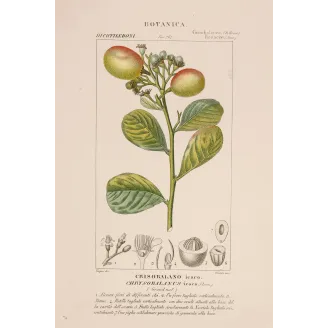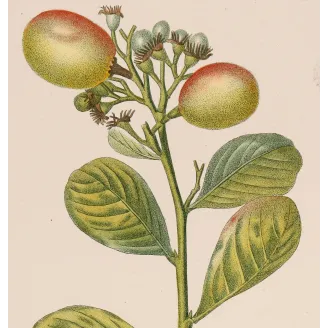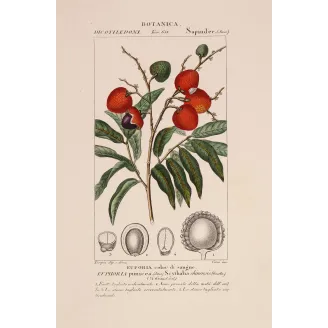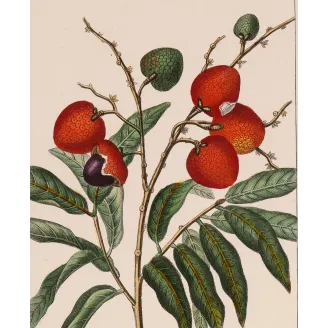
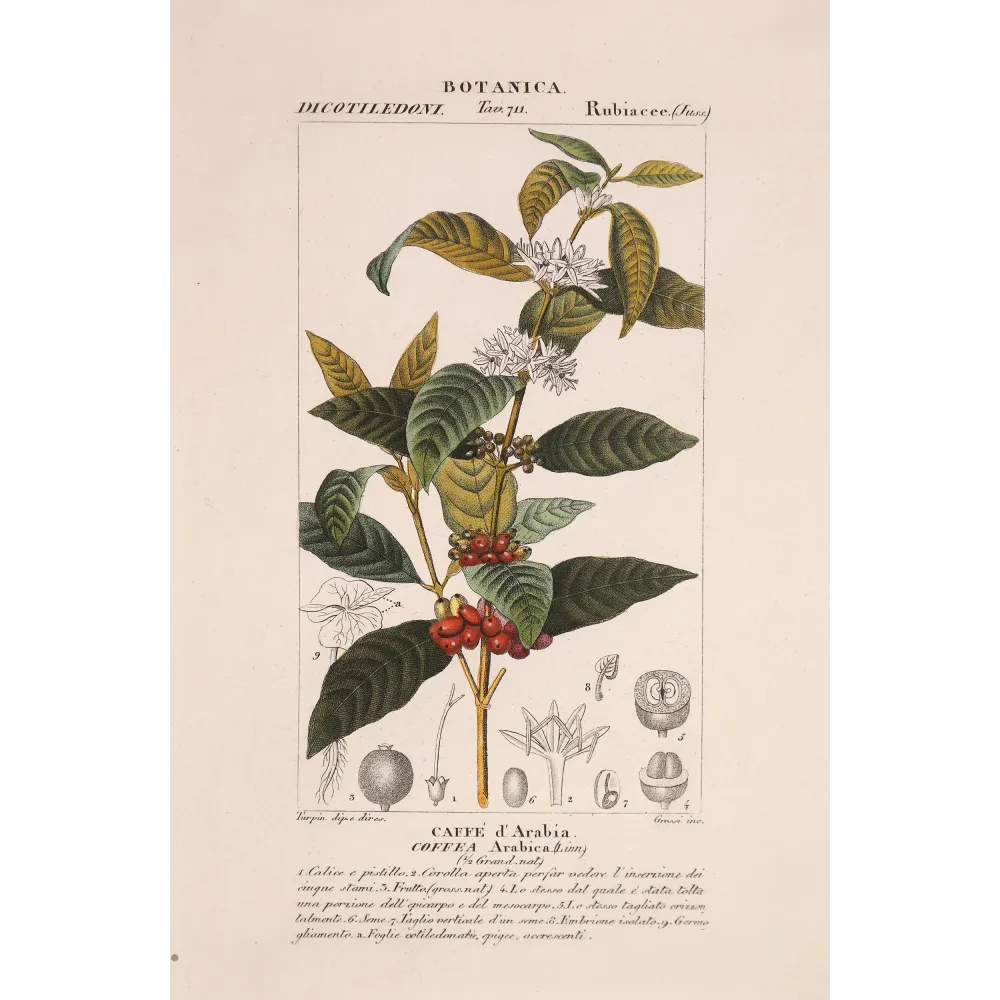
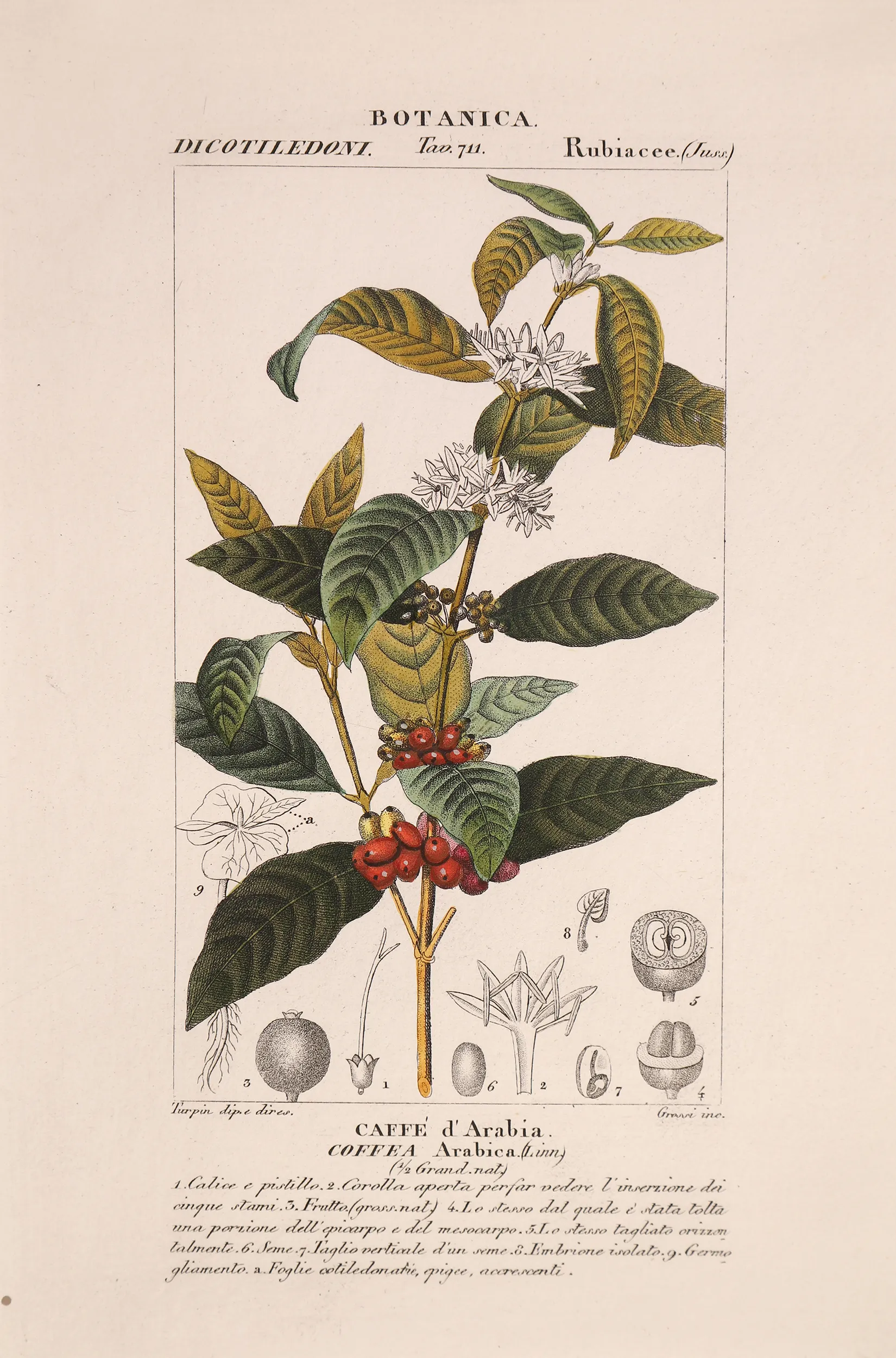

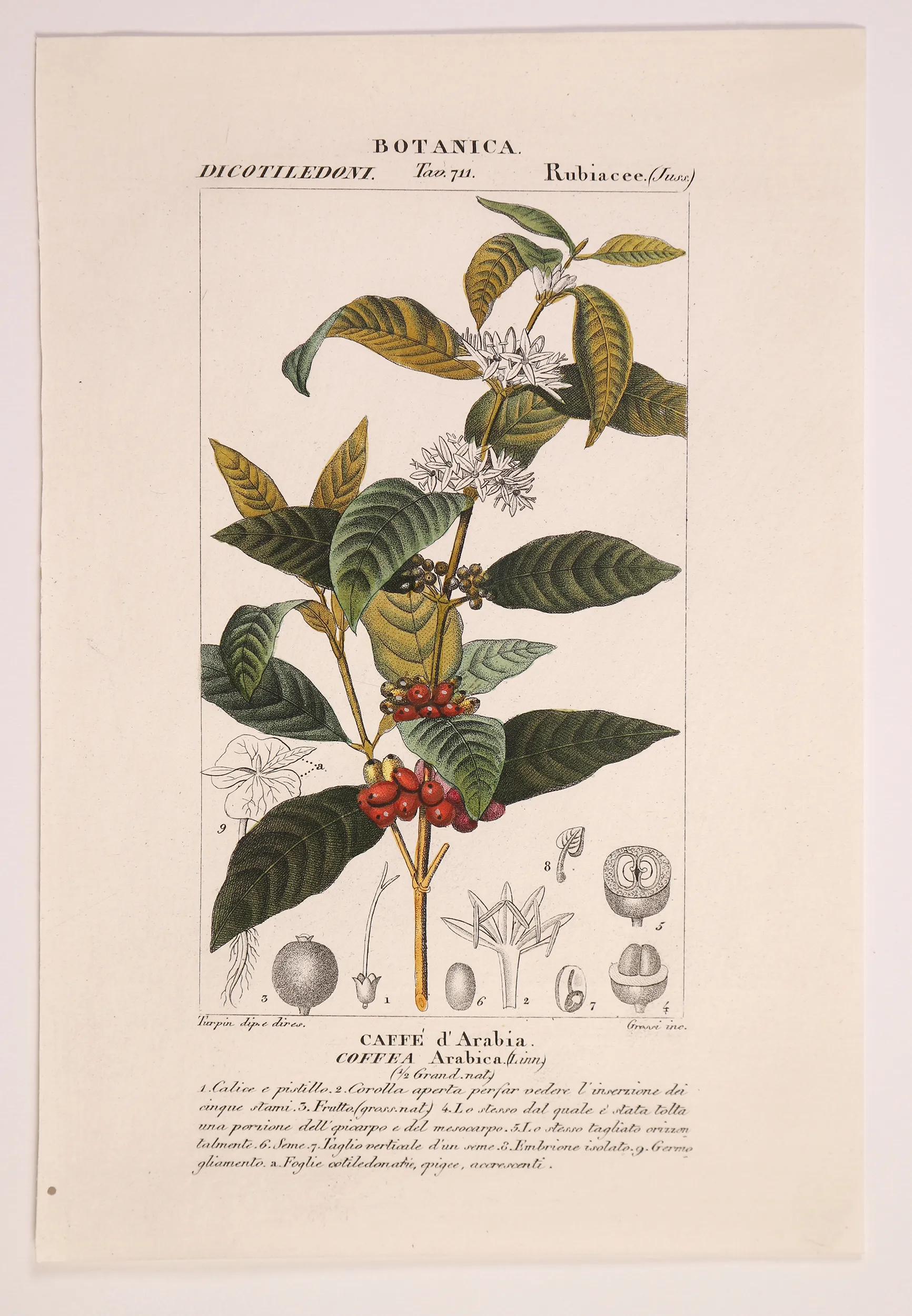
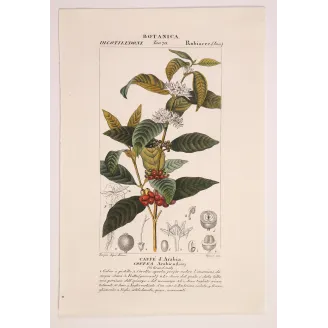
Botanical plate of Coffea arabica with vivid red berries and detailed floral structure.
 Delivery policy
Your print will be carefully prepared and shipped worldwide via trusted couriers (UPS or similar).
 Authentic antique prints
Original engravings from the 17th–19th century.
This refined botanical engraving depicts Coffea arabica, the Arabian coffee plant, presented with structural clarity and visual vitality. The specimen is shown in full development, combining foliage, blossoms, fruit, and analytical studies in a composition that reflects the disciplined scientific ambition of early nineteenth-century natural history publishing.
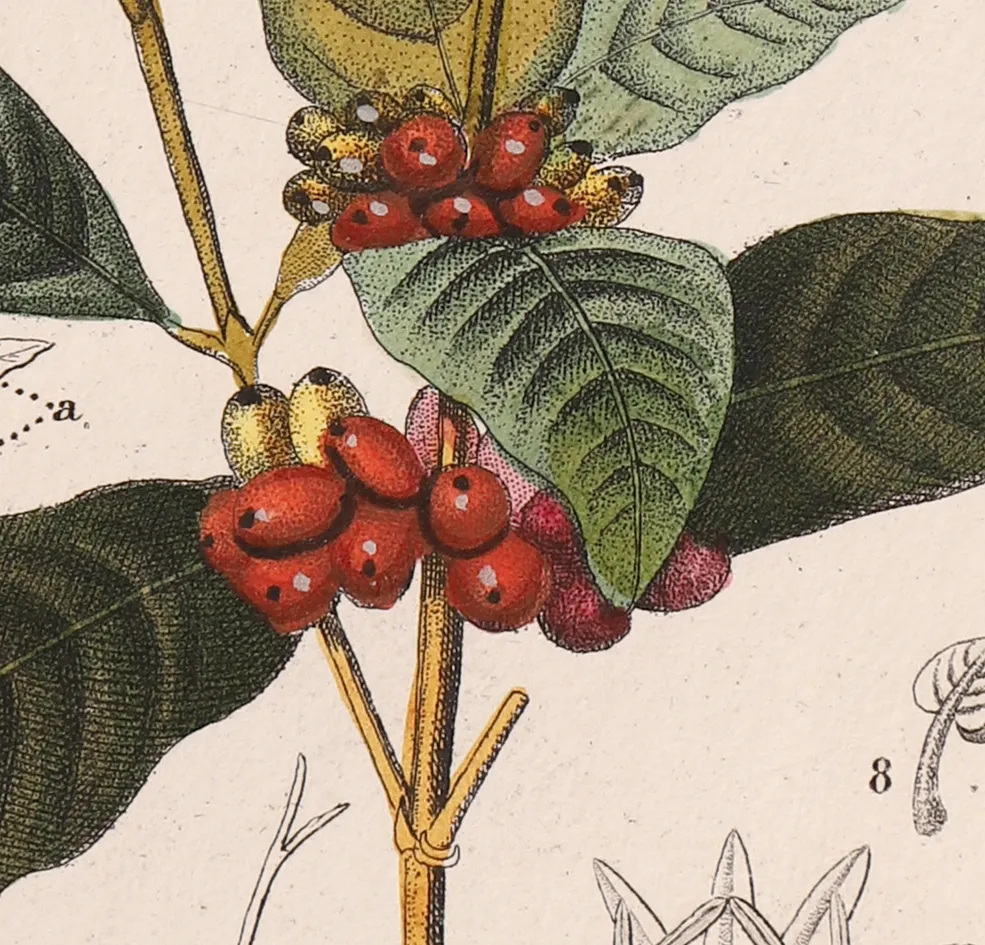
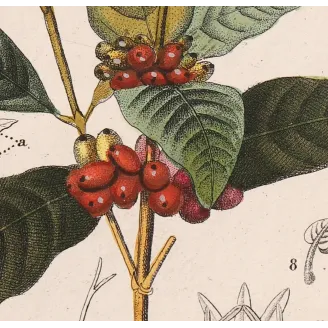
Unlike purely ornamental botanical works, this plate emphasizes morphological intelligibility. The branching structure is clearly articulated, the venation carefully observed, and the fruit rendered at different stages of maturation. The restrained yet vibrant hand-colouring reinforces botanical legibility while preserving aesthetic balance.
The plate belongs to the Italian edition of the Dizionario di Scienze Naturali (Florence, Battelli press), one of the most important encyclopedic scientific enterprises of its time, for which Pierre Jean François Turpin provided some of the finest botanical illustrations.
— • —
The composition is vertically structured and deliberately balanced. The central stem acts as an axial element, while the alternating leaves create a rhythmic progression across the sheet. Clusters of red berries introduce chromatic intensity, contrasting with the cooler greens of the foliage and the delicate white blossoms positioned in the upper register.
The analytical figures arranged along the lower margin provide anatomical clarification without disturbing the compositional harmony. Turpin achieves equilibrium between scientific documentation and decorative refinement — a hallmark of his contribution to post-Linnaean botanical illustration.
Coffea arabica, commonly known as the coffee plant, is native to the highlands of Ethiopia and Yemen and became one of the most economically and culturally significant plants worldwide. Its glossy evergreen leaves, fragrant white blossoms, and distinctive red berries made it a compelling subject for botanical illustration during the age of global exploration and scientific cataloguing. The plant’s dual identity — agricultural commodity and botanical specimen — explains its inclusion in encyclopedic works dedicated to documenting the natural world with precision and intellectual rigor.
This plate forms part of the historic Dizionario di Scienze Naturali, a monumental early nineteenth-century encyclopedic enterprise once preserved within a noble library and today housed in the Sacchetti Collection. Each engraving reflects a period in which scientific ambition was matched by exceptional artisanal execution — from the precision of the engraved copperplate line to the controlled, luminous hand-colouring applied individually to every sheet.
The result is not merely documentary illustration, but a refined synthesis of scholarship and craftsmanship, where artistic discipline elevates scientific observation into a form of quiet visual authority. To discover the full story behind these rare prints and their noble provenance, we invite you to read our editorial feature “Not Just Another Print” — a tribute to the enduring harmony between knowledge, art and prestige embodied in the Dizionario di Scienze Naturali.
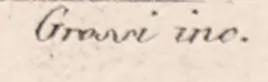
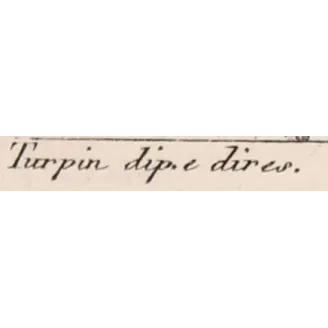
The engraving is in excellent antique condition. The sheet presents clean margins and a remarkably fresh impression. The paper is smooth early nineteenth-century wove paper (non-laid), consistent with Italian scientific editions of the period. No watermark has been observed. The original hand-colouring remains vibrant and well preserved, with no visible losses. The engraved credit “Turpin dis.” is present, confirming the original drawing by Pierre Jean François Turpin.
For further context on Pierre Jean François Turpin and his contribution to nineteenth-century botanical science, see our editorial feature:
Pierre Jean François Turpin – The Botanical Illustrator of Natural Harmony
Specific References
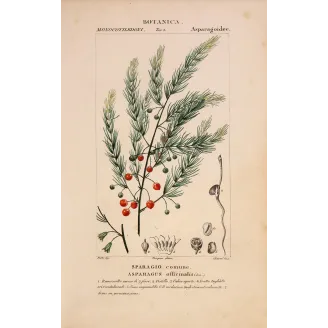
Botanical print of Asparagus officinalis by Turpin, featuring vivid orange berries.
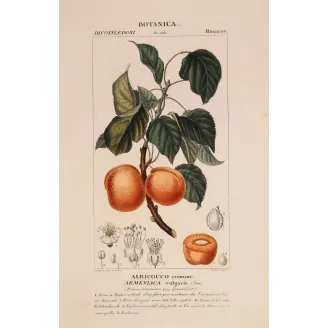
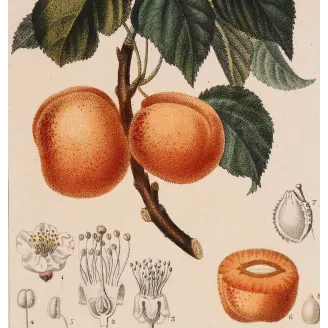
Original 19th-century botanical engraving of the common apricot, showing its velvety orange fruits and lush green leaves, rendered with great naturalistic balance.
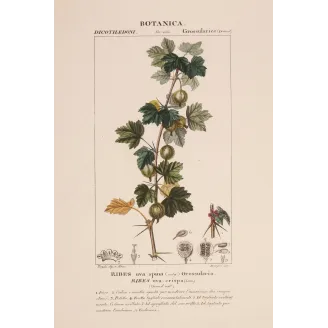
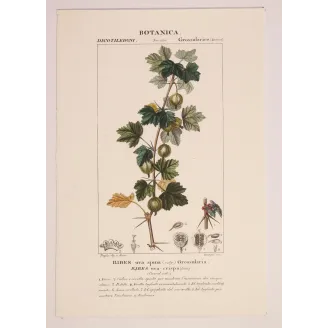
A charming depiction of *Ribes uva-crispa*, the gooseberry plant, detailed with its spiny stems and translucent green fruits.
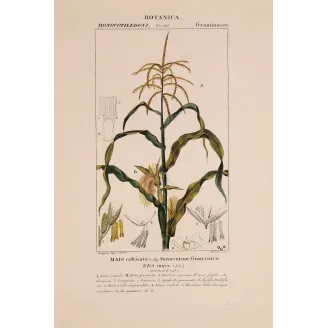
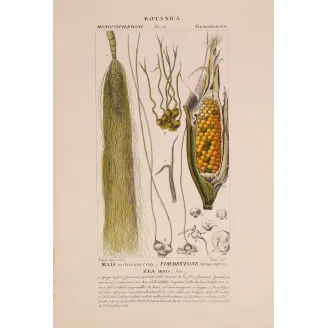
Double plate of cultivated maize (Zea mays) from Turpins botanical series.
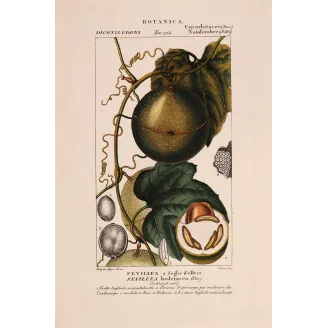
A coordinated pair of engravings depicting *Fevillea hederacea*, with intricate tendrils and elegant fruit structure, hand-colored with precision.
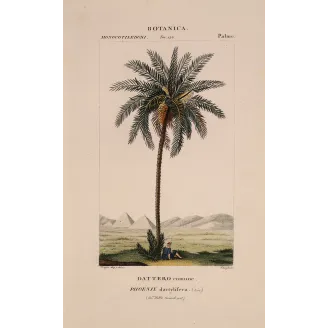
Detailed antique illustrations of the date palm tree and its floral and fruit anatomy.
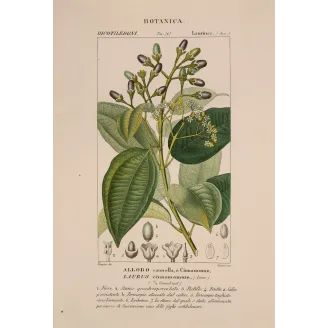
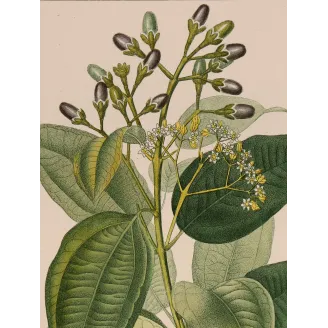
Elegant illustration of Laurus cinnamomum, showing leaves, flowers and seeds.
Elegant hand-colored plate of the juniper plant with berries and cone structure.
Elegant hand-colored botanical engraving of *Chrysobalanus icaco*, showing the round fruits and smooth glossy leaves in rich natural hues.
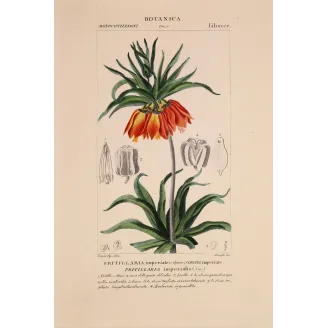
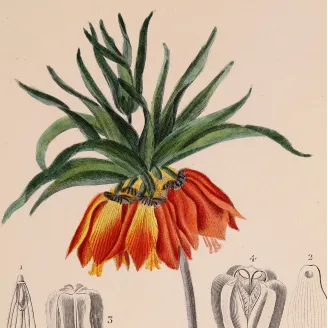
Striking antique print of Fritillaria imperialis with bright orange crown flowers.
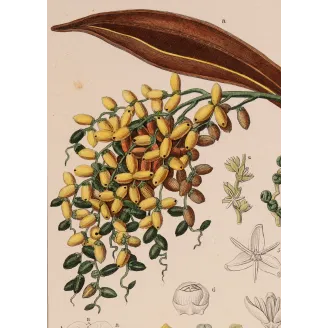
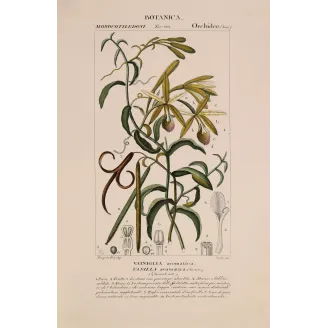
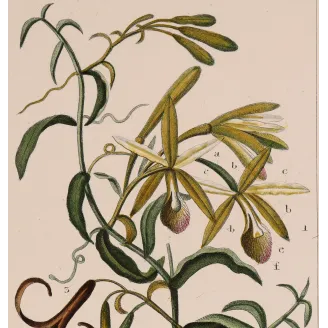
Delicate orchid illustration showing flower, pod and internal anatomy of vanilla.
A striking hand-colored engraving of *Euphoria punicea*, displaying vivid red fruits and lush foliage in a refined 19th-century botanical composition.
A complete set of 22 original hand-colored lithographs of ferns by Turpin, from the Dizionario di Scienze Naturali (c. 1830).
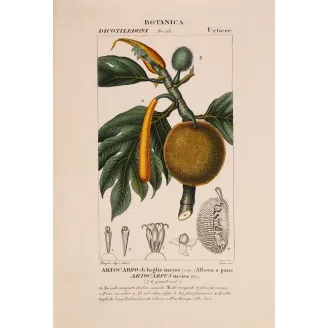
An extraordinary 19th-century engraving of *Artocarpus incisa*, the breadfruit tree, showcasing its bold leaves and unique fruit texture.
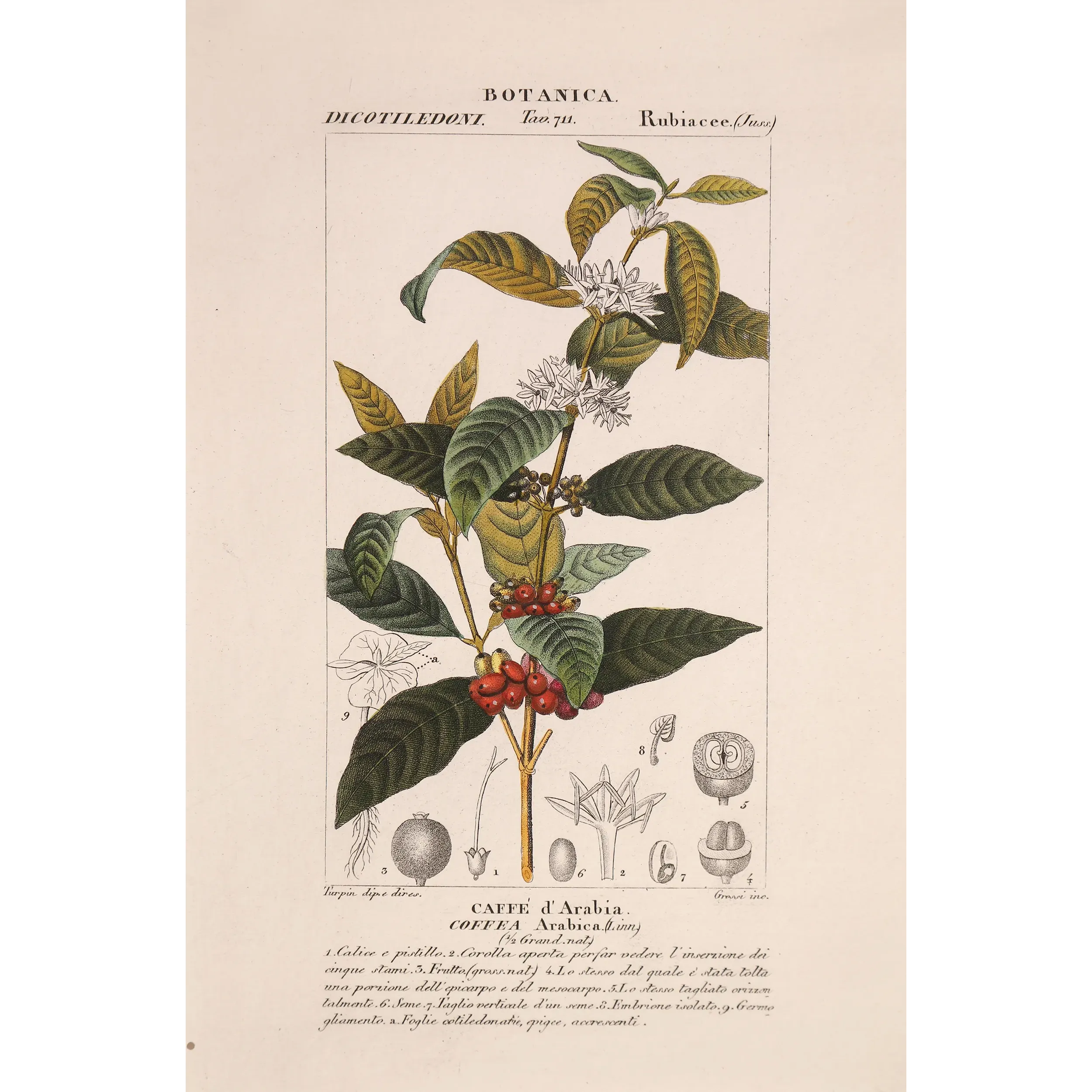
Botanical plate of Coffea arabica with vivid red berries and detailed floral structure.