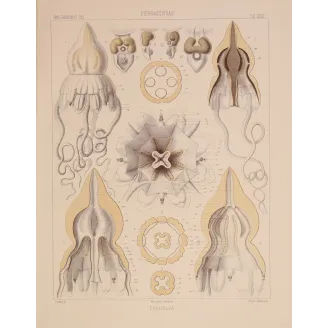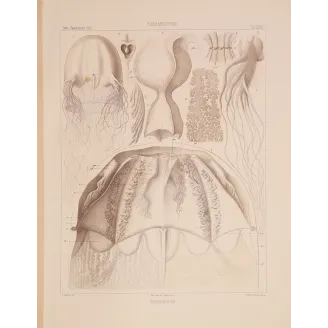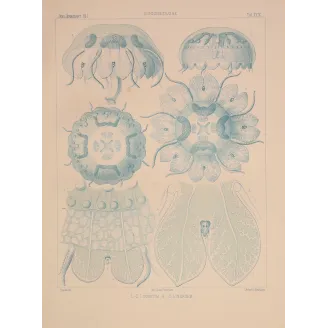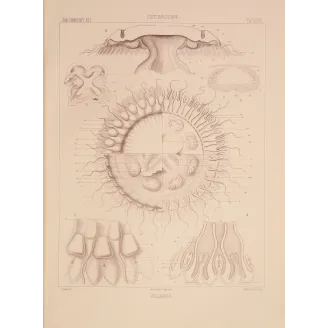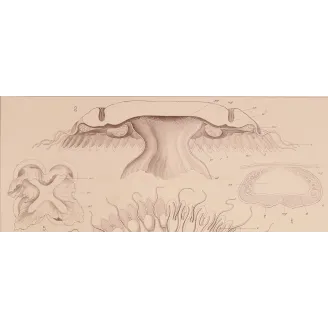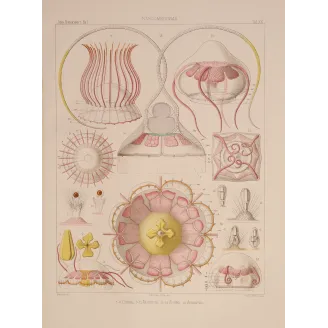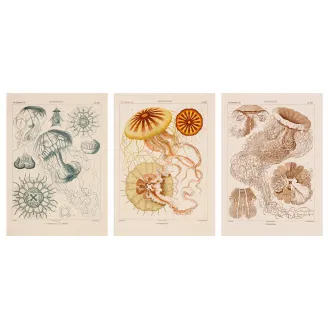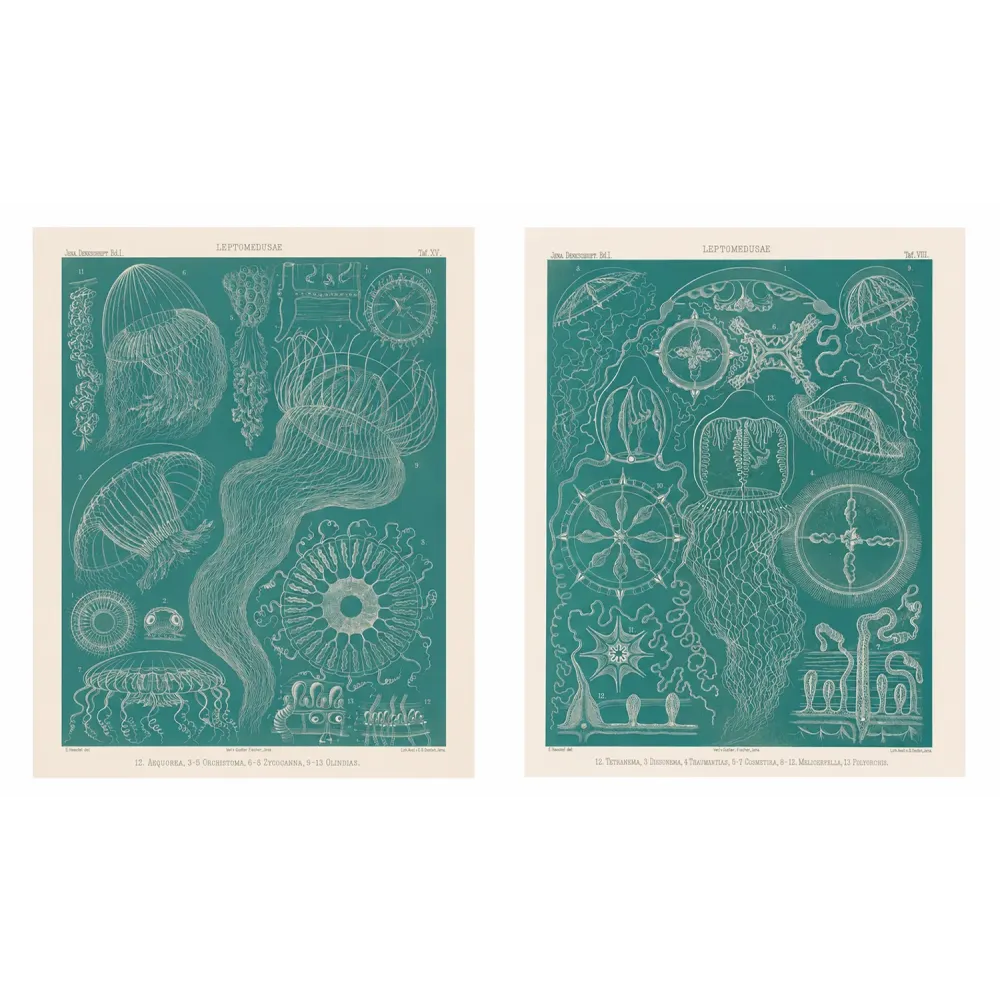
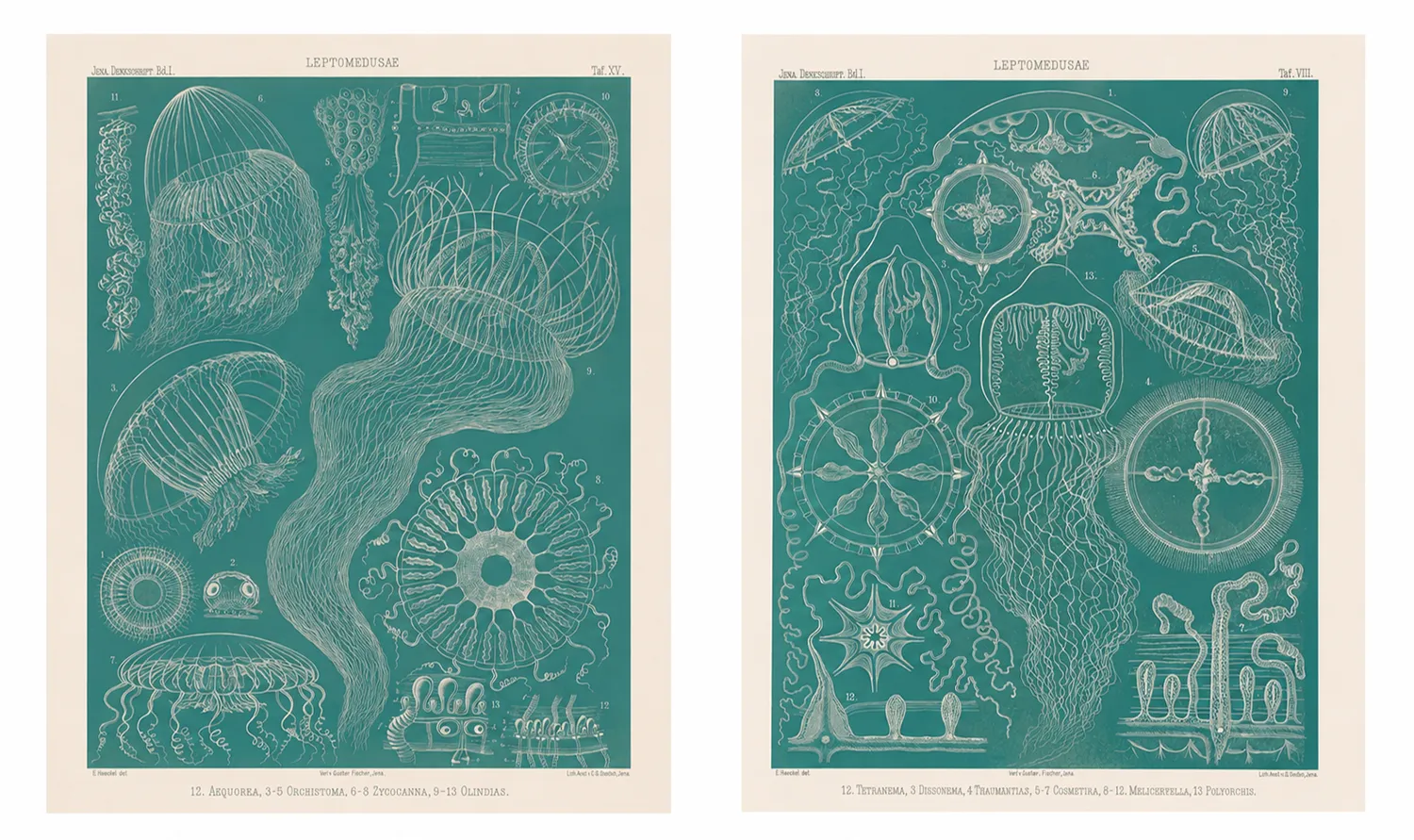
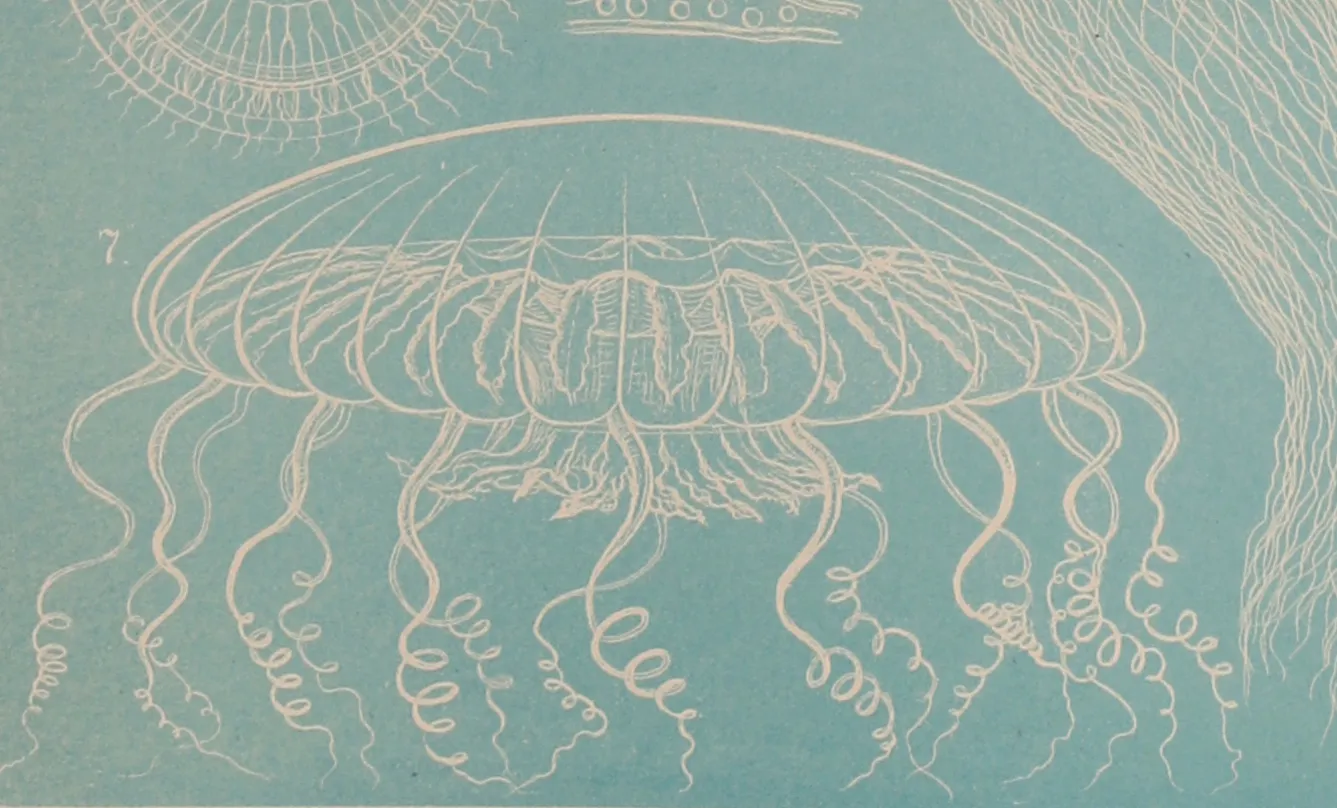
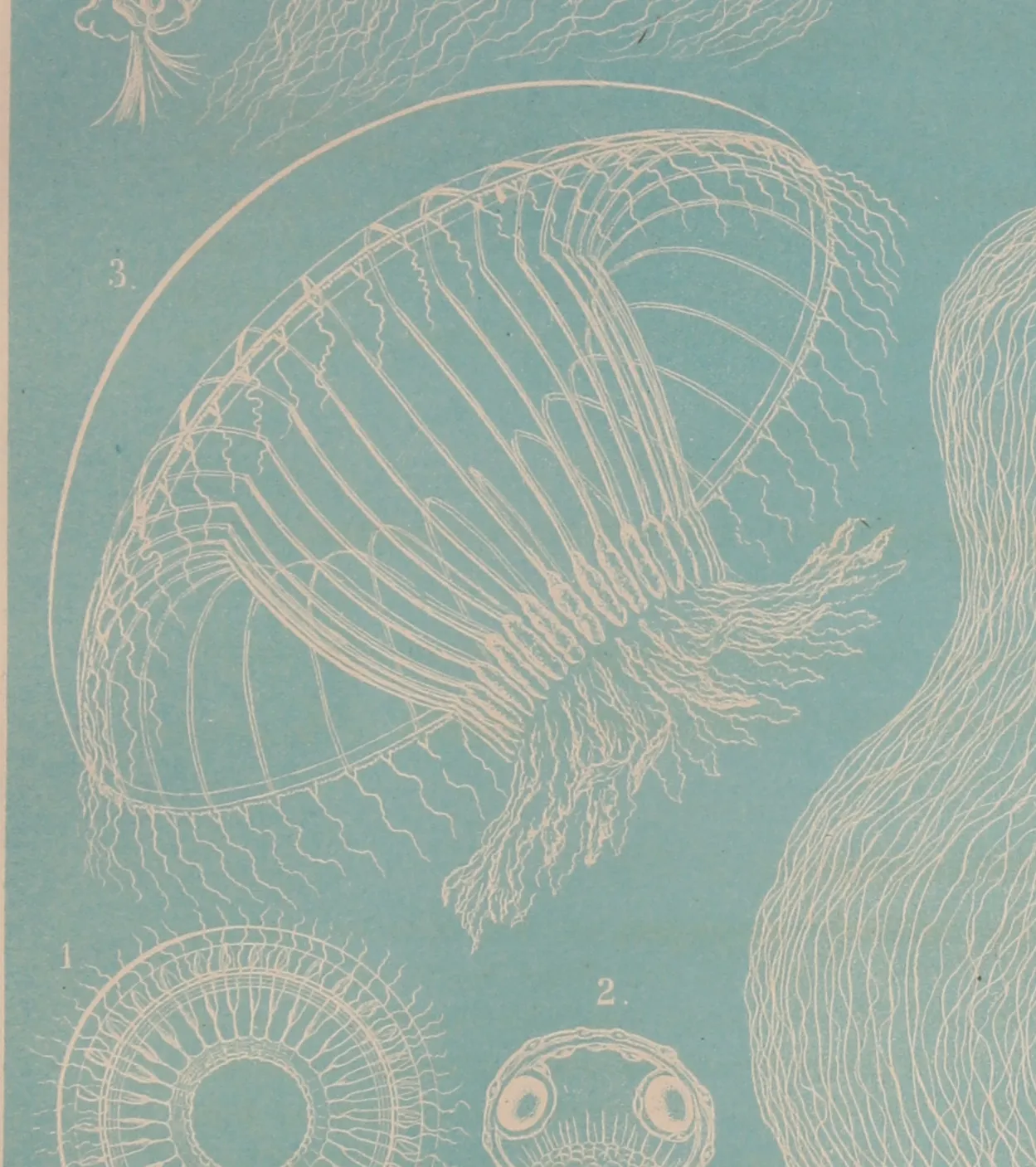
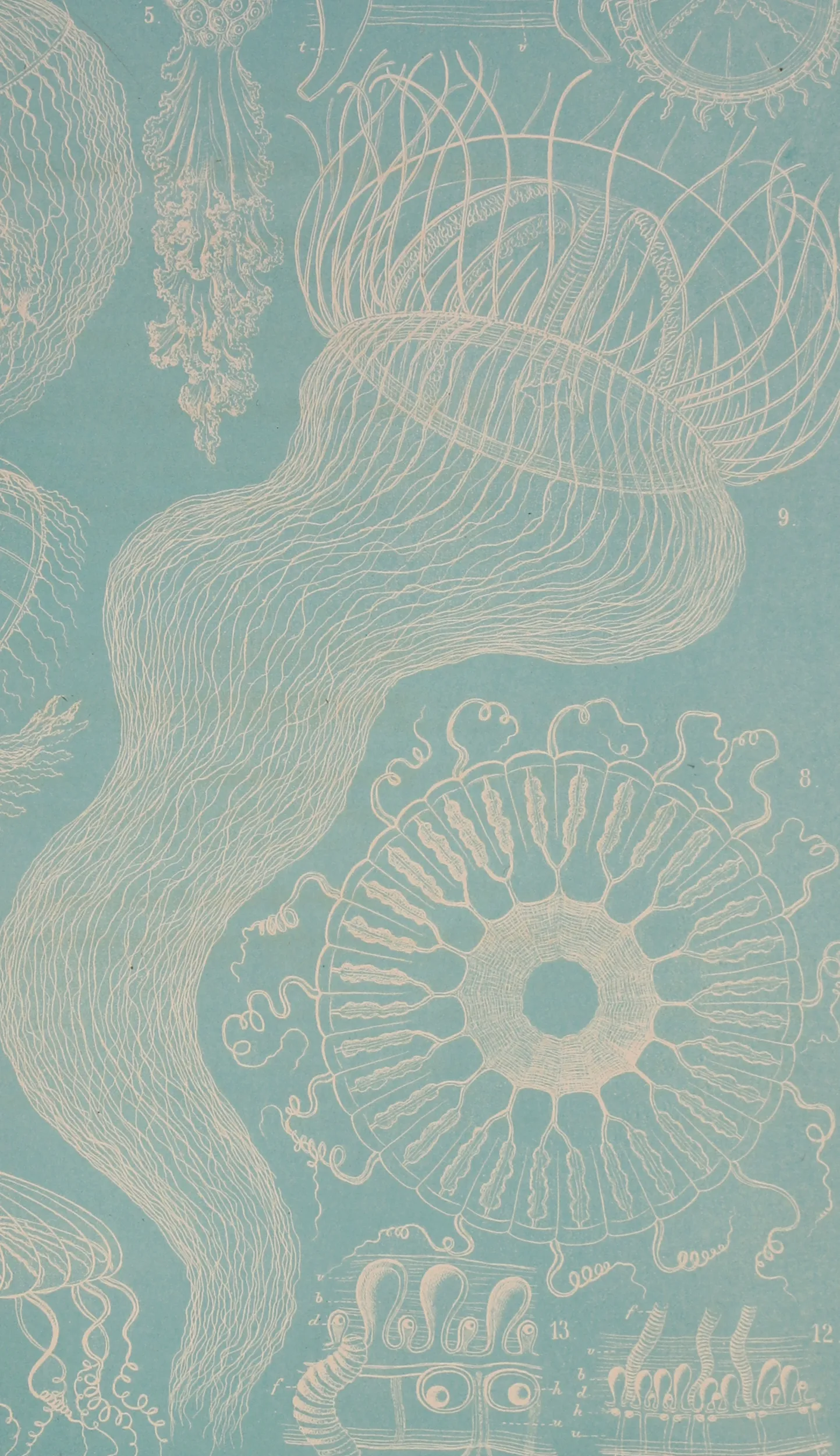
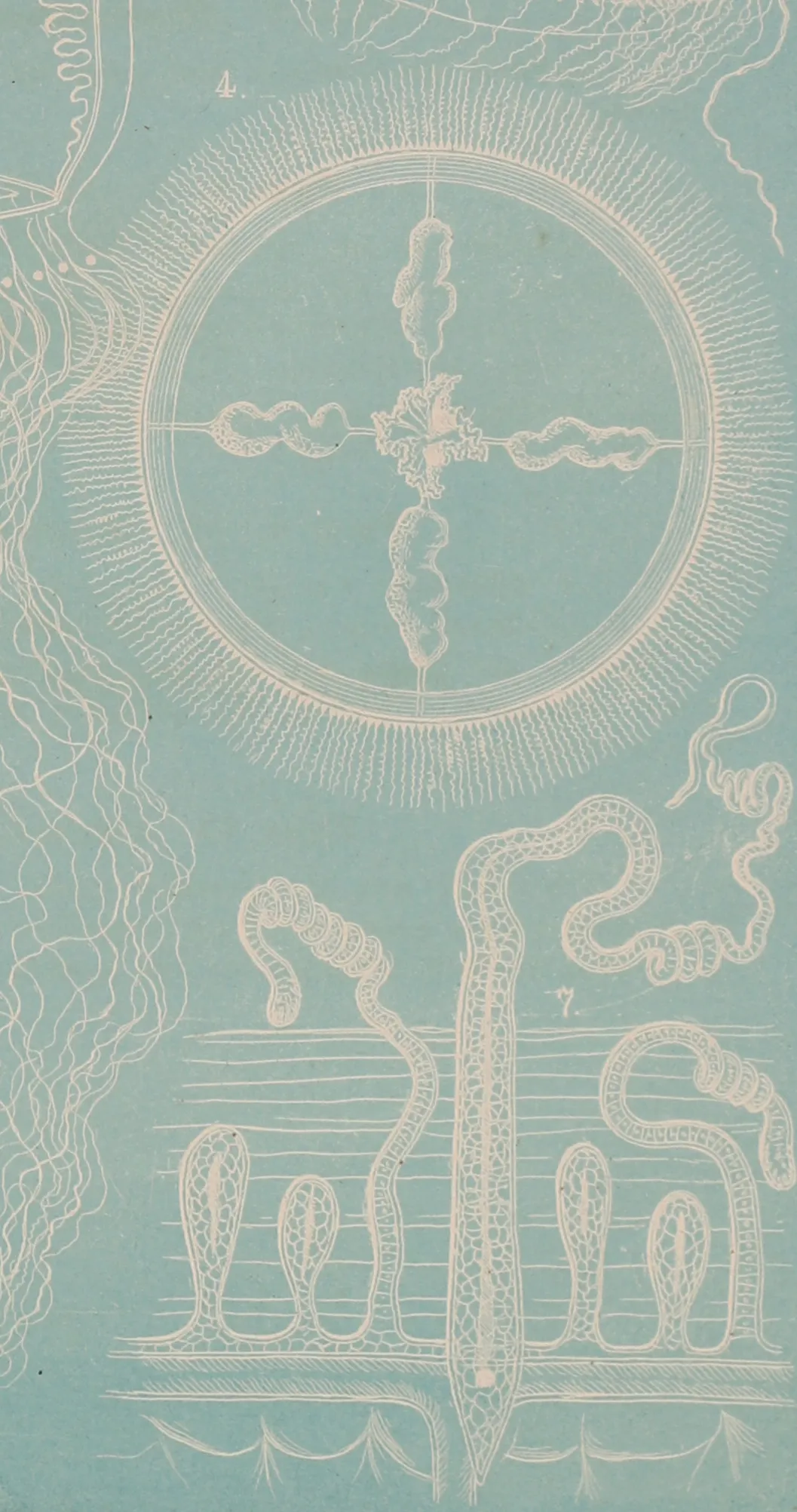
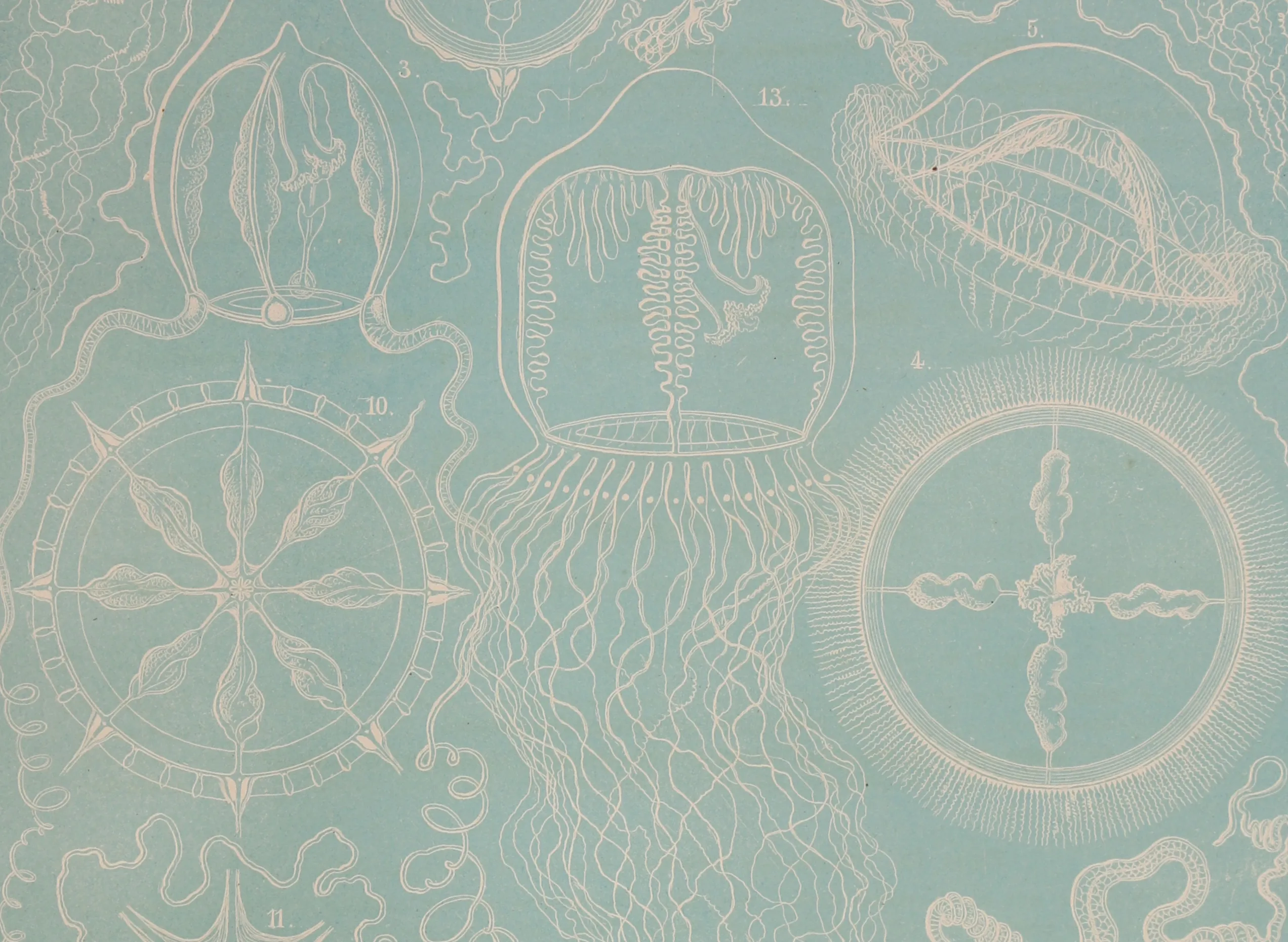
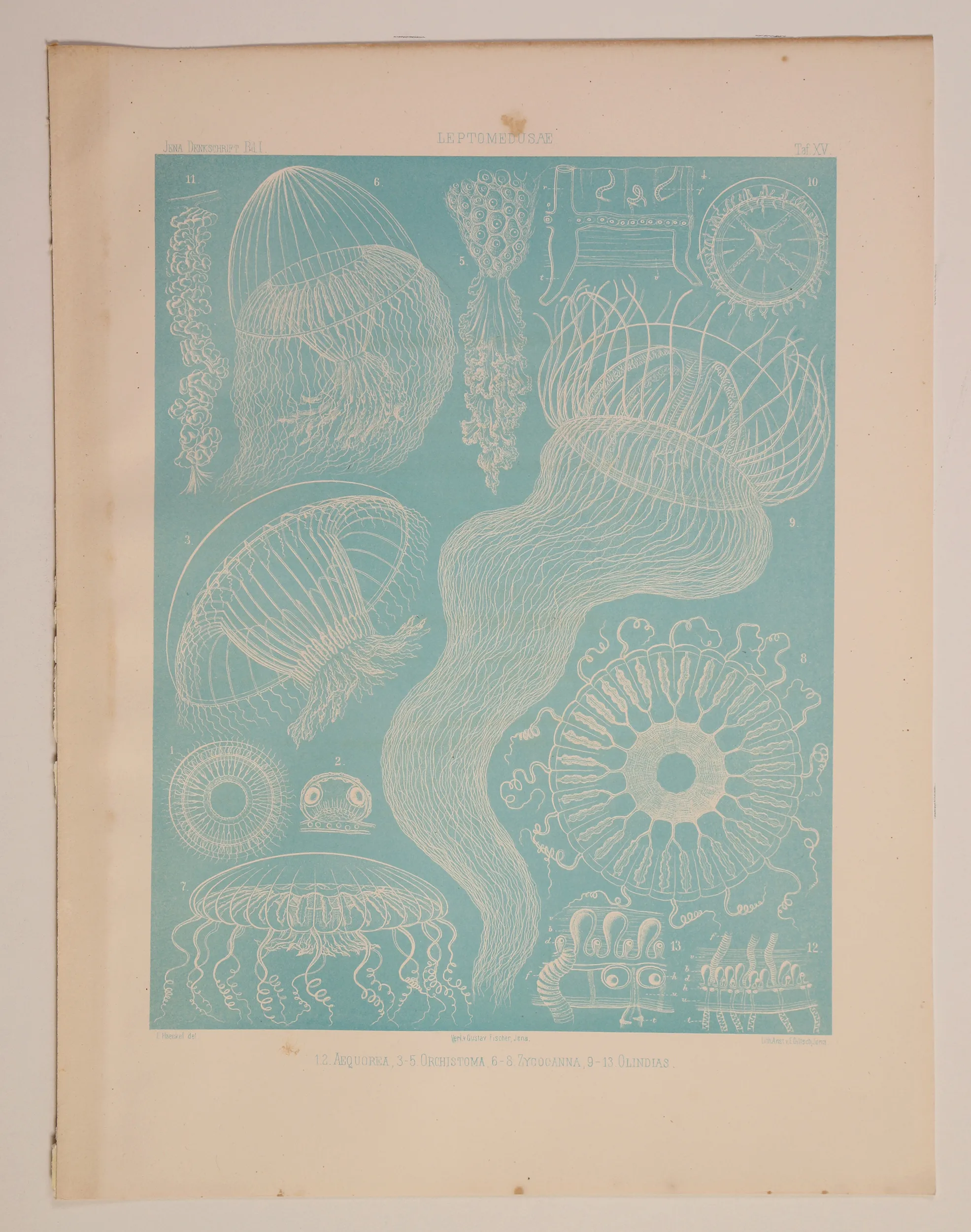
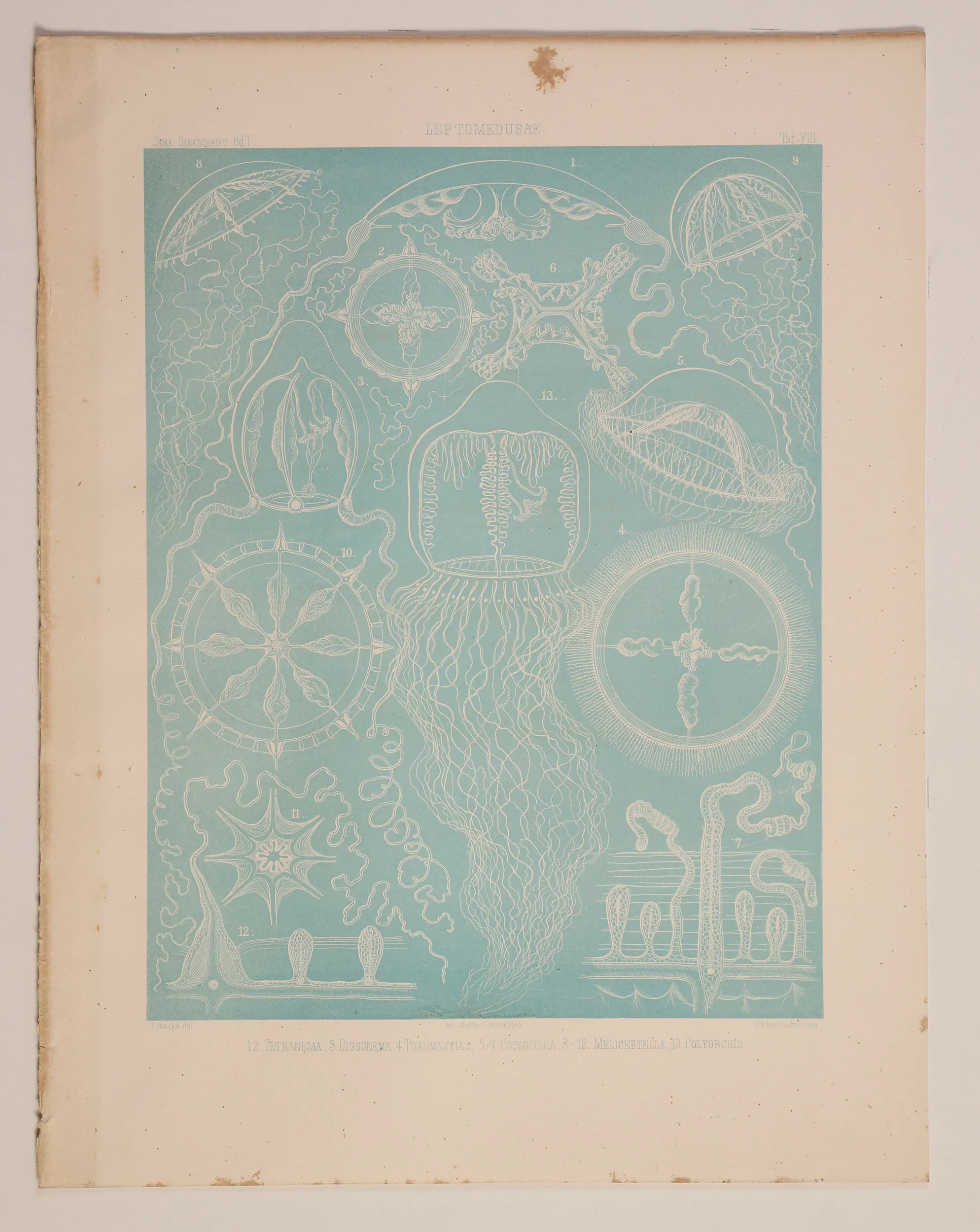
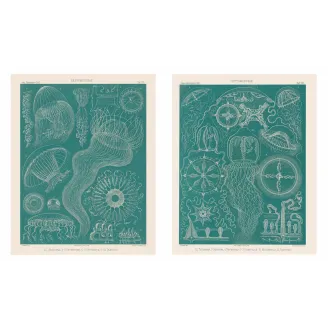
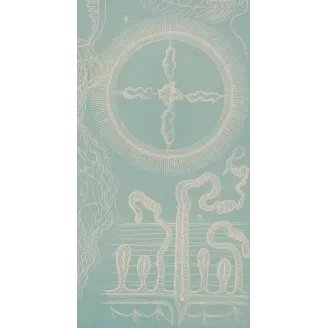
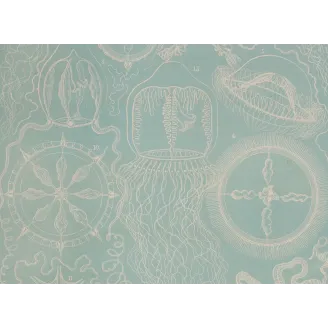
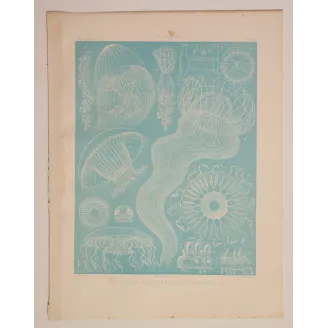
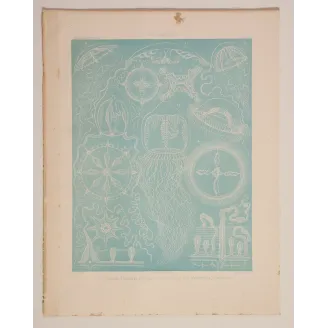
A refined pair of original 19th-century jellyfish lithographs by Ernst Haeckel, selected from Das System der Medusen (1879). Rendered in delicate monochrome cyan tones, these scientific plates reveal the hidden geometry of marine life with remarkable decorative elegance. A striking museum-quality ensemble for interiors inspired by science, design and natural history.
 Delivery policy
Your print will be carefully prepared and shipped worldwide via trusted couriers (UPS or similar).
 Authentic antique prints
Original engravings from the 17th–19th century.
This exceptional curated suite brings together three original lithographs from Ernst Haeckel’s monumental scientific work Das System der Medusen (1879) — plates that appear to anticipate, and visually resonate with, some of the marine forms later celebrated in his internationally renowned Kunstformen der Natur.
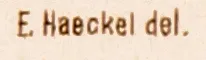
Rather than decorative reinterpretations, these are scientific originals: lithographs created during Haeckel’s direct study of jellyfish morphology, printed in the nineteenth century and bearing the credit “E. Haeckel del.” on the plate — an important indication of Haeckel’s own artistic involvement in the observation and rendering of these extraordinary marine organisms.
— • —
Together, the three plates form an unusually coherent visual ensemble. Displayed as a group, they reveal the transition between scientific observation and aesthetic vision, offering a rare opportunity to experience the intellectual and visual world from which Haeckel’s later artistic imagery emerged.
With their flowing tentacles, radial symmetry and extraordinary biological architecture, these works possess an aesthetic power that feels strikingly modern. The suite moves from warm amber and coral tones to refined marine blue, creating a sophisticated visual rhythm across the three plates.
The ensemble is especially compelling because it allows the viewer to read Haeckel’s visual language before its later transformation into the more decorative world of Kunstformen der Natur. Here, the beauty emerges from scientific observation itself: anatomical structure, classification and morphology become a form of visual poetry.
As a group, the three lithographs are particularly suited to a collector’s study, a design-led interior, a private gallery wall or a cabinet of curiosities. This grouping is offered as a curated museum-grade suite and is available only as a set.
Das System der Medusen, published in Jena in 1879, is one of Haeckel’s most important scientific works devoted to jellyfish. It predates Kunstformen der Natur by around two decades and belongs to the period in which Haeckel was developing the marine forms, anatomical structures and visual ideas that would later help define his broader artistic legacy.
The presence of the plate credit “E. Haeckel del.” gives these lithographs particular significance within Prantique’s collection: they are not merely later decorative prints after Haeckel, but original nineteenth-century scientific plates directly linked to his observational and artistic practice.
This curated suite belongs to the rare visual world of Ernst Haeckel’s marine studies, where scientific classification and artistic imagination meet with exceptional force. The plates from Das System der Medusen reveal the scientific foundations of the jellyfish imagery that would later become central to Haeckel’s international reputation.
Discover more about Haeckel, his jellyfish studies and the visual legacy of his marine works in our editorial feature: Ernst Haeckel and the Beauty of Jellyfish
Very good to excellent antique condition. Printed on original nineteenth-century paper, with age-appropriate toning, occasional light spotting and minor signs of handling consistent with scientific works of this period. Each plate retains its authentic paper character and original printed credits. Please examine the photographs carefully, as the suite is composed of three genuine nineteenth-century impressions, each with its own individual signs of age and preservation.
Specific References
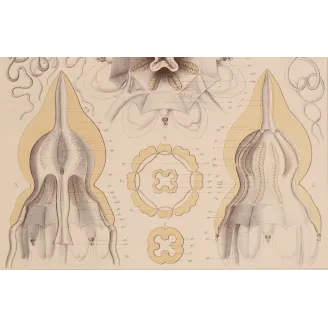
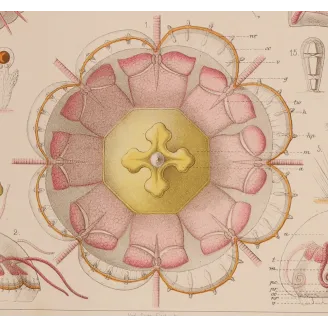
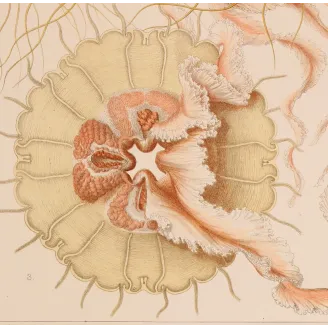
Original 1879 lithograph from Ernst Haeckel's Das System der Medusen, depicting Pericolpa and related Peromedusae forms. A refined marine study combining biological symmetry, architectural structure and delicate golden tones.
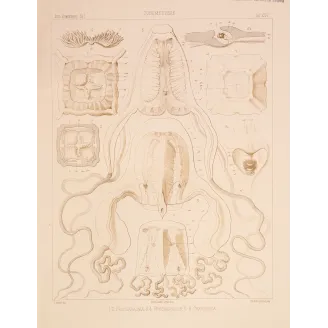
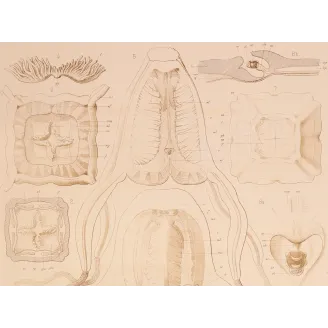
An original 1879 lithograph by Ernst Haeckel from Das System der Medusen, depicting the extraordinary anatomy of Chirodropus, one of the most remarkable Cubomedusae. Combining scientific precision, monumental scale and elegant nineteenth-century lithographic craftsmanship, this authentic marine study reveals the hidden architecture of one of nature’s most complex jellyfish forms.
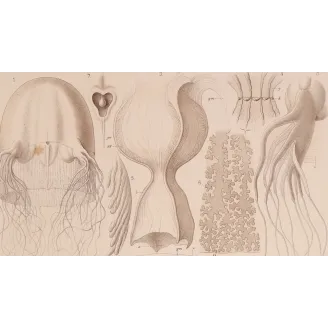
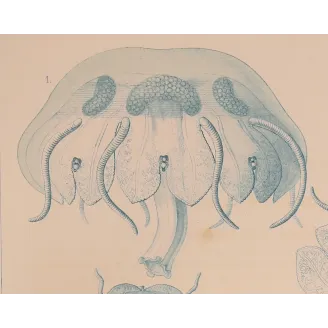
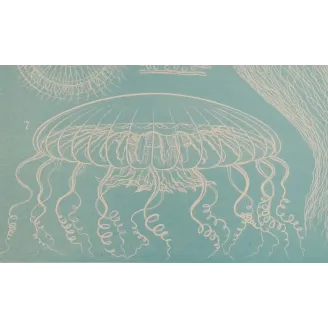
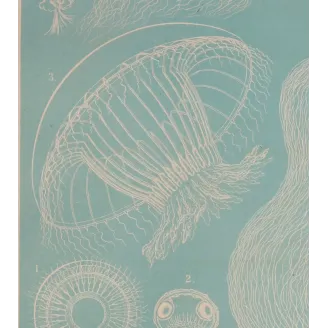
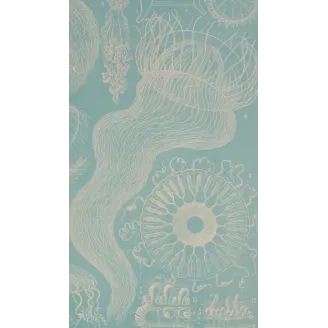
Original 1879 lithograph from Ernst Haeckel's Das System der Medusen, depicting Linantha and Linerges jellyfish in a refined pale-blue palette. A striking combination of scientific precision, marine symmetry and decorative elegance.
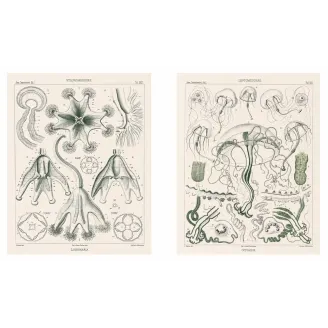
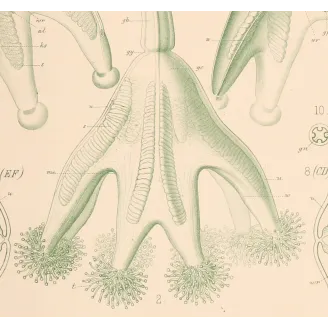
A refined curated diptych of two original 1879 lithographs by Ernst Haeckel from Das System der Medusen, printed in delicate monochromatic green and bearing the plate credit “E. Haeckel del.” Combining marine geometry with scientific precision, these authentic nineteenth-century jellyfish studies create an unusually elegant visual ensemble for collectors, interiors and natural history enthusiasts.
Original 1879 lithograph from Ernst Haeckel's Das System der Medusen, depicting Collaspis jellyfish with extraordinary anatomical precision. A refined scientific composition centered on radial symmetry and marine morphology.
An original 1879 lithograph by Ernst Haeckel from Das System der Medusen, depicting the remarkable forms of the Narcomedusae. Combining delicate pink, coral and golden tones with extraordinary scientific precision, this authentic nineteenth-century marine study reveals why Haeckel's jellyfish imagery later became one of the defining visual inspirations of Art Nouveau.
A rare curated suite of three original 1879 lithographs by Ernst Haeckel, bringing together medusae later visually echoed in his iconic Kunstformen der Natur. A museum-grade grouping combining scientific beauty, early marine illustration and exceptional decorative presence.
An original 1879 lithograph by Ernst Haeckel from Das System der Medusen, depicting the remarkable anatomy of Cubomedusae (box jellyfish). Combining scientific precision with striking architectural symmetry, this authentic nineteenth-century plate reveals the hidden biological structures behind one of the ocean’s most fascinating marine organisms.
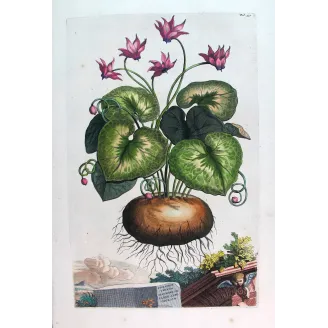
A rare 17th-century botanical engraving from Abraham Munting’s Nauwkeurige Beschryving der Aardgewassen - Phytographia Curiosa, depicting a cyclamen plant with exposed tuber, delicate pink flowers and richly patterned leaves. An expressive example of early botanical art combining scientific curiosity with striking decorative presence.
18th-century hand-colored engraving of the Almond Tree by Elisabeth Blackwell, with blossom, fruit and kernel beautifully rendered.
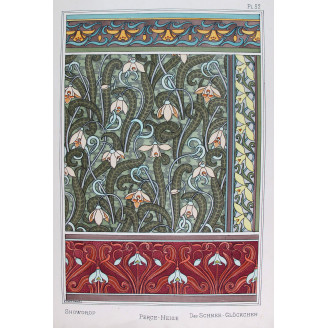
The snowdrop — the first sign of spring — is here celebrated with minimalism and grace.
Refined hand-colored engraving of the Florentine iris with elegant petals and detailed rhizome structure.
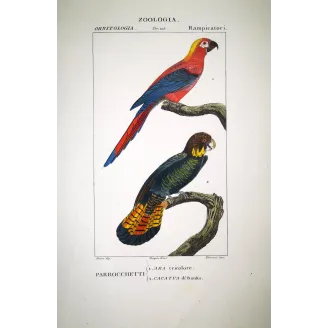
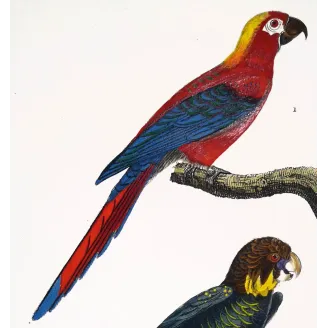
Vibrant parakeets perched on branches: a scarlet macaw and a black cockatoo with yellow and red highlights.
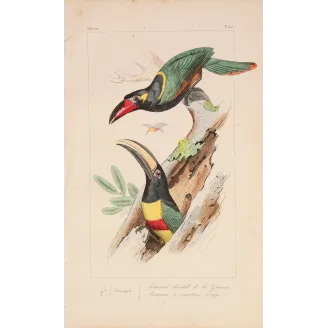
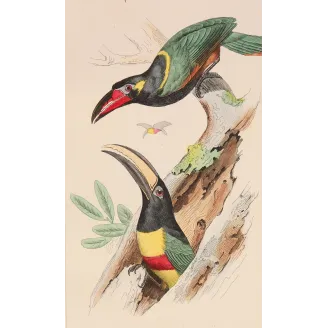
This vivid 19th-century engraving depicts two exotic aracaris, showcasing striking contrasts of green, red and yellow plumage. A highly decorative composition combining scientific observation with strong visual appeal, ideal for collectors of tropical ornithology and refined interior spaces.
Fine 18th-century engraving of the Medlar Tree by Elisabeth Blackwell, featuring fruit, blossom, and botanical detail.
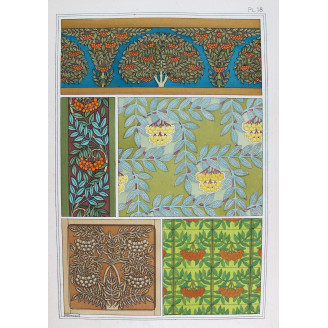
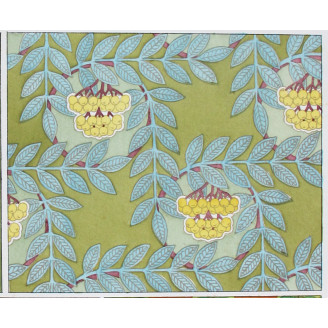
With its compound leaves and clusters of red berries, the sorb tree is rich in folk symbolism.
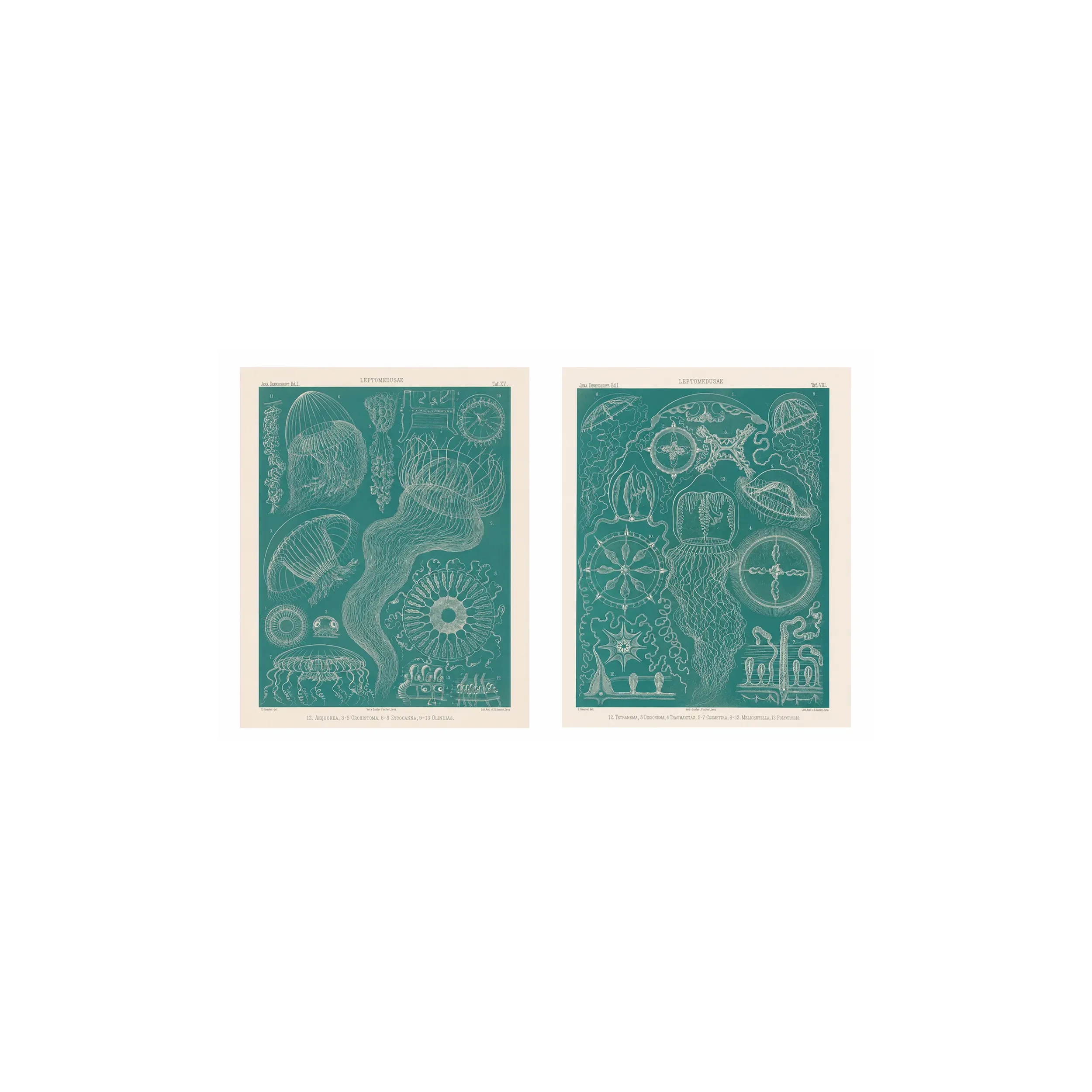
A refined pair of original 19th-century jellyfish lithographs by Ernst Haeckel, selected from Das System der Medusen (1879). Rendered in delicate monochrome cyan tones, these scientific plates reveal the hidden geometry of marine life with remarkable decorative elegance. A striking museum-quality ensemble for interiors inspired by science, design and natural history.