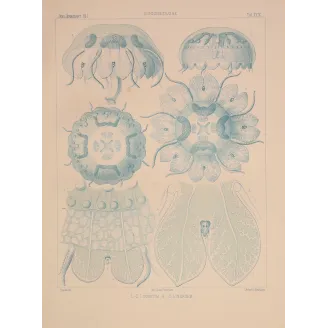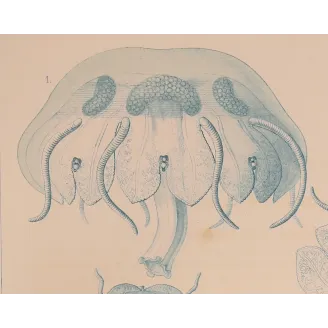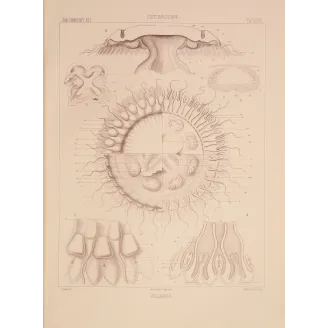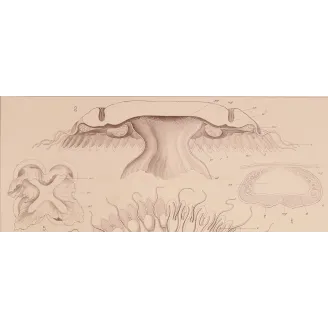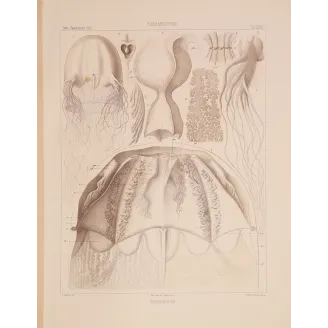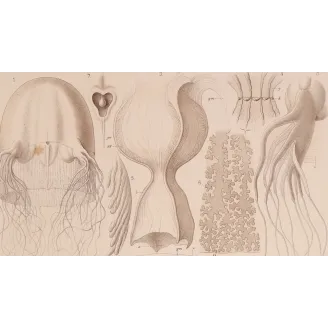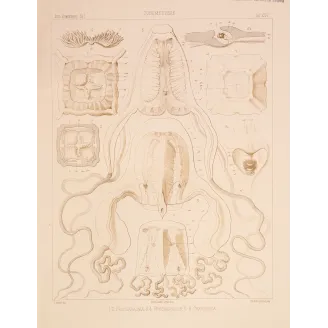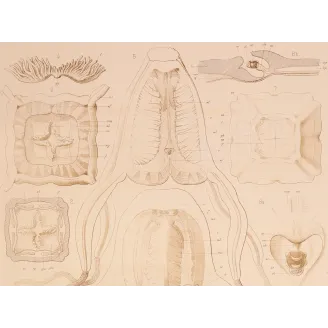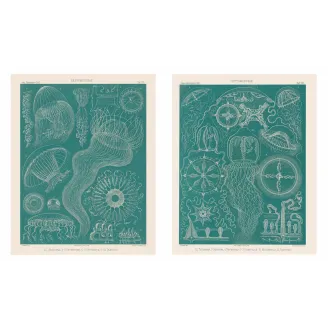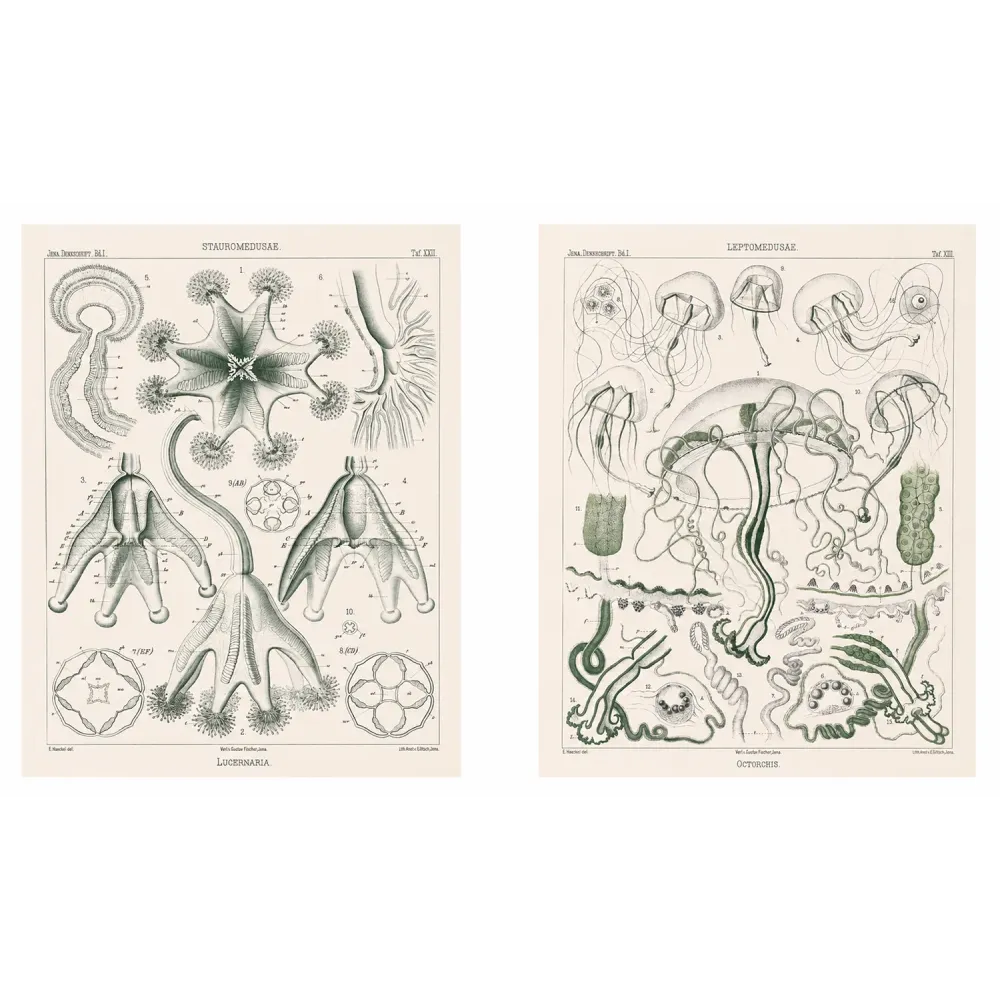
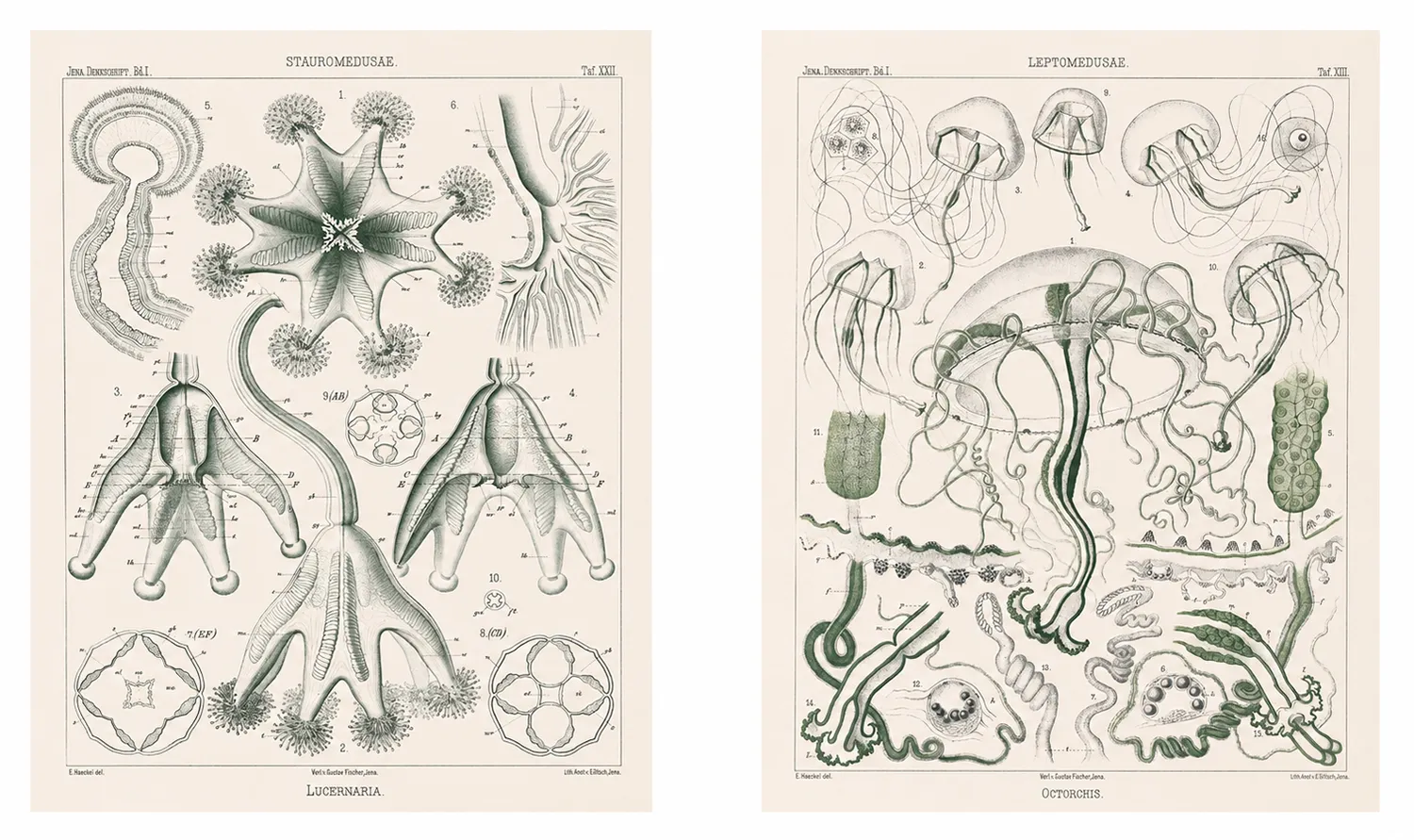
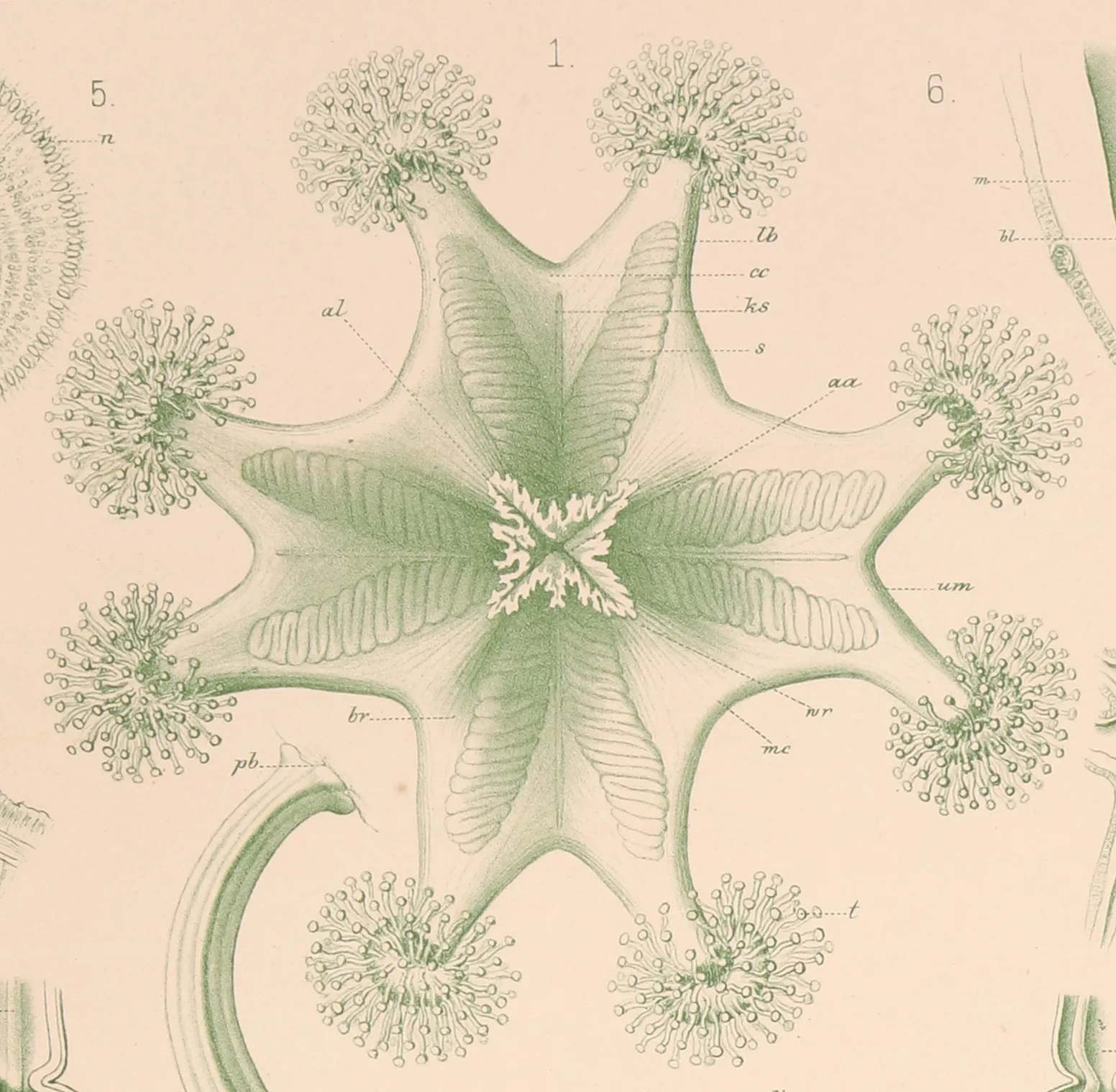
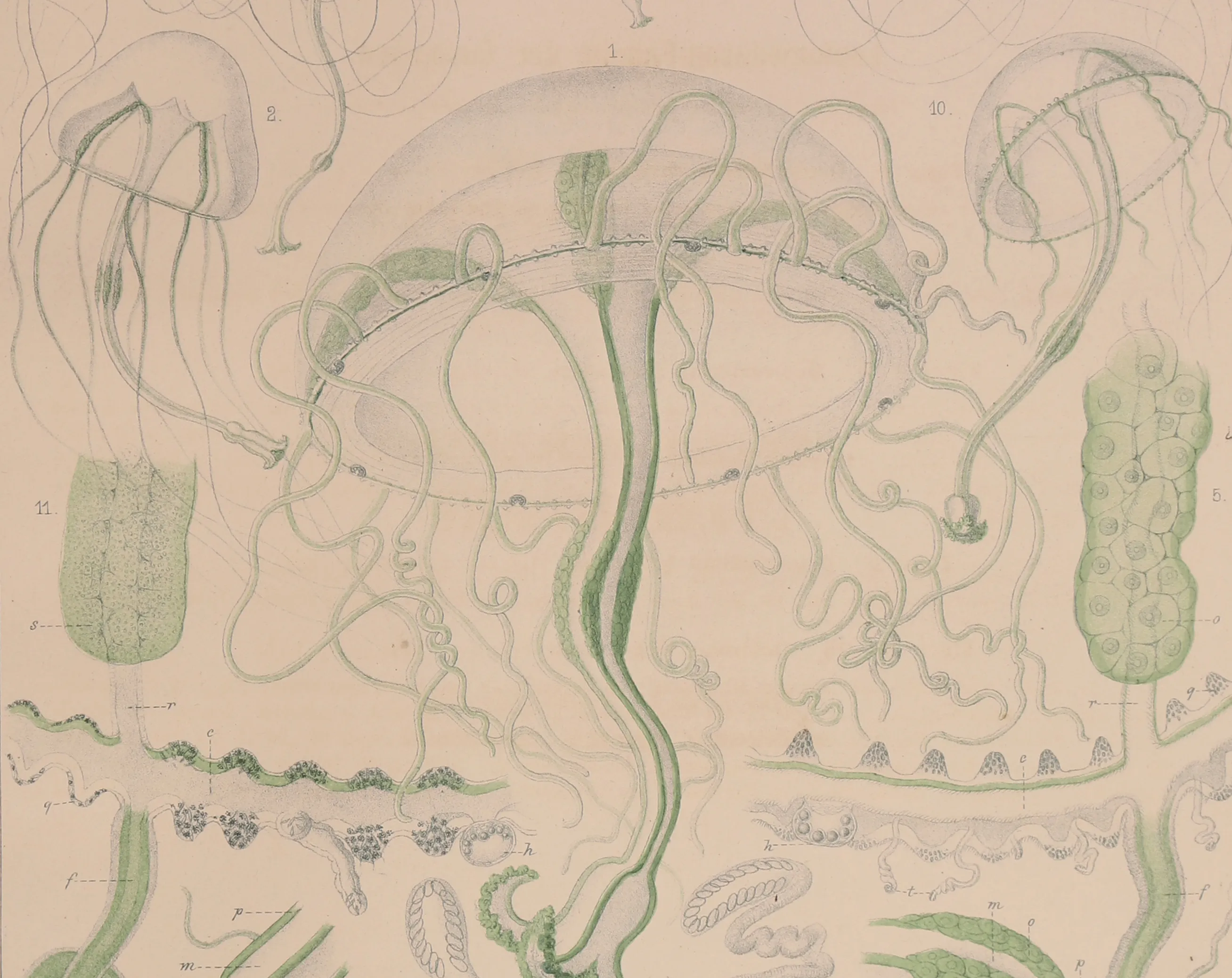
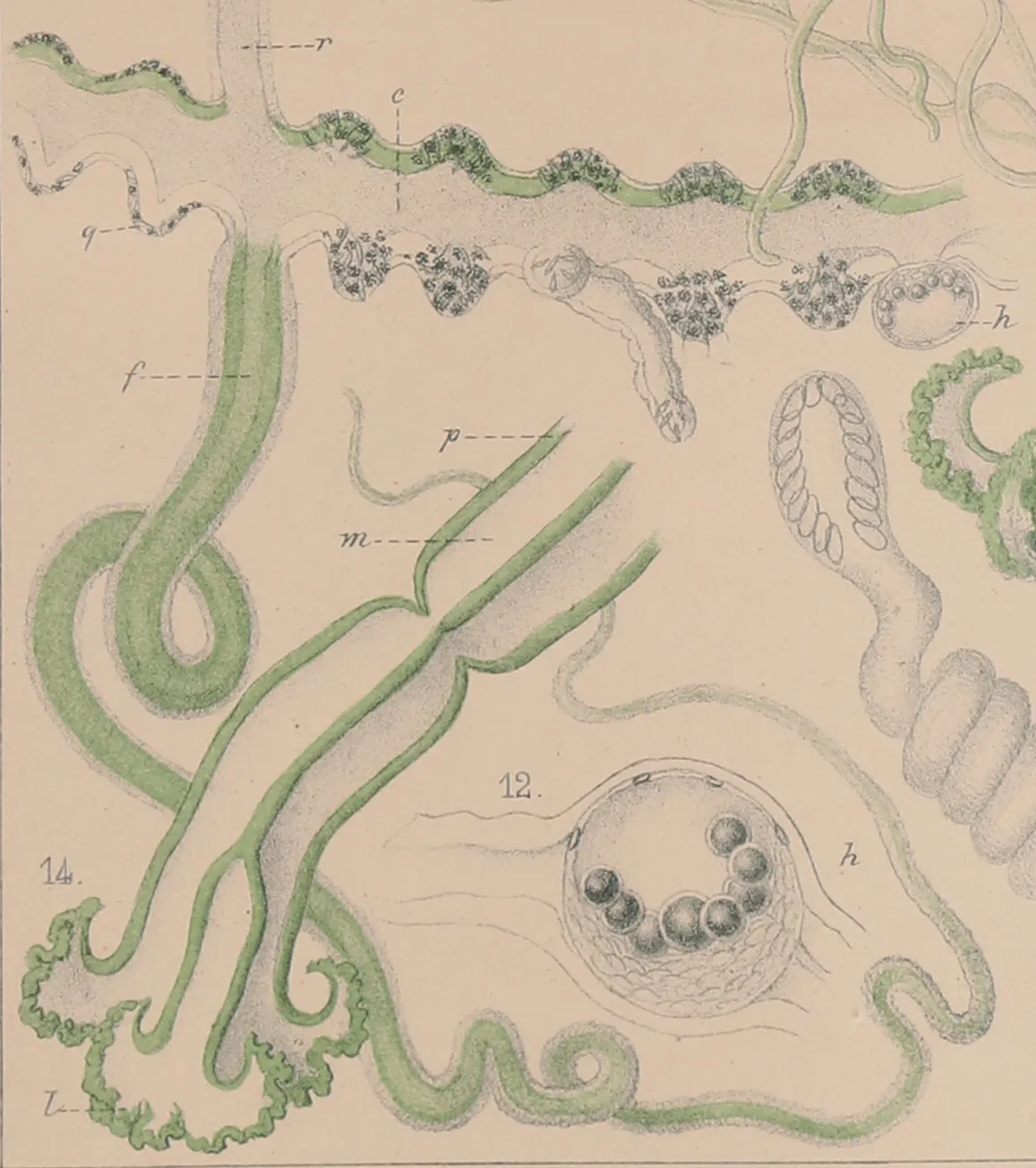
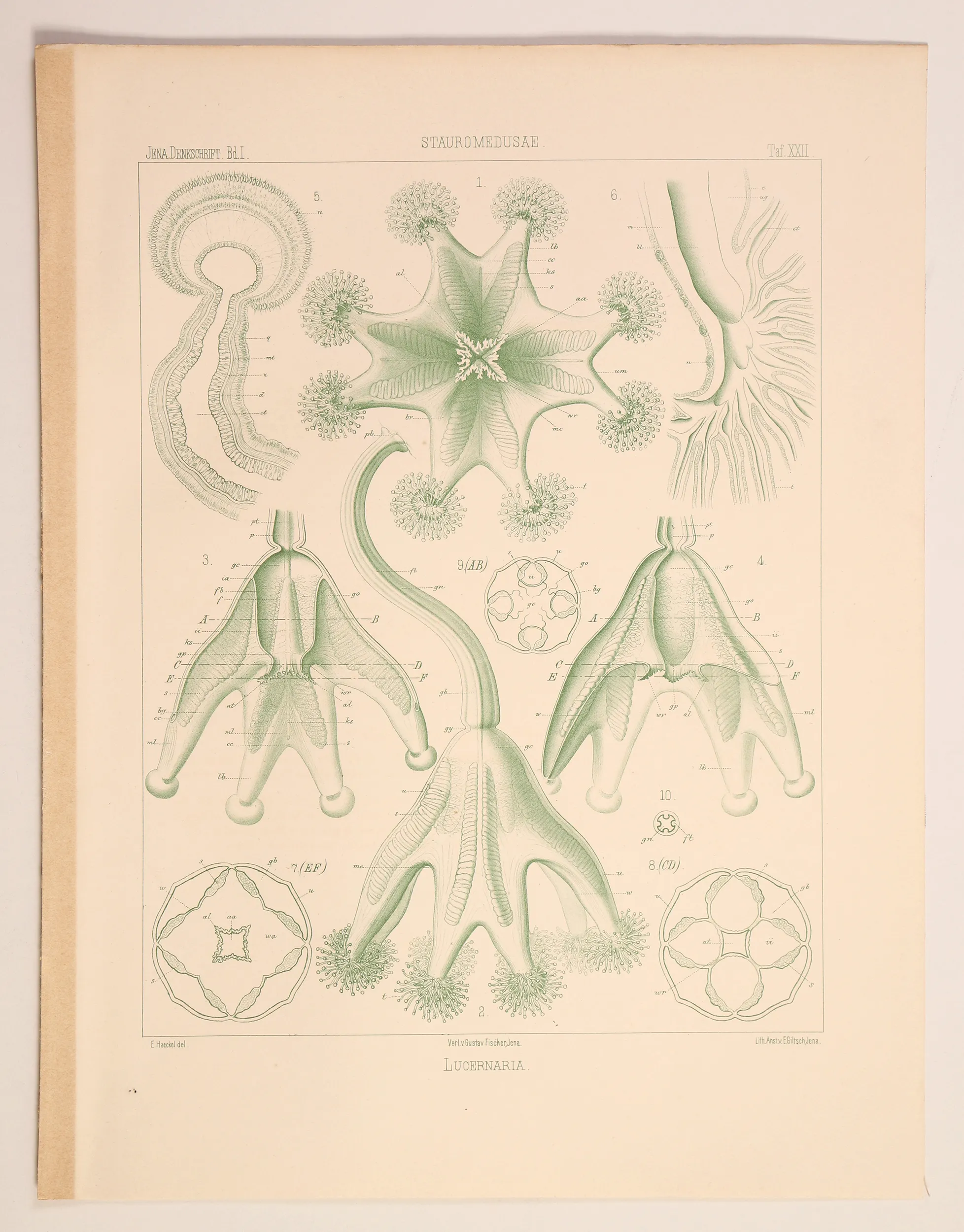
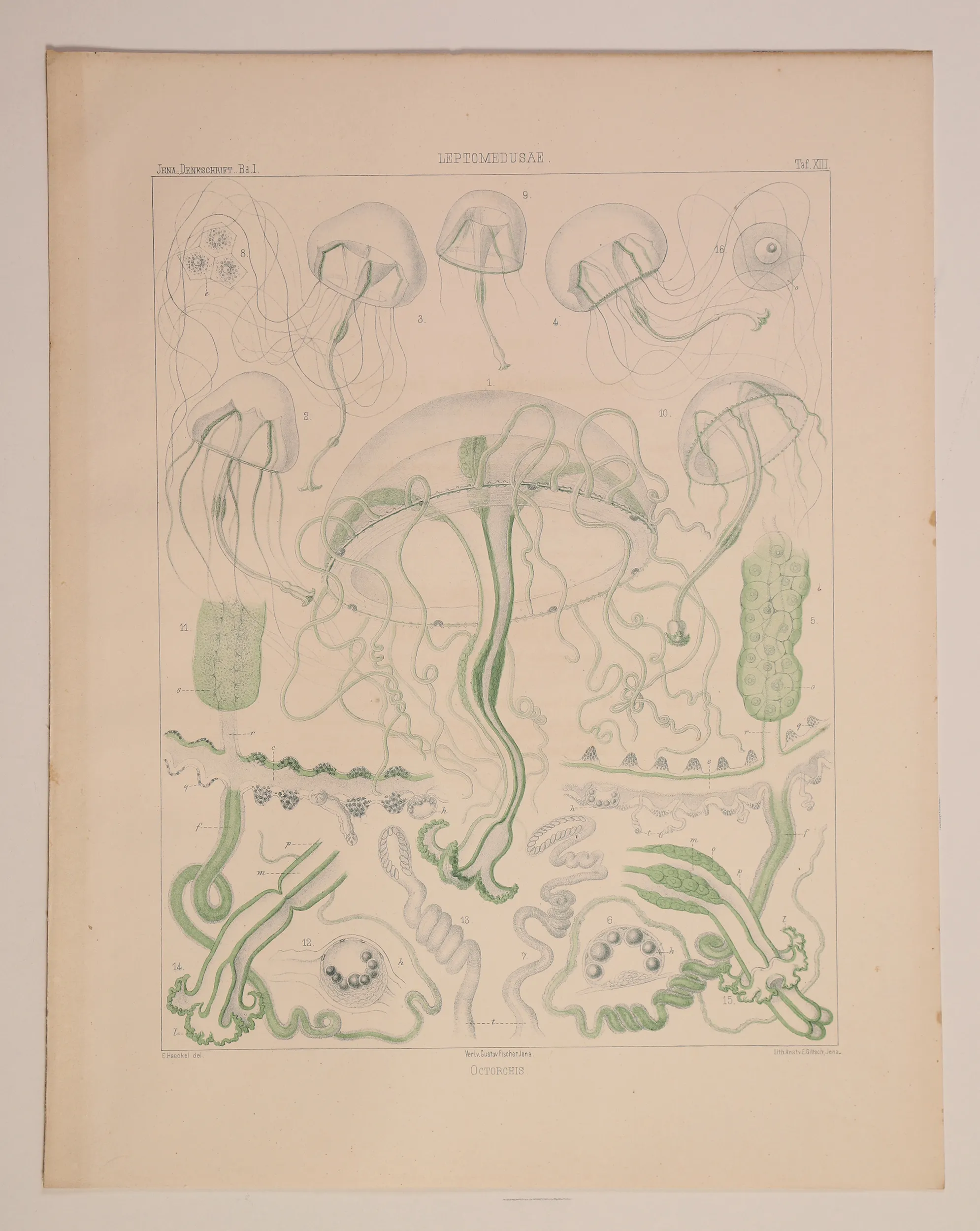
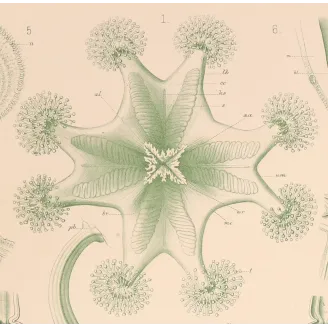
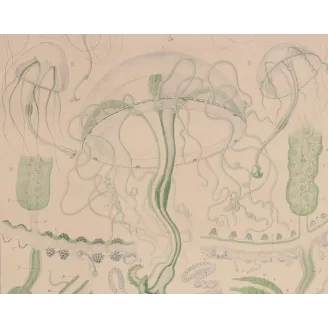
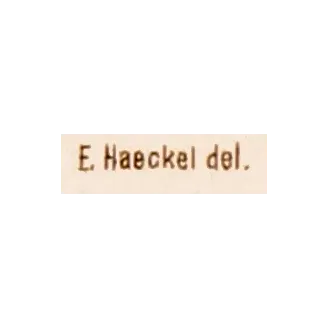
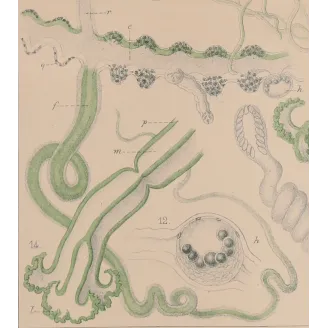
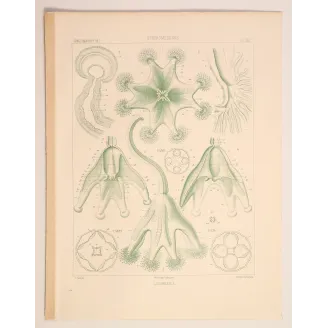
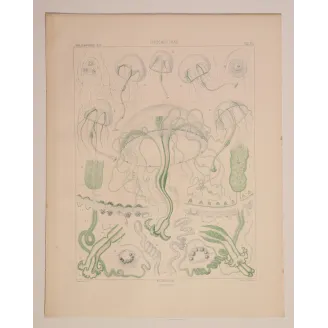
A refined curated diptych of two original 1879 lithographs by Ernst Haeckel from Das System der Medusen, printed in delicate monochromatic green and bearing the plate credit “E. Haeckel del.” Combining marine geometry with scientific precision, these authentic nineteenth-century jellyfish studies create an unusually elegant visual ensemble for collectors, interiors and natural history enthusiasts.
 Delivery policy
Your print will be carefully prepared and shipped worldwide via trusted couriers (UPS or similar).
 Authentic antique prints
Original engravings from the 17th–19th century.
This refined curated diptych brings together two original lithographs from Ernst Haeckel’s monumental scientific masterpiece Das System der Medusen (1879) — works that reveal a quieter and more architectural side of Haeckel’s marine imagination.
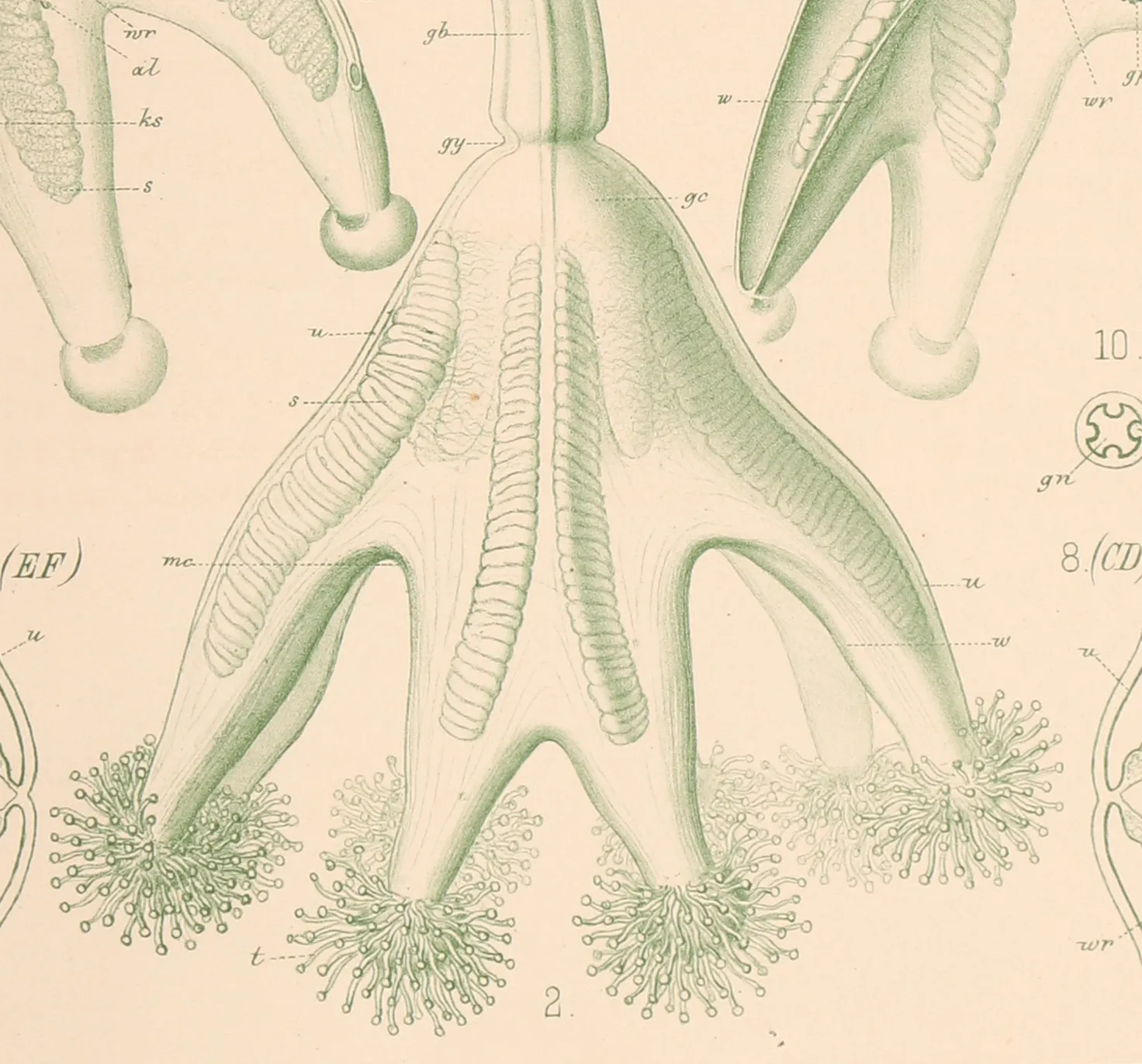
Printed in delicate shades of green and bearing the important plate credit “E. Haeckel del.”, these lithographs were created during Haeckel’s direct scientific observation of jellyfish morphology. Far from decorative reinterpretations, they are authentic nineteenth-century visual studies in which scientific precision unexpectedly approaches modern design.
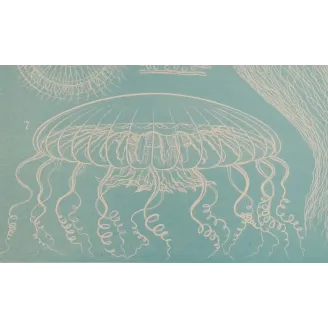
Together, these two plates create an unusually balanced visual dialogue between flowing marine forms and almost geometric biological structures. The diptych combines the ethereal transparency of floating medusae with the sculptural symmetry of marine anatomy, forming a remarkably cohesive museum-grade ensemble.
Unlike the more dramatic chromatic intensity often associated with Haeckel’s marine imagery, this pairing possesses an understated elegance. The soft monochromatic green palette creates a calm, intellectual atmosphere, making the suite particularly suitable for a collector’s study, contemporary interiors, natural history libraries, wellness spaces or refined design-led environments.
Displayed together, the plates evoke the feeling of a nineteenth-century scientific cabinet reinterpreted through a contemporary aesthetic lens.
Discover more about Ernst Haeckel, his marine studies and the visual world behind his extraordinary jellyfish plates in our editorial feature:
Ernst Haeckel and the Beauty of Jellyfish
Printed on original nineteenth-century paper and preserved in very good antique condition. Minor age-related toning, occasional spotting and gentle signs of handling may be present, consistent with authentic scientific lithographs of this period. Please examine the photographs carefully, as each sheet retains its own individual antique character.
Specific References
Original 1879 lithograph from Ernst Haeckel's Das System der Medusen, depicting Linantha and Linerges jellyfish in a refined pale-blue palette. A striking combination of scientific precision, marine symmetry and decorative elegance.
Original 1879 lithograph from Ernst Haeckel's Das System der Medusen, depicting Collaspis jellyfish with extraordinary anatomical precision. A refined scientific composition centered on radial symmetry and marine morphology.
An original 1879 lithograph by Ernst Haeckel from Das System der Medusen, depicting the extraordinary anatomy of Chirodropus, one of the most remarkable Cubomedusae. Combining scientific precision, monumental scale and elegant nineteenth-century lithographic craftsmanship, this authentic marine study reveals the hidden architecture of one of nature’s most complex jellyfish forms.
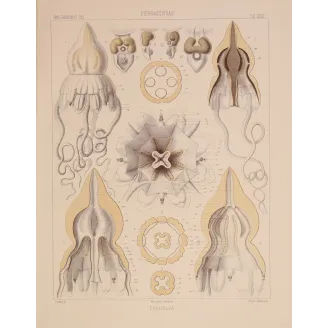
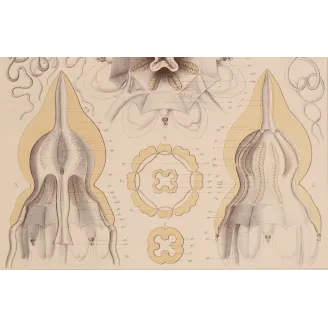
An original 1879 lithograph by Ernst Haeckel from Das System der Medusen, depicting the remarkable anatomy of Cubomedusae (box jellyfish). Combining scientific precision with striking architectural symmetry, this authentic nineteenth-century plate reveals the hidden biological structures behind one of the ocean’s most fascinating marine organisms.
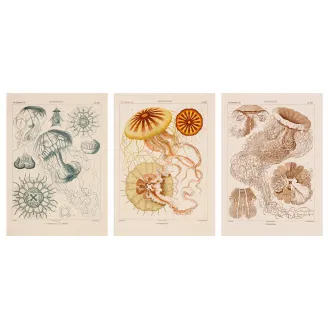
A rare curated suite of three original 1879 lithographs by Ernst Haeckel, bringing together medusae later visually echoed in his iconic Kunstformen der Natur. A museum-grade grouping combining scientific beauty, early marine illustration and exceptional decorative presence.
Original 1879 lithograph from Ernst Haeckel's Das System der Medusen, depicting Pericolpa and related Peromedusae forms. A refined marine study combining biological symmetry, architectural structure and delicate golden tones.
A refined pair of original 19th-century jellyfish lithographs by Ernst Haeckel, selected from Das System der Medusen (1879). Rendered in delicate monochrome cyan tones, these scientific plates reveal the hidden geometry of marine life with remarkable decorative elegance. A striking museum-quality ensemble for interiors inspired by science, design and natural history.
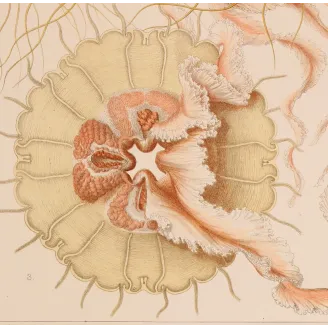
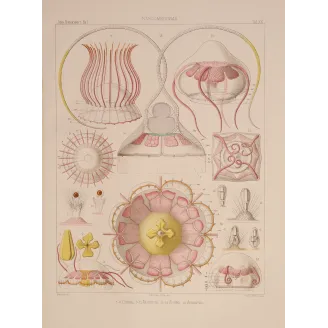
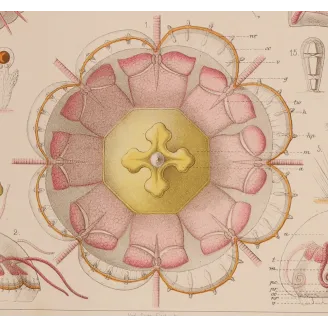
An original 1879 lithograph by Ernst Haeckel from Das System der Medusen, depicting the remarkable forms of the Narcomedusae. Combining delicate pink, coral and golden tones with extraordinary scientific precision, this authentic nineteenth-century marine study reveals why Haeckel's jellyfish imagery later became one of the defining visual inspirations of Art Nouveau.
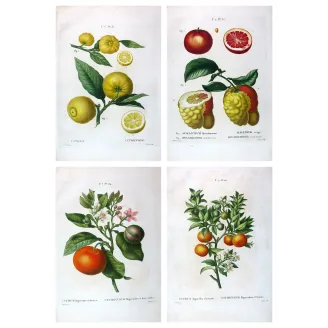
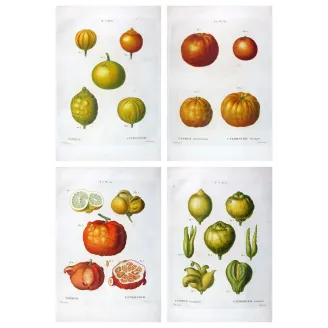
A coherent ensemble of eight original orange and bigarade engravings by Pancrace Bessa, reflecting the cultivated discipline of French orangeries in the Napoleonic era. Botanical precision and architectural composure unite in a refined citrus portfolio preserved as a complete series.
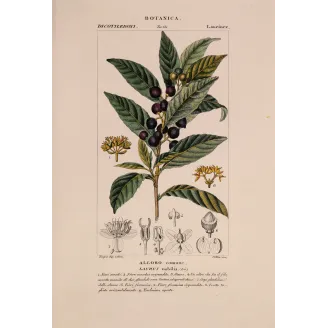
Graceful composition of bay laurel with fruits, blossoms, and internal flower structure.
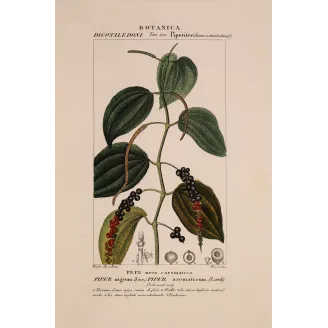
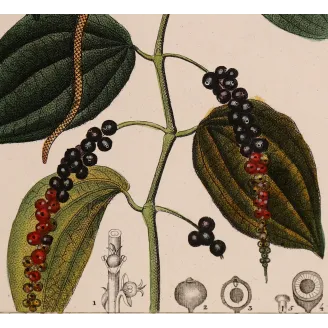
Detailed depiction of the black pepper vine with fruiting spikes and leaves.
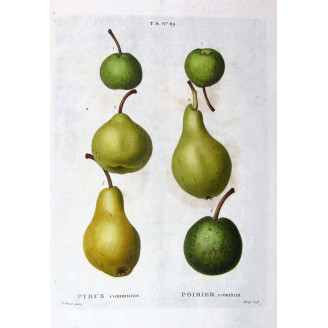
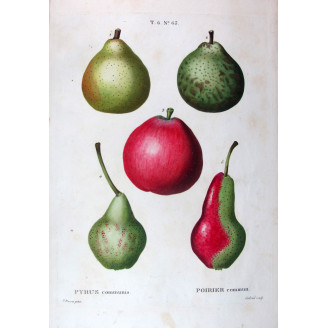
A refined study of French cultivated pear varieties, distinguished by subtle chromatic contrasts and carefully modelled forms. This hand-colored engraving reflects Pancrace Bessa’s ability to elevate orchard subjects through balance, restraint, and quiet visual authority.
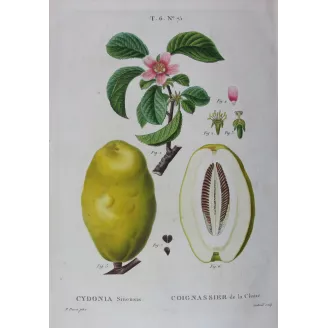
Chinese Quince Coignassier de la Chine Original hand-colored botanical engraving by Pancrace Bessa.
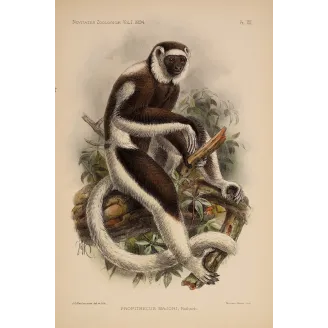
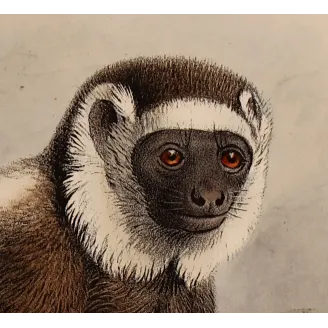
Original hand-coloured lithograph by John Gerrard Keulemans from Novitates Zoologicae, Volume I, Plate XII, published in 1894. Depicting Propithecus majori (Major's Sifaka), the composition combines precise anatomical observation with an unusually expressive portrayal of a living primate. Selective gum arabic remains visible on the pupils and across the darker fur of the forelimb, thigh and body. Printed by Mintern Bros. on substantial wove paper and preserved in very good condition.
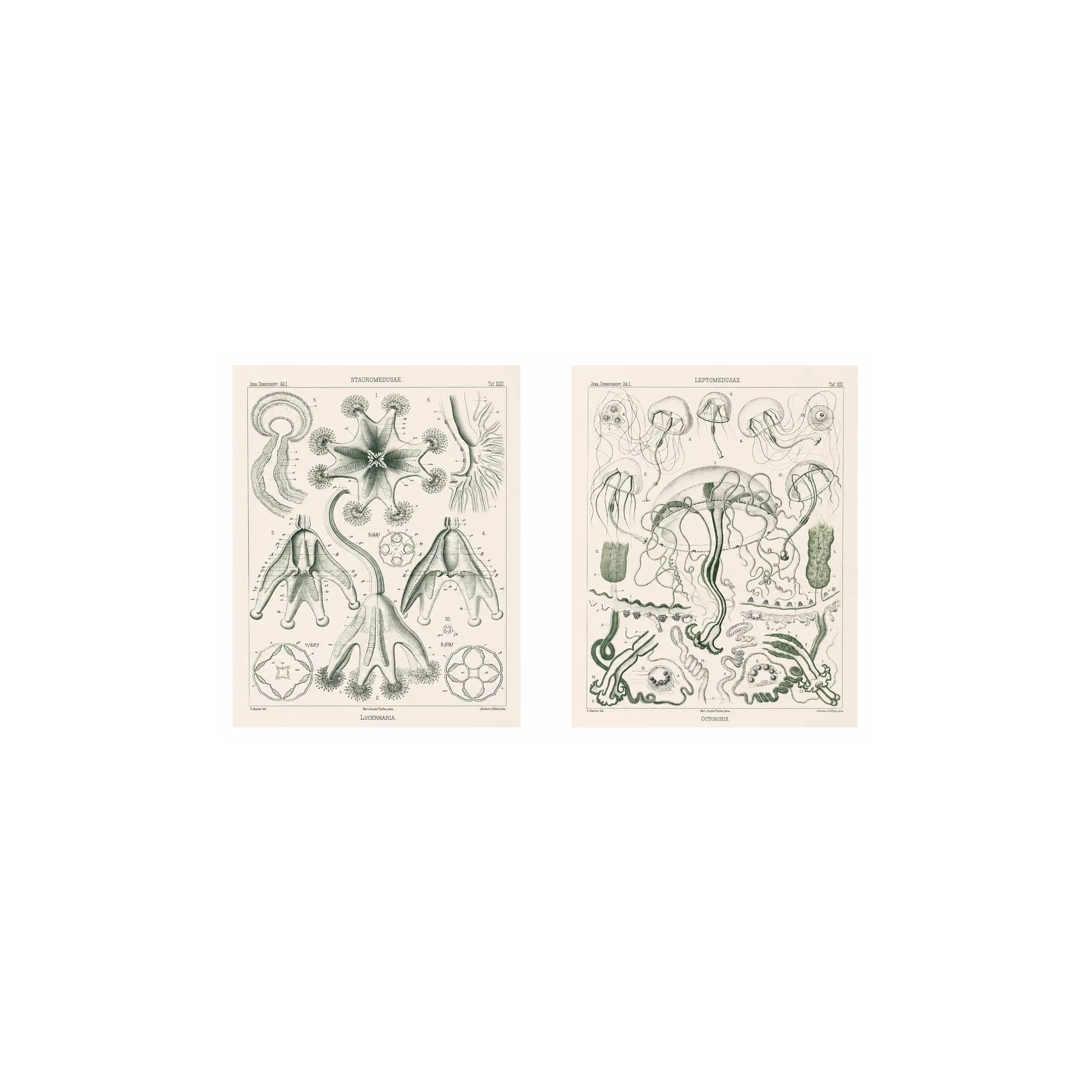
A refined curated diptych of two original 1879 lithographs by Ernst Haeckel from Das System der Medusen, printed in delicate monochromatic green and bearing the plate credit “E. Haeckel del.” Combining marine geometry with scientific precision, these authentic nineteenth-century jellyfish studies create an unusually elegant visual ensemble for collectors, interiors and natural history enthusiasts.