
A Guide to Collecting and Decorating with Antique Botanical Prints
A Guide to Collecting and Decorating with Antique Botanical Prints
Knowledge. Emotion. Beauty.
Long before photography transformed the way we observe plants, botanical artists combined direct observation, scientific curiosity and artistic vision to create images that continue to inspire collectors, plant lovers and interior enthusiasts today.
This page is part of an evolving Prantique guide dedicated to the passions, knowledge and visual experiences that lead people to original antique botanical prints. Technical subjects such as paper, plate marks, historical printing processes and hand-colouring are examined separately in our Antique Prints Guide.
Who Is This Guide For?
This guide is designed for anyone looking for authentic antique botanical prints to decorate a living room, create a gallery wall, begin a collection, or simply understand botanical illustration more deeply before making a purchase.
It answers some of the most common questions asked by first-time buyers, collectors and interior professionals alike. Where should you buy original antique botanical prints? How can you tell an original print from a reproduction? Which botanical artists, books and periods are worth considering? Why can two botanical prints of the same plant look completely different? And how do you choose works that suit both your personal taste and your home?
Rather than offering quick recommendations, this guide explores the history, visual languages, collecting appeal and decorative qualities of antique botanical prints, helping you make informed decisions based on knowledge rather than marketing.
Prantique's Curatorial Perspective
This guide reflects the perspective of an independent online gallery specialising in original antique prints.
Every work entering the Prantique collection is individually researched, documented through professional documentary photography and presented not simply as an historical document, but as an artwork that may eventually become part of someone’s everyday life.
Every original botanical print tells more than one story.
It tells the story of the plant represented, the artist who observed it, the scientific culture that shaped the image and the people who continue to find meaning in it today.
Over many years, conversations with collectors, gardeners, botanists, interior designers and first-time buyers have revealed something surprisingly consistent.
People rarely begin with antique botanical prints.
They begin with plants, gardens, flowers and the natural world.
About this Guide
This guide explores why original antique botanical prints continue to inspire collectors, plant lovers and interior enthusiasts today.
Rather than focusing on how antique prints were made, it examines the visual language, historical context and enduring appeal that allow botanical images from different centuries to remain meaningful in contemporary homes.
Technical subjects such as historic paper, plate marks, printing methods, hand-colouring and authenticity are explored separately in our Antique Prints Guide, allowing this guide to focus on the experience of collecting, understanding and living with original antique botanical prints.
People Often Love Plants Before They Discover Antique Botanical Prints
Over many years of handling original antique prints, we have had the privilege of meeting people from remarkably different backgrounds who shared a deep affection for plants.
Some were experienced collectors. Others were gardeners, botanists, landscape professionals, flower enthusiasts or people whose relationship with plants had grown quietly through everyday life.
Others arrived by a completely different route. They were looking for meaningful artwork, refining a room or searching for an authentic object capable of bringing nature, colour and character into their home.
One pattern appeared again and again.
People rarely began with a passion for antique botanical prints.
They began with a rose, an orchid, a fruit tree, a medicinal herb, a garden remembered from childhood or the simple pleasure of observing how a plant grows.
The original print came later — as a natural extension of an existing fascination, a way of preserving a personal connection with the botanical world or the beginning of a collection that gradually acquired its own direction and meaning.
Observation, Knowledge and Artistic Vision
Long before photography, knowledge of the plant world depended on direct observation, cultivated specimens, herbarium collections, travel, written descriptions and the ability of artists to transform living structures into images that others could study.
Yet the finest botanical illustrations were never merely visual records.
The great illustrators of natural history were also artists. They understood composition, proportion, colour, visual rhythm and the expressive possibilities of leaves, roots, flowers and fruit represented on paper.
Their work had to communicate botanical knowledge, but accuracy alone was not enough. Important natural-history publications were costly undertakings, often issued over time and supported by patrons, subscribers and institutions whose interest helped make them possible.
The images therefore also needed to attract attention, sustain curiosity and reveal the extraordinary variety of the plant world.
Scientific observation and artistic beauty were not opposing ambitions. In the finest works, each strengthened the other. These artists made plants understandable through precision — and unforgettable through beauty.
Botanical Illustration — Different Ways of Seeing Plants
Antique botanical prints do not speak with a single visual language.
A seventeenth-century engraving by Abraham Munting may present a plant as a complete visual world, combining roots, flowers, landscape and architecture within the same composition. A medicinal plate may privilege clarity and practical recognition. A nineteenth-century scientific illustration may isolate a specimen and analyse its structures with exceptional precision. A work associated with Redouté or Bessa may achieve its authority through elegance, balance and close natural observation.
These differences are not simply decorative choices.
They reflect different periods, purposes, audiences and ways of understanding nature. The same flower can therefore appear monumental or delicate, analytical or theatrical, isolated for study or embedded within a broader imagined landscape.
Learning to recognise these visual languages is one of the great pleasures of collecting botanical prints. It allows the viewer to move beyond subject alone and begin to understand why one image feels entirely different from another.
Abraham Munting — Botanical Observation and Seventeenth-Century Imagination
Few botanical books possess a visual identity as immediately recognisable as Abraham Munting’s Nauwkeurige Beschryving der Aardgewassen, later known as Phytographia Curiosa.
Published at the end of the seventeenth century, its engravings belong to a world in which observation, collecting, cultivation and curiosity remained closely connected. Plants are rarely treated as detached decorative motifs. They are given weight, structure and presence.
Roots may remain exposed. Bulbs and tubers become central forms. Leaves, buds, flowers and fruit can coexist within a single image. Architectural fragments, distant landscapes and ornamental settings expand the botanical subject into a wider visual narrative.
This language still echoes traditions developed within Renaissance natural history, when the study of plants was inseparable from medicine, gardens, travel, collecting and a broader culture of wonder. Munting’s plates do not imitate an earlier age; they preserve and transform elements of that inheritance within a distinctly late seventeenth-century vision.
The result is neither purely scientific nor merely ornamental. It is a visual language in which knowledge and imagination remain active at the same time.
Living with Antique Botanical Prints
Botanical prints possess an unusual ability to live naturally within very different interiors.
They can introduce colour without overwhelming a room, historical depth without making it feel formal and a connection with nature without becoming merely decorative.
A single original engraving can become a quiet point of attention in a study, bedroom, dining room or living space. A pair can establish balance. A carefully assembled group can create a botanical gallery wall organised by artist, period, subject, colour or personal association.
Yet their appeal is not determined only by where they are placed.
For the plant lover, a print may preserve an attachment to a particular flower, fruit or tree. For the collector, it can open the door to the history of botany, exploration, medicine and publishing. For someone refining a home, it offers an authentic work whose beauty is inseparable from its history.
Different people may arrive for different reasons. The same print can satisfy them all.
Looking Closely at an Original Botanical Print
A catalogue description can identify a species, publication, artist and historical context.
Looking closely at the work reveals something different.
In this seventeenth-century engraving of Cyclamen europaeum, the first element that captures the eye may not be the delicate pink flowers or the richly patterned leaves.
The composition is organised around something heavier and more fundamental.
The exposed tuber.
From this rounded form, fine roots spread downward while slender stems rise through the dense foliage toward the flowers. Tuber, roots, leaves, buds and blossoms appear together, allowing the viewer to perceive the plant as a complete organism rather than through a single botanical feature.
The eye moves naturally from the rooted mass to the marbled leaves, then upward to the flowers before returning to the small landscape and architectural fragment below. What initially appears to be a botanical plate gradually becomes a staged visual composition.
Munting is not simply isolating a specimen for identification.
He is presenting the plant through a visual language of completeness, monumentality and context.
The landscape does not provide botanical habitat in a modern scientific sense. Its role is imaginative and cultural. It places the plant within a broader world where nature, architecture, cultivation and human curiosity remain connected.
The sheet documents a species, but it also preserves a distinctive late seventeenth-century way of looking at the plant world.
That is the point at which botanical illustration becomes something more than documentation: an image capable of preserving knowledge while continuing to communicate structure, imagination and wonder more than three centuries later.
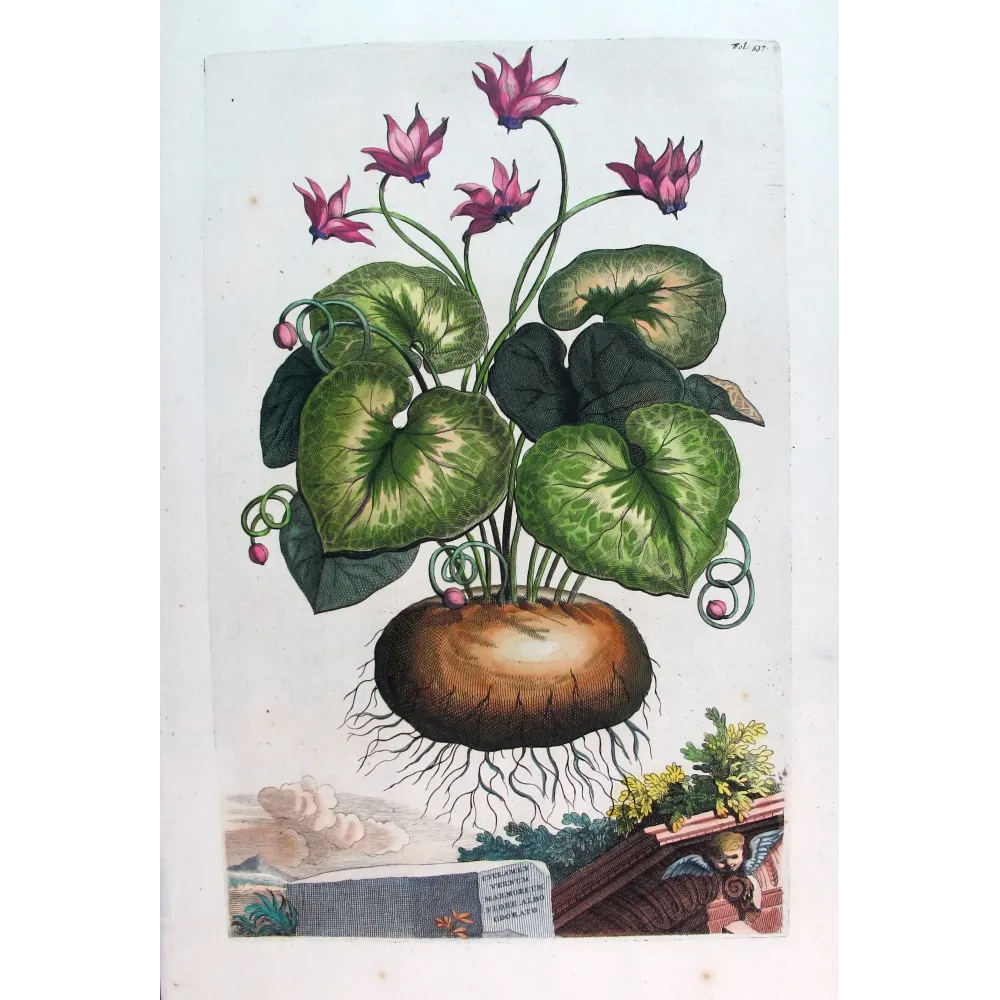
Cyclamen Plant (Cyclamen europaeum) — Abraham Munting, 1696
Original seventeenth-century hand-coloured copper engraving from Nauwkeurige Beschryving der Aardgewassen, later known as Phytographia Curiosa.
A Guide Designed to Grow
Abraham Munting represents only one of the many visual worlds found within antique botanical illustration.
Medicinal herbals communicate knowledge through clarity and practical recognition. Fruit studies connect botany with cultivation, agriculture and abundance. Redouté’s flowers embody balance, refinement and exceptional control of form. Turpin’s work brings analytical precision to the structures of plants. Bessa unites close observation with softness and decorative harmony.
Flowers, fruits, trees, medicinal plants and exotic species each invite different forms of collecting and different relationships with interiors.
Each deserves to be understood through its own visual language, historical context and contemporary appeal.
This guide will therefore grow together with the Prantique collection. New chapters will be added when original works allow us not only to discuss these different botanical worlds, but to place the reader directly in front of them.
Knowledge. Emotion. Beauty.
Antique botanical prints occupy an unusual space between natural history, art and contemporary life. They preserve the work of the first great observers of plants, the artistic vision of their illustrators and the emotions of those who continue to live with these images today.
Collecting may begin with knowledge. Decorating may begin with beauty. Very often, both begin with a plant that already means something to us.
Continue the Journey
This guide focuses on the visual, cultural and emotional worlds surrounding antique botanical prints. Readers wishing to understand their material and technical foundations — including historic paper, plate marks, printing methods, hand-colouring and authenticity — may continue through our Antique Prints Guide.
Questions about an antique botanical print? Whether you are a collector, plant lover, researcher, interior professional or simply curious, we are always happy to discuss original antique prints, artists, historical publications and the works currently presented by Prantique. You may contact us at [email protected].
''' path = Path("/mnt/data/guide-antique-botanical-prints-rev0.html") path.write_text(html, encoding="utf-8") print(path)
Related posts
-
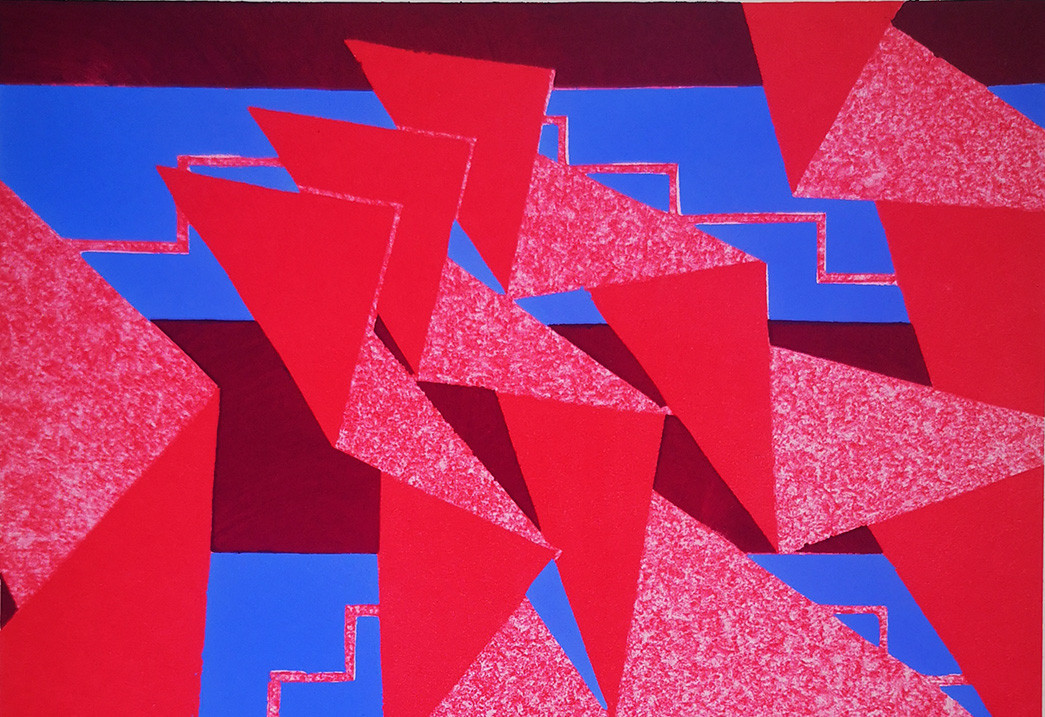 Émile-Allain Séguy and Prismes: Art Deco Geometry in Full Color
At the intersection of biology, modernism, and decorative arts, Émile-Allain Séguy occupies a singular place. Best...Read more
Émile-Allain Séguy and Prismes: Art Deco Geometry in Full Color
At the intersection of biology, modernism, and decorative arts, Émile-Allain Séguy occupies a singular place. Best...Read more -
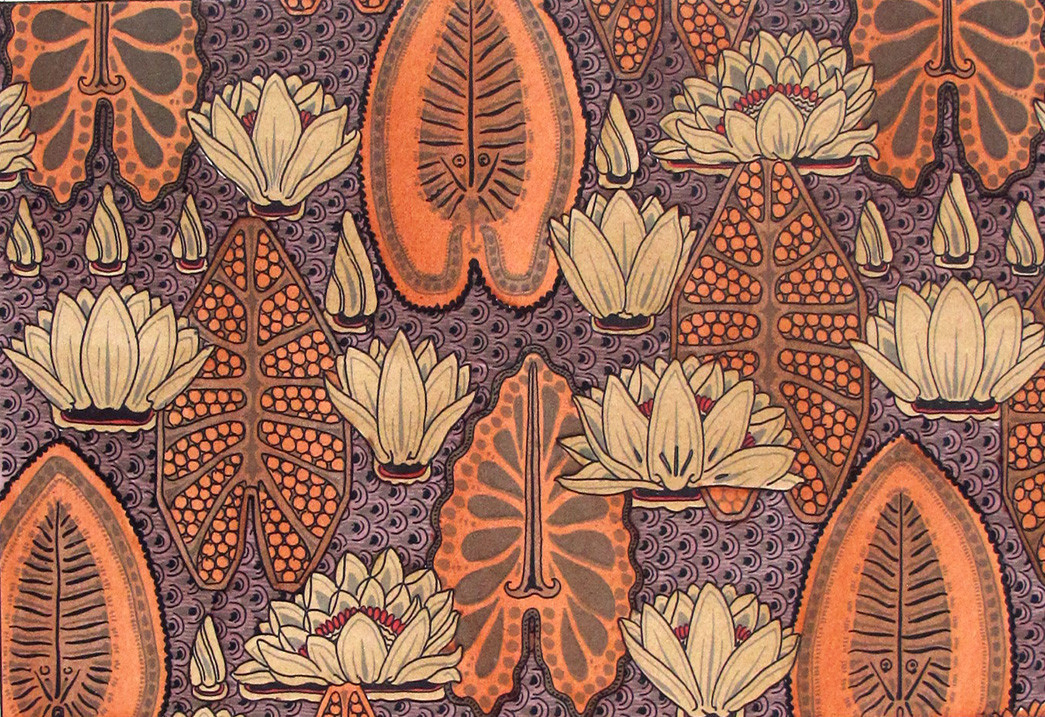 La Plante et ses Applications Ornementales: Eugène Grasset and the Birth of Modern Botanical Design
In the golden age of Art Nouveau, few works embody the marriage between art and nature as perfectly as La Plante et...Read more
La Plante et ses Applications Ornementales: Eugène Grasset and the Birth of Modern Botanical Design
In the golden age of Art Nouveau, few works embody the marriage between art and nature as perfectly as La Plante et...Read more -
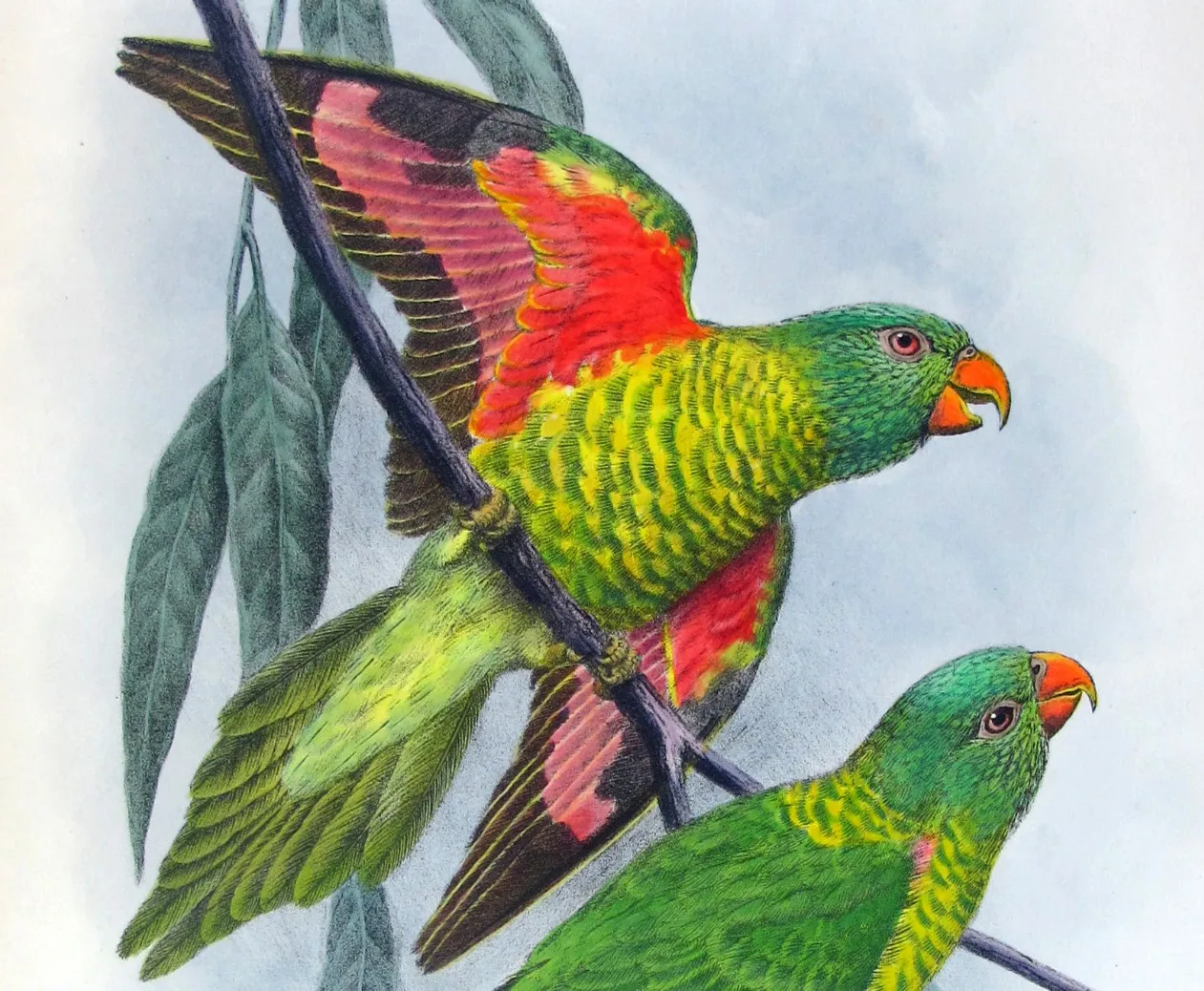 Gregory M. Mathews and The Birds of Australia: A Monument of Ornithological Ambition
Gregory M. Mathews’ The Birds of Australia is a monumental blend of taxonomy and art. This article explores the...Read more
Gregory M. Mathews and The Birds of Australia: A Monument of Ornithological Ambition
Gregory M. Mathews’ The Birds of Australia is a monumental blend of taxonomy and art. This article explores the...Read more -
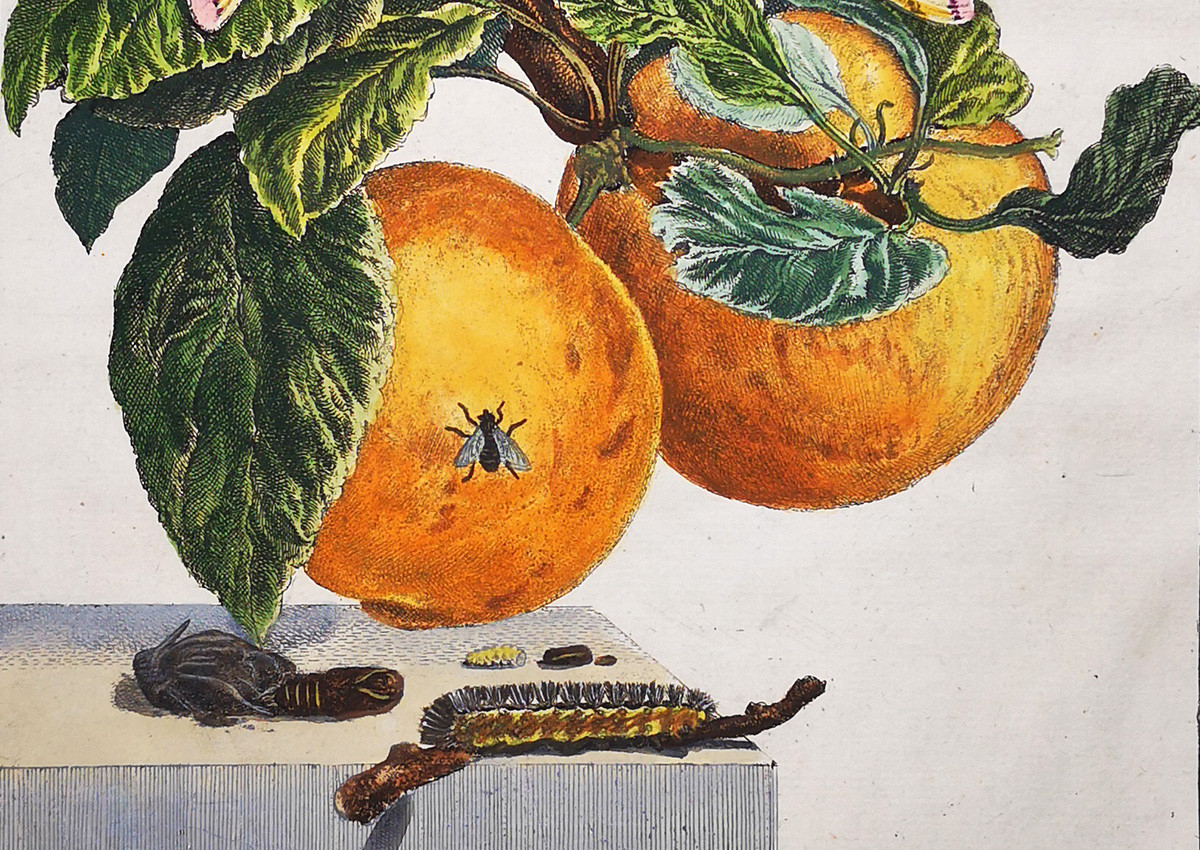 Jacob L'Admiral and the Metamorphosis of Insects – A Dutch Enlightenment Marvel (1774)
In the vibrant scientific atmosphere of the 18th century, Jacob L’Admiral (1700–1775), a Dutch naturalist and...Read more
Jacob L'Admiral and the Metamorphosis of Insects – A Dutch Enlightenment Marvel (1774)
In the vibrant scientific atmosphere of the 18th century, Jacob L’Admiral (1700–1775), a Dutch naturalist and...Read more -
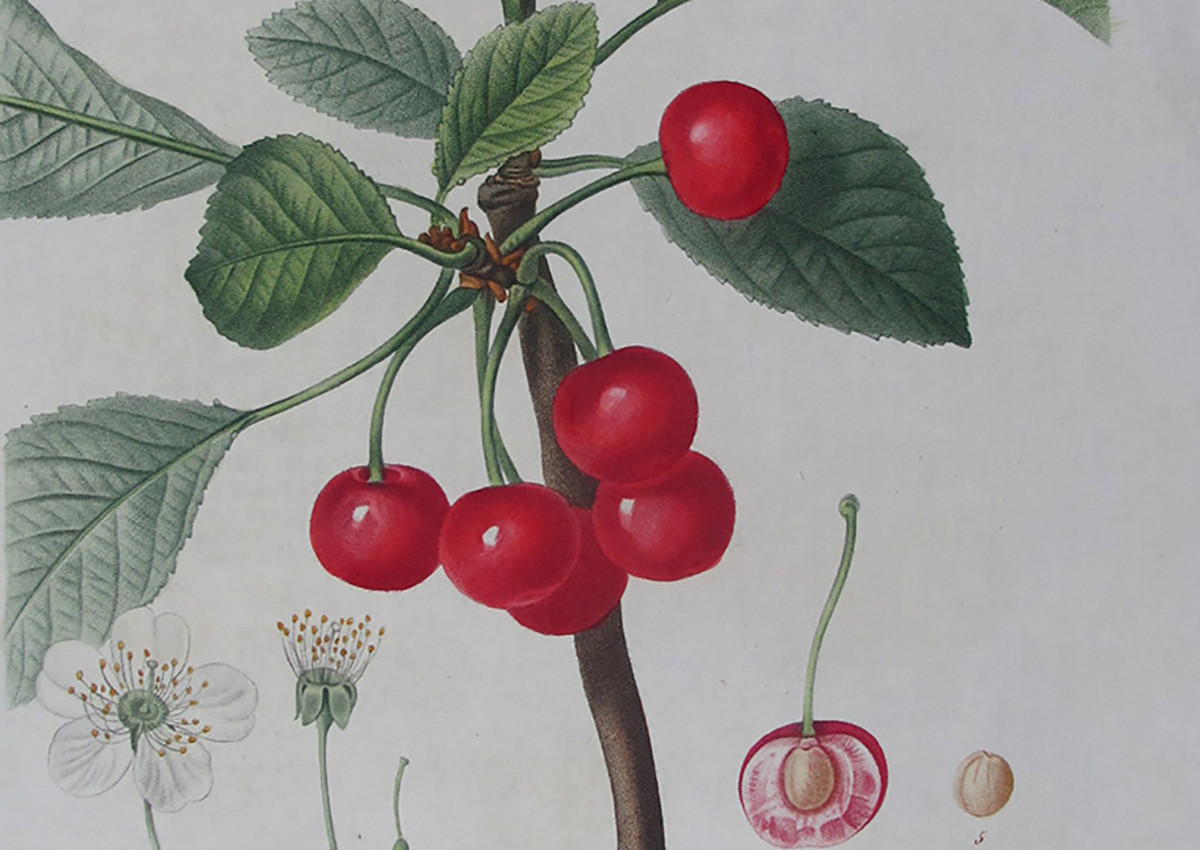 Pierre-Joseph Redouté: Botanical Illustration Beyond Roses
Pierre-Joseph Redouté (1759–1840) is universally regarded as the most influential botanical illustrator of the late...Read more
Pierre-Joseph Redouté: Botanical Illustration Beyond Roses
Pierre-Joseph Redouté (1759–1840) is universally regarded as the most influential botanical illustrator of the late...Read more
Leave a comment