
Joseph Jacob von Plenck and the Botanical Enlightenment
Joseph Jacob von Plenck and the Botanical Enlightenment
By the late eighteenth century, Europe was witnessing a profound transformation in the way nature was observed, classified and understood. Plants were no longer valued solely for their practical or symbolic meanings. They had become subjects of scientific investigation, demanding careful observation, accurate description and faithful visual representation.
Nowhere was this transformation more visible than in Vienna. Within the Imperial Gardens of Schönbrunn, the Botanical Garden of the University of Vienna and the medical institutions of the Habsburg Empire, botanists, physicians, artists, engravers, printers and hand-colourists contributed to a new visual language for science.
It was within this remarkable intellectual environment that Joseph Jacob von Plenck conceived Icones Plantarum Medicinalium, one of the most ambitious botanical publishing enterprises of the European Enlightenment: a work in which medicine, scientific observation and artistic refinement were brought together with exceptional clarity.
When Plants Became Knowledge
For centuries, illustrated herbals had attempted to describe medicinal plants. Many were remarkable achievements for their time, yet they often combined direct observation with inherited tradition, symbolism and images copied from earlier publications.
During the eighteenth century, these expectations gradually changed. Botanical illustration was no longer required merely to accompany a written description. It increasingly became evidence in its own right. Every leaf, flower, root, seed and fruit could contribute to the correct identification of a species.
Under the influence of Carl Linnaeus, botanical classification became systematic. Illustration developed alongside it as one of the principal tools through which scientific knowledge could be recorded, compared and communicated. Nature itself, rather than inherited authority, was becoming the primary source of knowledge.
Vienna and the Botanical Enlightenment
During the reigns of Maria Theresa and Joseph II, Vienna emerged as one of Europe’s leading centres of medicine, botany and natural history. Scientific education was reorganised, medical institutions were expanded and the study of plants became an essential part of professional medical training.
The Imperial Gardens at Schönbrunn became living laboratories in which rare and newly introduced species could be cultivated, observed and classified. The Botanical Garden of the University of Vienna and the gardens associated with the Medico-Surgical Academy provided additional collections for scientific study and teaching.
This culture depended upon collaboration. Physicians investigated the medicinal properties of plants. Botanists determined their classification. Artists observed their structures. Engravers translated drawings into printable copperplates, while specialist colourists completed each impression by hand.
Scientific publishing had become a collective enterprise, uniting observation, craftsmanship and institutional knowledge. The great botanical works produced in Vienna during this period were not isolated artistic achievements, but expressions of an interconnected scientific and visual culture.
A Physician of the Enlightenment
Joseph Jacob von Plenck was a physician, surgeon, professor of chemistry and botany, medical educator and Imperial counsellor. His interests extended across numerous branches of medicine, but botanical knowledge occupied a particularly practical position within his work.
For Plenck, the correct identification of a medicinal plant was not merely an academic exercise. A botanical error could have immediate and serious consequences for physicians, pharmacists and patients.
In the preface to Icones Plantarum Medicinalium, he specifically addresses physicians, surgeons, apothecaries and herb gatherers who might not possess sufficient knowledge of systematic botany to distinguish one species safely from another.
Nothing promotes the knowledge of plants more effectively than accurate illustrations made from life, representing plants in their natural size, colour and proportion.
Plenck reinforces this argument with examples of poisonous plants being mistaken for edible or medicinal species. The publication was therefore conceived not simply as a beautiful botanical work, but as a practical instrument intended to reduce dangerous errors of identification.
Drawing Knowledge from Life
One passage in Plenck’s preface is especially revealing. He states that most of the medicinal plants were represented ad vivum: drawn from living specimens.
These specimens were cultivated in the Imperial Gardens of Schönbrunn, the Botanical Garden of the University of Vienna and the garden of the Medico-Surgical Academy. Where living material was unavailable, Plenck also relied upon the finest botanical images already published.
This declaration expresses the intellectual spirit of the Enlightenment. Nature itself, rather than inherited imagery, had become the principal authority.
Observation replaced repetition. The living specimen replaced the copied image. Botanical illustration became a disciplined method for translating nature into knowledge.
Icones Plantarum Medicinalium
Published in Vienna from 1788, Icones Plantarum Medicinalium secundum Systema Linnaei digestarum was conceived as an extensive illustrated survey of medicinal plants arranged according to the Linnaean system.
Plenck described the intended structure of the publication with remarkable precision. Each fascicle was to contain twenty-five plants together with their accompanying text. Four fascicles, representing one hundred plants, formed a Centuria. Each new hundred was introduced by its own title page and index.
The accompanying descriptions were arranged in two parallel columns, Latin on the left and German on the right. For every plant, Plenck intended to provide its name, Linnaean class and order, generic and specific characters, geographical origin, pharmaceutical part, properties, medical uses and customary dosage.
Image and text therefore formed a single educational instrument. The plates were not originally conceived as isolated works of decoration, but as part of an expanding scientific reference designed for physicians, surgeons, apothecaries and students throughout the Habsburg world.
Science Meets Beauty
Although conceived as a medical and scientific reference, Icones Plantarum Medicinalium was never intended to sacrifice beauty in favour of accuracy.
In his preface, Plenck explicitly measured his undertaking against earlier illustrated botanical publications by Johannes Zorn, Elizabeth Blackwell and Nicolas-François Regnault. Although these works had contributed significantly to the visual study of medicinal plants, he judged their illustrations too small, their botanical coverage incomplete and, in certain instances, their drawing, colouring or accompanying descriptions insufficiently accurate.
He therefore announced that Icones Plantarum Medicinalium would distinguish itself not only through the completeness and precision of its botanical determinations, but also through the beauty of its paper, drawings and hand colouring. This declaration is particularly revealing, as it demonstrates that Plenck regarded aesthetic refinement not as an ornament to scientific illustration, but as an essential component of its educational value.
This ambition remains immediately visible in the surviving prints. The compositions are restrained yet carefully balanced. Plants rise against generous fields of unprinted paper. Roots, flowers, leaves and separate anatomical details are arranged with exceptional clarity, while the natural scale of the specimens gives the images a physical presence unusual in many earlier medicinal herbals.
Nothing appears to have been added merely for beauty, yet everything appears beautiful.
The result is a distinctive Enlightenment aesthetic in which elegance emerges from observation, proportion and truthfulness to nature. As the historian of botanical art Wilfrid Blunt later observed, Plenck’s work is both delightful and highly decorative in treatment.
The Viennese Culture of Botanical Illustration
One of the most fascinating aspects of Plenck’s publication is also one of its unresolved questions: the individual botanical plates are unsigned.
The artists responsible for the original drawings have not yet been securely identified. Nevertheless, the scientific and artistic environment in which the work was produced is clear.
During the final decades of the eighteenth century, Vienna possessed a relatively small and highly specialised circle of botanical artists, engravers and colourists. Many worked within or around the Imperial Gardens at Schönbrunn and the circle of the distinguished botanist Nikolaus Joseph von Jacquin.
This community included artists associated with some of the finest botanical publications produced in Vienna, among them Franz von Scheidel, Joseph Hofbauer, Johann Scharf, Martin Sedelmayer and Johann Knapp.
Although the plates of Icones Plantarum Medicinalium are unsigned, they are characteristic of the highly specialised visual culture that flourished in late eighteenth-century Vienna. Plenck’s own preface confirms that many of the plants were drawn from living specimens cultivated at Schönbrunn and Vienna’s principal scientific institutions.
No documentary evidence presently allows the plates to be attributed to any one member of Jacquin’s circle. Yet the work clearly emerged from the same environment of botanists, draughtsmen, engravers and colourists that gave rise to the great botanical publications of Enlightenment Vienna.
A Signature on the Frontispiece
Although the individual botanical plates remain unsigned, the engraved title page of the first Centuria preserves an important name.
Io. Ig. Albrech sc. Vienn.
The abbreviation sc., from the Latin sculpsit, identifies Johann Ignaz Albrecht as the Viennese engraver responsible for the frontispiece. The inscription does not establish that Albrecht also engraved the botanical plates, but it offers a rare surviving glimpse of the collaborative craftsmanship behind the publication.
Like many great scientific publishing enterprises of the Enlightenment, Plenck’s work was created through a network of contributors. The scientific conception belonged to the physician and botanist, while botanical artists, engravers, printers and hand-colourists transformed observation into a finished illustrated work.
Reading an Original Plenck Engraving
One of the pleasures of examining an original engraving from Icones Plantarum Medicinalium lies in discovering the relationship between scientific purpose and material craftsmanship.
The engraved structure records the translation of the original botanical drawing onto the copperplate. Hand-applied colour introduces subtle variations between individual impressions, while the physical sheet preserves the dimensions, texture and surface qualities selected for this ambitious publication.
The generous areas of untouched paper are not empty. They give the plant visual independence, allowing its proportions, movement and botanical structure to be read without distraction. Roots remain visible, flowers are clearly separated and diagnostic details are given the space required for close observation.
Looking closely transforms the experience of the image. What first appears to be an elegant botanical composition gradually reveals itself as a carefully constructed scientific object, created through observation, engraving, printing and individual hand colouring more than two centuries ago.
Why Plenck Still Speaks to Modern Collectors
Today, the engravings from Icones Plantarum Medicinalium are appreciated far beyond their original medical purpose.
Collectors admire their exceptional balance between scientific precision and artistic refinement. Historians recognise them as documents of the Enlightenment’s confidence in observation, classification and education. Their restrained compositions and generous use of white space also give them a quiet visual clarity that feels remarkably contemporary.
Individual plants possess a calm sculptural presence and can be displayed independently, while groups of related species form sophisticated botanical arrangements. Their decorative versatility does not diminish their historical importance: each plate remains an original artefact from one of the defining periods in the development of modern botanical science.
Far from being modern reproductions, these original hand-coloured engravings preserve the scientific ambition, artistic culture and material craftsmanship of Enlightenment Vienna.
Prantique’s Curatorial Perspective
At Prantique, we consider Icones Plantarum Medicinalium far more than a collection of decorative botanical prints.
The work represents the meeting point of medicine, botany, craftsmanship and Enlightenment thought. Each hand-coloured engraving embodies a complex process involving scientific observation, botanical drawing, copperplate engraving, printing and individual colouring.
The identity of every collaborator may not have survived, but the visual culture from which the plates emerged remains unmistakable: the refined and highly specialised world of botanical illustration that flourished in late eighteenth-century Vienna.
To collect an original print from Plenck’s publication is therefore not simply to acquire an image of a plant. It is to preserve a fragment of the extraordinary scientific and artistic culture that developed around Schönbrunn at the close of the eighteenth century.
Explore Original Joseph Jacob von Plenck Botanical Prints
Discover our curated selection of original hand-coloured engravings from Joseph Jacob von Plenck’s Icones Plantarum Medicinalium, created in Enlightenment Vienna from living botanical specimens cultivated at Schönbrunn and the principal scientific institutions of the Imperial capital.
Related posts
-
 Émile-Allain Séguy and Prismes: Art Deco Geometry in Full Color
At the intersection of biology, modernism, and decorative arts, Émile-Allain Séguy occupies a singular place. Best...Read more
Émile-Allain Séguy and Prismes: Art Deco Geometry in Full Color
At the intersection of biology, modernism, and decorative arts, Émile-Allain Séguy occupies a singular place. Best...Read more -
 La Plante et ses Applications Ornementales: Eugène Grasset and the Birth of Modern Botanical Design
In the golden age of Art Nouveau, few works embody the marriage between art and nature as perfectly as La Plante et...Read more
La Plante et ses Applications Ornementales: Eugène Grasset and the Birth of Modern Botanical Design
In the golden age of Art Nouveau, few works embody the marriage between art and nature as perfectly as La Plante et...Read more -
 Gregory M. Mathews and The Birds of Australia: A Monument of Ornithological Ambition
Gregory M. Mathews’ The Birds of Australia is a monumental blend of taxonomy and art. This article explores the...Read more
Gregory M. Mathews and The Birds of Australia: A Monument of Ornithological Ambition
Gregory M. Mathews’ The Birds of Australia is a monumental blend of taxonomy and art. This article explores the...Read more -
 Jacob L'Admiral and the Metamorphosis of Insects – A Dutch Enlightenment Marvel (1774)
In the vibrant scientific atmosphere of the 18th century, Jacob L’Admiral (1700–1775), a Dutch naturalist and...Read more
Jacob L'Admiral and the Metamorphosis of Insects – A Dutch Enlightenment Marvel (1774)
In the vibrant scientific atmosphere of the 18th century, Jacob L’Admiral (1700–1775), a Dutch naturalist and...Read more -
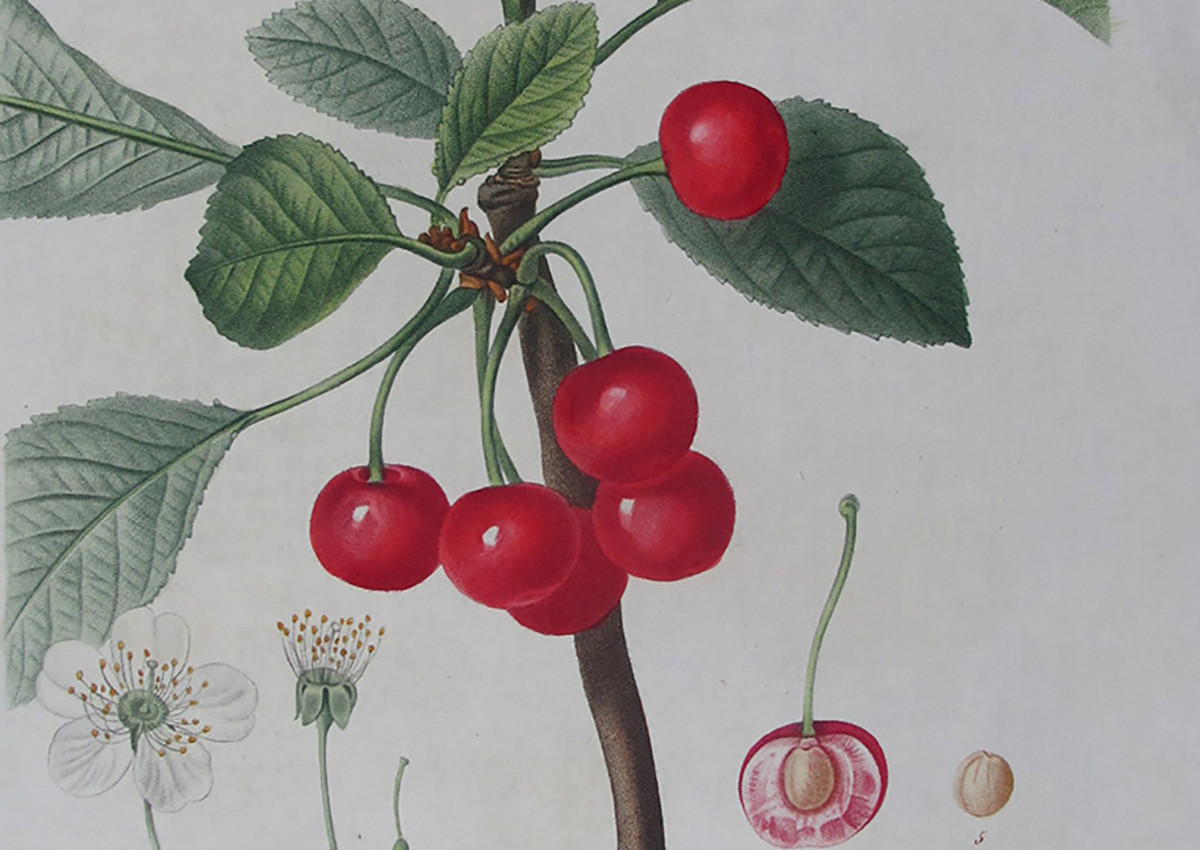 Pierre-Joseph Redouté: Botanical Illustration Beyond Roses
Pierre-Joseph Redouté (1759–1840) is universally regarded as the most influential botanical illustrator of the late...Read more
Pierre-Joseph Redouté: Botanical Illustration Beyond Roses
Pierre-Joseph Redouté (1759–1840) is universally regarded as the most influential botanical illustrator of the late...Read more
Leave a comment