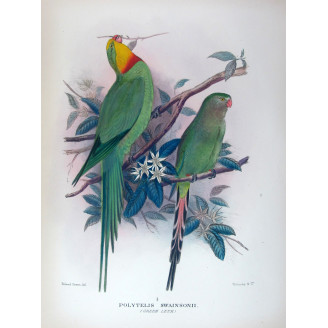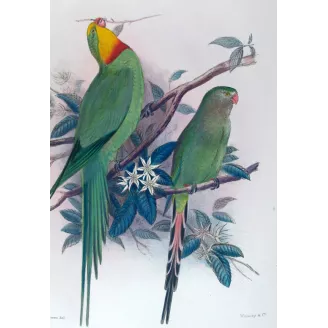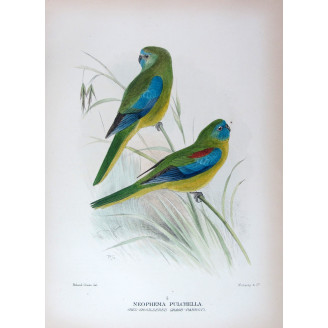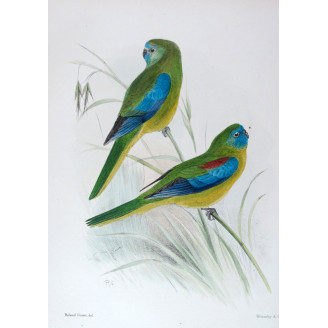
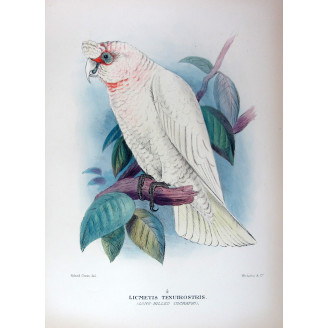
Antique lithograph of the Green Leek Parrot by Roland Green.
 Delivery policy
Your print will be carefully prepared and shipped worldwide via trusted couriers (UPS or similar).
 Authentic antique prints
Original engravings from the 17th–19th century.
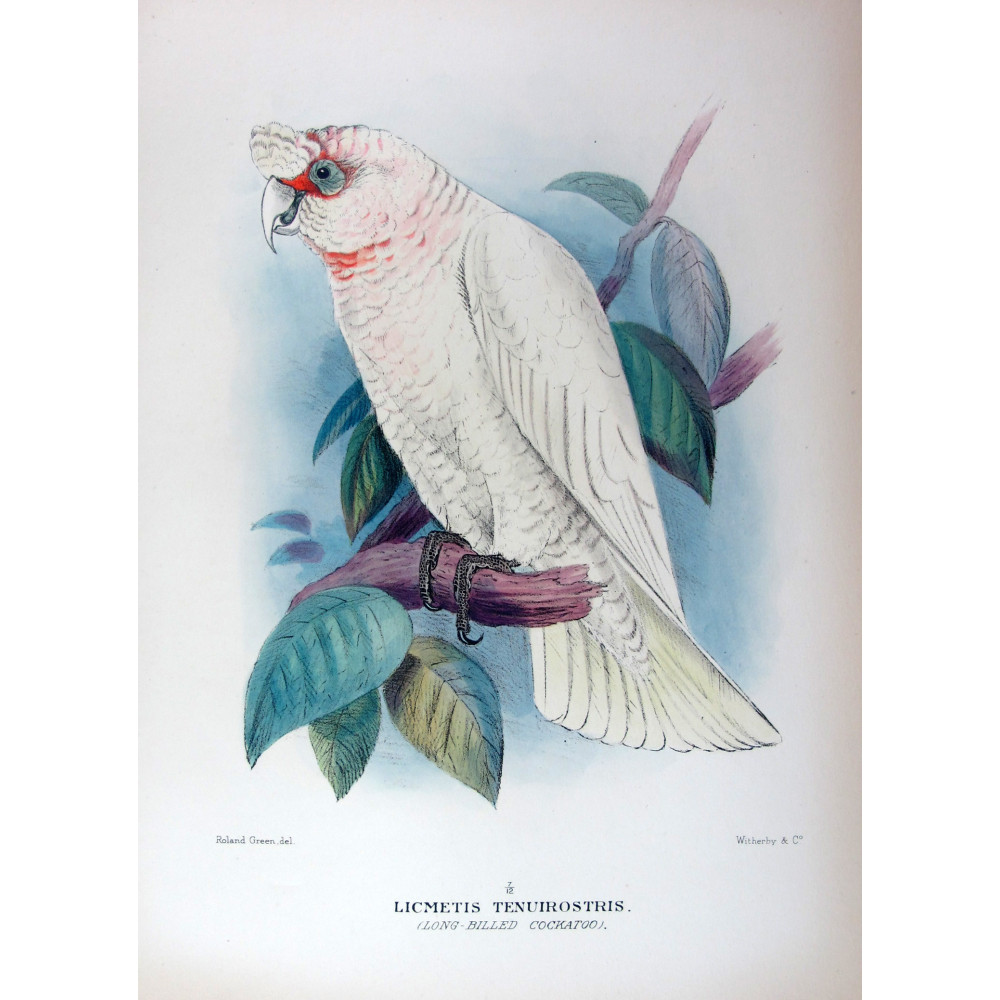
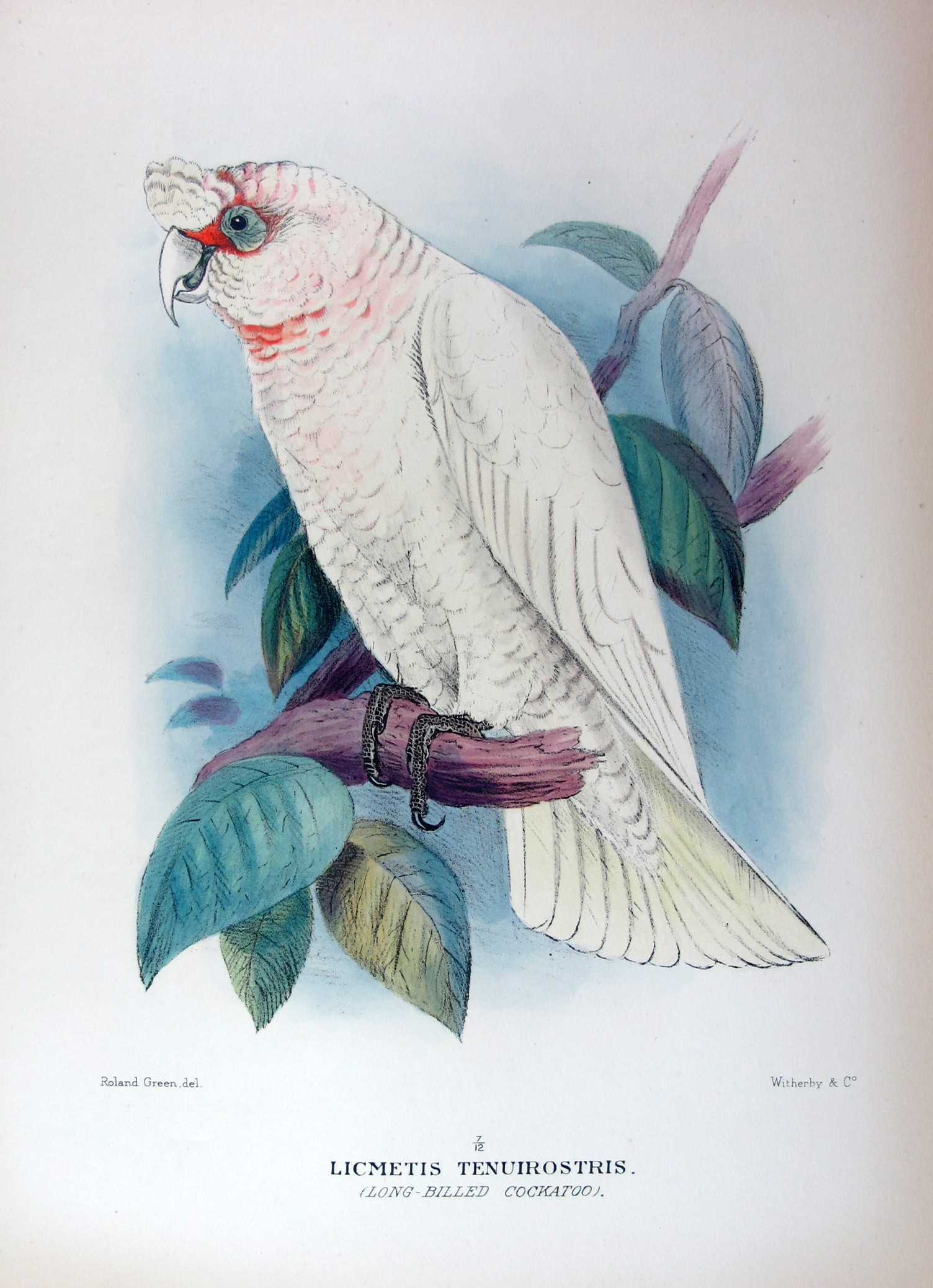
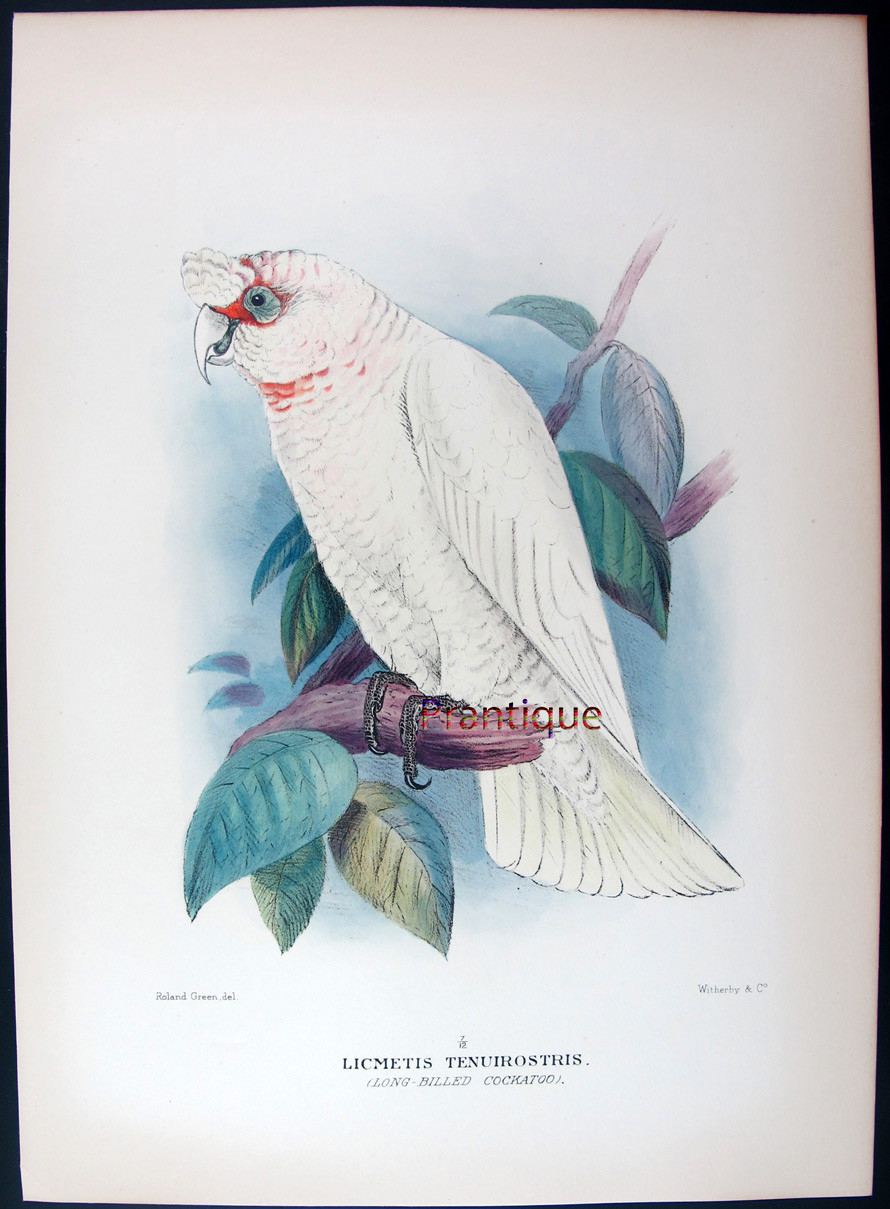
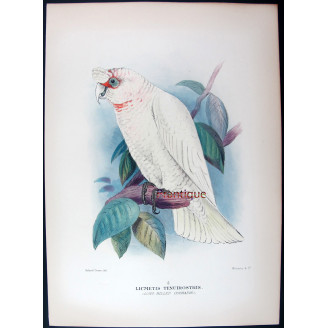
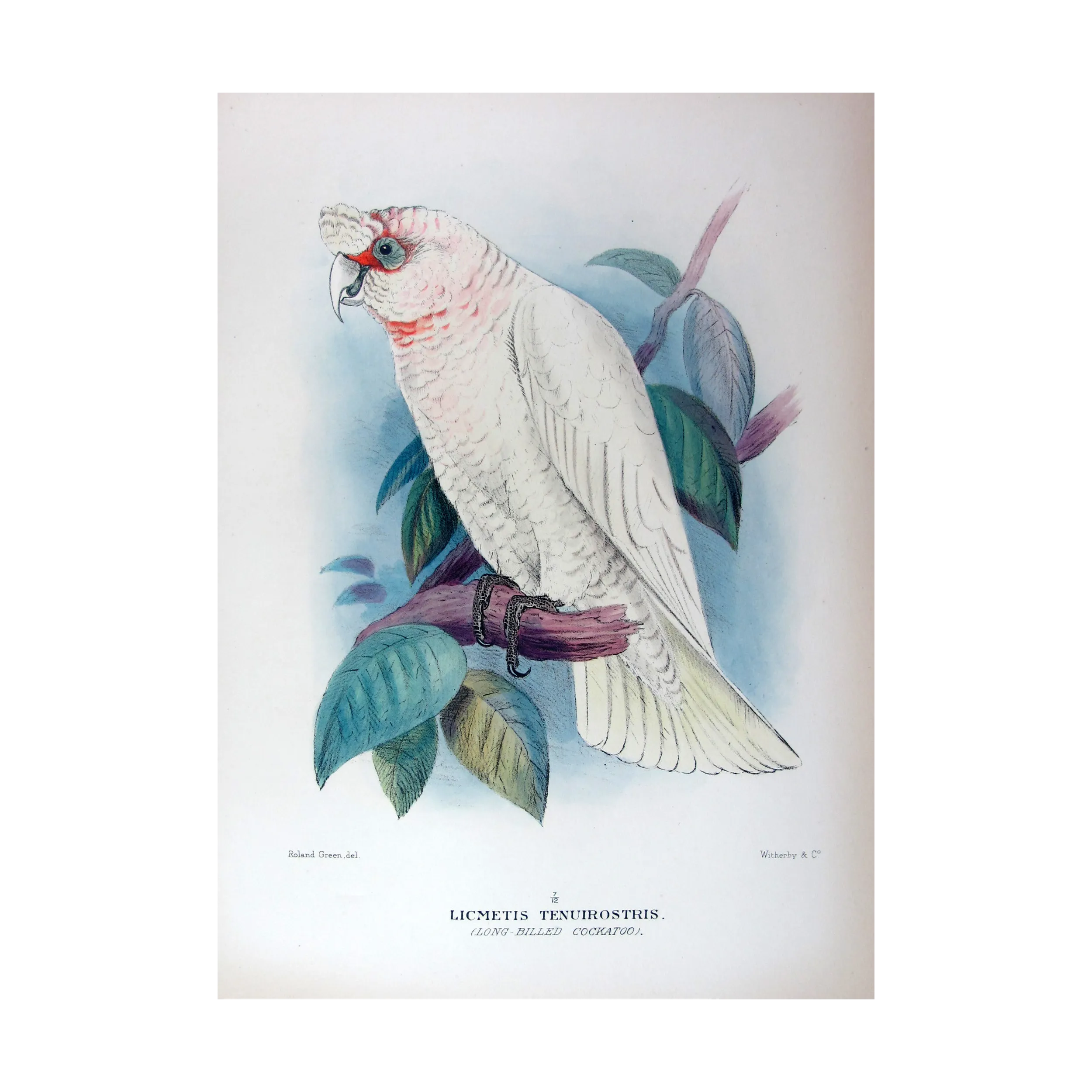
This original early twentieth-century hand-colored lithograph depicts Licmetis tenuirostris, the Long-billed Cockatoo, from Gregory M. Mathews’ monumental publication The Birds of Australia. The plate was illustrated by Roland Green and printed by Witherby & Co.
Unlike more flamboyant parrots of the Australian continent, this species captivates through subtle chromatic refinement—an interplay of ivory plumage, coral facial markings, and cool botanical surroundings that results in an image of poised, decorative balance.
— • —
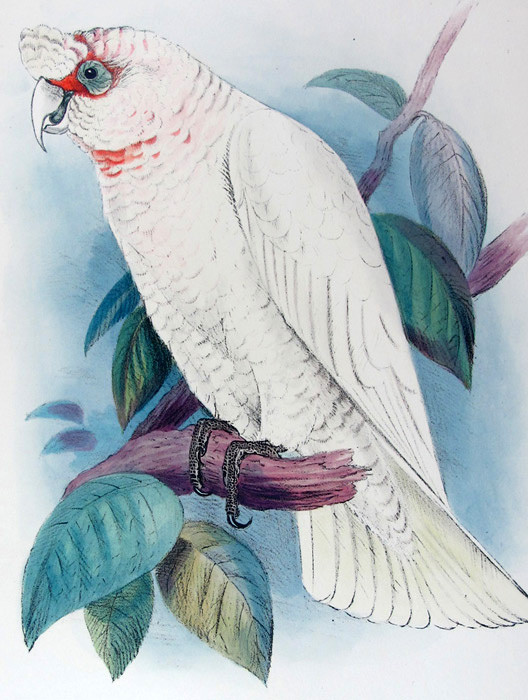
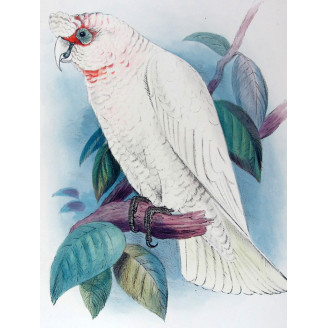
Roland Green renders the cockatoo in a graceful diagonal composition, the extended wing introducing dynamic movement without disrupting compositional calm. The white plumage is carefully modelled in fine grey tonalities, avoiding flatness while preserving luminosity.
The softly blushed underparts and vivid coral-red facial skin provide a sophisticated chromatic counterpoint. Beneath the bird, the violet-toned branch and blue-green eucalyptus foliage introduce cool tonal depth, enhancing the warmth of the plumage without overwhelming it.
The result is a plate of refined decorative presence—bright yet controlled, expressive yet elegant—making it particularly suited to both modern and classic interiors.
The Long-billed Cockatoo is native to southeastern Australia and is distinguished by its elongated bill and pink-tinged underparts. Its distinctive facial colouring and sculptural profile made it an especially compelling subject for early twentieth-century ornithological illustration.
In Mathews’ ambitious scientific survey, species such as Licmetis tenuirostris demonstrate the breadth of Australian avifauna—where tonal nuance and structural elegance stand alongside more vibrantly coloured parrots.
This lithograph originates from The Birds of Australia, Gregory M. Mathews’ early twentieth-century ornithological landmark. Conceived as a comprehensive scientific reference, the publication combined rigorous taxonomy with the refined artistry of leading wildlife illustrators, producing one of the most authoritative visual records of Australian birdlife. Explore the historical context in our editorial feature: Gregory M. Mathews and The Birds of Australia .
The disciplined structure and subtle tonal modelling seen here reflect the hand of Roland Green, one of the most respected bird illustrators of his generation.
Very good antique condition. Fresh original hand-coloring with strong lithographic impression. Printed on fine early twentieth-century wove paper. Minor age toning slightly more visible along the outer margins, consistent with age.
For further insight into Roland Green’s contribution to ornithological illustration: Roland Green – Dynamic Vision and Field-Born Precision in Bird Art
Specific References
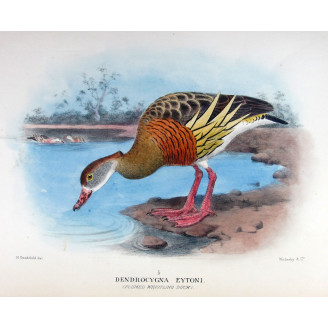
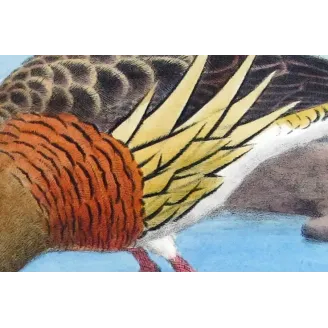
Original lithograph of the Plumed Whistling Duck by H. Goodchild (Dendrocygna eytoni).
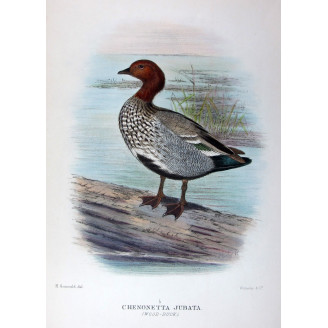
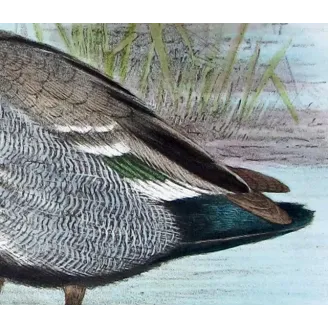
Original lithograph of the Wood Duck by H. Goodchild (Chenonetta jubata).
Antique lithograph of the Red-shouldered Grass Parrot by Roland Green.
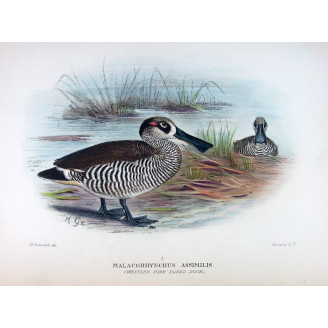
Western Pink-eared Duck (Malacorhynchus assimilis) – Original antique bird print by H. Grønvold.
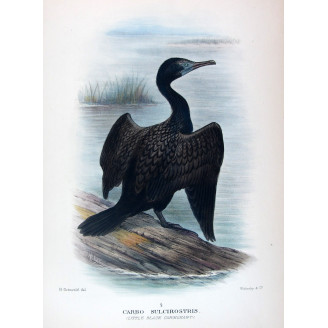
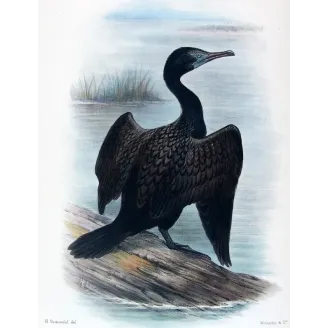
Little Black Cormorant (Carbo sulcirostris) – Original antique bird print by H. Grønvold
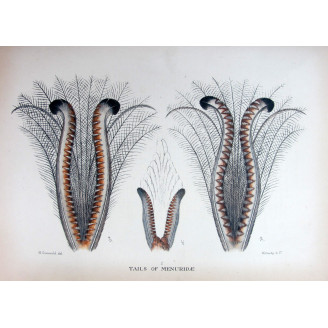
Original lithograph of the Lyrebird Tail Study (Tails of Menuridae) by Henrik Grønvold
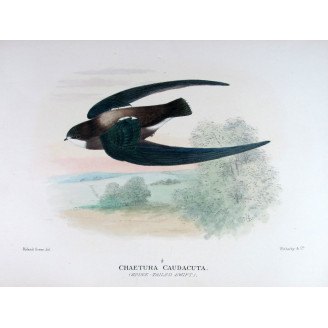
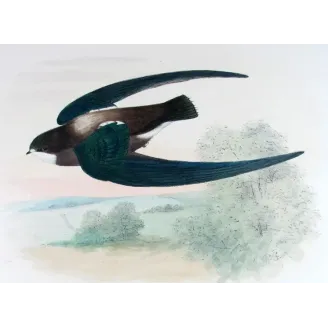
Spine-tailed Swift (Chaetura caudacuta) – Original lithograph by Roland Green
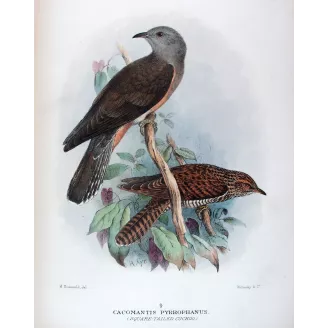
Square-tailed Cuckoo (Cacomantis pyrrophanus) – Original lithograph by Henrik Grønvold.
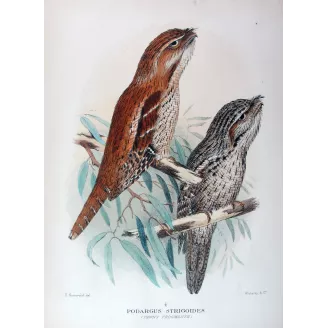
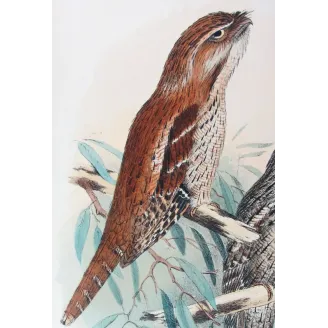
Original lithograph of the Tawny Frogmouth by H. Grönvold from Mathews' Birds of Australia.
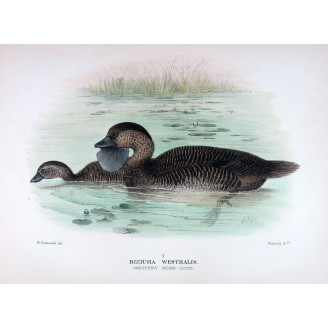
Western Musk Duck (Biziura westensis) – Original antique bird print by H. Grønvold.
Original lithograph of the Red-backed Kingfisher (Cyanalcyon pyrrhopygus) by Roland Green
Antique lithograph of the Green Leek Parrot by Roland Green.