
- New
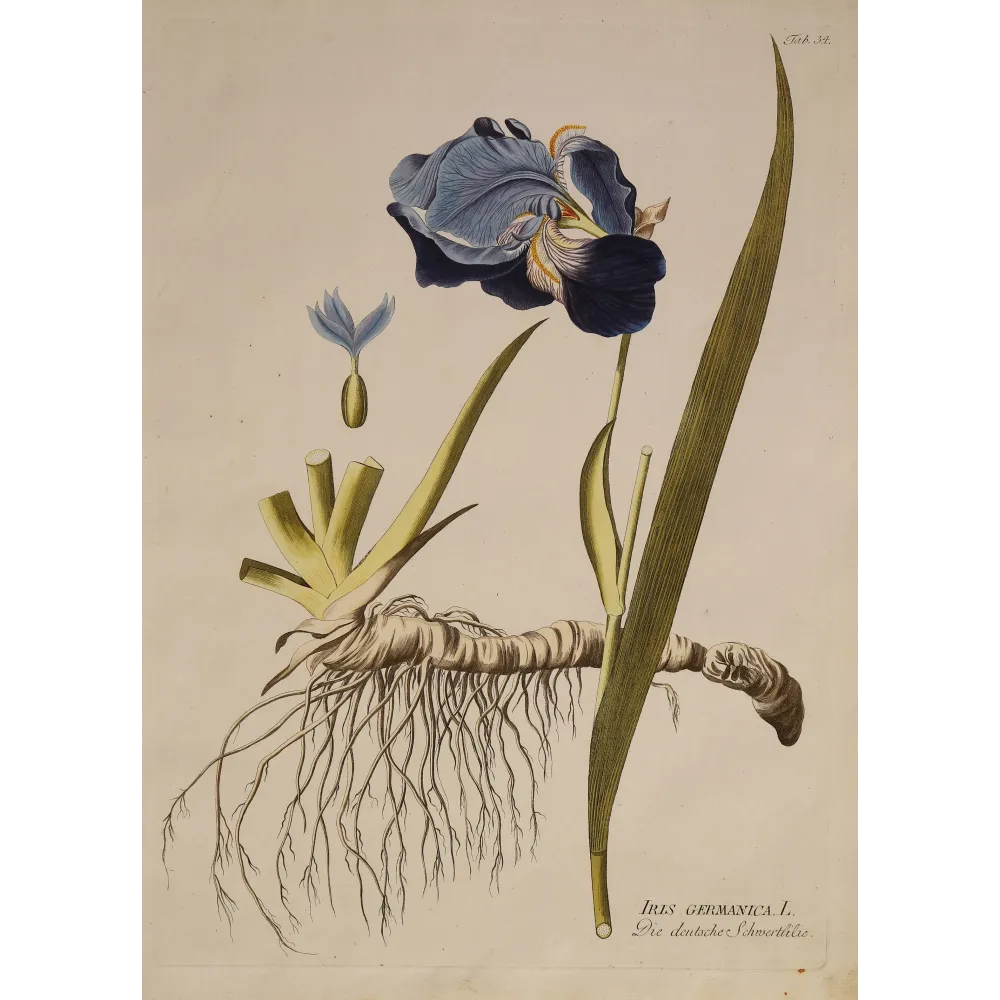
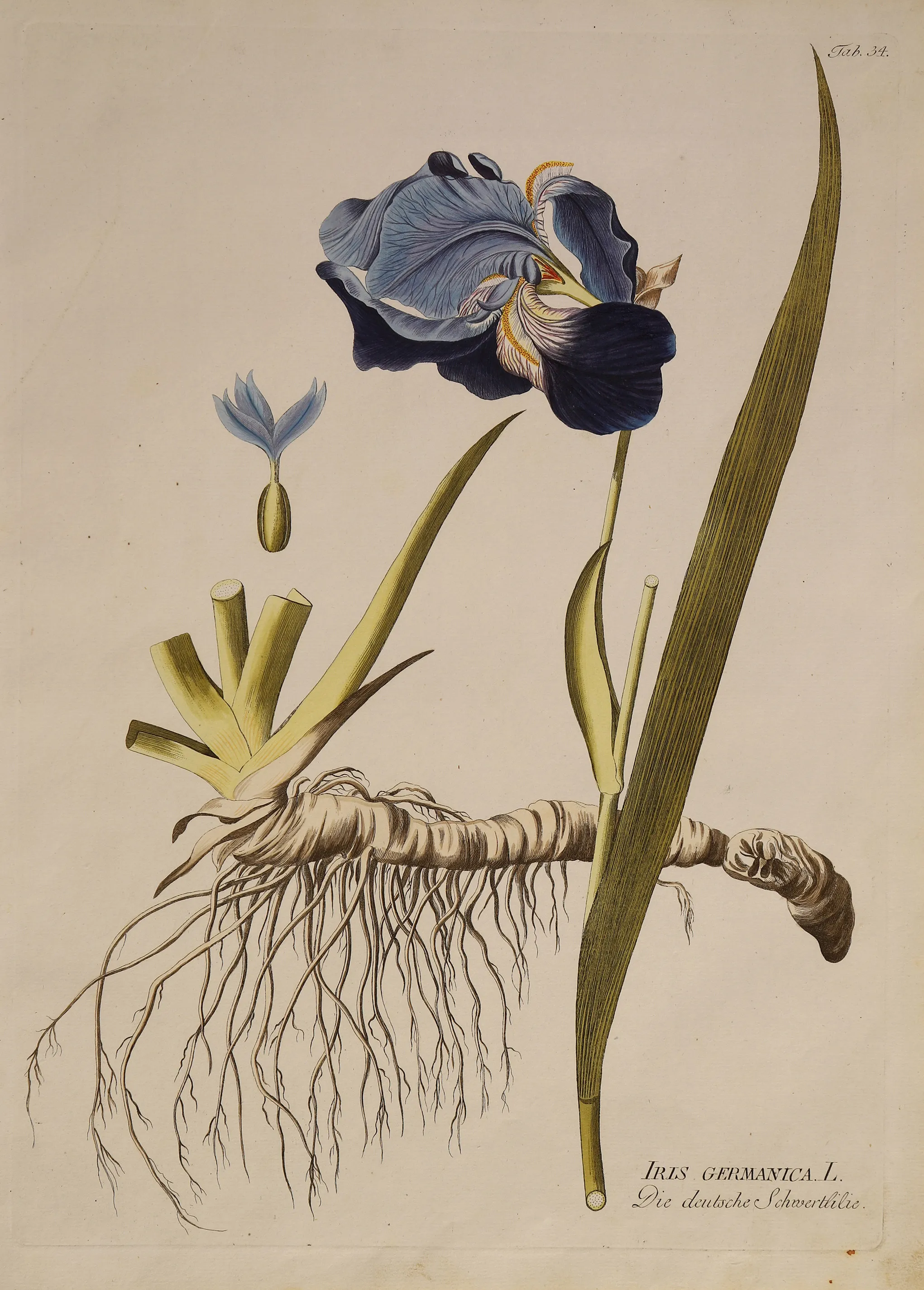
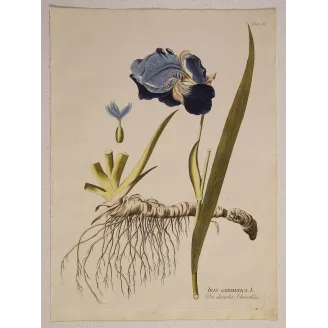
An original eighteenth-century botanical engraving depicting Iris germanica, published in Joseph Jacob von Plenck's celebrated Icones Plantarum Medicinalium. Printed on fine laid paper bearing the Honig watermark, the sheet combines scientific precision with the refined artistic craftsmanship of the Viennese botanical school.
 Delivery policy
Your print will be carefully prepared and shipped worldwide via trusted couriers (UPS or similar).
 Authentic antique prints
Original engravings from the 17th–19th century.
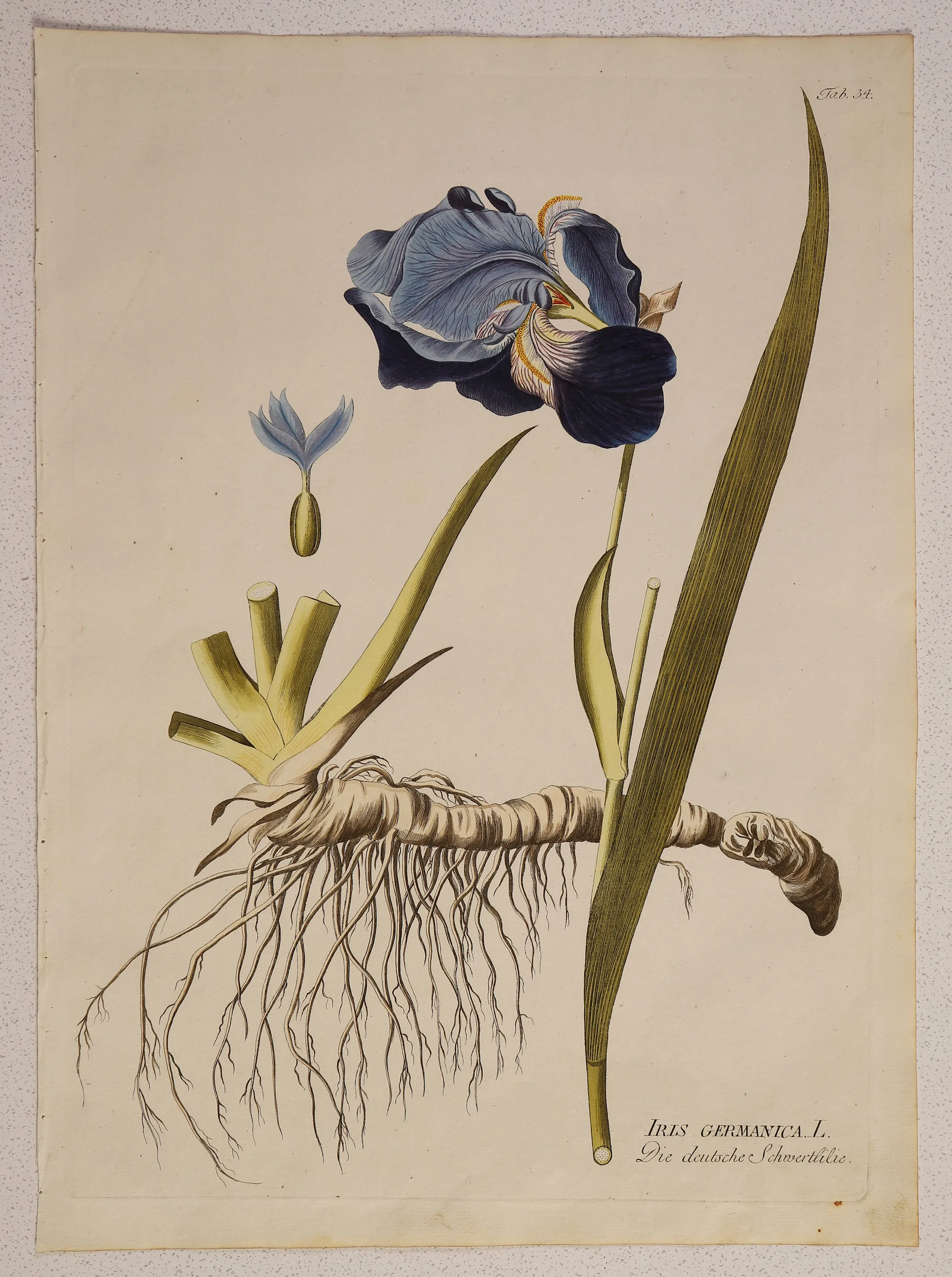
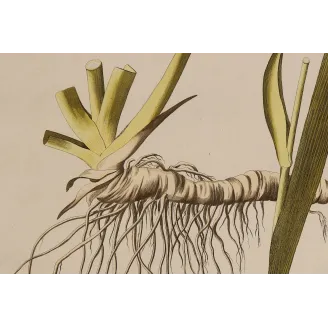
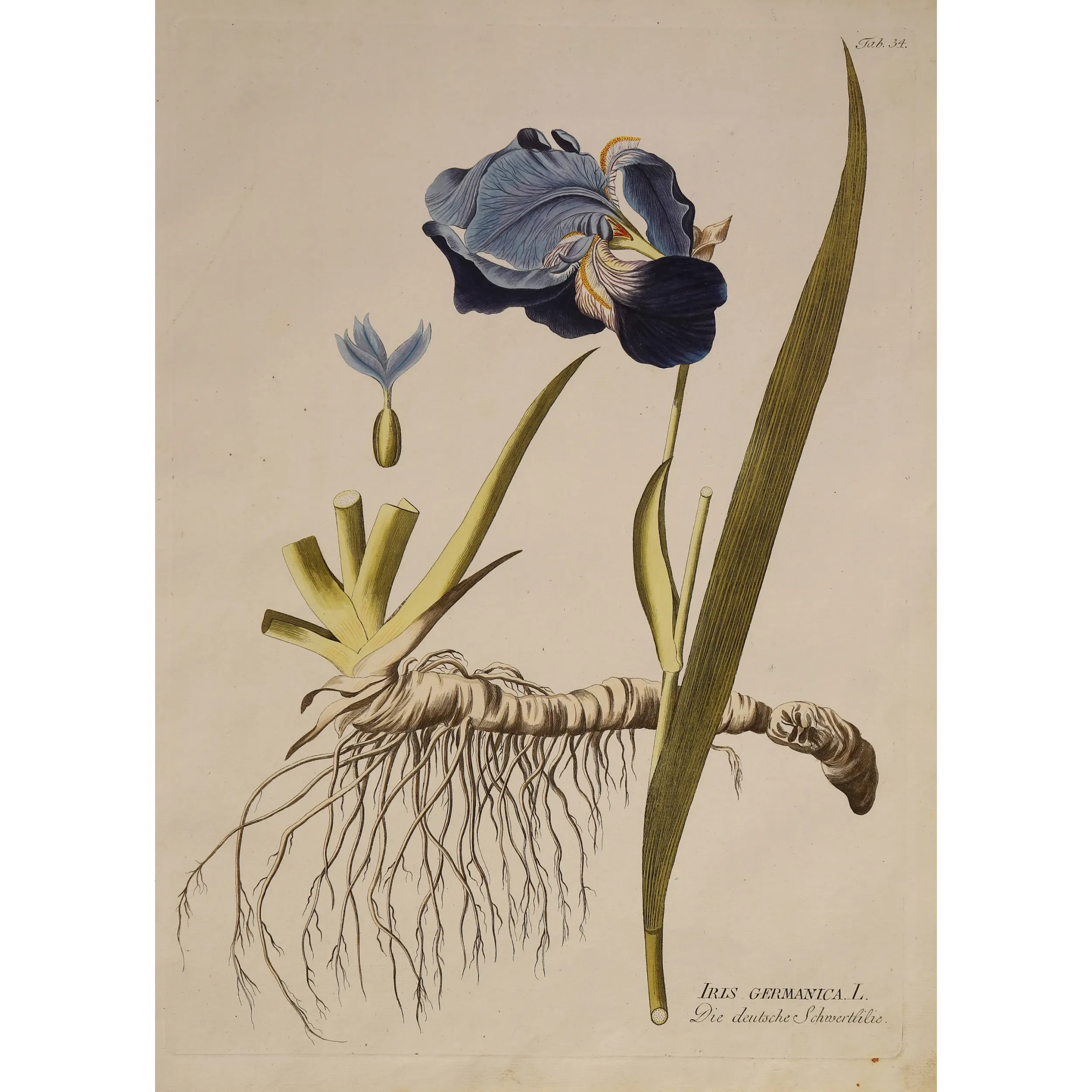
This exceptional original hand-coloured engraving from Joseph Jacob von Plenck’s Icones Plantarum Medicinalium depicts Iris germanica L., commonly known as the German Iris. Published in Vienna during the late eighteenth century as Plate 34, the image presents the flowering plant together with its long sword-shaped leaves, articulated rhizome, fibrous roots and separate floral details.
Nothing has been included solely for decoration. Flower, foliage and underground structures are arranged as parts of a complete botanical description, allowing the species to be recognised through its natural form, colour and proportions. Yet scientific purpose never diminishes the beauty of the image: through refined engraving and luminous hand colouring, the German Iris becomes both an instrument of knowledge and an accomplished work of botanical art.
The composition rises from the broad horizontal structure of the rhizome towards the violet-blue flower at the top of the sheet. The underground parts give the image a strong visual foundation, while the long leaves and flowering stem introduce an elegant upward movement through the generous white space surrounding the plant.
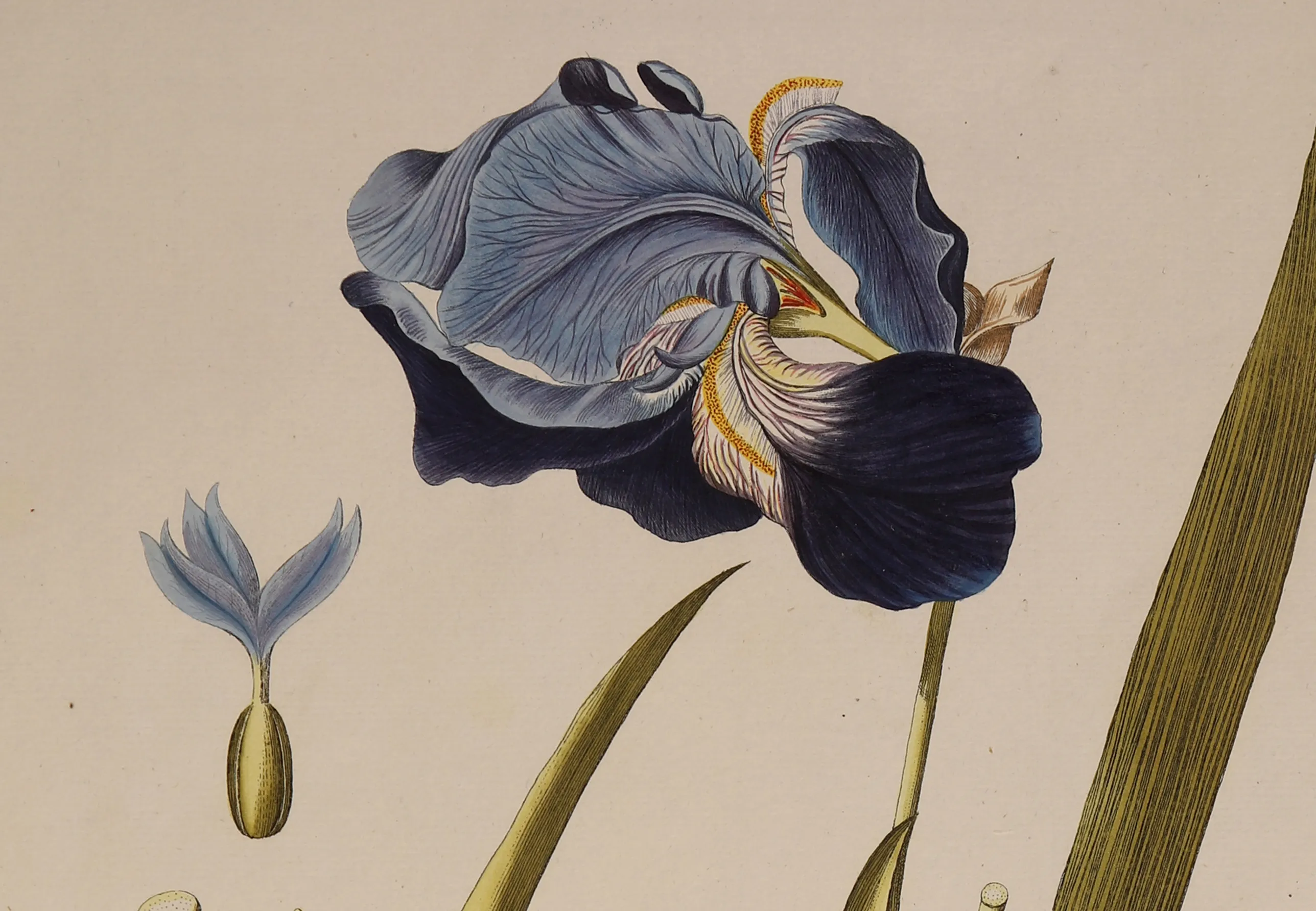
The flower provides the principal focus. Transparent shades of blue, violet and purple define its folded petals, while deeper tones are concentrated within the shadowed areas and along the descending falls. Restrained greens describe the foliage, and the warm natural tones of the rhizome ensure that the flower remains luminous without becoming detached from the plant as a whole.
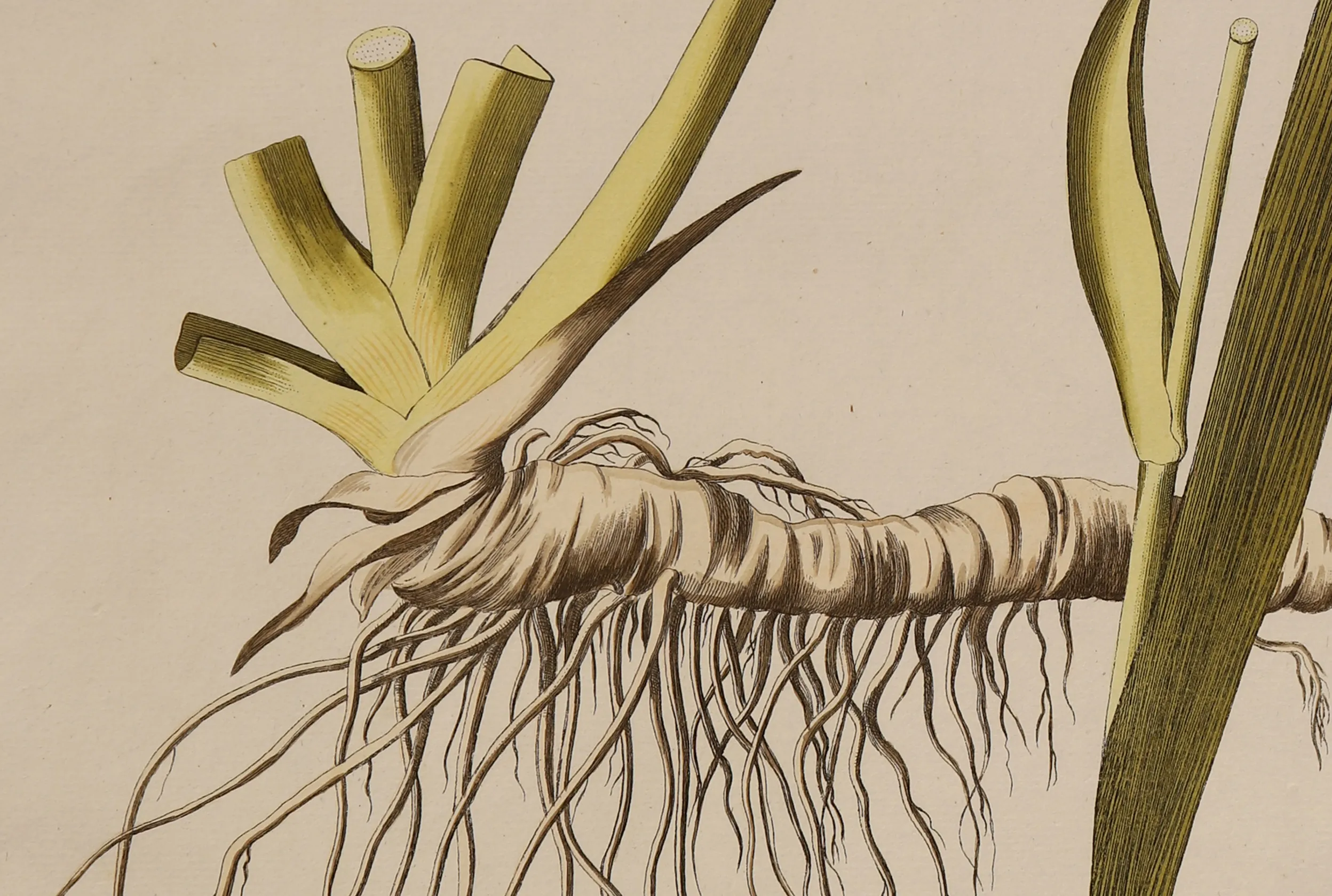
The engraved line is used with exceptional discipline. Fine marks establish the contours and essential internal structures of the plant, becoming denser only where greater definition is scientifically necessary. Parallel hatching models the segmented rhizome and tangled roots, while lighter lines describe the veining of the leaves and the delicate folds of the petals.
Separate floral details appear beside the principal specimen, allowing individual anatomical structures to be examined more closely. These analytical elements support identification without interrupting the balance of the composition, revealing how naturally scientific explanation and artistic clarity coexist throughout the plate.
Iris germanica is a rhizomatous perennial recognised by its tall flowering stems, sword-shaped leaves and complex flowers composed of upright standards and descending falls. Its imposing form and violet-blue colouring have made it one of the most familiar cultivated irises in European gardens.
The substantial underground rhizome is one of the plant’s defining botanical structures. Plenck therefore gives it unusual visual prominence, showing its segmented form, emerging fibrous roots and direct relationship with the foliage and flowering stem above.
Within an eighteenth-century work devoted to medicinal plants, such completeness had practical importance. Physicians, apothecaries, botanists and students needed to recognise a species from more than the appearance of its flower. Roots, leaves, reproductive structures and the natural relationship between the different parts of the plant all contributed to reliable identification.
In the preface to Icones Plantarum Medicinalium, Joseph Jacob von Plenck set out a remarkably ambitious objective. The plants were to be represented accurately from life, preserving their natural size, colour and proportion, so that the illustrations could support dependable scientific identification.
Plenck also made clear that scientific accuracy alone was not sufficient. He considered the elegance of the paper, the quality of the drawings and the refinement of the hand colouring essential features of the publication. Knowledge and beauty were therefore conceived not as separate aims, but as complementary parts of the same botanical project.
This engraving of Iris germanica fulfils that declared purpose with exceptional clarity. The architecture of the flower, the blade-like leaves, the articulated rhizome, the fibrous roots and the separate floral structures are all presented as botanical evidence. The image does not simply depict an iris in bloom: it reveals how the complete living plant is constructed.
The extraordinary artists of the Viennese botanical school translated Plenck’s scientific programme into a work of remarkable visual refinement. The plant is positioned with precision within the open sheet, allowing every essential structure to remain legible, while the surrounding white space gives the composition an almost meditative clarity.
The copper engraving provides a delicate underlying framework rather than dominating the image. Across the petals and leaves, the engraved line remains light and restrained, allowing transparent hand-applied watercolour to establish much of the volume, modelling and natural character. Stronger hatching is reserved for the rhizome and roots, where texture and structural complexity require more precise definition.
The contemporary hand colouring is particularly accomplished. Fine layers of transparent watercolour create gradual transitions across the violet-blue flower without concealing the engraved detail beneath. The greens of the leaves and the warmer tones of the underground structures remain equally controlled, preserving the natural relationships between the different parts of the plant.
Gum arabic has been selectively and extensively applied across the upper petals. These beautifully preserved glossy passages gently reflect the light, enriching the depth of the violet-blue colouring and heightening the natural luminosity of the flower. The finish is concentrated where it can strengthen the surface and sculptural presence of the petals without disturbing the botanical clarity of the illustration.
A strong and deeply impressed plate mark remains clearly visible around the engraved composition. Its distinct relief records the pressure exerted when the dampened sheet was passed through the copperplate press and provides direct material evidence of the original eighteenth-century printing process.
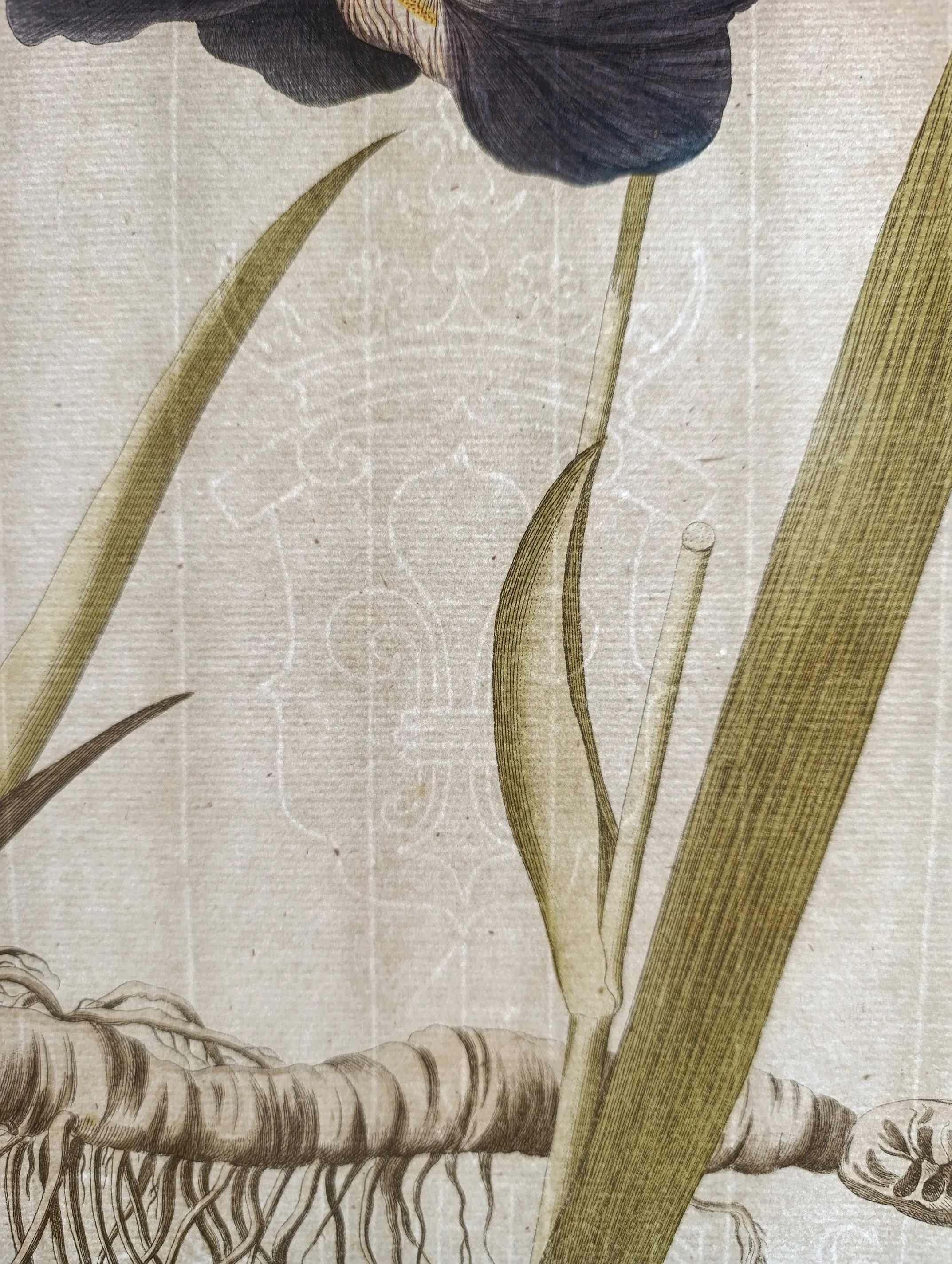
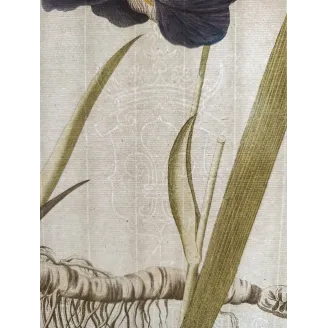
The engraving is printed on fine eighteenth-century laid paper bearing a clearly recognisable Honig watermark, visible when the sheet is examined in transmitted light. The mark connects this individual impression with the distinguished tradition of Dutch papermaking and with papers valued throughout Europe for demanding artistic and publishing projects.
The Honig family became associated with the important paper-producing region around Zaandam in the Netherlands. Papers carrying their name were appreciated for their strength, regular laid structure and refined surface: qualities particularly suited to receiving both the pressure of copperplate printing and the transparent layers of colour subsequently applied by hand.
The choice of such paper was therefore not merely practical. It formed part of the material quality of the finished publication and directly reflected Plenck’s stated concern for the elegance and beauty of the sheets on which his botanical illustrations appeared.
Examination of the wider Prantique group of original Plenck engravings reveals that paper marks are preserved with remarkable frequency. The Honig watermark appears across a substantial majority of the sheets examined, while other impressions show initials or different papermakers’ marks. This variation suggests the use of more than one supply of high-quality laid paper during the production of Icones Plantarum Medicinalium.
Together, these surviving watermarks provide valuable collection-level evidence of the materials selected for the publication. They allow the sheets to be studied not only as botanical images, but also as physical objects shaped by eighteenth-century European networks of papermaking, printing, publishing and artistic production.
In this impression, scientific observation, restrained engraving, luminous hand colouring, selective gum arabic, deeply impressed copperplate relief and prestigious Dutch paper remain exceptionally well preserved. Each element contributes to the fulfilment of Plenck’s original ambition: to create botanical images accurate enough to communicate knowledge and refined enough to endure as works of art.
This engraving belongs to Joseph Jacob von Plenck’s ambitious project to transform medicinal botany into a precise visual language during the European Enlightenment. Discover how scientific observation, natural scale, botanical identification, fine paper, copper engraving, hand colouring and the refined craftsmanship of the Viennese botanical school came together in Icones Plantarum Medicinalium.
Excellent condition. Original late eighteenth-century laid paper with exceptionally fresh and luminous hand colouring. The sheet is remarkably clean and well preserved, with no stains, tears or significant signs of handling. The selective gum arabic across the upper petals retains its original reflective quality, while the strong and deeply impressed plate mark remains clearly visible. A Honig watermark is preserved within the sheet and can be observed in transmitted light. Only very light historical finger contact is visible in the lower right margin, entirely consistent with the age and authentic handling of the work and without affecting the engraved image or its overall presentation. Please examine the professional high-resolution photographs for a complete visual assessment.
Botanical name: Iris germanica L.
Common name: German Iris
Work: Icones Plantarum Medicinalium
Author: Joseph Jacob von Plenck
Artistic tradition: Viennese botanical school
Place of publication: Vienna
Date: c. 1788
Technique: Original copper engraving with contemporary hand-applied watercolour
Finishing: Selective gum arabic extensively applied across the upper petals
Paper: Fine eighteenth-century laid paper
Watermark: Honig watermark, visible in transmitted light
Plate mark: Strong, deeply impressed and clearly preserved
Plate: 34
Plant family: Iridaceae
Sheet size: approx. 44 × 33 cm
Specific References
An original eighteenth-century botanical engraving depicting Iris germanica, published in Joseph Jacob von Plenck's celebrated Icones Plantarum Medicinalium. Printed on fine laid paper bearing the Honig watermark, the sheet combines scientific precision with the refined artistic craftsmanship of the Viennese botanical school.