
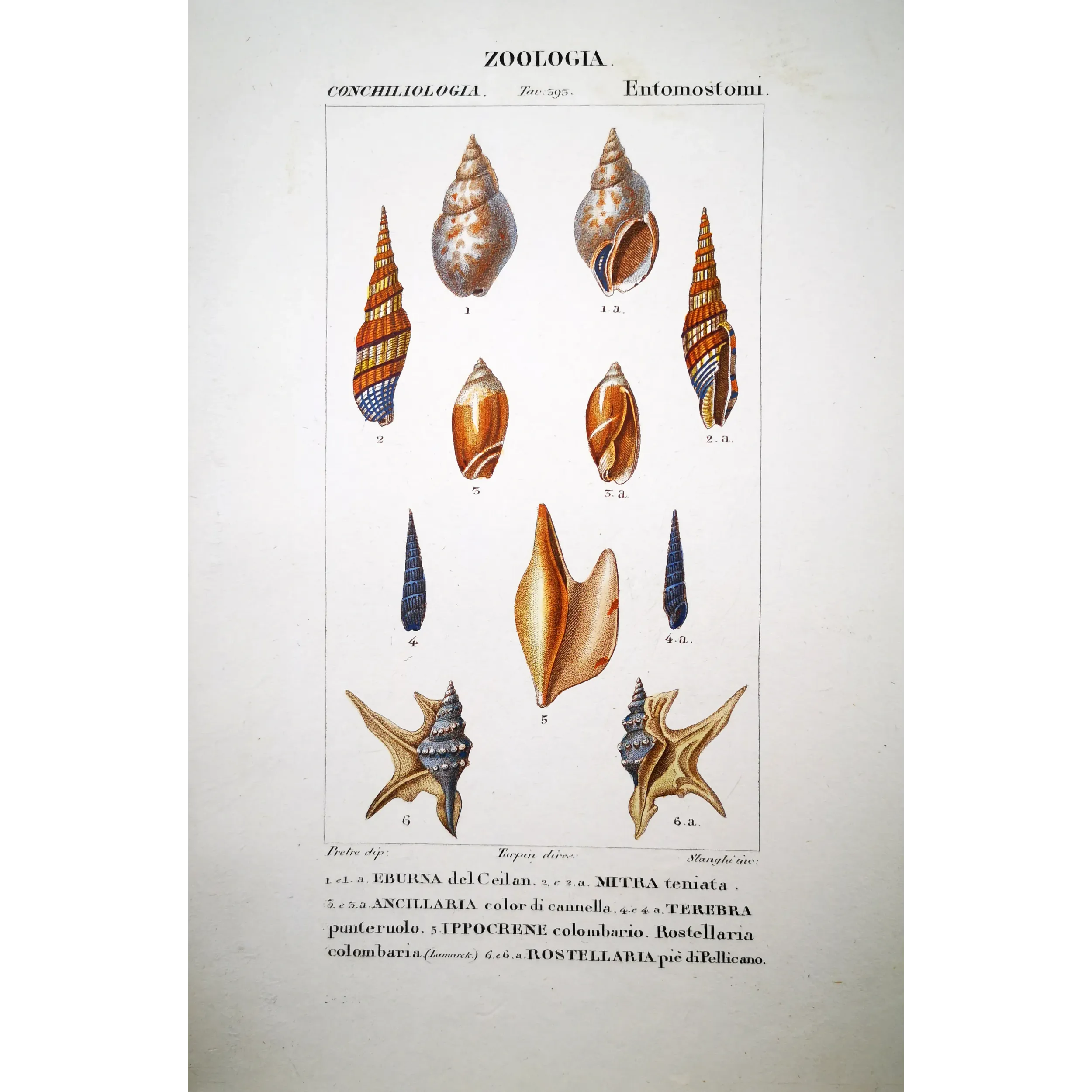
Elegant representation of ornamental and rare marine shells.
 Delivery policy
Your print will be carefully prepared and shipped worldwide via trusted couriers (UPS or similar).
 Authentic antique prints
Original engravings from the 17th–19th century.
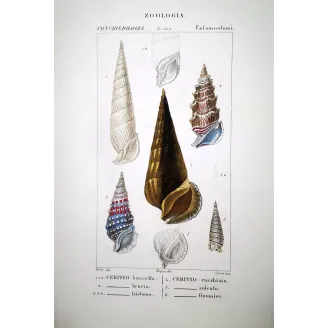
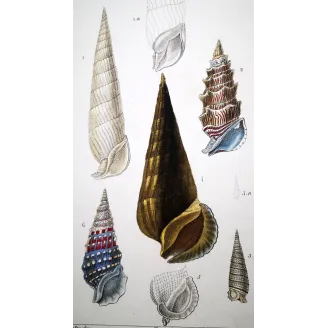
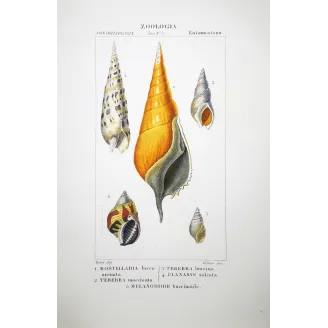
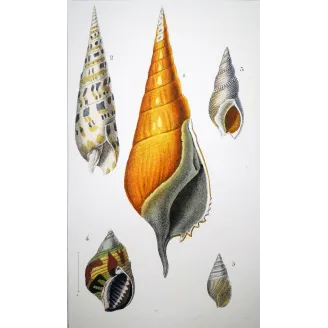
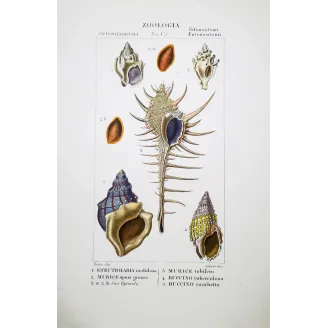
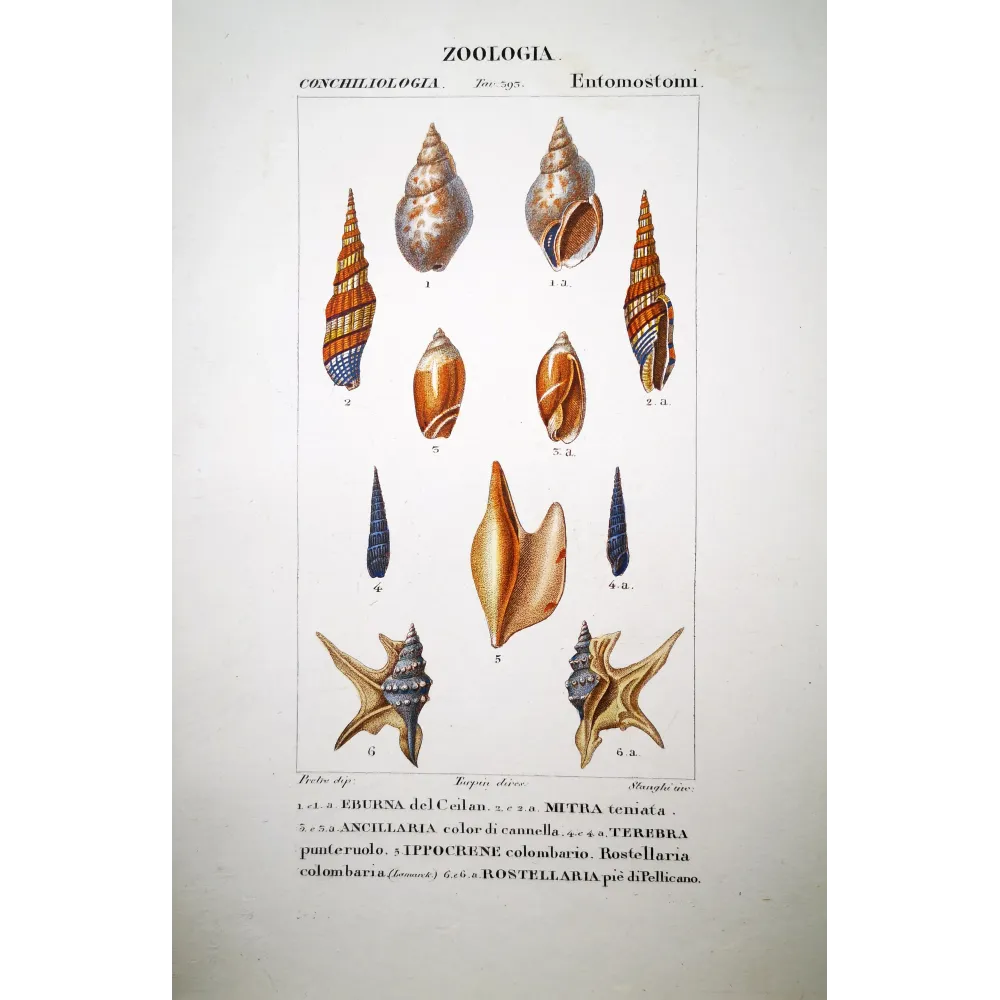
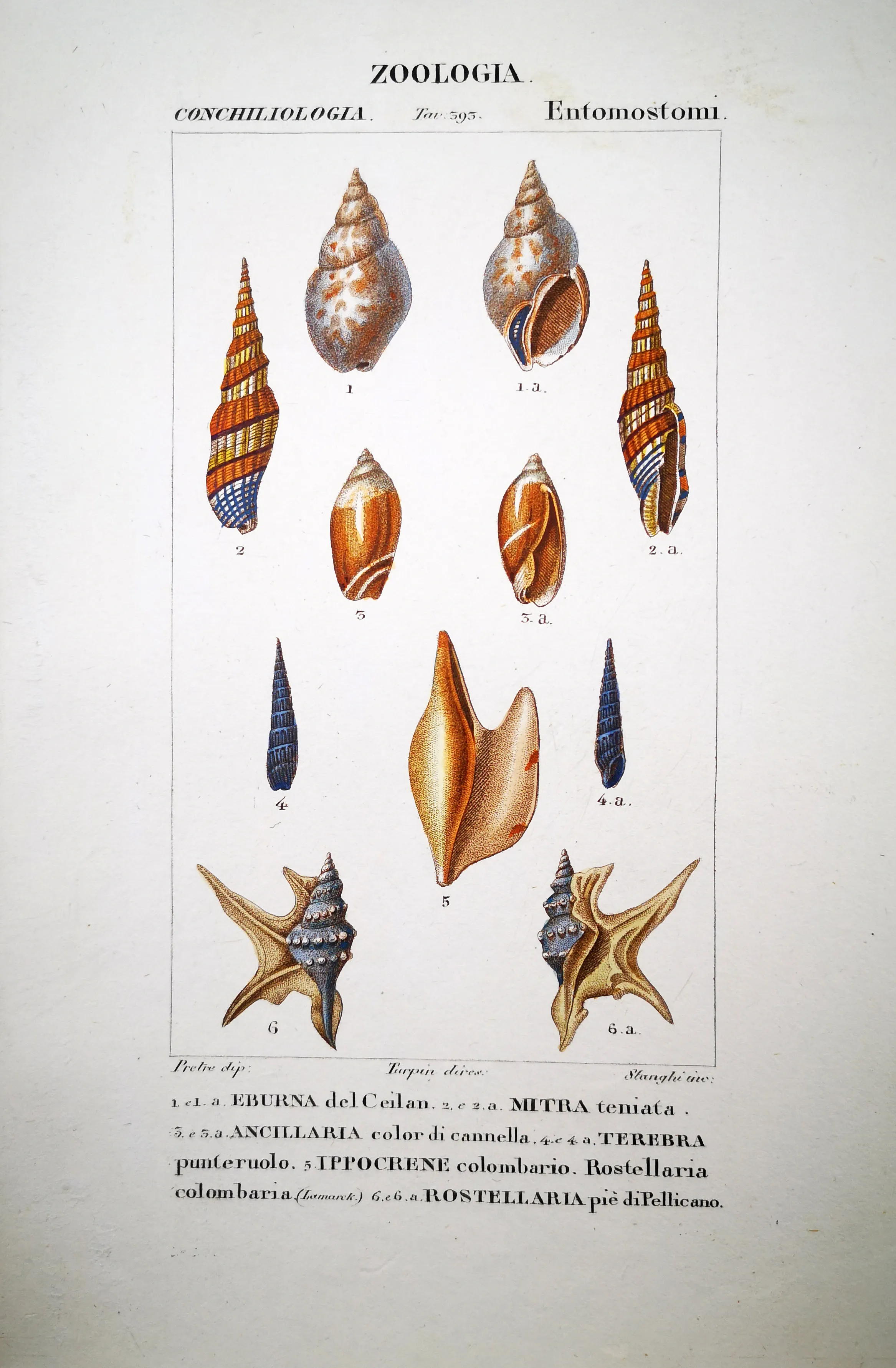
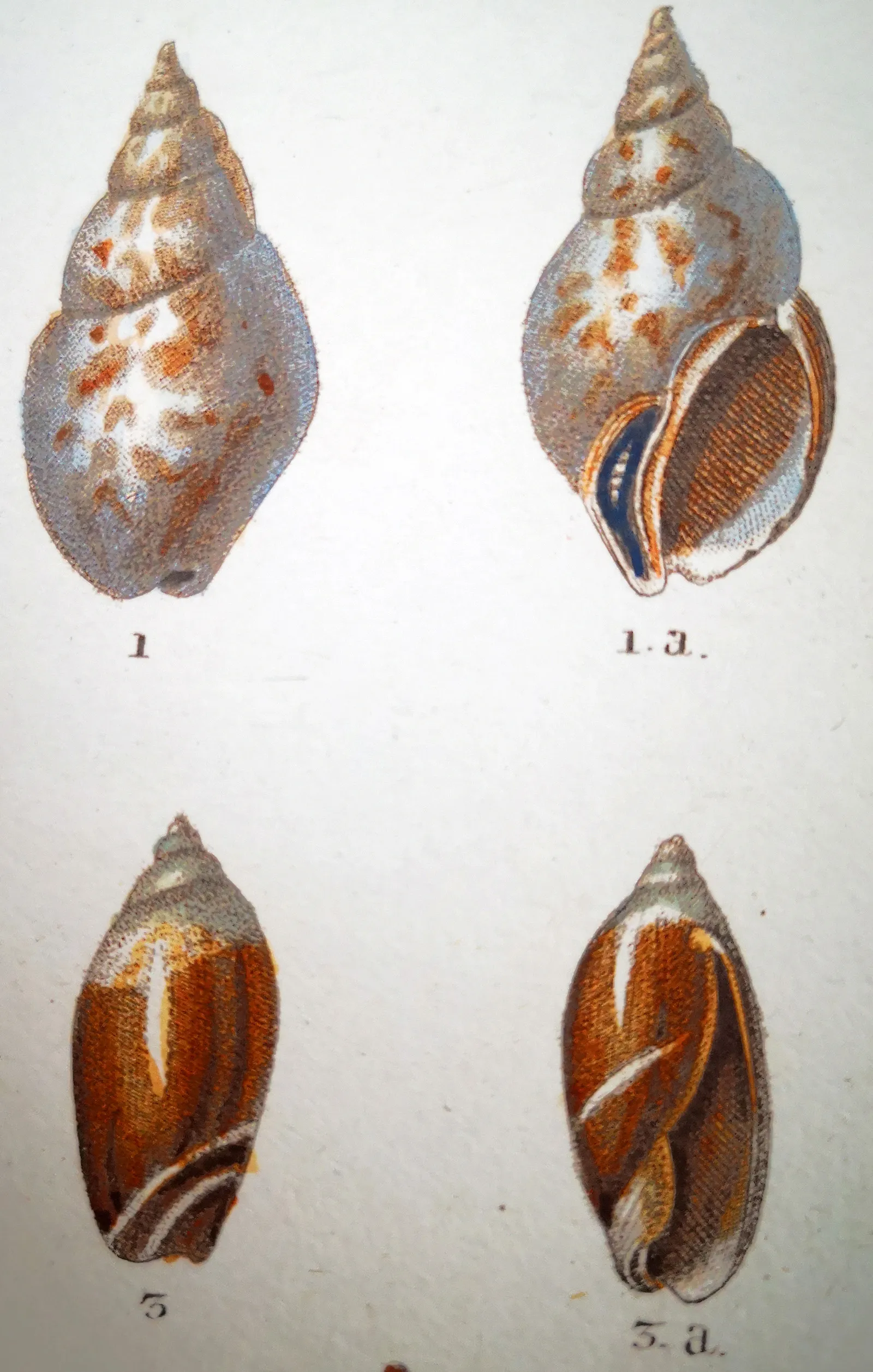
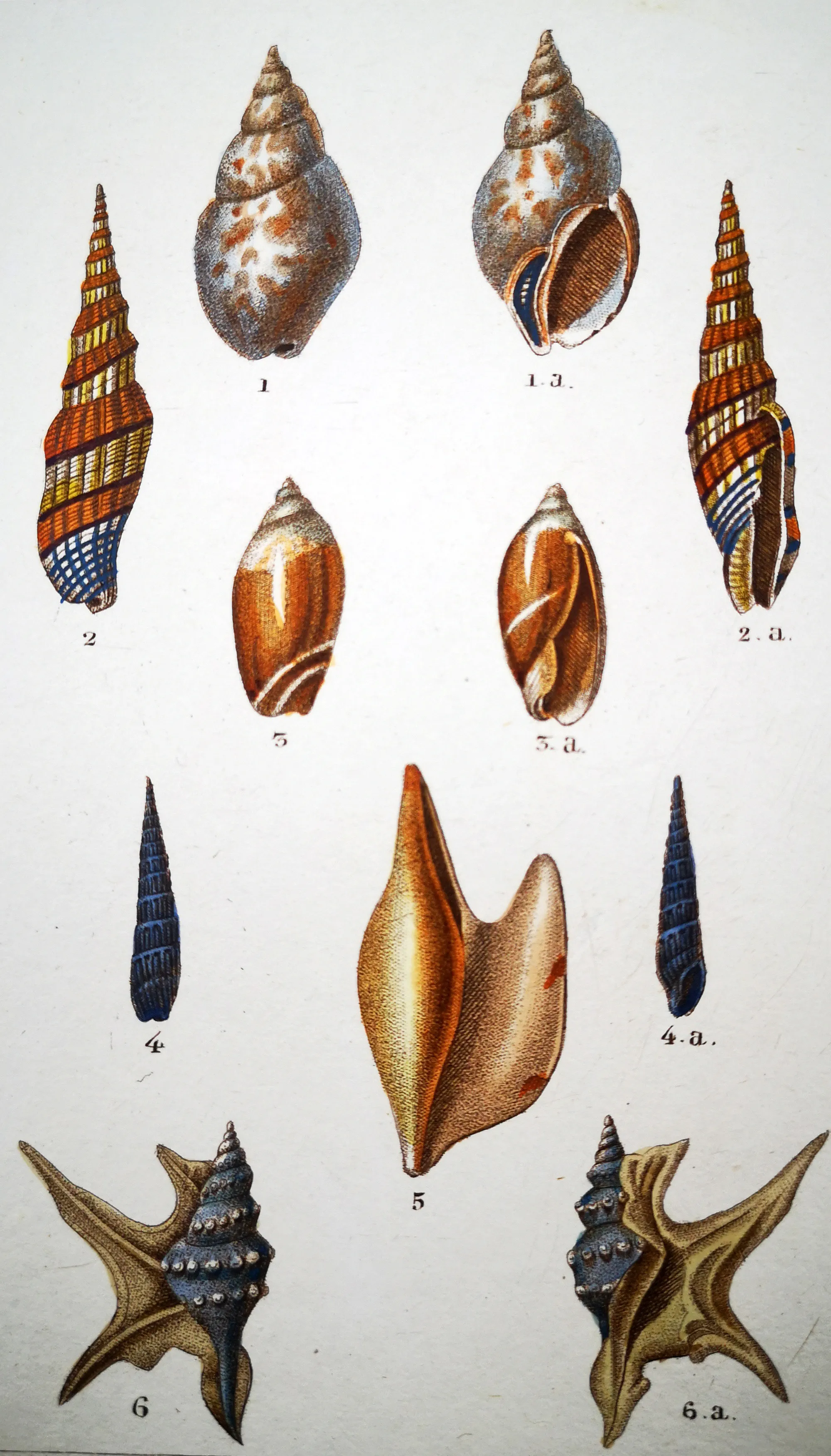
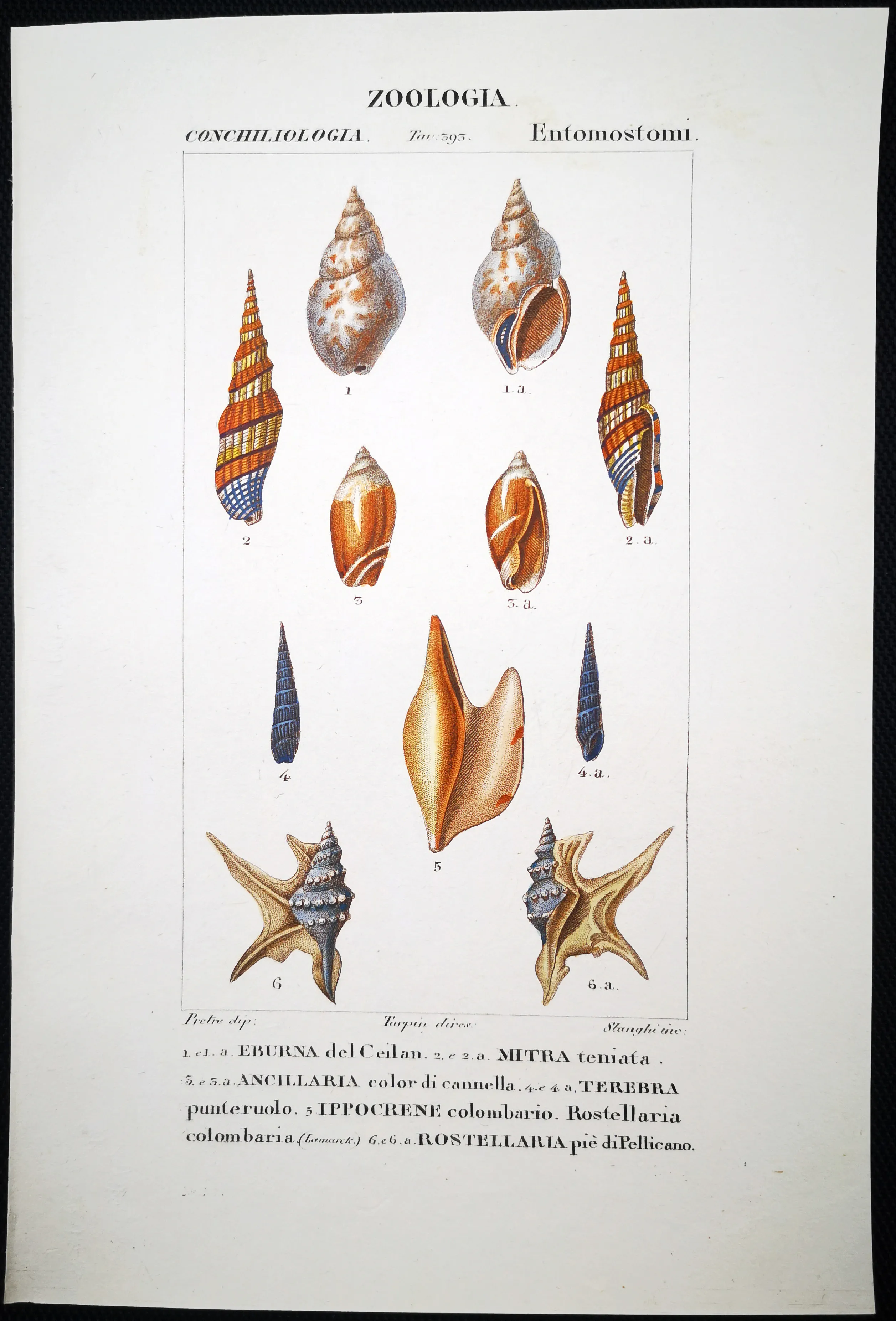
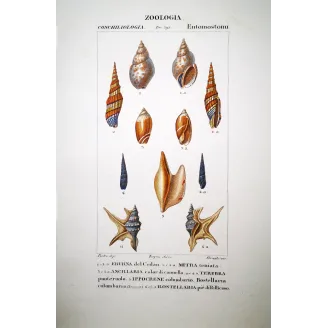
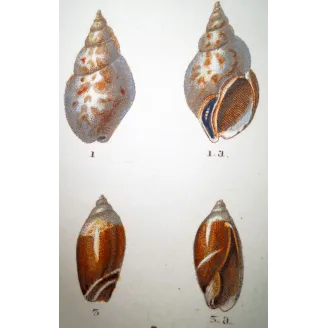
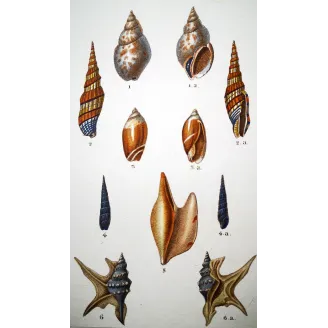
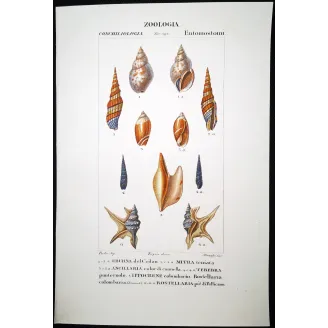
This refined zoological engraving presents a comparative study of remarkable marine shells, including Eburna (“Eburna del Ceilan”), Mitra (“Mitra teniata”), Ancillaria (“Ancillaria color di cannella”), Terebra (“Terebra punteruolo”), and two striking Rostellaria forms — Rostellaria colombaria (Lamarck) and the celebrated “Rostellaria piè di Pellicano”. The plate foregrounds aperture architecture, spire proportion, and surface pattern as principal taxonomic indicators, embodying the comparative methodology of early nineteenth-century conchiliology.
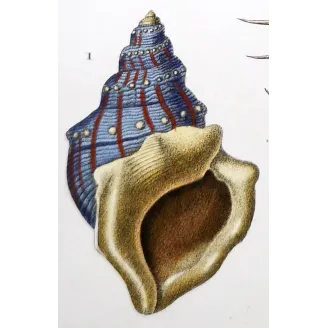
Rather than offering ornament alone, the engraving emphasizes morphological intelligibility. Each specimen is isolated for clear reading: the disciplined spirals of Mitra and Terebra contrast with the sculptural apertures of the Rostellaria, while hand-colouring is applied with controlled authority — warm ambers and cinnamons balanced by saturated blues and red banding that heighten structure without sacrificing scientific clarity.
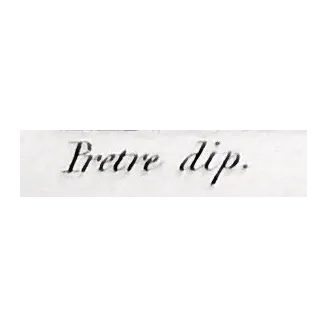
The plate belongs to the Italian edition of the Dizionario di Scienze Naturali (Florence, Battelli press), one of the most ambitious encyclopedic scientific enterprises of its time, for which Pierre Antoine Prêtre produced some of the most accomplished conchiliological illustrations of marine life.
— • —
The composition is arranged as a poised display of contrasting silhouettes. Slender, vertical spires create a refined rhythm in the upper field, while the lower register introduces sculptural drama through the expanded “pelican’s foot” forms of Rostellaria. This balance between strict verticality and expressive aperture geometry produces a plate of exceptional compositional maturity.
Chromatically, the sheet is unusually sophisticated for scientific illustration: warm amber and cinnamon tones are punctuated by deep blue passages and precise red striping, creating a decorative harmony that reads as both analytical and luxurious. The result is conchiliology elevated into quiet visual authority.
Rostellaria species were among the most admired shells in nineteenth-century European collections, prized for their dramatic apertures and elongated canals — forms that seemed almost architectural in their invention. The “pelican’s foot” silhouette, in particular, became culturally emblematic of exotic seas and the cabinet-of-curiosities imagination. Paired with the disciplined geometry of Mitra and Terebra, and the richly coloured presence of Eburna and Ancillaria, this plate demonstrates the encyclopedic ideal: diversity expressed through comparison. As a 19th-century shell engraving, it combines high decorative impact with taxonomic clarity, making it especially desirable for refined coastal interiors, studies, and curated marine collections.
This plate forms part of the historic Dizionario di Scienze Naturali, a monumental early nineteenth-century encyclopedic enterprise once preserved within a noble library and today housed in the Sacchetti Collection. Each engraving reflects a period in which scientific ambition was matched by exceptional artisanal execution — from the disciplined copperplate line to the luminous hand-colouring applied individually to every impression.
The result is not merely zoological documentation, but a refined synthesis of scholarship and craftsmanship, where artistic discipline elevates marine observation into a form of quiet visual authority. To discover the full story behind these rare prints and their noble provenance, we invite you to read our editorial feature “Not Just Another Print”.
The engraving is in excellent antique condition. The sheet presents clean margins and a strong, well-preserved impression. The paper is smooth early nineteenth-century wove paper (non-laid), consistent with Italian scientific editions of the period. No watermark has been observed. The original hand-colouring remains vivid and balanced, with no visible pigment loss.
For further context on Pierre Antoine Prêtre and his contribution to nineteenth-century zoological illustration, see our editorial feature:
Pierre Antoine Prêtre – Illustrator of Natural Science and Marine Life
Specific References
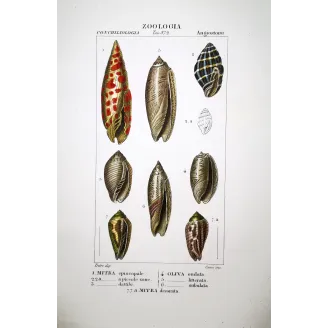
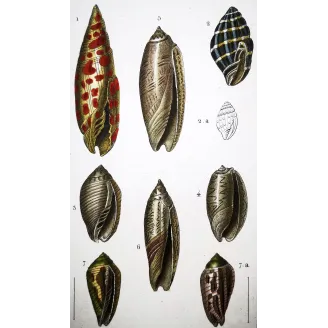
Colorful antique shell print featuring Mitra, Oliva, and Terebra drawn by Prêtre and engraved by Corsi.
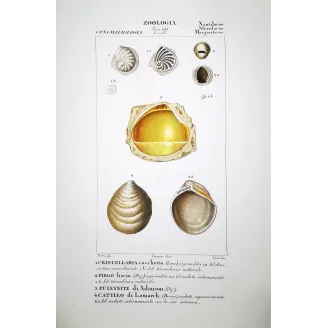
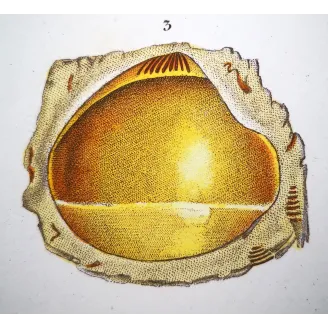
Vintage shell illustration: Cristellaria, Pirgo, Pulvinite, Catillo original 19th century zoological print by Prêtre.
Entomostome shells depicted with chromatic elegance and scientific precision.
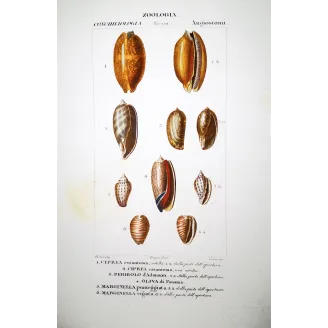
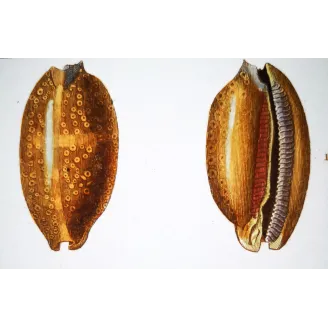
Fine antique print of Ciprea, Peribolo, Marginella highly decorative sea shells by Prêtre.
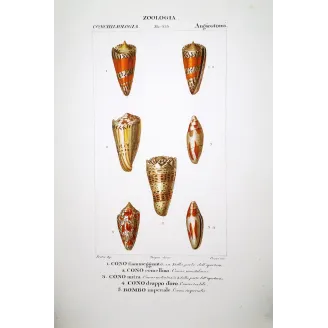
Antique shell engraving: Conus species and Rombo imperiale vibrant and geometrical forms by Prêtre.
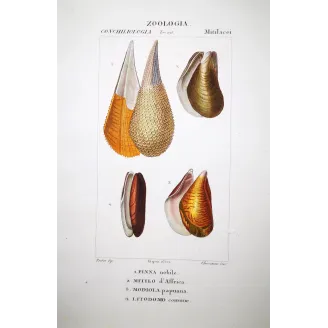
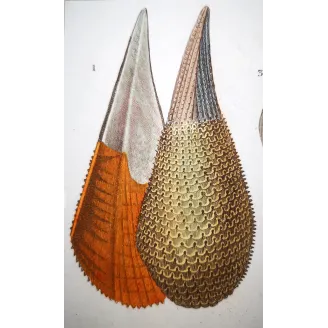
Antique conchology print: Pinna nobilis, Mitilo, Modiola, and Litodomo drawn by Prêtre.
Ancient illustrations of turriculated shells, colored with scientific precision.
Elegant representation of ornamental and rare marine shells.