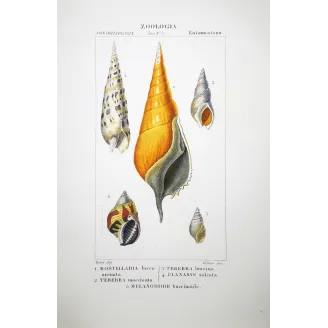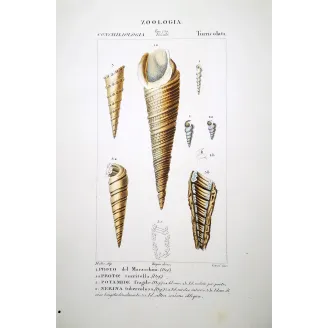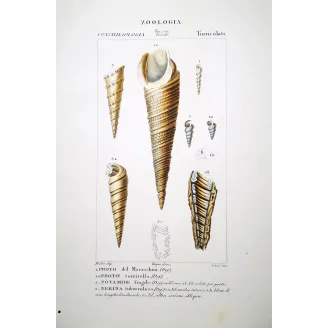
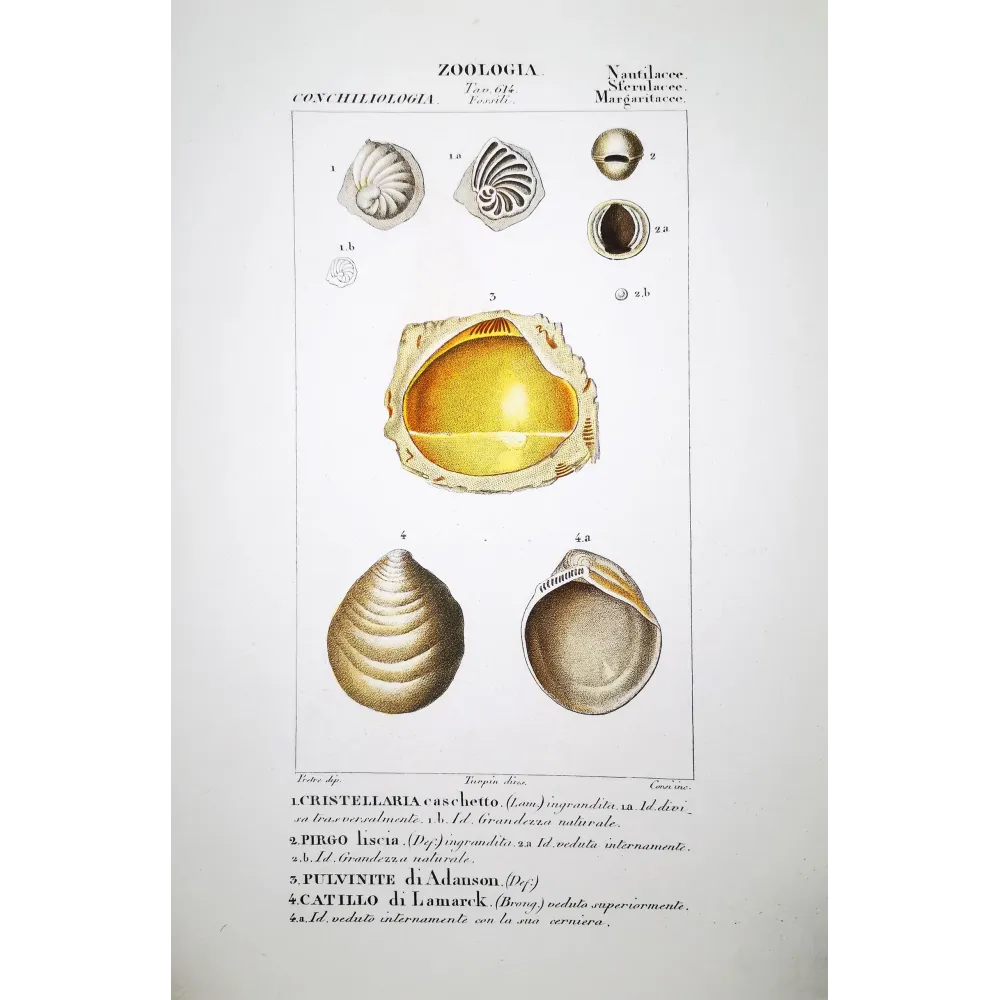
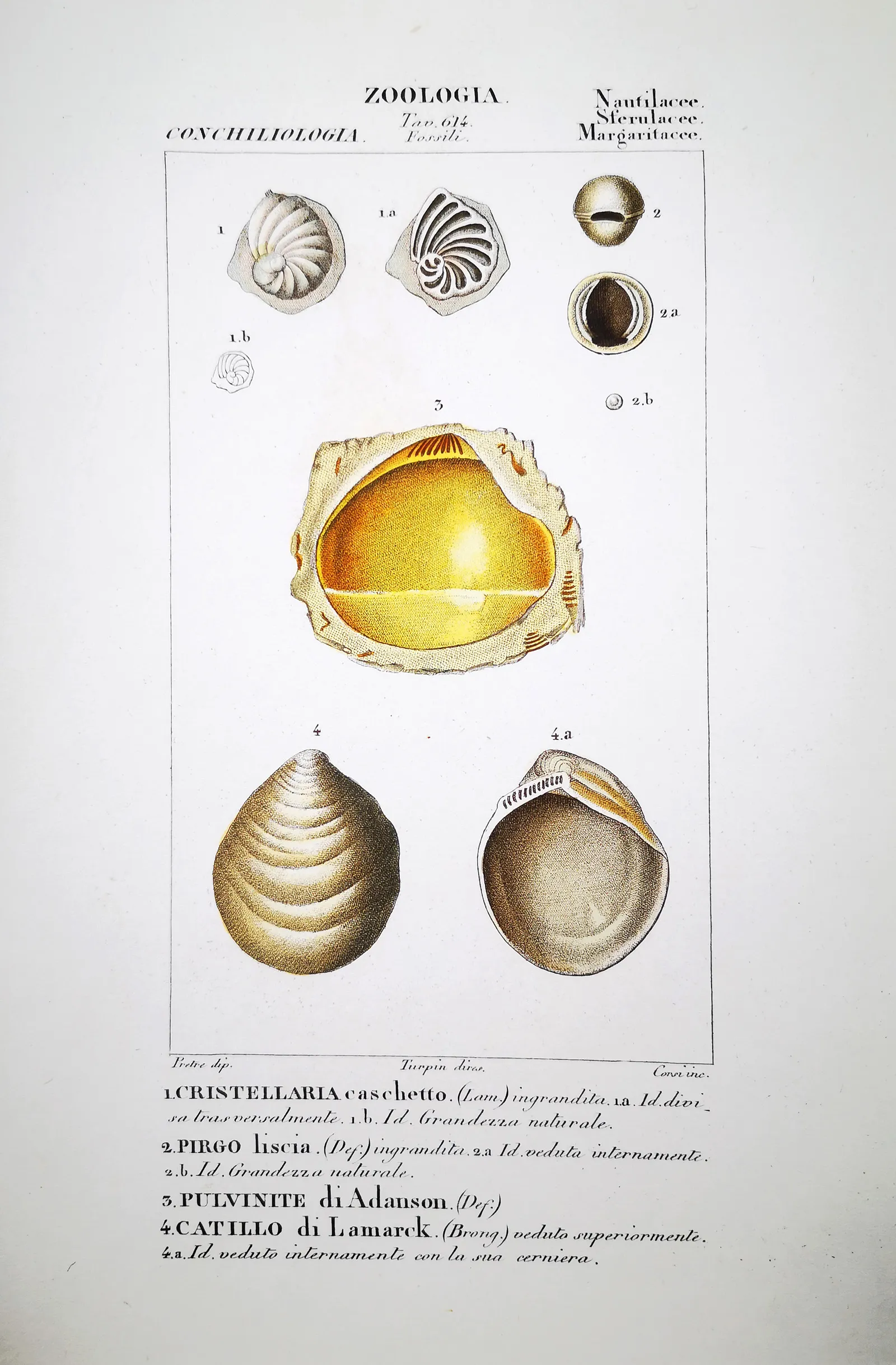
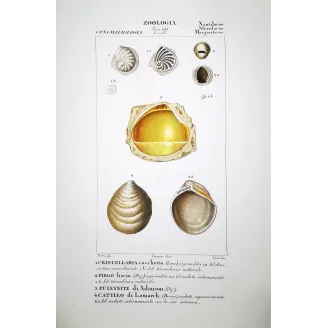
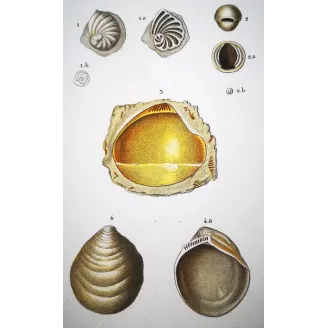
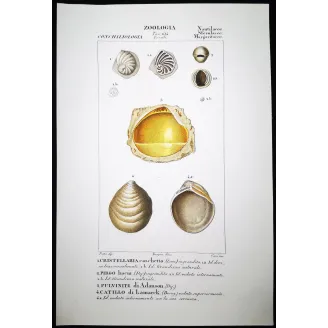
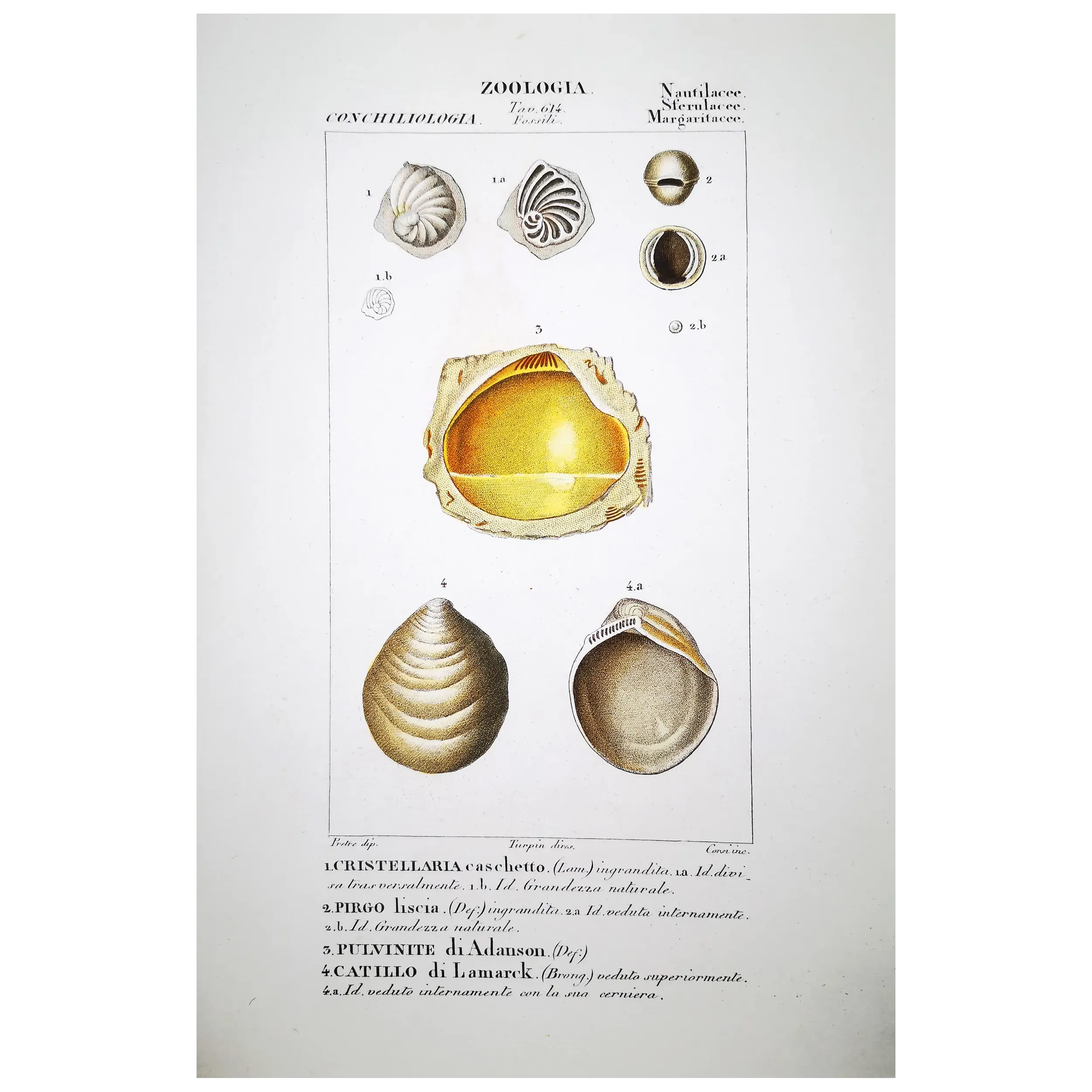
Vintage shell illustration: Cristellaria, Pirgo, Pulvinite, Catillo original 19th century zoological print by Prêtre.
 Delivery policy
Your print will be carefully prepared and shipped worldwide via trusted couriers (UPS or similar).
 Authentic antique prints
Original engravings from the 17th–19th century.
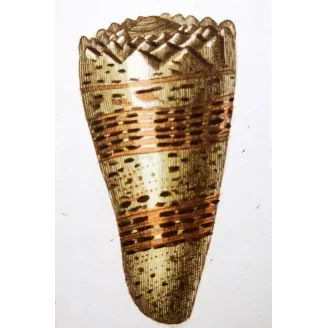
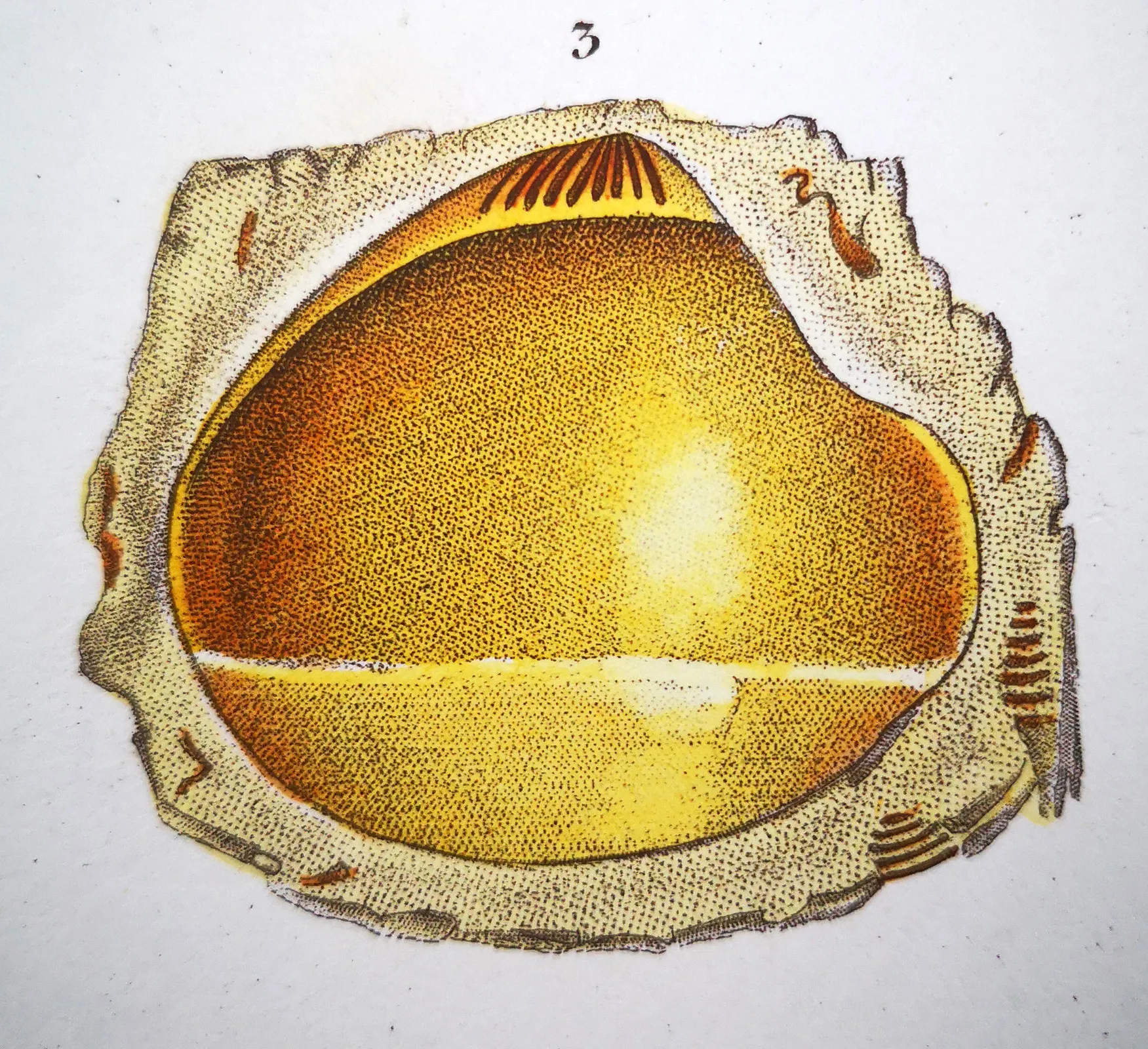
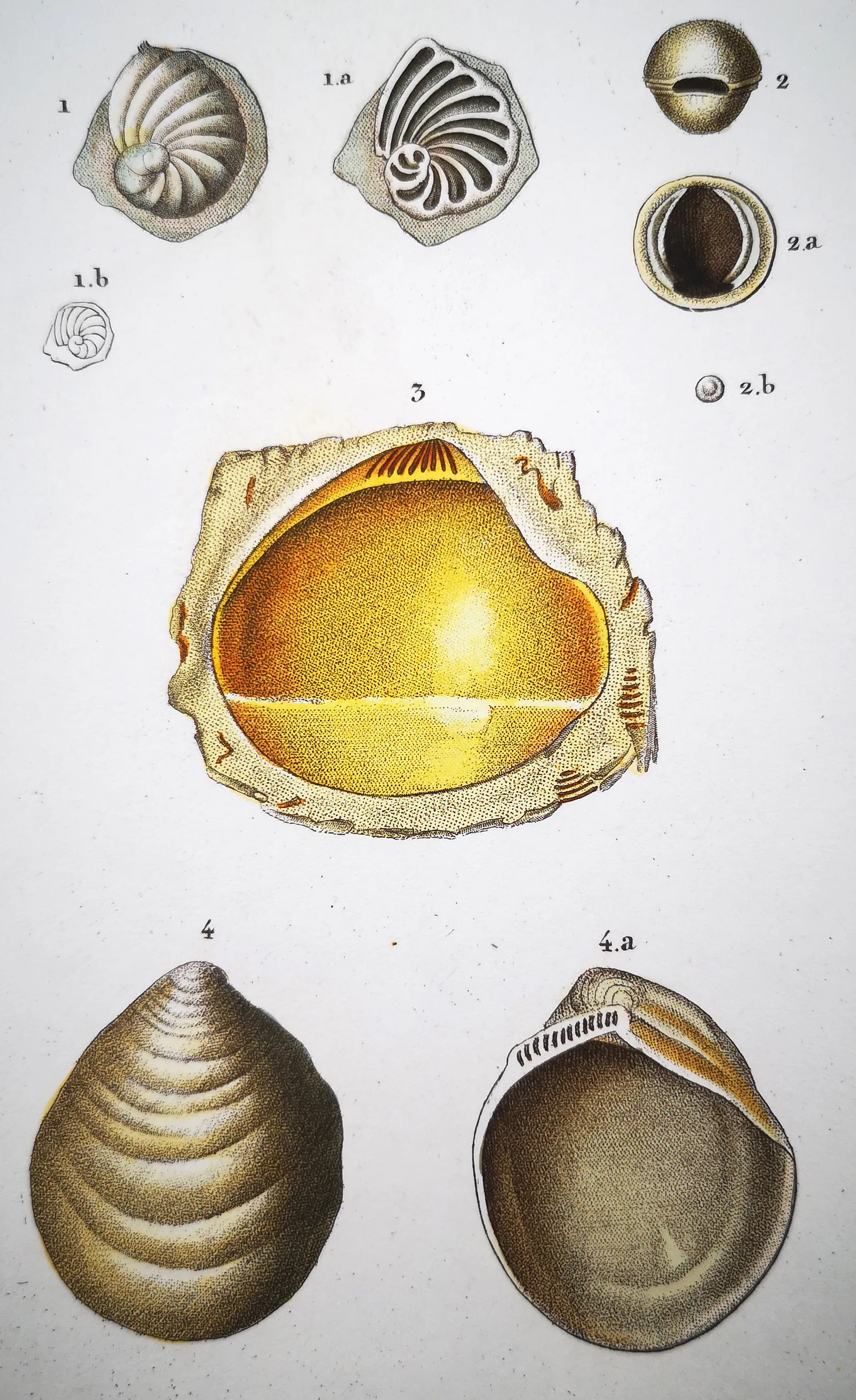
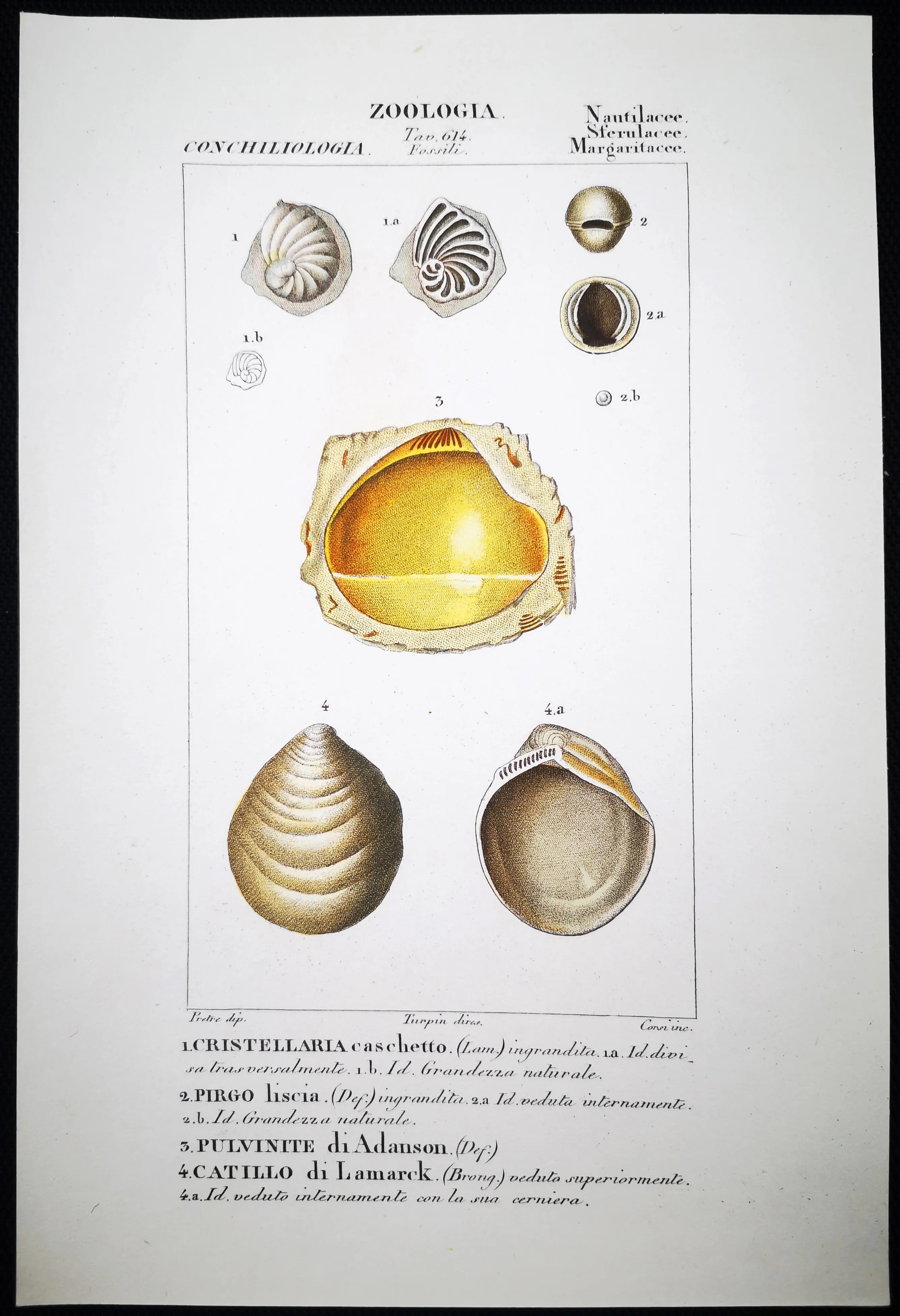
This refined conchiliological engraving presents a fossil-focused study spanning multiple groups, including Cristellaria (“Cristellaria caschetto”, Lamarck), Pirgo (“Pirgo liscia”, Def.), “Pulvinite di Adanson” (Def.), and “Catillo di Lamarck” (Brong.). Enlarged figures and sectional views highlight diagnostic structure, demonstrating how early nineteenth-century natural history translated microscopic and fossil morphology into legible visual knowledge.
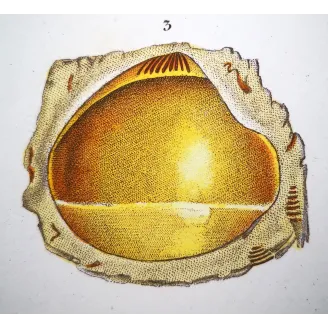
Rather than offering ornament alone, the plate emphasizes analytical clarity. The upper figures isolate spiral architecture and internal whorl logic, while the lower register anchors the composition with a monumental fossil shell rendered in luminous, honeyed tone. Subtle shading and precise stippling create an almost mineral depth, suggesting weight, age, and preserved form.
The plate belongs to the Italian edition of the Dizionario di Scienze Naturali (Florence, Battelli press), one of the most ambitious encyclopedic scientific enterprises of its time, for which Pierre Antoine Prêtre produced some of the most accomplished plates of marine life and fossil morphology.
— • —
The composition is built around contrast of scale and texture. Small, enlarged fossil studies occupy the upper field with disciplined spacing, while the central specimen below commands attention through its expansive, golden interior plane — a near-abstract ellipse of light that gives the plate exceptional decorative authority.
The palette is intentionally restrained: warm golds and pale mineral greys replace coastal brightness, creating an atmosphere of quiet scholarship. This sobriety, combined with the precision of line, elevates the sheet from scientific illustration into a refined object for collectors drawn to natural history aesthetics.
Fossil conchiliology fascinated nineteenth-century readers because it connected marine form to geological time. Cristellaria and related microfossils were studied for their spiral logic and internal architecture, while larger fossil shells were examined through sectional views that revealed hinges and structural anatomy. Plates like this embodied the encyclopedic ambition of the period: to make deep time visible through disciplined comparison. As a 19th-century fossil shell engraving, this work is especially appealing to collectors who value scientific heritage, minimalist elegance, and cabinet-of-curiosities culture.
This plate forms part of the historic Dizionario di Scienze Naturali, a monumental early nineteenth-century encyclopedic enterprise once preserved within a noble library and today housed in the Sacchetti Collection. Each engraving reflects a period in which scientific ambition was matched by exceptional artisanal execution — from the disciplined copperplate line to the luminous hand-colouring applied individually to every impression.
The result is not merely scientific documentation, but a refined synthesis of scholarship and craftsmanship. To discover the full story behind these rare prints and their noble provenance, we invite you to read our editorial feature “Not Just Another Print”.
The engraving is in excellent antique condition. The sheet presents clean margins and a well-preserved impression. The paper is smooth early nineteenth-century wove paper (non-laid), consistent with Italian scientific editions of the period. No watermark has been observed. The original hand-colouring remains balanced and luminous, with no visible pigment loss.
For further context on Pierre Antoine Prêtre and his contribution to nineteenth-century zoological illustration, see our editorial feature:
Pierre Antoine Prêtre – Illustrator of Natural Science and Marine Life
Specific References
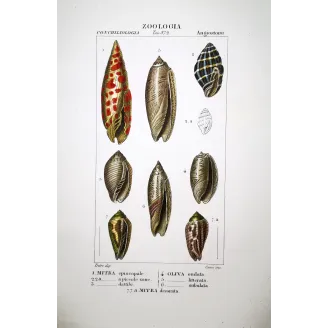
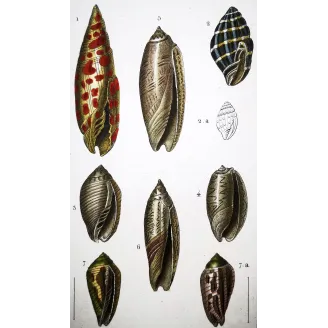
Colorful antique shell print featuring Mitra, Oliva, and Terebra drawn by Prêtre and engraved by Corsi.
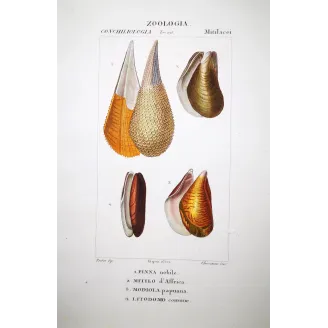
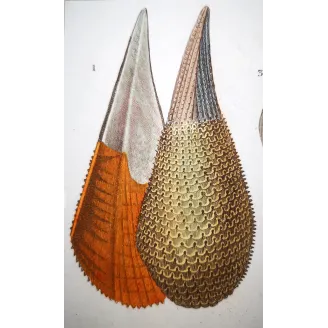
Antique conchology print: Pinna nobilis, Mitilo, Modiola, and Litodomo drawn by Prêtre.
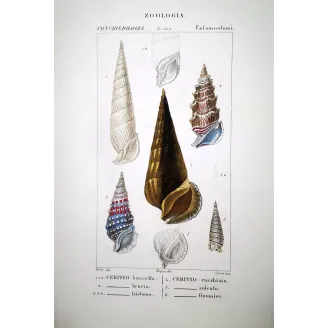
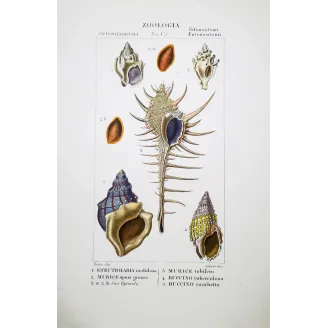
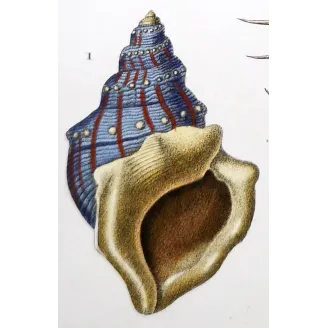
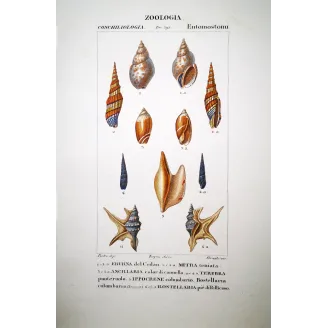
Entomostome shells depicted with chromatic elegance and scientific precision.
Ancient illustrations of turriculated shells, colored with scientific precision.
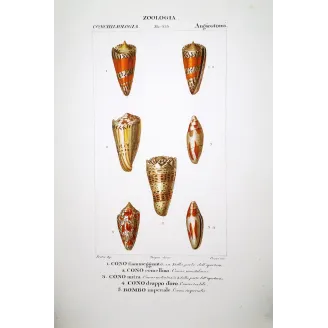
Antique shell engraving: Conus species and Rombo imperiale vibrant and geometrical forms by Prêtre.
Fine antique print of Ciprea, Peribolo, Marginella highly decorative sea shells by Prêtre.
Vintage shell illustration: Cristellaria, Pirgo, Pulvinite, Catillo original 19th century zoological print by Prêtre.