- New
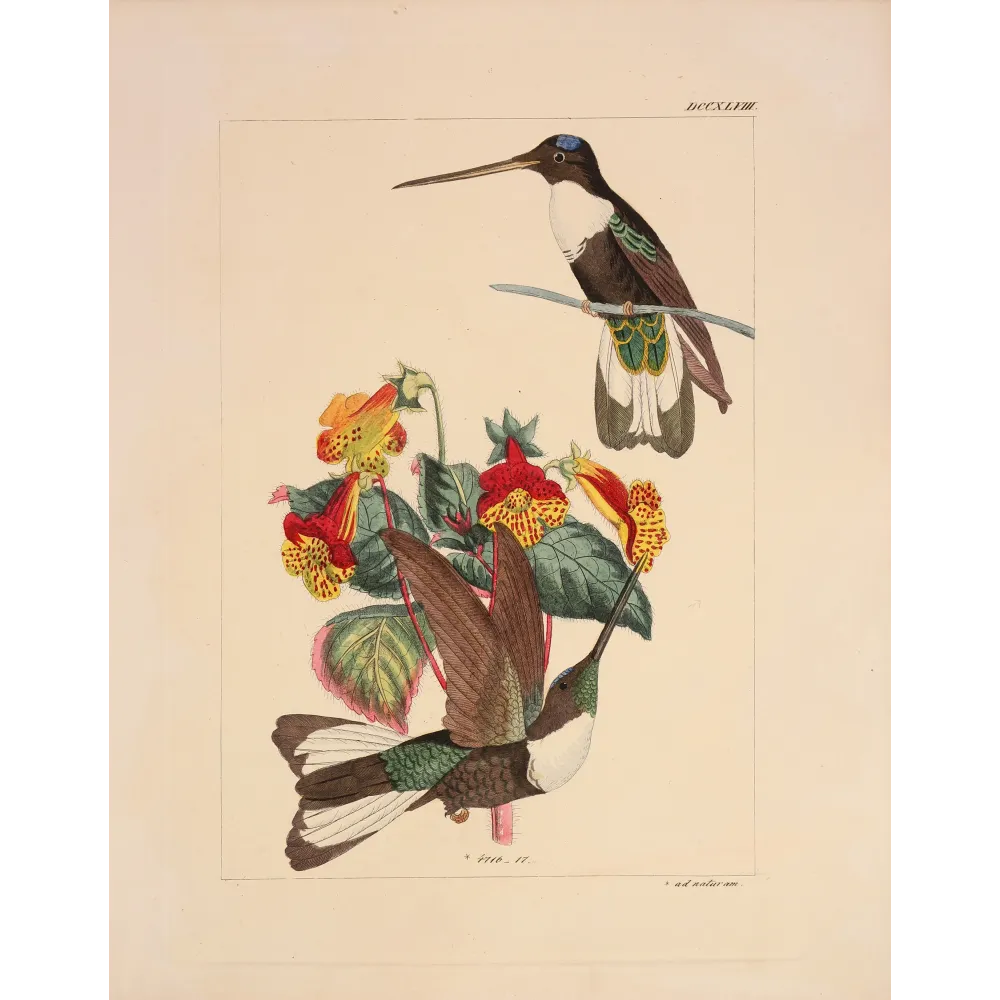
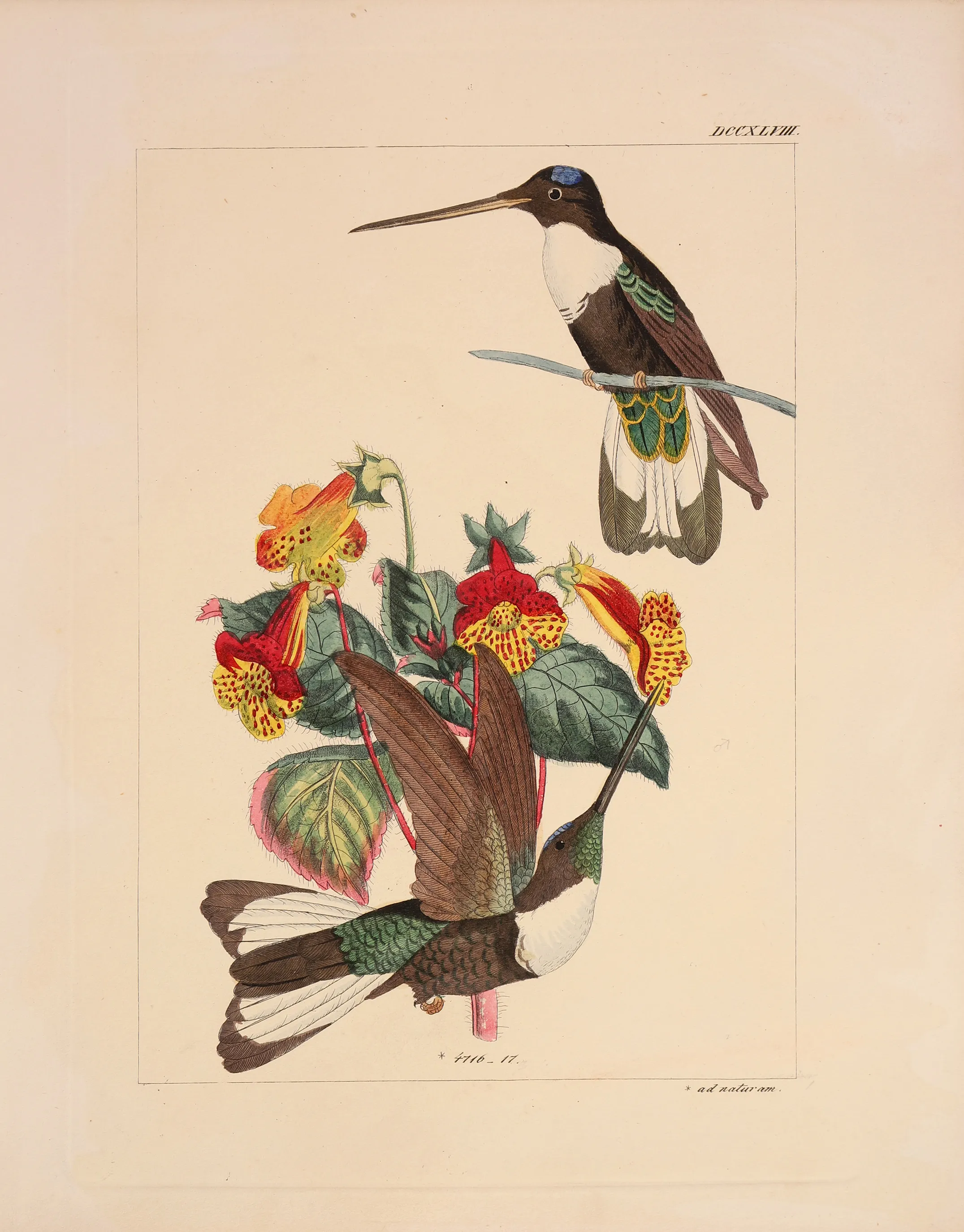
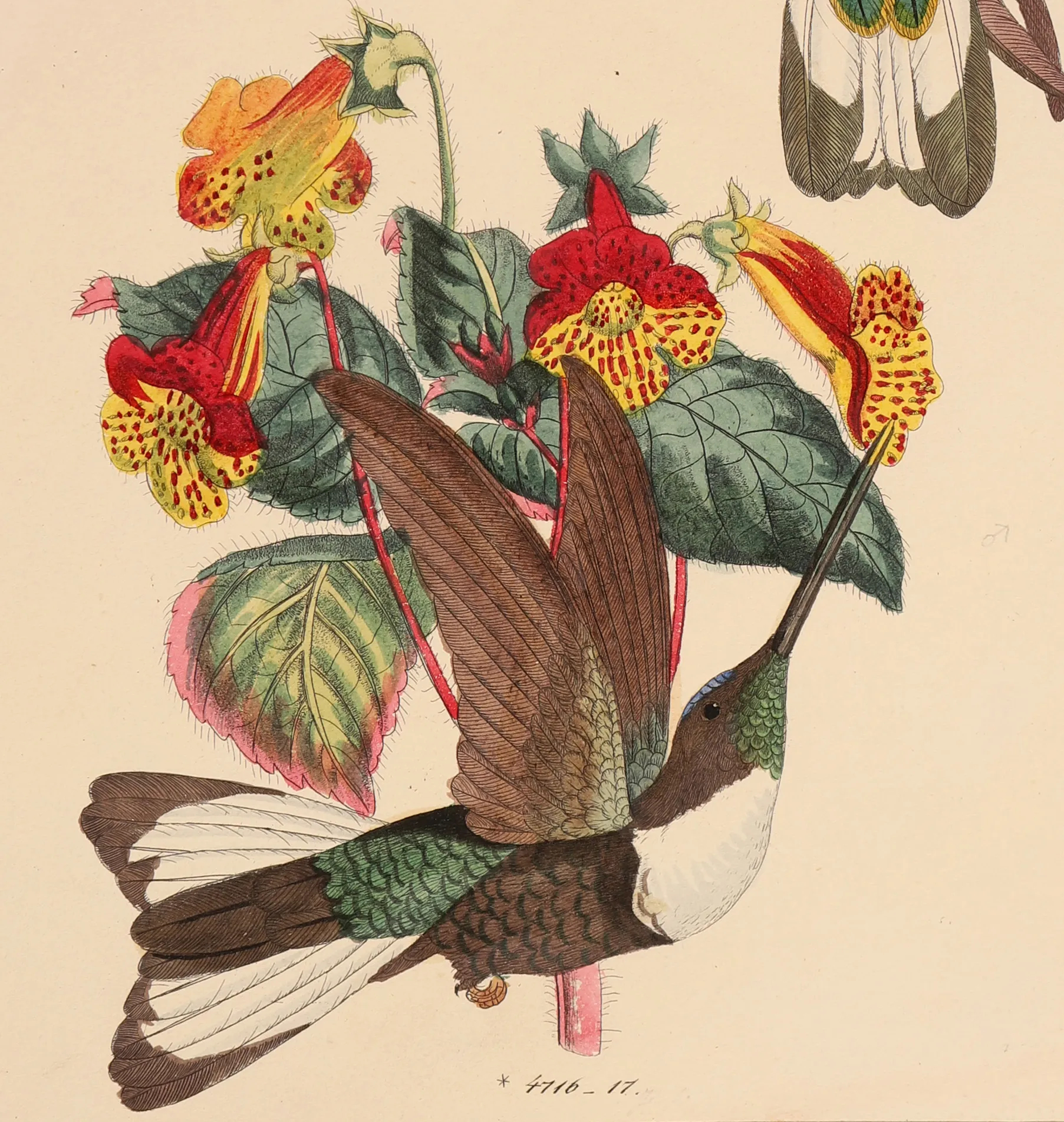
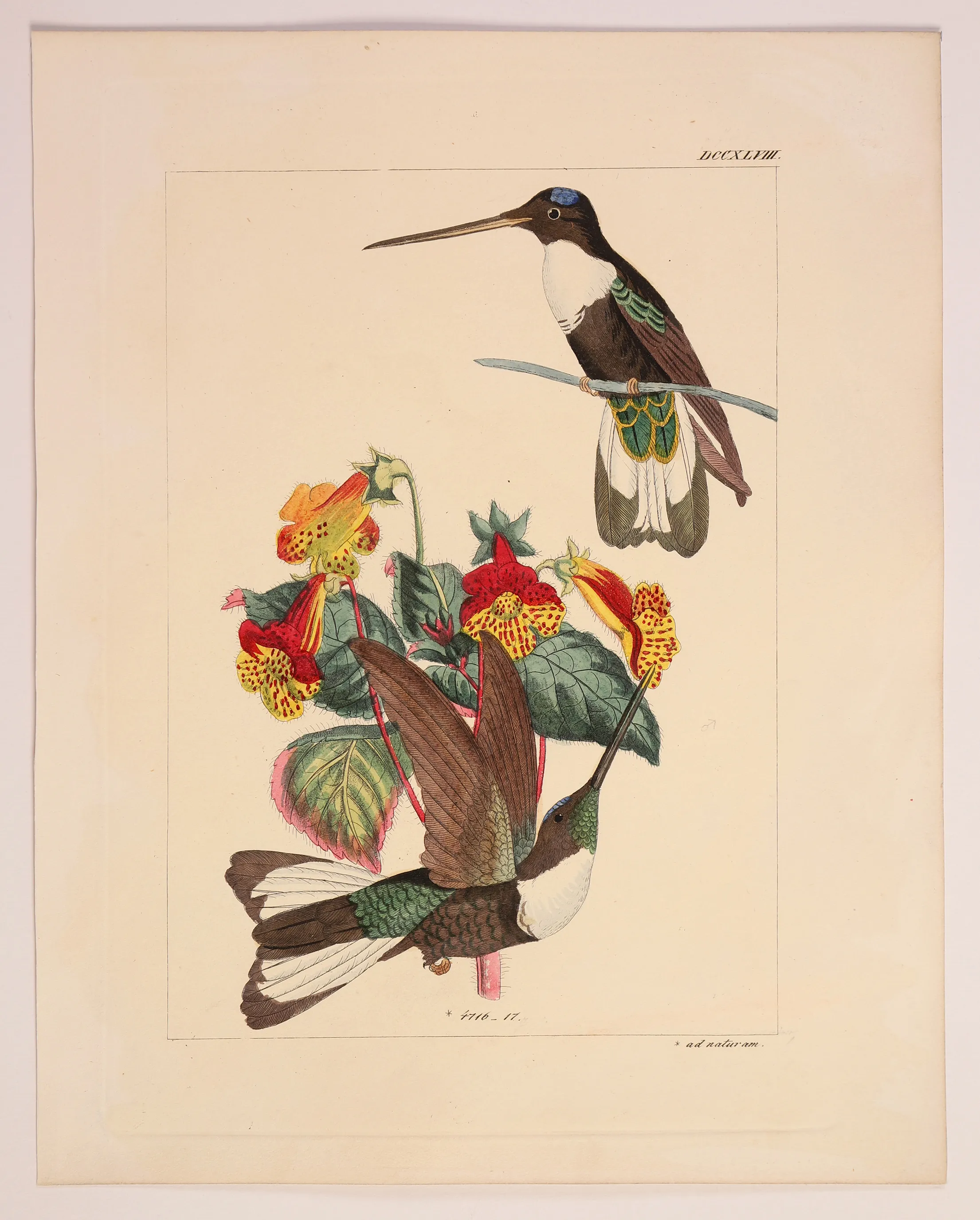
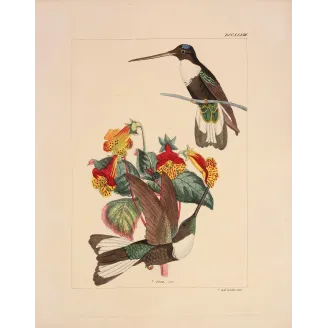
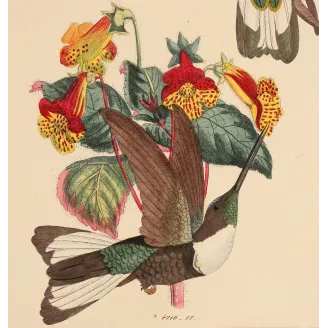
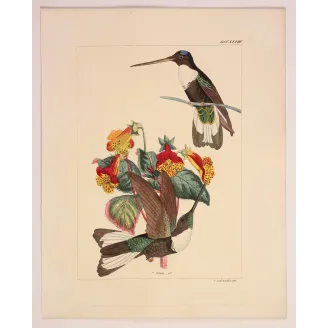
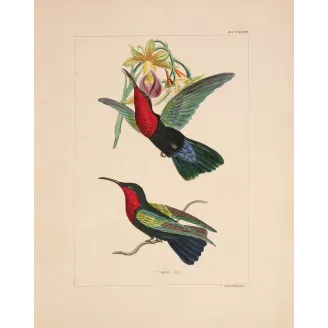
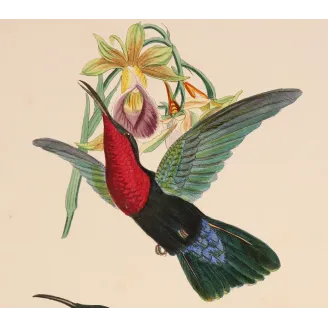
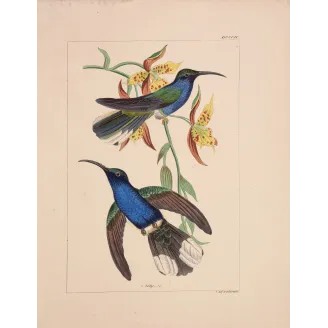
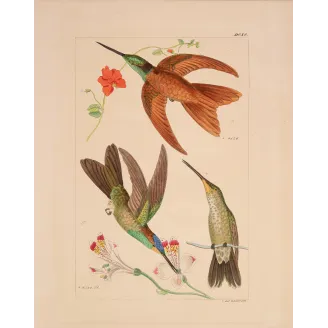
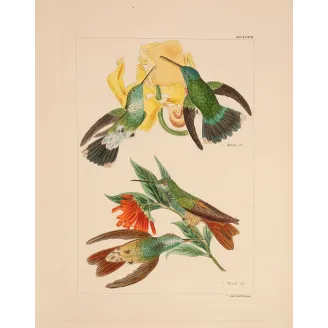
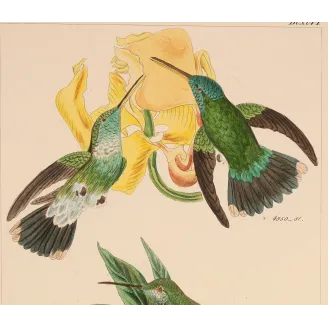
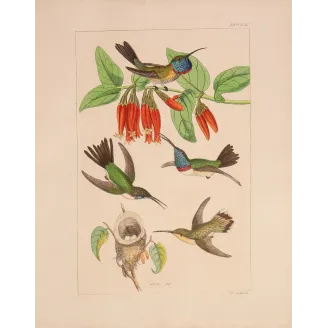
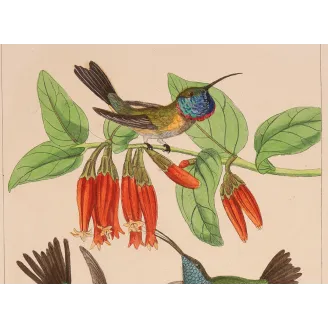
An original nineteenth-century hand-colored engraving from Ludwig Reichenbach's Trochilinarum Enumeratio, depicting Bourcieria prunellii among the vibrant blossoms of Achimenes picta. A refined composition balancing quiet observation and graceful flight in one of the most elegant plates of the series.
 Delivery policy
Your print will be carefully prepared and shipped worldwide via trusted couriers (UPS or similar).
 Authentic antique prints
Original engravings from the 17th–19th century.
This refined original nineteenth-century hand-colored engraving from Ludwig Reichenbach's Trochilinarum Enumeratio depicts Bourcieria prunellii, associated by Reichenbach with Colombia and New Granada. The plate presents two hummingbirds among the vivid tubular blossoms of Achimenes picta, creating a composition of remarkable clarity and elegance.
Rather than relying on abundance, the engraving achieves its strength through contrast. One bird rests in quiet observation above the flowering plant, while the other hovers below in active flight, transforming the scene into a graceful study of stillness, movement and natural behaviour.
The composition is built around a striking diagonal relationship between the perched bird, the flowering stem and the feeding individual below. This creates a visual tension that is both calm and dynamic, allowing the viewer to move naturally between observation and action.
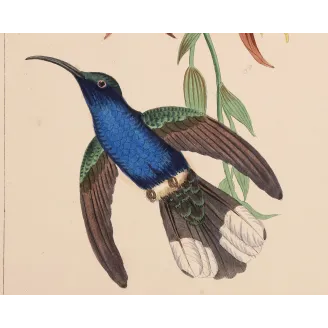
The dark velvety plumage, brilliant white breast and small blue crown accent give the birds a bold graphic presence, while the red and yellow blossoms of Achimenes picta introduce warmth, rhythm and botanical richness. The generous white background enhances the modern elegance of the plate and allows each form to stand with exceptional clarity.
This engraving depicts Bourcieria prunellii, recorded by Reichenbach in association with Colombia and New Granada. The species is presented through two complementary poses, revealing both the poised stillness and the hovering flight that made hummingbirds such captivating subjects for nineteenth-century naturalists.
Reichenbach associated Bourcieria prunellii with Achimenes picta Bentham, a tropical flowering plant whose tubular, brightly patterned blossoms are ideally suited to nectar-feeding birds. The pairing beautifully expresses the ecological relationship between hummingbirds and the specialised flowers they visit.
This engraving belongs to Ludwig Reichenbach's remarkable world of hummingbirds, where Victorian scientific curiosity meets extraordinary visual elegance. Explore the story behind Trochilinarum Enumeratio and discover why these original hummingbird engravings remain so compelling today.
Very Good condition. Original nineteenth-century paper with strong hand colouring and a clear plate mark. Minor age-related signs may be present, entirely consistent with authenticity and the historical character of the work.
Species: Bourcieria prunellii (Bourcier & Mulsant, 1843)
Common name: Prunell's Hummingbird
Work: Trochilinarum Enumeratio
Author: Ludwig Reichenbach
Date: c. 1855–1860
Technique: Original hand-colored engraving
Plate: DCCXLVIII (748)
Reference numbers: 4716–17
Inscription: ad naturam (“drawn from life”)
Associated plant: Achimenes picta Bentham
Origin noted by Reichenbach: Colombia, New Granada
Sheet size: approx. 28.5 × 22.5 cm
Specific References
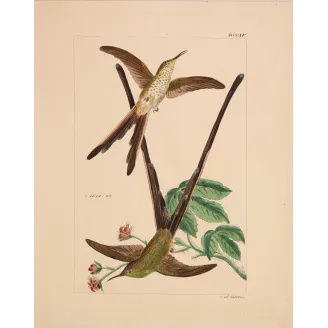
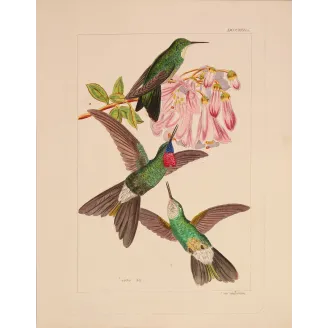
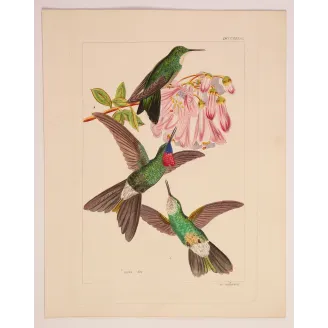
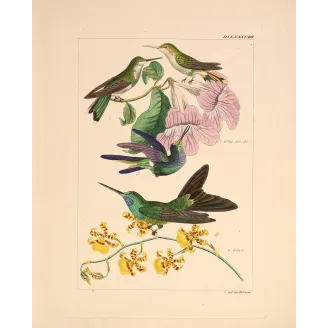
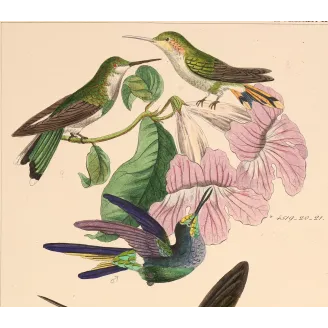
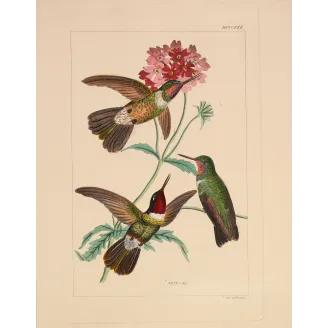
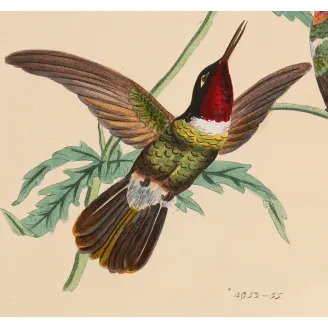
Original nineteenth-century hand-colored engraving by Ludwig Reichenbach, depicting three hummingbirds among pink blossoms. A rare later plate from the Trochilinarum Enumeratio corpus, not fully documented in the principal published index.
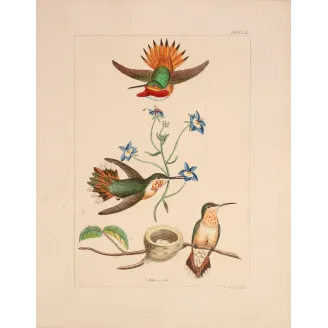
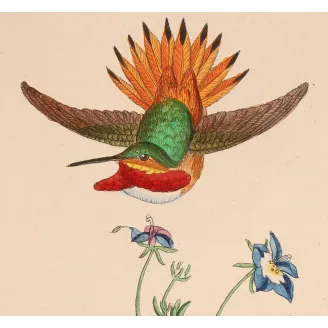
An exceptional original hand-colored engraving from Ludwig Reichenbach's Trochilinarum Enumeratio, portraying hummingbirds during the nesting season. Featuring a beautifully woven nest, delicate blue flowers and vibrant emerald plumage, this rare nineteenth-century composition combines ornithological observation with remarkable decorative elegance.
Original 19th-century hummingbird engraving depicting Cuvier’s Sabrewing (*Campylopterus cuvierii*), published by Ludwig Reichenbach for *Trochilinarum Enumeratio*. A refined composition marked *ad naturam* — drawn from life — combining scientific observation with remarkable decorative elegance.
An original nineteenth-century hand-colored engraving from Ludwig Reichenbach's Trochilinarum Enumeratio, depicting Mango Hummingbirds feeding among elegant tropical blossoms. This refined composition celebrates the remarkable evolutionary relationship between hummingbirds and the flowers they pollinate.
Original nineteenth-century hand-colored engraving depicting Victoria's Trainbearer (Lesbia victoriae), a rare Andean hummingbird illustrated by Ludwig Reichenbach in Trochilinarum Enumeratio.
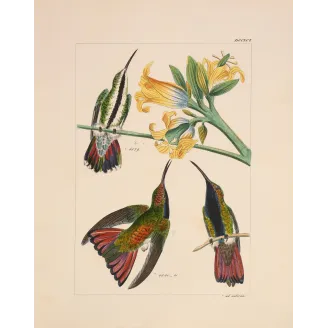
An original nineteenth-century hand-colored engraving from Ludwig Reichenbach's Trochilinarum Enumeratio, depicting three hummingbirds gathered around elegant pendulous blossoms. One of the most harmonious compositions of the series, celebrating movement, colour and the timeless relationship between hummingbirds and flowering plants.
Original nineteenth-century hand-colored engraving depicting Coeligena sagittata and the hummingbird identified by Reichenbach as Warszewiczii (later associated with Helianthea iris Gould). A visually striking composition featuring emerald plumage, warm copper tones and two botanical species from Northern Peru.
An original hand-colored engraving depicting Lucian's Puffleg (Eriocnemis luciani), one of the most distinctive high-Andean hummingbirds illustrated by Ludwig Reichenbach in Trochilinarum Enumeratio (c. 1855–1860). Drawn ad naturam ("from life"), the composition captures the remarkable white feather tufts that give pufflegs their name, together with brilliant emerald plumage and delicate yellow blossoms. Combining Victorian scientific precision with refined decorative elegance, this authentic nineteenth-century engraving remains both an important ornithological document and a striking work of natural history art.
An original nineteenth-century hand-colored engraving from Ludwig Reichenbach's Trochilinarum Enumeratio, depicting Lesbia victoriae among spectacular tropical blossoms. A refined natural history composition celebrating the remarkable partnership between hummingbirds and flowering plants.
An elegant original nineteenth-century hand-colored engraving from Ludwig Reichenbach's Trochilinarum Enumeratio, depicting Ramond's Hummingbird among the scarlet blossoms of Lemoinea spectabilis. A beautifully balanced composition celebrating the harmony between hummingbirds and tropical flowers.
An original nineteenth-century hand-colored engraving from Ludwig Reichenbach's Trochilinarum Enumeratio, depicting hummingbirds surrounding their nest among brilliant tubular blossoms. This elegant composition celebrates the harmony between tropical birds, flowers and the delicate cycle of new life.
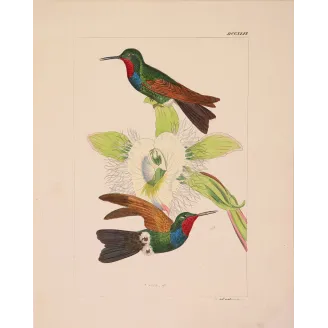
An original nineteenth-century hand-colored engraving from Ludwig Reichenbach's Trochilinarum Enumeratio, depicting Coeligena ourissia among the elegant blossoms of Bignonia picta. Four hummingbirds create one of the most harmonious and visually refined compositions in the celebrated Victorian series.
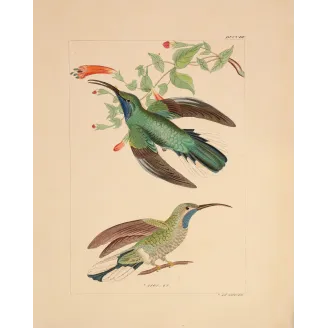
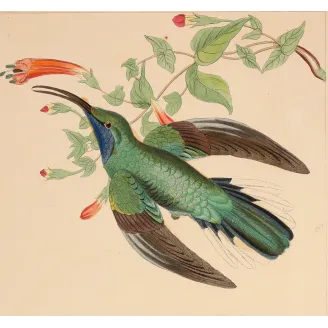
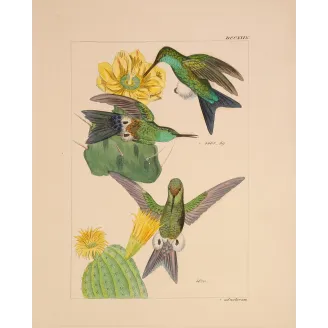
An original nineteenth-century hand-colored engraving from Ludwig Reichenbach's Trochilinarum Enumeratio, depicting Eriocnemis simplex among flowering passionflowers and cactus blossoms. A remarkable natural history engraving celebrating the extraordinary botanical diversity of hummingbird habitats.
Original nineteenth-century hand-colored engraving depicting the Purple-throated Carib (Eulampis jugularis), one of the most spectacular Caribbean hummingbirds illustrated in Ludwig Reichenbach’s Trochilinarum Enumeratio.
Original nineteenth-century hand-colored engraving by Ludwig Reichenbach, depicting three hummingbirds among pink blossoms. A rare later plate from the Trochilinarum Enumeratio corpus, not fully documented in the principal published index.
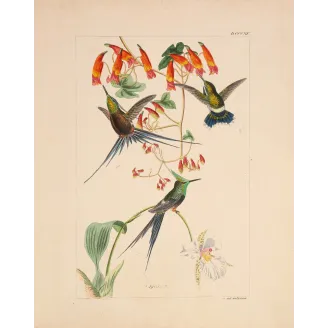
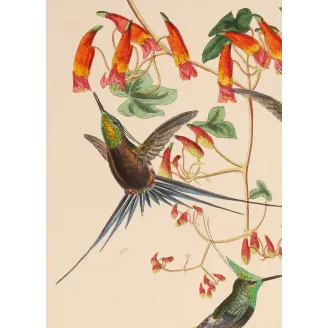
An original nineteenth-century hand-colored engraving from Ludwig Reichenbach's Trochilinarum Enumeratio, portraying elegant long-tailed hummingbirds suspended among cascading tropical blossoms. This exceptionally decorative composition combines graceful movement, botanical beauty and the refined artistry of Victorian natural history illustration.
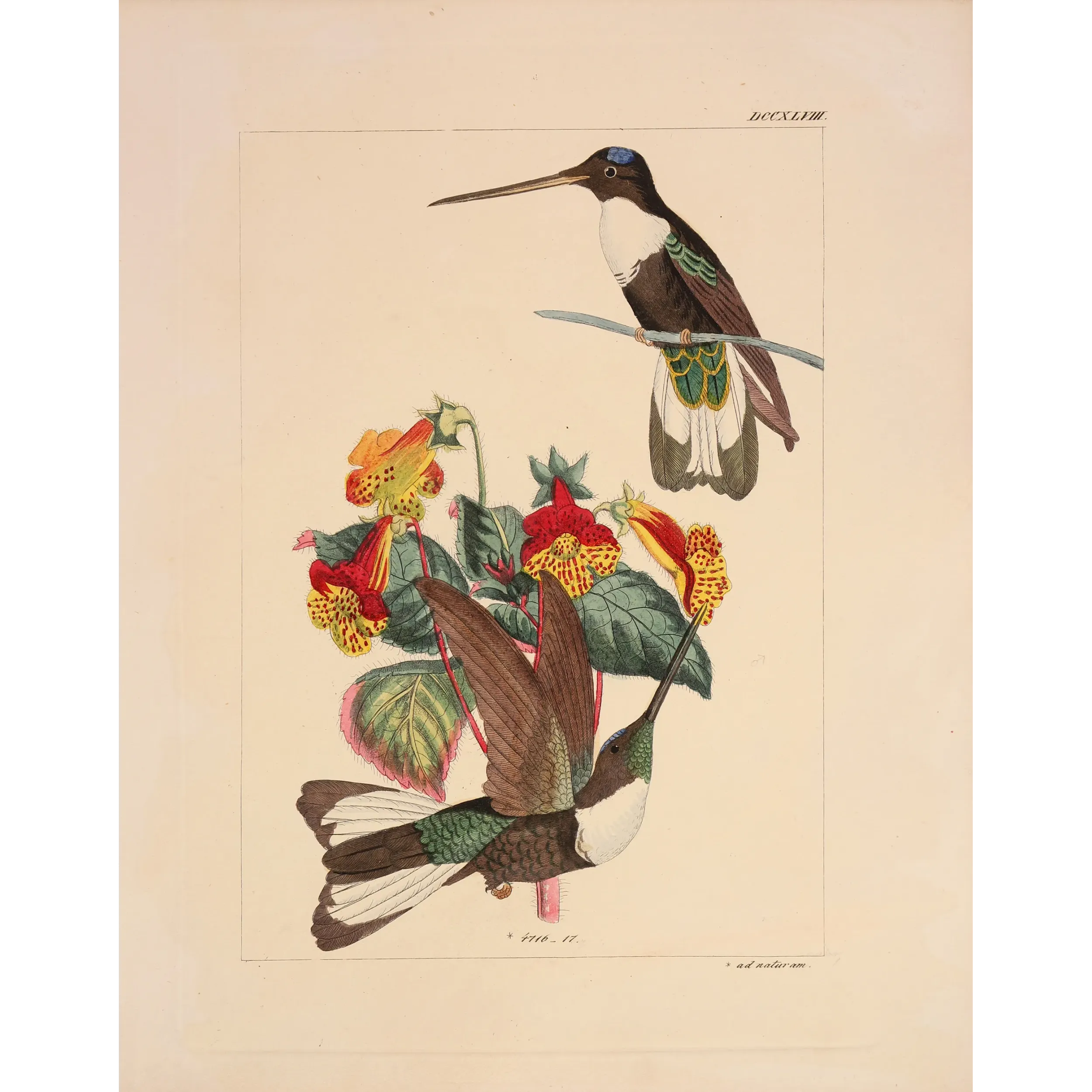
An original nineteenth-century hand-colored engraving from Ludwig Reichenbach's Trochilinarum Enumeratio, depicting Bourcieria prunellii among the vibrant blossoms of Achimenes picta. A refined composition balancing quiet observation and graceful flight in one of the most elegant plates of the series.