- New
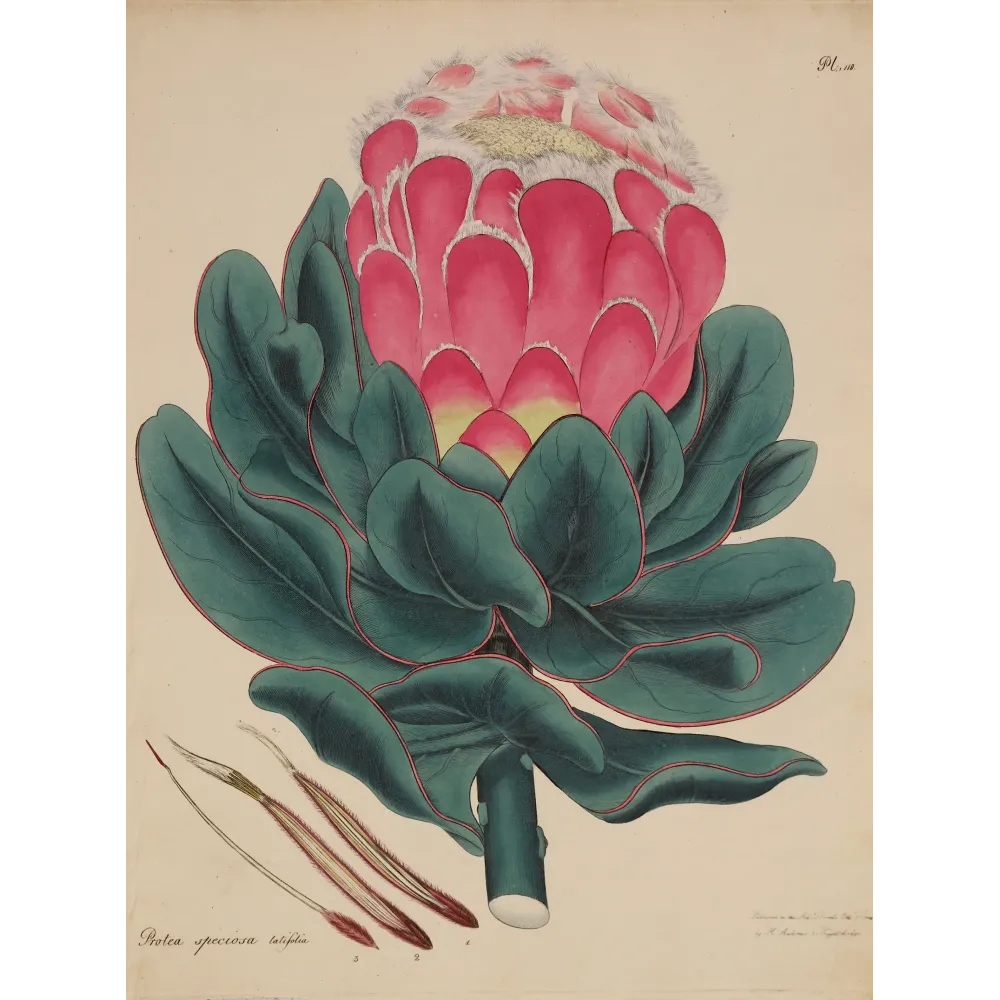
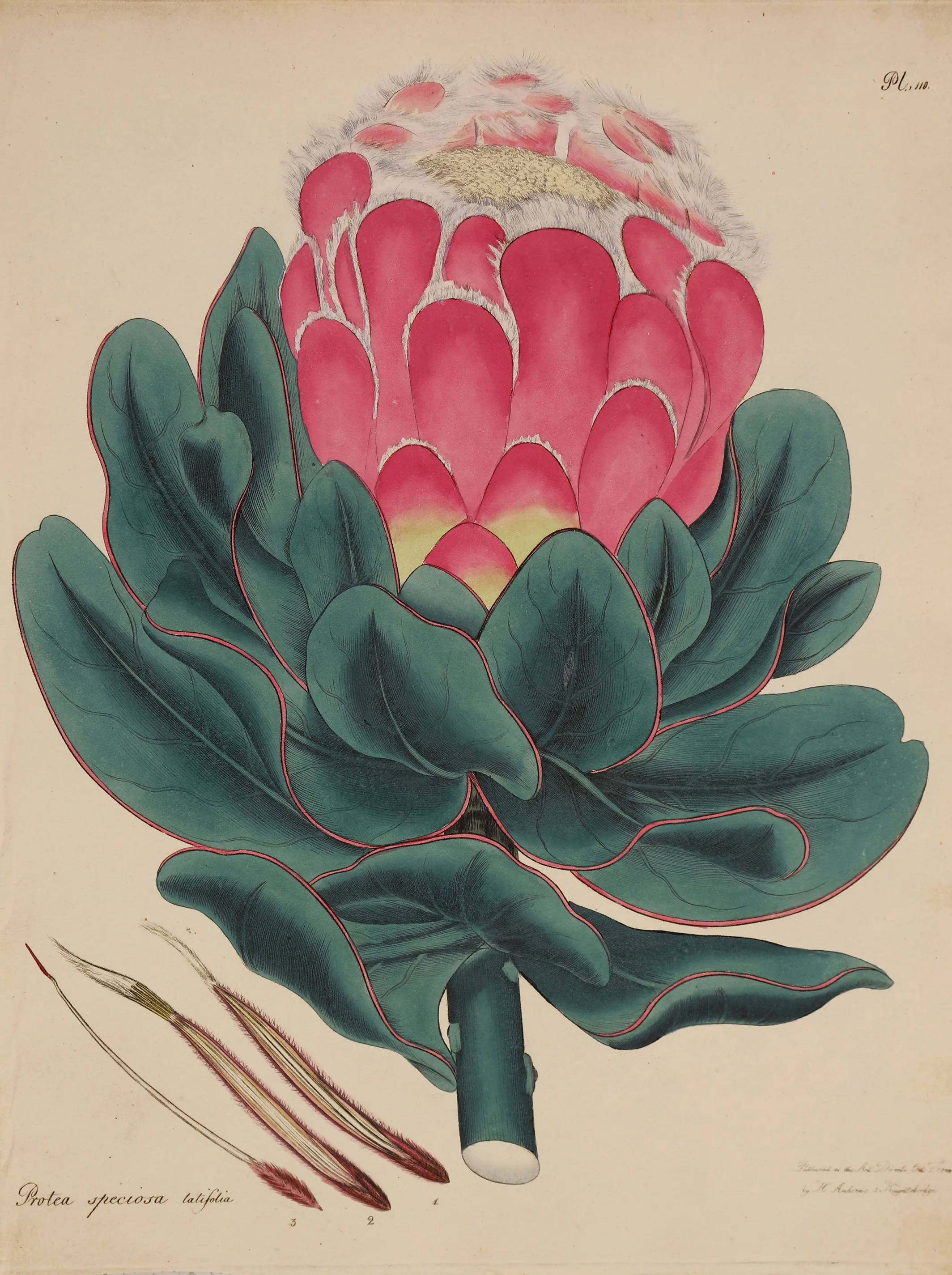
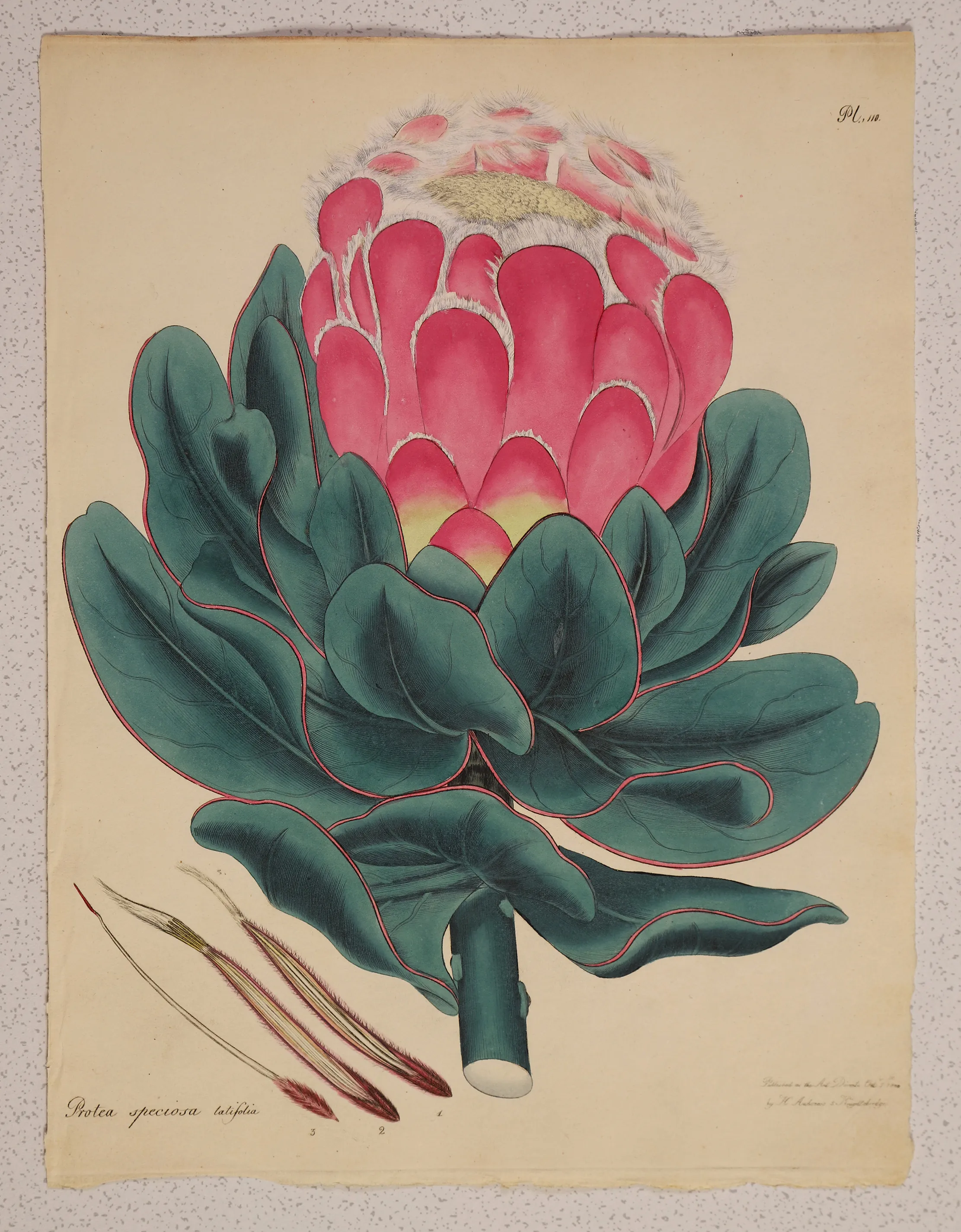
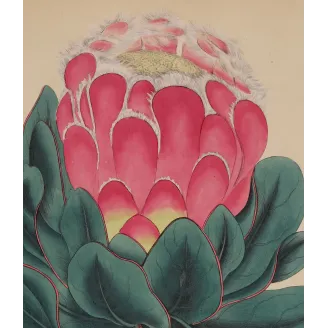
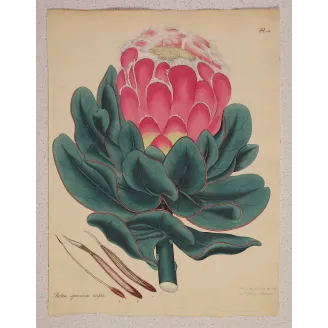
Monumental original hand-coloured engraving of the Broad-Leaved Showy Protea, published as Plate 110 in Henry Charles Andrews’ The Botanist’s Repository. Its sculptural blue-green foliage and extraordinary rose-pink flower make this one of the most iconic botanical images in the collection.
 Delivery policy
Your print will be carefully prepared and shipped worldwide via trusted couriers (UPS or similar).
 Authentic antique prints
Original engravings from the 17th–19th century.
This exceptional original hand-coloured engraving from Henry Charles Andrews’ The Botanist’s Repository depicts Protea speciosa, latifolia, described in the publication as the Broad-Leaved Showy Protea. Published as Plate CX (110), the image transforms one of South Africa’s most remarkable flowering plants into a composition of extraordinary scale, colour and sculptural presence.
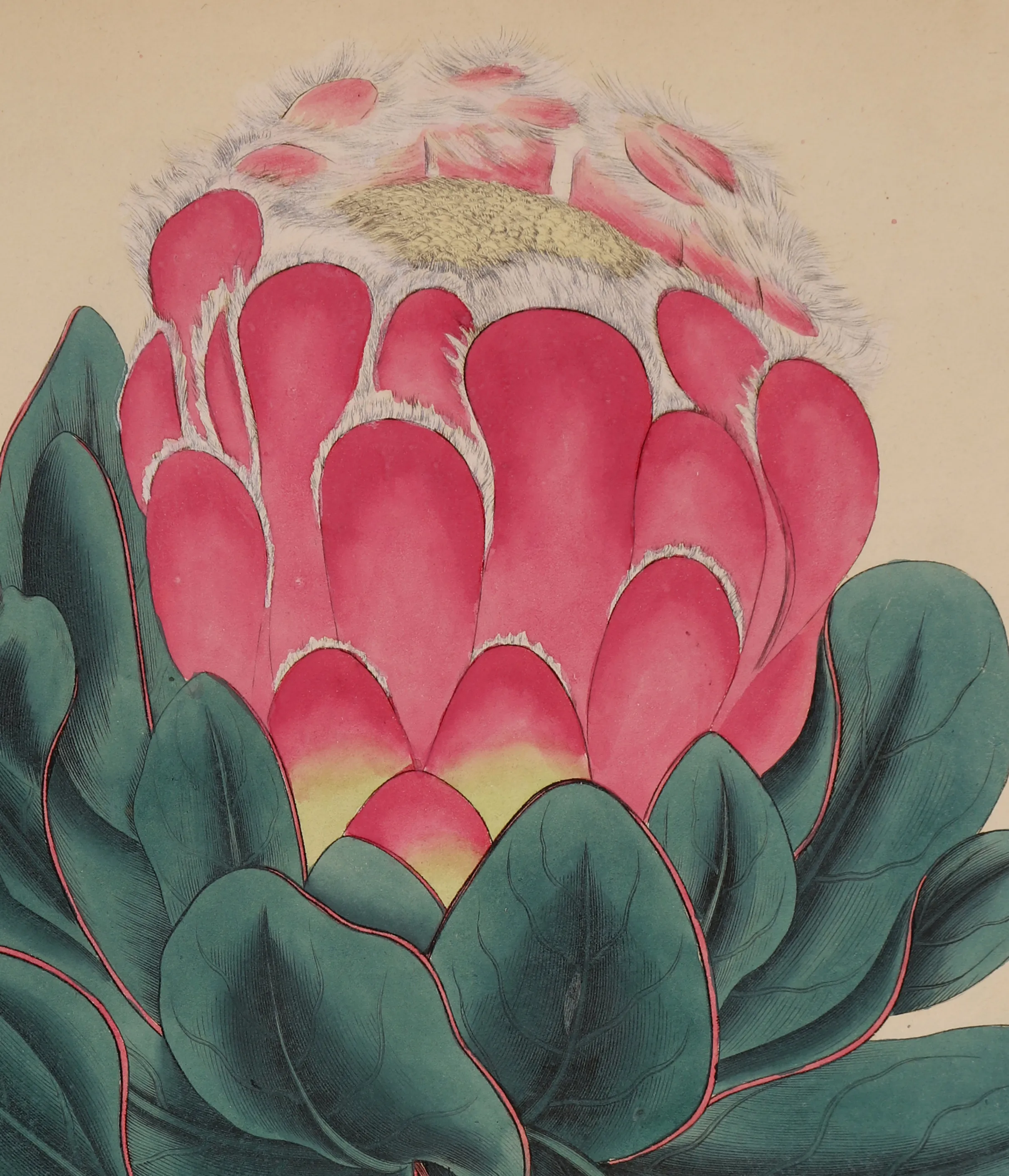
A monumental rose-pink flower rises above dense layers of broad blue-green leaves, filling almost the entire sheet. Rather than presenting the plant as a delicate floral specimen, Andrews gives it the presence of a botanical monument: powerful, exotic and immediately recognisable.
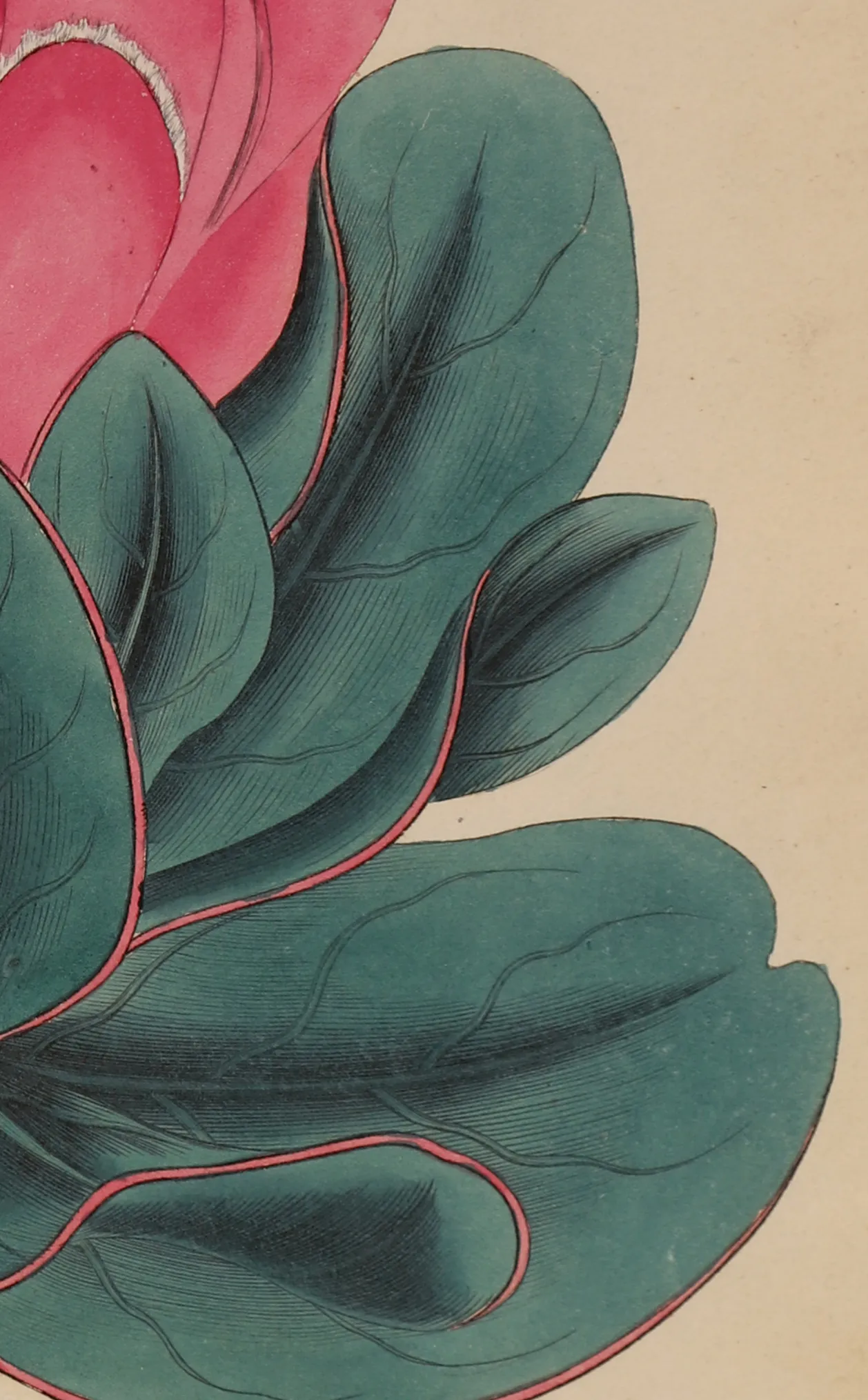
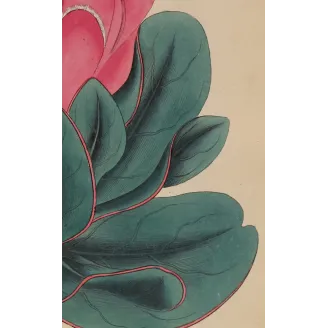
The composition is built around a striking contrast between the rounded mass of the flower and the sweeping architecture of the foliage. The overlapping leaves form a deep sculptural base, while fine crimson outlines define their edges and establish a visual connection with the vivid pink bracts above.
Andrews’ hand colouring is particularly effective. Rich teal-green leaves, crimson contours and luminous shades of rose, cream and yellow give the plate an almost contemporary intensity. Subtle tonal gradations soften the monumental structure of the flower and create a remarkable sense of volume across the broad foliage.
In this impression, the engraved structure is unusually restrained. Fine engraved lines provide the essential framework of the image, but much of the modelling, depth and botanical character is created through transparent applications of watercolour. The resulting effect is more painterly than that of a conventionally hand-coloured engraving and approaches the visual delicacy of an original botanical watercolour.
Near the lower margin, Andrews included separate botanical details showing individual floral structures. These analytical elements provide scientific context without disturbing the commanding simplicity of the principal image, revealing the dual purpose of the plate as both botanical documentation and an independent work of art.
Protea speciosa is native to the Cape region of South Africa, an area celebrated for its exceptional botanical diversity. Its large flower heads, colourful involucral bracts and strong evergreen foliage made it an ideal subject for the British fascination with exotic ornamental plants at the end of the eighteenth century.
Andrews recorded the plant under the historical name Protea speciosa, latifolia. Modern botanical classification places it within Protea speciosa, but the original inscription remains an important part of the plate’s historical identity and reflects the evolving language of botanical science during the Georgian period.
To contemporary British viewers, plants of this kind represented far more than decorative novelty. Recently introduced species from southern Africa embodied geographical discovery, scientific progress and the expanding ambitions of horticultural collections throughout Britain.
Close examination reveals the distinctive material and artistic character of this impression. The image was printed from a copperplate and subsequently coloured by hand, with minute tonal transitions and carefully controlled applications of transparent watercolour that distinguish an original impression from any later reproduction.
The engraved line is particularly restrained throughout the composition. Rather than relying upon dense hatching or strongly defined engraved modelling, Andrews used the copperplate to establish a delicate underlying structure and allowed hand-applied colour to create much of the form, volume and visual depth.
This unusually subtle relationship between engraving and colour gives the plate a markedly painterly quality. Across the monumental flower and broad blue-green leaves, the final appearance is closer to a botanical watercolour than to a conventionally coloured engraving, demonstrating the remarkable control Andrews exercised over both printed line and hand-applied colour.
No gum arabic finishing is visible on this individual impression. Its visual depth and tonal richness are instead produced through the controlled layering of transparent watercolour over the restrained engraved framework.
At the lower right, the sheet retains a faint handwritten publication inscription rather than an engraved publication line. Andrews’ plates commonly followed the formula “Published as the Act directs”, accompanied by the publication date, his name and his London address at 5 Knightsbridge.
The wording referred to the British Engravers’ Copyright Act of 1735, widely known as Hogarth’s Act. The legislation was created to protect engravers and graphic artists against unauthorised copying. The surviving handwritten inscription therefore contributes directly to the publication history of this individual sheet and connects it with Andrews’ activity as both artist and independent publisher.
As is frequently observed in surviving impressions from The Botanist’s Repository, the sheet has been historically trimmed along its two long edges. The trimming enters within the original plate mark, which is consequently not preserved along the vertical sides.
This recurring feature belongs to the material history of the publication. The plates were issued in monthly parts and commonly assembled into bound volumes, while historical binding and trimming often reduced their original lateral margins. The incomplete preservation of the plate mark should therefore be understood as a characteristic frequently encountered in original sheets from the work rather than as evidence of modern alteration.
A further material discovery was made during the examination of another original sheet belonging to this Prantique group of Andrews engravings: a clearly legible J. Whatman 1794 watermark. The finding documents the use within the group of fine English paper associated with the celebrated Whatman mill, renowned for producing high-quality papers for artists, engravers and publishers.
The watermark is a collection-level observation and is not recorded as visible on this individual sheet. Nevertheless, together with the surviving copperplate impression, original hand colouring, handwritten publication inscription and characteristic historical trimming, it helps reconstruct the exceptional materials and artisanal processes behind The Botanist’s Repository.
Andrews was unusual among botanical illustrators because he maintained close control over almost every stage of production. He drew from living plants, engraved the copperplates, prepared the impressions, coloured the plates and published the work himself. This integration of observation, engraving, colour and publishing gives his botanical images their extraordinary consistency and distinctive visual identity.
This engraving belongs to Henry Charles Andrews’ extraordinary world of new and rare plants, created during Britain’s great age of botanical exploration. Discover Andrews’ unusual working method and the material evidence preserved within original impressions, including hand colouring, engraved structure, publication inscriptions, historical trimming, selected applications of gum arabic and Whatman paper.
Henry Charles Andrews and Britain’s Passion for Exotic Plants →
Very Good condition. Original late eighteenth-century paper with strong and remarkably vivid hand colouring. Light, even age-related toning, subtle surface marks and minor irregularities are present, entirely consistent with the authenticity and historical character of the work. As frequently encountered in impressions from The Botanist’s Repository, the sheet has been historically trimmed along its two long edges within the original plate mark. The faint handwritten publication inscription remains visible at the lower right. Please examine the professional high-resolution photographs for a complete visual assessment.
Historical name: Protea speciosa, latifolia
Accepted botanical name: Protea speciosa (L.) L.
Historical common name: Broad-Leaved Showy Protea
Work: The Botanist’s Repository, for New, and Rare Plants
Author, artist and engraver: Henry Charles Andrews
Publisher: Henry Charles Andrews, 5 Knightsbridge, London
Date: c. 1799–1800
Technique: Original copper engraving with hand-applied watercolour
Publication inscription: Faint handwritten inscription at lower right
Plate mark: Historically trimmed within the plate mark along the two long edges
Plate: CX (110)
Plant family: Proteaceae
Native region: Cape Provinces, South Africa
Sheet size: approx. 28 × 22 cm
Specific References
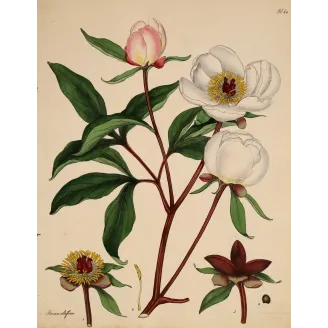
An exceptionally refined original hand-coloured engraving depicting the White Peony, published by Henry Charles Andrews in The Botanist's Repository in 1799. Delicate grey modelling, luminous white petals and beautifully preserved gum arabic finishing make this one of the finest botanical plates of the series.
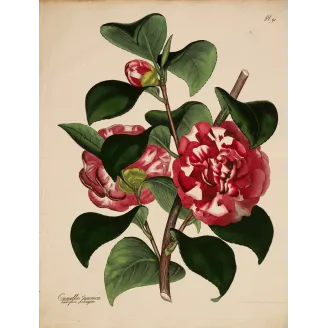
An original hand-coloured engraving of Camellia japonica from Henry Charles Andrews' celebrated The Botanist's Repository. Published around 1799, this elegant botanical print combines exceptionally refined hand colouring, selective gum arabic finishing on the foliage and Andrews' characteristic handwritten publication inscription.
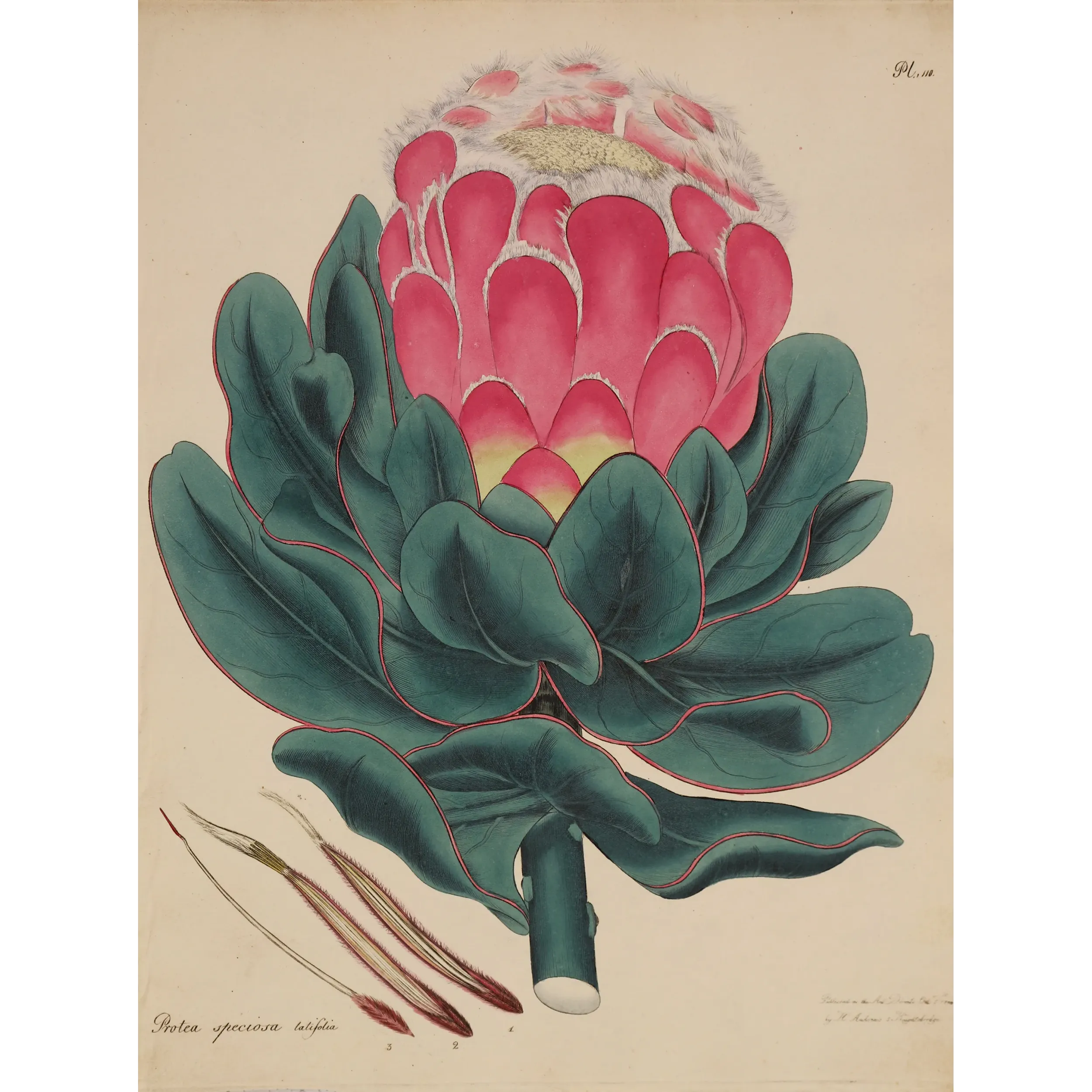
Monumental original hand-coloured engraving of the Broad-Leaved Showy Protea, published as Plate 110 in Henry Charles Andrews’ The Botanist’s Repository. Its sculptural blue-green foliage and extraordinary rose-pink flower make this one of the most iconic botanical images in the collection.