- New
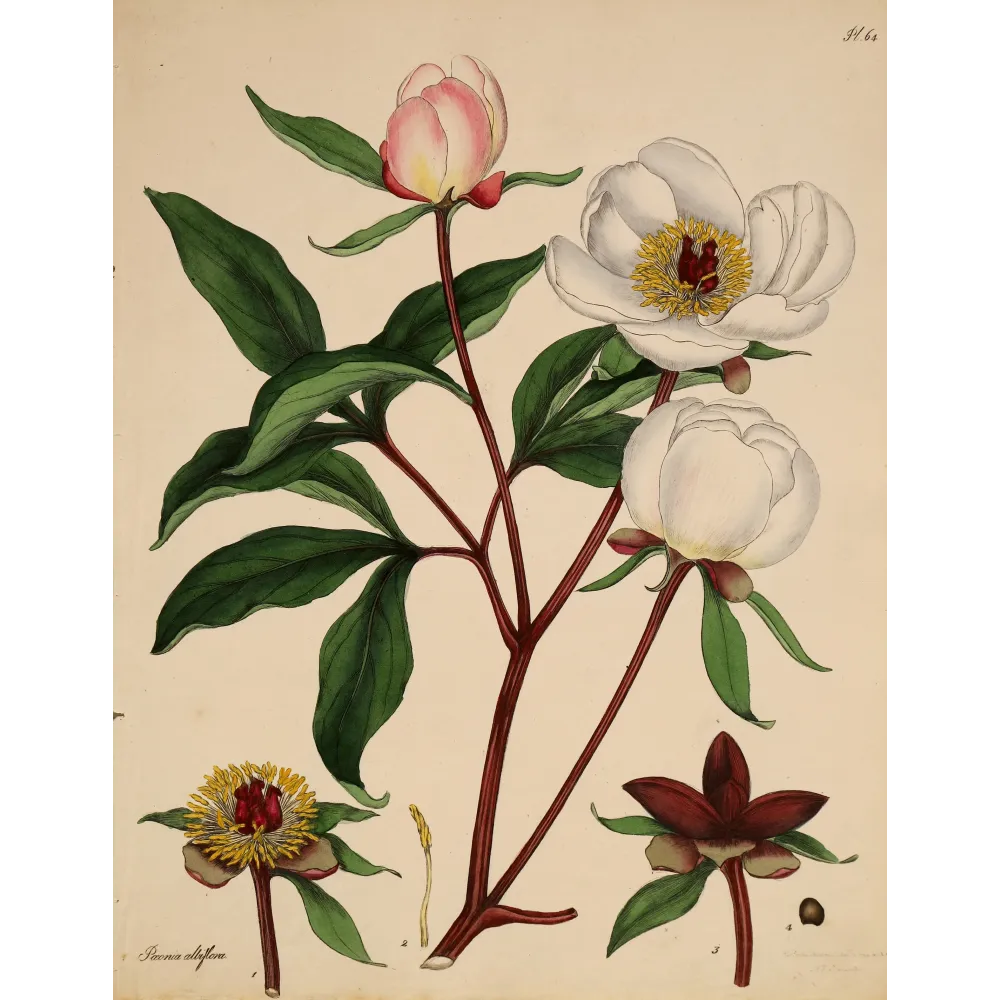
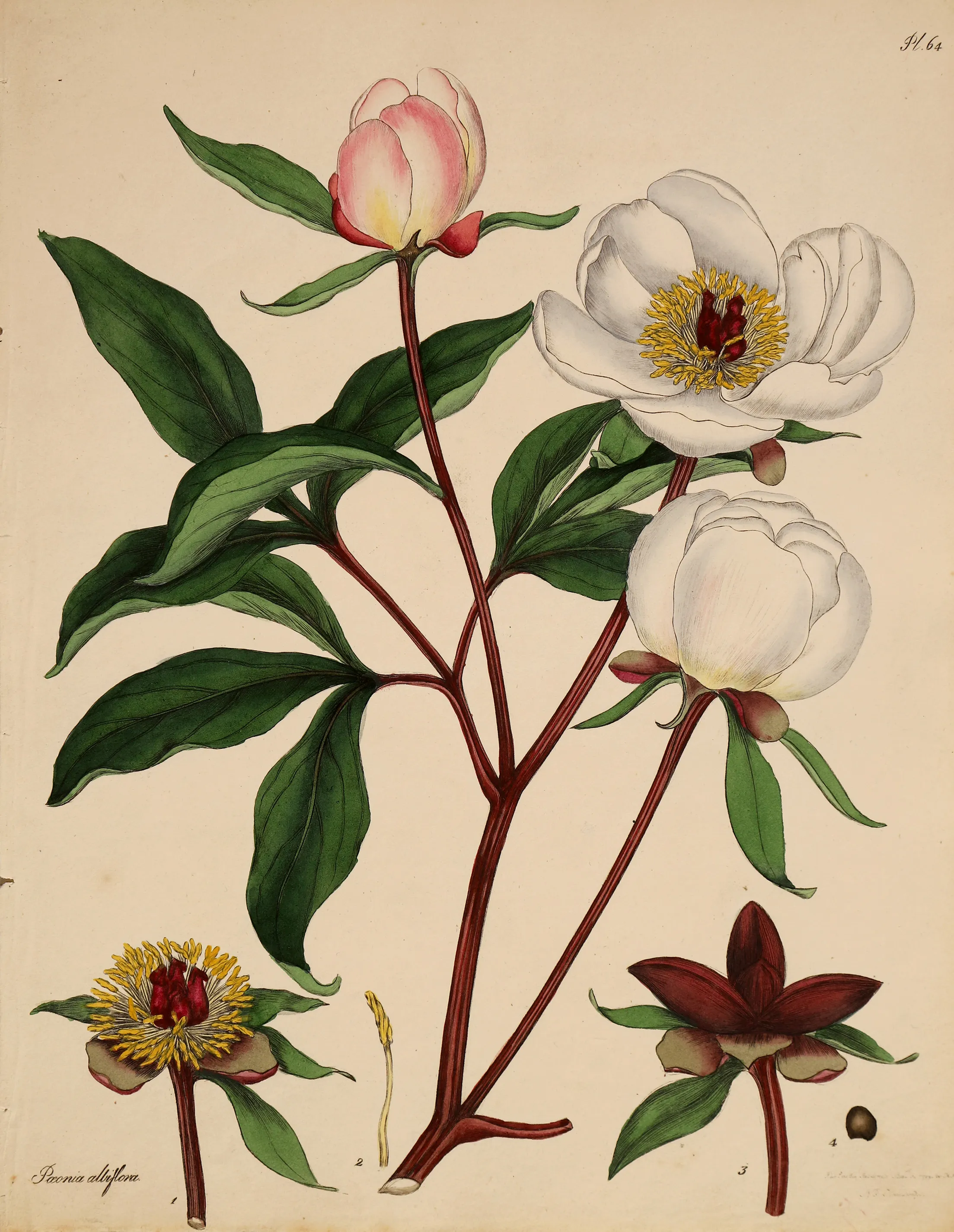
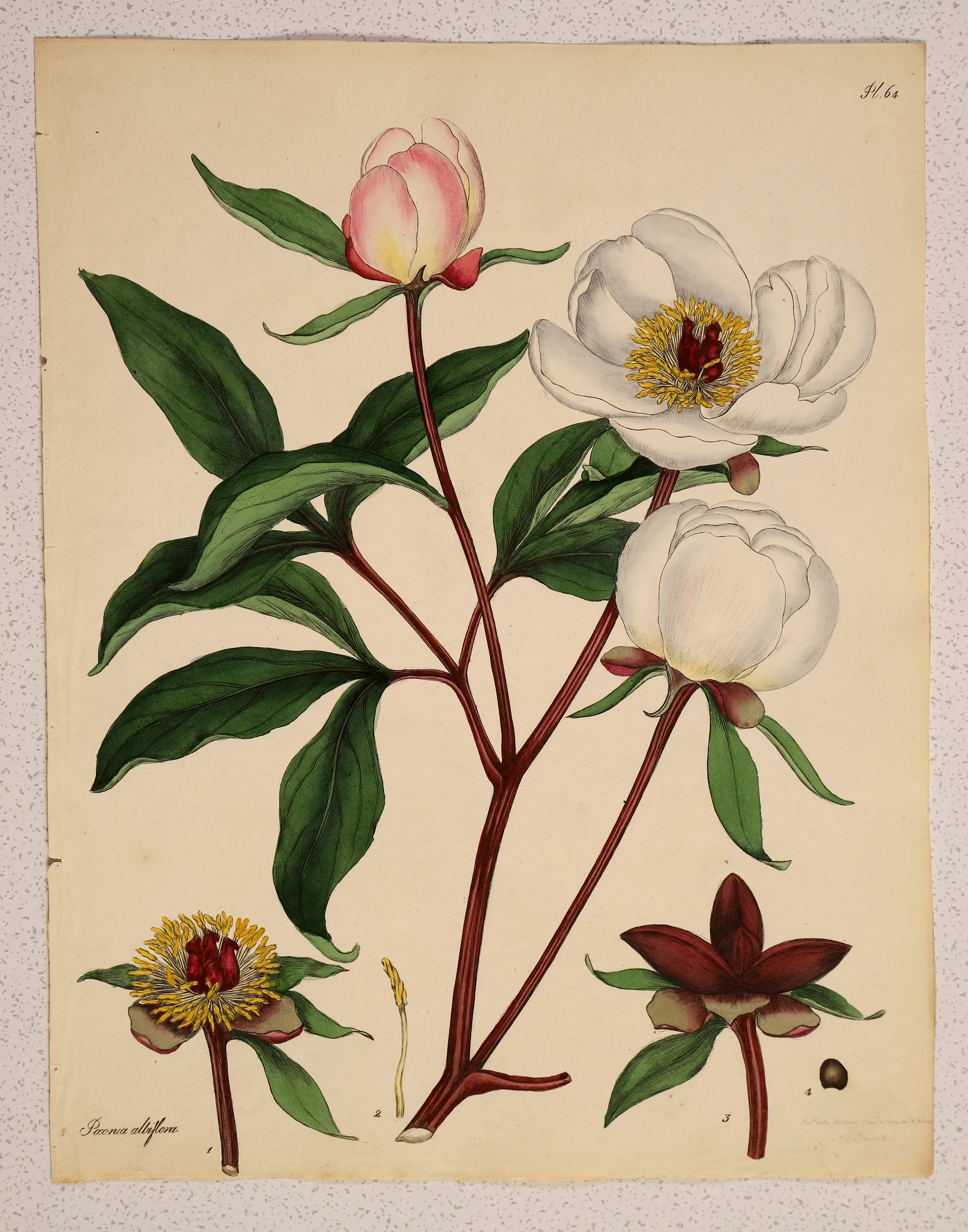
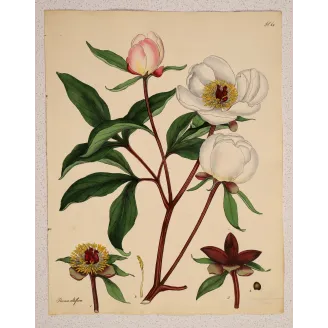
An exceptionally refined original hand-coloured engraving depicting the White Peony, published by Henry Charles Andrews in The Botanist's Repository in 1799. Delicate grey modelling, luminous white petals and beautifully preserved gum arabic finishing make this one of the finest botanical plates of the series.
 Delivery policy
Your print will be carefully prepared and shipped worldwide via trusted couriers (UPS or similar).
 Authentic antique prints
Original engravings from the 17th–19th century.
This exceptional original hand-coloured engraving from Henry Charles Andrews’ The Botanist’s Repository depicts the White Peony, historically recorded as Paeonia albiflora and now generally accepted as Paeonia lactiflora. Published in 1799 as Plate LXIV (64), the print combines botanical precision with an extraordinary mastery of light, colour and technical restraint.
A fully opened white flower rises above the foliage beside two blossoms at different stages of development. Andrews transforms the progression from enclosed bud to mature flower into a composition of exceptional purity and balance, culminating in the immaculate luminosity of the expanded petals.
The composition develops vertically through a graceful arrangement of stems, leaves and flowers. A rounded bud occupies the upper part of the sheet, while the fully opened blossom forms the luminous centre of the image. A second, partially enclosed flower introduces another stage in the plant’s flowering cycle and creates a gentle visual rhythm across the plate.
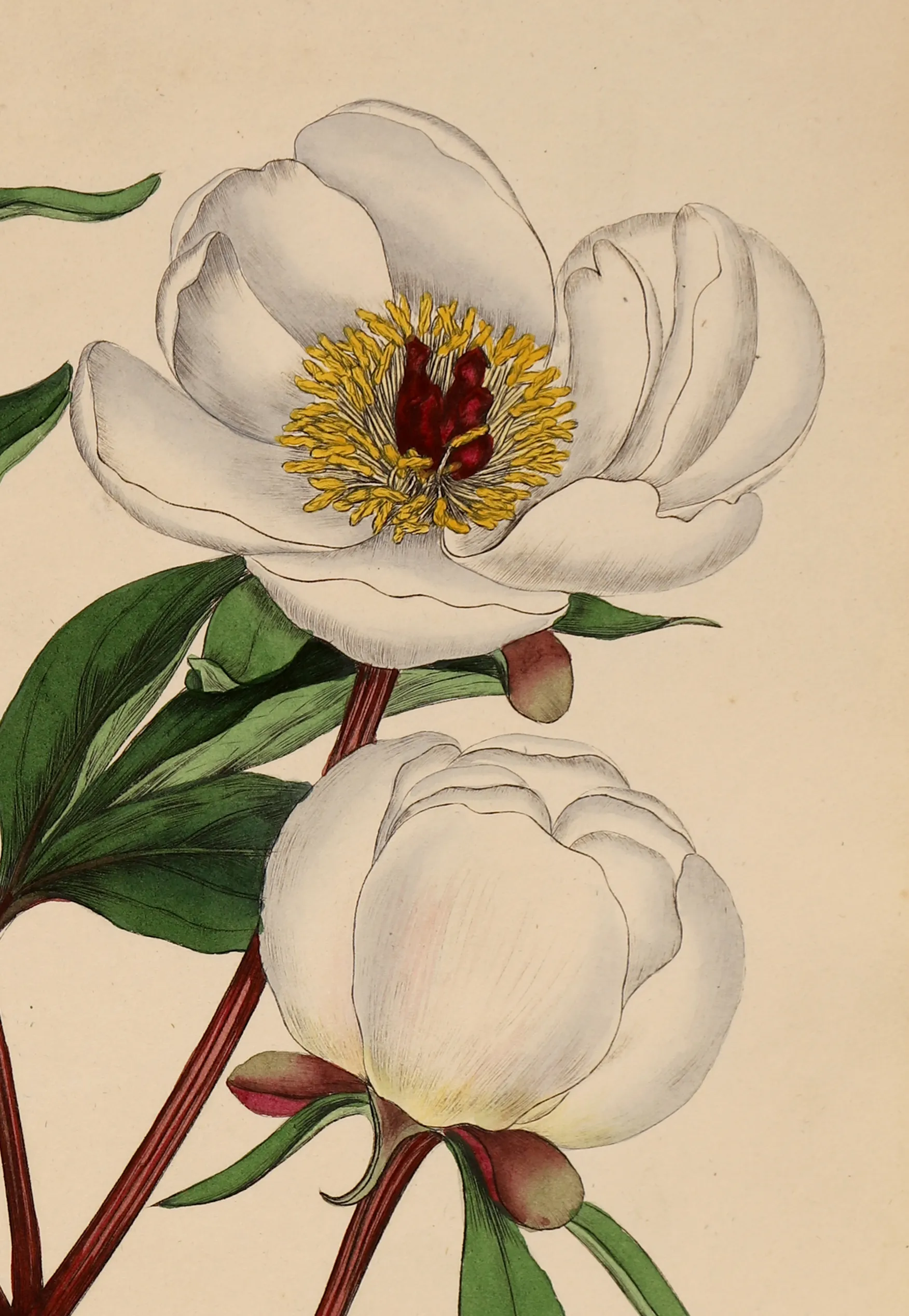
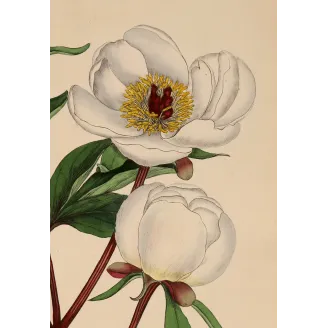
The fully opened flower is a remarkable demonstration of Andrews’ mastery of hand colouring. Rather than modelling the petals through dense colour, he preserves the untouched white of the paper as the principal source of light. Only the lightest pearl-grey washes describe the folds, overlaps and subtle transitions of form.
The petals consequently appear almost immaculate. Their convincing three-dimensional volume emerges from minute tonal variations rather than strongly defined outlines or heavy shadows. This exceptional restraint allows the blossom to remain luminous and pure while giving it an almost sculptural presence.
The same delicate treatment continues across the unopened and partially opened flowers. Soft grey modelling defines the white petals, while restrained touches of pink and crimson reveal the internal structures and the gradual unfolding of the blossom. The golden stamens and deep red carpels at the centre of the open flower provide a concentrated note of colour without disturbing its overall luminosity.
The rich green foliage and warm reddish-brown stems create a strong but carefully controlled contrast with the flowers. Their deeper tones anchor the composition and intensify the immaculate white of the petals, while the analytical botanical details arranged near the lower margin complete the plate’s scientific purpose without interrupting its visual harmony.
The engraved structure is deliberately restrained throughout the composition. Fine lines establish the essential botanical framework, but much of the volume, softness and natural character of the flowers is created through transparent applications of hand-applied watercolour. The resulting image approaches the delicacy and immediacy of an original botanical watercolour.
Paeonia lactiflora, historically described as Paeonia albiflora, is a herbaceous perennial native to temperate regions of East Asia. It is admired for its large flowers, deeply divided foliage and long history of cultivation as both an ornamental and culturally significant plant.
The species produces flowers ranging from pure white to pale and deeper shades of pink. Its elegant blossoms, strong stems and generous flowering habit made it especially attractive to European horticulturists during the expansion of botanical collecting in the late eighteenth and early nineteenth centuries.
The historical name Paeonia albiflora refers directly to the characteristic white flower represented in this plate. Although botanical nomenclature has subsequently changed, Andrews’ original identification remains an important part of the print’s historical identity and reflects the evolving classification of newly studied plants during the Georgian period.
For contemporary viewers, the peony combined botanical rarity with longstanding associations of beauty, abundance and refinement. In Andrews’ interpretation, however, its ornamental character is conveyed without excess: the flower’s value lies in the purity of its form, the delicacy of its colouring and the quiet authority of its presence.
Close examination reveals the extraordinary refinement of Andrews’ working method. The image was printed from a delicately engraved copperplate and subsequently brought to life through exceptionally fine layers of transparent, hand-applied watercolour.
The engraved framework remains intentionally light throughout the flowers. Rather than relying upon dense hatching or strongly defined engraved modelling, Andrews uses the copperplate only to establish the essential botanical structure and allows colour itself to describe volume, light and the soft construction of the petals.
The representation of white is the plate’s most remarkable technical achievement. Andrews does not attempt to cover the paper with opaque pigment. Instead, he preserves its natural whiteness and introduces only minute pearl-grey washes where the petals fold, overlap or turn away from the light.
These restrained tonal transitions create a convincing sense of depth while allowing the flowers to retain an immaculate luminosity. The expanded blossom and the enclosing bud appear both delicate and sculptural, demonstrating how exceptionally little colour was required to create a highly sophisticated illusion of three-dimensional form.
The subtle relationship between printed line, untouched paper and transparent watercolour gives the finished impression a markedly painterly character. At close range, the flowers appear less like conventionally coloured engravings than passages from an original botanical watercolour.
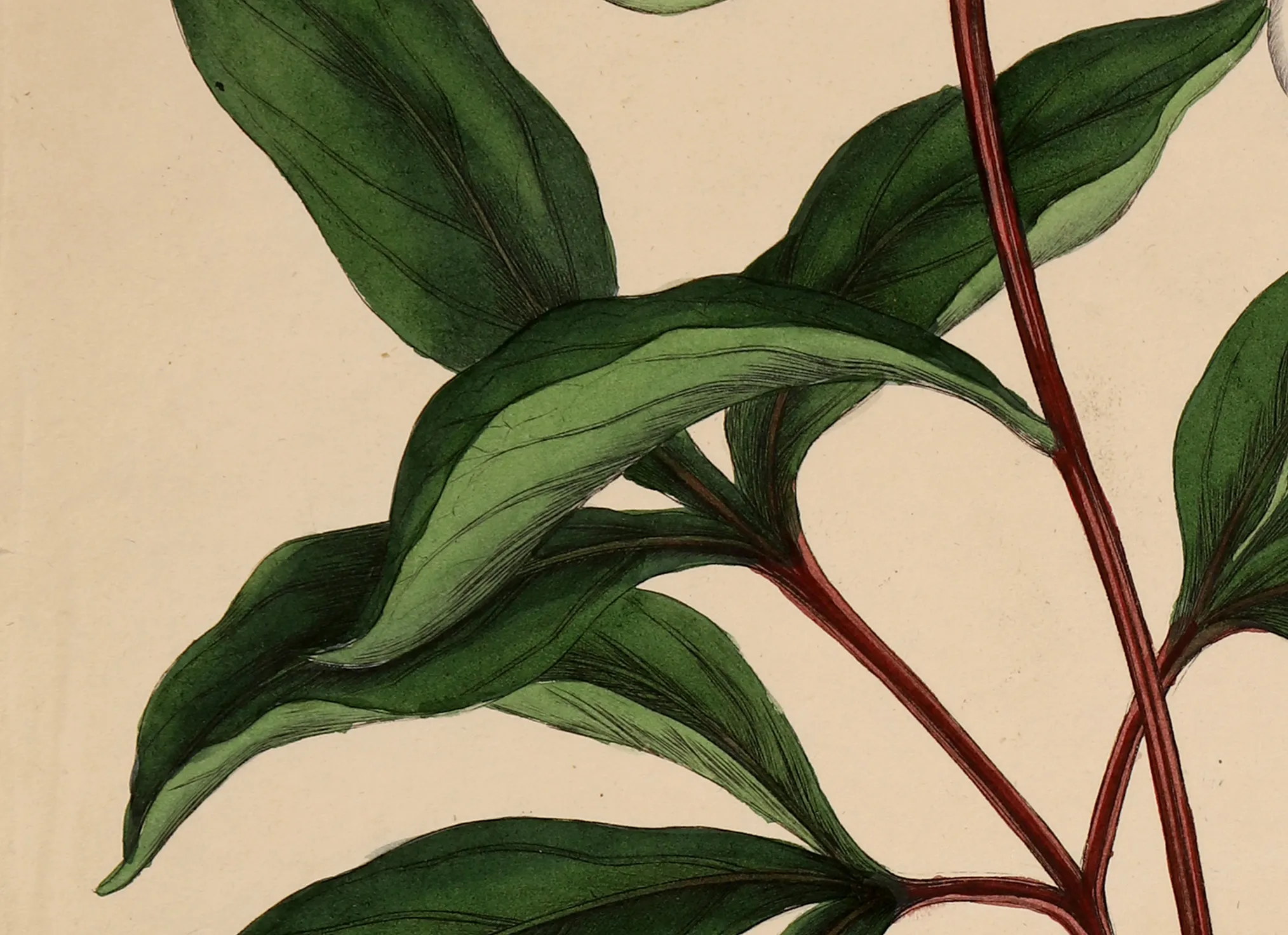
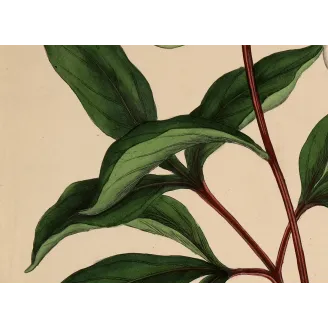
By contrast, the selective application of gum arabic across the foliage creates gentle surface reflections that reinforce the naturally smooth and living character of the leaves. The finish is not distributed uniformly across the composition but is concentrated where it supports the material qualities of the plant.
Andrews therefore adapts his materials to the contrasting surfaces represented within the image. The white petals absorb and diffuse light through the untouched paper and the palest watercolour washes, while the foliage reflects it with a restrained lustre. The physical qualities of the print closely echo those of the living plant.
At the lower right, the sheet preserves Andrews’ characteristic handwritten publication inscription rather than an engraved publication line. This minute notation originally recorded the publication details, commonly including the wording “Published as the Act directs”, the date, Andrews’ name and his address at 5 Knightsbridge, London.
The wording referred to the British Engravers’ Copyright Act of 1735, widely known as Hogarth’s Act. The legislation was created to protect engravers and graphic artists against unauthorised copying. Although discreet, the surviving handwritten inscription forms an integral part of the publication history and material identity of this original impression and should not be mistaken for a later annotation.
The original plate mark is not visible on this individual sheet. This is consistent with the historical trimming frequently encountered in impressions from The Botanist’s Repository, whose plates were issued in parts and subsequently assembled into bound volumes.
No watermark has been observed on this individual impression. Examination of another original sheet belonging to this Prantique group of Andrews engravings, however, revealed a clearly legible J. Whatman 1794 watermark, documenting the use of fine English Whatman paper within the publication.
Although the watermark is a collection-level observation rather than a feature recorded on this sheet, it provides valuable material context for the group. Together with the surviving copperplate impression, original hand colouring, selective gum arabic finishing and handwritten publication inscription, it helps reconstruct the exceptional materials and artisanal processes behind The Botanist’s Repository.
Andrews was unusual among botanical illustrators because he maintained close control over almost every stage of production. He drew from living plants, engraved the copperplates, prepared the impressions, coloured the plates and published the work himself. This integration of observation, engraving, colour and publishing gives his botanical images their extraordinary consistency and distinctive visual identity.
This engraving belongs to Henry Charles Andrews’ extraordinary world of new and rare plants, created during Britain’s great age of botanical exploration. Discover Andrews’ unusual working method and the material evidence preserved within original impressions, including hand colouring, engraved structure, publication inscriptions, historical trimming, selected applications of gum arabic and Whatman paper.
Henry Charles Andrews and Britain’s Passion for Exotic Plants →
Excellent condition. Exceptionally clean original late eighteenth-century paper with remarkably fresh hand colouring and beautifully preserved selective gum arabic finishing on the foliage. The sheet displays virtually no visible signs of age, use or handling and survives in an outstanding state of preservation. The delicate handwritten publication inscription remains visible at the lower right. Please examine the professional high-resolution photographs for a complete visual assessment.
Historical botanical name: Paeonia albiflora
Accepted botanical name: Paeonia lactiflora Pall.
Common name: White Peony
Work: The Botanist’s Repository, for New, and Rare Plants
Author, artist and engraver: Henry Charles Andrews
Publisher: Henry Charles Andrews, 5 Knightsbridge, London
Date: 1799
Technique: Original copper engraving with hand-applied watercolour and selective gum arabic finishing
Surface finishing: Selective gum arabic applied to the foliage
Publication inscription: Handwritten publication inscription at the lower right
Plate mark: Not visible on this impression
Watermark: Not observed on this individual impression
Plate: LXIV (64)
Plant family: Paeoniaceae
Native region: East Asia
Sheet size: approx. 28 × 22 cm
Specific References
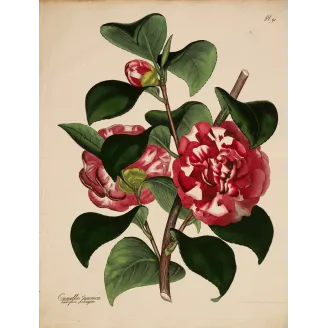
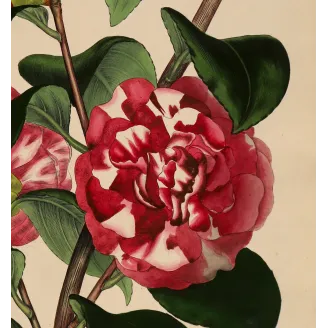
An original hand-coloured engraving of Camellia japonica from Henry Charles Andrews' celebrated The Botanist's Repository. Published around 1799, this elegant botanical print combines exceptionally refined hand colouring, selective gum arabic finishing on the foliage and Andrews' characteristic handwritten publication inscription.
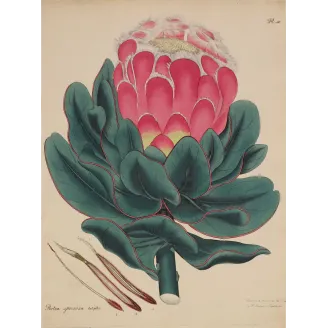
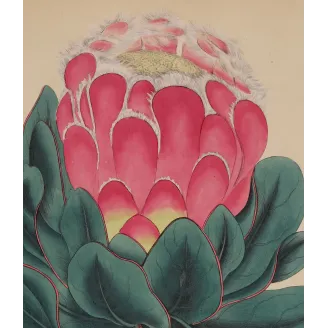
Monumental original hand-coloured engraving of the Broad-Leaved Showy Protea, published as Plate 110 in Henry Charles Andrews’ The Botanist’s Repository. Its sculptural blue-green foliage and extraordinary rose-pink flower make this one of the most iconic botanical images in the collection.
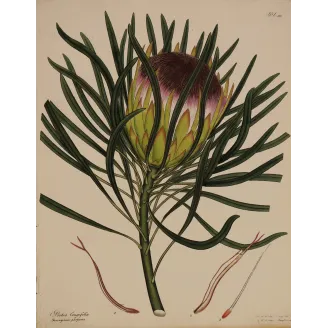
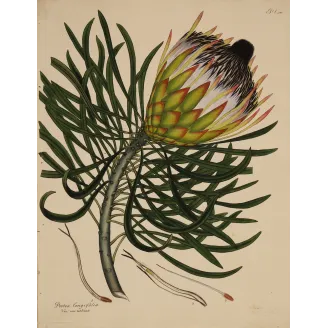
An original hand-coloured copper engraving depicting Protea longifolia (Rusty-purple Flower), published by Henry Charles Andrews in The Botanist's Repository in 1801. Distinguished by its protective arrangement of evergreen foliage, subtle engraved structure and exceptionally refined transparent watercolour.
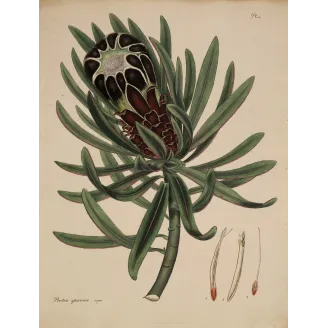
A striking original hand-coloured engraving depicting the Black-Flowered Showy Protea, published by Henry Charles Andrews in The Botanist's Repository in 1799. Monumental foliage, sculptural flower structure and beautifully preserved hand colouring make this one of the most architecturally impressive plates of the series.
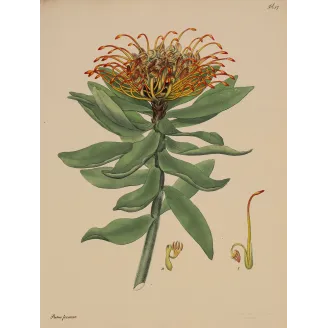
An original hand-coloured copper engraving of Protea formosa, published by Henry Charles Andrews in The Botanist's Repository (1799). Distinguished by its spectacular upward flowering styles, exceptionally delicate watercolour and refined botanical execution, this plate represents one of the most elegant Protea engravings of the series.
An original hand-coloured copper engraving depicting the Long-Leaved Protea (Protea longifolia), published by Henry Charles Andrews in The Botanist's Repository in 1801. Elegant linear foliage, a dramatic emerging flower head and exceptionally refined hand colouring distinguish one of the most dynamic Protea compositions of the series.
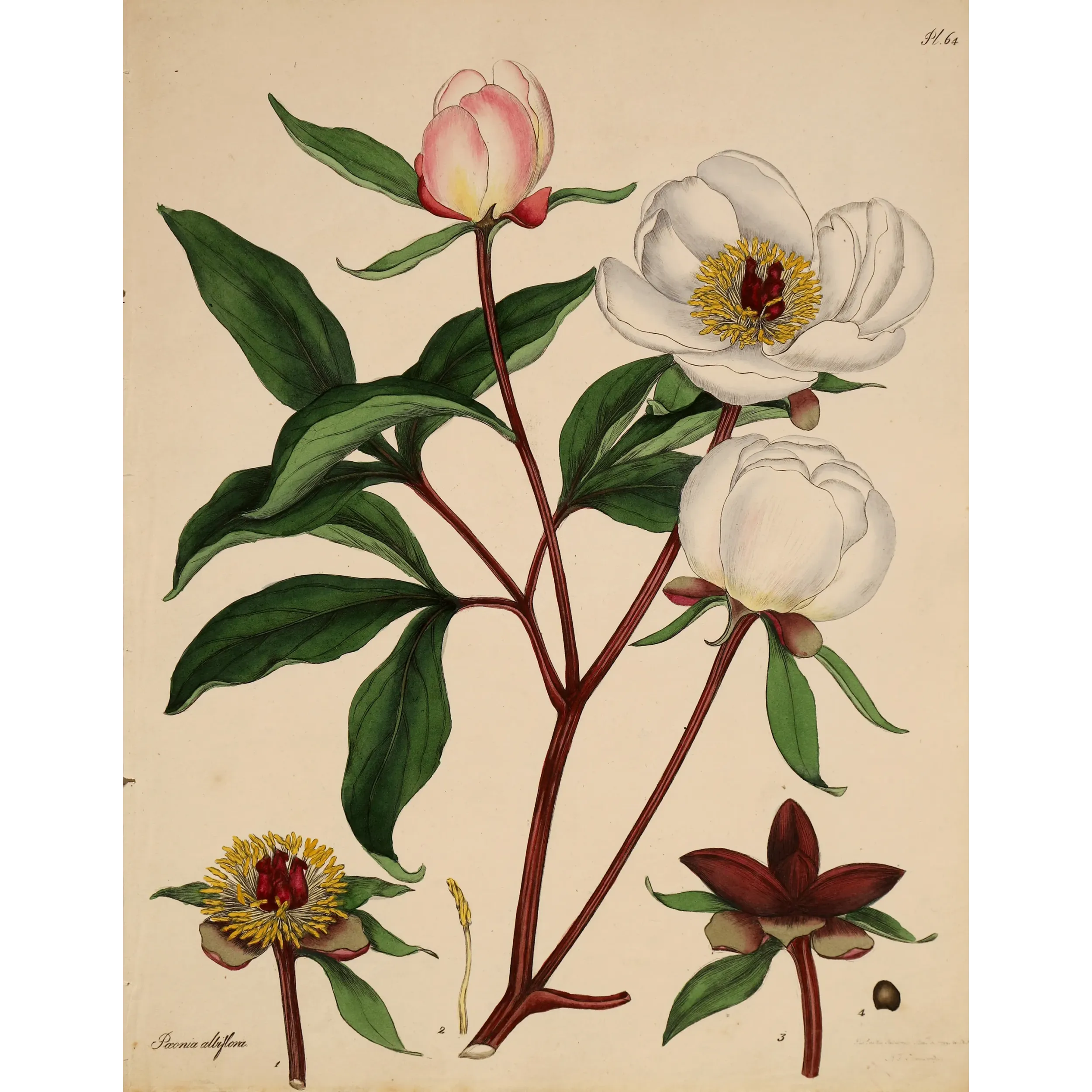
An exceptionally refined original hand-coloured engraving depicting the White Peony, published by Henry Charles Andrews in The Botanist's Repository in 1799. Delicate grey modelling, luminous white petals and beautifully preserved gum arabic finishing make this one of the finest botanical plates of the series.