- New
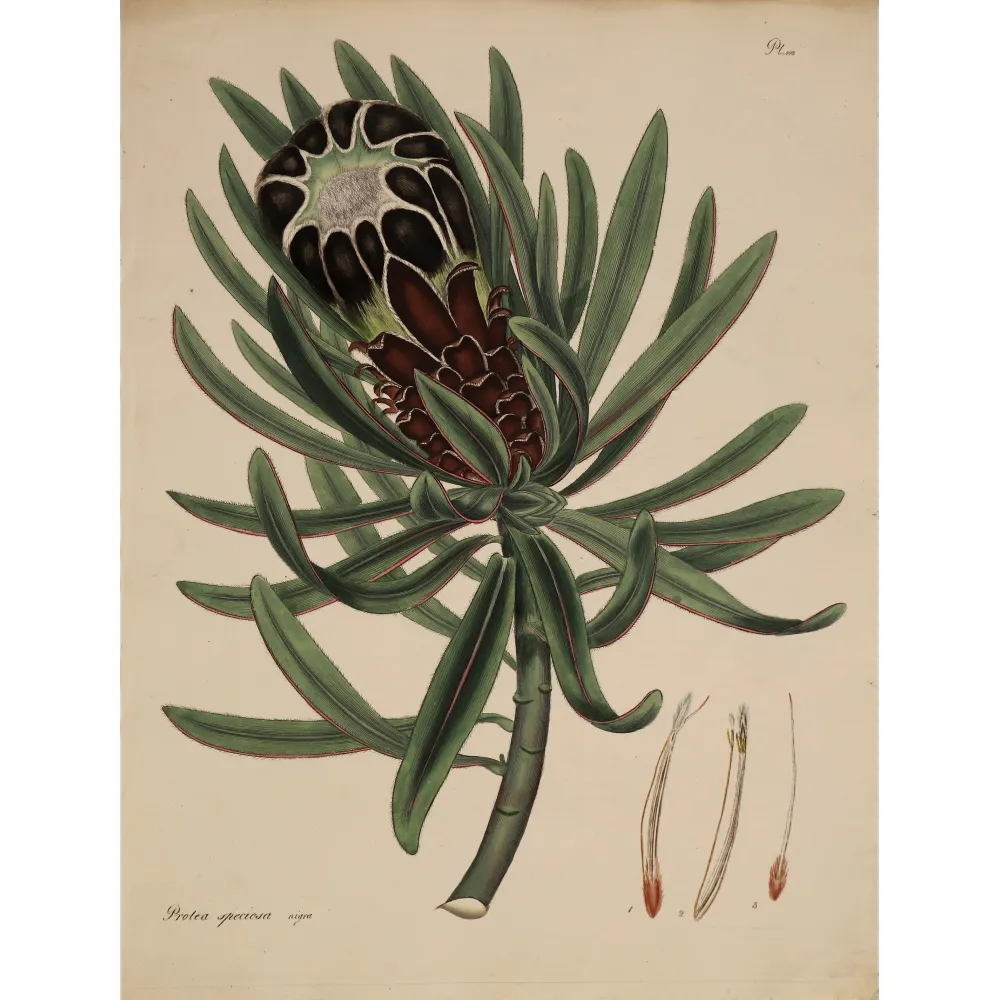
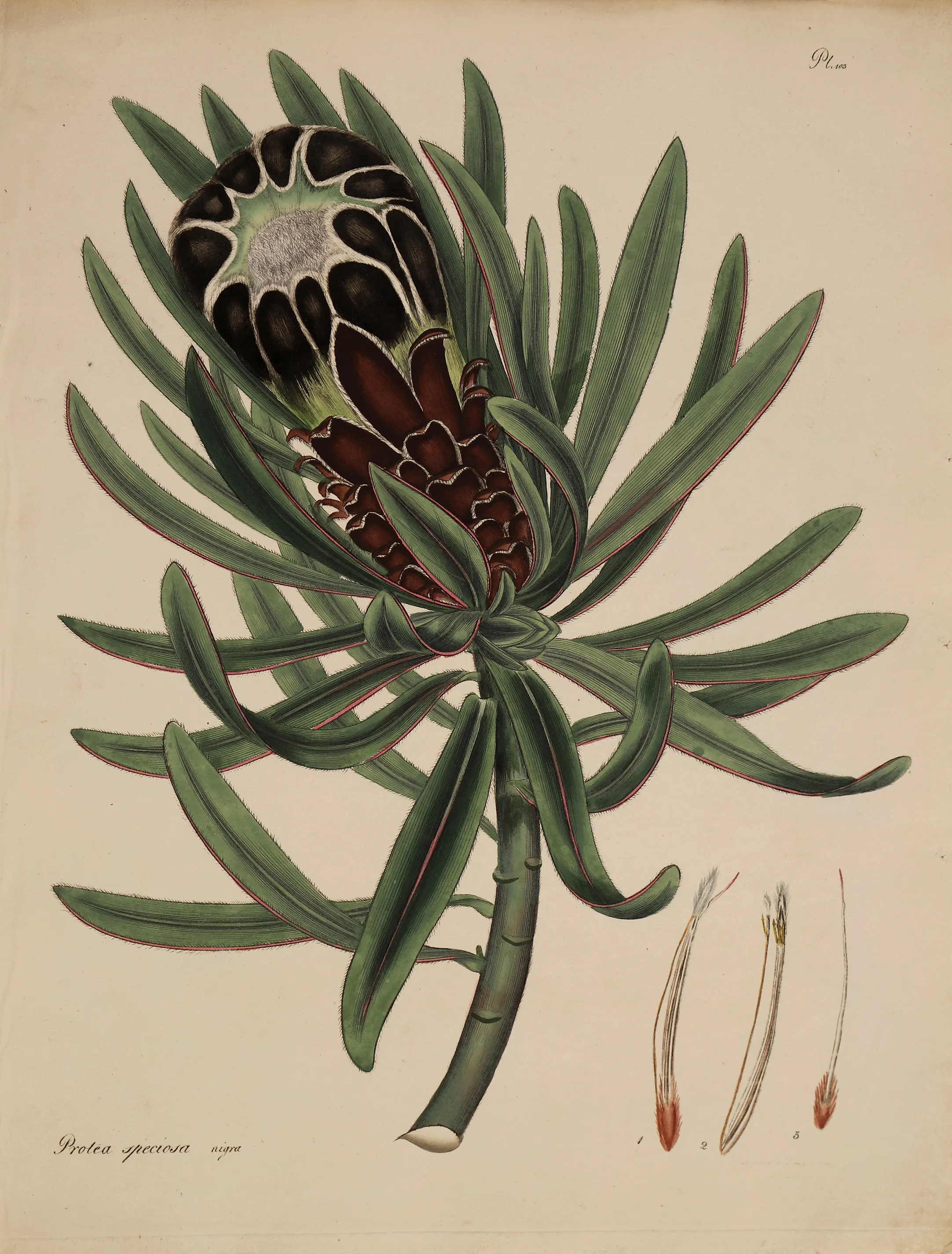
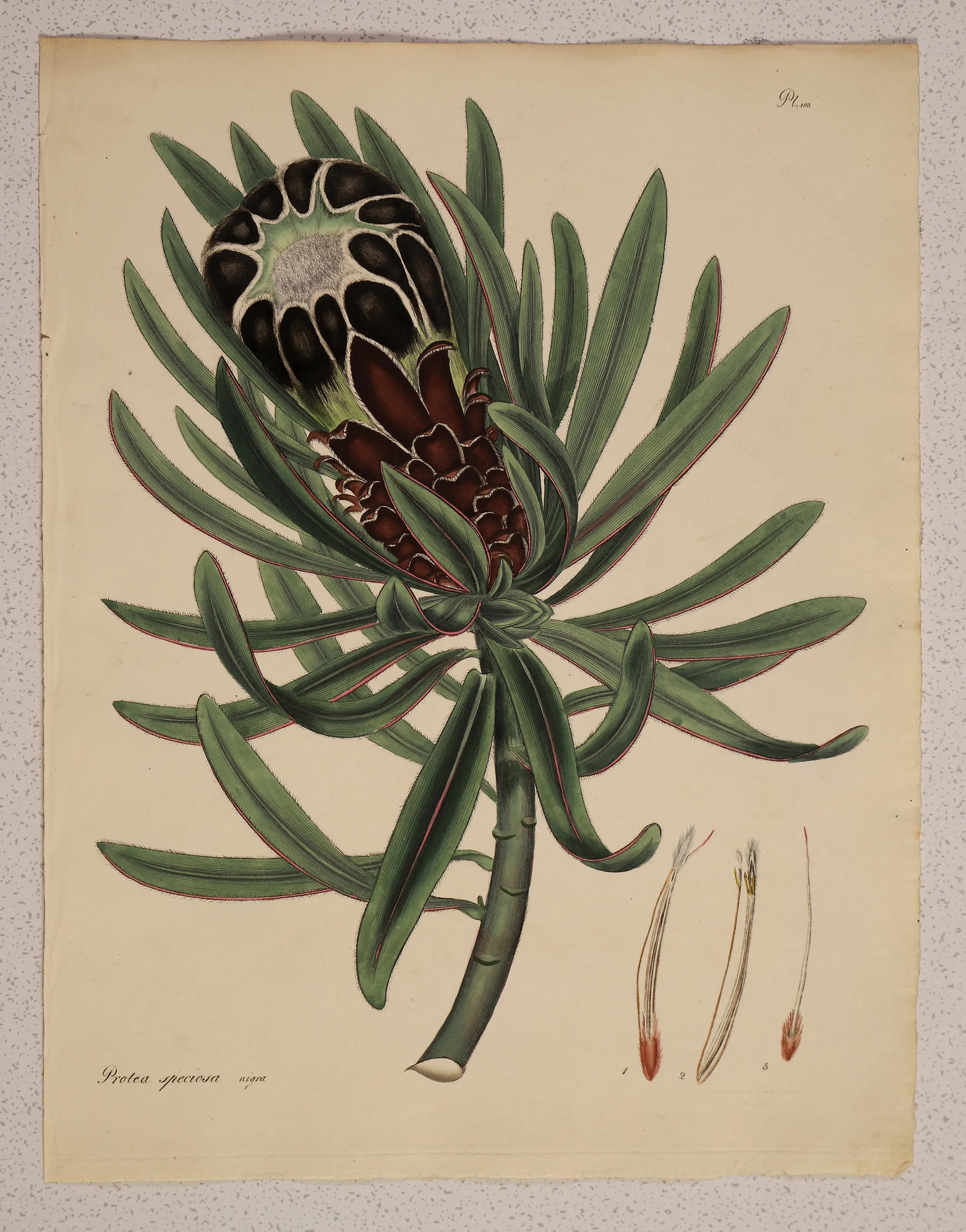
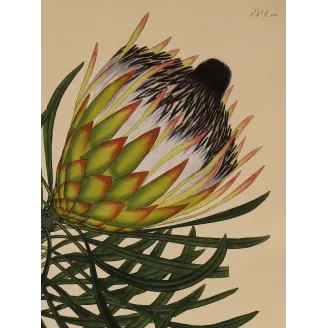
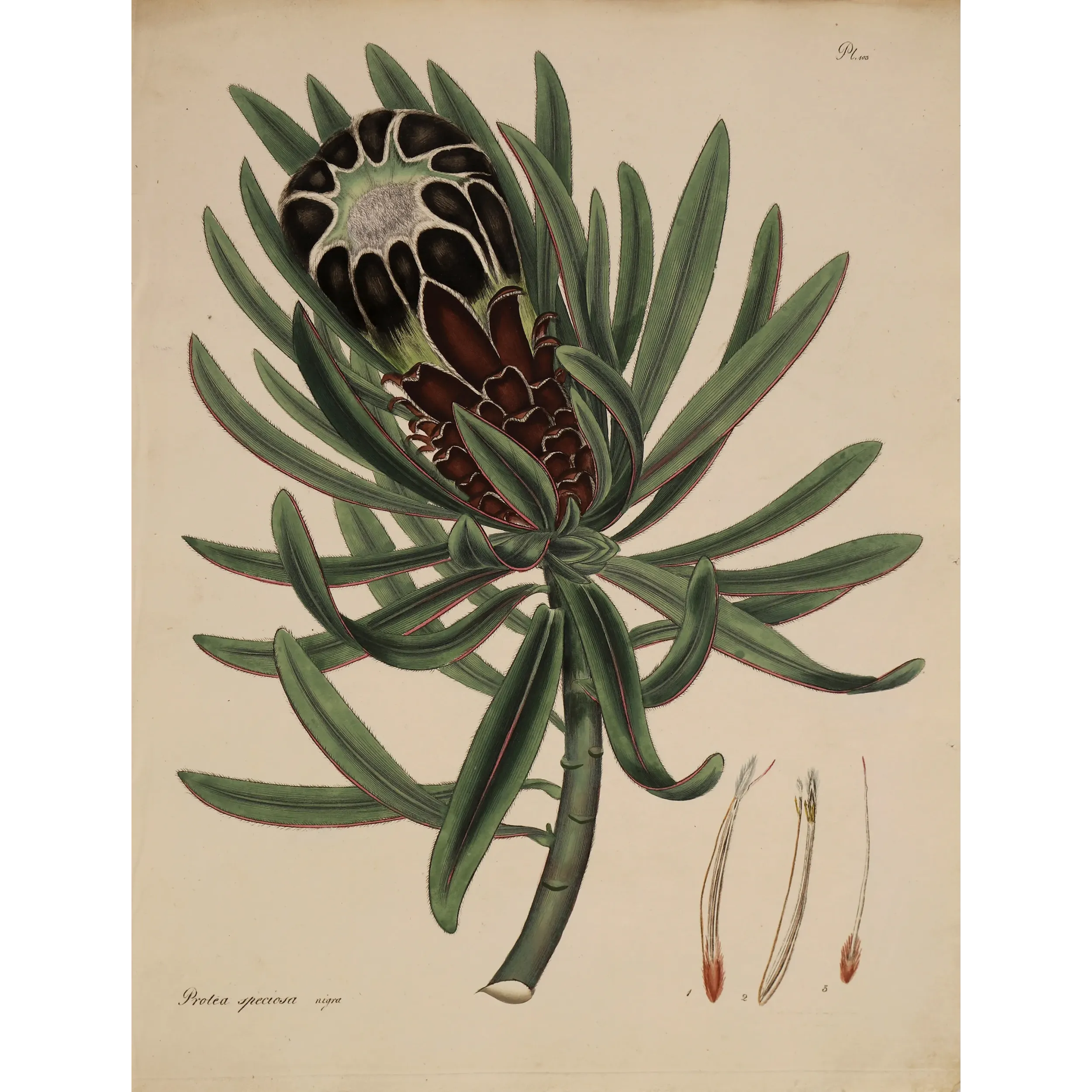
A striking original hand-coloured engraving depicting the Black-Flowered Showy Protea, published by Henry Charles Andrews in The Botanist's Repository in 1799. Monumental foliage, sculptural flower structure and beautifully preserved hand colouring make this one of the most architecturally impressive plates of the series.
 Delivery policy
Your print will be carefully prepared and shipped worldwide via trusted couriers (UPS or similar).
 Authentic antique prints
Original engravings from the 17th–19th century.
This remarkable original hand-coloured engraving from Henry Charles Andrews’ The Botanist’s Repository depicts the Black-Flowered Showy Protea, historically identified as Protea speciosa nigra. Published in 1799, the print combines botanical precision with an imposing sculptural presence, revealing Andrews’ exceptional ability to translate the strength and complex architecture of an exotic plant into a refined botanical image.
A dark, powerfully constructed flower head rises above an expansive arrangement of narrow green leaves. Unlike botanical compositions centred upon fragility or softness, this plate derives its beauty from determination, structure and resistance. The plant appears not merely observed but monumentalised, its living form presented with the authority of a natural sculpture.
The composition develops around the powerful upward movement of the central stem. From this structural axis, the long narrow leaves radiate outward in multiple directions, producing a dense but carefully balanced arrangement that fills almost the entire sheet.
The foliage forms an architecture around the flower head. Individual leaves curve, overlap and turn through space, creating successive layers of depth while directing the eye towards the dark terminal bloom. Their rhythmic distribution gives the plant an energetic presence and conveys the impression of continual outward growth.
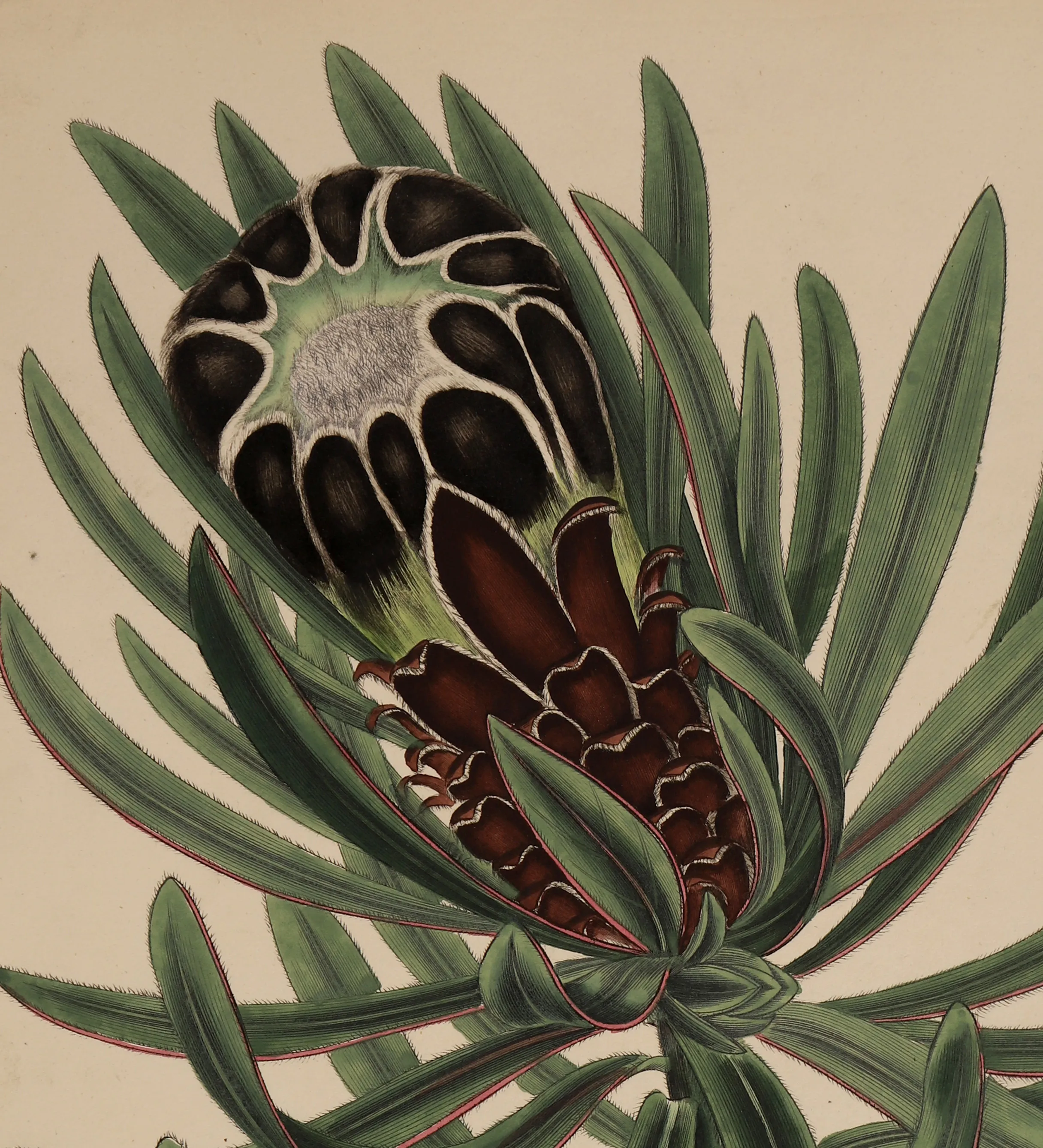
At the summit of the composition, the flower head combines rich brown, black and muted green tones. Its overlapping terminal structures are rendered as a sequence of firm protective forms, giving the inflorescence an almost armoured appearance. This visual density contrasts with the elongated leaves and reinforces the plant’s extraordinary sculptural character.
The dark central masses are articulated by narrow pale boundaries and subtle changes in colour. Andrews carefully separates each component without weakening the unity of the flower head, allowing its intricate botanical construction to remain clearly legible while preserving its commanding visual weight.
The restrained green colouring of the foliage is enriched by fine tonal transitions and discreet reddish outlines along selected margins. These accents clarify the direction and curvature of individual leaves while creating a subtle chromatic relationship with the deeper brown and red tones of the flower.
The engraved framework remains remarkably light throughout the plate. Fine engraved lines establish the essential structure of the plant, but the modelling, depth and material character of the image are created predominantly through transparent hand-applied watercolour. The result is richly descriptive without becoming visually heavy.
The analytical botanical details arranged at the lower right provide a delicate counterpoint to the monumental plant. Their isolated forms reveal the internal structures required for scientific identification, reminding the viewer that the dramatic composition remains grounded in careful botanical observation.
Protea speciosa belongs to the Proteaceae, a remarkable family of flowering plants strongly associated with the Cape region of South Africa. Its members are recognised for their complex flower heads, durable foliage and extraordinary diversity of form.
The historical designation Protea speciosa nigra distinguished this dark-flowered form through the rich brown and almost black colouring of its terminal structures. Although modern botanical classification no longer necessarily maintains such historical varieties as separate accepted taxa, Andrews’ original name remains essential to the identity and publication history of the plate.
Proteas were especially admired by European botanists and collectors because their forms differed dramatically from familiar northern European flowers. Their architectural foliage, dense inflorescences and distant geographical origins made them emblematic of the rare plants entering specialist nurseries and private collections during the Georgian period.
The genus name refers to Proteus, the shape-changing figure of Greek mythology, and evokes the astonishing variety found across the group. In this plate, however, Andrews emphasises not transformation but determination: the plant appears structurally resolved, resilient and perfectly adapted to its natural environment.
Close examination reveals the refinement underlying the apparent strength of the composition. The image was printed from a delicately engraved copperplate and subsequently developed through finely controlled layers of transparent, hand-applied watercolour.
The engraved framework remains intentionally restrained throughout the plant. Rather than relying upon dense hatching or strongly defined engraved modelling, Andrews uses the copperplate to establish the essential botanical structure and allows colour to create most of the volume, depth and material character.
This balance is particularly evident across the foliage. Fine engraved lines provide direction and texture, while transparent green washes describe the curvature, overlapping planes and changing orientation of the leaves. The resulting modelling is precise but never mechanical.
The flower head is treated with greater chromatic density. Deep brown and almost black passages build its powerful terminal form, while pale separating lines preserve the legibility of the individual structures. The dark colour does not flatten the image but instead strengthens its sculptural presence.
Unlike other Andrews plates in which gum arabic is concentrated across the foliage, this impression preserves selective applications upon the terminal parts of the flower head. The subtle surface gloss reinforces the naturally polished character of these protective structures and increases the sense of physical solidity.
The selective placement of gum arabic demonstrates that Andrews did not use the material according to a fixed decorative formula. He applied it where reflection could support the specific botanical surface represented, adapting his finishing technique to the physical qualities of each plant.
In this plate, transparent watercolour creates the layered depth of the foliage, while the restrained gloss of the terminal flower structures catches light more directly. The material qualities of the print therefore reinforce the contrast between flexible leaves and the dense, protective architecture of the inflorescence.
At the lower right, the sheet preserves Andrews’ characteristic handwritten publication inscription rather than an engraved publication line. On this impression the notation is exceptionally delicate and almost imperceptible to the unaided eye, becoming distinguishable only through close examination.
The inscription originally recorded the publication details, commonly including the wording “Published as the Act directs”, the date, Andrews’ name and his address at 5 Knightsbridge, London. Its extreme subtlety should not be mistaken for absence or for a later annotation.
The wording referred to the British Engravers’ Copyright Act of 1735, widely known as Hogarth’s Act. The legislation was created to protect engravers and graphic artists against unauthorised copying. Although discreet, the surviving handwritten inscription forms an integral part of the publication history and material identity of this original impression.
The vertical plate mark is not visible on this individual sheet. The impression nevertheless retains generous margins, indicating that its absence should not be understood as evidence of severe trimming. Variations in plate-mark visibility may result from the pressure of printing, subsequent binding and the individual material history of the sheet.
No watermark has been observed on this individual impression. Examination of another original sheet belonging to this Prantique group of Andrews engravings, however, revealed a clearly legible J. Whatman 1794 watermark, documenting the use of fine English Whatman paper within the publication.
Although the watermark is a collection-level observation rather than a feature recorded on this sheet, it provides valuable material context for the group. Together with the surviving copperplate impression, original hand colouring, selective gum arabic finishing and exceptionally delicate publication inscription, it helps reconstruct the artisanal production of The Botanist’s Repository.
Andrews was unusual among botanical illustrators because he maintained close control over almost every stage of production. He drew from living plants, engraved the copperplates, prepared the impressions, coloured the plates and published the work himself. This integration of observation, engraving, colour and publishing gives his botanical images their extraordinary consistency and distinctive visual identity.
This engraving belongs to Henry Charles Andrews’ extraordinary world of new and rare plants, created during Britain’s great age of botanical exploration. Discover Andrews’ unusual working method and the material evidence preserved within original impressions, including hand colouring, engraved structure, publication inscriptions, historical trimming, selected applications of gum arabic and Whatman paper.
Henry Charles Andrews and Britain’s Passion for Exotic Plants →
Excellent condition. Exceptionally clean original late eighteenth-century paper with remarkably fresh hand colouring and beautifully preserved selective gum arabic finishing on the terminal parts of the flower head. The sheet displays no visible stains, foxing, signs of use or handling and retains generous margins. The extremely delicate handwritten publication inscription remains discernible under close examination. Please examine the professional high-resolution photographs for a complete visual assessment.
Historical botanical name: Protea speciosa nigra
Accepted botanical name: Protea speciosa Andrews
Common name: Black-Flowered Showy Protea
Work: The Botanist’s Repository, for New, and Rare Plants
Author, artist and engraver: Henry Charles Andrews
Publisher: Henry Charles Andrews, 5 Knightsbridge, London
Date: 1799
Technique: Original copper engraving with hand-applied watercolour and selective gum arabic finishing
Surface finishing: Selective gum arabic applied to the terminal parts of the flower head
Publication inscription: Exceptionally delicate handwritten publication inscription at the lower right
Plate mark: Vertical plate mark not visible on this impression
Watermark: Not observed on this individual impression
Plate: LXIII (63)
Plant family: Proteaceae
Native region: South Africa, Cape region
Sheet size: approx. 28 × 22 cm
Specific References
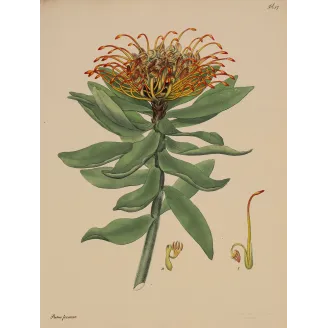
An original hand-coloured copper engraving depicting the Long-Leaved Protea (Protea longifolia), published by Henry Charles Andrews in The Botanist's Repository in 1801. Elegant linear foliage, a dramatic emerging flower head and exceptionally refined hand colouring distinguish one of the most dynamic Protea compositions of the series.
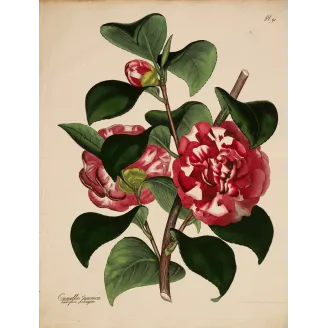
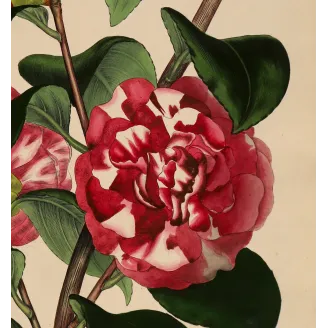
An original hand-coloured engraving of Camellia japonica from Henry Charles Andrews' celebrated The Botanist's Repository. Published around 1799, this elegant botanical print combines exceptionally refined hand colouring, selective gum arabic finishing on the foliage and Andrews' characteristic handwritten publication inscription.
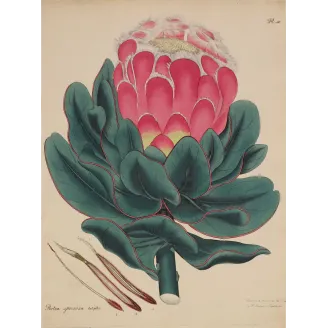
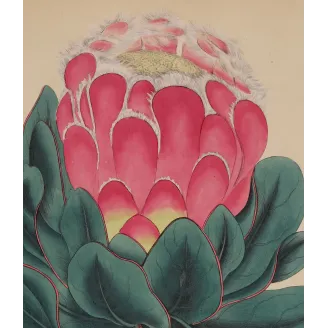
Monumental original hand-coloured engraving of the Broad-Leaved Showy Protea, published as Plate 110 in Henry Charles Andrews’ The Botanist’s Repository. Its sculptural blue-green foliage and extraordinary rose-pink flower make this one of the most iconic botanical images in the collection.
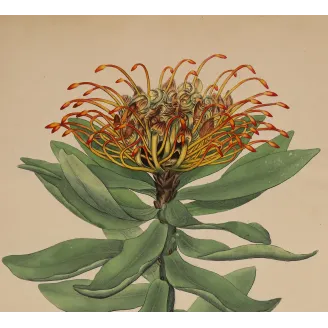
An original hand-coloured copper engraving of Protea formosa, published by Henry Charles Andrews in The Botanist's Repository (1799). Distinguished by its spectacular upward flowering styles, exceptionally delicate watercolour and refined botanical execution, this plate represents one of the most elegant Protea engravings of the series.
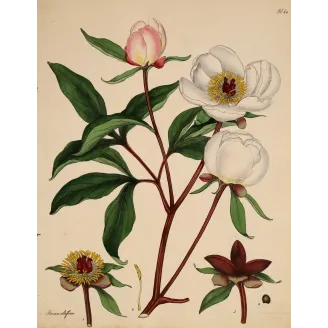
An exceptionally refined original hand-coloured engraving depicting the White Peony, published by Henry Charles Andrews in The Botanist's Repository in 1799. Delicate grey modelling, luminous white petals and beautifully preserved gum arabic finishing make this one of the finest botanical plates of the series.
A striking original hand-coloured engraving depicting the Black-Flowered Showy Protea, published by Henry Charles Andrews in The Botanist's Repository in 1799. Monumental foliage, sculptural flower structure and beautifully preserved hand colouring make this one of the most architecturally impressive plates of the series.