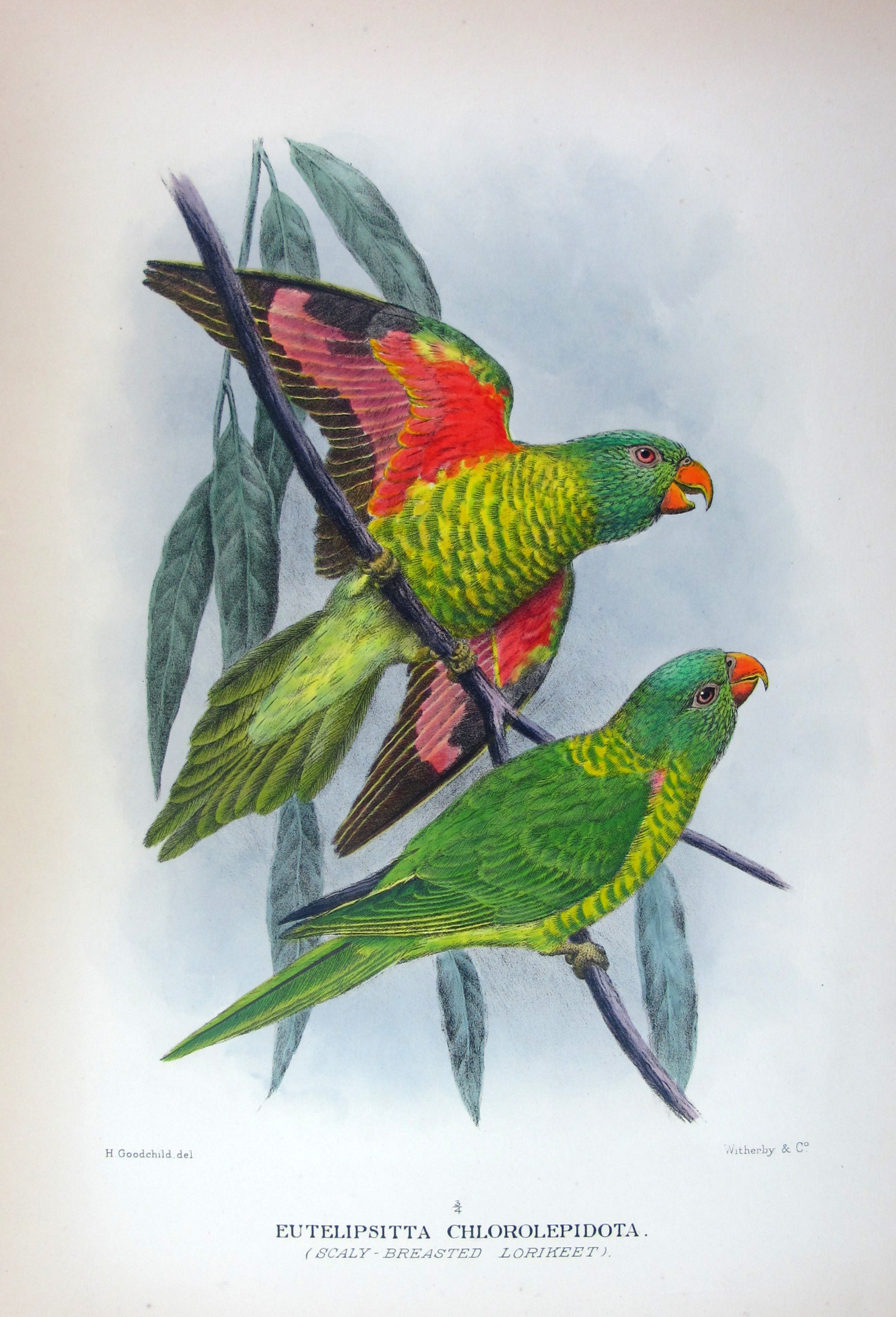
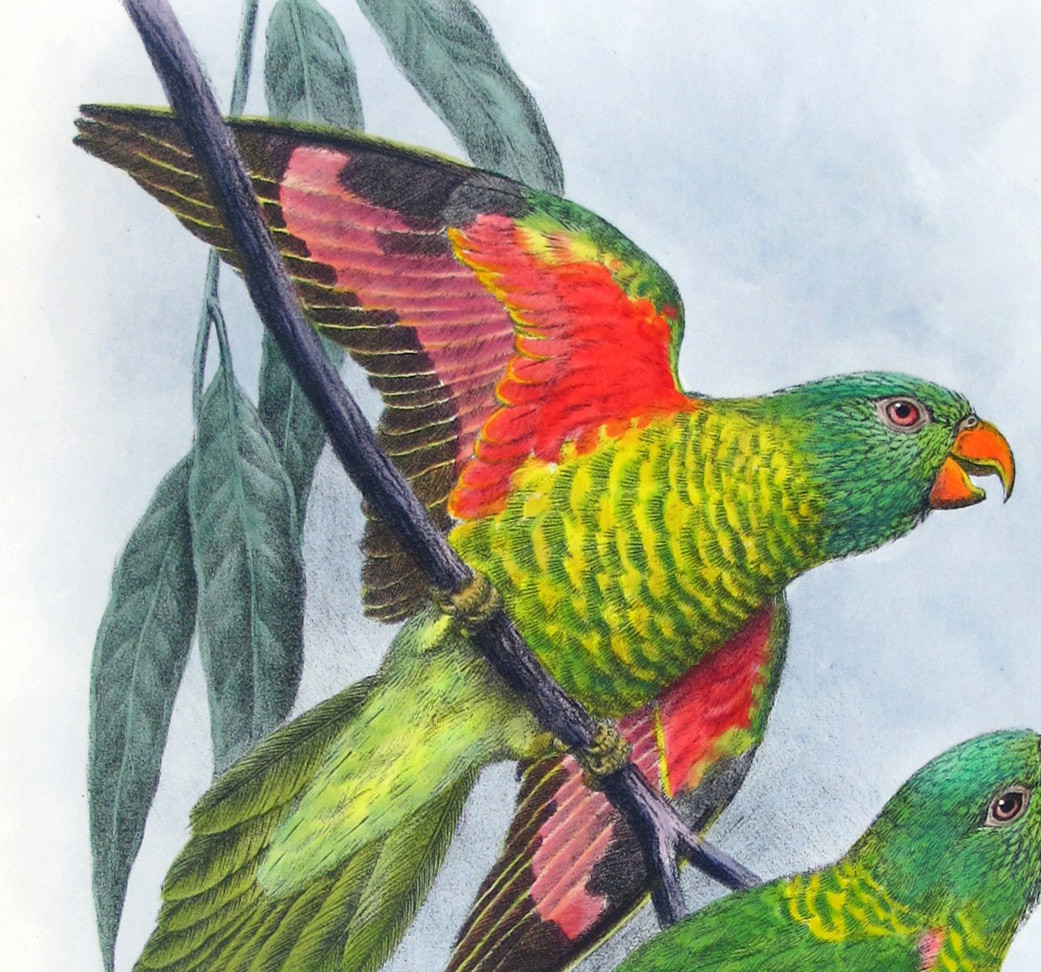
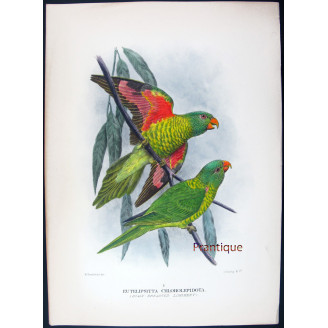
Gold-breasted Lorikeet lithograph by Henrik Grønvold, dynamic dual composition.
 Delivery policy
Your print will be carefully prepared and shipped worldwide via trusted couriers (UPS or similar).
 Authentic antique prints
Original engravings from the 17th–19th century.
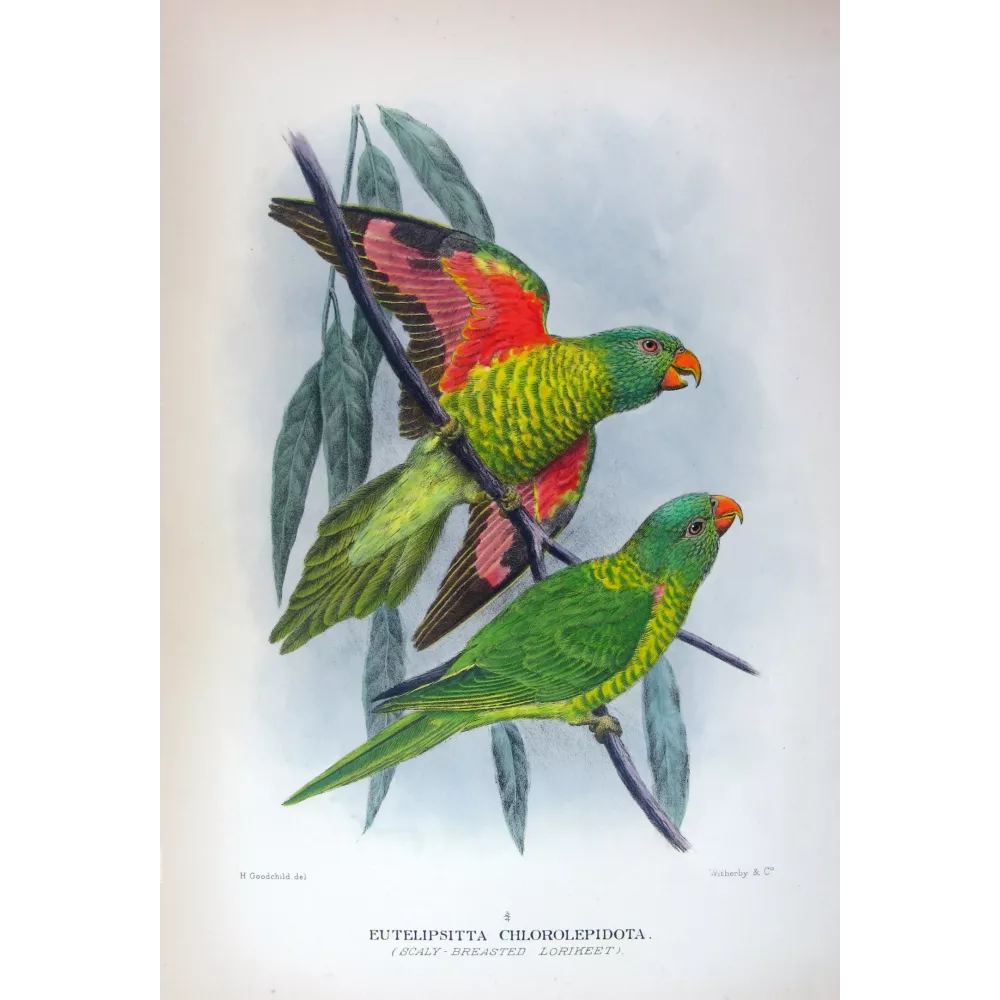
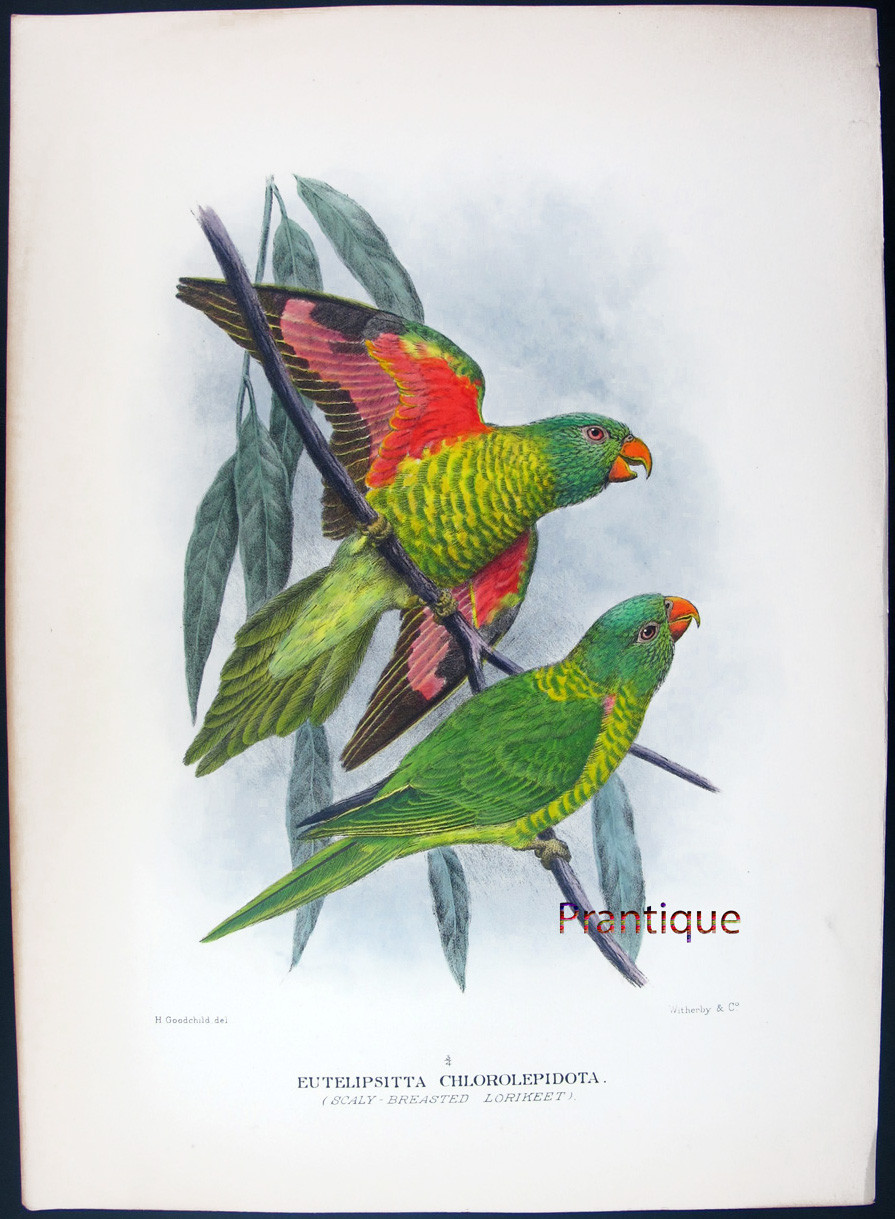
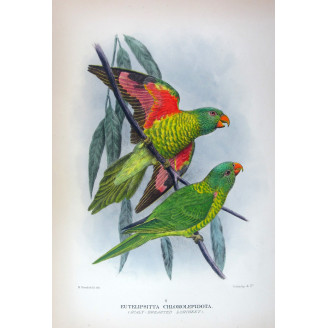
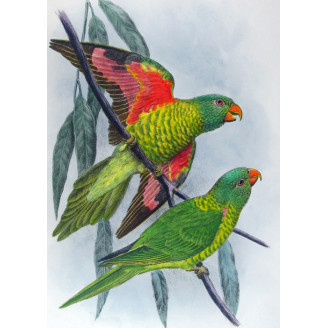
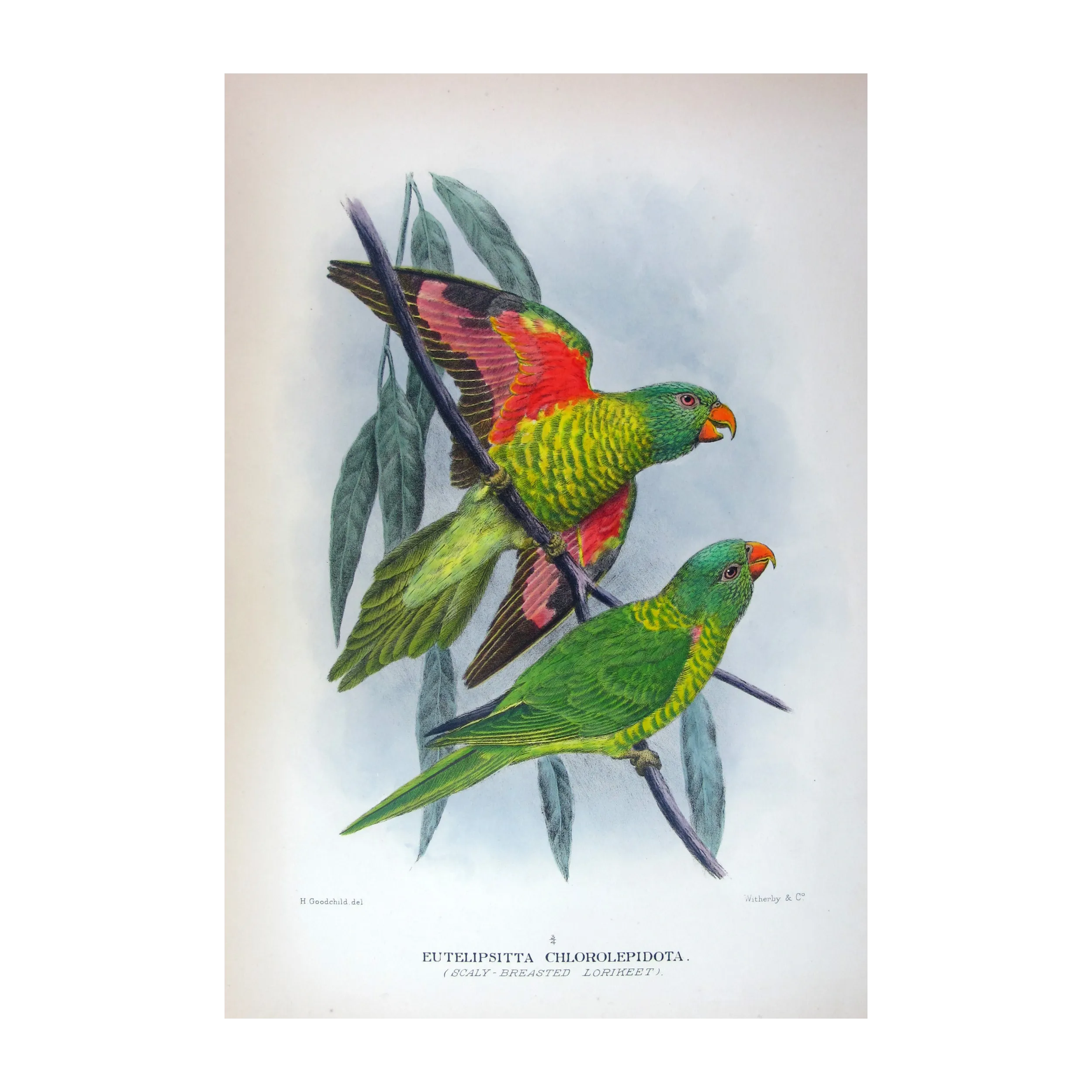
This original early twentieth-century hand-colored lithograph depicts Eutelipsitta chlorolepidota, the Scaly-breasted Lorikeet. The plate belongs to The Birds of Australia, Gregory M. Mathews’ ambitious ornithological enterprise, and was illustrated by H. Goodchild.
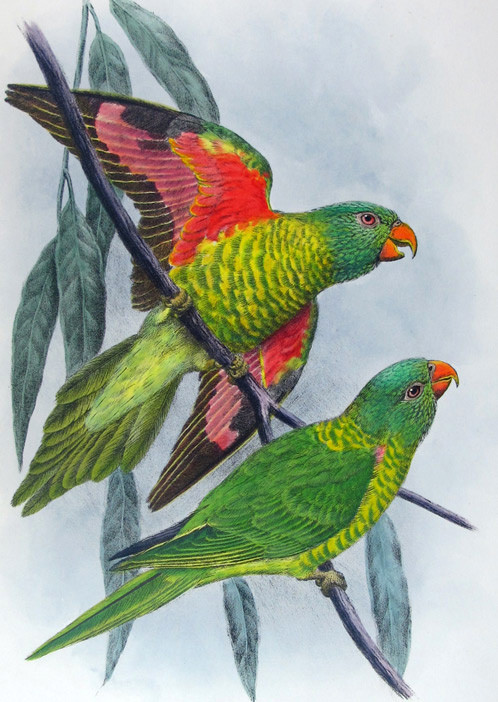
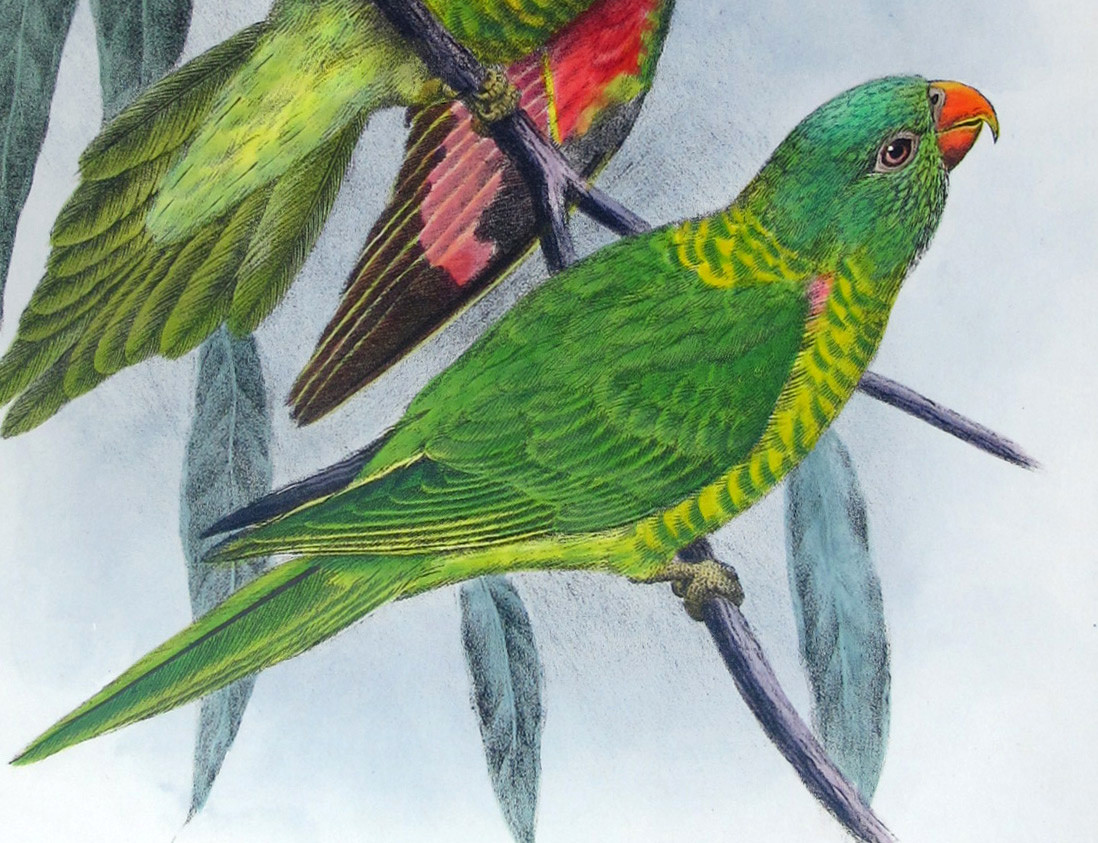
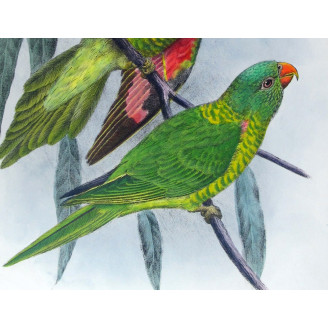
Two individuals are presented in complementary attitudes: one alert and upright, the other partially extended in motion. The pairing creates a compositional dialogue that enhances both scientific clarity and decorative vitality.
— • —
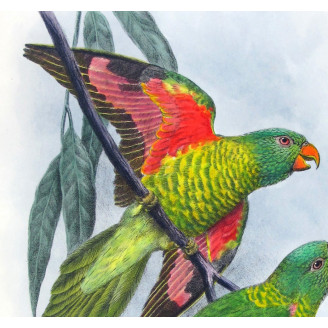
Goodchild structures the composition through layered chromatic intensity. The upper bird reveals a dramatic flash of crimson and rose across the wing coverts, contrasting against the vibrant emerald body. The distinctive “scaled” breast pattern — fine yellow edging over green plumage — introduces textural rhythm and subtle luminosity.
The diagonal eucalyptus branch anchors the composition, while the muted blue-grey atmospheric background softens the palette and prevents visual saturation. The interplay between the dynamic raised wing and the calm lower figure produces balance between motion and repose — a hallmark of Goodchild’s disciplined yet expressive approach.
The Scaly-breasted Lorikeet inhabits eastern Australia, favouring flowering woodland and coastal forests. Like other lorikeets, it feeds primarily on nectar, pollen and soft fruits, its brush-tipped tongue adapted to floral feeding.
In early twentieth-century ornithology, vividly coloured parrots such as Eutelipsitta chlorolepidota represented both taxonomic complexity and visual splendour. Their iridescent plumage made them particularly suited to the collaborative ambition of Mathews’ monumental publication.
This lithograph originates from The Birds of Australia, Gregory M. Mathews’ early twentieth-century ornithological masterpiece. Designed as a definitive scientific record, the work united rigorous taxonomy with the artistic excellence of leading wildlife illustrators. Explore the broader historical ambition in our editorial feature: Gregory M. Mathews and The Birds of Australia .
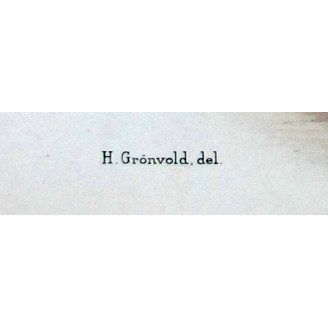
The illustration was executed by H. Goodchild, whose refined handling of structure and tonal layering contributed significantly to the visual authority of the series.
Very good antique condition. Fresh original hand-coloring with strong lithographic impression. Printed on fine early twentieth-century wove paper. Minor age toning slightly more visible along the outer margins, consistent with age.
For further insight into H. Goodchild’s artistic contribution to Australian ornithology: H. Goodchild – Shadows and Structure in Bird Art
Specific References
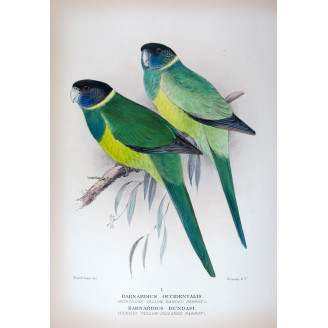
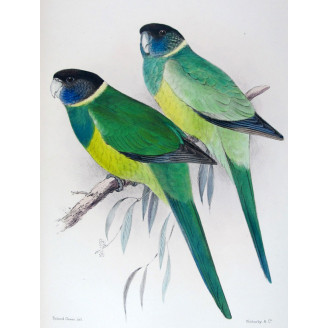
Antique lithograph of the Northern Yellow-banded Parrot & Dundas Yellow-collared Parrot by Roland Green.
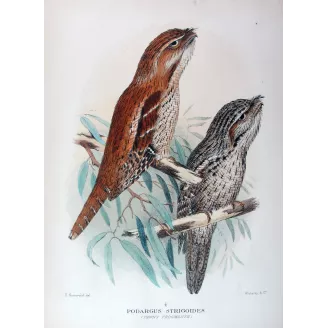
Original lithograph of the Tawny Frogmouth by H. Grönvold from Mathews' Birds of Australia.
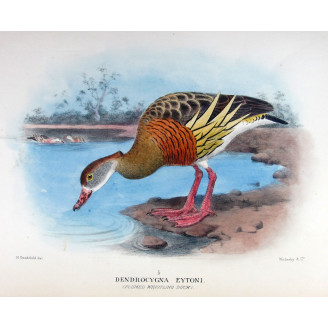
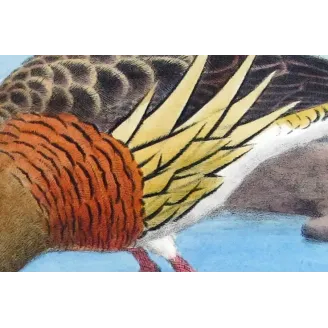
Original lithograph of the Plumed Whistling Duck by H. Goodchild (Dendrocygna eytoni).
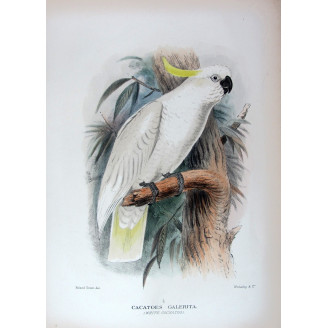
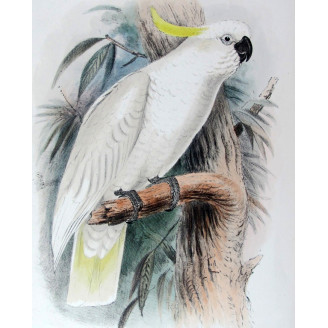
Antique lithograph of the Sulphur-crested Cockatoo by Roland Green, hand-colored.
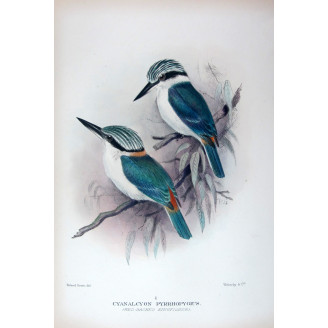
Original lithograph of the Red-backed Kingfisher (Cyanalcyon pyrrhopygus) by Roland Green
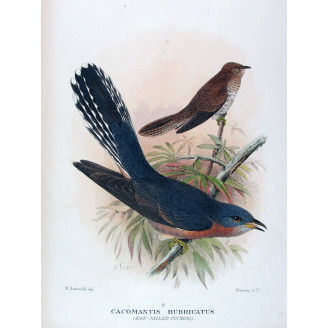
Fan-tailed Cuckoo (Cacomantis rubricatus) – Original lithograph by Henrik Grønvold.
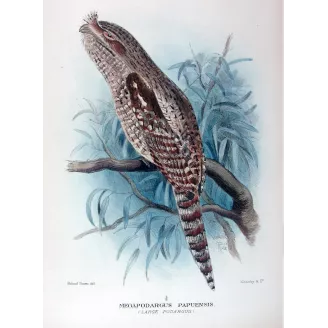
Original lithograph of the Large Podargus by Roland Green from Mathews' Birds of Australia.
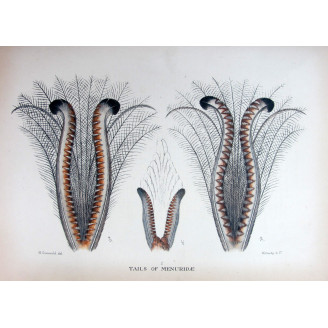
Original lithograph of the Lyrebird Tail Study (Tails of Menuridae) by Henrik Grønvold
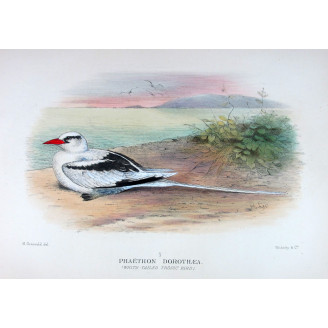
White-Tailed Tropic Bird (Phaëthon dorothea), original Mathews lithograph.
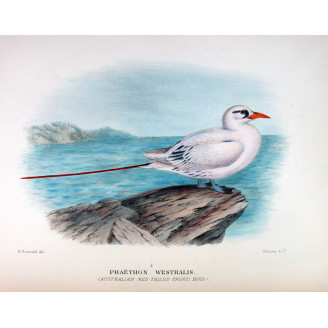
Australian Red-Tailed Tropic Bird (Phaëthon westralis), original Mathews lithograph.
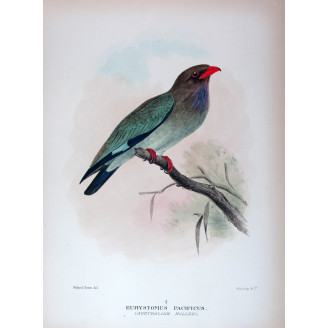
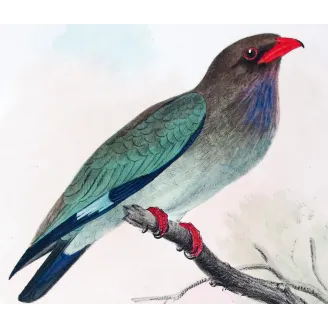
Original lithograph of the Australian Roller (Eurystomus pacificus) by Roland Green
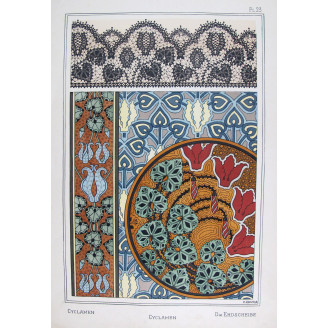
In this vibrant composition, Grasset elevates the humble gourd (courge) to an elegant decorative form.
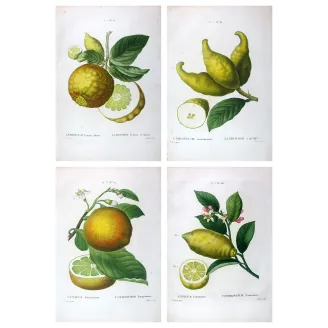
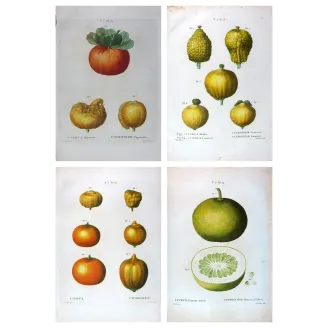
Nine original citrus engravings by Pancrace Bessa, uniting rare cedrats, sculptural lemons, and monumental Pomme d’Adam varieties into a coherent Napoleonic-era ensemble. Botanical study and refined color harmonize in a portfolio conceived to be read as a whole.
Gold-breasted Lorikeet lithograph by Henrik Grønvold, dynamic dual composition.