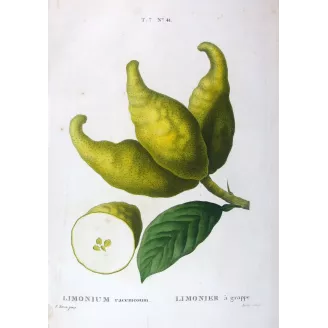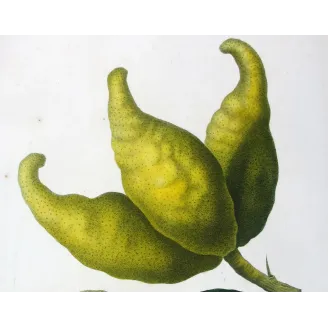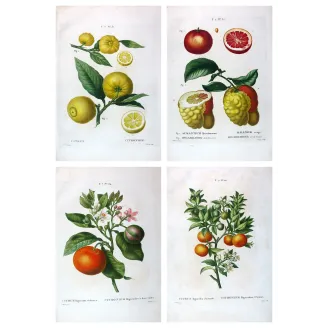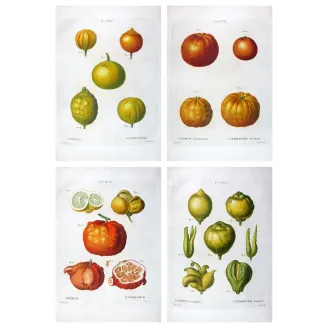
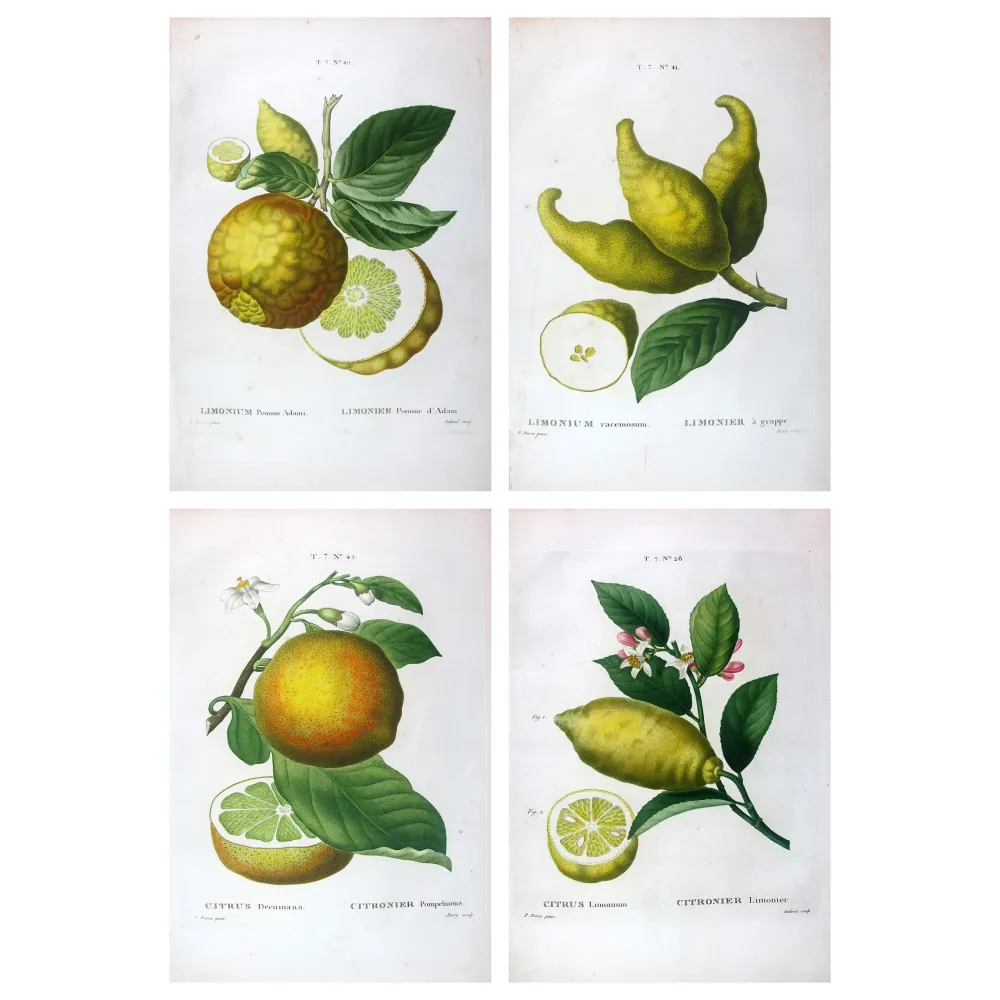
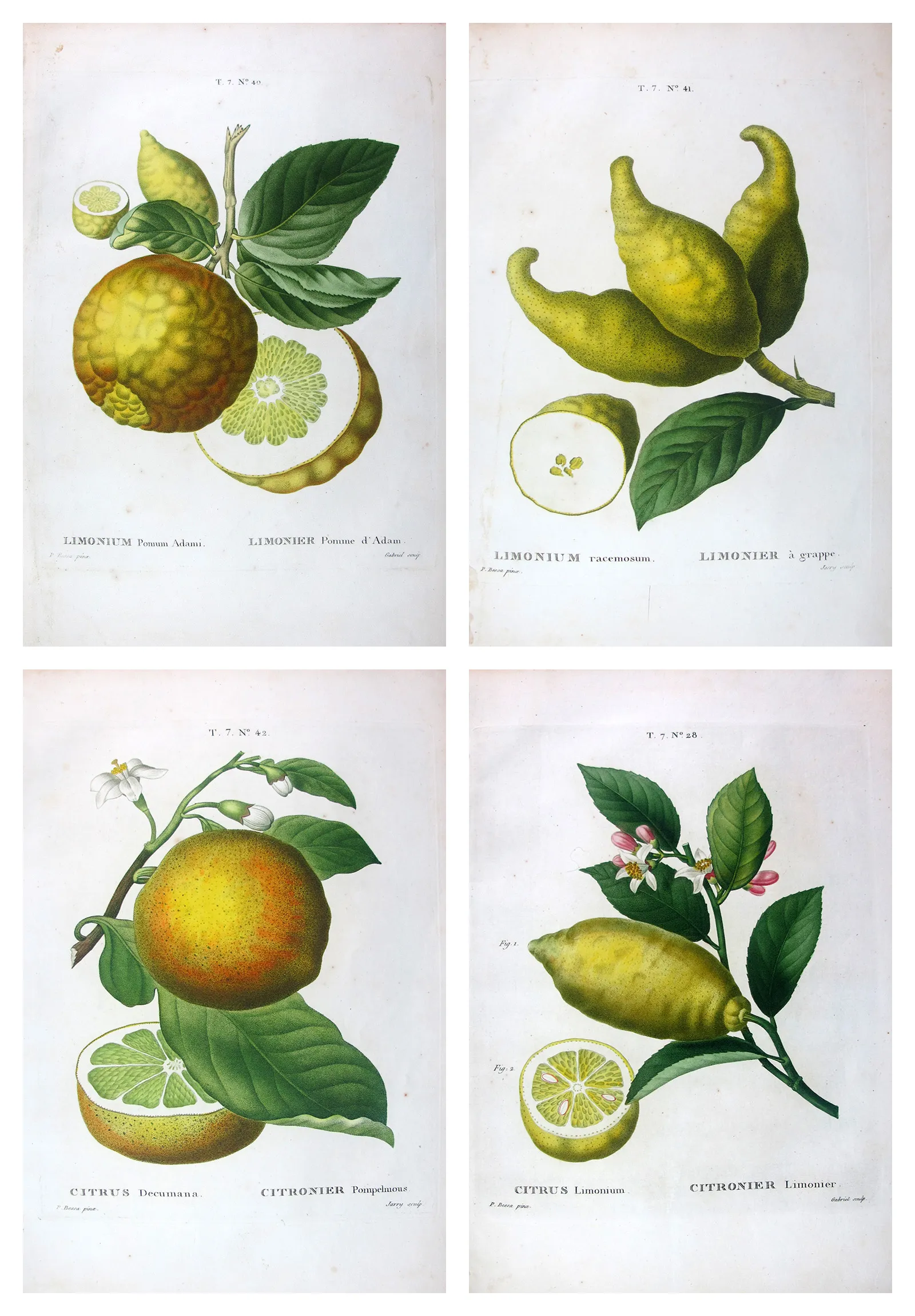
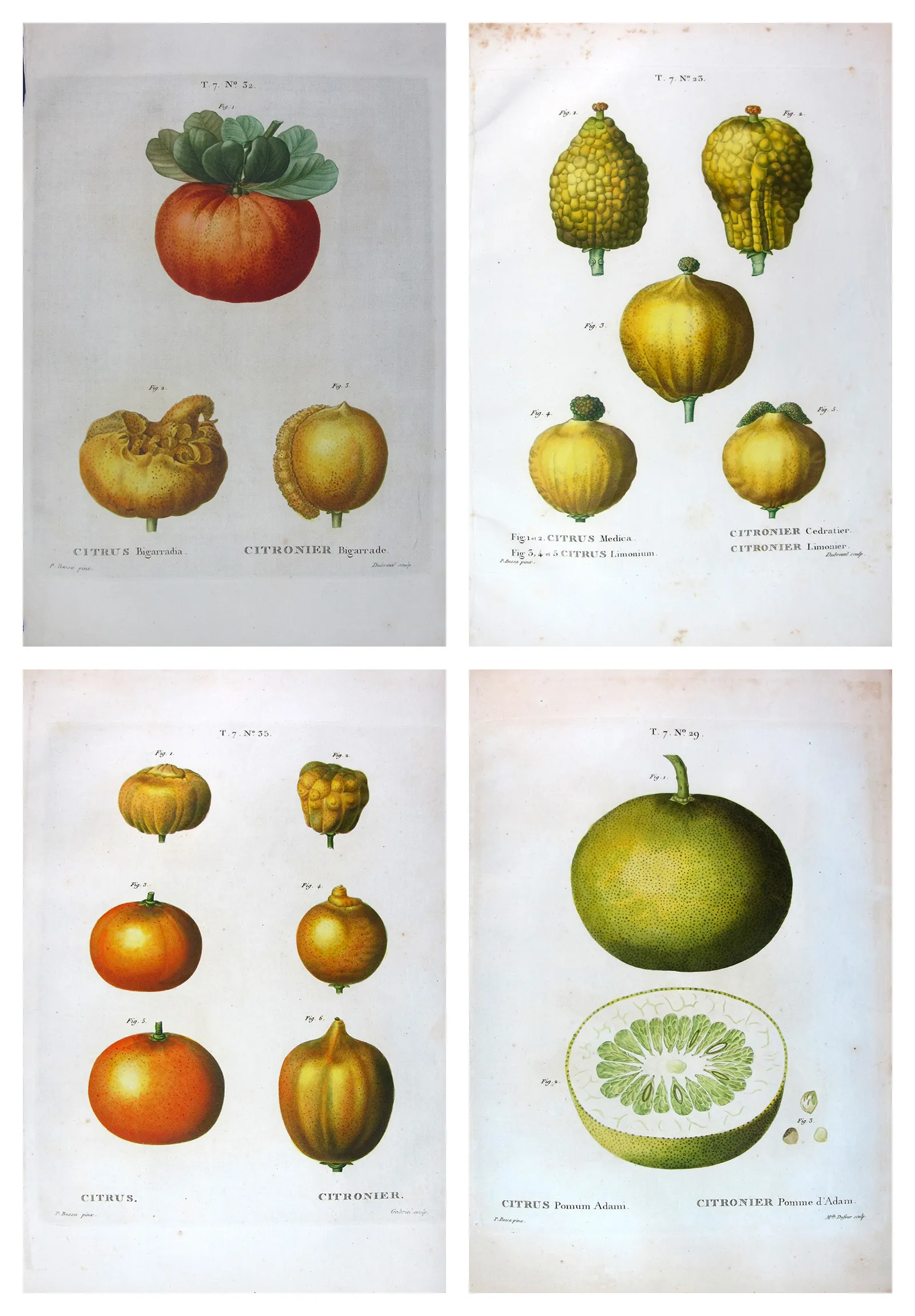
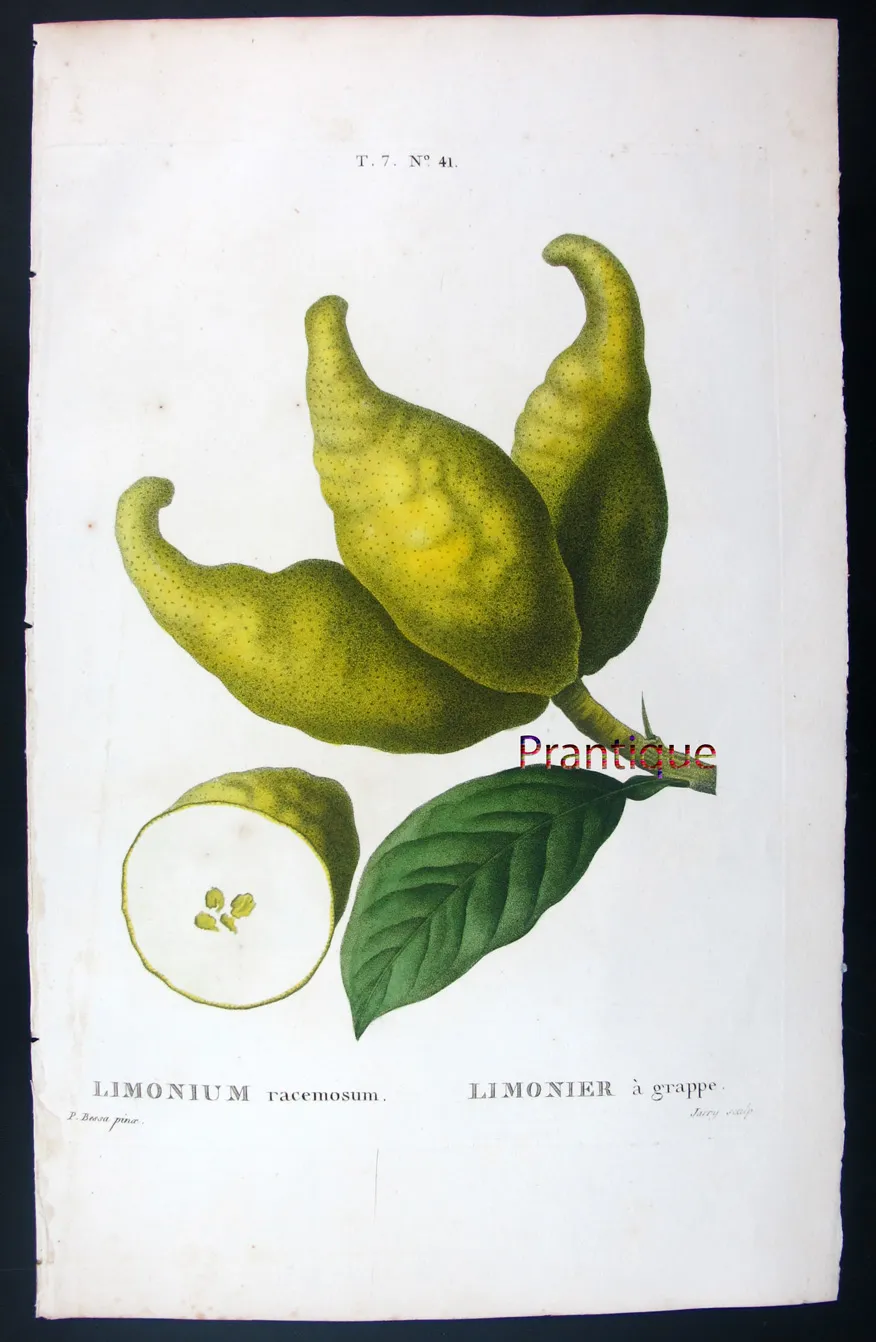
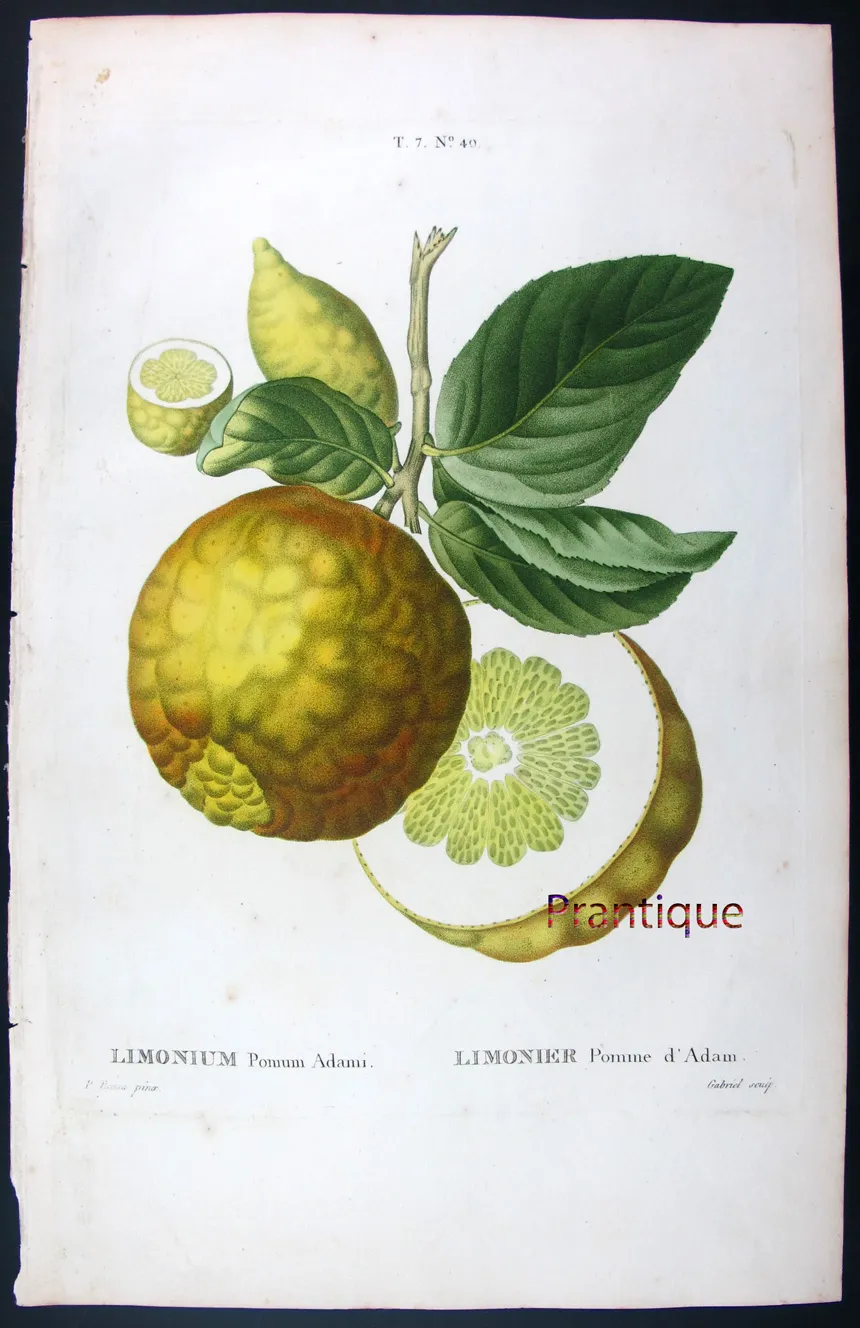
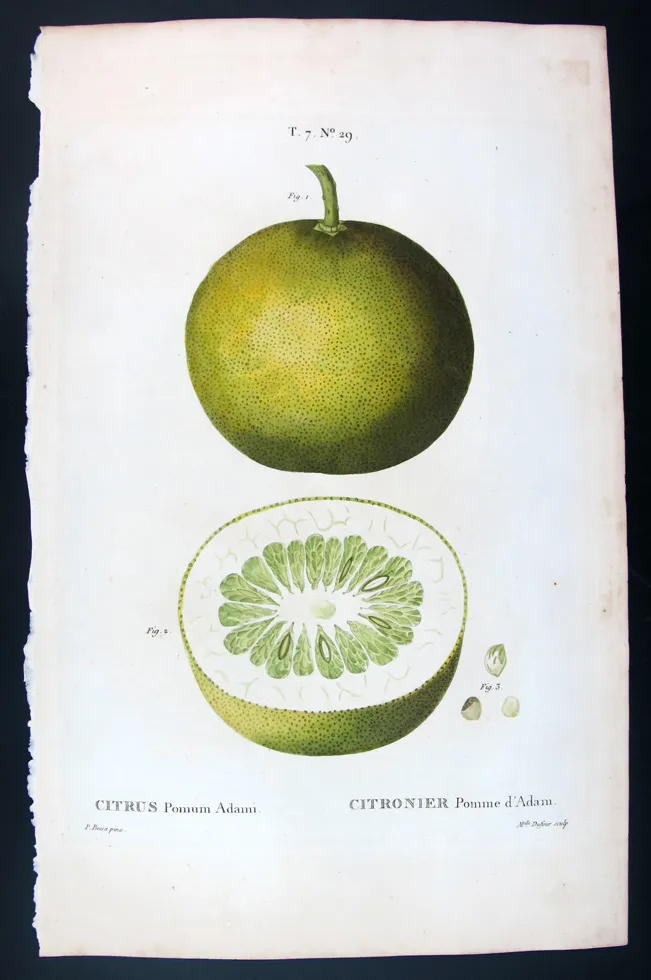
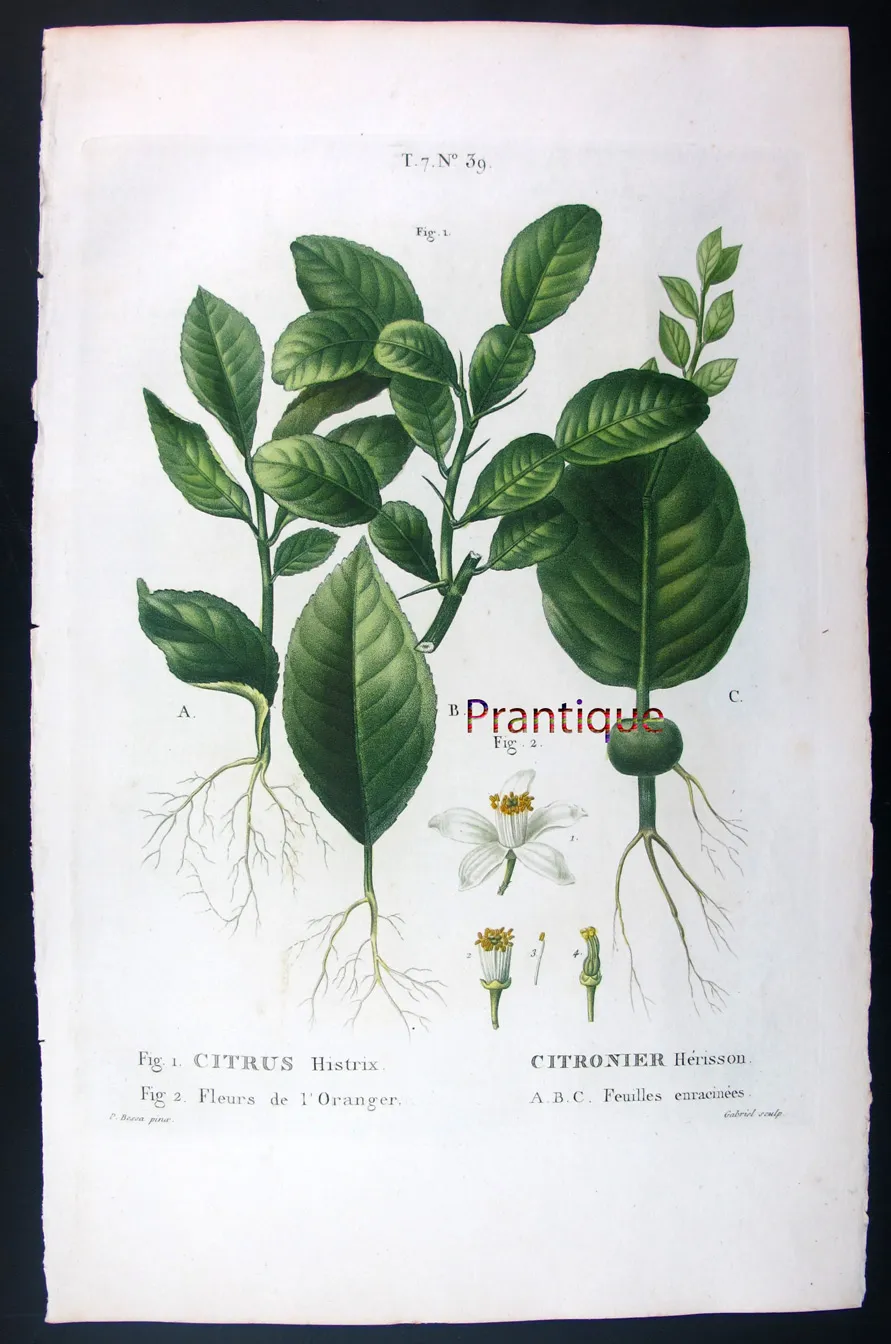
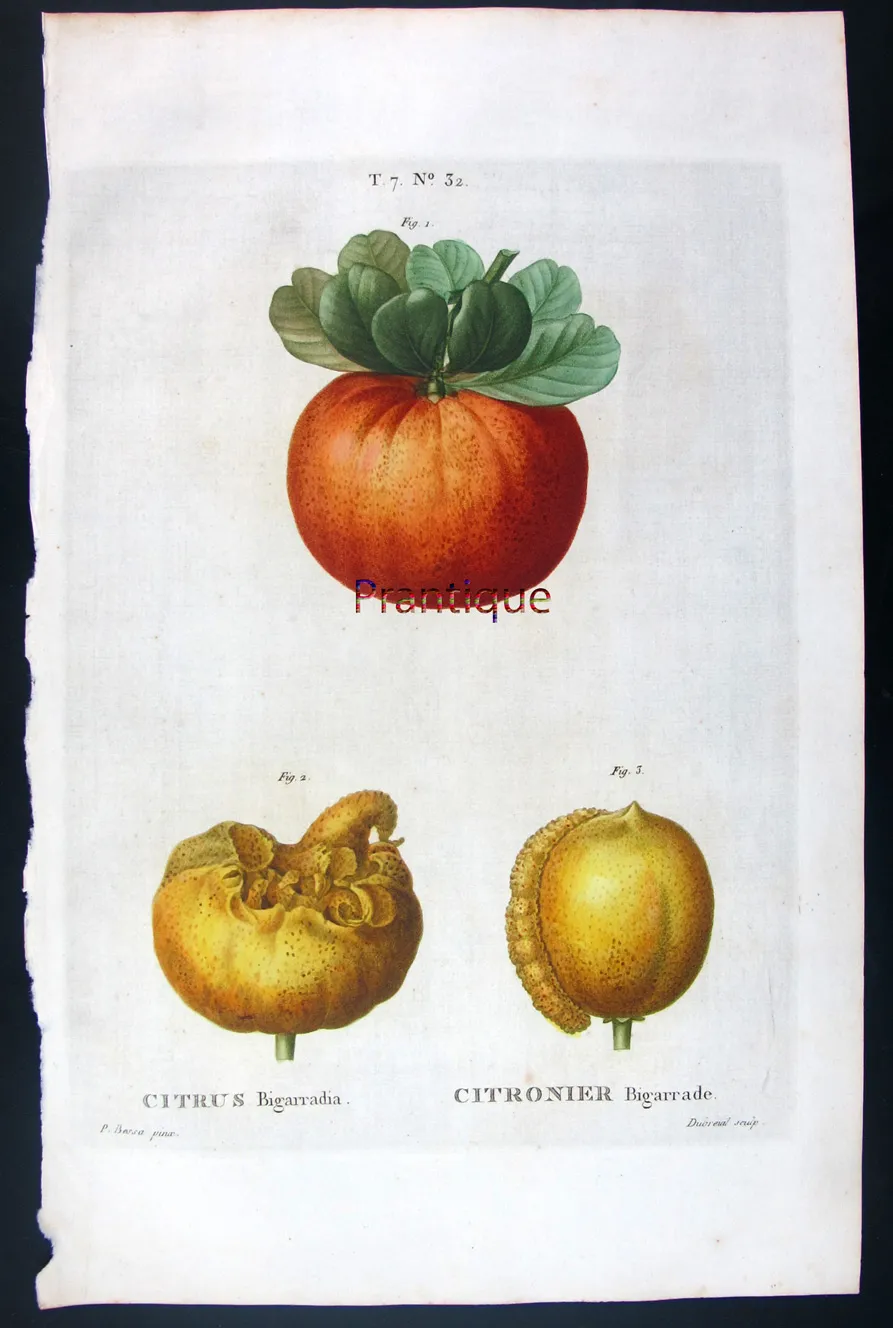
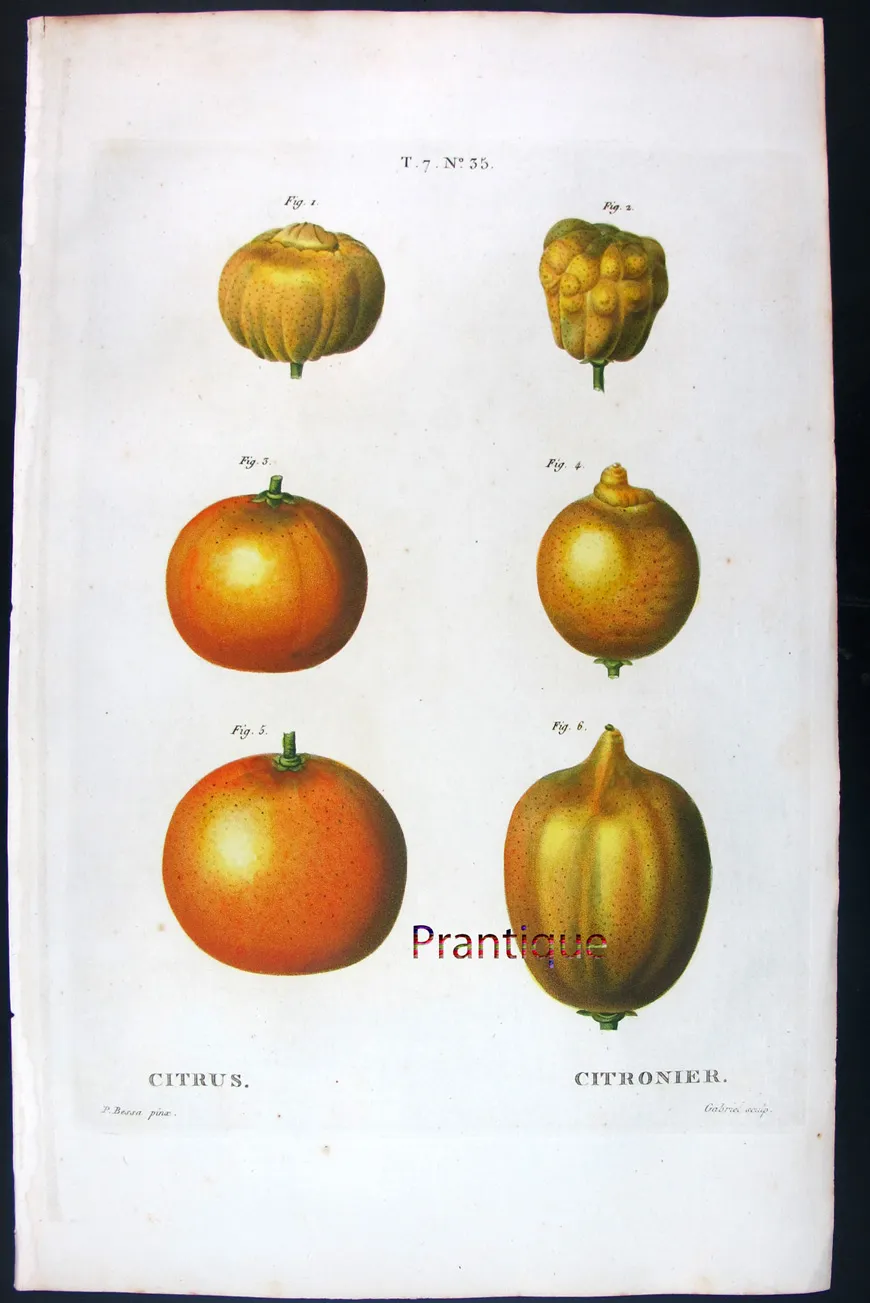
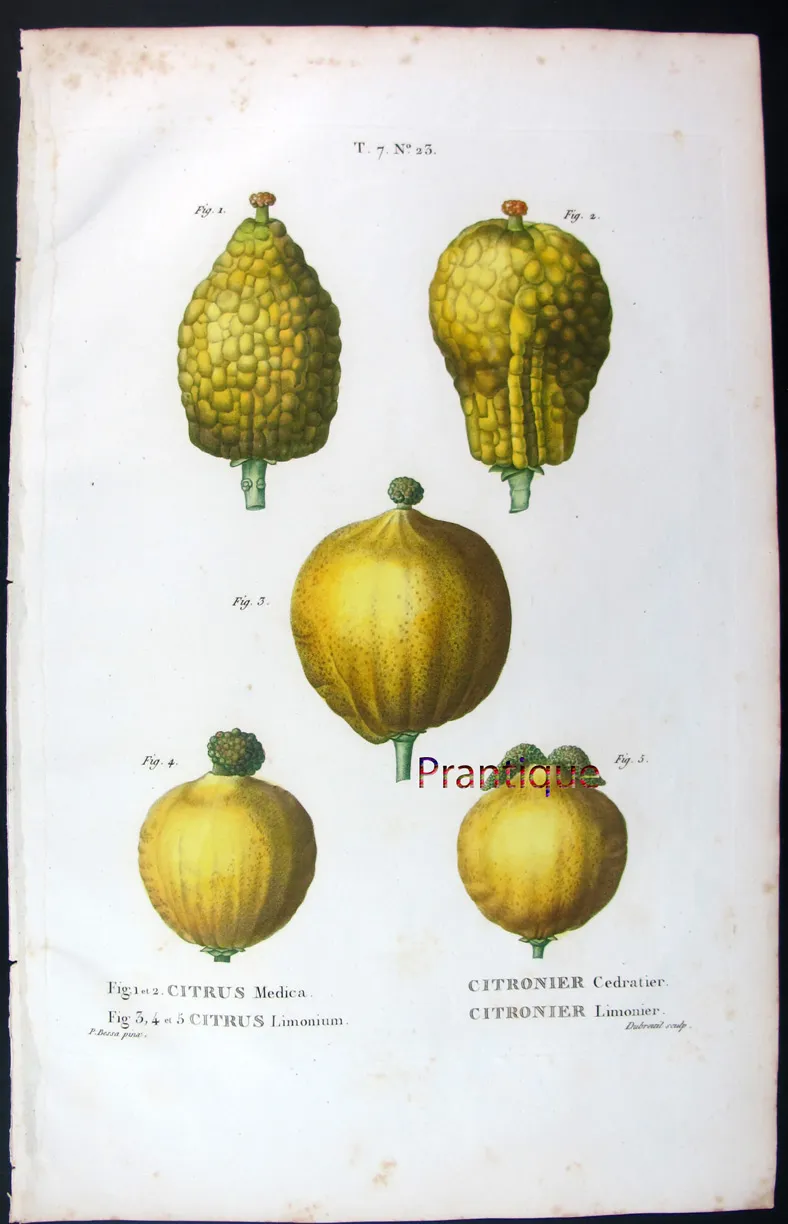
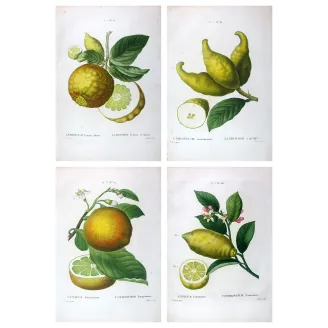
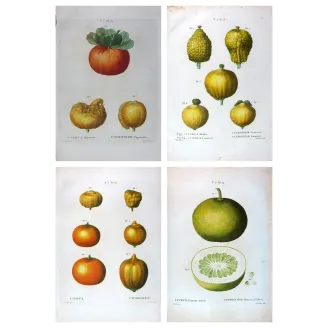
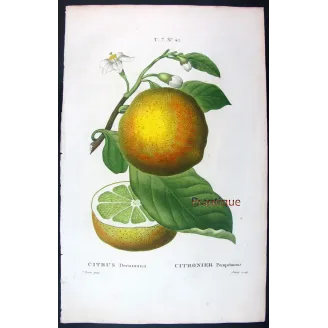
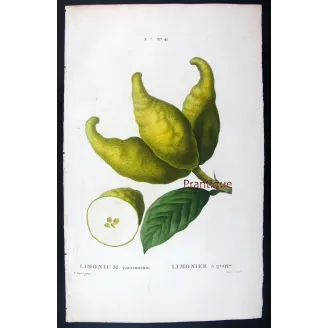
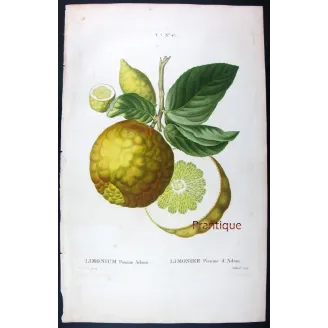
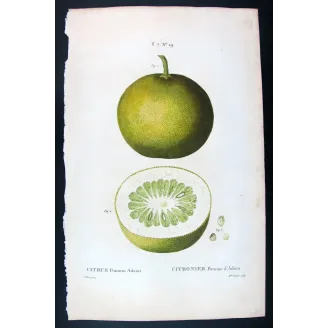
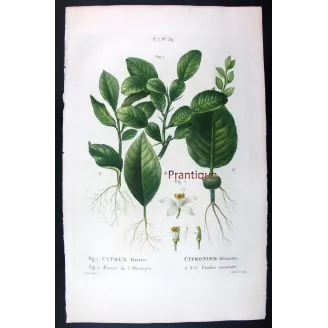
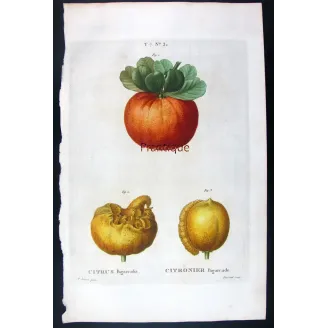
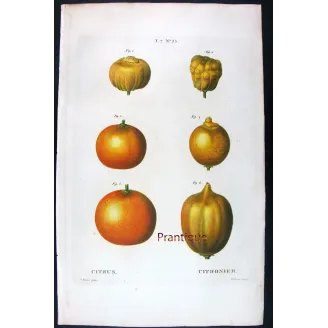
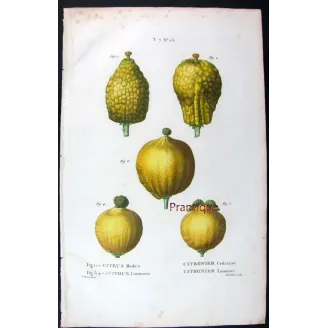
Nine original citrus engravings by Pancrace Bessa, uniting rare cedrats, sculptural lemons, and monumental Pomme d’Adam varieties into a coherent Napoleonic-era ensemble. Botanical study and refined color harmonize in a portfolio conceived to be read as a whole.
 Delivery policy
Your print will be carefully prepared and shipped worldwide via trusted couriers (UPS or similar).
 Authentic antique prints
Original engravings from the 17th–19th century.
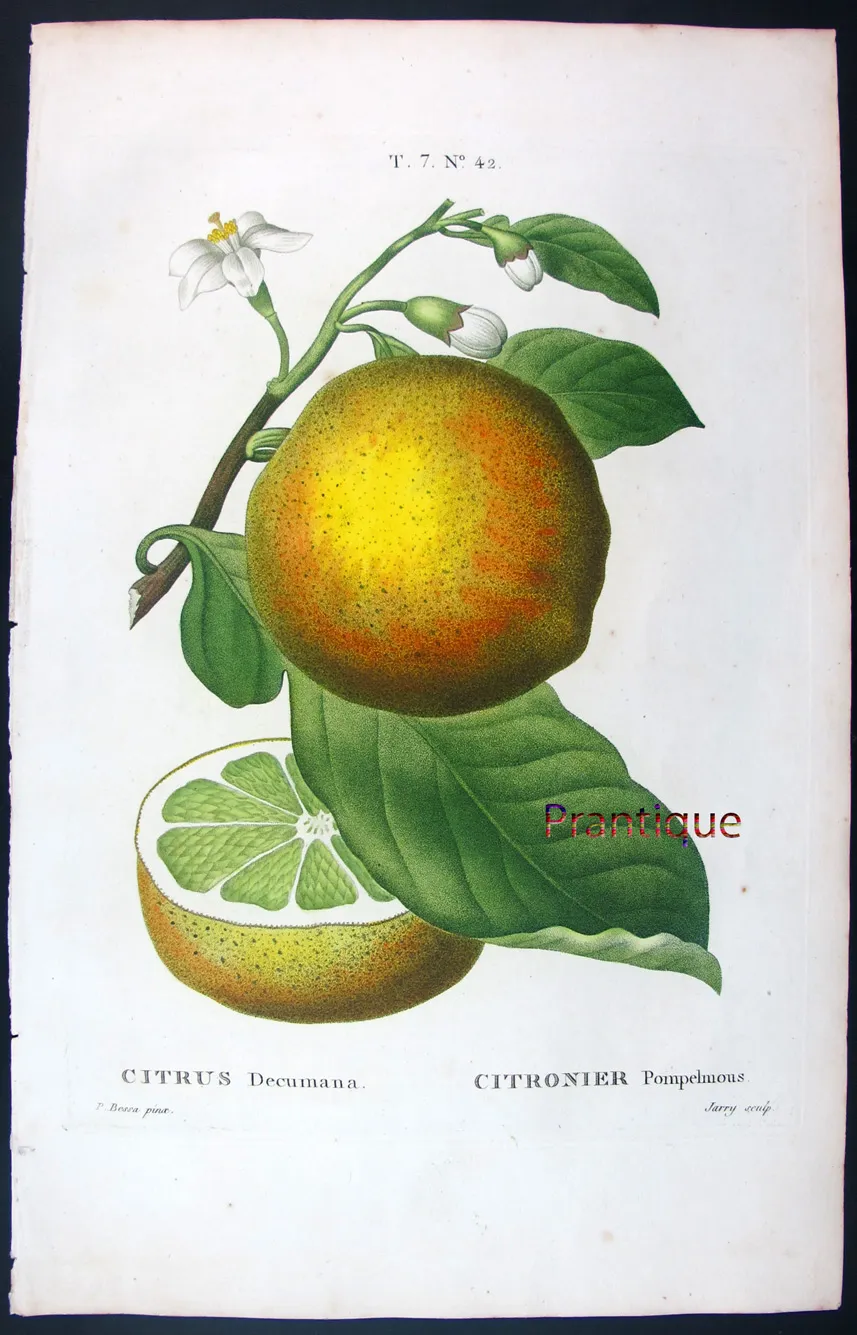
This curated ensemble unites nine original early nineteenth-century engravings devoted to rare cultivated citrus—cedrats, refined lemon varieties, the monumental Pomme d’Adam, and the imposing Pompelmous. Conceived in Napoleonic France, the group reads like a private chapter from an agrarian golden age: the kind of visual knowledge once gathered for grand gardens, limonaie, and Mediterranean orangeries where fragrance, form, and seasonality were part of the architecture of living.
Bessa’s plates are not merely fruit portraits. They are studies in atmosphere: cool greens, citrine yellows, and soft blush tones shaped by hand-coloring of exceptional finesse. Sectional views reveal the internal geometry of the fruit, while leaves and blossoms introduce the quiet drama of the citrus tree itself—suggesting a terrace in warm light, a shaded courtyard, or a dining room where the art of cultivation becomes part of everyday elegance.
The nine plates form a complete visual narrative, balancing botanical clarity with a naturally decorative rhythm. Some compositions isolate fruit like sculptural objects—poised, tactile, and luminous—while others open the fruit in cross-section, exposing the architecture of segments and pulp. The ensemble moves between study and sensation: the pleasure of citrus in the hand, and the precision of citrus under the eye.
Seen together, these engravings evoke the Mediterranean idea of abundance—an orchard vocabulary of texture, fragrance, and light. They suit interiors that value restraint and materials: stone, wood, linen, terracotta, and the quiet luxury of rooms designed to breathe.
The ensemble comprises nine documented citrus varieties as engraved in Arbres et Arbustes. Read collectively, they illustrate distinctions in fruit structure, rind texture, internal segmentation, and botanical habit—revealing the complexity of early nineteenth-century French pomology.
Together these plates form a coherent and academically significant citrus portfolio, preserved as an intact ensemble.
Pancrace Bessa stands among the foremost botanical illustrators of his generation. His approach is quietly luxurious: never theatrical, always luminous—made for collectors who prefer harmony over emphasis. Clarity of engraving is complemented by nuanced hand-coloring, with subtle transitions from pale citrine to olive green and carefully modelled rind textures. The balance between scientific observation and aesthetic restraint is particularly evident in the larger compositions, where foliage and fruit are orchestrated with measured authority.
Complete varietal citrus groupings rarely remain intact. Preserved together, these engravings transcend decorative appeal and assume documentary and historical significance.
All nine engravings are preserved in like brand-new antique condition, retaining exceptionally fresh original hand coloring and strong impressions. The sheets present clean margins and stable paper structure consistent with early nineteenth-century production.
The ensemble retains both its aesthetic coherence and its documentary integrity, presenting as a remarkably well-preserved and highly desirable complete citrus series.
For further context on Pancrace Bessa and his contribution to French botanical illustration, see our editorial feature:
Specific References
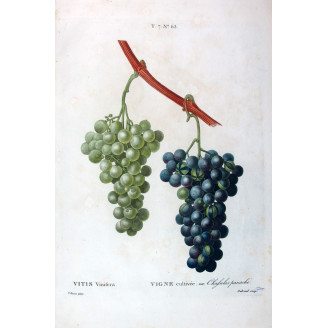
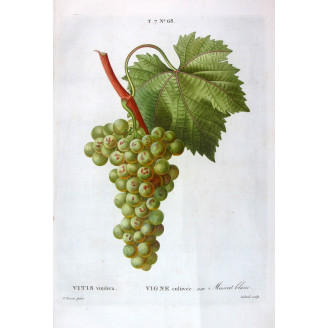
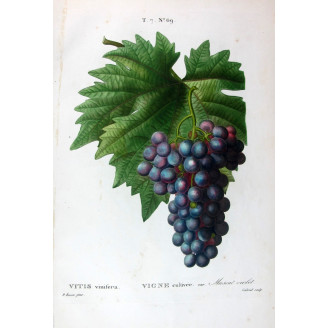
Rare depiction of striped Chasselas grape clusters, unique in its pattern and color.
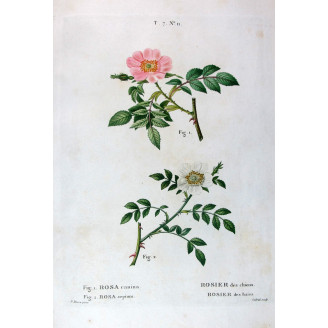
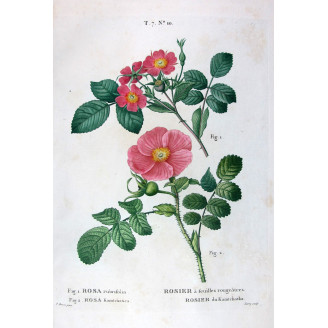
Dog Rose & Hedge Rose Rosier des chiens & Rosier des haies Original hand-colored botanical engraving by Pancrace Bessa.
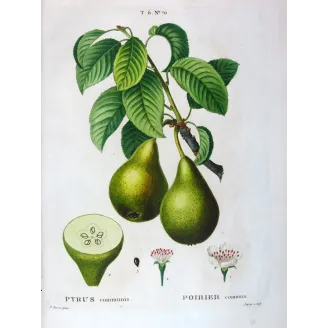
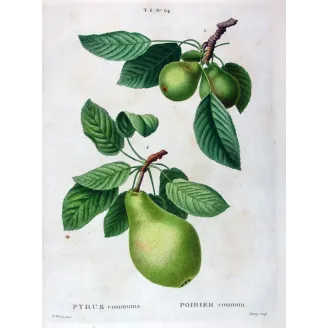
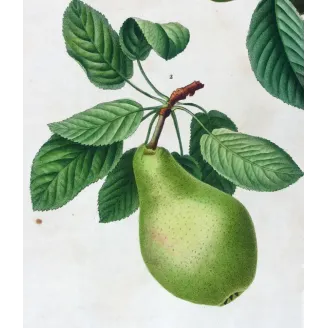
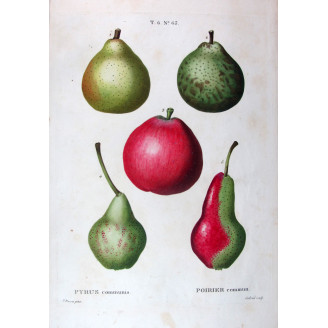
A refined early 19th-century botanical engraving depicting cultivated pear varieties (Pyrus communis), drawn by Pancrace Bessa and engraved for Arbres et Arbustes. Executed with restraint and clarity, the plate exemplifies the elegance of French pomological illustration, uniting scientific precision with a calm, decorative sensibility. The harmonious composition and subtle hand-colouring make it a timeless and highly collectible work.
A refined early 19th-century botanical engraving depicting cultivated pear varieties (Pyrus communis), drawn by Pancrace Bessa and engraved for Arbres et Arbustes. Executed with restraint and clarity, the plate exemplifies the elegance of French pomological illustration, uniting scientific precision with a calm, decorative sensibility. The harmonious composition and subtle hand-colouring make it a timeless and highly collectible work.
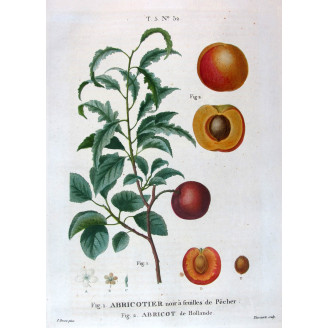
Dutch Apricot Abricot de Hollande Original hand-colored botanical engraving by Pancrace Bessa.
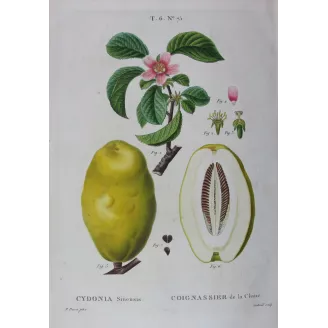
Chinese Quince Coignassier de la Chine Original hand-colored botanical engraving by Pancrace Bessa.
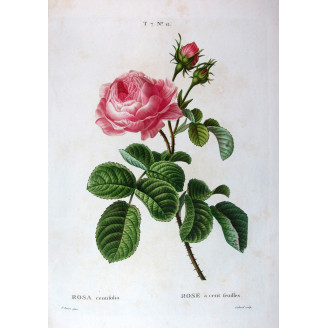
Hundred-petaled Rose Rose à cent feuilles Original hand-colored botanical engraving by Pancrace Bessa.
A coherent ensemble of eight original orange and bigarade engravings by Pancrace Bessa, reflecting the cultivated discipline of French orangeries in the Napoleonic era. Botanical precision and architectural composure unite in a refined citrus portfolio preserved as a complete series.
Kamchatka Rose Rosier du Kamchatka Original hand-colored botanical engraving by Pancrace Bessa.
Elegant depiction of a rich purple Muscat grape variety by Pancrace Bessa.
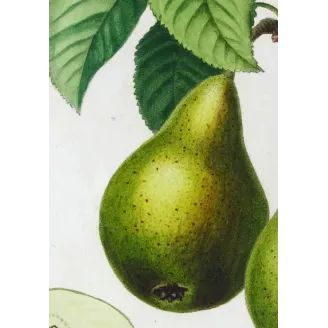
A refined study of French cultivated pear varieties, distinguished by subtle chromatic contrasts and carefully modelled forms. This hand-colored engraving reflects Pancrace Bessa’s ability to elevate orchard subjects through balance, restraint, and quiet visual authority.
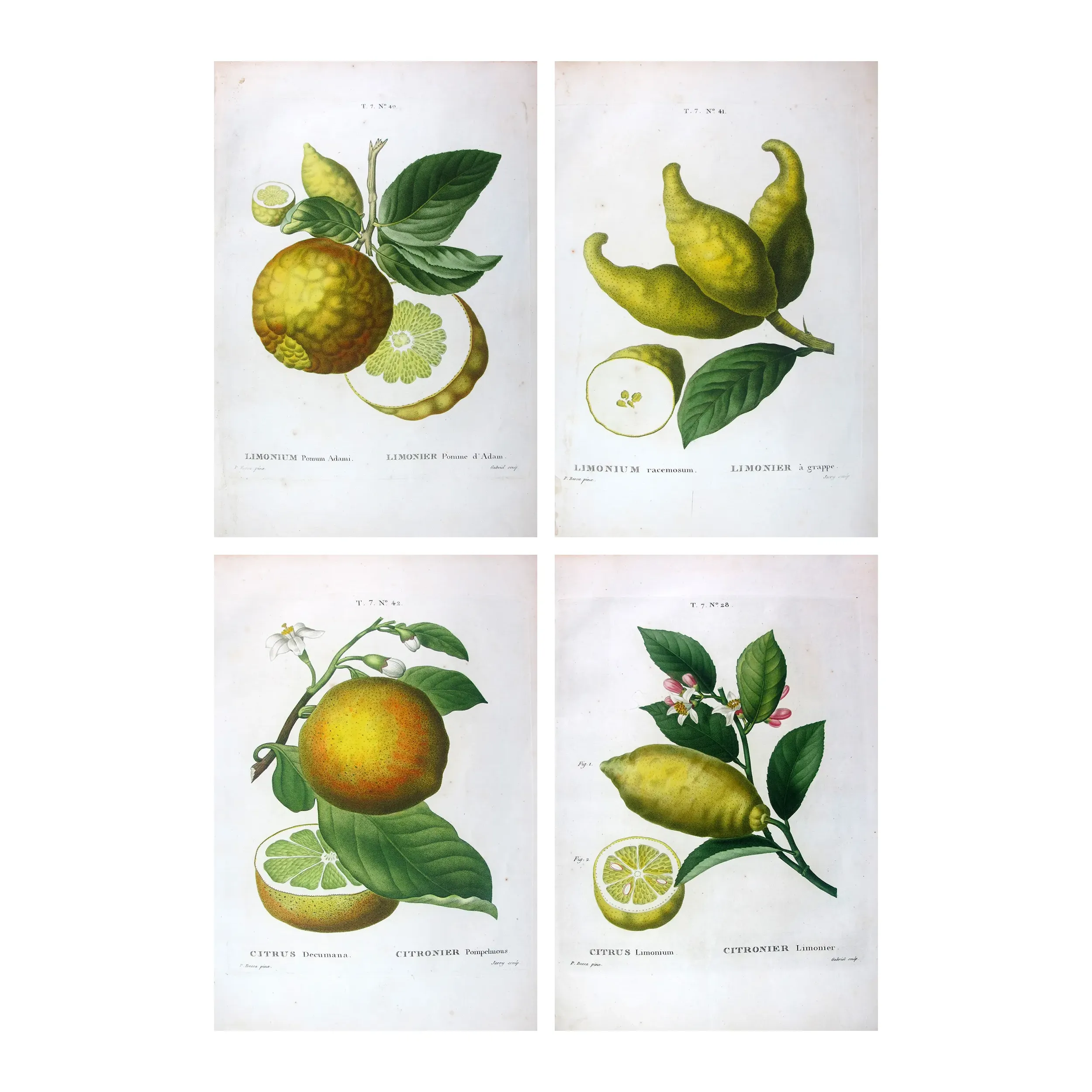
Nine original citrus engravings by Pancrace Bessa, uniting rare cedrats, sculptural lemons, and monumental Pomme d’Adam varieties into a coherent Napoleonic-era ensemble. Botanical study and refined color harmonize in a portfolio conceived to be read as a whole.