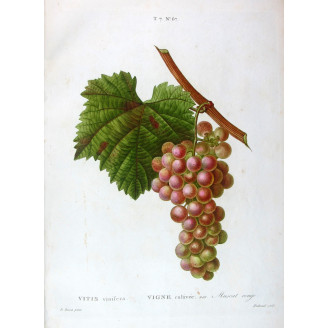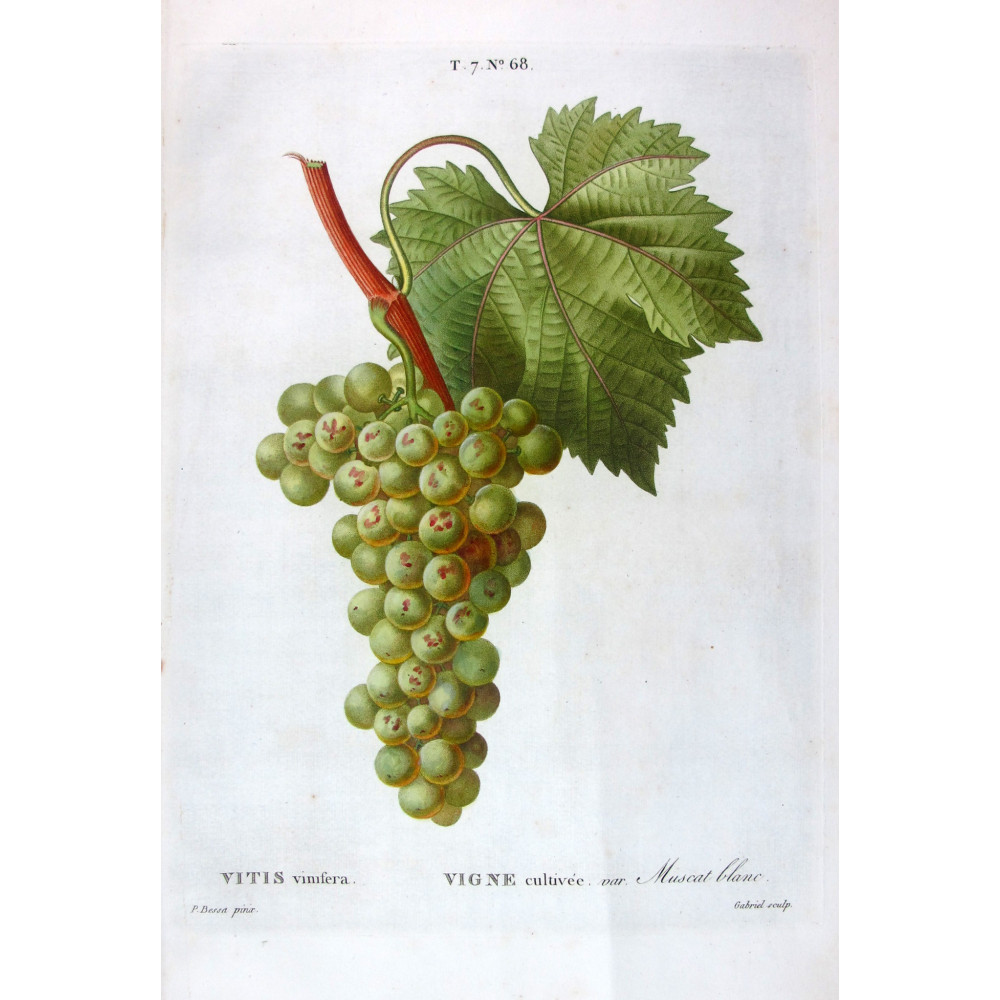
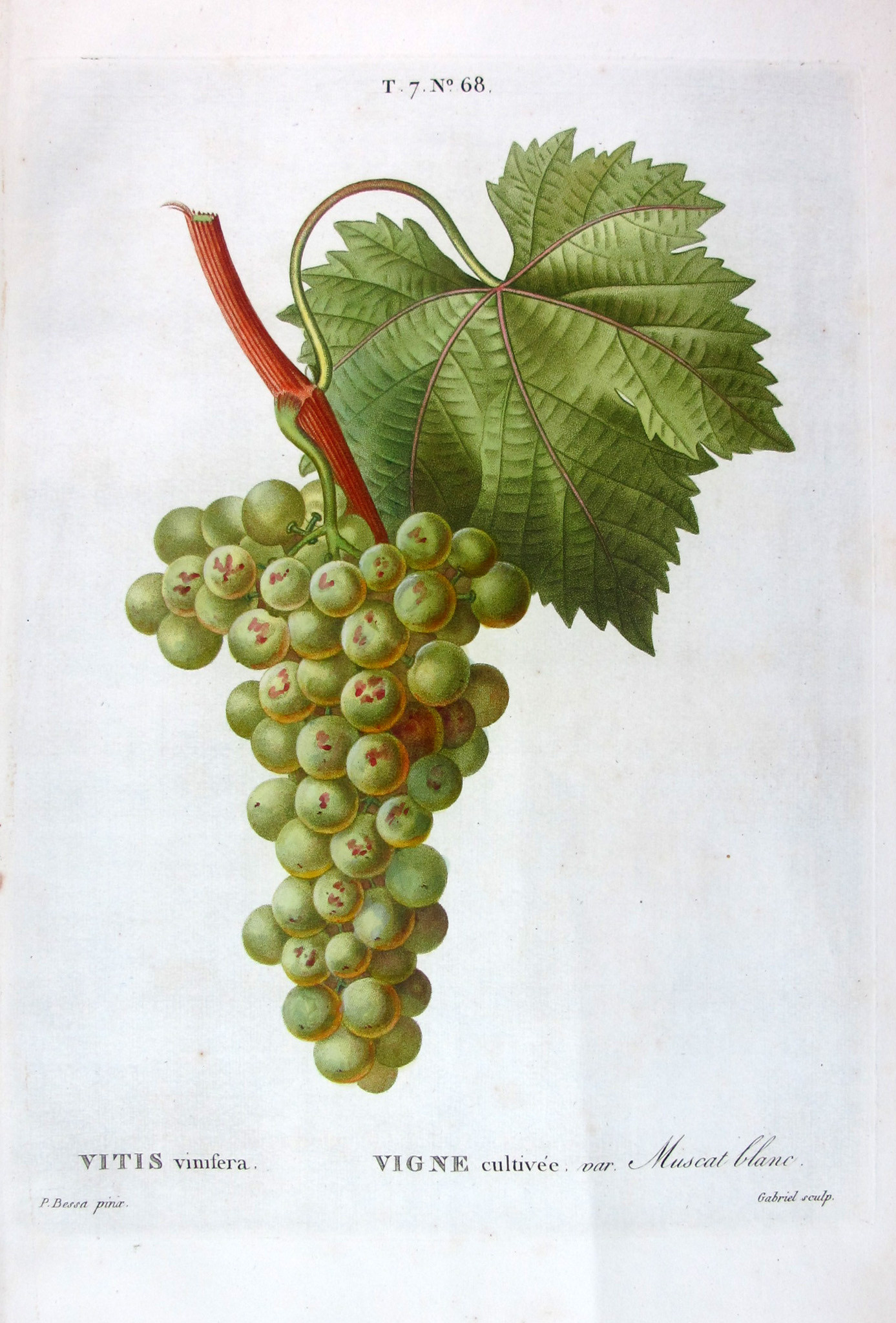
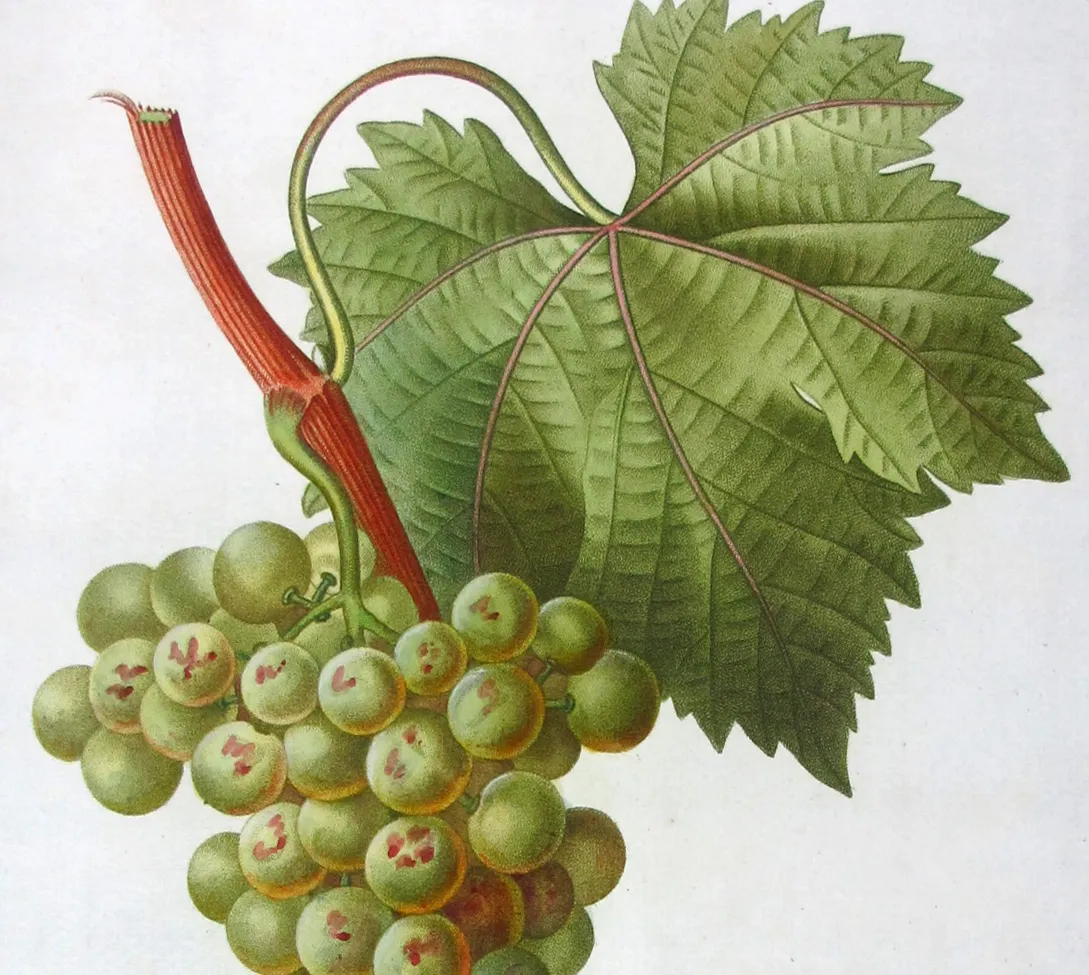
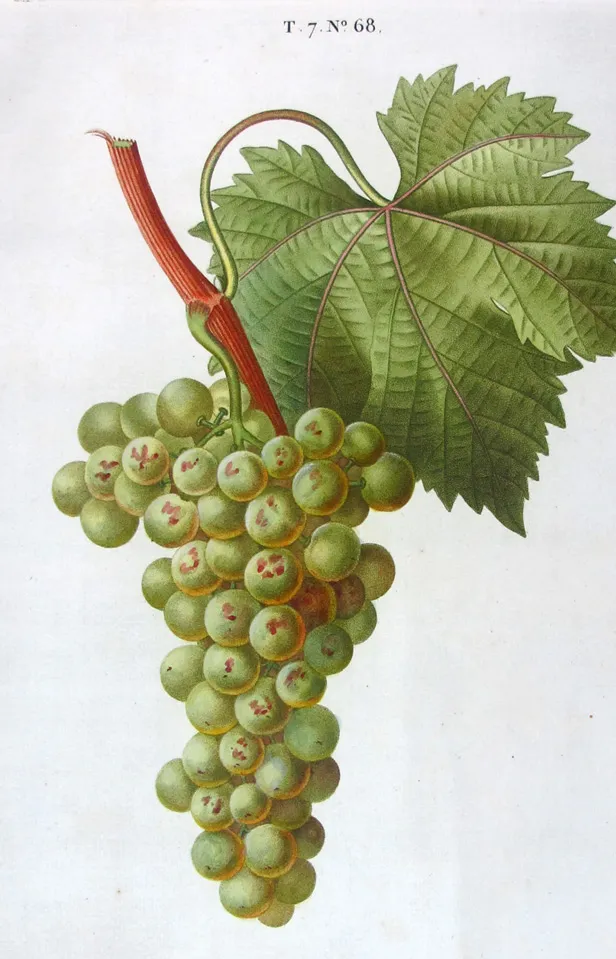
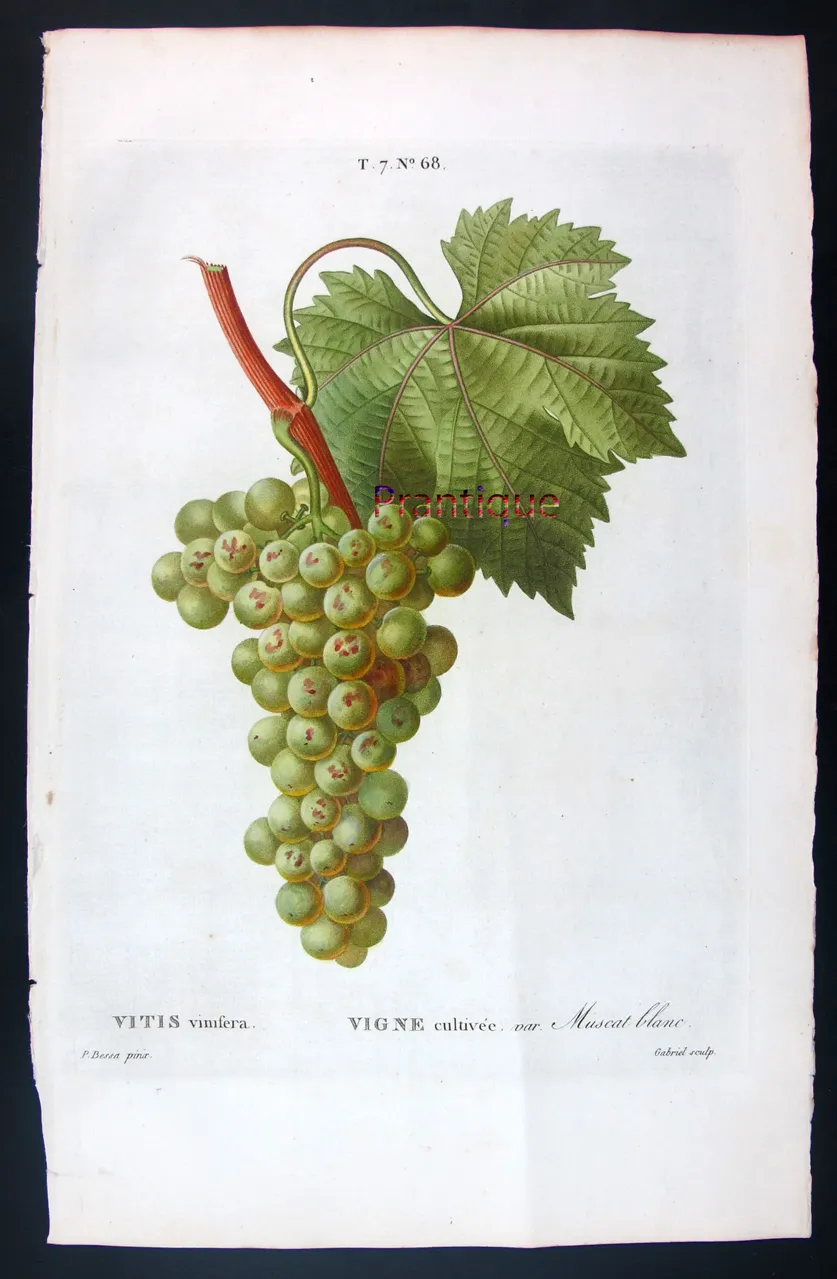

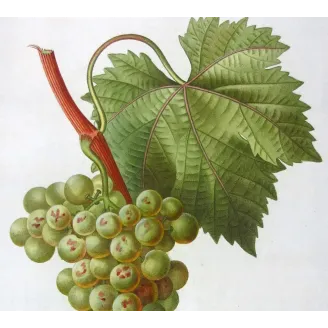
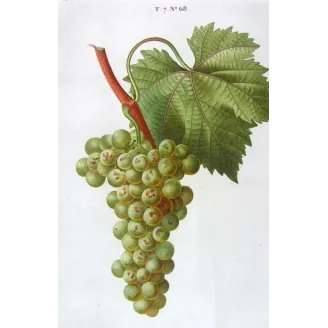
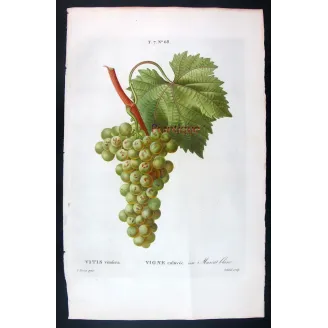
Bright and lush rendering of the white Muscat grape by Bessa.
 Delivery policy
Your print will be carefully prepared and shipped worldwide via trusted couriers (UPS or similar).
 Authentic antique prints
Original engravings from the 17th–19th century.
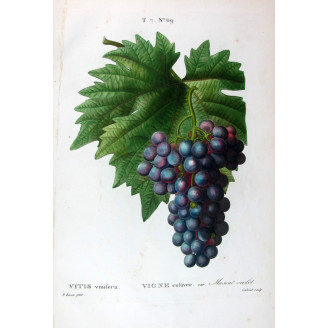
This original early 19th-century botanical engraving depicts Vitis vinifera as a cultivated French variety identified in the plate as Muscat blanc. The composition presents a single cluster of pale grapes suspended beneath a broad vine leaf, arranged with remarkable clarity against generous white space.
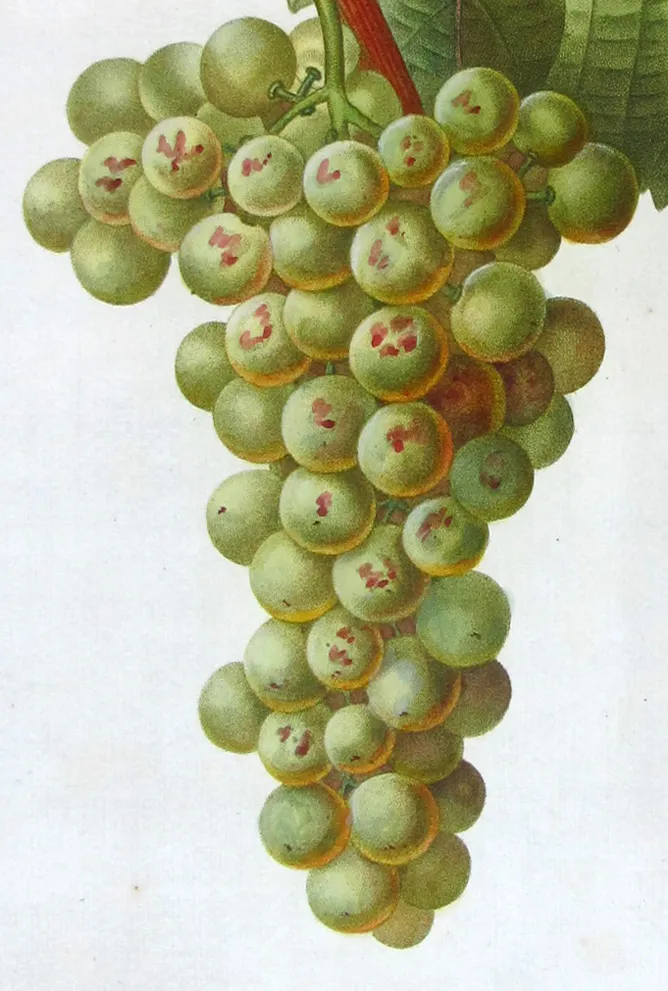
What makes this plate especially distinctive is the treatment of the fruit surface. Beyond the soft green-gold modelling typical of white Muscat varieties, many berries display subtle rosy speckling and faint blush tones, suggesting natural variation during ripening. Bessa translates these minute details into a refined visual rhythm, keeping the cluster luminous and tactile without resorting to heavy contrast.
Issued as part of Arbres et Arbustes, this engraving reflects the period’s fascination with cultivated vineyard varieties, where even delicate differences of tone and surface character were recorded with scientific precision and an eye for domestic elegance.
— • —
The composition is built around a graceful diagonal: the vine stem rises to the left, while the cluster descends in a compact, tapering form. The large leaf above acts as an architectural canopy, anchoring the subject and adding a bold, veined structure that contrasts beautifully with the rounded translucency of the fruit.
Fine stipple engraving and exceptionally clean hand-colouring give the grapes a softly luminous presence. The restrained palette—fresh greens warmed with subtle golden notes—allows the delicate rosy markings to read as intentional botanical observation, adding refinement and complexity to an otherwise calm and airy plate.
The plate is identified in the original publication as a cultivated grapevine variety:
Rather than presenting blossoms or a full vine habit, Bessa concentrates on fruit character—density, translucency, and surface variation—making this plate both a decorative orchard study and a historically grounded document of cultivated grapes “in portrait.”
The engraving is in exceptional antique condition, effectively near like brand new. The original hand-colouring is remarkably fresh and luminous, with no visible defects distracting from the image. No watermark has been observed. The engraved credits “P. Bessa pinx.” and “Gabriel sculp.” are present.
For insight into Bessa’s distinctive hand-colouring techniques, see our editorial feature on Pancrace Bessa:
Specific References
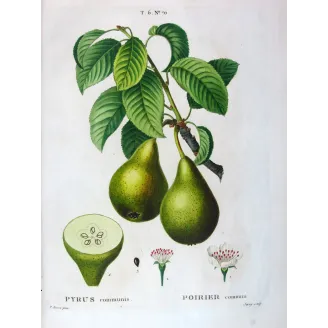
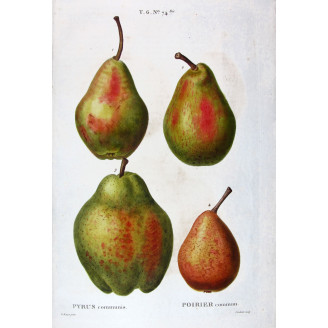
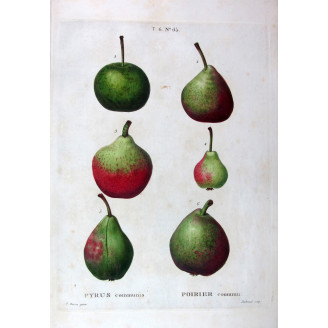
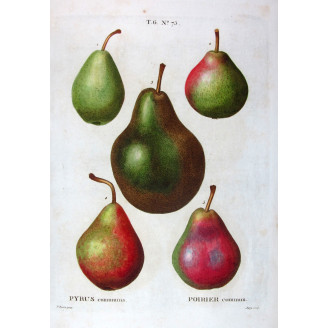
A refined early 19th-century botanical engraving depicting cultivated pear varieties (Pyrus communis), drawn by Pancrace Bessa and engraved for Arbres et Arbustes. Executed with restraint and clarity, the plate exemplifies the elegance of French pomological illustration, uniting scientific precision with a calm, decorative sensibility. The harmonious composition and subtle hand-colouring make it a timeless and highly collectible work.
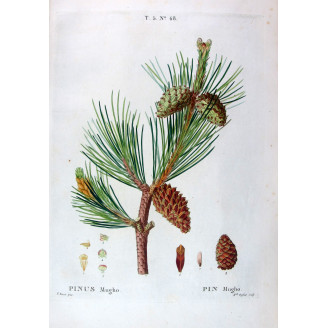
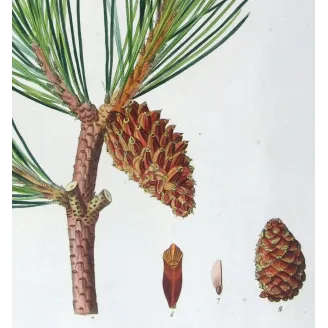
Antique engraving of Pinus Mugho by Bessa, rich in botanical detail.
Elegant depiction of a rich purple Muscat grape variety by Pancrace Bessa.
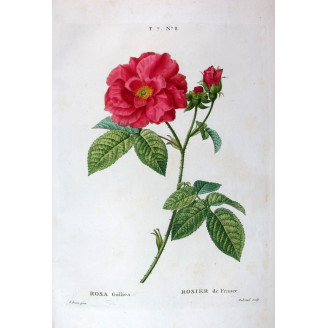
French Rose Rosier de France Original hand-colored botanical engraving by Pancrace Bessa.
A refined orchard subject where volume and proportion are carefully balanced, giving the fruit a calm, almost sculptural presence.
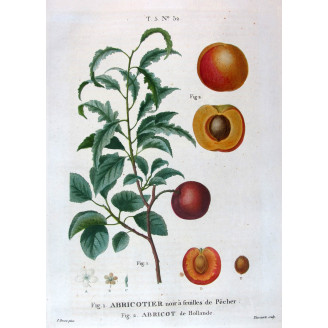
Dutch Apricot Abricot de Hollande Original hand-colored botanical engraving by Pancrace Bessa.
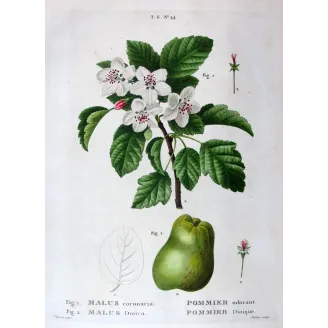
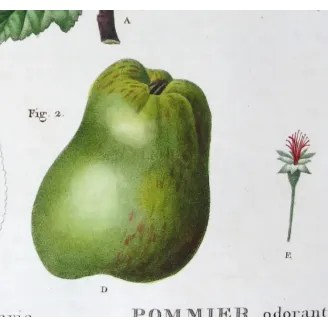
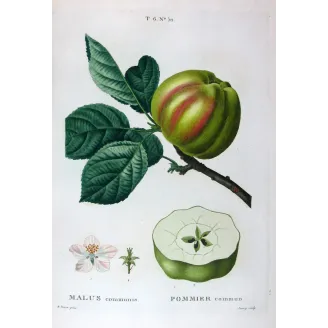
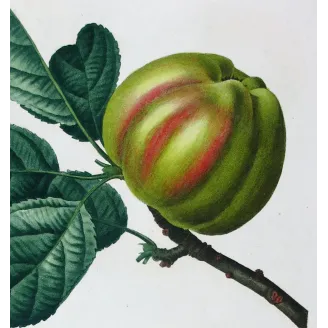
A finely executed early 19th-century botanical engraving illustrating a cultivated apple variety (Malus communis), drawn by Pancrace Bessa for Arbres et Arbustes. The composition combines precise botanical observation with refined decorative balance, presenting fruit and foliage with clarity and quiet elegance. Exceptional hand-colouring and careful modelling reflect the sophistication of French pomological illustration at its height.
A finely executed early 19th-century botanical engraving illustrating a cultivated apple variety (Malus communis), drawn by Pancrace Bessa for Arbres et Arbustes. The composition combines precise botanical observation with refined decorative balance, presenting fruit and foliage with clarity and quiet elegance. Exceptional hand-colouring and careful modelling reflect the sophistication of French pomological illustration at its height.
A refined study of cultivated pears, presenting five distinct fruit forms arranged in a balanced and harmonious composition. Subtle variations in shape, colour, and surface texture create a quiet visual rhythm, reflecting Pancrace Bessa’s ability to transform orchard subjects into works of enduring elegance.
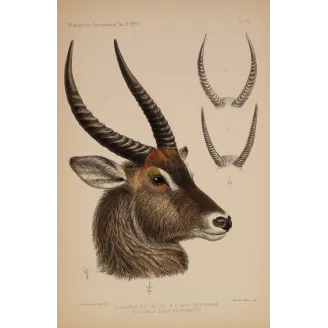
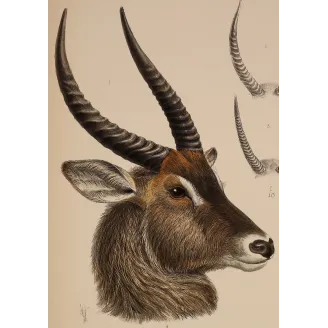
Original hand-coloured lithograph by John Gerrard Keulemans from Novitates Zoologicae, Volume II, Plate IV, published in 1895. The sheet combines a finely observed portrait of an African waterbuck with comparative studies of three horn forms used for zoological identification. Selective gum arabic remains visible on the forehead, pupil, nose and darker portions of the principal horns. Printed by Mintern Bros. on substantial wove paper and preserved in very good condition.
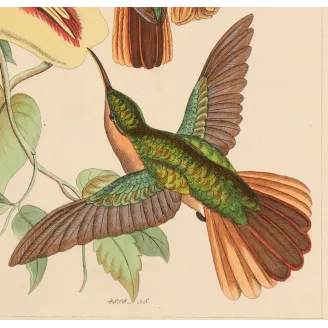
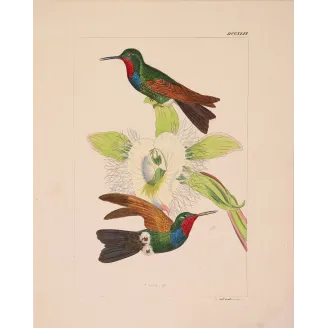
Original nineteenth-century hand-colored engraving depicting the Jamaican Mango (Anthracothorax mango), a striking tropical hummingbird illustrated by Ludwig Reichenbach in his celebrated Trochilinarum Enumeratio.
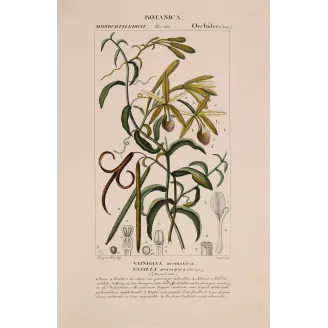
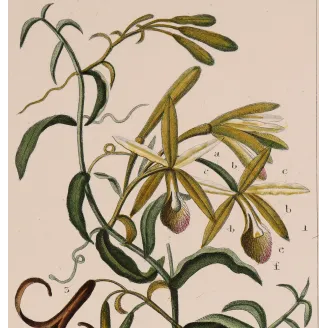
Delicate orchid illustration showing flower, pod and internal anatomy of vanilla.
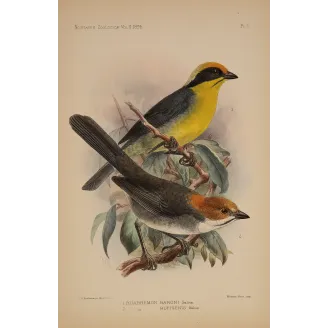
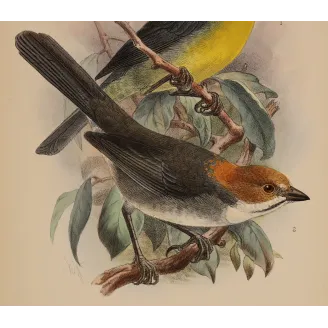
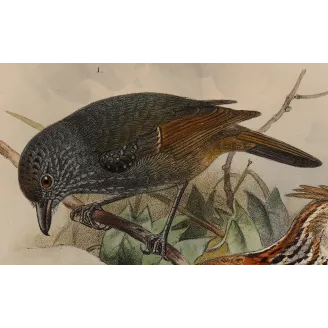
Original hand-coloured lithograph by John Gerrard Keulemans from Novitates Zoologicae, Volume II, Plate I, published in 1895. The composition depicts two Peruvian Andean brushfinches against a restrained botanical setting, with selective gum arabic highlights around the eyes and across parts of the upper bird’s wings. Printed by Mintern Bros. on substantial wove paper and preserved in very good condition.
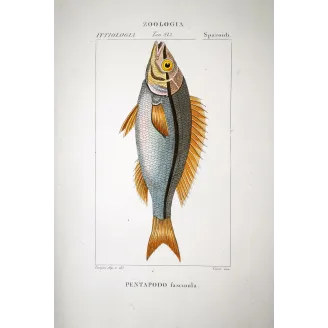
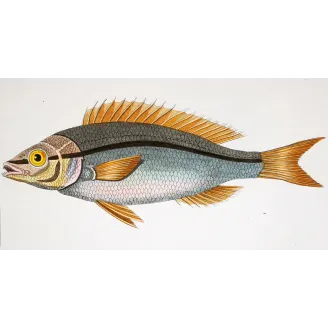
Elegant Pentapodus fish with shimmering orange-silver tones and refined aquatic poise.
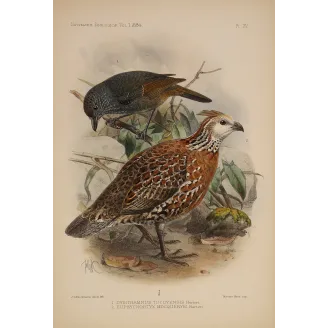
Original hand-coloured lithograph by John Gerrard Keulemans from Novitates Zoologicae, Volume I, Plate XV, published in 1894. The composition presents a Venezuelan White-streaked Antvireo above a richly patterned Crested Bobwhite, using vertical placement to suggest two distinct ecological levels within the same natural environment. Selective gum arabic remains visible on the pupils of both subjects and more extensively across the plumage of the lower bird. Printed by Mintern Bros. on substantial wove paper and preserved in very good condition.
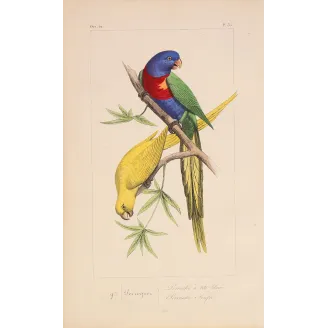
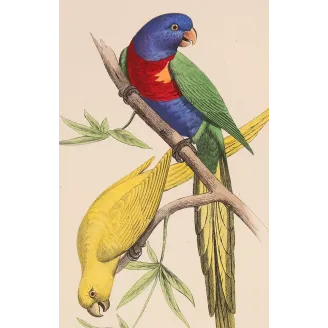
Highly decorative 19th-century engraving of exotic parakeets with vivid blue, red and yellow plumage. A striking and colorful antique bird print.
Original nineteenth-century hand-colored engraving depicting the Purple-throated Carib (Eulampis jugularis), one of the most spectacular Caribbean hummingbirds illustrated in Ludwig Reichenbach’s Trochilinarum Enumeratio.
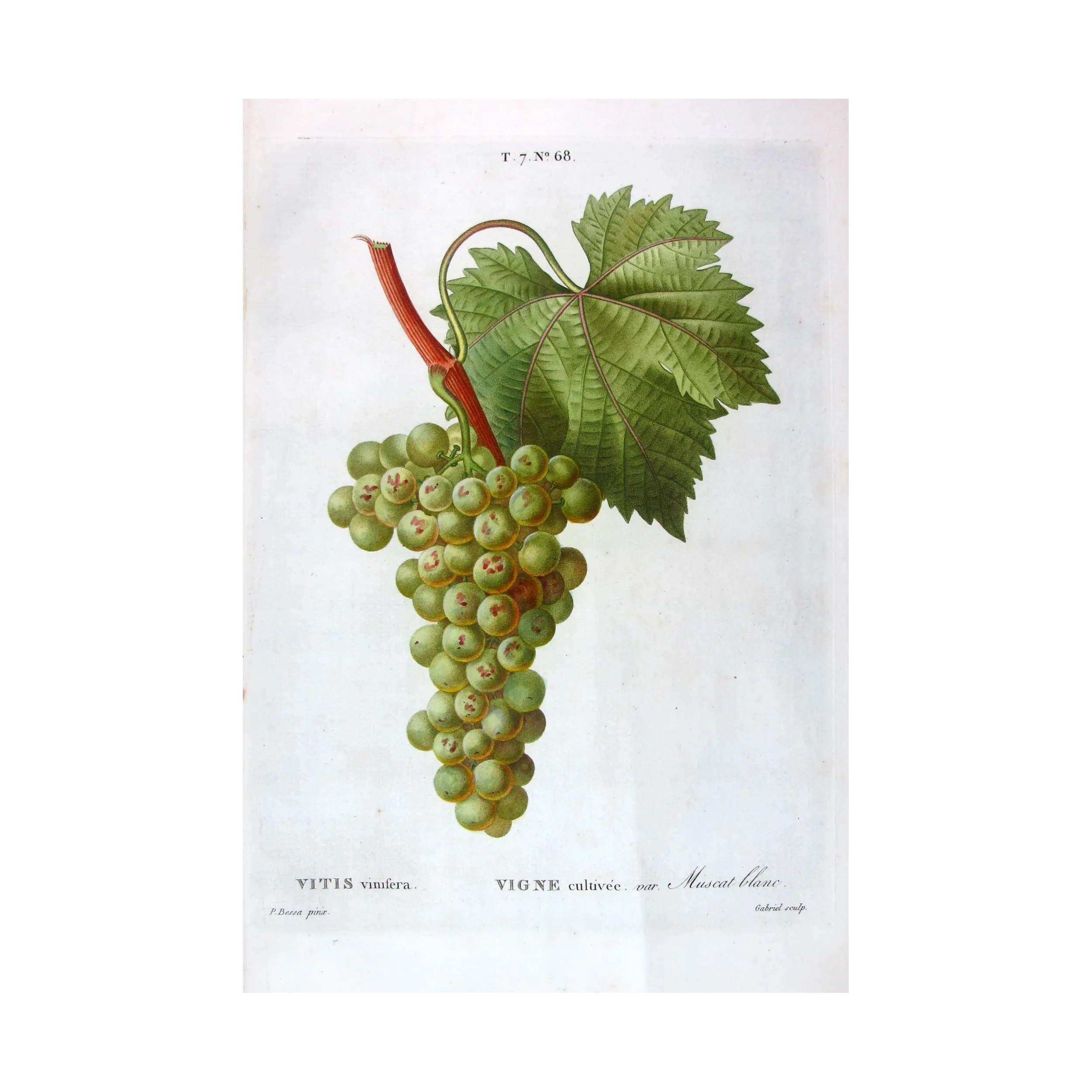
Bright and lush rendering of the white Muscat grape by Bessa.