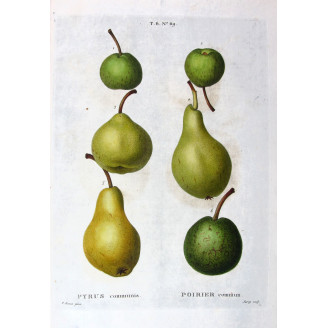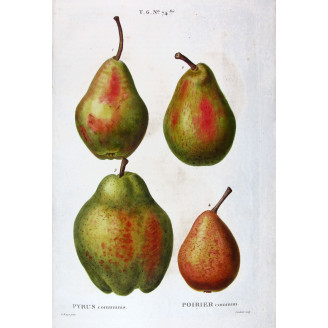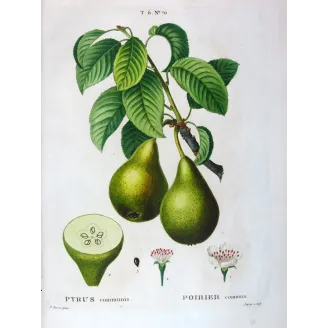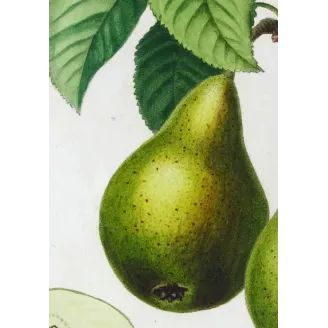
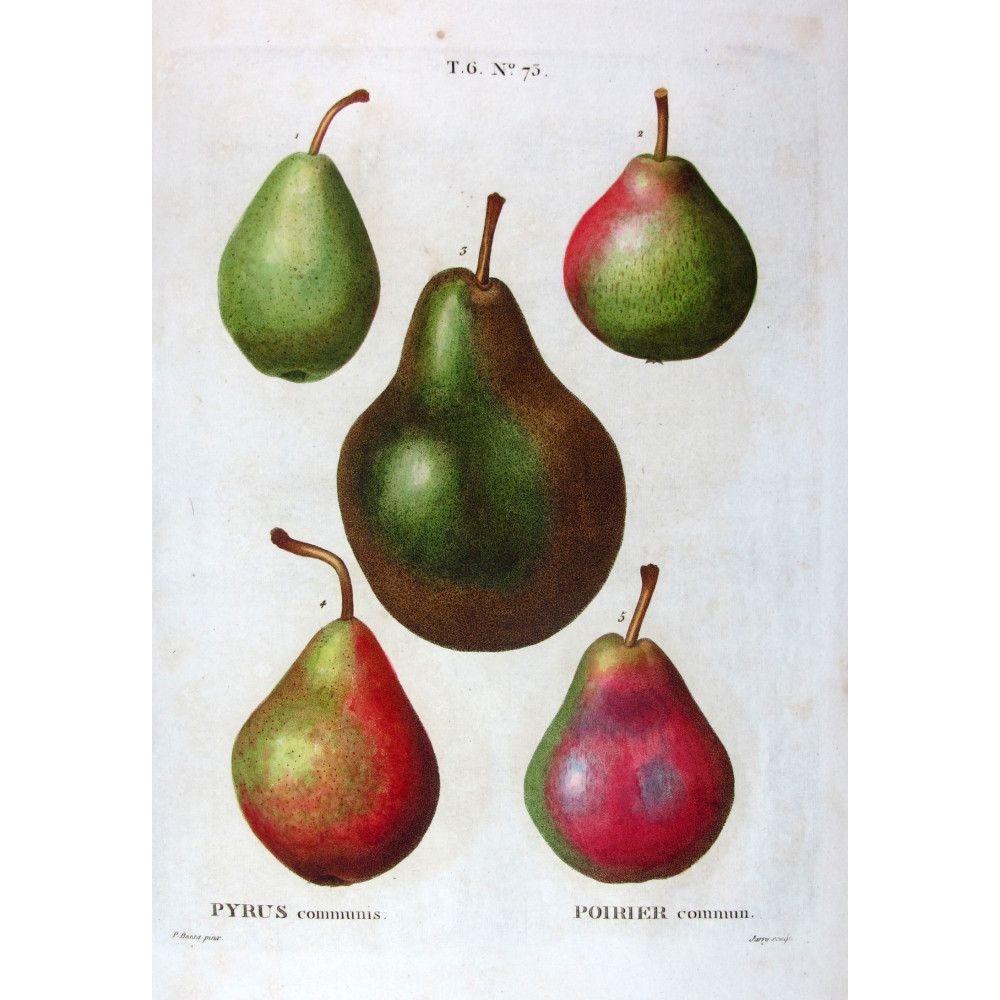
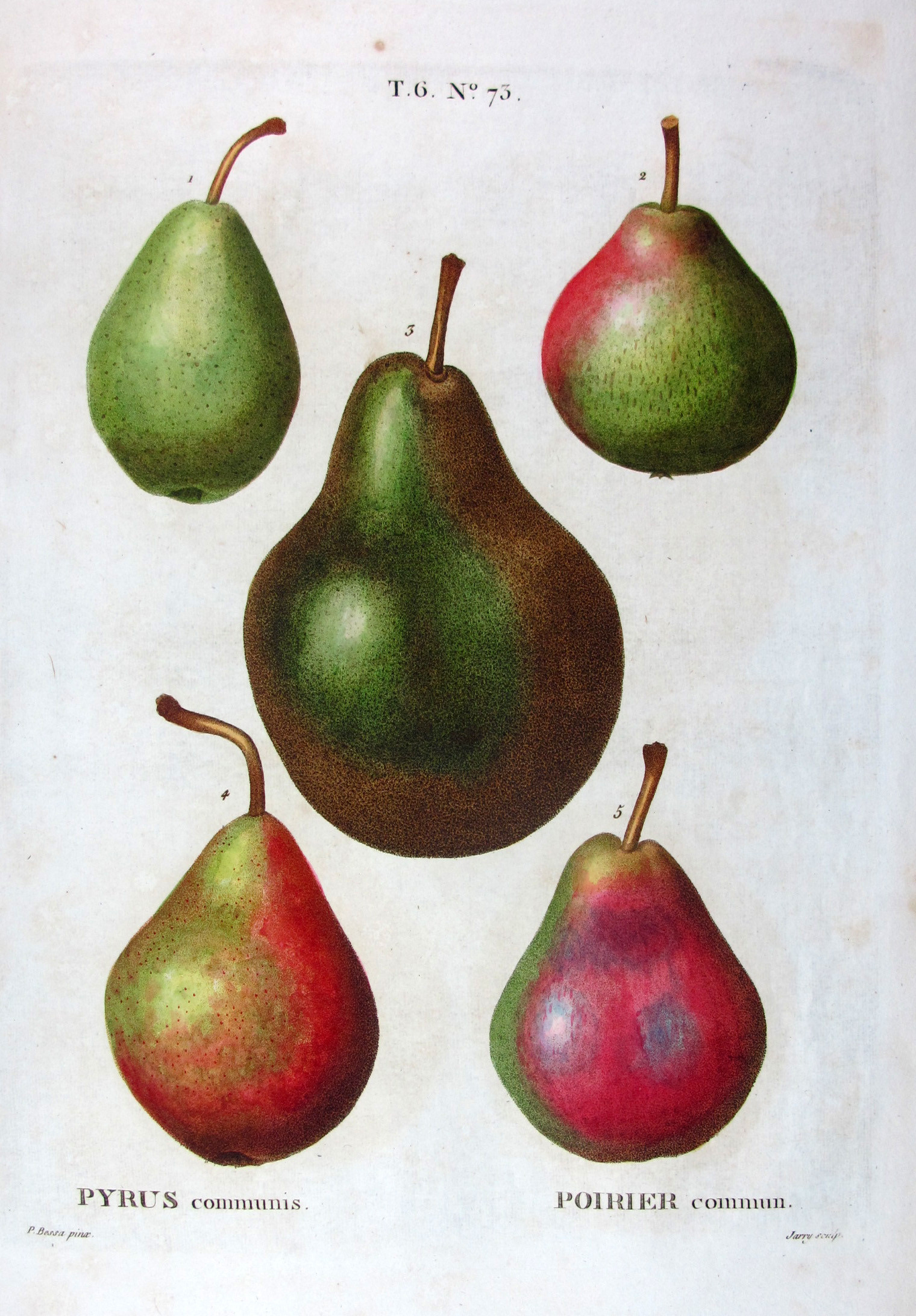
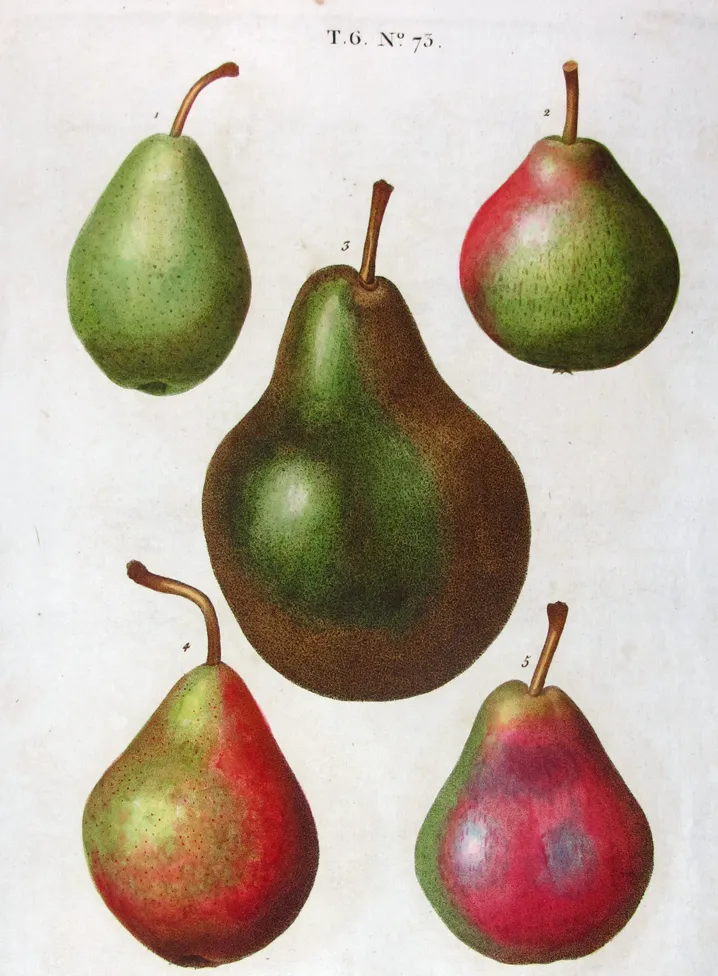
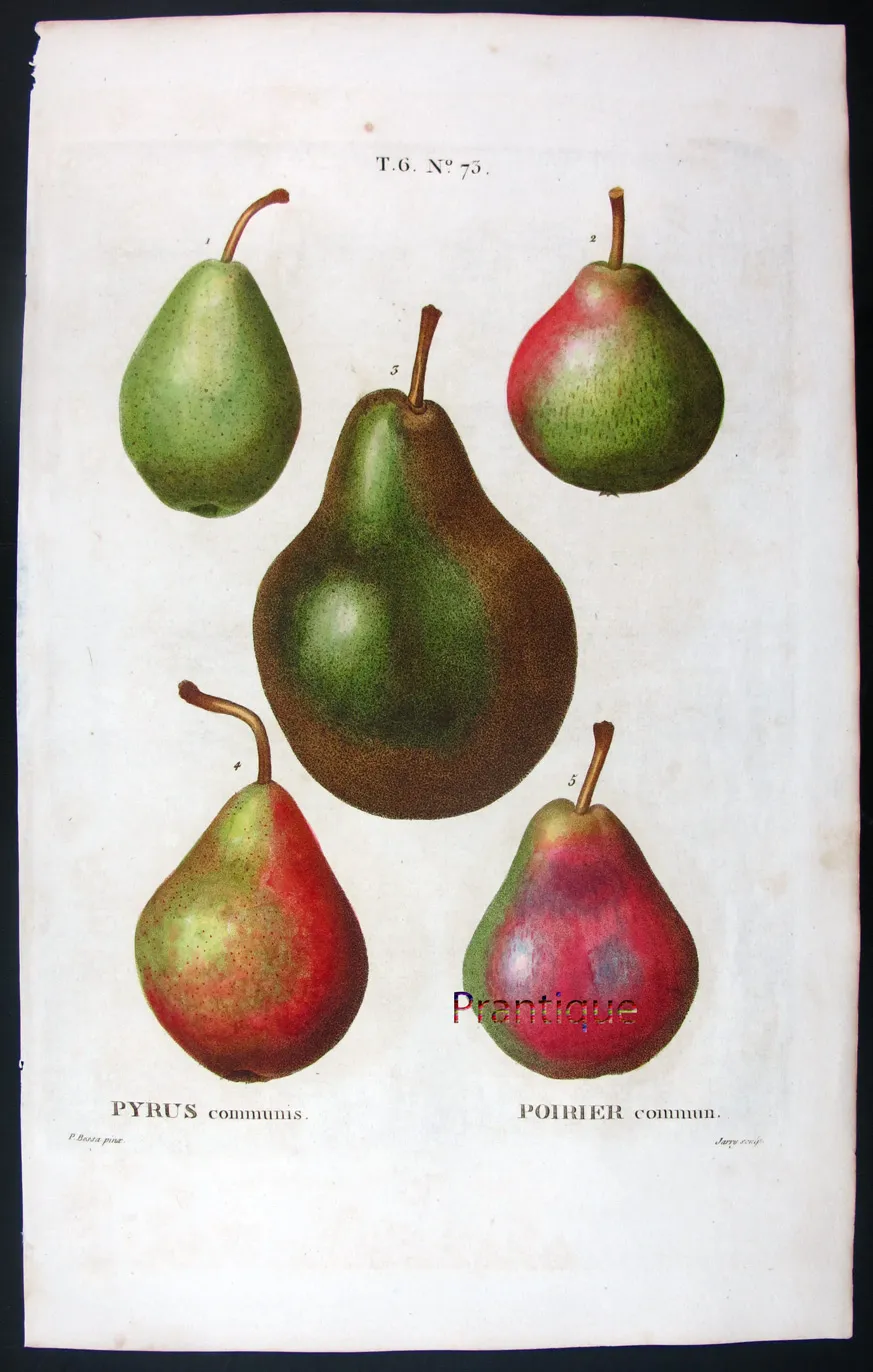
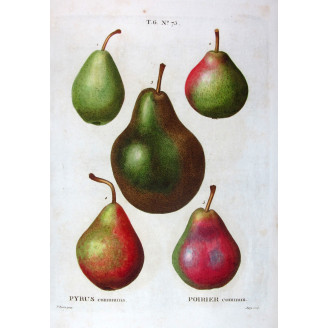

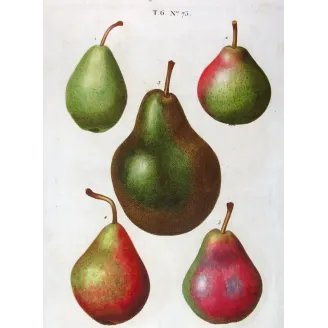
A refined study of cultivated pears, presenting five distinct fruit forms arranged in a balanced and harmonious composition. Subtle variations in shape, colour, and surface texture create a quiet visual rhythm, reflecting Pancrace Bessa’s ability to transform orchard subjects into works of enduring elegance.
 Delivery policy
Your print will be carefully prepared and shipped worldwide via trusted couriers (UPS or similar).
 Authentic antique prints
Original engravings from the 17th–19th century.
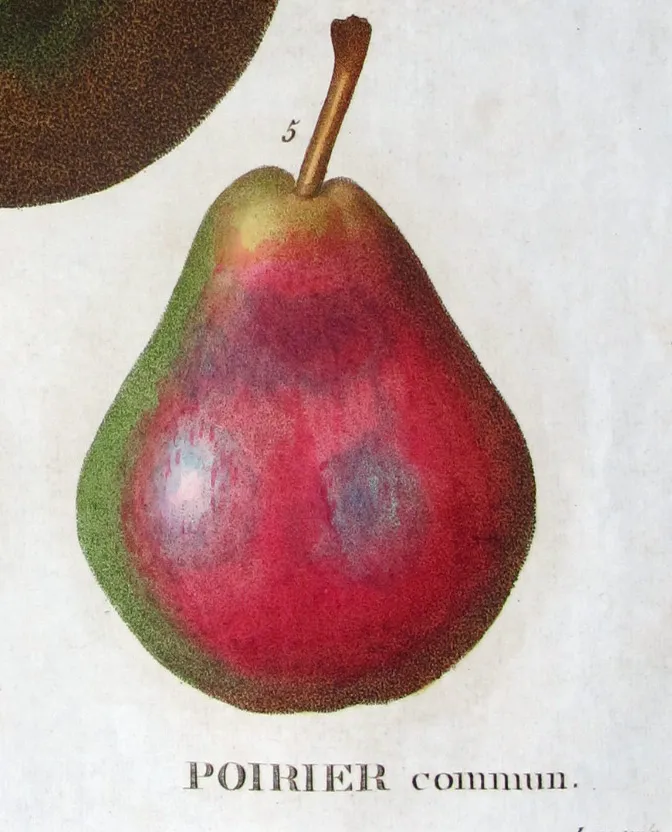
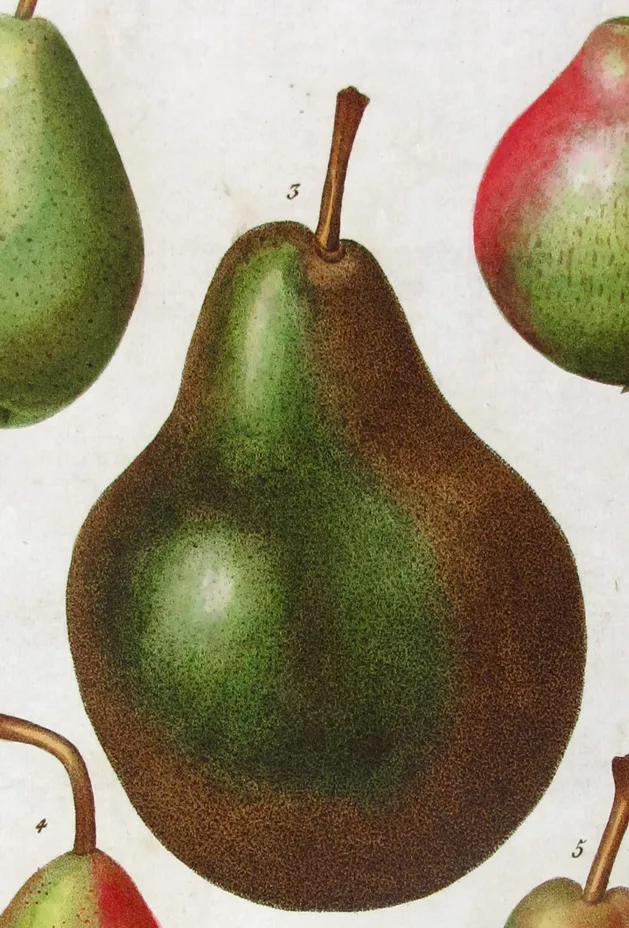
This original botanical engraving presents a comparative study of cultivated pears, each fruit rendered as an independent subject within a carefully balanced composition. Set against generous negative space, the fruits are allowed to read with clarity, their distinct silhouettes and surface textures emerging without visual interference.
Bessa’s approach is measured and restrained. Volume is articulated through subtle tonal modulation rather than sharp contour, while colour transitions remain soft and naturalistic. The result is an image that feels quietly sculptural, emphasizing presence and form over decorative excess.
Produced for Arbres et Arbustes, this plate exemplifies Bessa’s ability to elevate orchard subjects through compositional discipline and refined hand-colouring, transforming agricultural documentation into objects of enduring visual elegance.
— • —
The composition is organized around multiple fruit studies, each isolated to encourage direct visual comparison. Differences in proportion, curvature, and surface character become immediately legible, while the overall arrangement maintains a calm, almost meditative rhythm across the sheet.
The palette remains restrained—muted greens, warm blush tones, and delicate speckling—allowing the engraving to harmonize effortlessly with both classical and contemporary interiors. The emphasis is not on botanical spectacle, but on balance, restraint, and perceptual depth.
The plate is classified as Pyrus communis (common pear). In the original publication, however, the fruits are identified individually as distinct cultivated varieties, reflecting early nineteenth-century pomological practice and the desire to document orchard diversity through visual comparison.
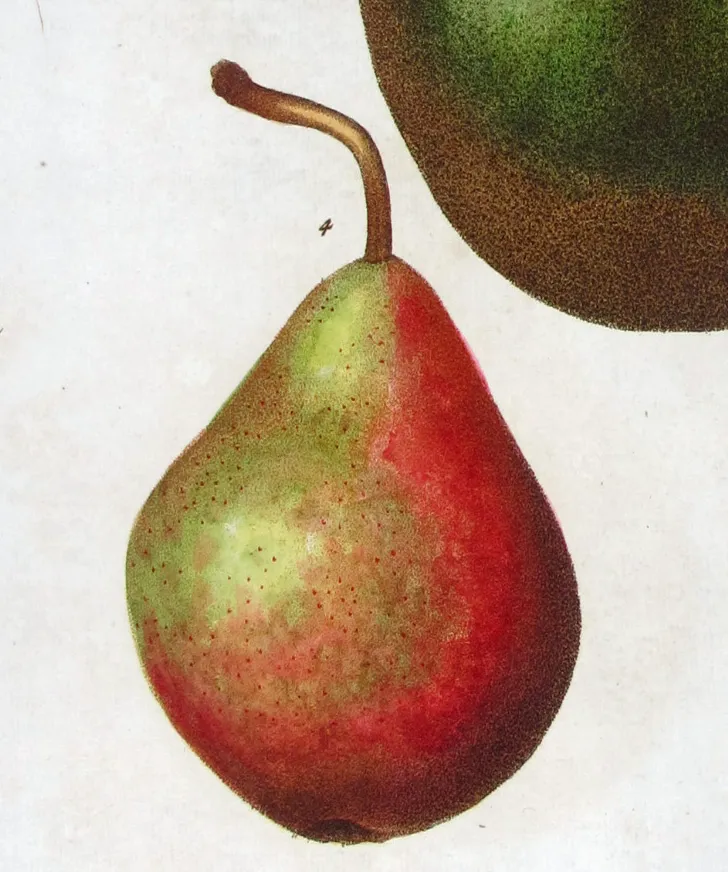
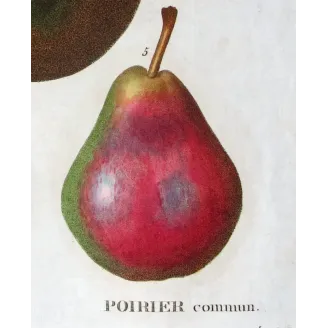
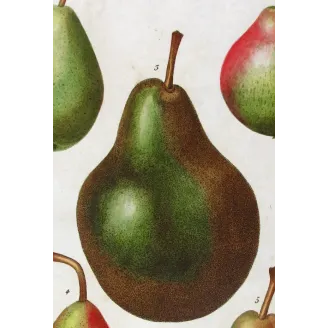
According to the engraved captions, the cultivars represented are Martin-Sire (Fig. 1), Poire Chaplale (Fig. 2), Belle-Bessa (Fig. 3), and Rougegarde (Fig. 4). Each fruit is presented as an isolated study, allowing differences in volume, skin texture, and colouration to be observed without compositional distraction.
Rather than illustrating botanical anatomy or flowering stages, Bessa focuses on mature fruit morphology. This approach was typical of period orchard documentation, where cultivated varieties were distinguished visually by silhouette and surface character rather than by taxonomic subdivision alone.
For insight into Bessa’s distinctive hand-colouring techniques and his pursuit of visual depth and naturalistic volume, see our editorial feature on Pancrace Bessa.
The engraving is in very good antique condition. A faint, near-imperceptible offset toning may be observed in limited areas, consistent with the natural ageing of early nineteenth-century paper. The original hand-colouring remains fresh and well preserved across all fruit studies. No watermark has been observed. The engraved credits “P. Bessa pinx.” and “Jarry sculp.” are present, confirming the original drawing by Pancrace Bessa and the engraving executed by Jarry.
For further context on Pancrace Bessa and his contribution to French botanical illustration, see our editorial feature:
Specific References
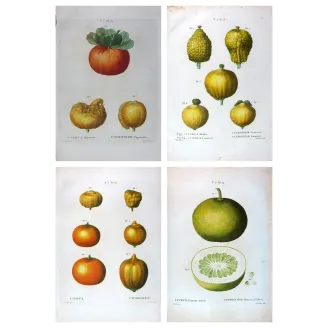
Nine original citrus engravings by Pancrace Bessa, uniting rare cedrats, sculptural lemons, and monumental Pomme d’Adam varieties into a coherent Napoleonic-era ensemble. Botanical study and refined color harmonize in a portfolio conceived to be read as a whole.
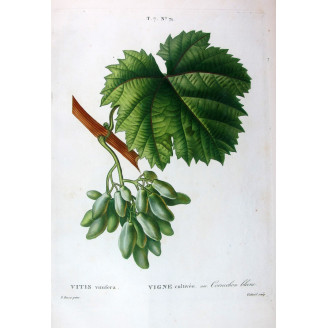
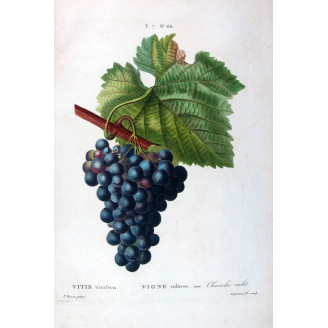
Original antique print of the common grape vine, Vitis vinifera, illustrated by Pancrace Bessa.
A refined orchard subject where volume and proportion are carefully balanced, giving the fruit a calm, almost sculptural presence.
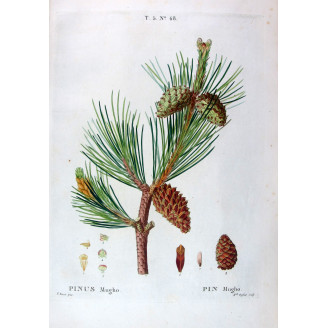
Antique engraving of Pinus Mugho by Bessa, rich in botanical detail.
Original antique print of the cultivated Chasselas grape vine, Vitis vinifera, by Pancrace Bessa.
A refined early 19th-century botanical engraving depicting cultivated pear varieties (Pyrus communis), drawn by Pancrace Bessa and engraved for Arbres et Arbustes. Executed with restraint and clarity, the plate exemplifies the elegance of French pomological illustration, uniting scientific precision with a calm, decorative sensibility. The harmonious composition and subtle hand-colouring make it a timeless and highly collectible work.
Elegant depiction of a rich purple Muscat grape variety by Pancrace Bessa.
Kamchatka Rose Rosier du Kamchatka Original hand-colored botanical engraving by Pancrace Bessa.
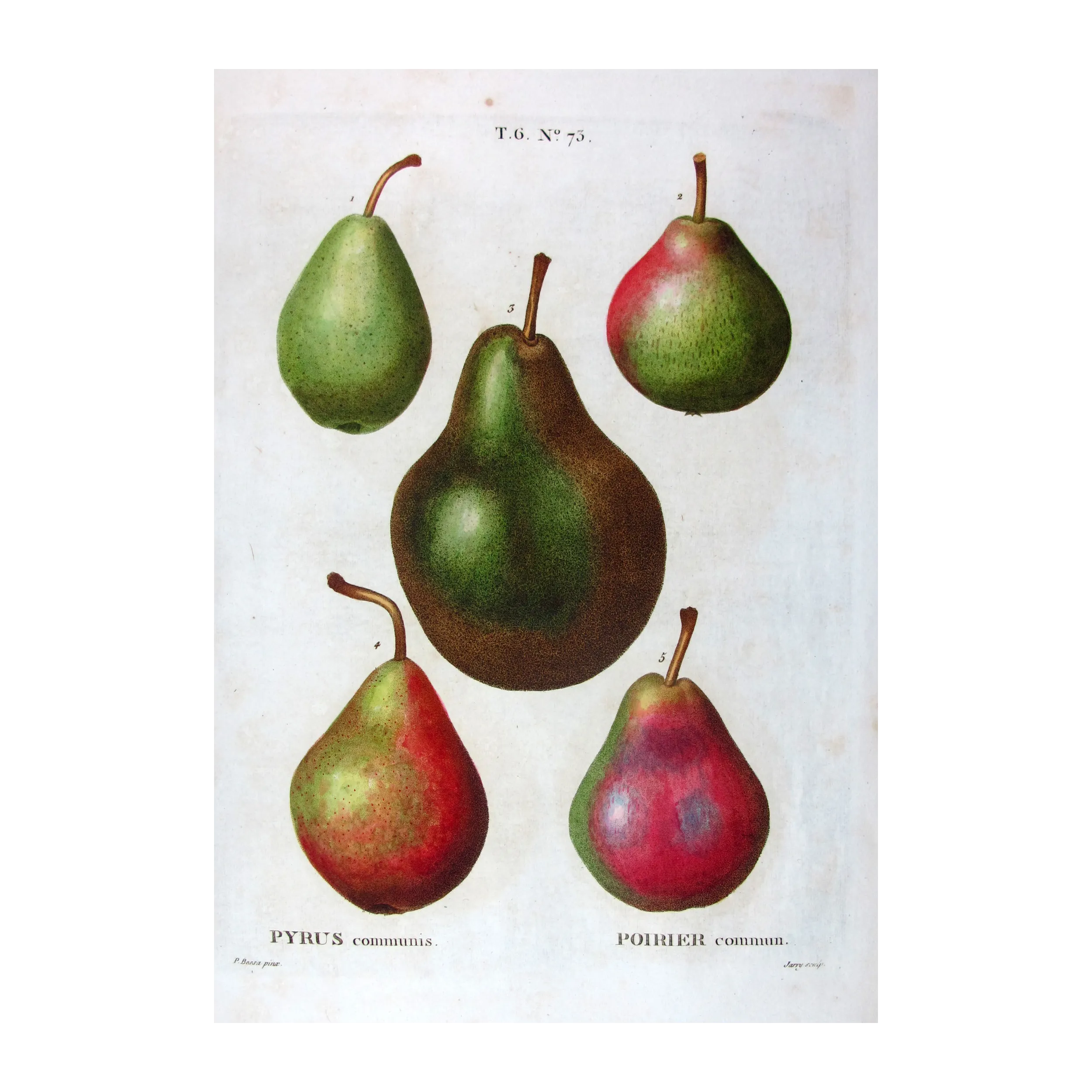
A refined study of cultivated pears, presenting five distinct fruit forms arranged in a balanced and harmonious composition. Subtle variations in shape, colour, and surface texture create a quiet visual rhythm, reflecting Pancrace Bessa’s ability to transform orchard subjects into works of enduring elegance.