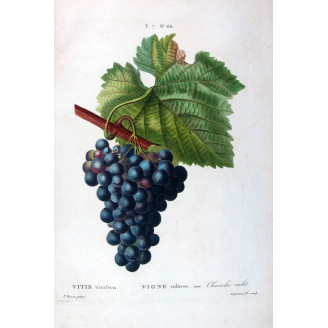
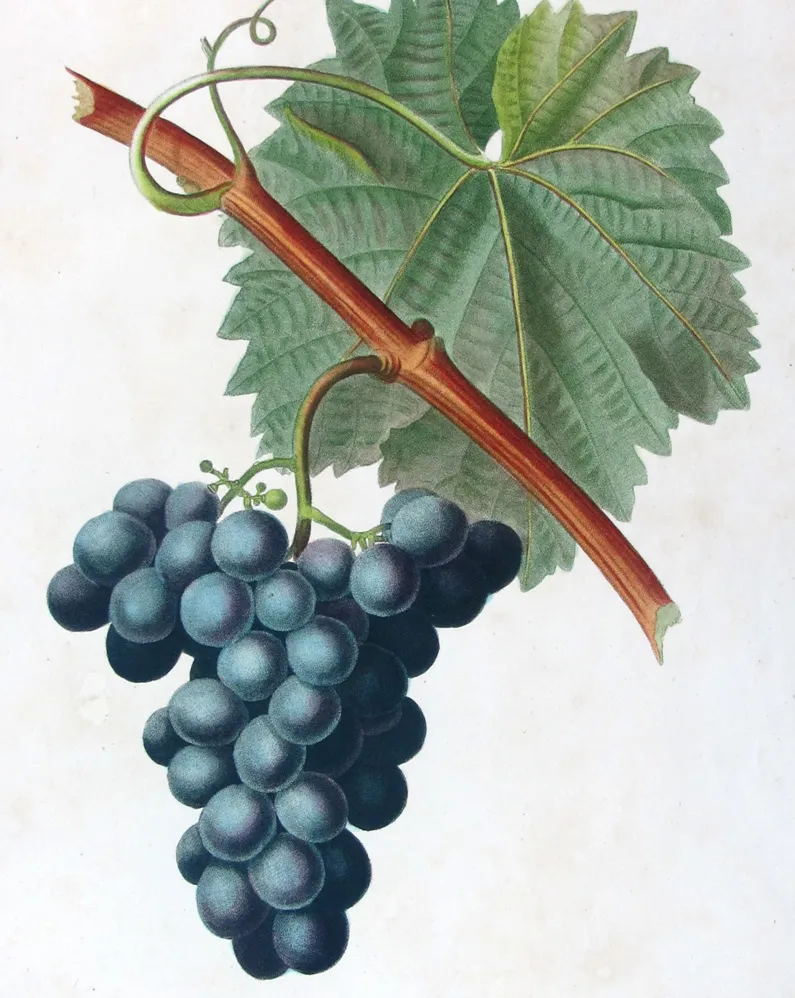

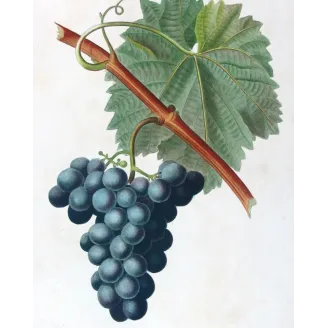
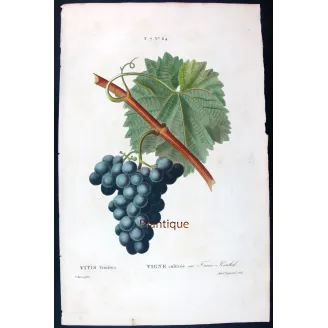
Compact dark grape cluster with sharply defined foliage.
 Delivery policy
Your print will be carefully prepared and shipped worldwide via trusted couriers (UPS or similar).
 Authentic antique prints
Original engravings from the 17th–19th century.
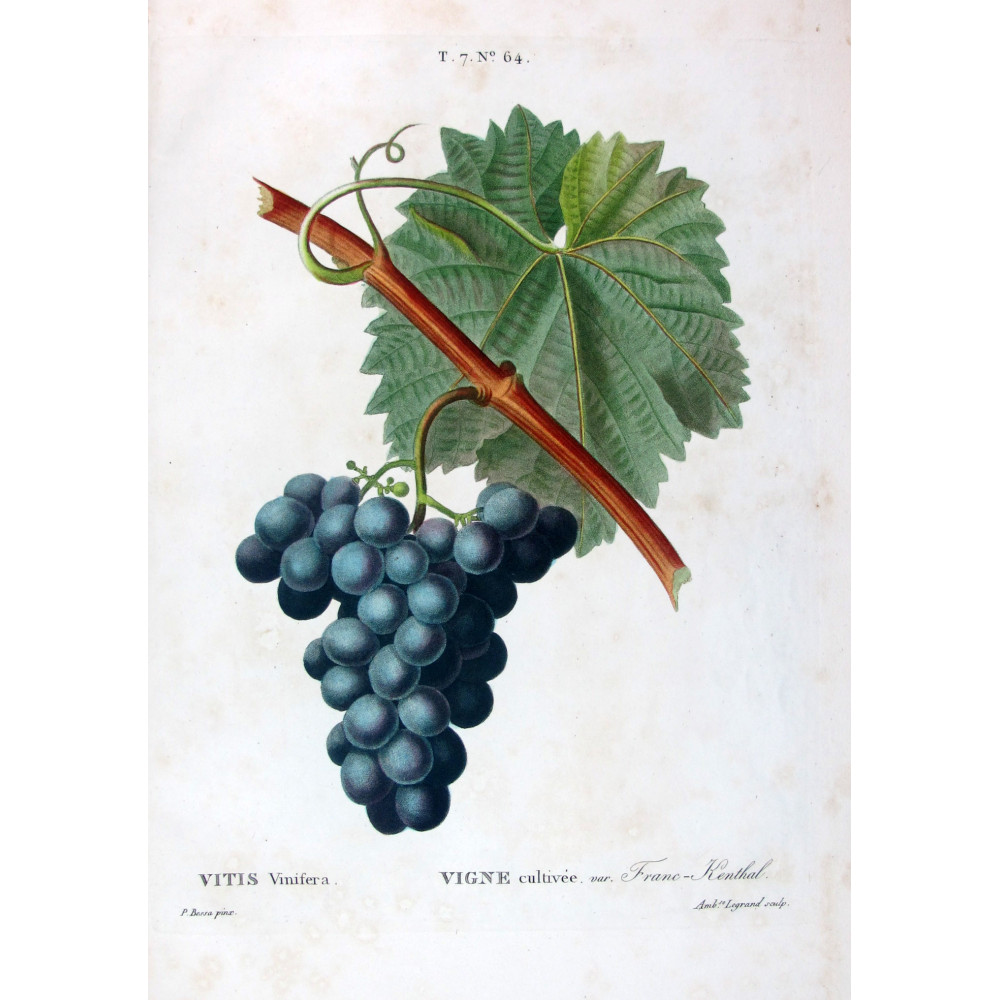
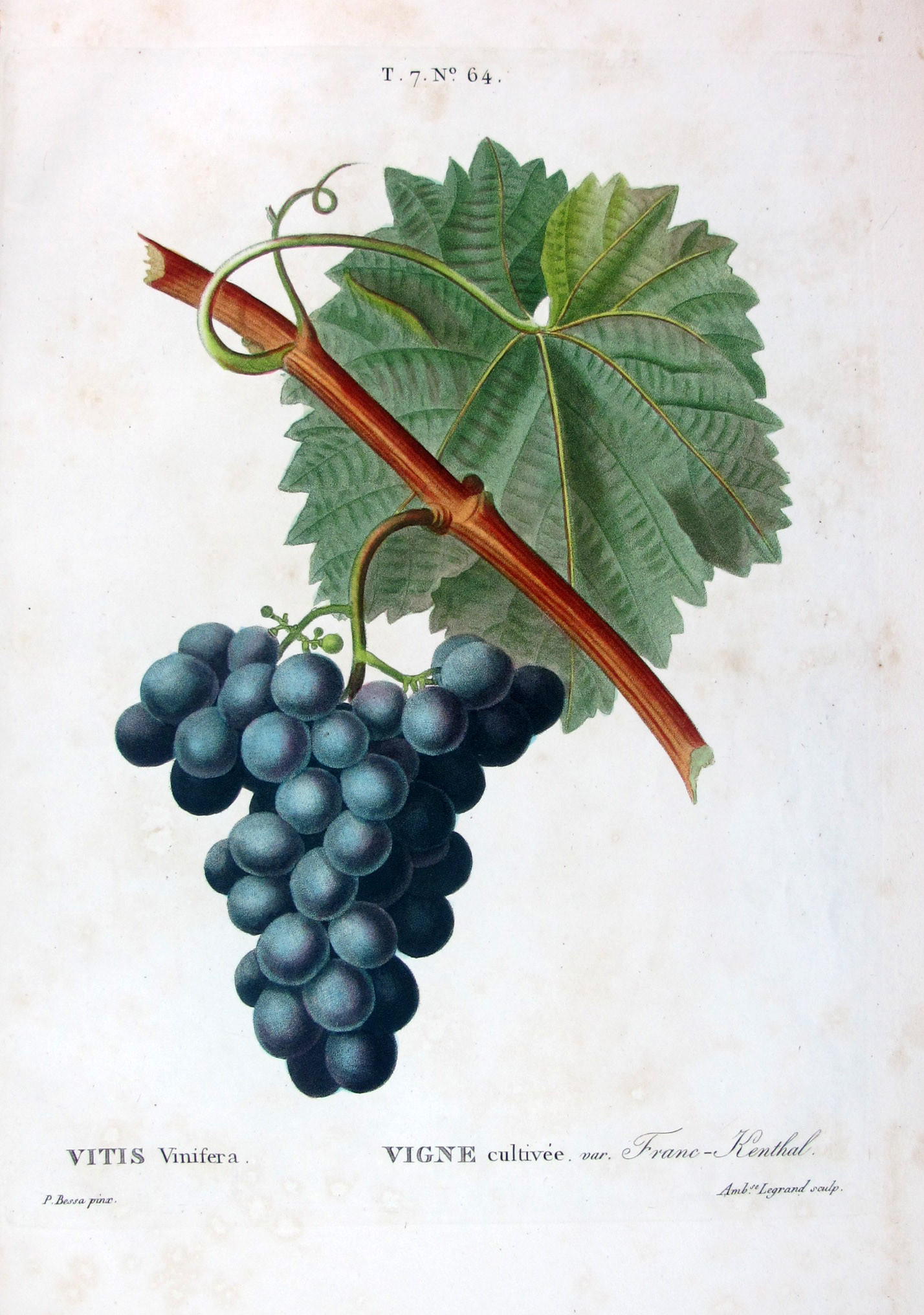
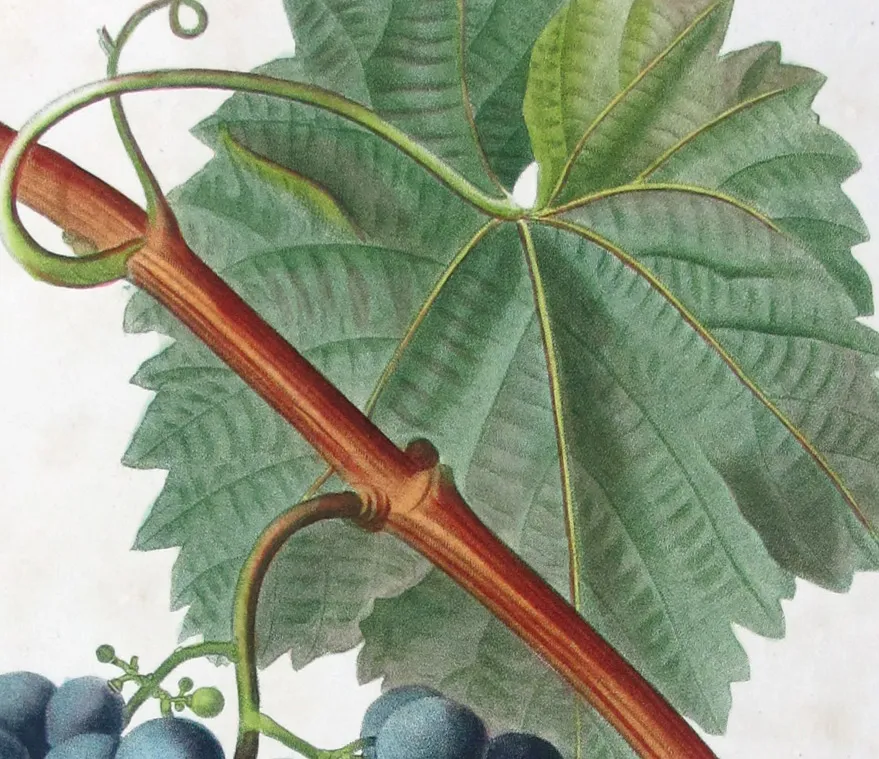
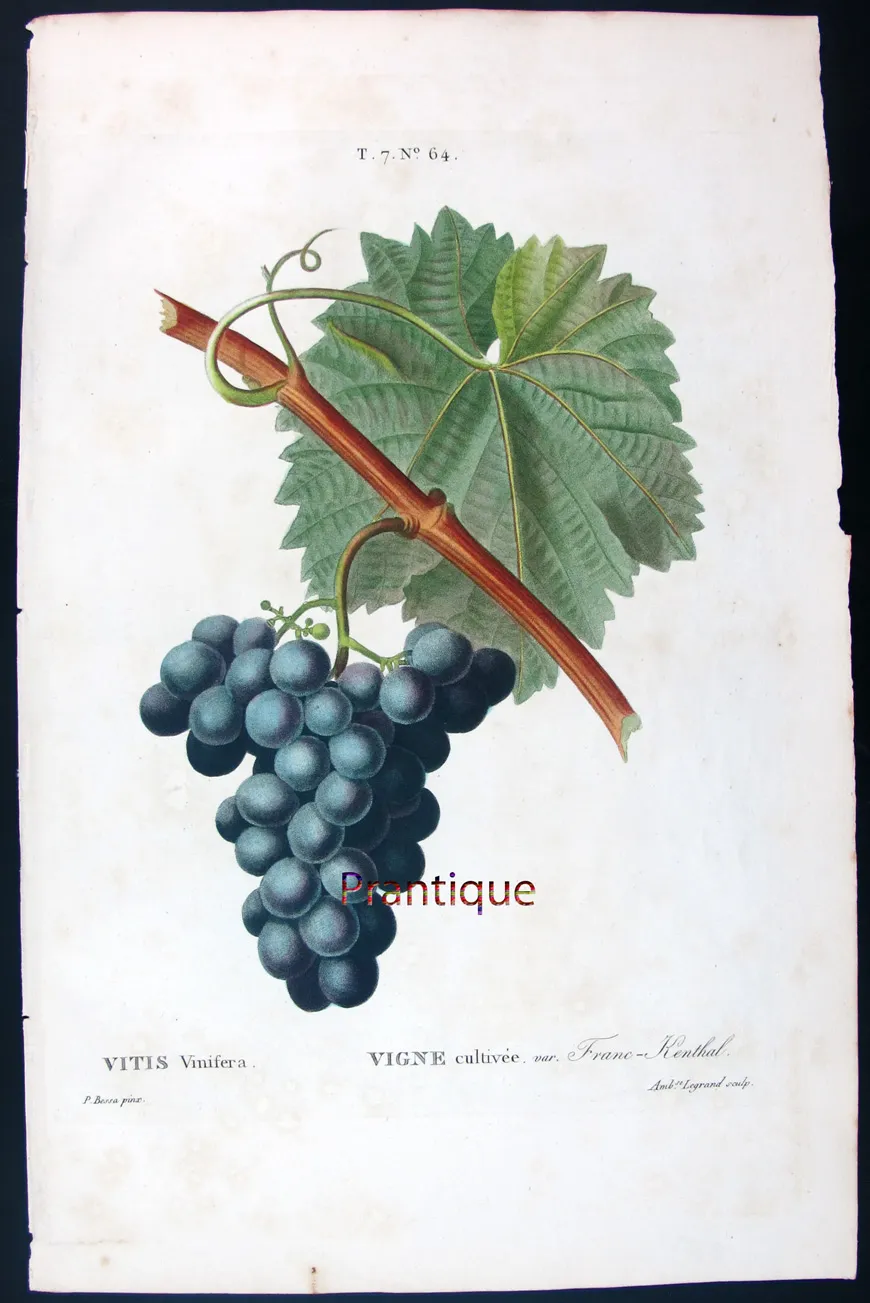
This original early 19th-century botanical engraving depicts Vitis vinifera (grapevine) as a cultivated French variety, presented with striking clarity and a quietly monumental sense of form. A single branch runs on a gentle diagonal, carrying a dense, pendulous cluster of grapes and a broad, sharply veined leaf—an arrangement that feels both natural and deliberately composed.
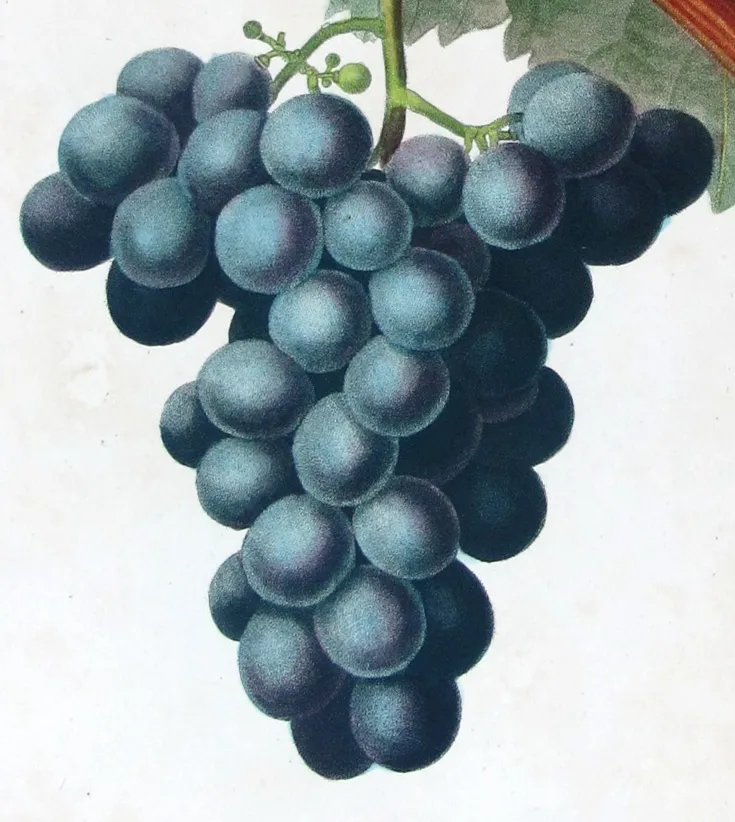
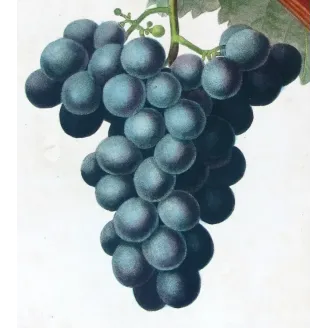
Pancrace Bessa’s hand-colouring is especially accomplished in the fruit: each grape is modeled as an individual sphere, with soft tonal transitions and restrained highlights that create real volume without theatrical contrast. The palette leans toward cool blue-violet and slate tones, balanced by muted greens and warm notes in the vine, giving the image an elegant depth that reads beautifully in interiors.
Issued as part of Arbres et Arbustes, this plate reflects the period’s cultivated orchard culture, where varieties of fruit were recorded with the same seriousness devoted to ornamental plants—an exacting meeting of botanical observation and refined domestic taste.
— • —
The composition is built around a confident dialogue between mass and structure: the grape cluster forms a compact, weighty volume, while the leaf acts as a broad, architectural counterbalance. Negative space is left intentionally generous, allowing the subject to “float” with a gallery-like clarity and reinforcing the sculptural presence of the fruit.
Fine stippled modelling and careful hand-colour harmonisation give the grapes a convincing three-dimensionality. Even at a distance, the cluster reads as tactile and mature—one of the reasons these vineyard plates feel quietly luxurious while remaining firmly within the tradition of engraved botanical illustration.
The plate is identified as Vitis vinifera and described in the publication as a cultivated vine variety:
Rather than presenting blossoms or a full vine habit, Bessa concentrates on the fruiting character—density, maturity, and chromatic depth—while the leaf and vine provide botanical structure and a refined sense of balance.
The engraving is in very good antique condition. A few very light, scattered toning spots may be observed, remaining discreet and not distracting from the image. The original hand-colouring is well preserved. No watermark has been observed. The engraved credits “P. Bessa pinx.” and “Amb.se Legrand sculp.” are present, attesting to the original drawing by Pancrace Bessa and the engraving executed by Legrand.
For insight into Bessa’s distinctive hand-colouring techniques, see our editorial feature on Pancrace Bessa:
Specific References
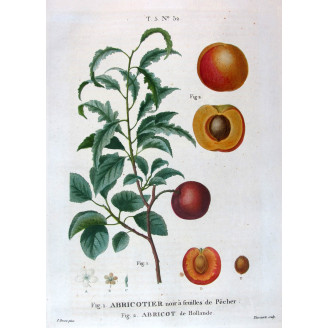
Dutch Apricot Abricot de Hollande Original hand-colored botanical engraving by Pancrace Bessa.
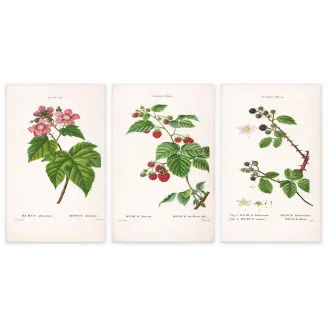
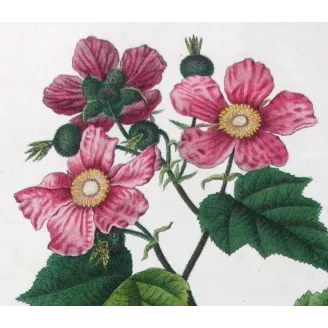
Illustration of the sweet-scented flowering bramble, Rubus odoratus, in full bloom.
A sculptural study of cultivated fruit, defined by rounded volumes and restrained modelling, rendered with quiet elegance and visual balance.
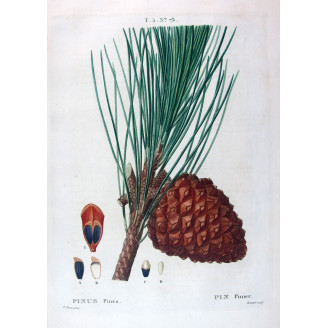
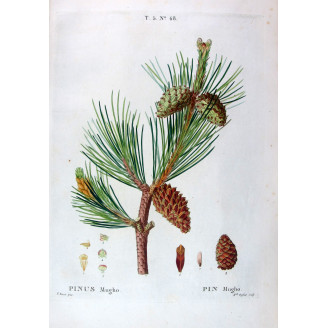
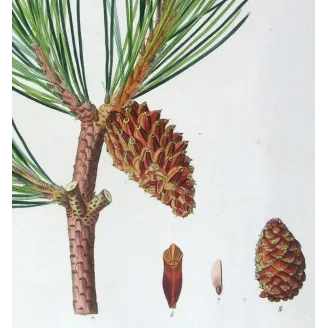
Antique engraving of Pinus Mugho by Bessa, rich in botanical detail.
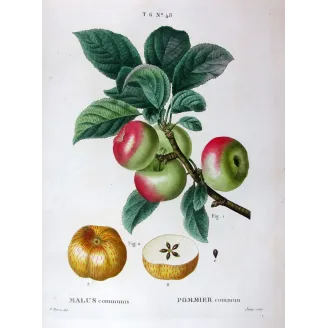
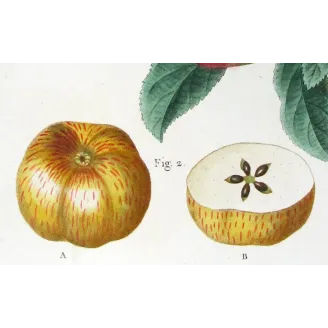
A finely executed early 19th-century botanical engraving illustrating a cultivated apple variety (Malus communis), drawn by Pancrace Bessa for Arbres et Arbustes. The composition combines precise botanical observation with refined decorative balance, presenting fruit and foliage with clarity and quiet elegance. Exceptional hand-colouring and careful modelling reflect the sophistication of French pomological illustration at its height.
Depiction of golden grapes with vivid green leaves in fine detail.
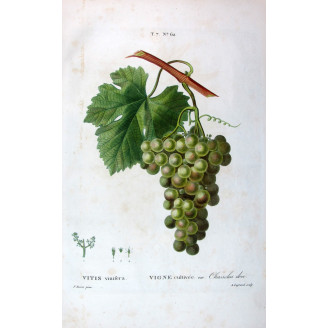
Original antique print of the cultivated Chasselas grape vine, Vitis vinifera, by Pancrace Bessa.
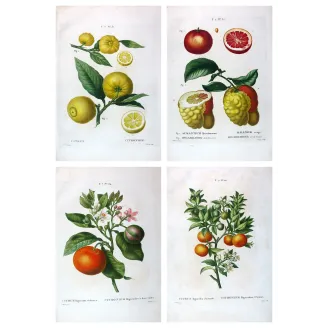
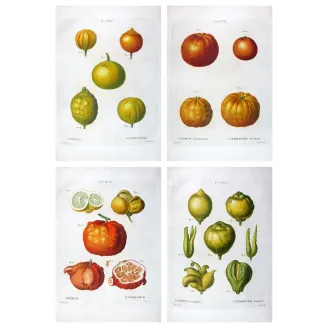
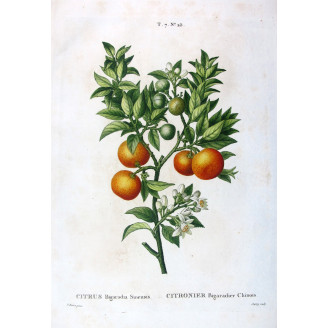
A coherent ensemble of eight original orange and bigarade engravings by Pancrace Bessa, reflecting the cultivated discipline of French orangeries in the Napoleonic era. Botanical precision and architectural composure unite in a refined citrus portfolio preserved as a complete series.
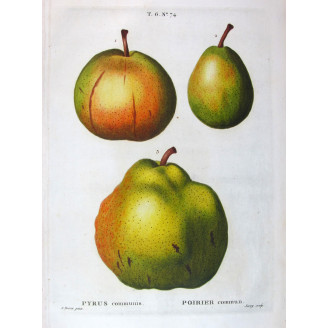
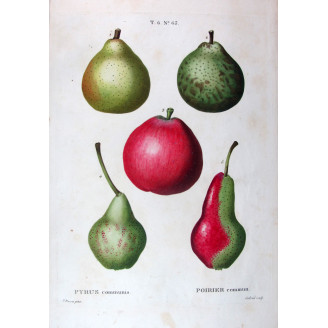
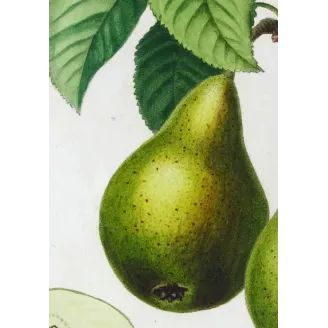
A refined study of French cultivated pear varieties, distinguished by subtle chromatic contrasts and carefully modelled forms. This hand-colored engraving reflects Pancrace Bessa’s ability to elevate orchard subjects through balance, restraint, and quiet visual authority.
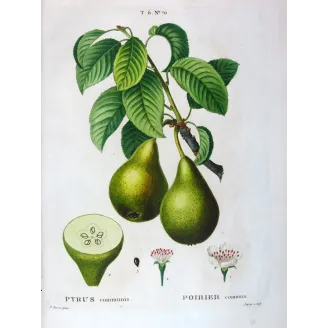
A refined early 19th-century botanical engraving depicting cultivated pear varieties (Pyrus communis), drawn by Pancrace Bessa and engraved for Arbres et Arbustes. Executed with restraint and clarity, the plate exemplifies the elegance of French pomological illustration, uniting scientific precision with a calm, decorative sensibility. The harmonious composition and subtle hand-colouring make it a timeless and highly collectible work.
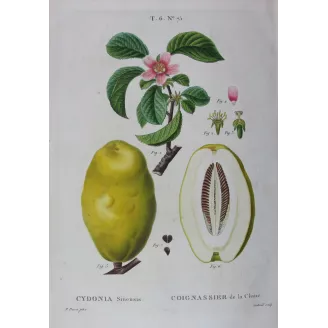
Chinese Quince Coignassier de la Chine Original hand-colored botanical engraving by Pancrace Bessa.
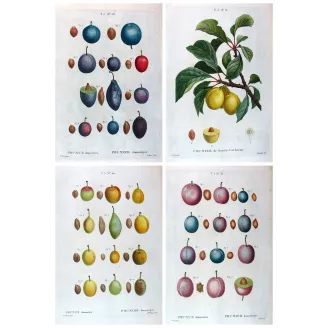
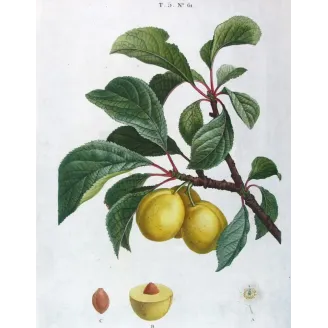
Botanical illustration of the Saint Catherine plum, a delicate fruit-bearing tree, by Pancrace Bessa.
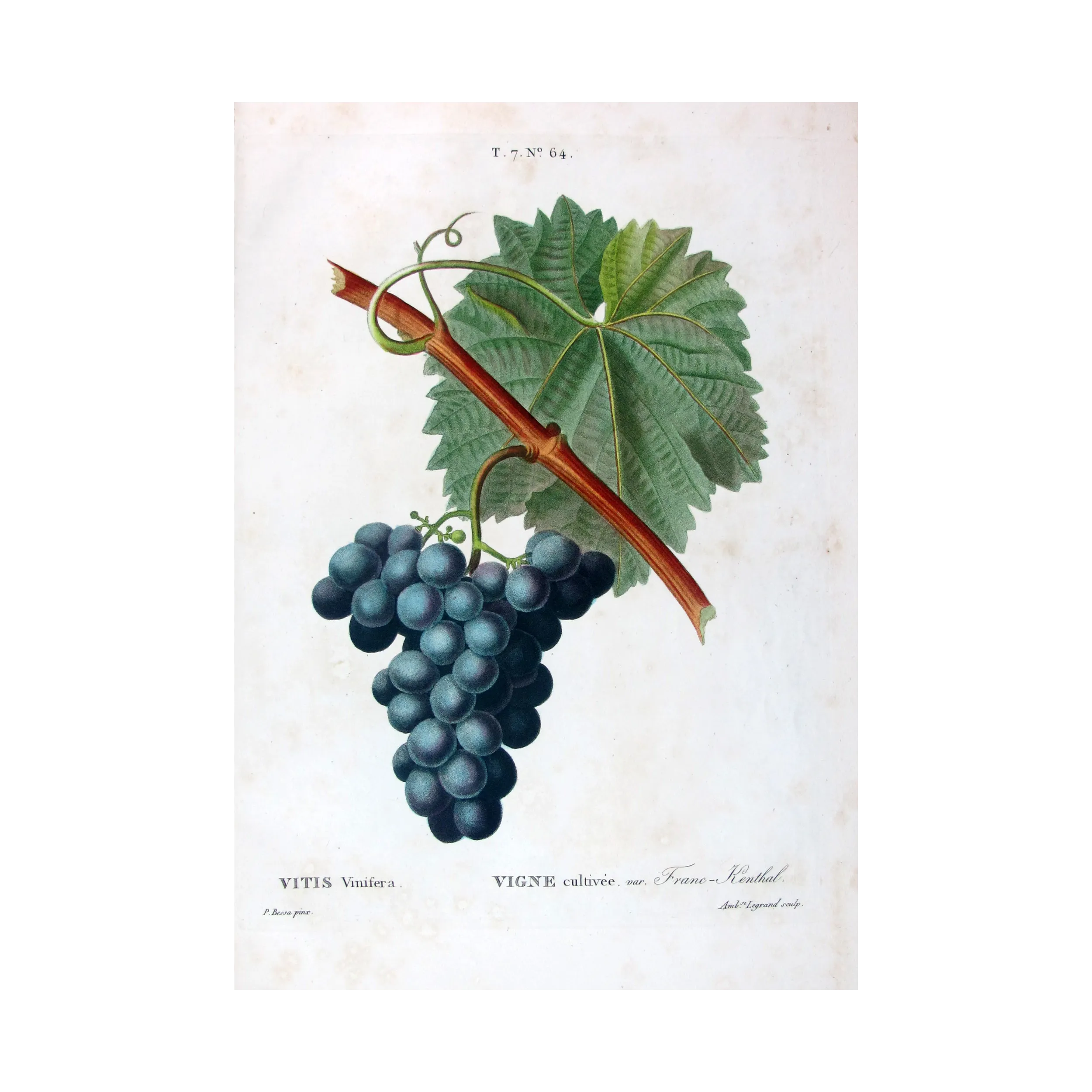
Compact dark grape cluster with sharply defined foliage.