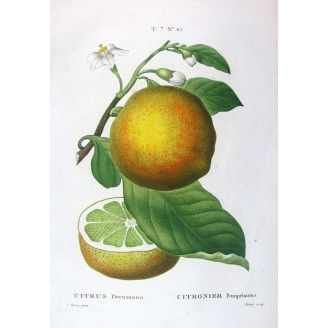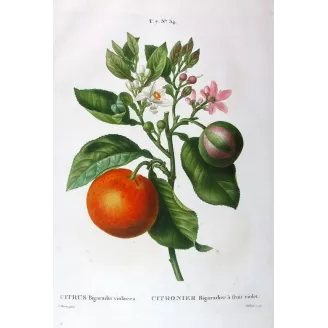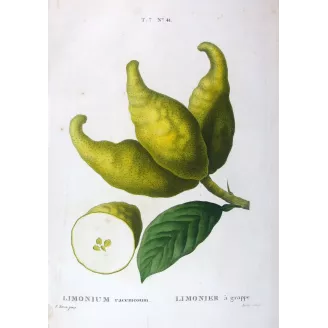
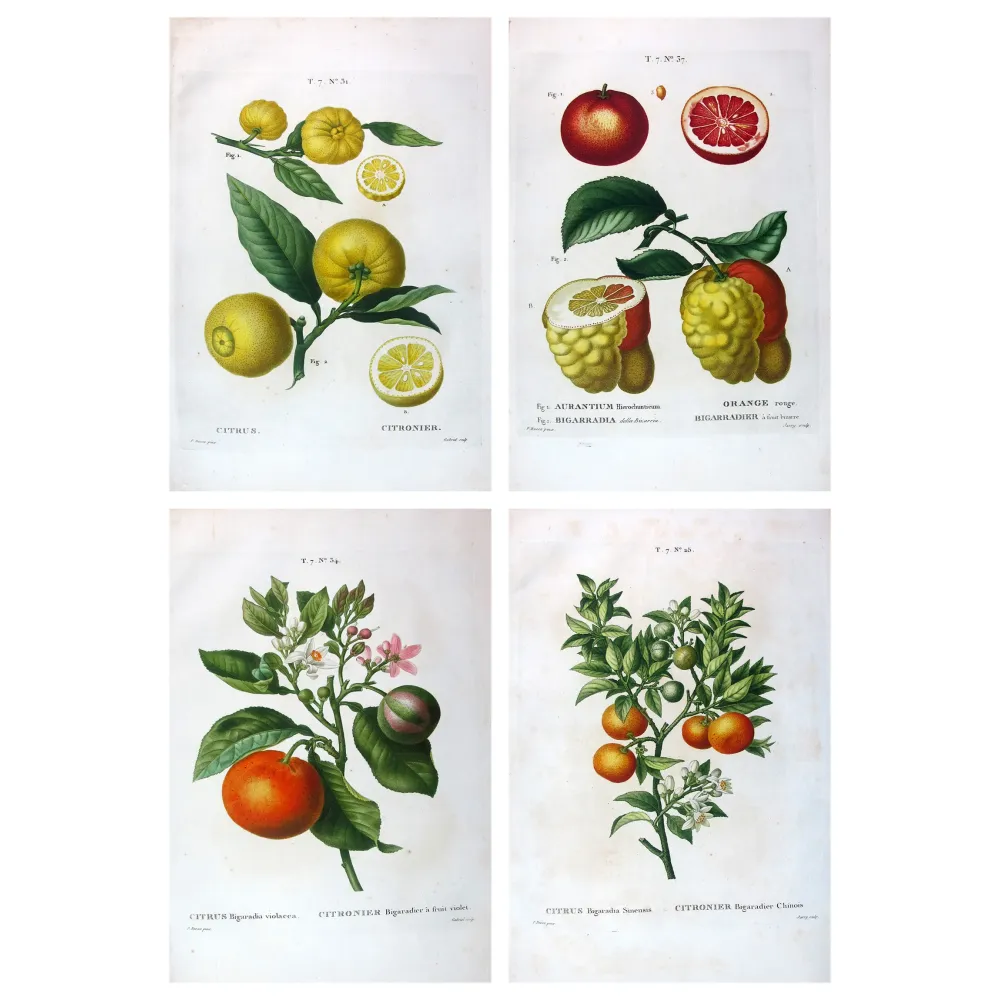
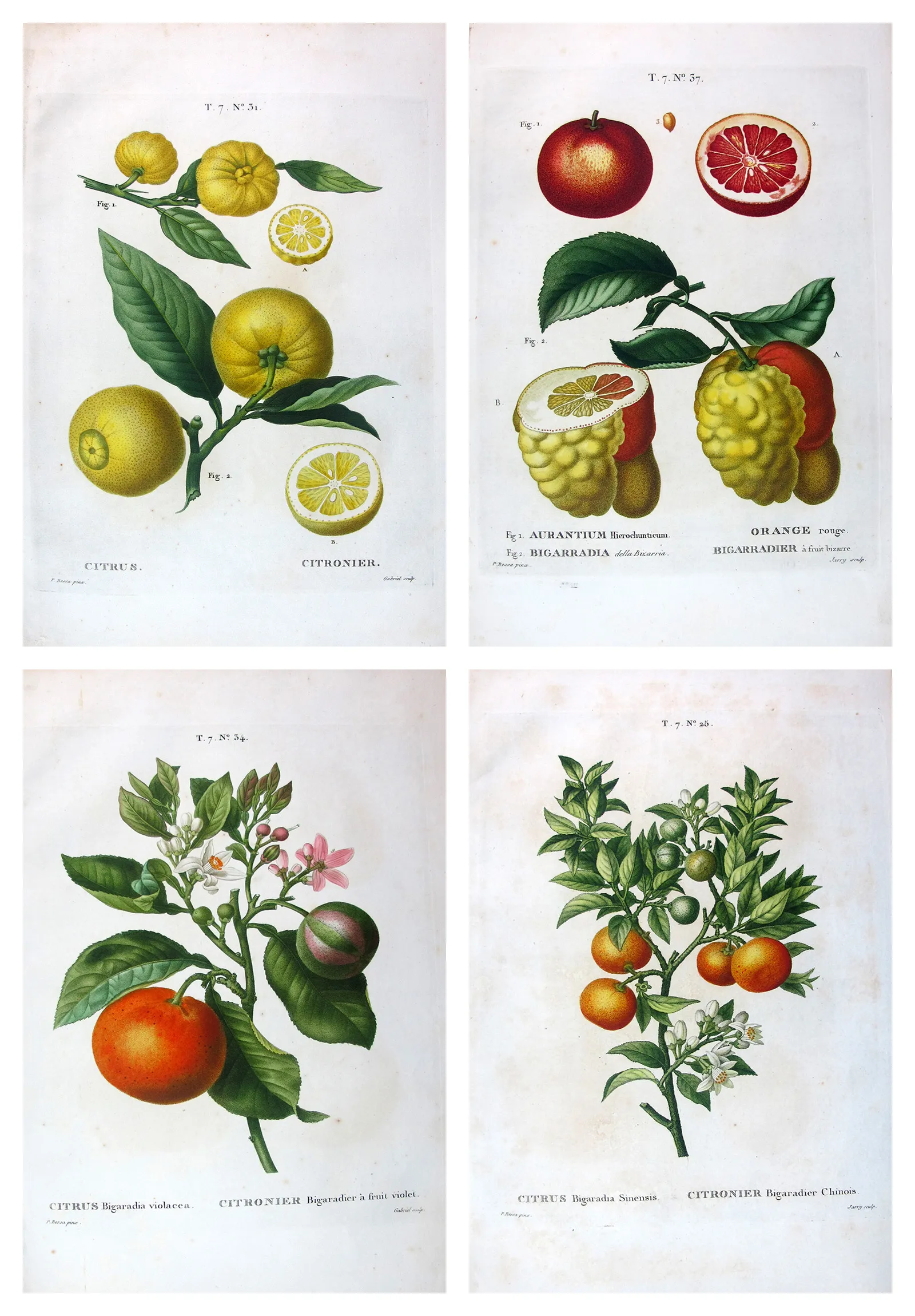
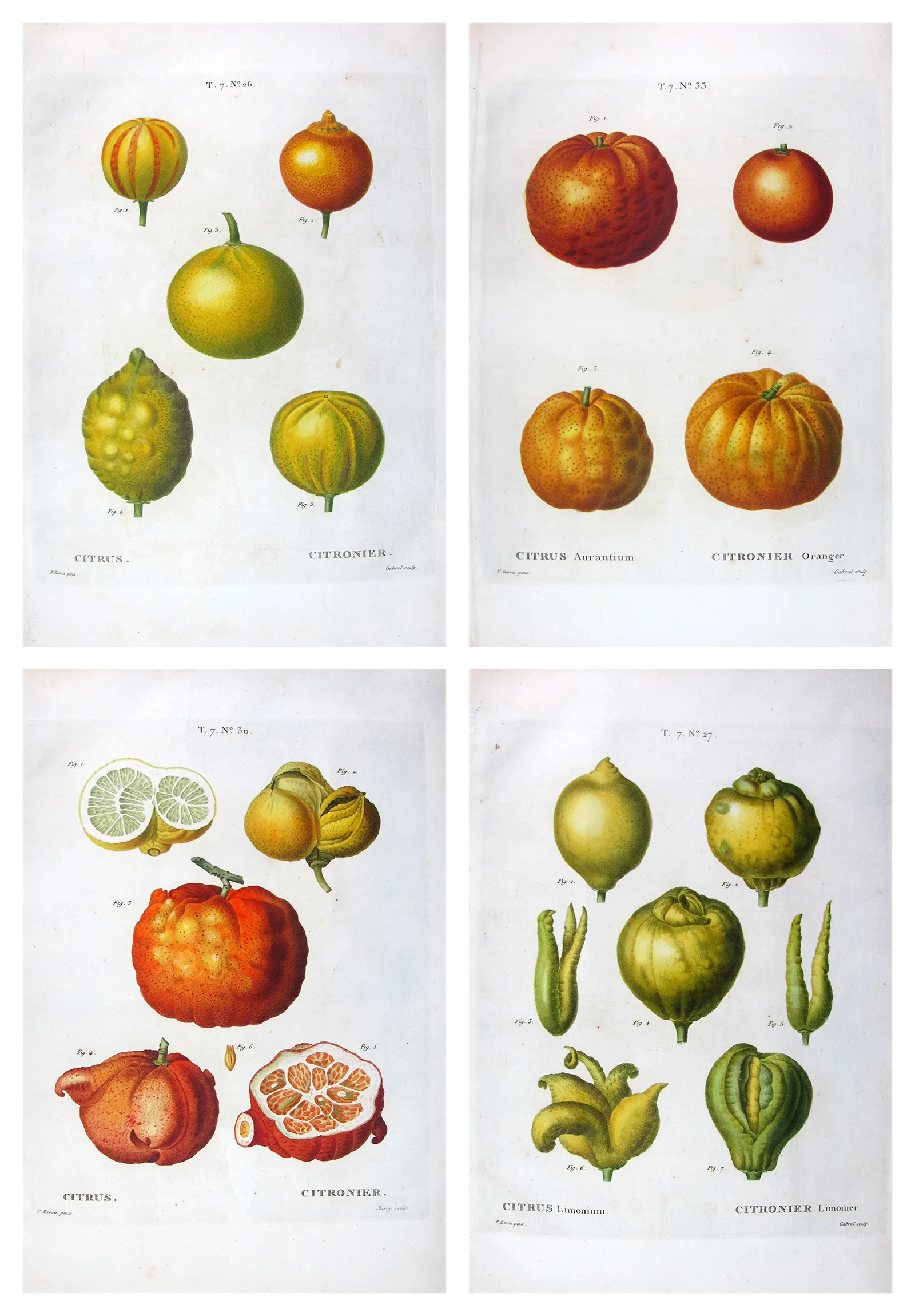
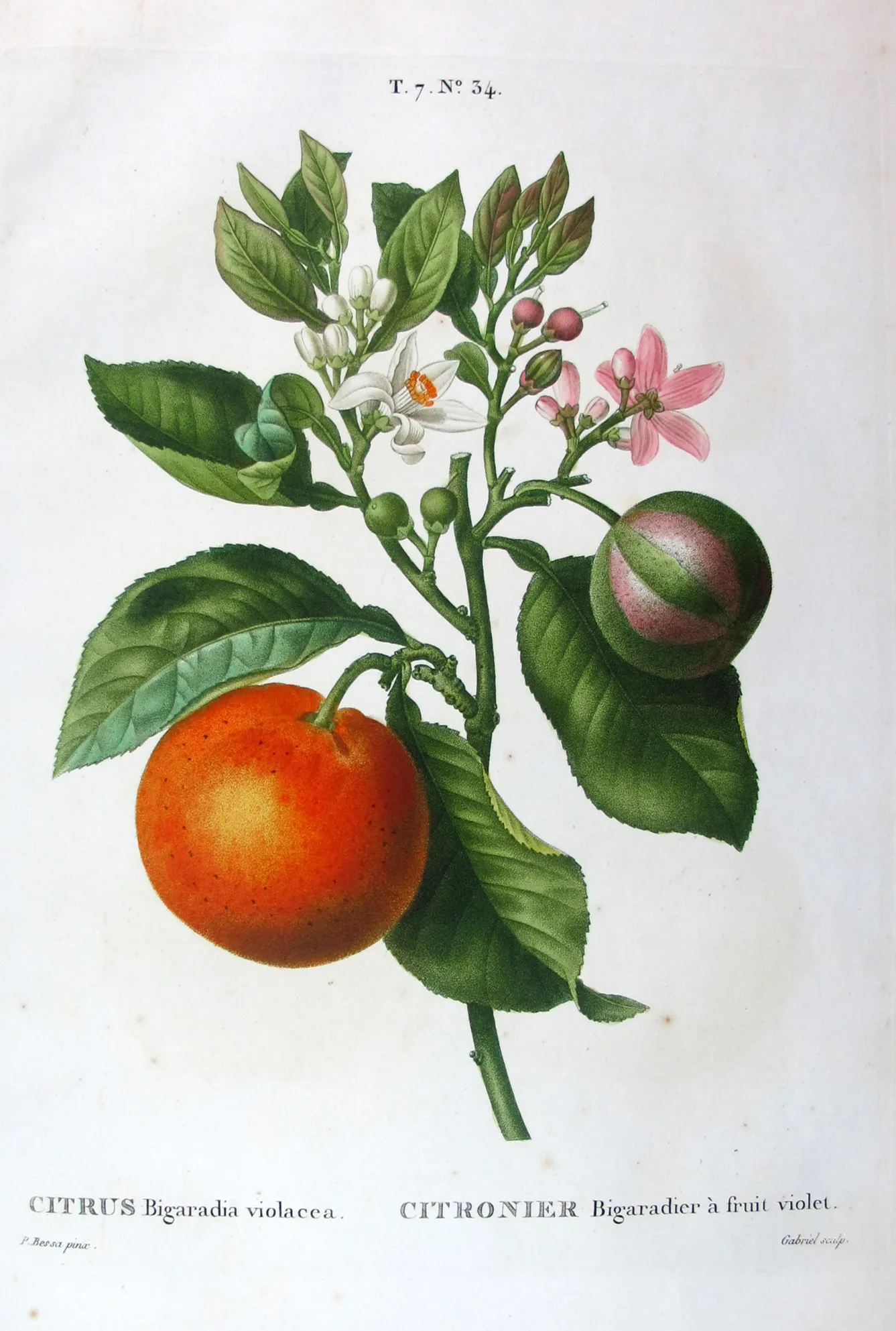
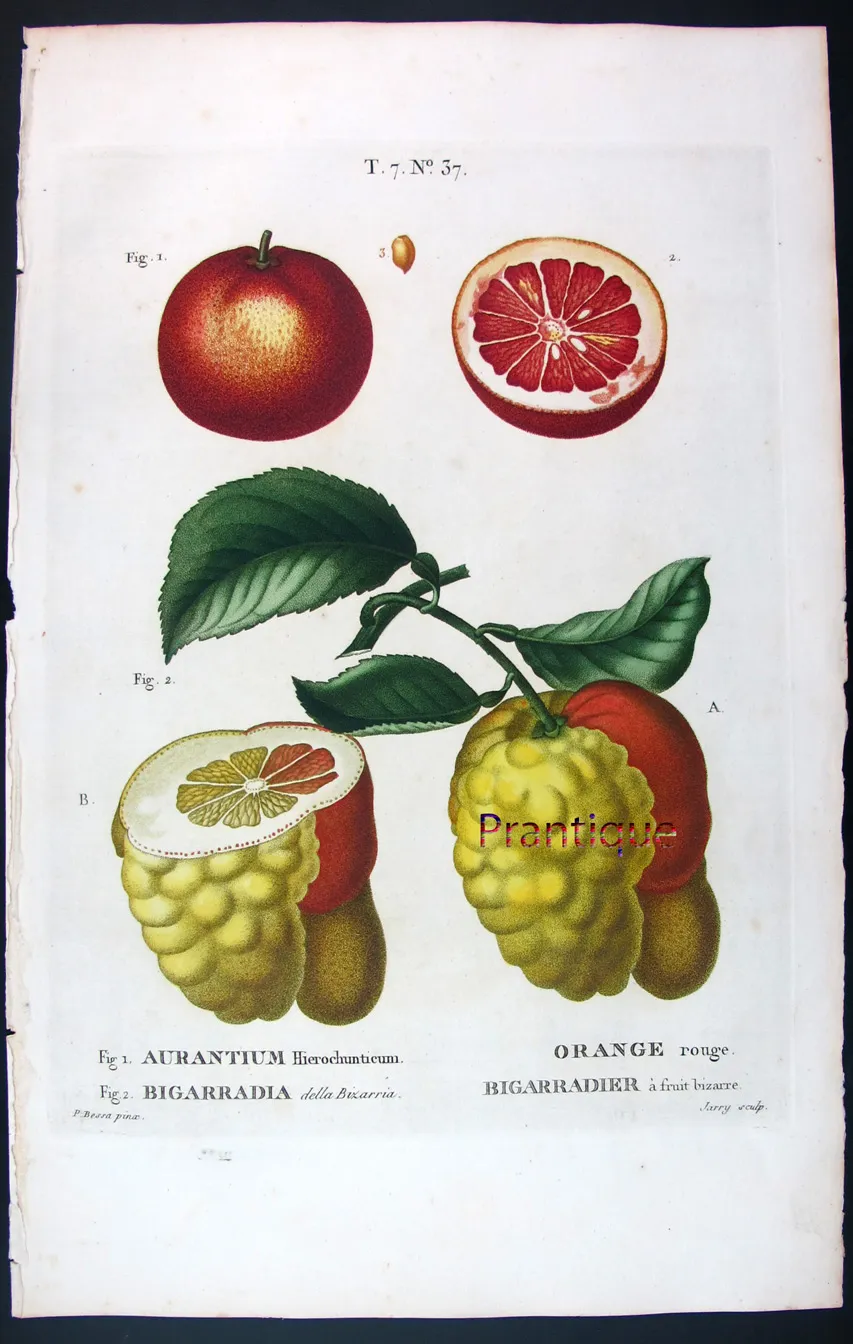
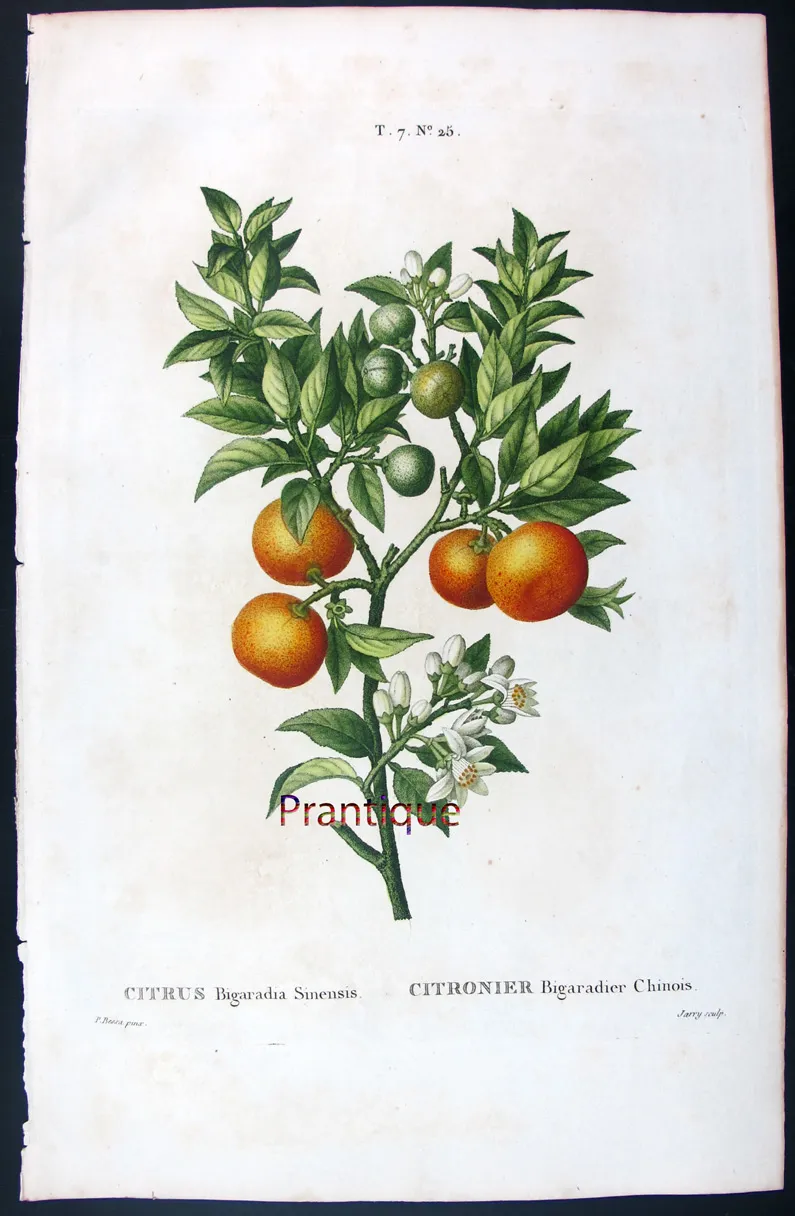
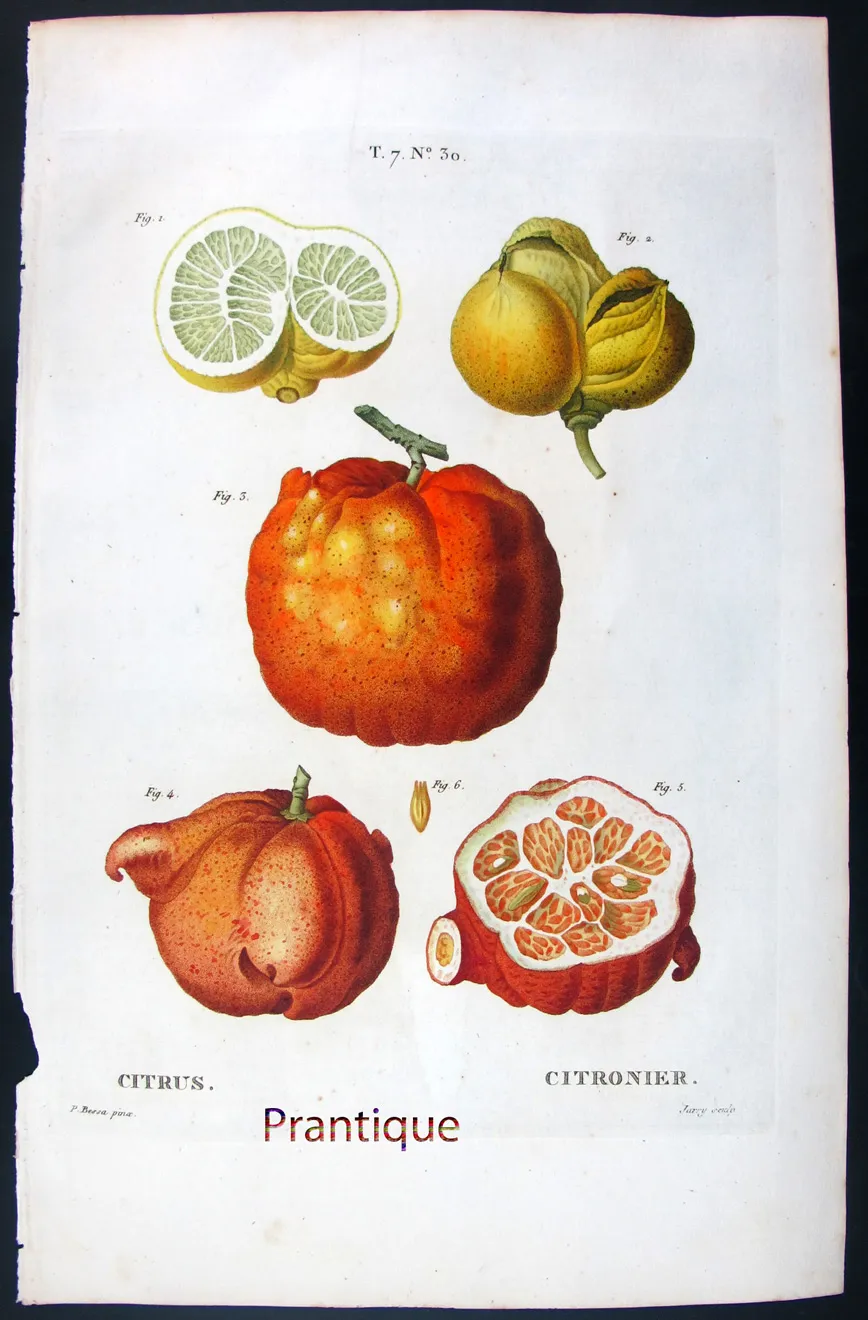
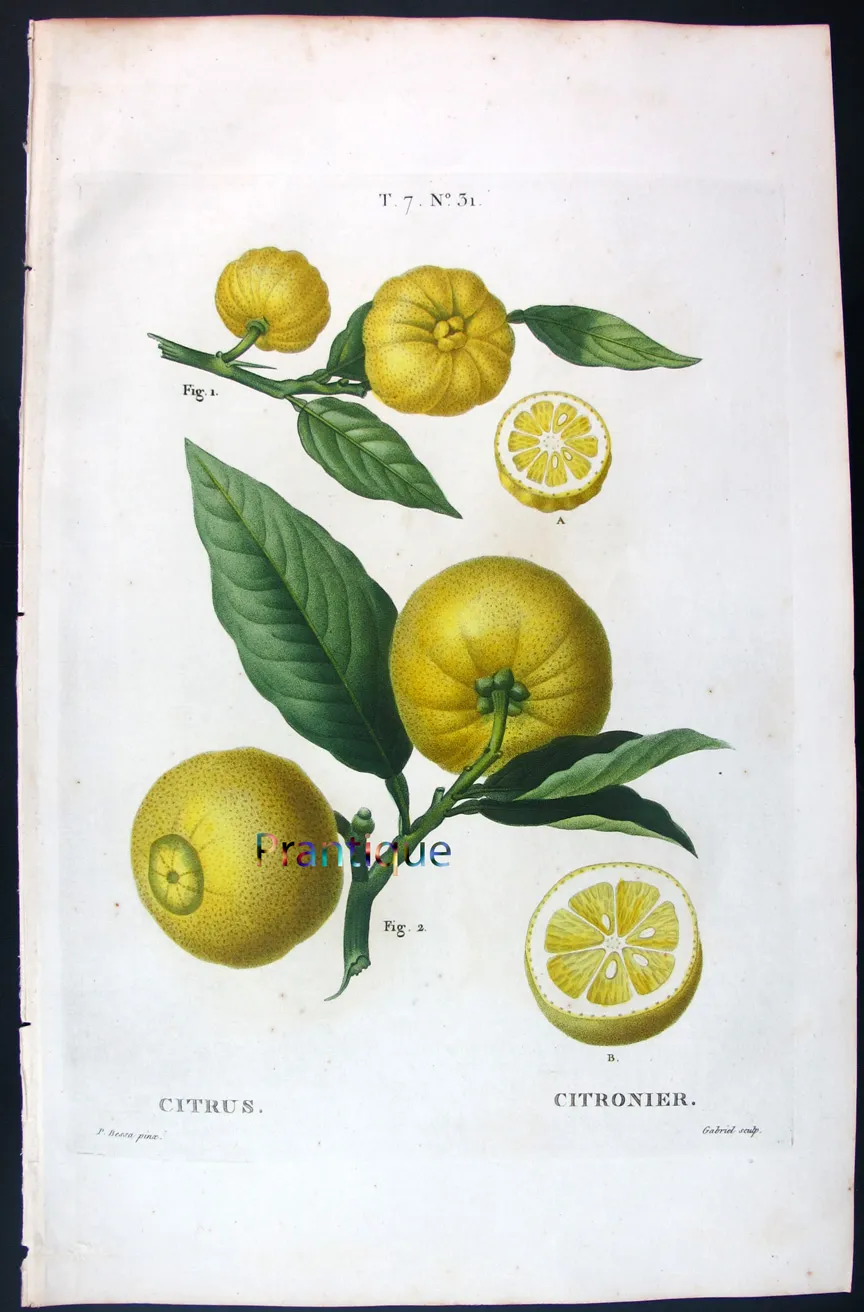
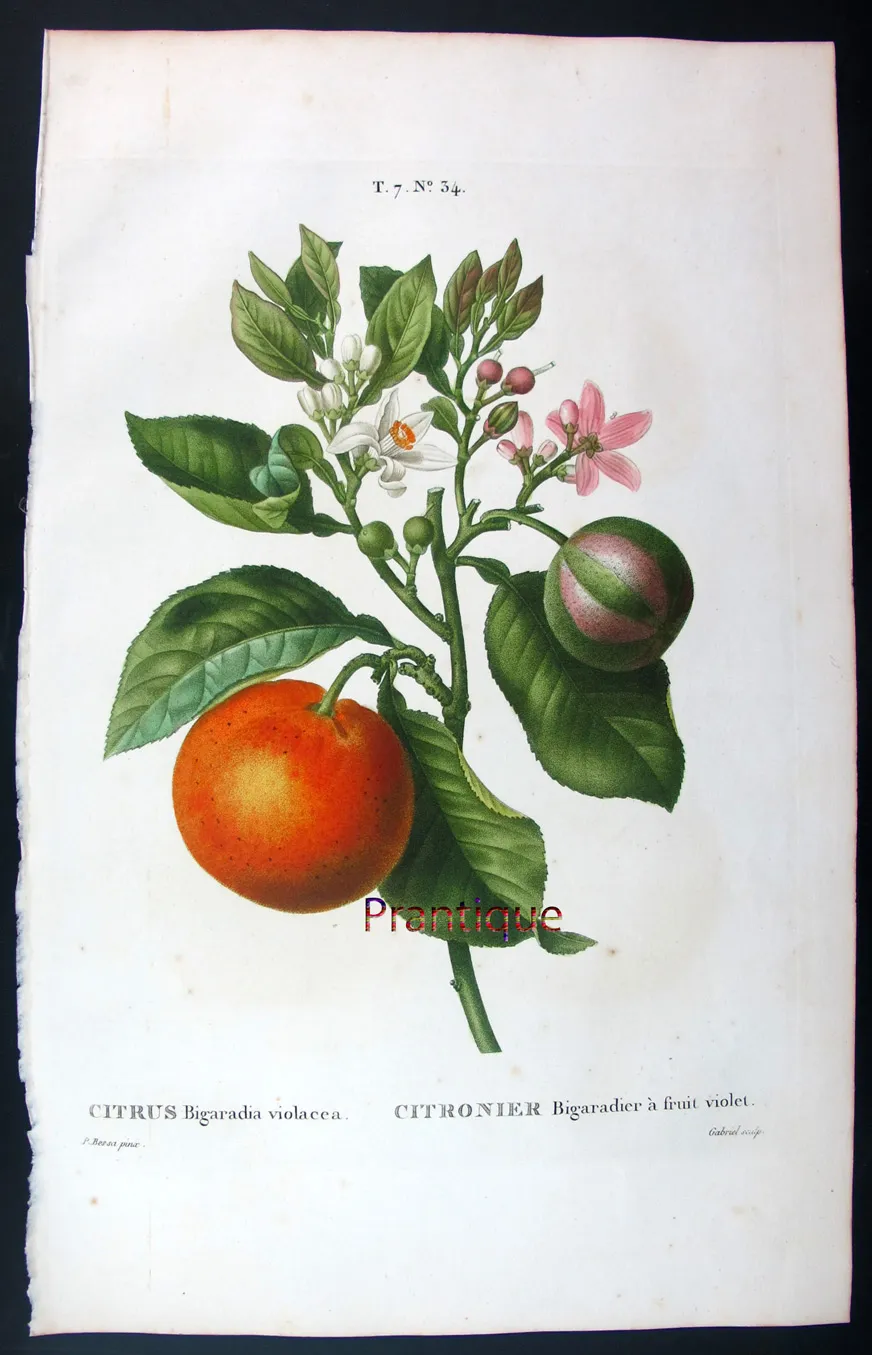
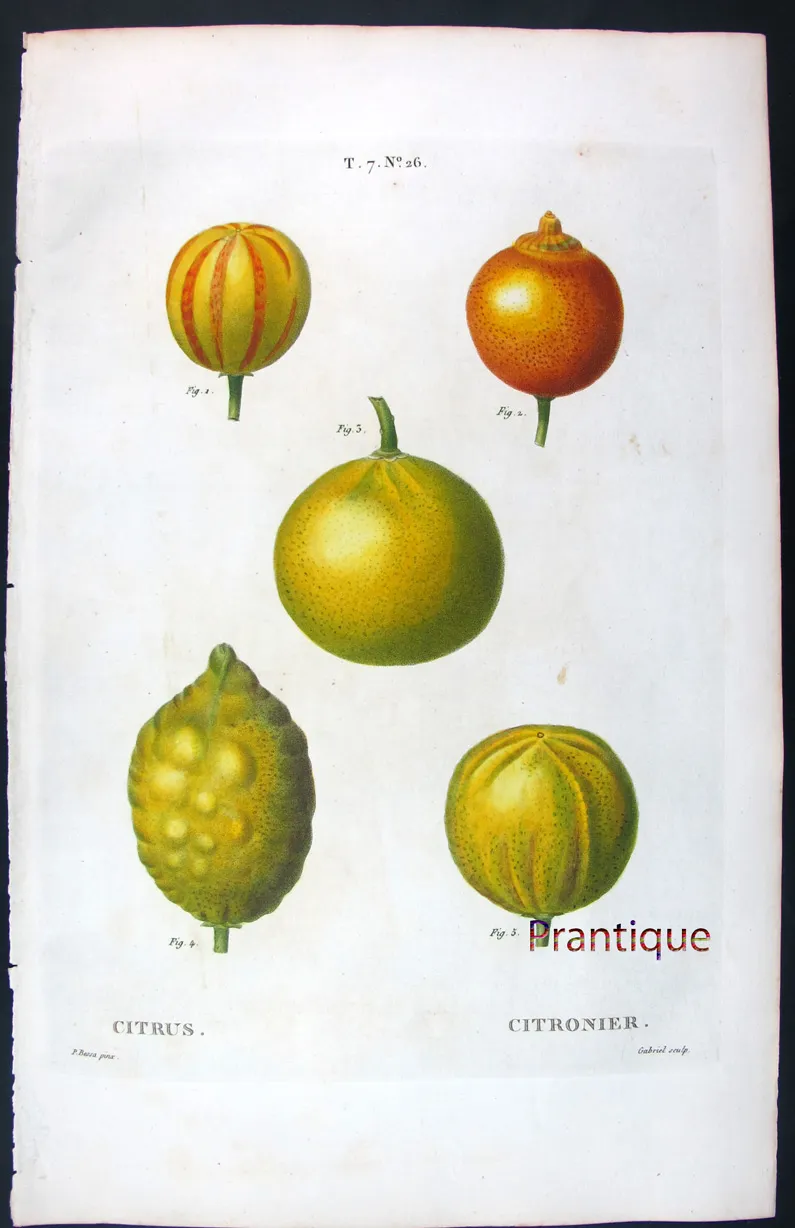
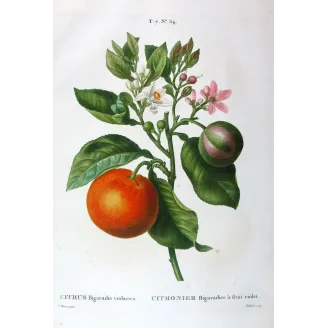
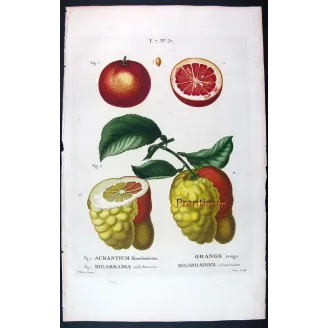
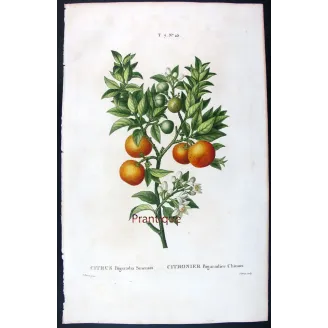
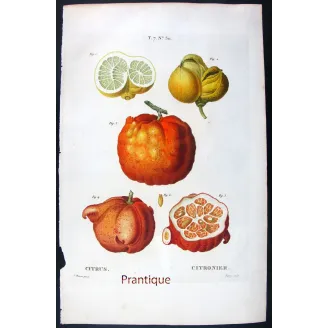
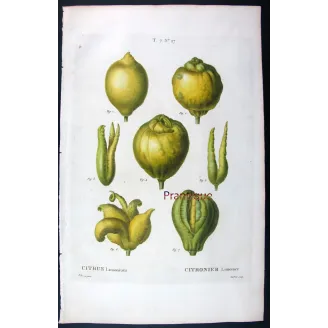
A coherent ensemble of eight original orange and bigarade engravings by Pancrace Bessa, reflecting the cultivated discipline of French orangeries in the Napoleonic era. Botanical precision and architectural composure unite in a refined citrus portfolio preserved as a complete series.
 Delivery policy
Your print will be carefully prepared and shipped worldwide via trusted couriers (UPS or similar).
 Authentic antique prints
Original engravings from the 17th–19th century.
This refined ensemble brings together eight original early nineteenth-century engravings devoted to cultivated oranges and bigarades. Conceived in Napoleonic France, these plates belong to the visual culture of the French orangerie—a world of glass, stone, symmetry, and seasonal care, where citrus trees were prized as living architecture within aristocratic estates.
Pancrace Bessa translates cultivated variety into controlled beauty. Branches bearing blossom and fruit are balanced with measured varietal studies and sectional views, preserving identity through form, rind structure, and internal segmentation. The result is an ensemble of quiet authority—made for interiors where nature was not merely enjoyed, but curated.
The eight plates articulate a disciplined visual narrative. Some compositions privilege branching structure and flowering habit, placing the fruit within its botanical framework. Others isolate citrus forms as sculptural specimens, emphasizing rind texture, chromatic modulation, and the legible geometry of each variety—an approach aligned with the classificatory precision of early nineteenth-century pomology.
Seen together, the ensemble evokes the atmosphere of a French orangerie: controlled light, restrained ornament, and a sense of cultivated order. These are works that sit naturally in a library, a garden pavilion, or an apartment furnished with classical proportion—where botanical art functions as both décor and connoisseurship.
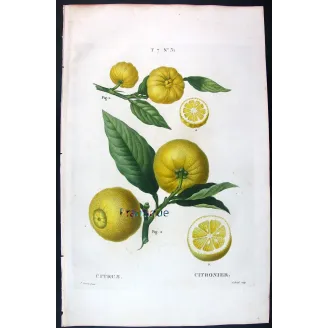
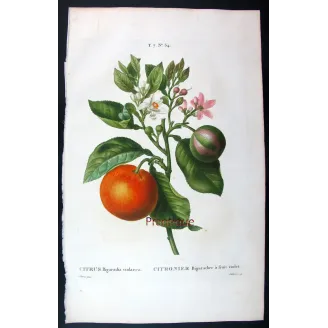
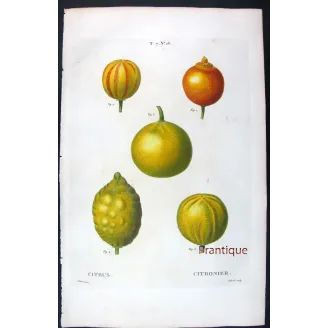
The ensemble comprises eight cultivated orange and bigarade plates as engraved in Arbres et Arbustes. Read collectively, they map the ornamental and structural diversity of citrus as understood in early nineteenth-century France—where variety was prized, named, compared, and preserved through image.
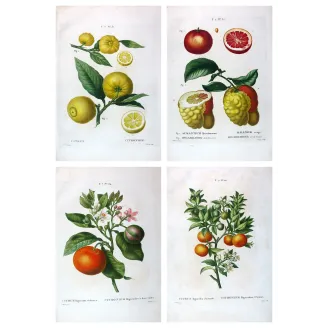
Orangerie branch compositions: branches presented as living architecture, bearing blossom and fruit with botanical authority—Rameau du Bigaradier de la Chine en fleurs et en fruits; Rameau du Bigaradier à fruit violet (Tab. 25, 34)
Structured bigarade studies: strong-fruited varieties prized for character and presence—Bigarade d’Espagne and the distinctive Bigarade cornie (Tab. 30, 31)
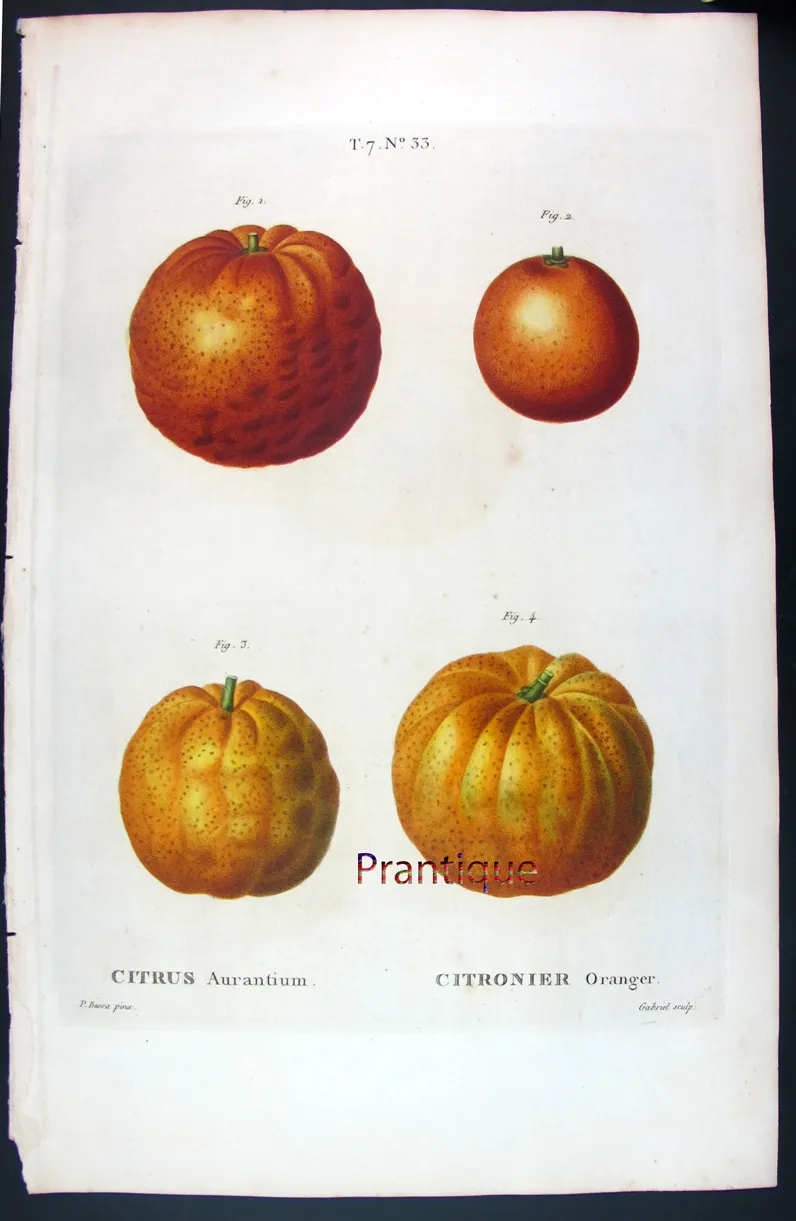
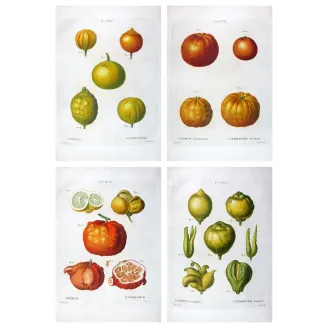
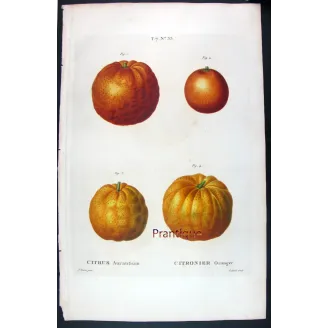
Regional and chromatic orange types: named French oranges and a richly colored “orange rouge,” combining elegance of form with controlled tonal modelling—Orange de Grasse; Orange de Nice; Orange rouge (Tab. 33, 37)
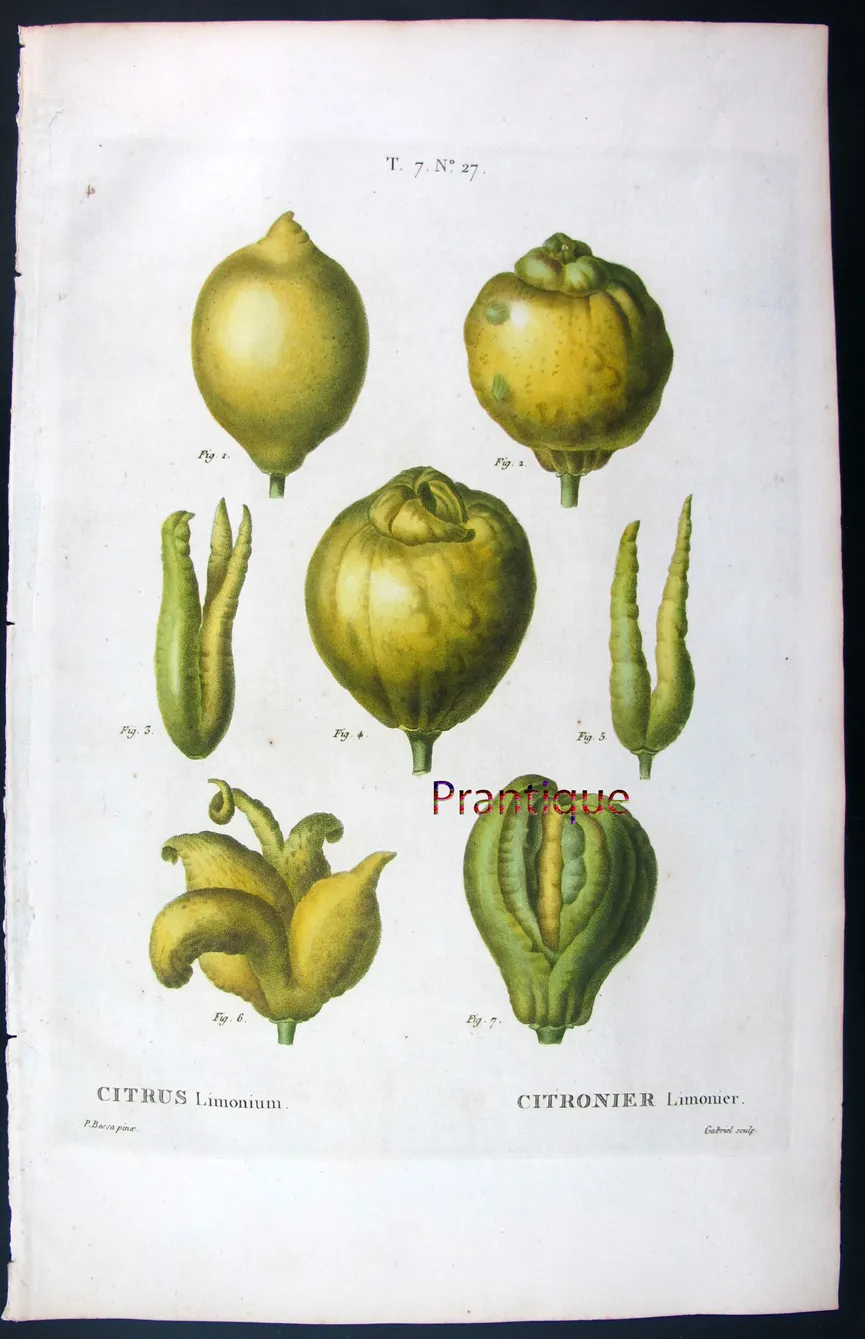
Botanical branch & sectional study: a Rameau du Limonier (1st variety) paired with transverse section, offering the analytical language of the orangerie (Tab. 27)
Comparative cultivated forms: a cabinet-like plate of named citrus types (including Orange changeante, Orange bergamotte, Orange à écorce rouge, and related forms), assembled for connoisseurial comparison (Tab. 26)
Together, these plates form a coherent orangerie portfolio preserved as an intact ensemble—decorative in authority, yet grounded in the disciplined horticultural culture of Napoleonic France.
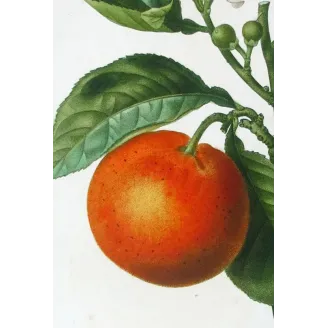
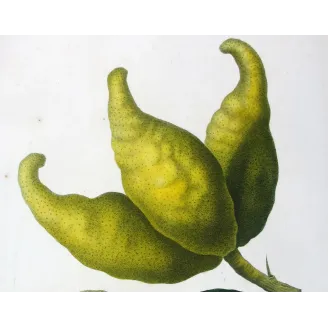
Bessa’s engraving style combines structural clarity with refined hand-coloring. His treatment of rind texture, subtle surface speckling, leaf veining, and floral detail demonstrates disciplined observation without theatrical flourish. Oranges and bigarades are modelled with restraint—volume and light carefully controlled—creating an aristocratic visual language suited to formal interiors.
Complete citrus groupings of this coherence rarely remain intact. Preserved as a unified ensemble, these plates transcend decorative function and assume documentary and historical significance.
All eight engravings are preserved in like brand-new antique condition, retaining exceptionally fresh original hand coloring and strong impressions. The sheets remain stable, clean, and visually balanced.
The ensemble retains its aesthetic coherence and horticultural integrity, presenting as a remarkably well-preserved citrus series of early nineteenth-century France.
For further context on Pancrace Bessa and his contribution to French botanical illustration, see our editorial feature:
Specific References
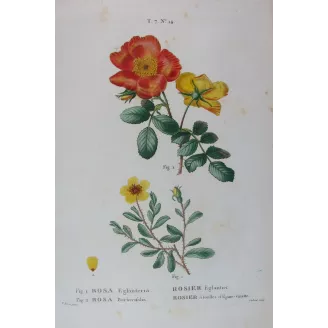
Eglantine & Berberis-leaved Rose Rosier à feuilles d'Épine-vinette Original hand-colored botanical engraving by Pancrace Bessa.
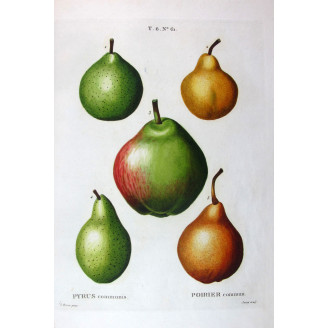
A refined study of five historic pear cultivars, combining varietal precision with sculptural balance and luminous hand-colouring.
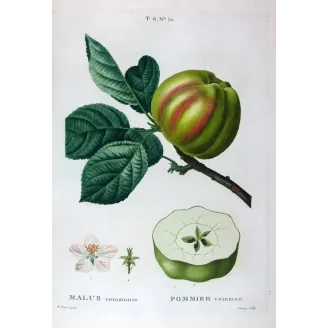
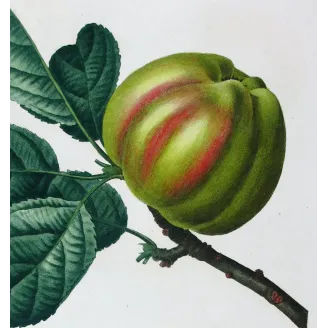
A finely executed early 19th-century botanical engraving illustrating a cultivated apple variety (Malus communis), drawn by Pancrace Bessa for Arbres et Arbustes. The composition combines precise botanical observation with refined decorative balance, presenting fruit and foliage with clarity and quiet elegance. Exceptional hand-colouring and careful modelling reflect the sophistication of French pomological illustration at its height.
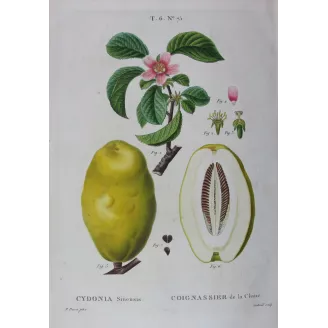
Chinese Quince Coignassier de la Chine Original hand-colored botanical engraving by Pancrace Bessa.
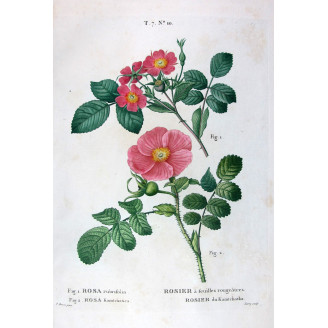
Kamchatka Rose Rosier du Kamchatka Original hand-colored botanical engraving by Pancrace Bessa.
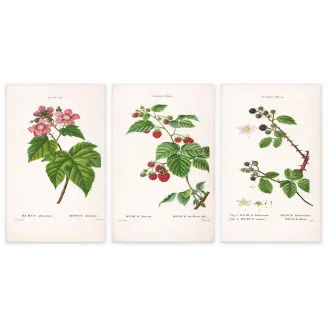
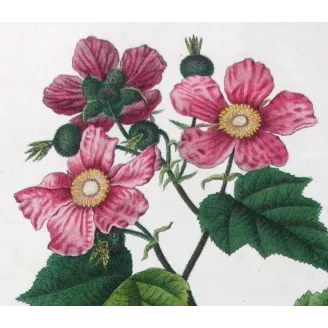
Illustration of the sweet-scented flowering bramble, Rubus odoratus, in full bloom.
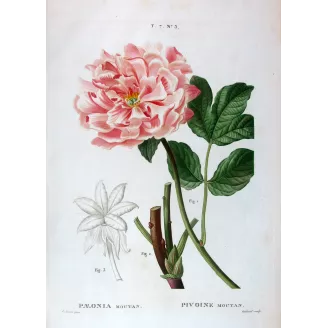
Tree Peony Pivoine moutan Original hand-colored botanical engraving by Pancrace Bessa.
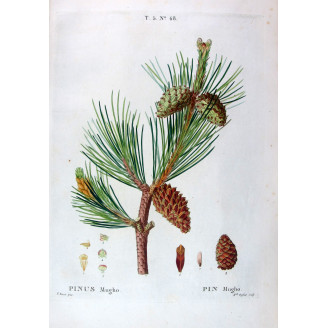
Antique engraving of Pinus Mugho by Bessa, rich in botanical detail.
Original pochoir print of the peach tree, Prunus persica, with detailed flowering and fruit.
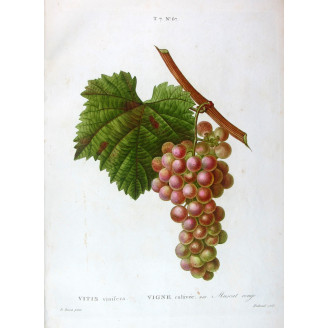
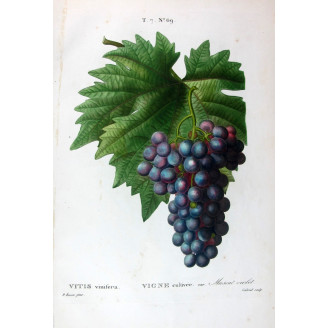
Elegant depiction of a rich purple Muscat grape variety by Pancrace Bessa.
Monthly Rose Rosier de tous les mois Original hand-colored botanical engraving by Pancrace Bessa.
Vibrant caper plant illustration with both flowers and fruiting structures.
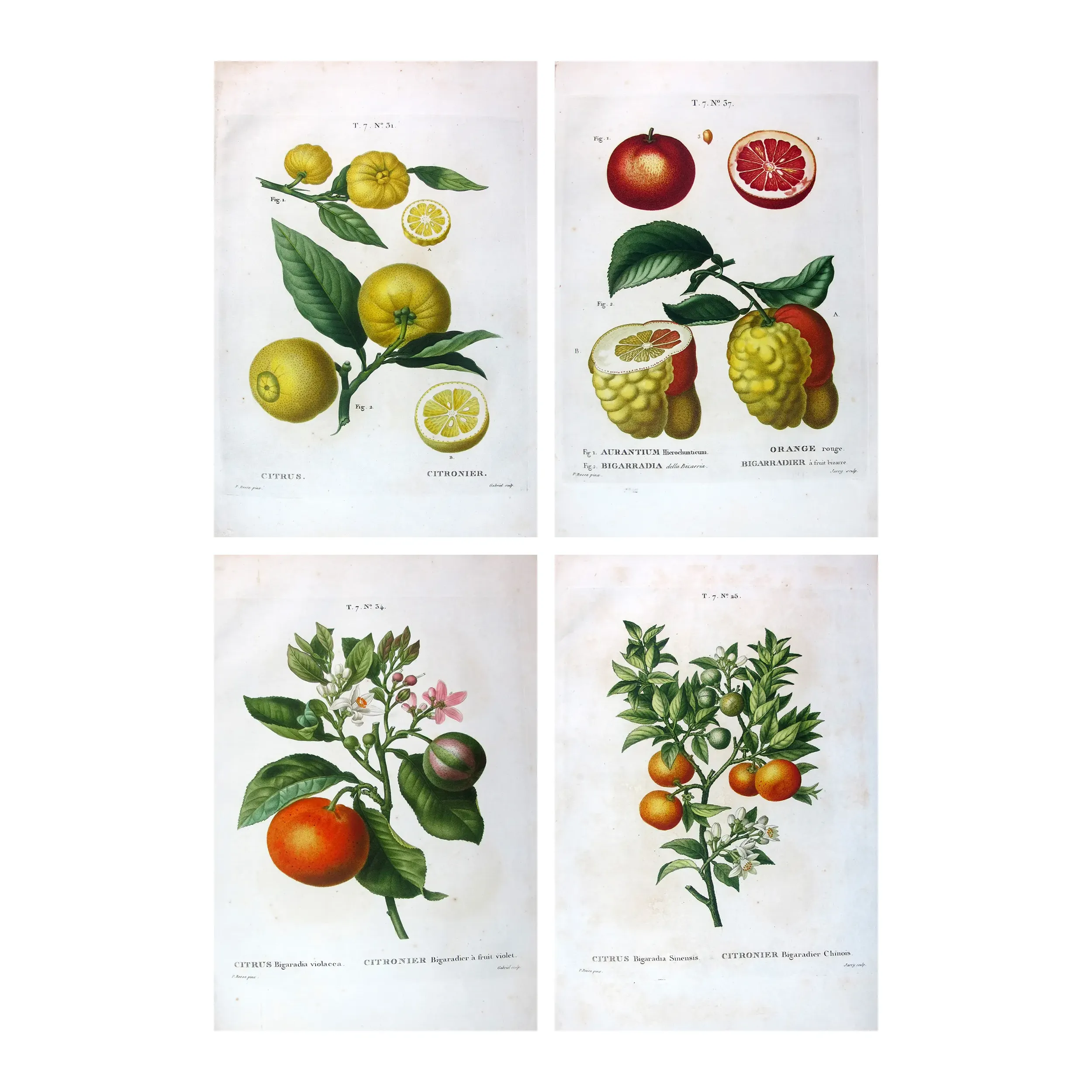
A coherent ensemble of eight original orange and bigarade engravings by Pancrace Bessa, reflecting the cultivated discipline of French orangeries in the Napoleonic era. Botanical precision and architectural composure unite in a refined citrus portfolio preserved as a complete series.