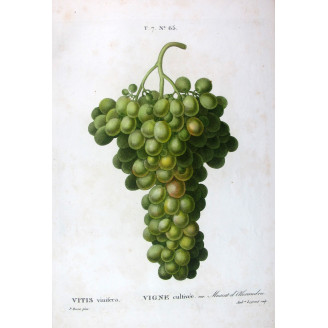
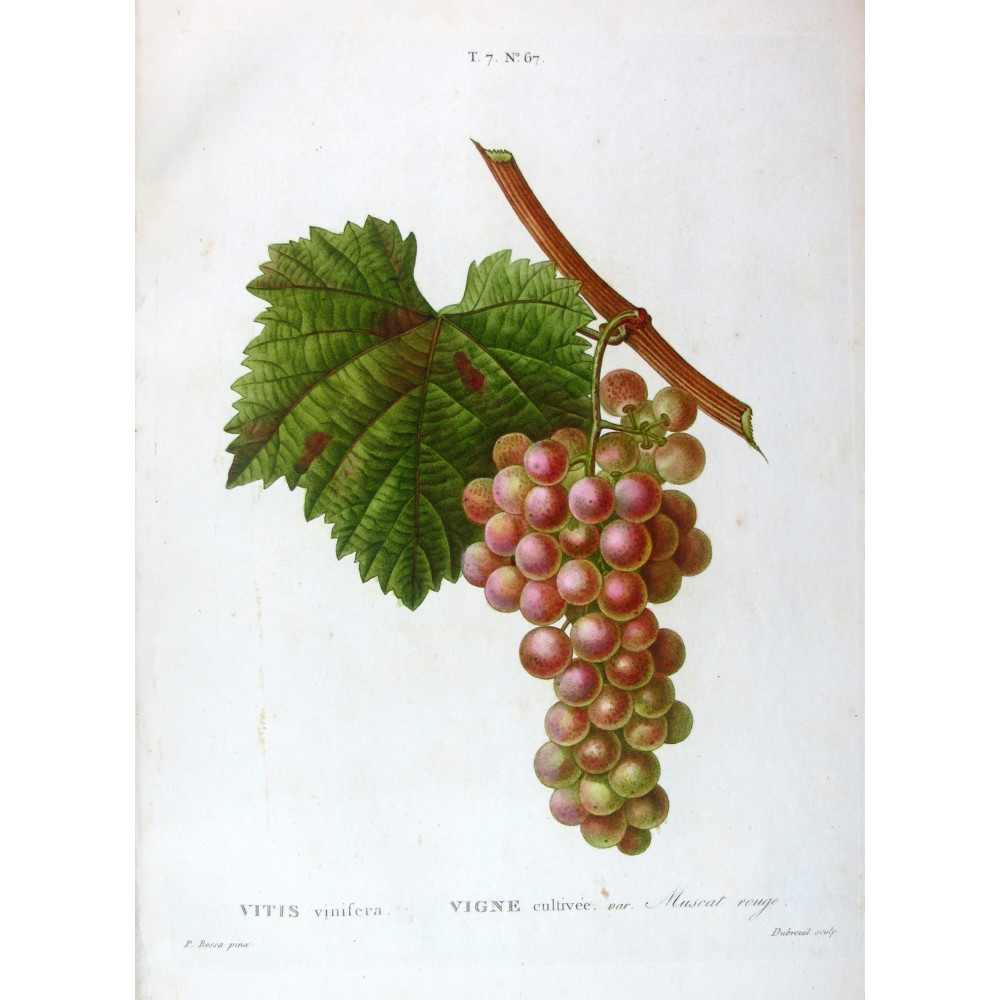
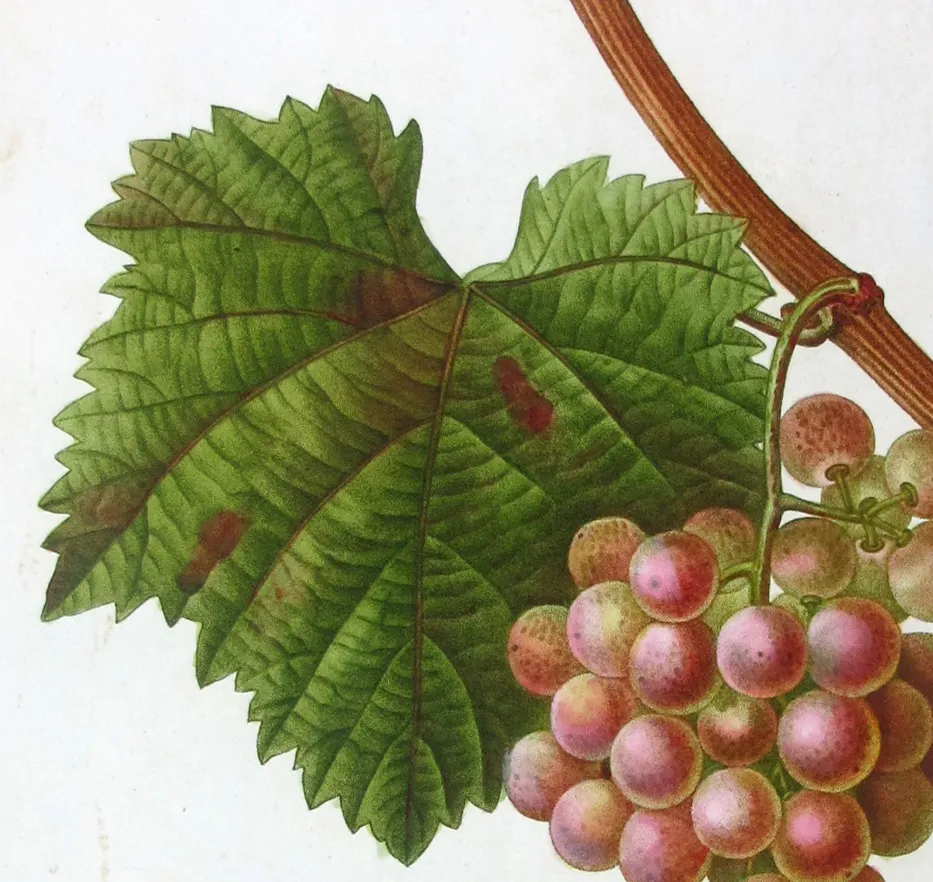
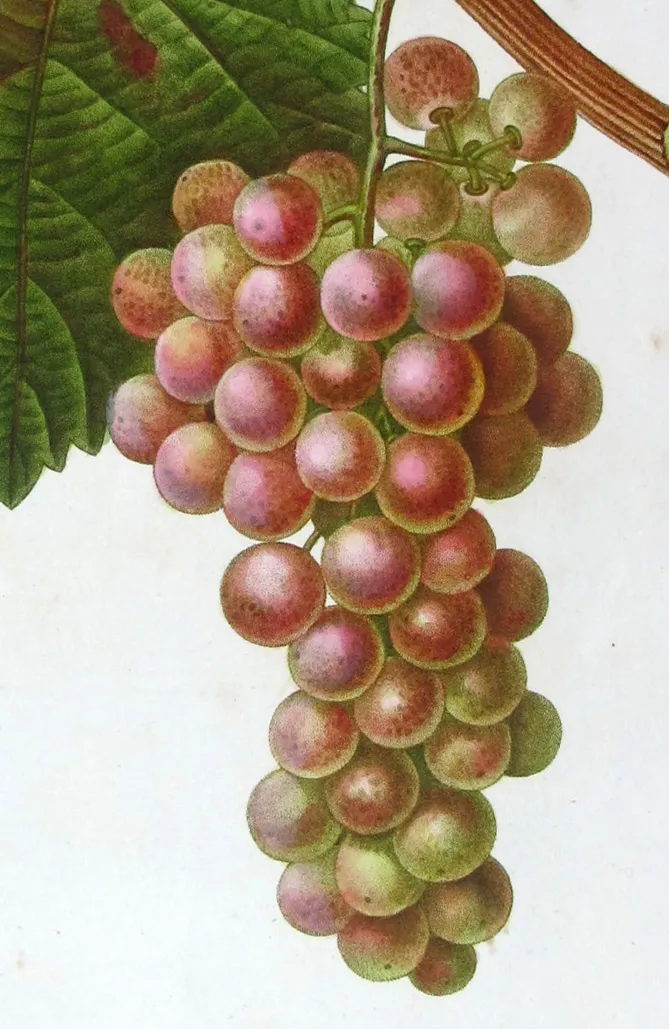
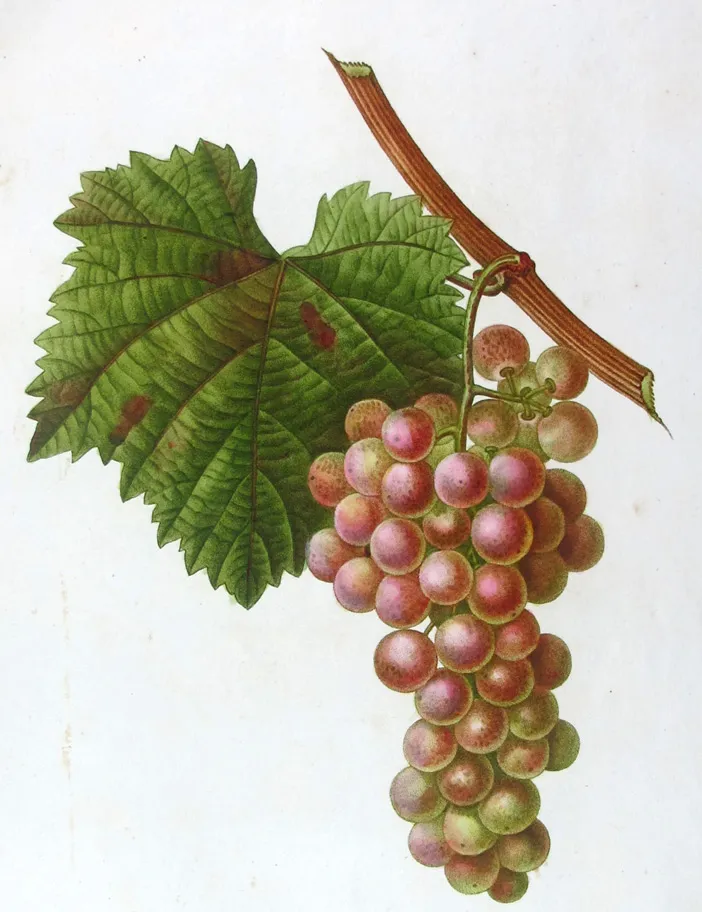
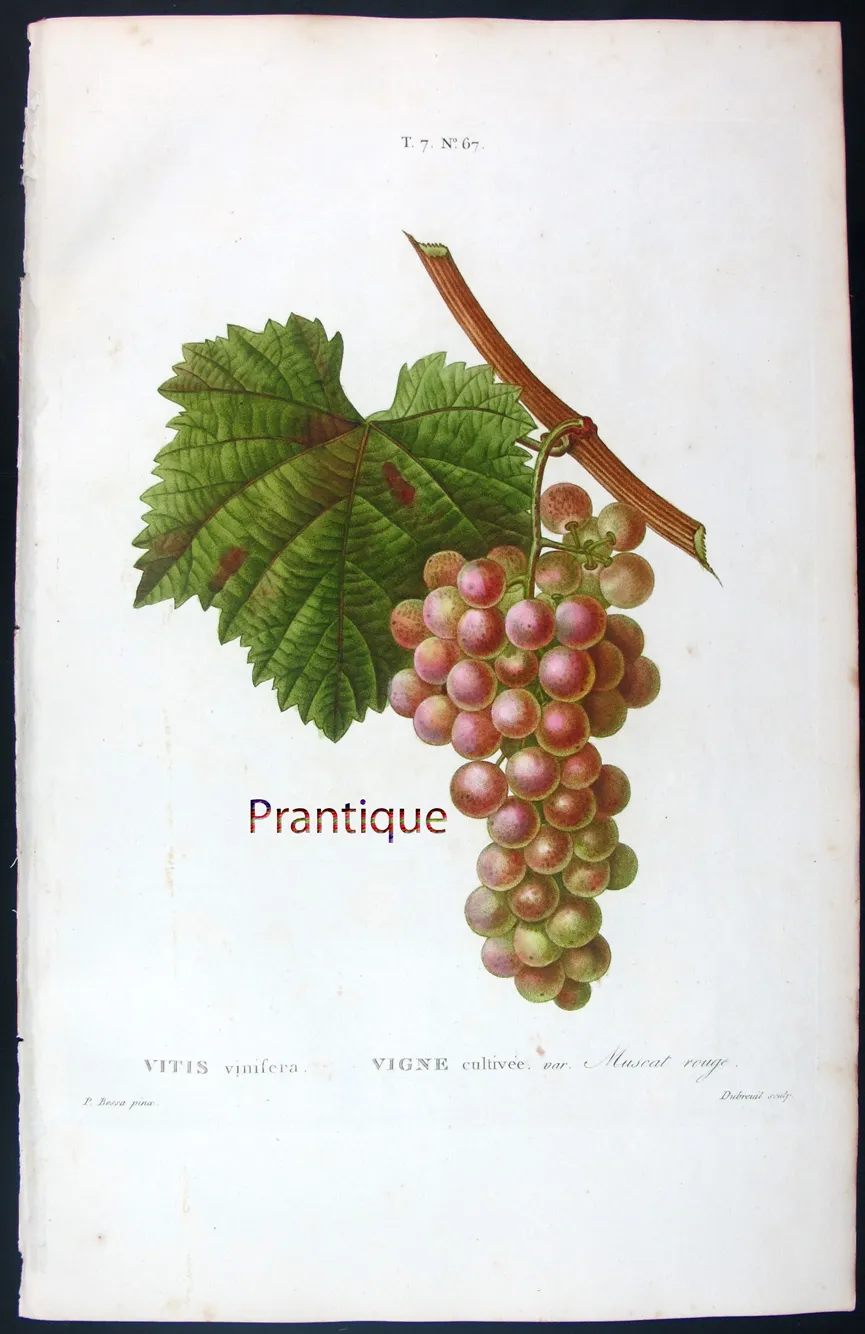
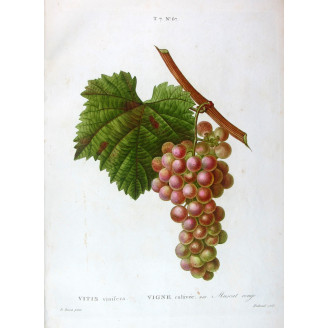

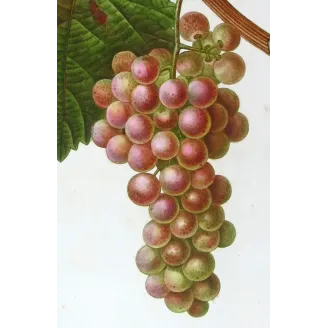
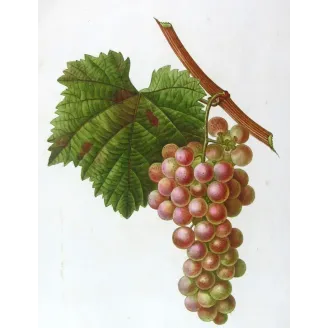
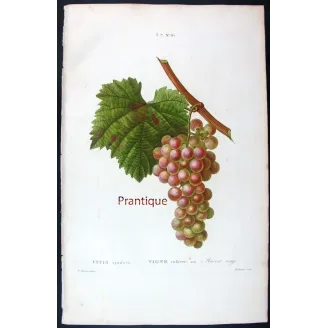
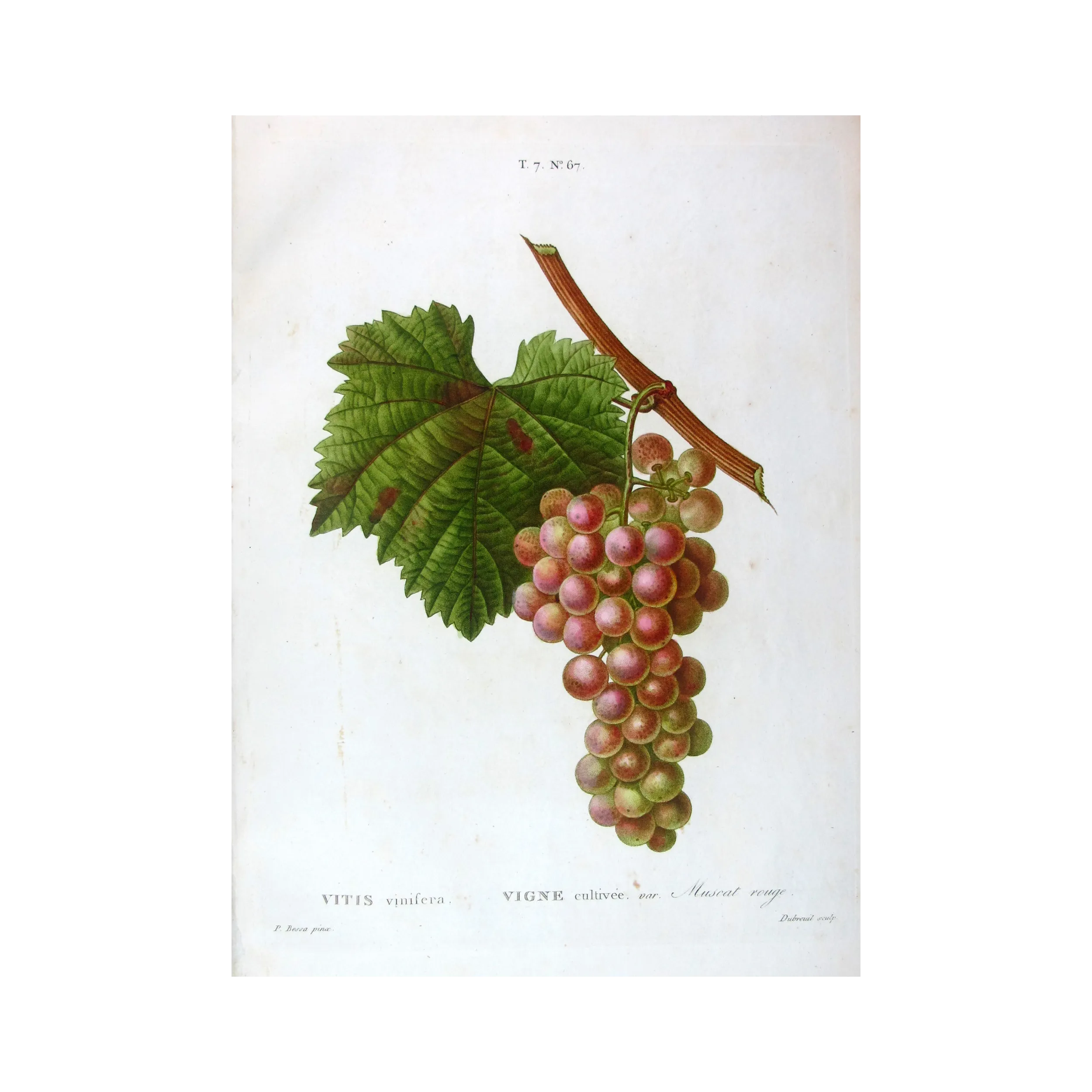
A botanical illustration of red Muscat grapes by Pancrace Bessa.
 Delivery policy
Your print will be carefully prepared and shipped worldwide via trusted couriers (UPS or similar).
 Authentic antique prints
Original engravings from the 17th–19th century.
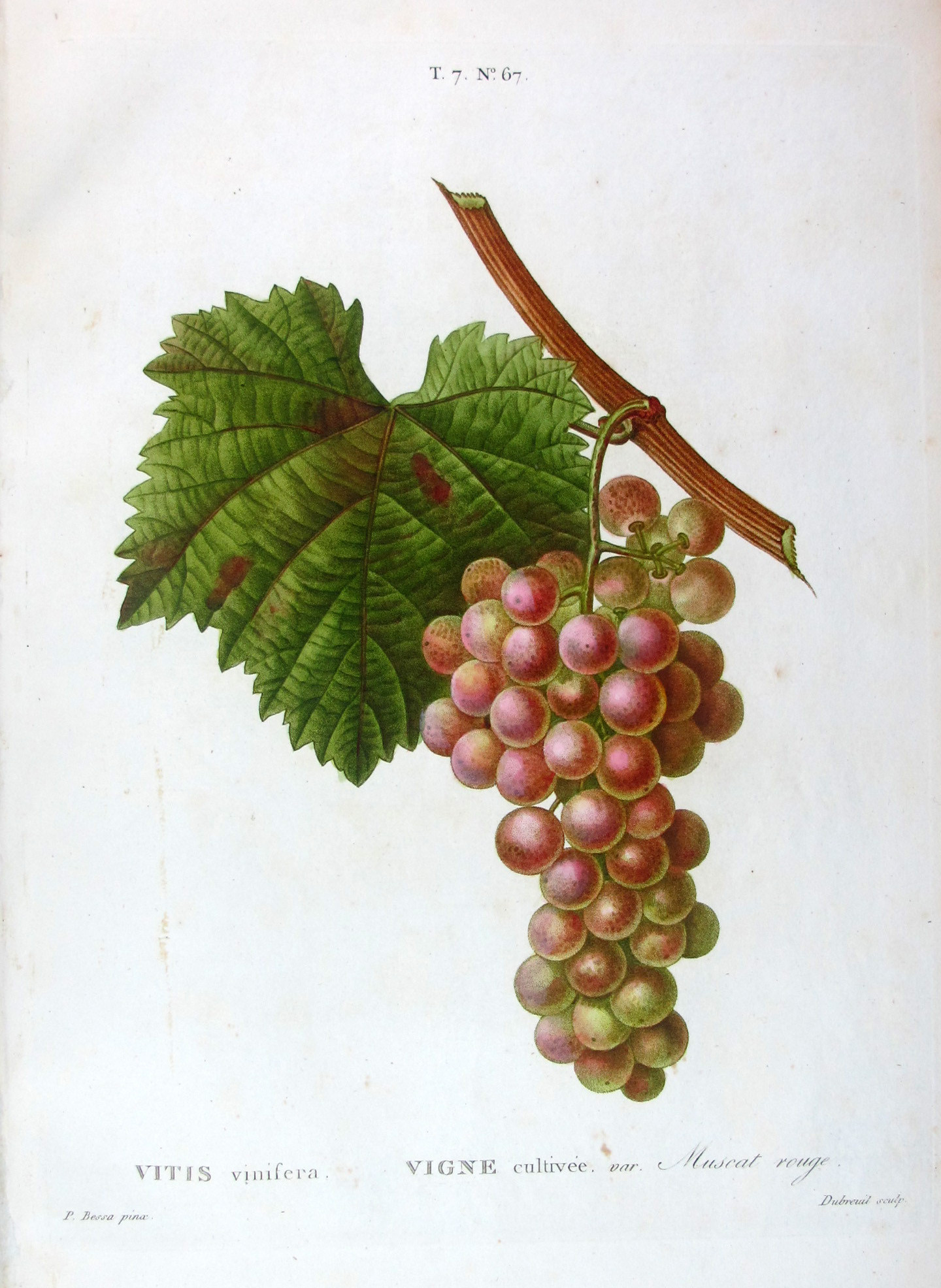
This original early 19th-century botanical engraving depicts Vitis vinifera as a cultivated French variety identified in the plate as Muscat rouge. The composition presents a single, elegantly suspended cluster accompanied by a broad vine leaf and a short section of branch, arranged with clarity against generous white space.
What distinguishes this plate is the chromatic richness of the fruit. Pancrace Bessa renders the grapes with an unusually delicate palette, where soft rose-pink tones blend into pale greens and warm olive hues. The subtle variation between berries suggests uneven ripening, lending the cluster a naturalistic depth and a refined visual rhythm.
Issued as part of Arbres et Arbustes, this engraving reflects the period’s refined approach to cultivated fruit: scientifically precise yet visually attuned to colour, texture, and the ornamental potential of orchard and vineyard subjects.
— • —
The composition balances the rounded mass of the grape cluster with the angular structure of the leaf, creating a gentle diagonal movement across the sheet. The grapes form a compact yet breathing volume, their repetition softened by nuanced shifts in colour and scale.
Fine stipple engraving combined with exceptionally clean hand-colouring produces a luminous surface. The rosé and olive tones catch the light subtly, giving the fruit a near-porcelain quality and enhancing its three-dimensional presence—an effect particularly striking in such a well-preserved impression.
The plate is identified in the original text as a cultivated grapevine variety:
Unlike darker grape varieties, the Muscat rouge is characterised here by its lighter skin and warm tonal range, qualities that Bessa exploits to explore colour modulation and surface texture rather than dramatic contrast.
The engraving is in exceptionally fine antique condition, close to near like brand new. The original hand-colouring is remarkably fresh and luminous, with no distracting flaws. No watermark has been observed. The engraved credits “P. Bessa pinx.” and “Dubreuil sculp.” are present.
For insight into Bessa’s distinctive hand-colouring techniques, see our editorial feature on Pancrace Bessa:
Specific References
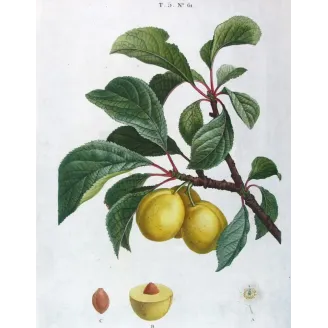
Botanical illustration of the Saint Catherine plum, a delicate fruit-bearing tree, by Pancrace Bessa.
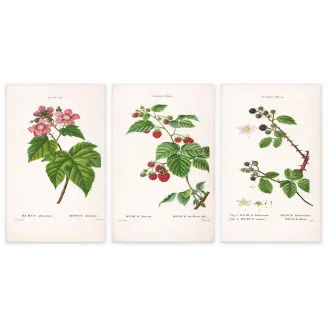
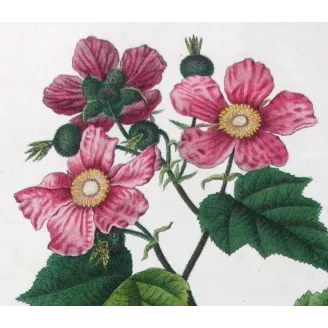
Illustration of the sweet-scented flowering bramble, Rubus odoratus, in full bloom.
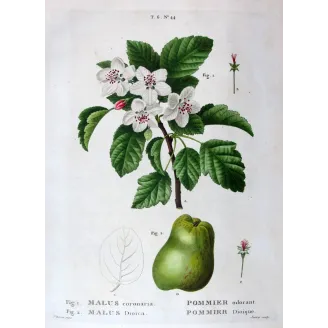
A finely executed early 19th-century botanical engraving illustrating a cultivated apple variety (Malus communis), drawn by Pancrace Bessa for Arbres et Arbustes. The composition combines precise botanical observation with refined decorative balance, presenting fruit and foliage with clarity and quiet elegance. Exceptional hand-colouring and careful modelling reflect the sophistication of French pomological illustration at its height.
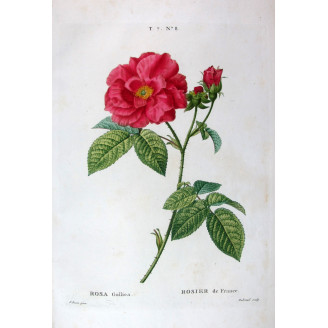
French Rose Rosier de France Original hand-colored botanical engraving by Pancrace Bessa.
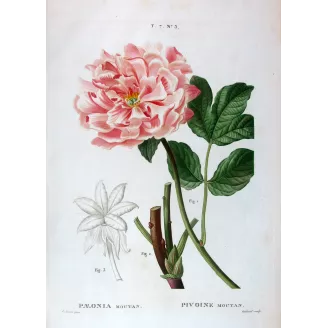
Tree Peony Pivoine moutan Original hand-colored botanical engraving by Pancrace Bessa.
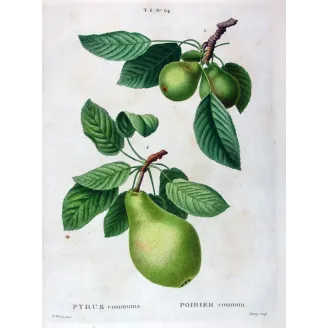
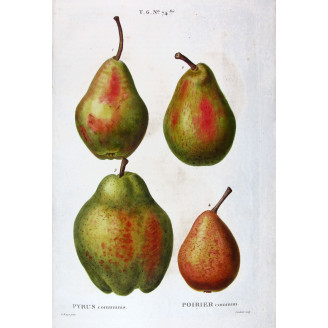
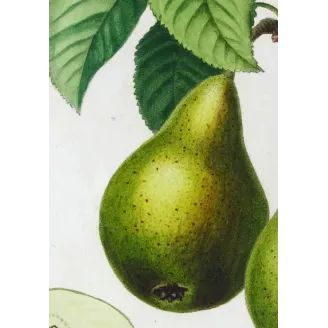
A refined early 19th-century botanical engraving depicting cultivated pear varieties (Pyrus communis), drawn by Pancrace Bessa and engraved for Arbres et Arbustes. Executed with restraint and clarity, the plate exemplifies the elegance of French pomological illustration, uniting scientific precision with a calm, decorative sensibility. The harmonious composition and subtle hand-colouring make it a timeless and highly collectible work.
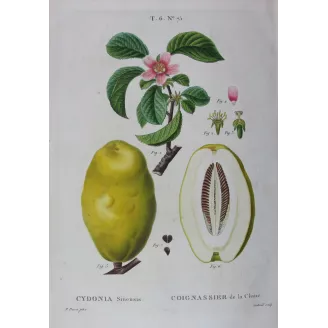
Chinese Quince Coignassier de la Chine Original hand-colored botanical engraving by Pancrace Bessa.
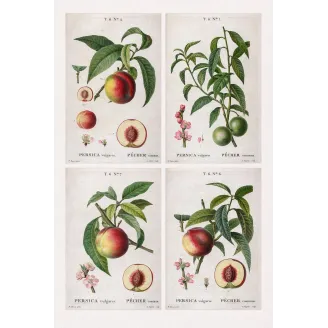
Original pochoir print of the peach tree, Prunus persica, with detailed flowering and fruit.
A refined orchard subject where volume and proportion are carefully balanced, giving the fruit a calm, almost sculptural presence.
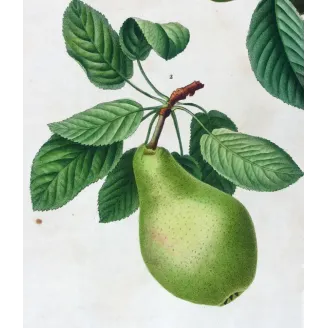
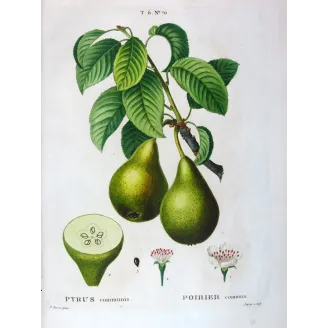
A refined early 19th-century botanical engraving depicting cultivated pear varieties (Pyrus communis), drawn by Pancrace Bessa and engraved for Arbres et Arbustes. Executed with restraint and clarity, the plate exemplifies the elegance of French pomological illustration, uniting scientific precision with a calm, decorative sensibility. The harmonious composition and subtle hand-colouring make it a timeless and highly collectible work.
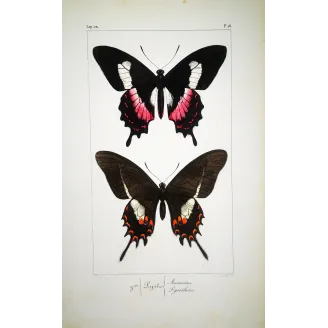
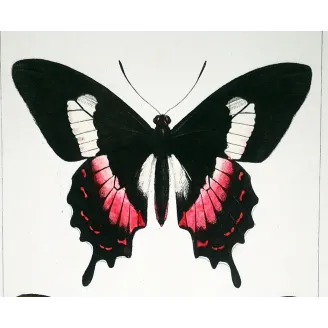
Cattleheart Swallowtail Butterflies (Parides lysithous group) – Antique Hand-Colored Engraving, Exotic Butterflies (1835)
Striking butterflies in deep red, violet, and dark tones with eye-like markings. A refined 1835 engraving with strong decorative character.
A botanical illustration of red Muscat grapes by Pancrace Bessa.