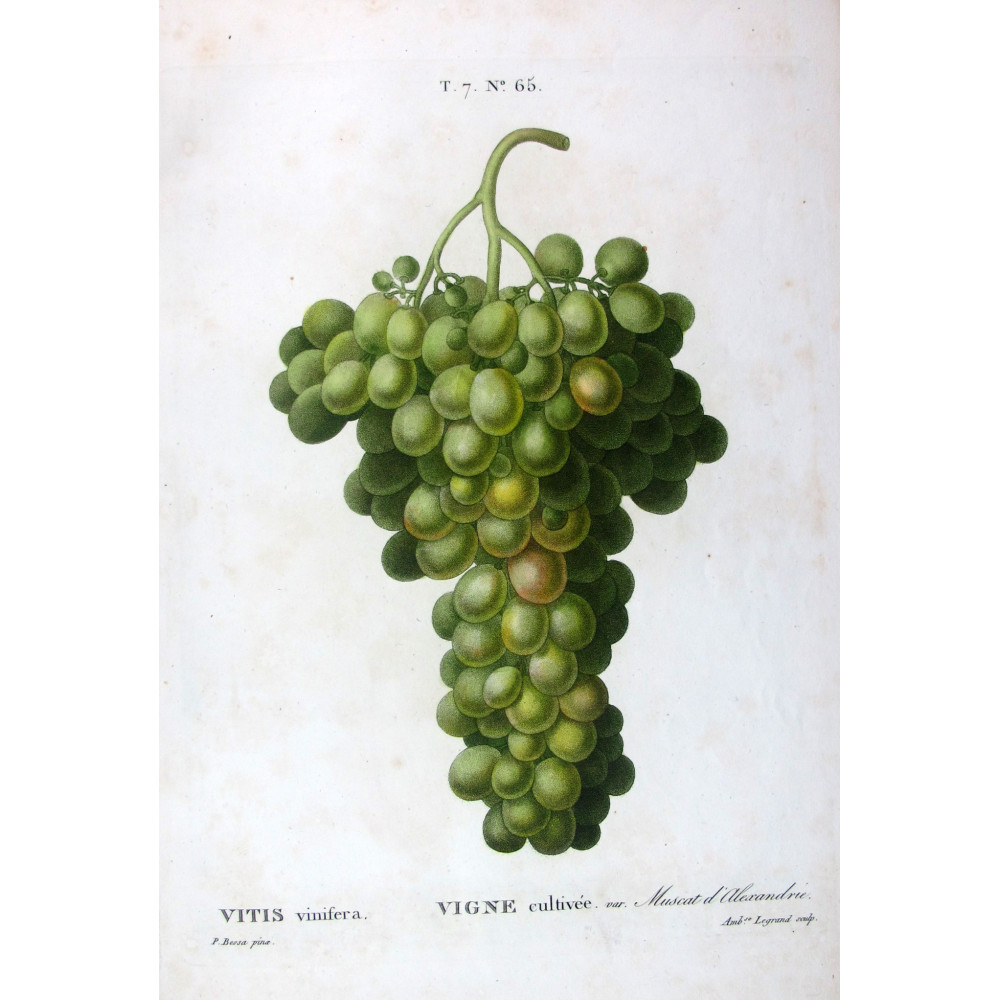
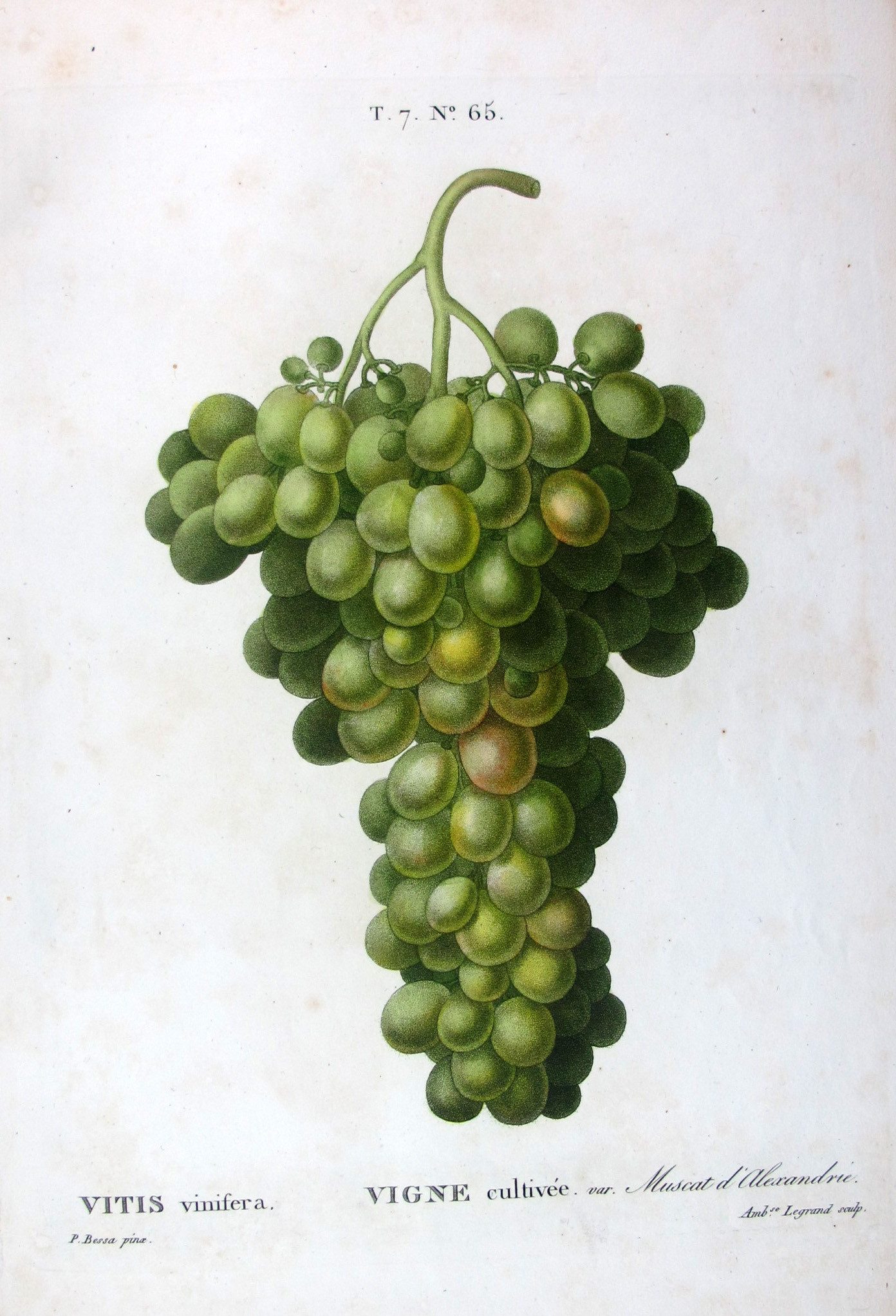

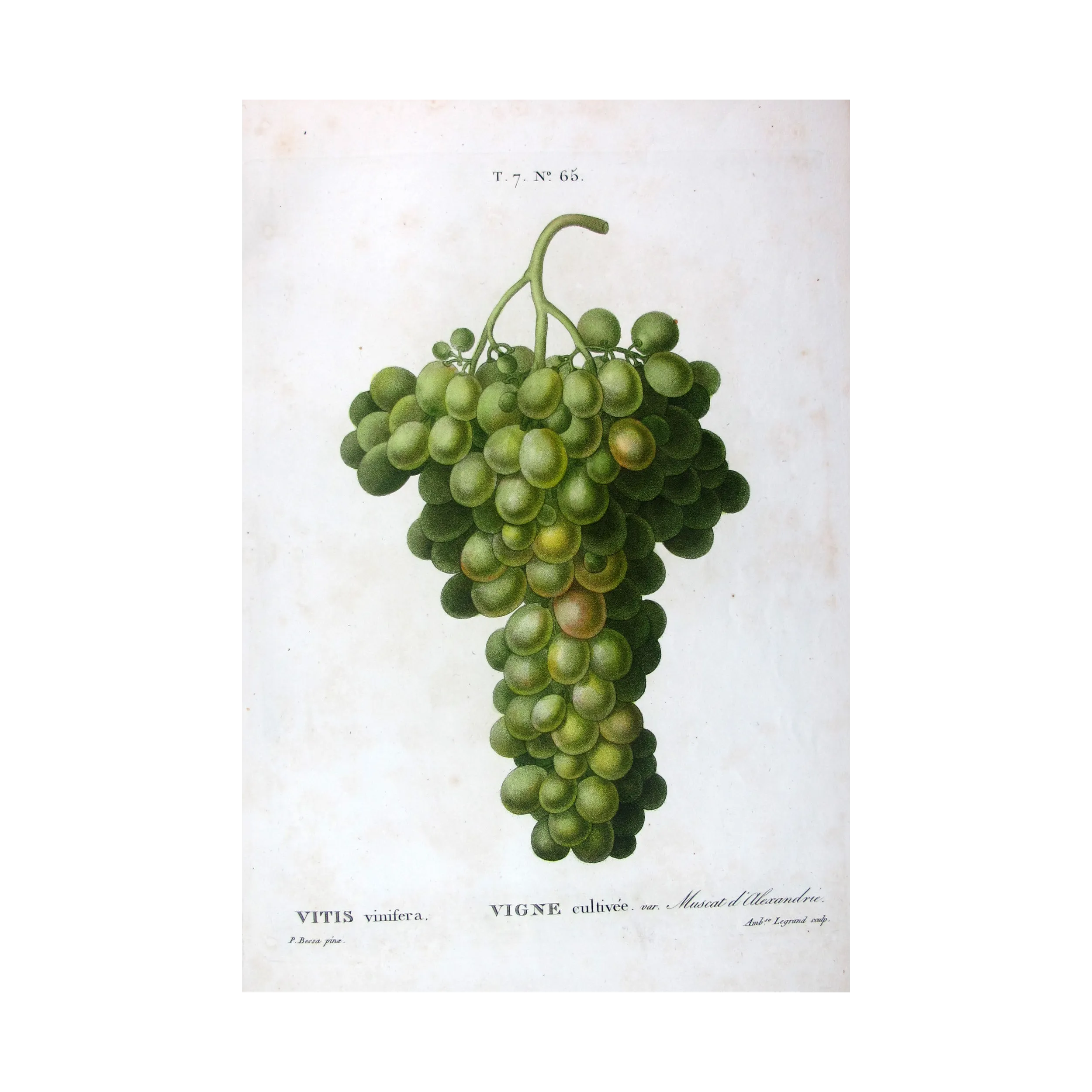
A historic grape varietal rendered in lush green tones.
 Delivery policy
Your print will be carefully prepared and shipped worldwide via trusted couriers (UPS or similar).
 Authentic antique prints
Original engravings from the 17th–19th century.
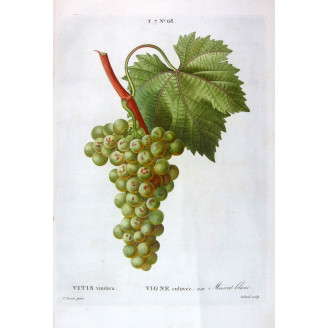
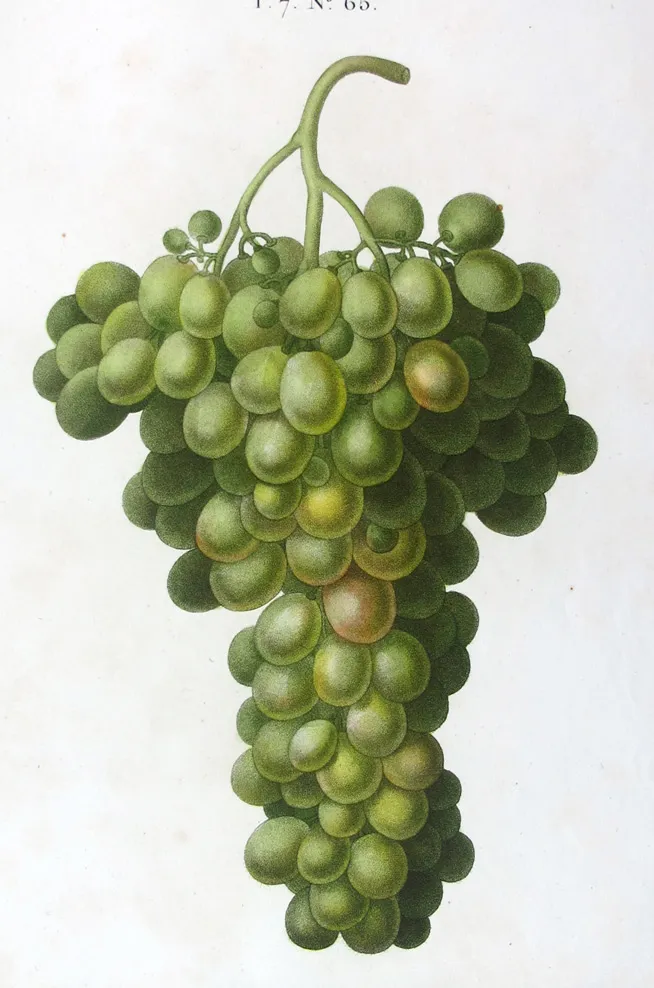
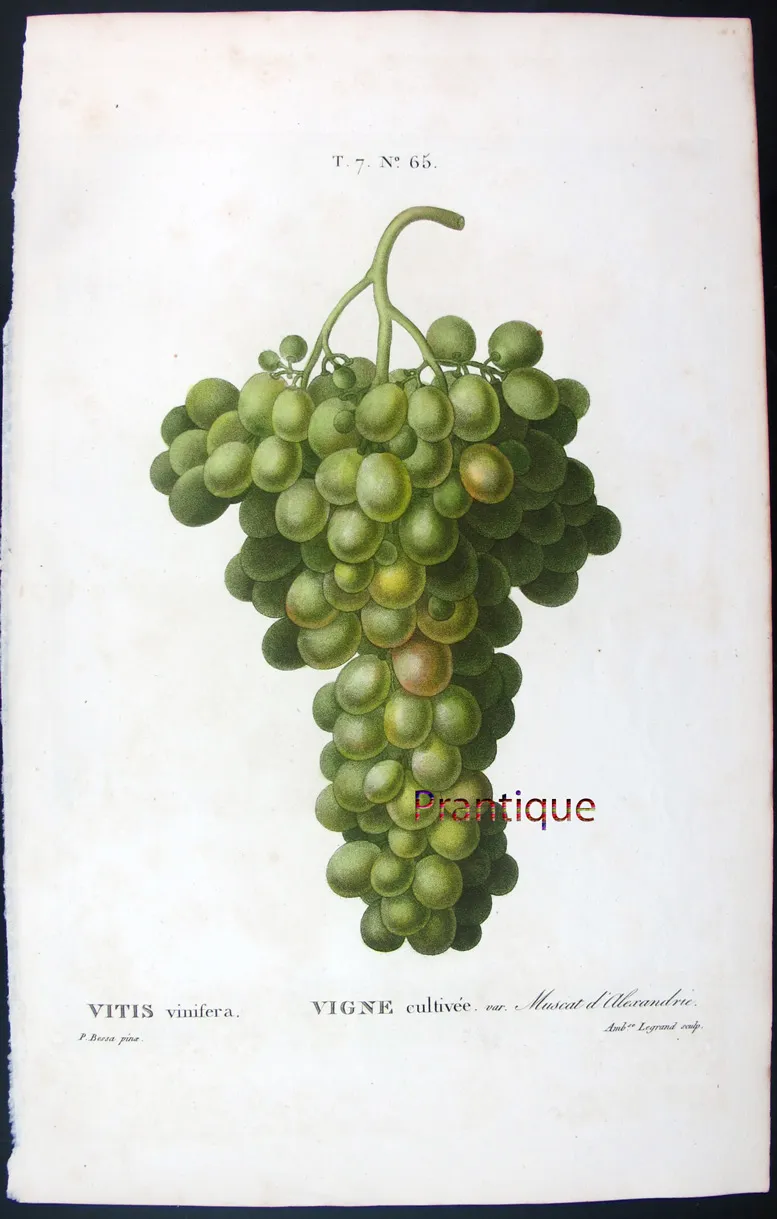
This original early 19th-century botanical engraving presents Vitis vinifera as a cultivated French variety identified as Muscat d’Alexandrie. The composition focuses on a single, elongated cluster of grapes suspended from a gently curving stem, isolated against ample white space that enhances its sculptural clarity.
Pancrace Bessa renders the fruit with particular sensitivity to volume and surface. Each grape is softly modelled, with discreet transitions between pale olive greens, warm yellow notes, and subtle amber touches that suggest ripening. The overall effect is calm and cohesive, emphasizing natural abundance without visual excess.
Issued as part of Arbres et Arbustes, this plate reflects the period’s sustained interest in cultivated orchard and vineyard varieties, where fruit was documented with both scientific precision and an eye for domestic elegance.
— • —
The cluster is composed as a continuous downward rhythm, tapering gently toward the base and creating a sense of natural weight and gravity. Rounded forms repeat in a measured cadence, avoiding rigidity through slight variations in size, colour, and spacing.
Fine stipple engraving combined with controlled hand-colouring produces a softly luminous surface. The restrained palette—dominated by greens warmed with golden undertones—gives the fruit a tactile presence while maintaining a refined, almost architectural simplicity.
The plate is identified in the original publication as a cultivated grapevine:
Rather than depicting foliage or flowering stages, Bessa concentrates on the fruit itself, highlighting the density, maturity, and characteristic colouration of this well-known cultivated variety.
The engraving is in very good antique condition. A few very light, scattered toning spots may be observed, remaining discreet and not distracting from the image. The original hand-colouring is well preserved. No watermark has been observed. The engraved credits “P. Bessa pinx.” and “Amb.se Legrand sculp.” are present.
For insight into Bessa’s distinctive hand-colouring techniques, see our editorial feature on Pancrace Bessa:
Specific References
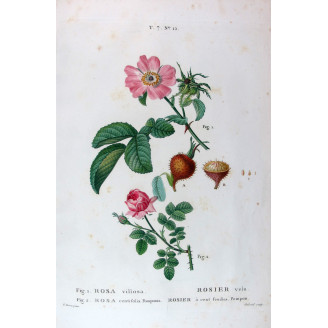
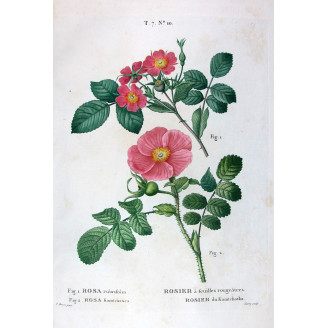
Velvet Rose & Pompon Centifolia Rosier velu & Rosier à cent feuilles, Pompon Original hand-colored botanical engraving by Pancrace Bessa.
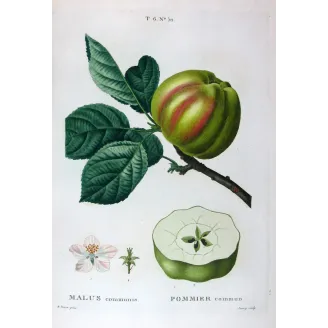
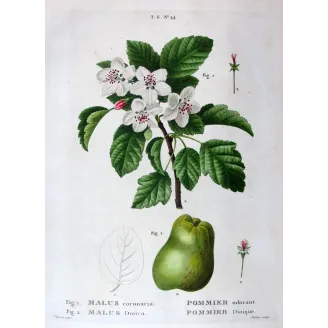
A finely executed early 19th-century botanical engraving illustrating a cultivated apple variety (Malus communis), drawn by Pancrace Bessa for Arbres et Arbustes. The composition combines precise botanical observation with refined decorative balance, presenting fruit and foliage with clarity and quiet elegance. Exceptional hand-colouring and careful modelling reflect the sophistication of French pomological illustration at its height.
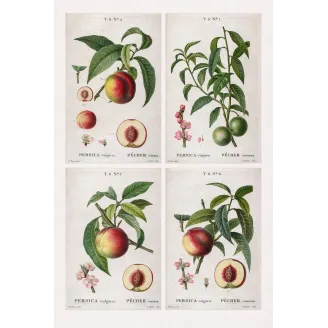
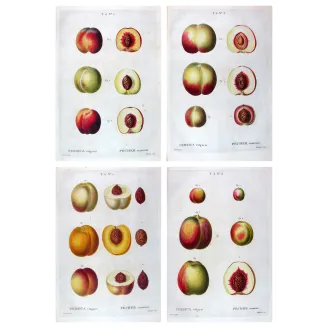
Original pochoir print of the peach tree, Prunus persica, with detailed flowering and fruit.
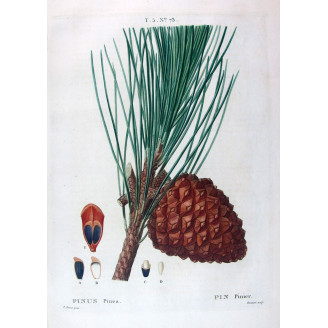
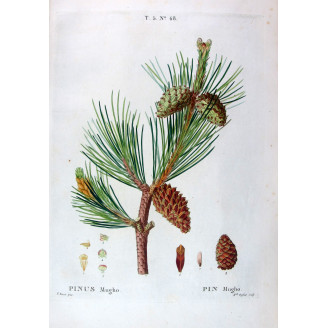
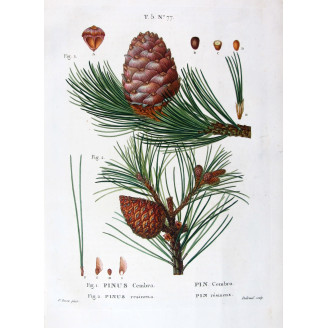
Antique engraving of Pinus Mugho by Bessa, rich in botanical detail.
A finely executed early 19th-century botanical engraving illustrating a cultivated apple variety (Malus communis), drawn by Pancrace Bessa for Arbres et Arbustes. The composition combines precise botanical observation with refined decorative balance, presenting fruit and foliage with clarity and quiet elegance. Exceptional hand-colouring and careful modelling reflect the sophistication of French pomological illustration at its height.
Kamchatka Rose Rosier du Kamchatka Original hand-colored botanical engraving by Pancrace Bessa.
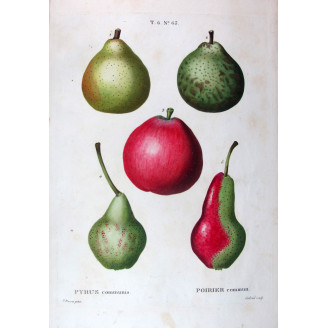
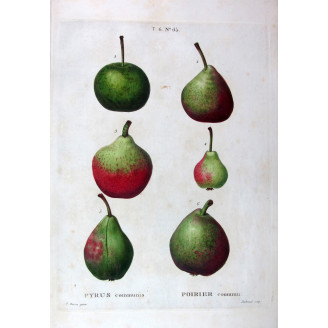
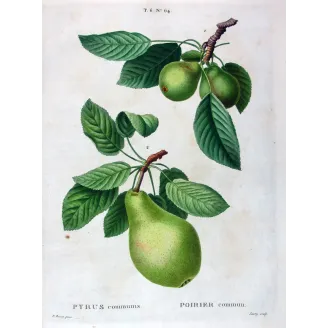
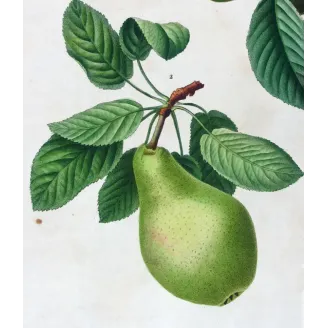
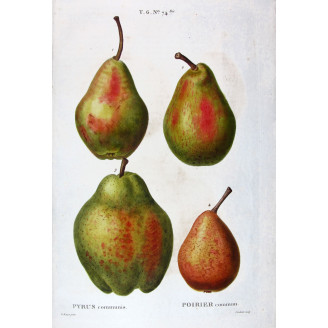
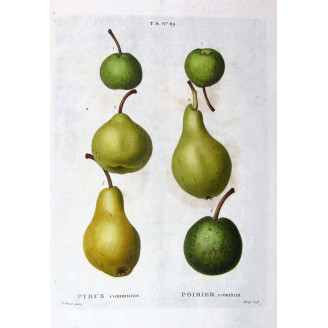
A refined study of French cultivated pear varieties, distinguished by subtle chromatic contrasts and carefully modelled forms. This hand-colored engraving reflects Pancrace Bessa’s ability to elevate orchard subjects through balance, restraint, and quiet visual authority.
A refined early 19th-century botanical engraving depicting cultivated pear varieties (Pyrus communis), drawn by Pancrace Bessa and engraved for Arbres et Arbustes. Executed with restraint and clarity, the plate exemplifies the elegance of French pomological illustration, uniting scientific precision with a calm, decorative sensibility. The harmonious composition and subtle hand-colouring make it a timeless and highly collectible work.
A refined orchard subject where volume and proportion are carefully balanced, giving the fruit a calm, almost sculptural presence.
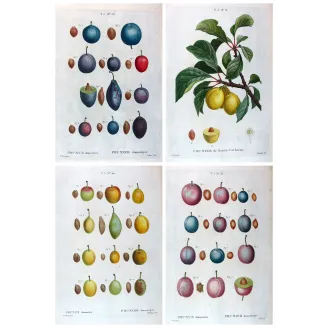
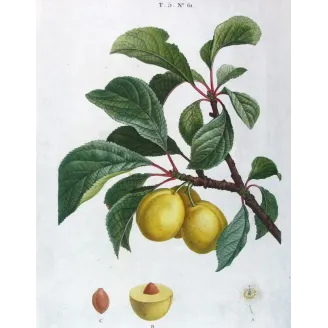
Botanical illustration of the Saint Catherine plum, a delicate fruit-bearing tree, by Pancrace Bessa.
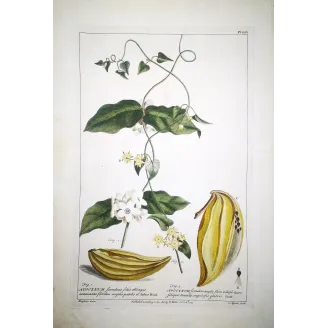
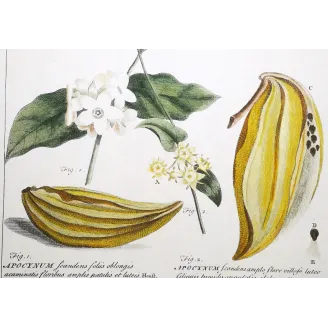
An original 18th-century hand-colored engraving depicting Apocynum scandens, published in Philip Miller’s Figures of the Most Beautiful, Useful, and Uncommon Plants. The composition combines delicate star-shaped flowers, elegant climbing stems, and striking striped seed pods, uniting botanical precision with refined decorative presence.
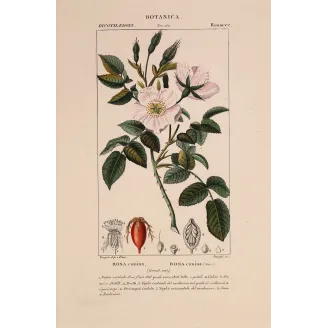
Delicate dog rose flower with soft pink petals and fine botanical details.
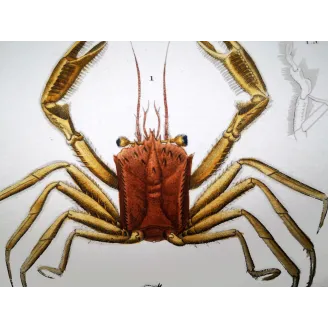
Refined 19th-century engraving of *Omola frontespinosa*, a rare crab with slender claws and delicate yellow-orange tones.
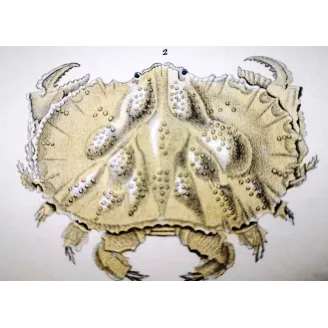
Fine 19th-century engraving of *Calappa tuberculata*, a beautifully armored crab with ornate textures and yellow tones.
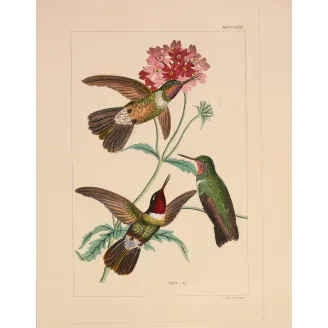
Original nineteenth-century hand-colored engraving by Ludwig Reichenbach, depicting three hummingbirds among pink blossoms. A rare later plate from the Trochilinarum Enumeratio corpus, not fully documented in the principal published index.
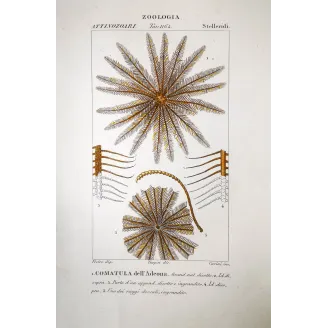
Rare 19th-century print of the feather star Comatula of the Adeona, with anatomical details.
Detailed antique illustrations of the date palm tree and its floral and fruit anatomy.
Fine botanical engraving showing delicate redcurrant clusters and bright green leaves.
A historic grape varietal rendered in lush green tones.