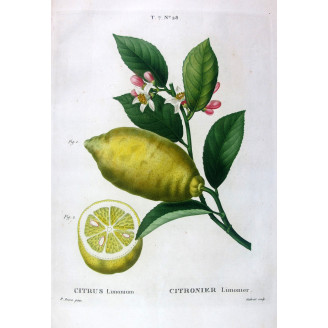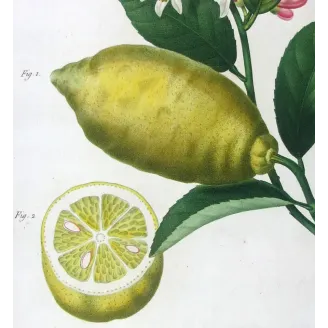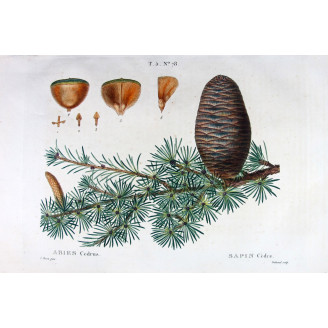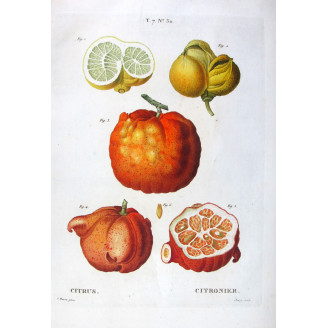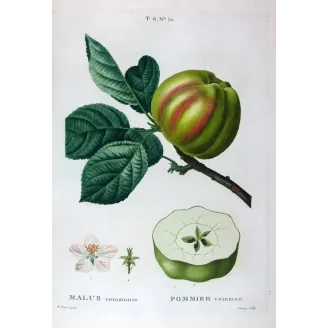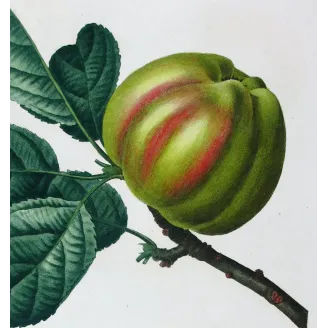
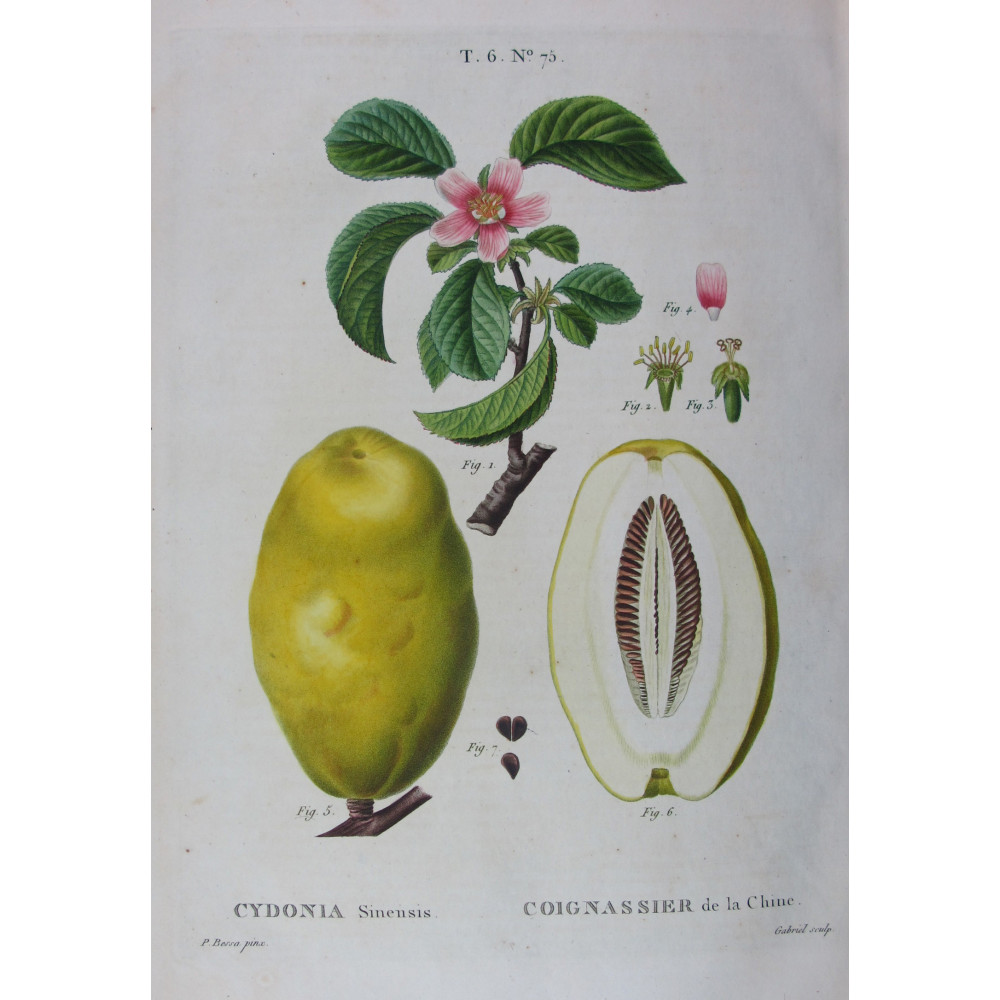
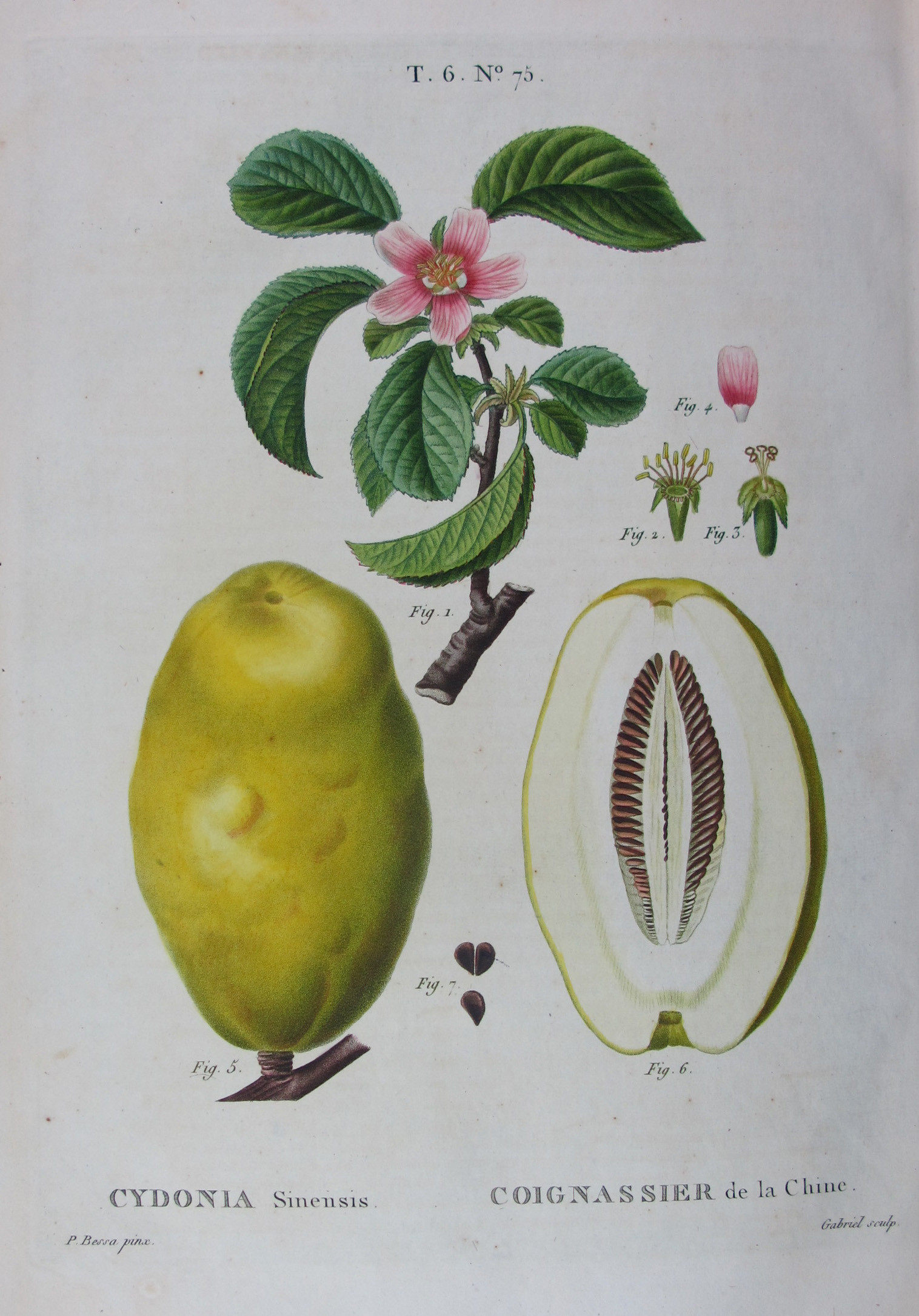
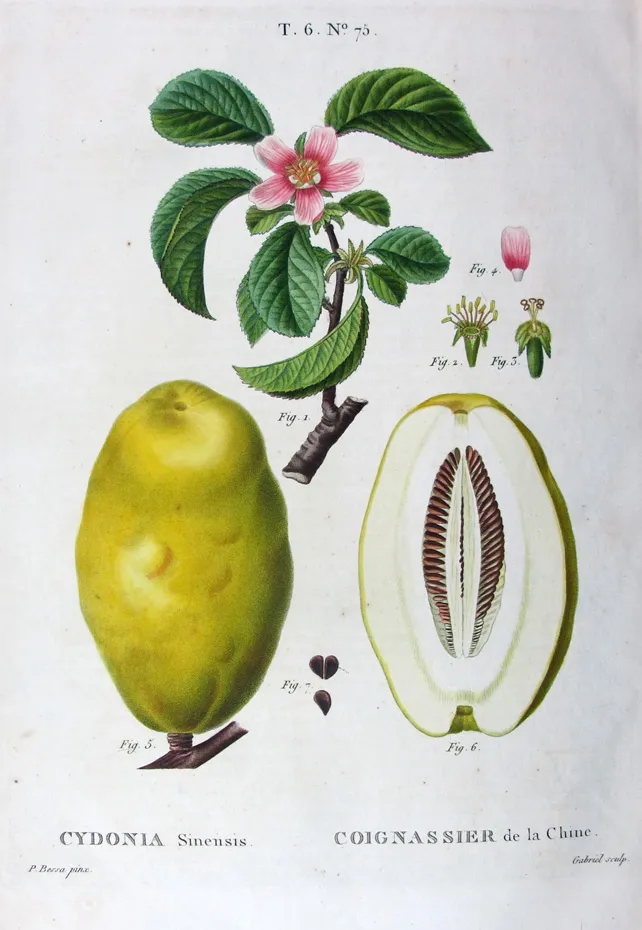

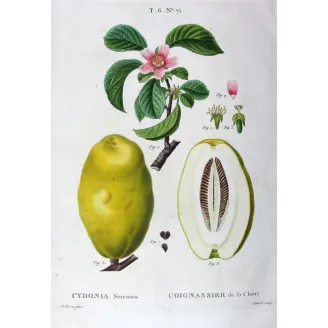
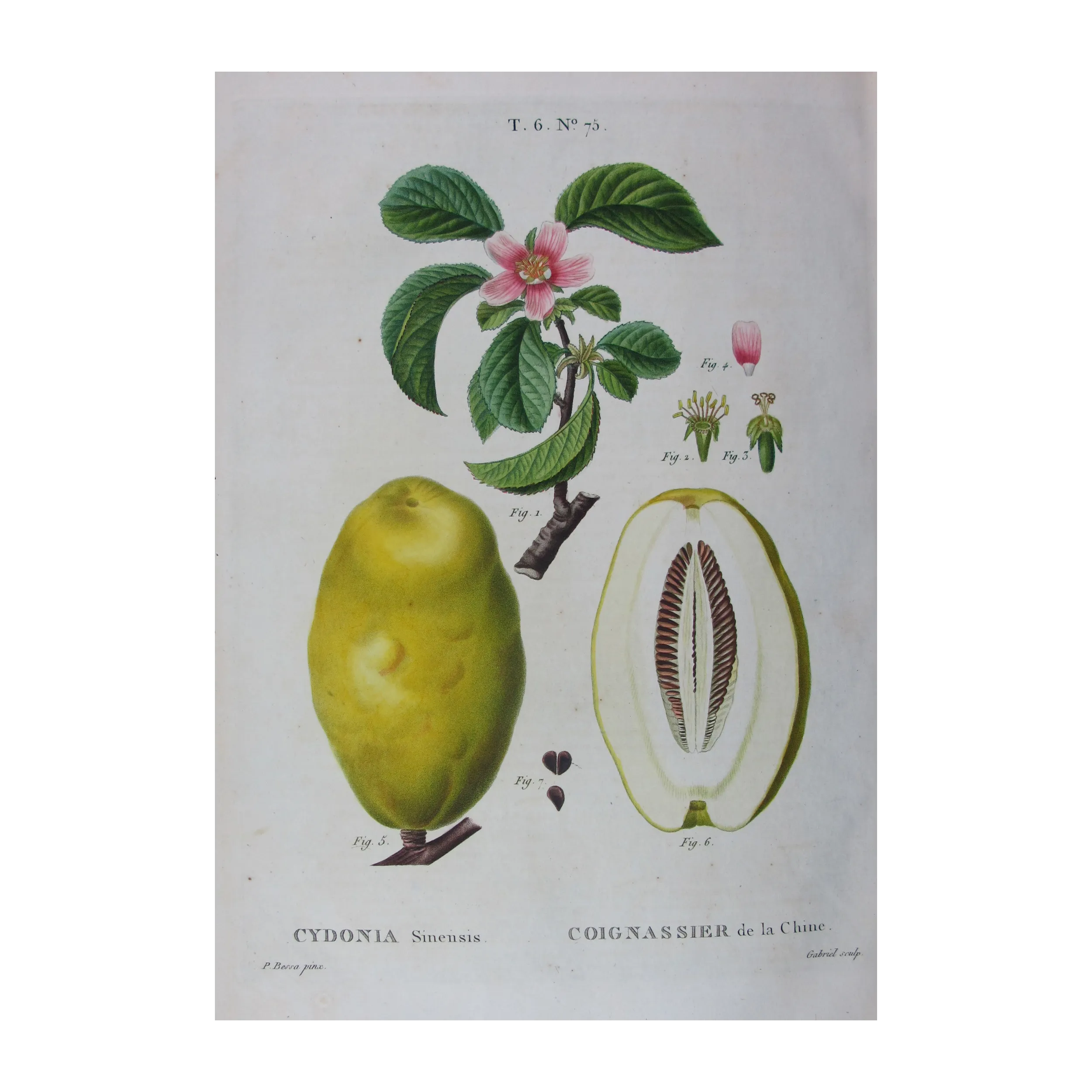
Chinese Quince Coignassier de la Chine Original hand-colored botanical engraving by Pancrace Bessa.
 Delivery policy
Your print will be carefully prepared and shipped worldwide via trusted couriers (UPS or similar).
 Authentic antique prints
Original engravings from the 17th–19th century.
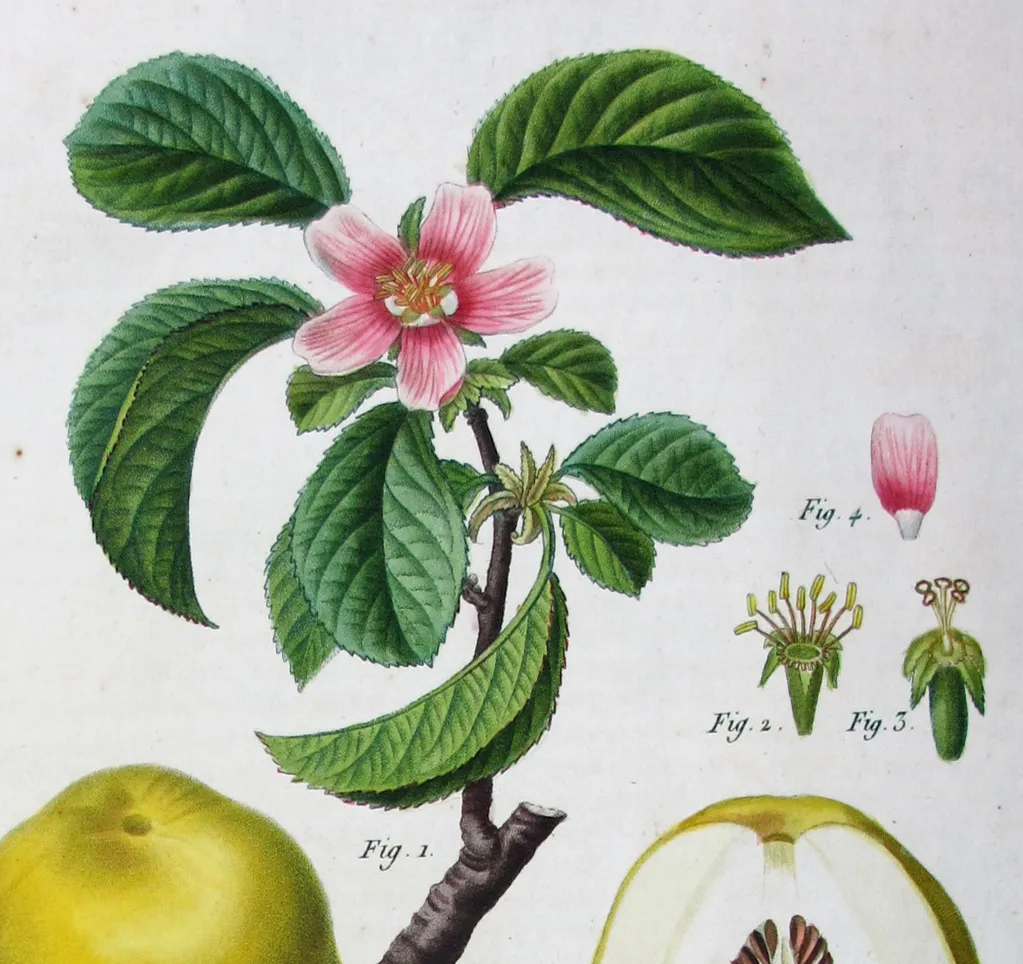
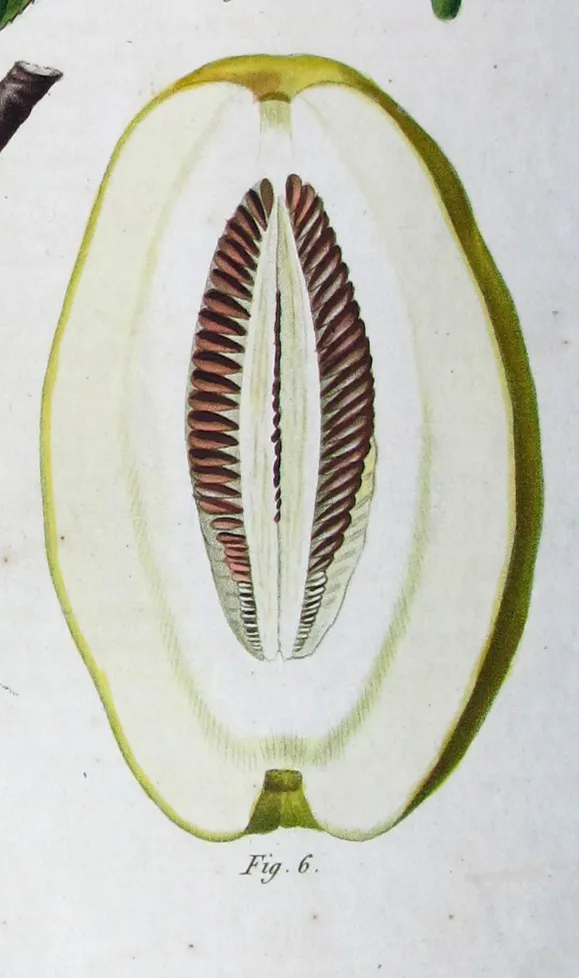
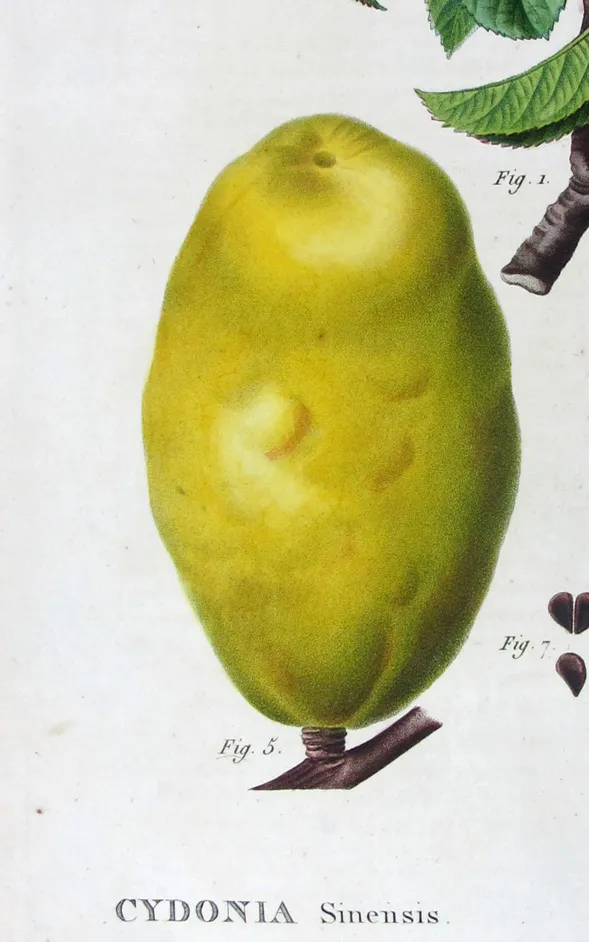
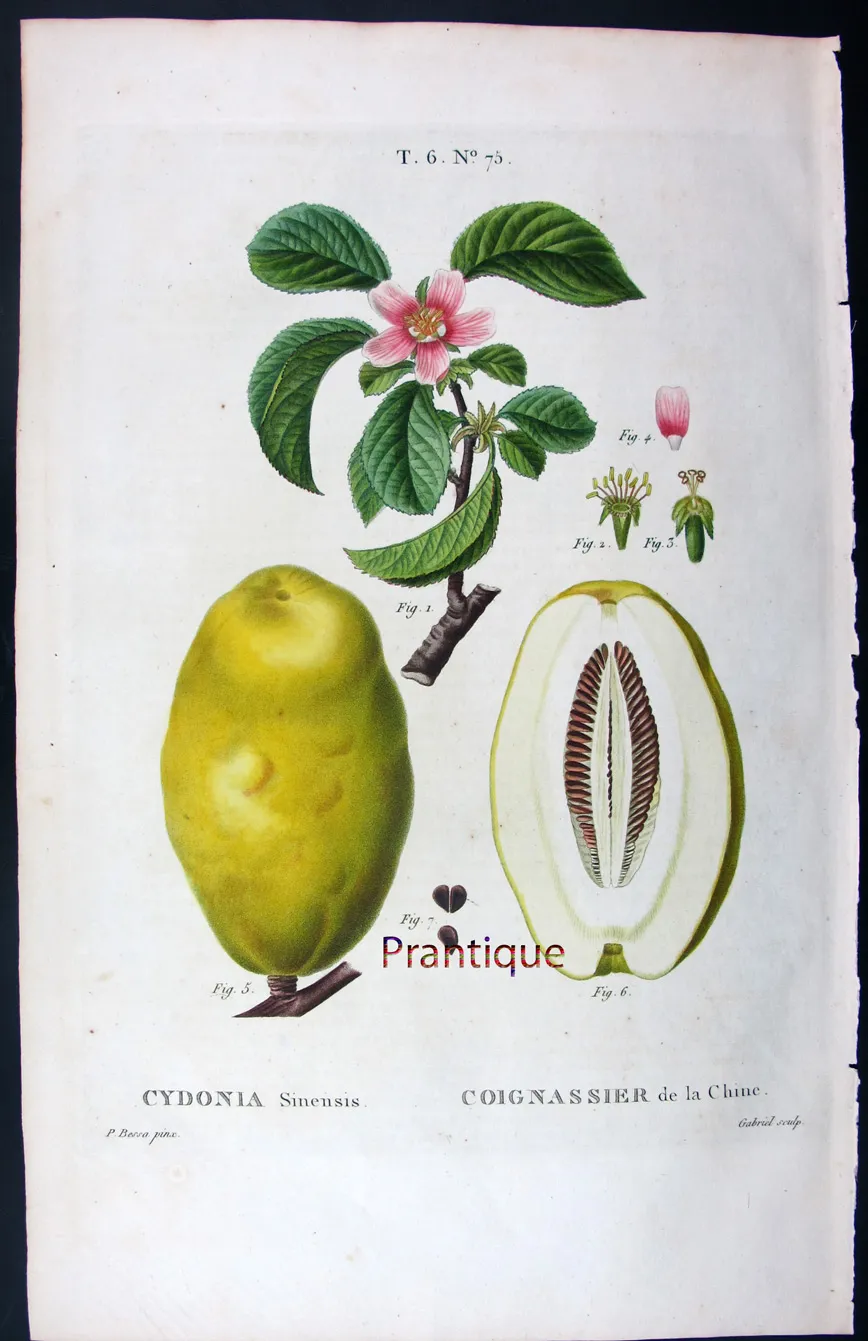
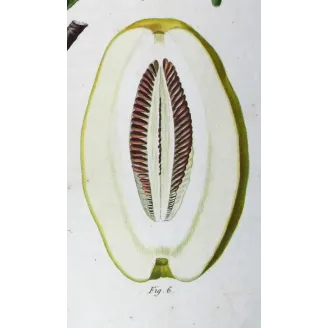
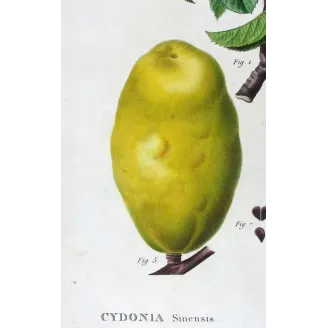
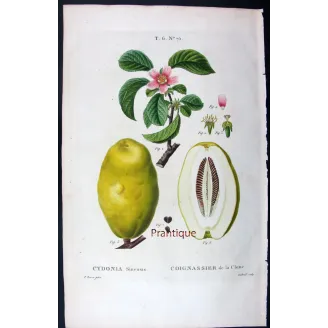
This original botanical engraving presents a striking study of Cydonia sinensis, the Chinese quince, combining flowering branch, mature fruit, and a carefully rendered longitudinal section. The composition offers a complete visual narrative, moving from blossom to fruit and into the interior structure with clarity and compositional balance.
Bessa’s treatment is both elegant and assured. The foliage and flower are rendered with painterly restraint, while the fruit—large, weighty, and softly modelled—occupies the sheet with sculptural presence. The cut section reveals the internal chambers and seeds with precision, introducing analytical depth without disrupting the visual harmony of the plate.
This engraving forms part of Arbres et Arbustes, one of the most accomplished French botanical publications of the early nineteenth century, where Pancrace Bessa consistently elevated botanical documentation through refined pictorial composition.
— • —
The composition is organized around a strong vertical axis. The flowering branch occupies the upper register, while the fruit studies dominate the lower half of the sheet, creating a visual progression from growth to maturity. The large, intact fruit anchors the composition, balanced by the longitudinal section that introduces symmetry and visual tension.
Colour application is restrained yet confident. The fruit is rendered in soft yellow-green tones with subtle shading that suggests weight and texture, while the interior section introduces warmer hues and rhythmic seed patterns. The surrounding foliage, painted in cooler greens, frames the composition and reinforces its structural clarity. The overall effect is calm, monumental, and highly decorative.
Cydonia sinensis, commonly known as the Chinese quince, occupied a distinctive position in early nineteenth-century European horticulture. Introduced and cultivated not only for its fruit but also for its ornamental qualities, it was admired for its large, sculptural form and its association with distant, non-European botanical traditions.
Unlike more familiar orchard fruits, the Chinese quince was often valued as a botanical curiosity—an object of study and display rather than purely of consumption. Its thick flesh, unusual fragrance, and striking internal structure made it particularly suitable for detailed botanical representation. Artists were drawn to its ability to convey both external mass and internal order within a single subject.
In works such as Arbres et Arbustes, the inclusion of Cydonia sinensis reflects a broader fascination with exotic species and the desire to document plants across their full morphological spectrum. By combining flowering branch, mature fruit, and longitudinal section, the plate offers a complete visual account of the species—one that unites ornamental presence, scientific observation, and the period’s growing interest in global botany.
The engraving is in very good antique condition. Light, even browning is present, consistent with the natural ageing of early nineteenth-century paper. No watermark has been observed. The original hand-colouring remains fresh and well preserved across foliage, flower, and fruit, with strong clarity in the cut section. No significant defects affect the image. The engraved credits “P. Bessa pinx.” and “Gabriel sculp.” are present, attesting to the original drawing by Pancrace Bessa and the engraving executed by Gabriel.
For further context on Pancrace Bessa and his distinctive contribution to French botanical illustration, see our editorial feature:
Specific References
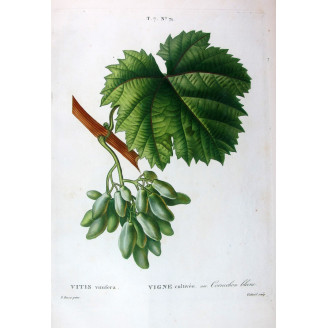
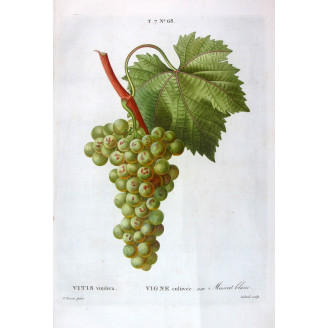
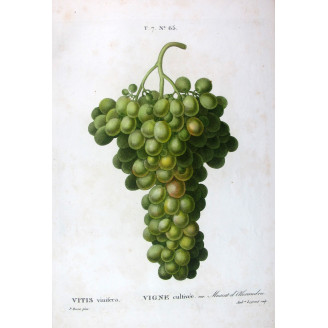
Original antique print of the common grape vine, Vitis vinifera, illustrated by Pancrace Bessa.
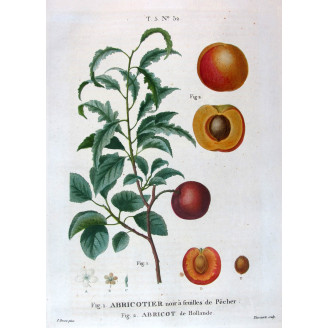
Dutch Apricot Abricot de Hollande Original hand-colored botanical engraving by Pancrace Bessa.
A sculptural study of cultivated fruit, defined by rounded volumes and restrained modelling, rendered with quiet elegance and visual balance.
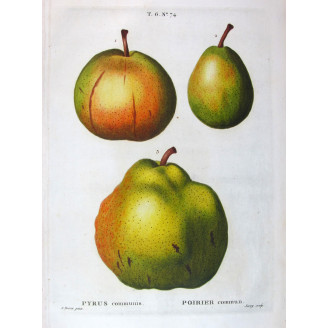
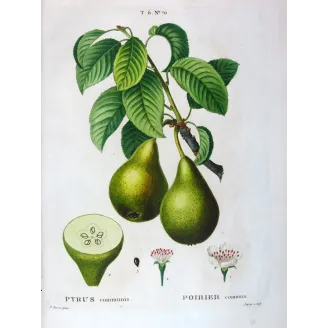
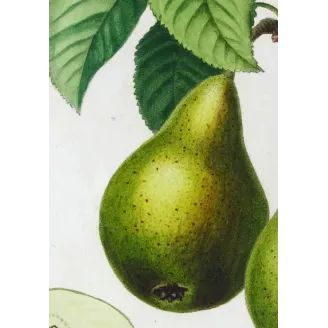
A refined early 19th-century botanical engraving depicting cultivated pear varieties (Pyrus communis), drawn by Pancrace Bessa and engraved for Arbres et Arbustes. Executed with restraint and clarity, the plate exemplifies the elegance of French pomological illustration, uniting scientific precision with a calm, decorative sensibility. The harmonious composition and subtle hand-colouring make it a timeless and highly collectible work.
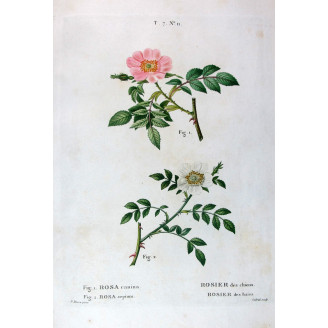
Dog Rose & Hedge Rose Rosier des chiens & Rosier des haies Original hand-colored botanical engraving by Pancrace Bessa.
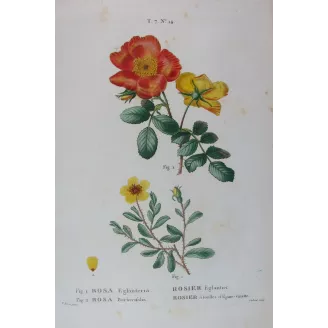
Eglantine & Berberis-leaved Rose Rosier à feuilles d'Épine-vinette Original hand-colored botanical engraving by Pancrace Bessa.
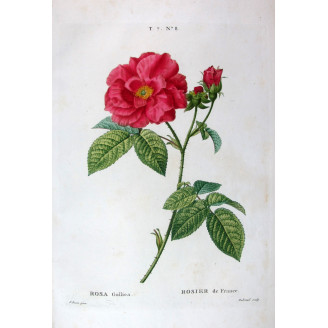
French Rose Rosier de France Original hand-colored botanical engraving by Pancrace Bessa.
A finely executed early 19th-century botanical engraving illustrating a cultivated apple variety (Malus communis), drawn by Pancrace Bessa for Arbres et Arbustes. The composition combines precise botanical observation with refined decorative balance, presenting fruit and foliage with clarity and quiet elegance. Exceptional hand-colouring and careful modelling reflect the sophistication of French pomological illustration at its height.
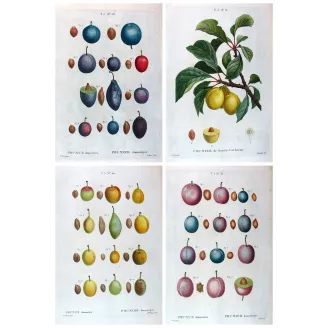
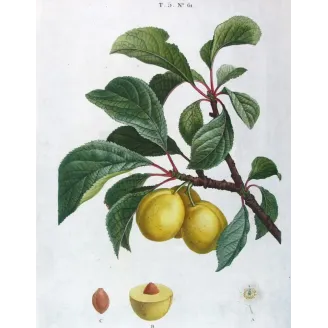
Botanical illustration of the Saint Catherine plum, a delicate fruit-bearing tree, by Pancrace Bessa.
Chinese Quince Coignassier de la Chine Original hand-colored botanical engraving by Pancrace Bessa.