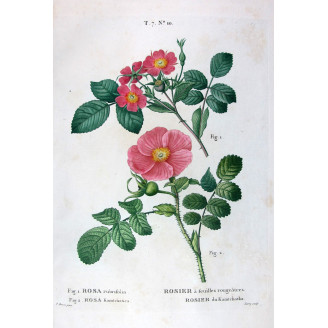
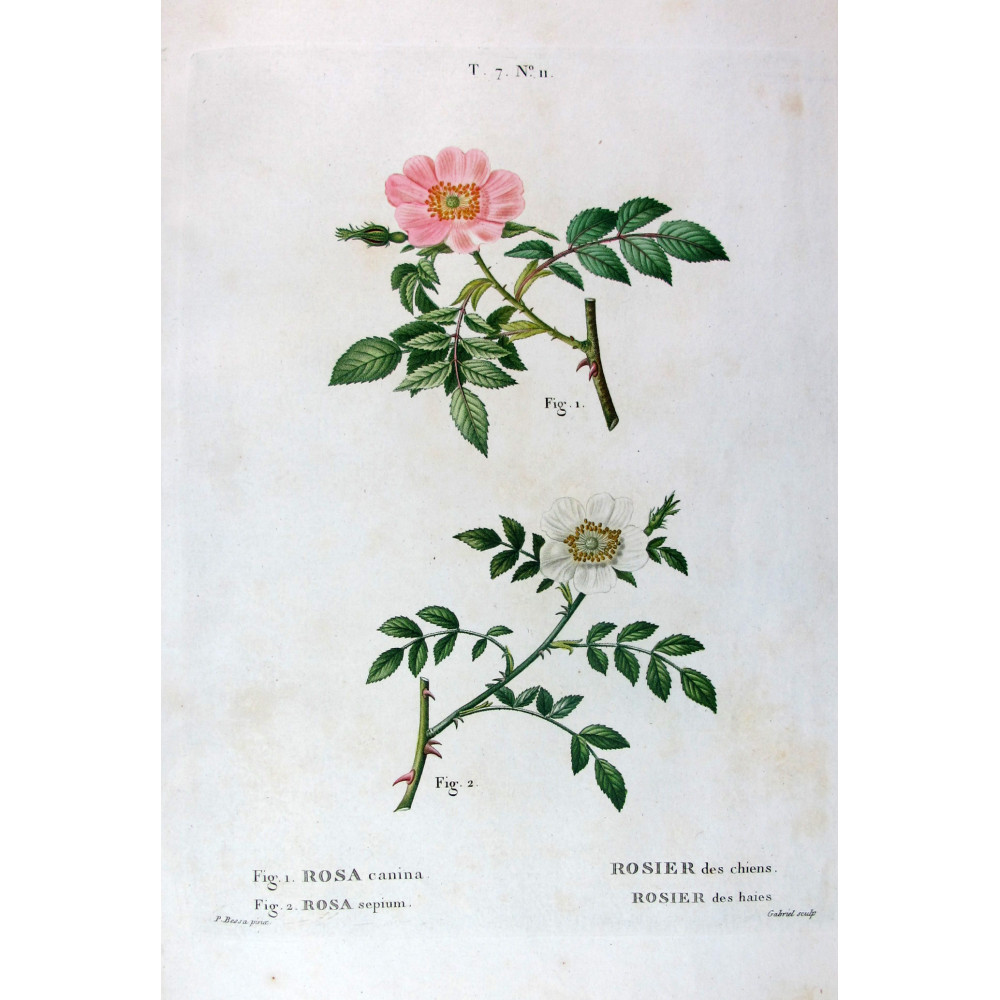
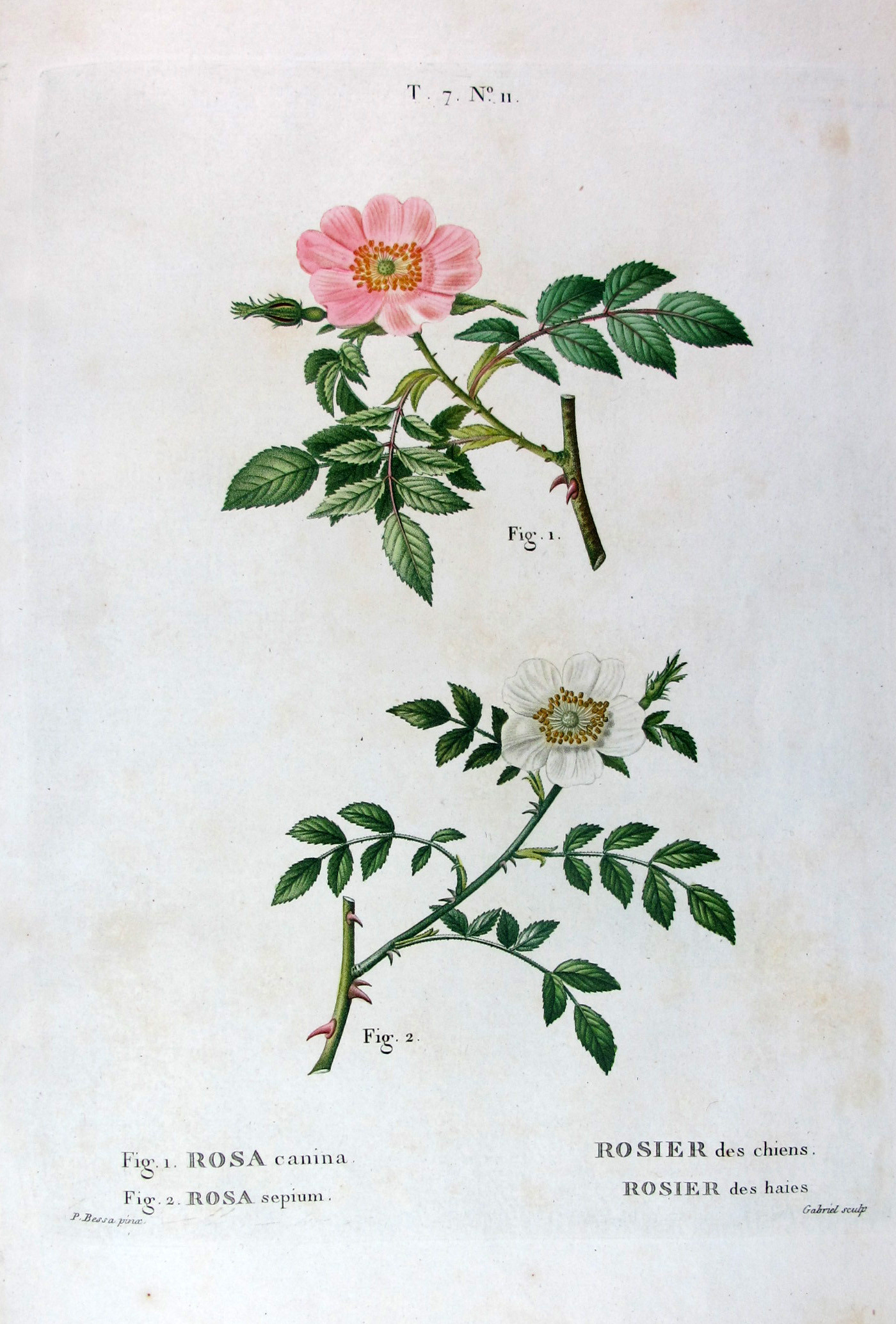
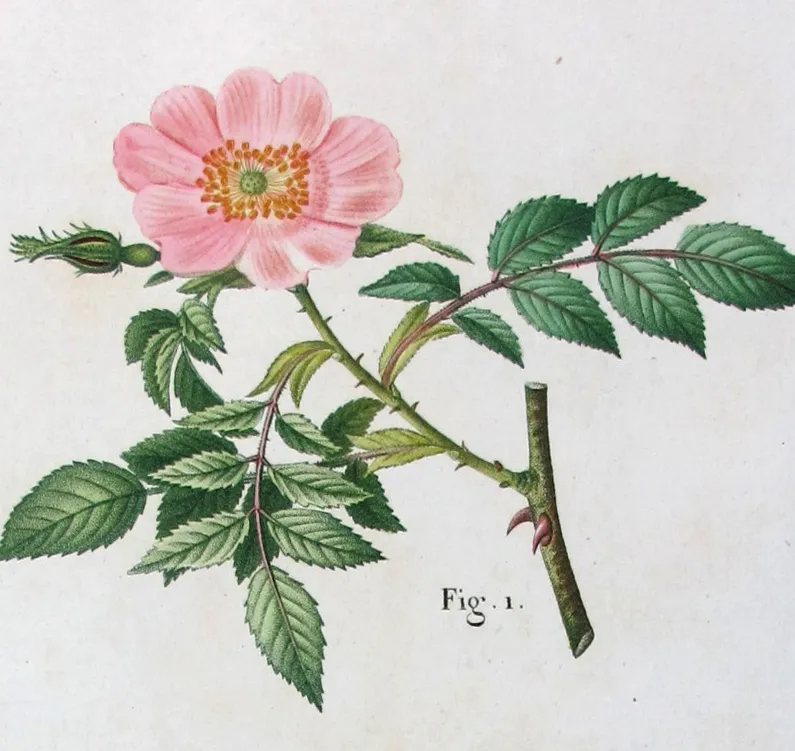
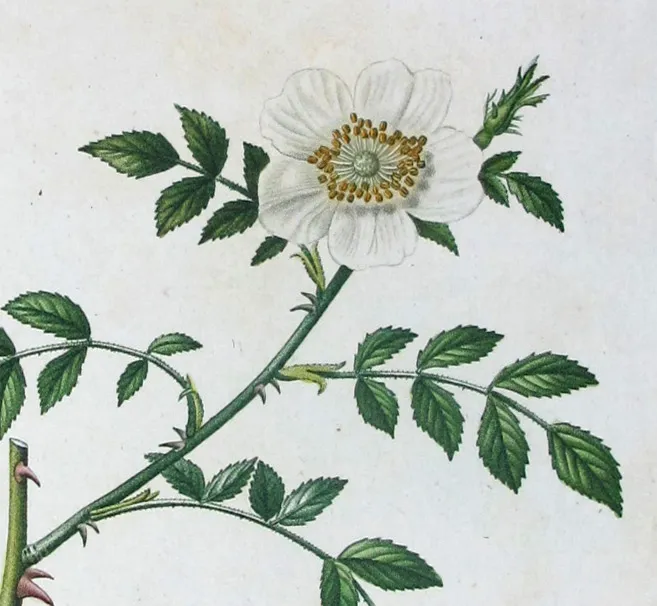
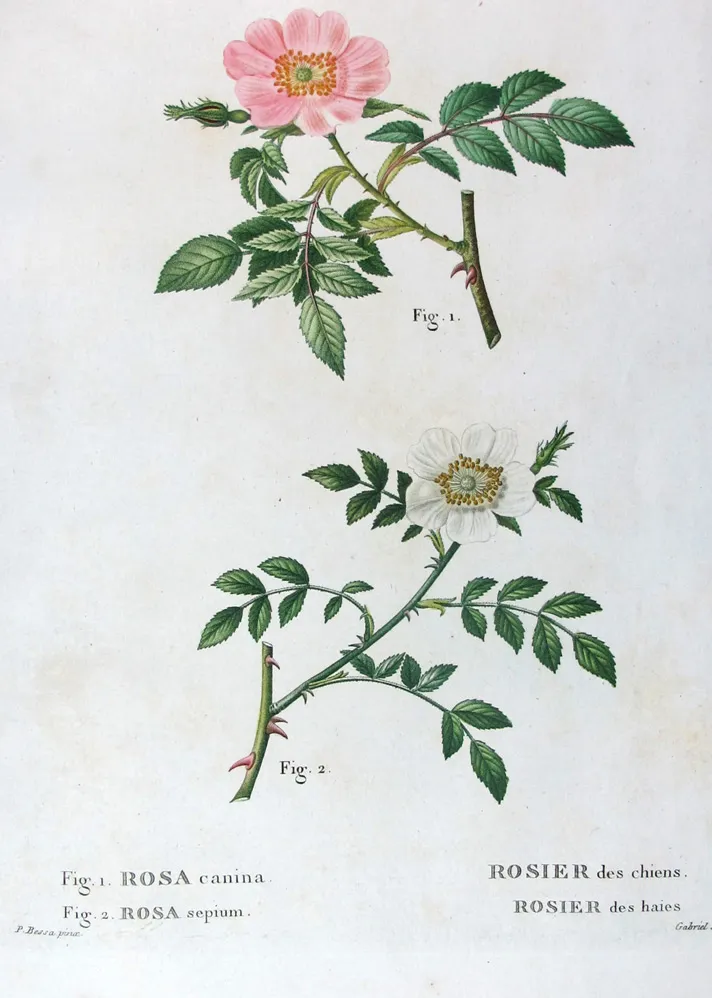
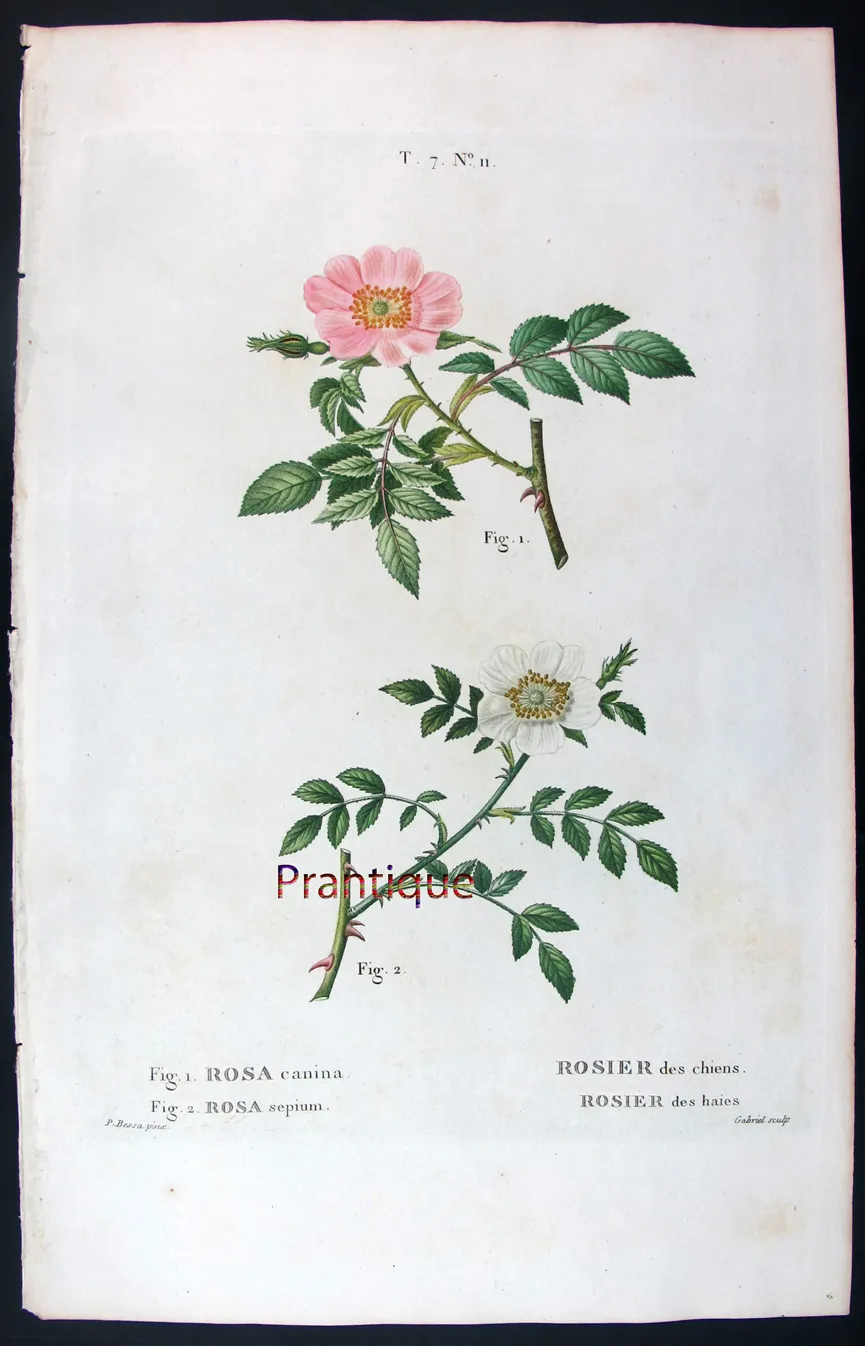
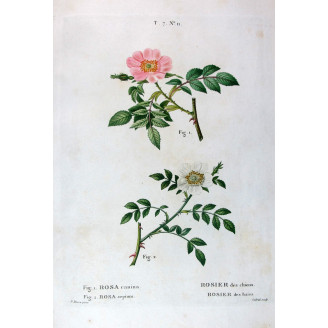

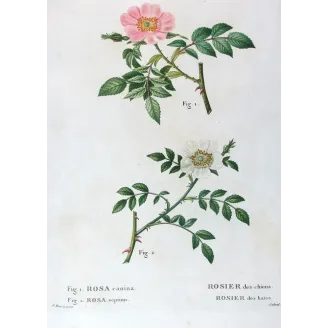
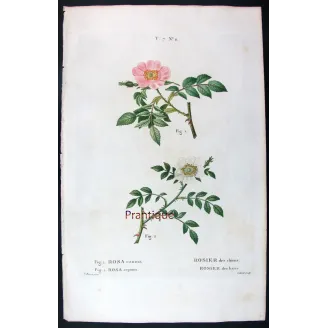
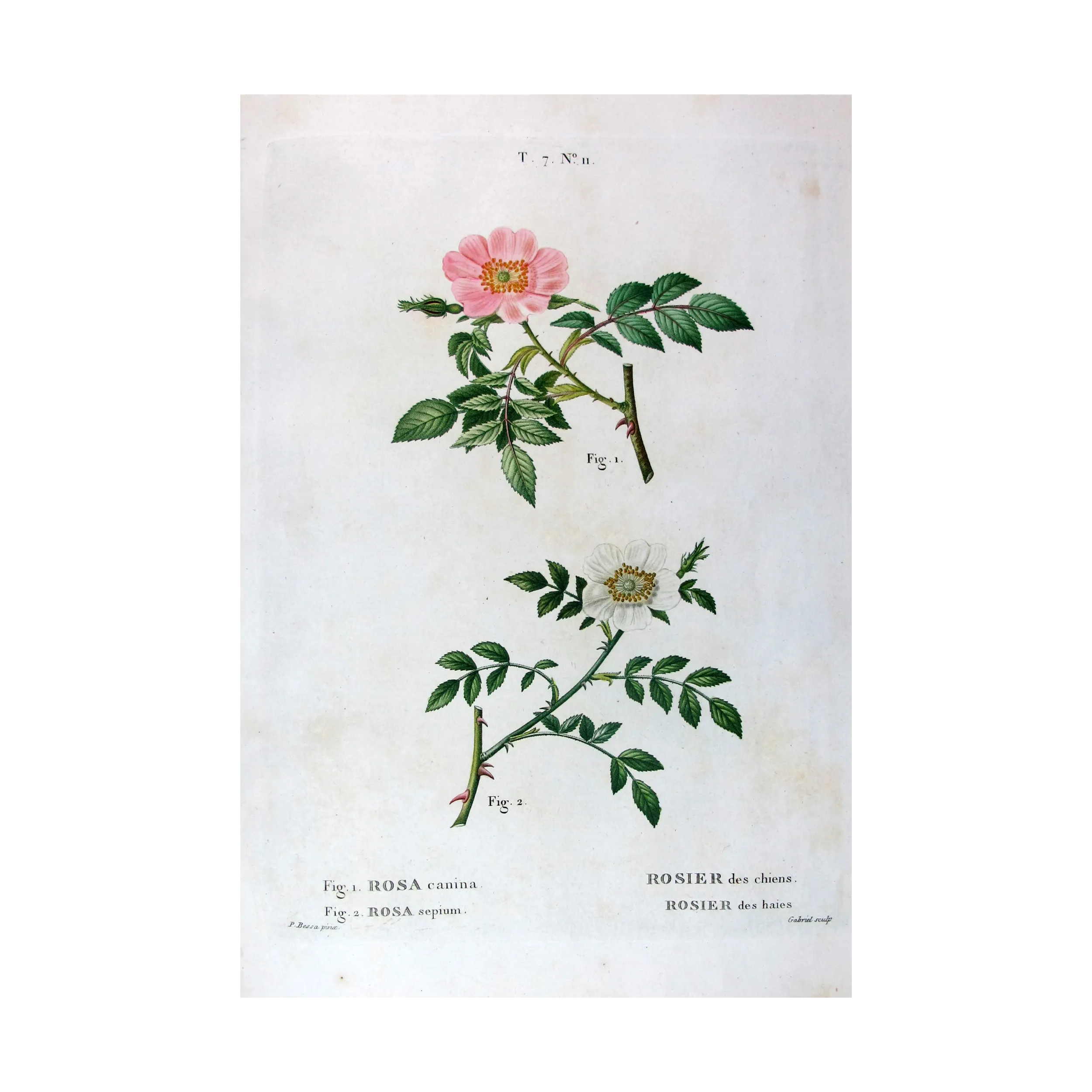
Dog Rose & Hedge Rose Rosier des chiens & Rosier des haies Original hand-colored botanical engraving by Pancrace Bessa.
 Delivery policy
Your print will be carefully prepared and shipped worldwide via trusted couriers (UPS or similar).
 Authentic antique prints
Original engravings from the 17th–19th century.
This original botanical engraving presents two related rose species, Rosa canina and Rosa sepium, depicted with clarity and restraint. Each figure is isolated and clearly articulated, allowing the viewer to observe differences in branching, foliage, and floral form without visual distraction.
Rather than emphasizing ornamental abundance, Bessa adopts a measured and analytical tone, privileging legibility and balance. The restrained compositions reflect a deliberate intent to document natural variation while maintaining a harmonious pictorial order.
The plate forms part of Arbres et Arbustes, one of the most important French botanical publications of the early nineteenth century, where Pancrace Bessa’s painterly discipline is applied with equal care to cultivated and wild botanical subjects.
— • —
The composition is structured vertically, with the two specimens arranged in a clear top-to-bottom relationship. Each branch is given ample surrounding space, reinforcing the analytical intent of the plate while preserving visual calm. The overall layout avoids overlap, enabling each figure to be read independently.
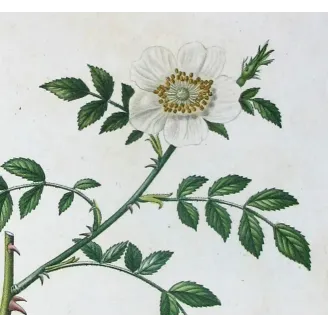
Hand-colouring is applied with restraint and precision. The soft pink and white blossoms provide gentle focal points, while the foliage is rendered in consistent green tones with crisp veining and serrated edges. The subdued palette contributes to the plate’s quiet authority, making it suitable for interiors oriented toward study, reflection, and natural history.
Rosa canina, commonly known as the dog rose, and Rosa sepium, often associated with hedgerows, are emblematic of wild European roses. Valued less for horticultural display than for their structural form and adaptability, these species were frequently included in botanical works to illustrate natural variation within the genus. Their inclusion in Arbres et Arbustes reflects the broader ambition of the publication to document both cultivated and naturally occurring plant forms.
The engraving is in very good antique condition. Light, even browning is present, consistent with the natural ageing of early nineteenth-century paper. No watermark has been observed. The original hand-colouring remains clean and well preserved, with clear definition in both floral and foliar elements. The image shows no significant losses or abrasions. The engraved credits “P. Bessa pinx.” and “Gabriel sculp.” are present, attesting to the original drawing by Pancrace Bessa and the engraving executed by Gabriel.
For further context on Pancrace Bessa and his distinctive contribution to French botanical illustration, see our editorial feature:
Specific References
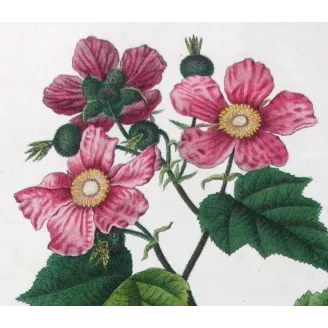
Illustration of the sweet-scented flowering bramble, Rubus odoratus, in full bloom.
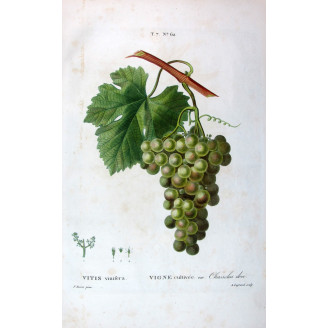
Depiction of golden grapes with vivid green leaves in fine detail.
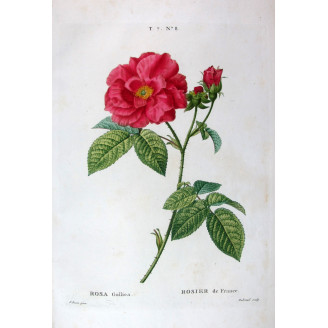
French Rose Rosier de France Original hand-colored botanical engraving by Pancrace Bessa.
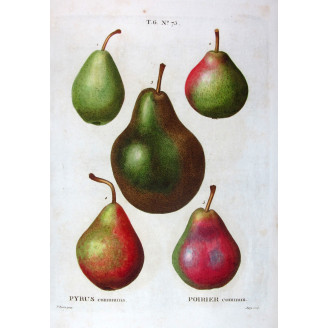
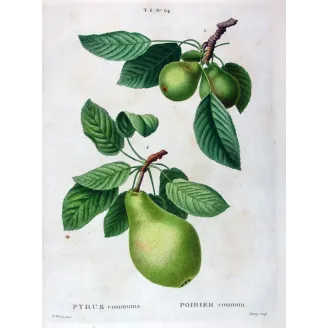
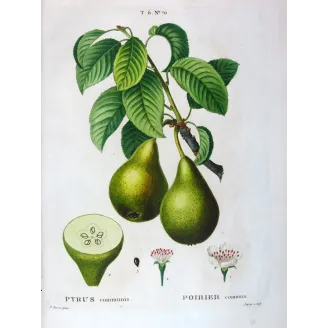
A refined study of cultivated pears, presenting five distinct fruit forms arranged in a balanced and harmonious composition. Subtle variations in shape, colour, and surface texture create a quiet visual rhythm, reflecting Pancrace Bessa’s ability to transform orchard subjects into works of enduring elegance.
A refined study of five historic pear cultivars, combining varietal precision with sculptural balance and luminous hand-colouring.
Kamchatka Rose Rosier du Kamchatka Original hand-colored botanical engraving by Pancrace Bessa.
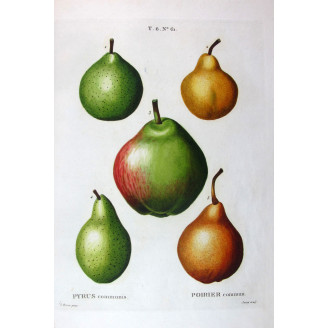
A refined early 19th-century botanical engraving depicting cultivated pear varieties (Pyrus communis), drawn by Pancrace Bessa and engraved for Arbres et Arbustes. Executed with restraint and clarity, the plate exemplifies the elegance of French pomological illustration, uniting scientific precision with a calm, decorative sensibility. The harmonious composition and subtle hand-colouring make it a timeless and highly collectible work.
A refined early 19th-century botanical engraving depicting cultivated pear varieties (Pyrus communis), drawn by Pancrace Bessa and engraved for Arbres et Arbustes. Executed with restraint and clarity, the plate exemplifies the elegance of French pomological illustration, uniting scientific precision with a calm, decorative sensibility. The harmonious composition and subtle hand-colouring make it a timeless and highly collectible work.
Dog Rose & Hedge Rose Rosier des chiens & Rosier des haies Original hand-colored botanical engraving by Pancrace Bessa.