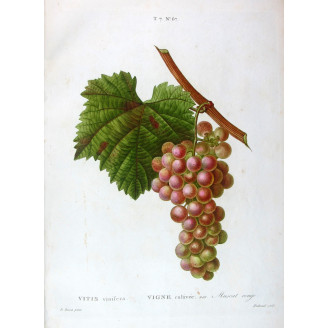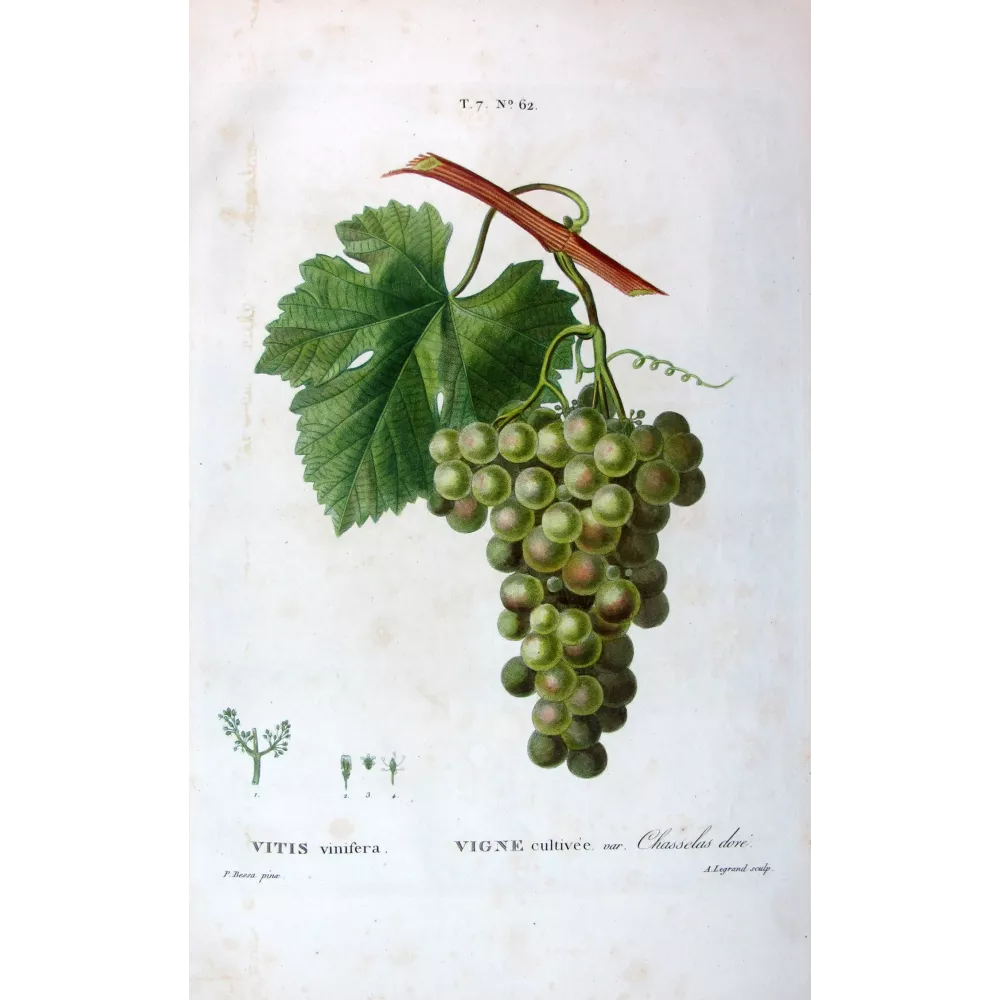
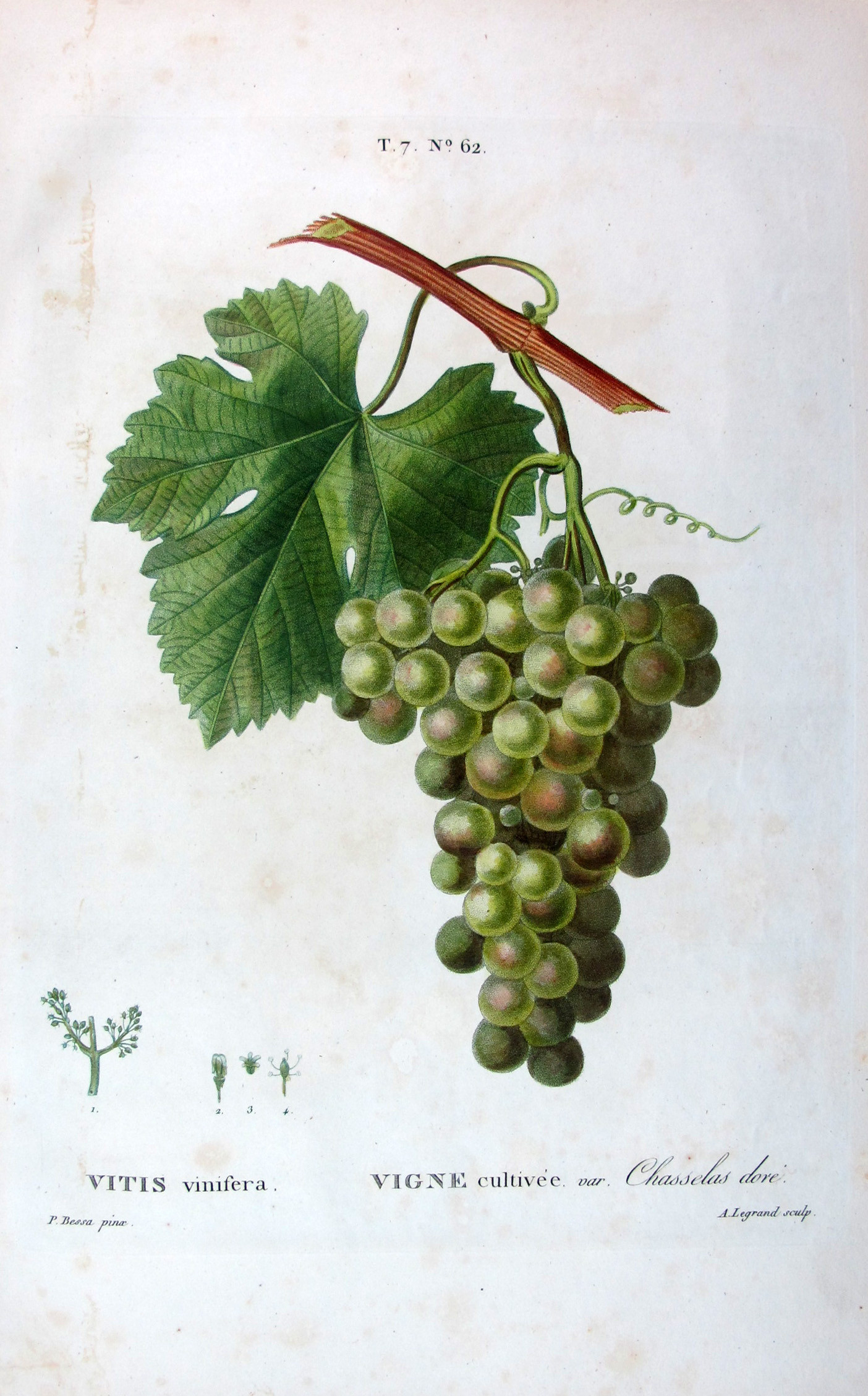
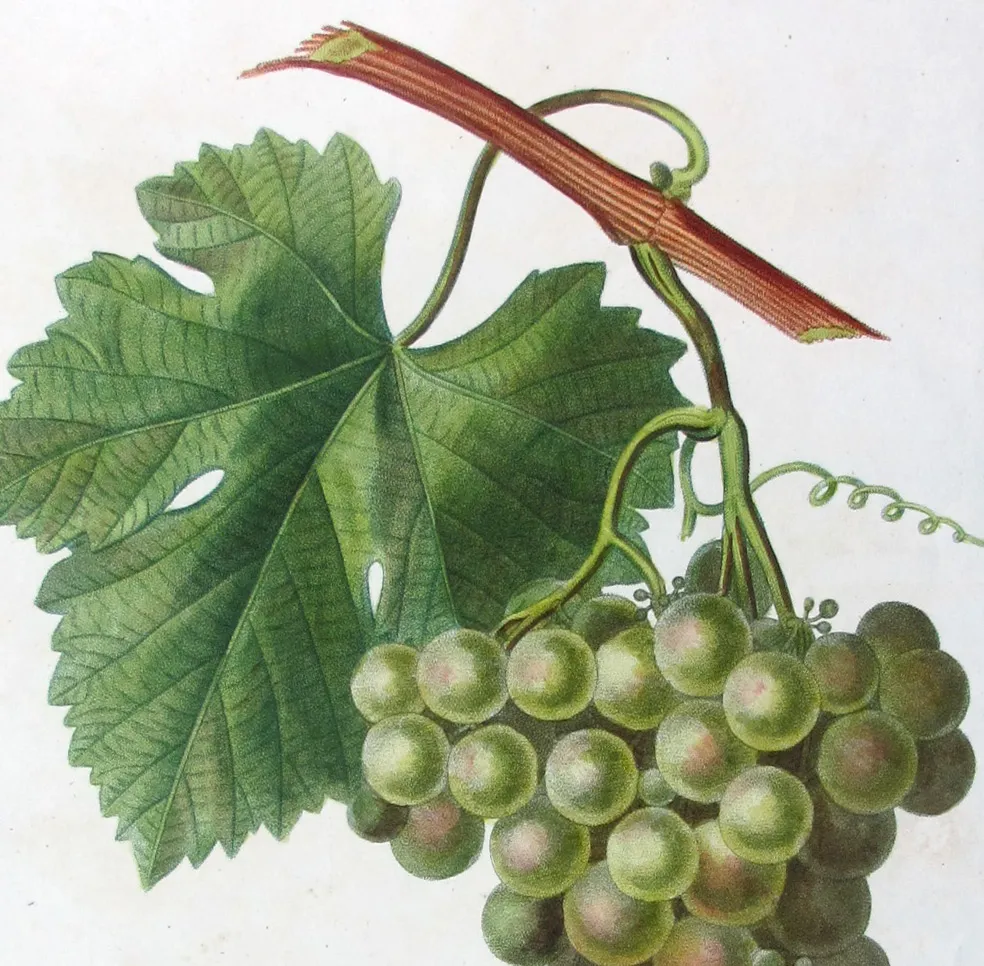
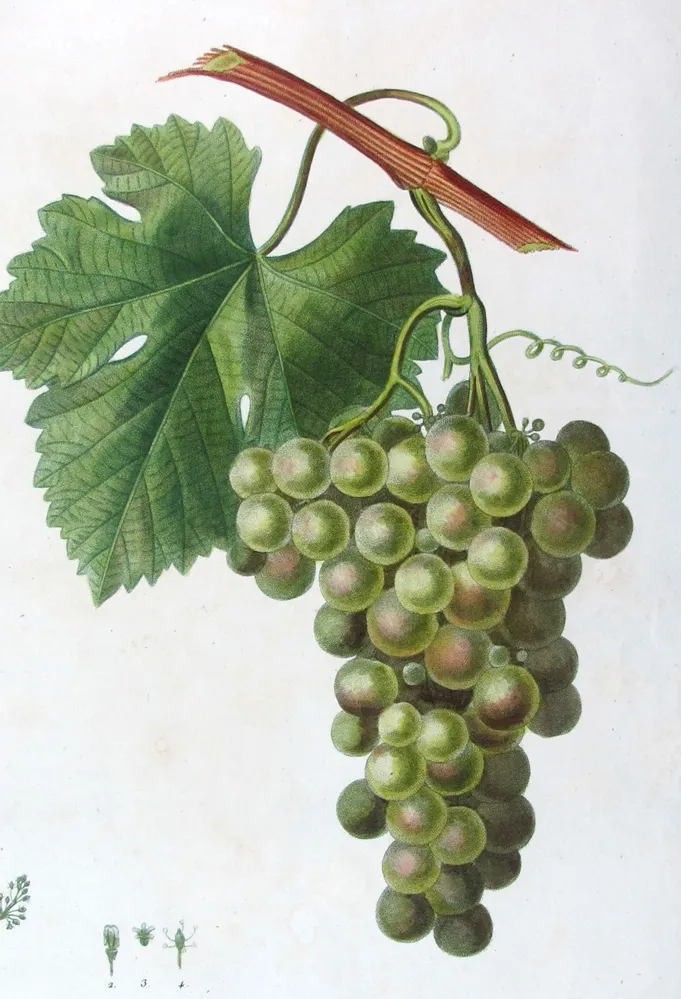

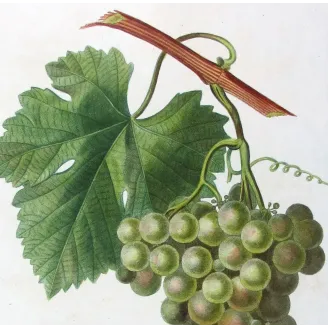
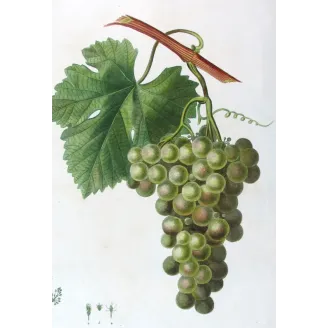
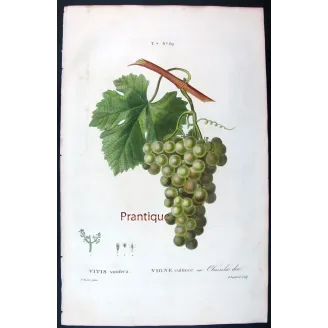
Depiction of golden grapes with vivid green leaves in fine detail.
 Delivery policy
Your print will be carefully prepared and shipped worldwide via trusted couriers (UPS or similar).
 Authentic antique prints
Original engravings from the 17th–19th century.
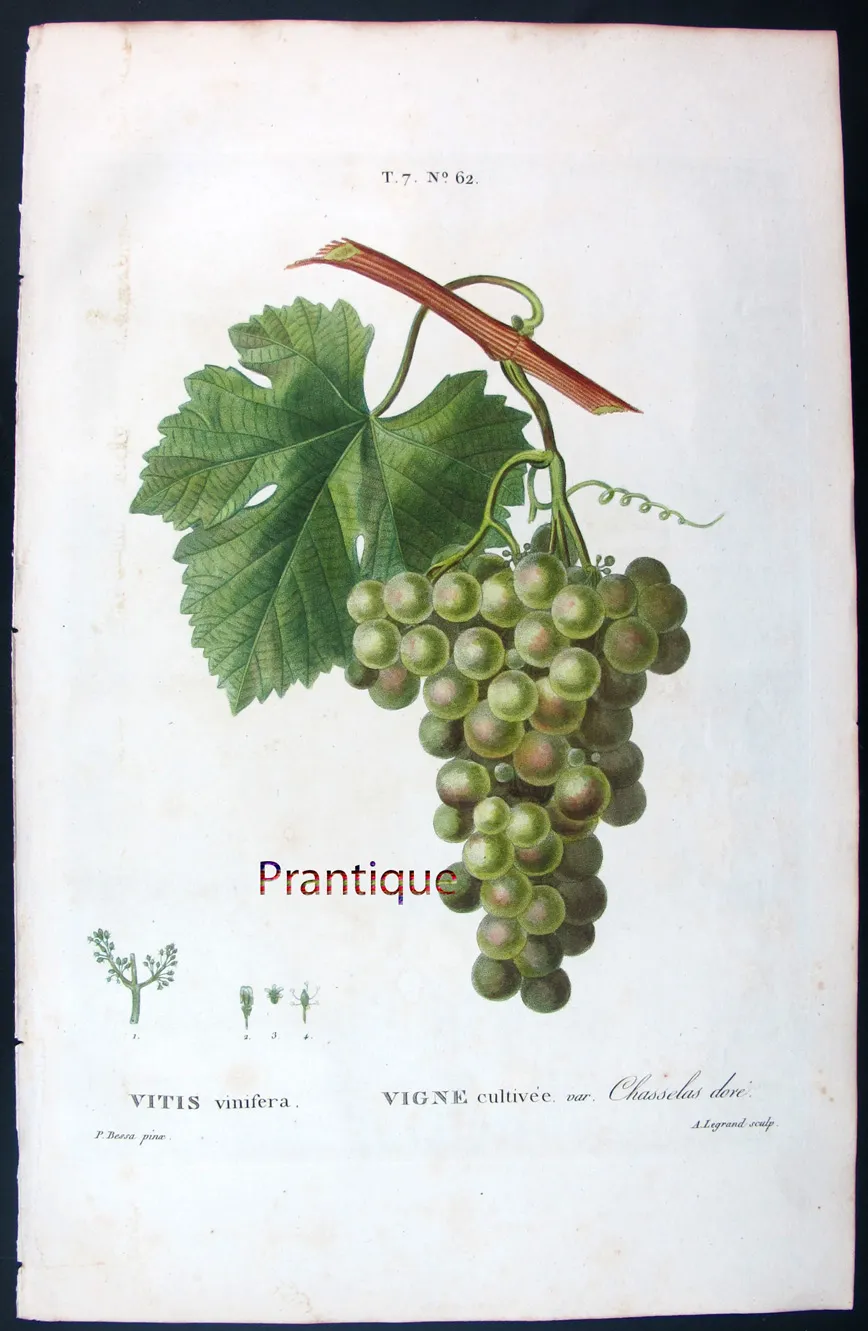
This original early 19th-century botanical engraving depicts Vitis vinifera as a cultivated French variety identified in the plate as Chasselas doré. The composition presents a single grape cluster suspended beneath a broad vine leaf, accompanied by small auxiliary studies illustrating stages of growth and floral structure.
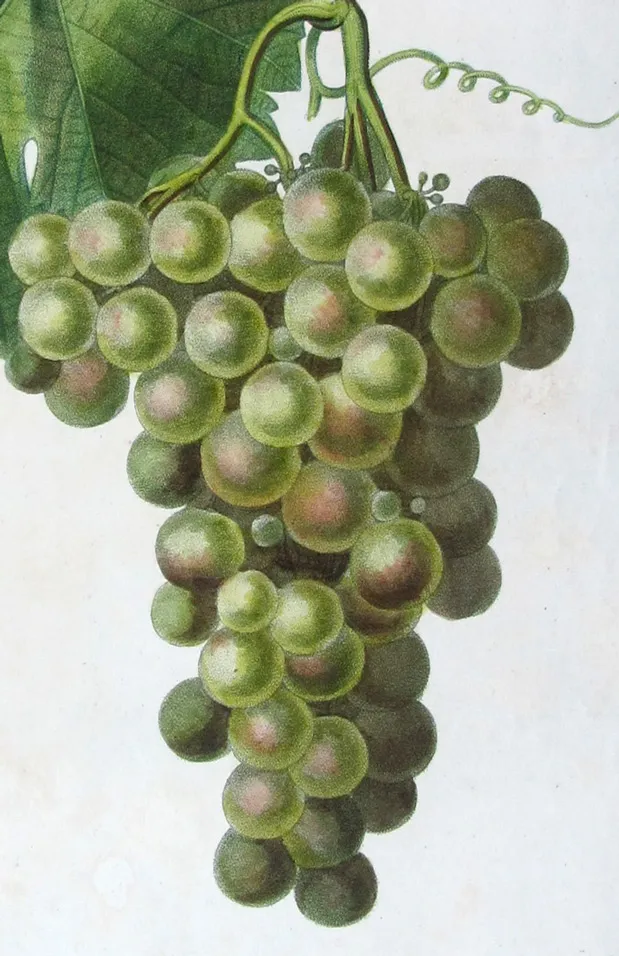
Pancrace Bessa renders the fruit with a restrained, natural palette dominated by soft green and golden hues, subtly warmed by delicate blush tones. The grapes are rounded and gently modelled, conveying ripeness without excess, while the large leaf above provides a strong structural counterpoint.
Issued as part of Arbres et Arbustes, this plate reflects the period’s dual interest in visual harmony and botanical instruction, combining an appealing orchard subject with informative secondary details.
— • —
The composition is balanced around a gentle diagonal movement, with the cluster descending in a compact form and the leaf acting as a broad visual anchor. The repetition of rounded grapes creates a calm rhythm, softened by slight variations in size and tone.
Fine stipple engraving and controlled hand-colouring give the fruit a softly luminous presence. The overall effect is understated and elegant, favouring botanical clarity over dramatic contrast.
The plate is identified in the original publication as a cultivated grapevine variety:
Chasselas varieties were widely cultivated for their balanced flavour and visual appeal, and this plate documents the golden-toned form with clarity and restraint.
The engraving is in good antique condition. Light toning is present in several areas, with more noticeable toning along the left margin. These age-related marks do not affect the printed image itself and are consistent with an early 19th-century work on original paper. The hand-colouring remains intact. No watermark has been observed. The engraved credits “P. Bessa pinx.” and “A. Legrand sculp.” are present.
For insight into Pancrace Bessa’s distinctive hand-colouring techniques, see our editorial feature on Pancrace Bessa:
Specific References
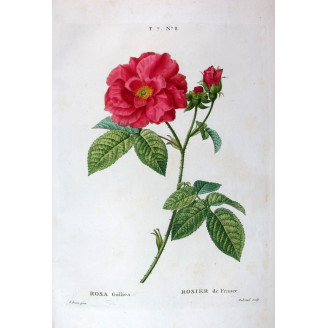
French Rose Rosier de France Original hand-colored botanical engraving by Pancrace Bessa.
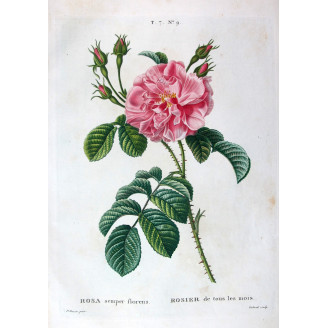
Monthly Rose Rosier de tous les mois Original hand-colored botanical engraving by Pancrace Bessa.
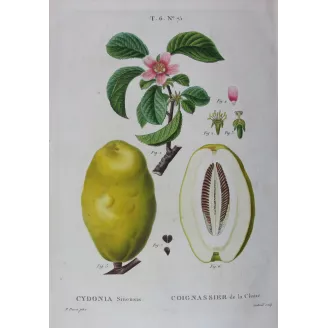
Chinese Quince Coignassier de la Chine Original hand-colored botanical engraving by Pancrace Bessa.
Kamchatka Rose Rosier du Kamchatka Original hand-colored botanical engraving by Pancrace Bessa.
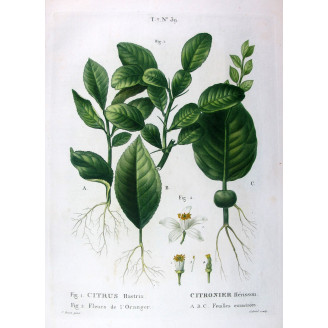
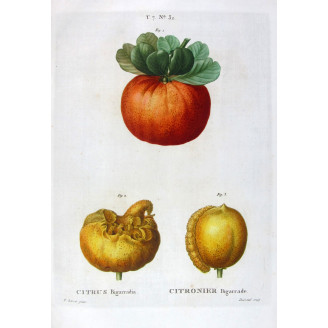
A coherent ensemble of eight original orange and bigarade engravings by Pancrace Bessa, reflecting the cultivated discipline of French orangeries in the Napoleonic era. Botanical precision and architectural composure unite in a refined citrus portfolio preserved as a complete series.
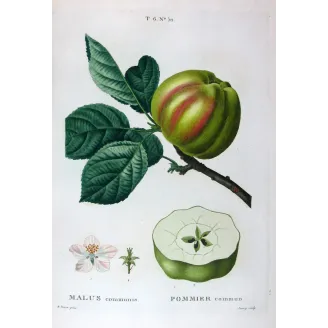
A finely executed early 19th-century botanical engraving illustrating a cultivated apple variety (Malus communis), drawn by Pancrace Bessa for Arbres et Arbustes. The composition combines precise botanical observation with refined decorative balance, presenting fruit and foliage with clarity and quiet elegance. Exceptional hand-colouring and careful modelling reflect the sophistication of French pomological illustration at its height.
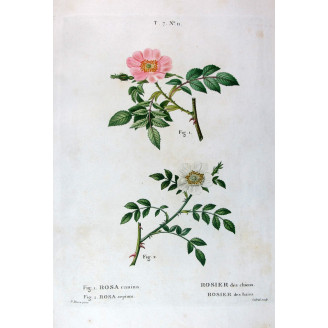
Dog Rose & Hedge Rose Rosier des chiens & Rosier des haies Original hand-colored botanical engraving by Pancrace Bessa.
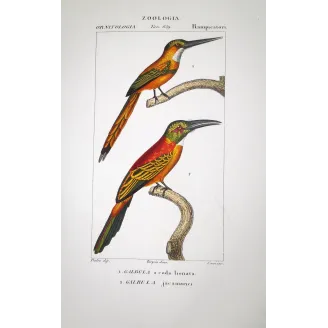
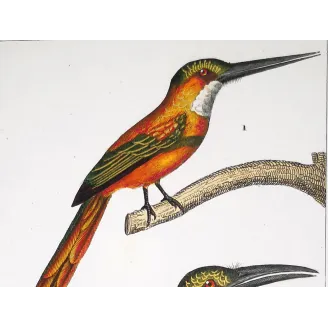
Two vibrant Jacamar birds with metallic plumage and long sharp beaks on stylized branches.
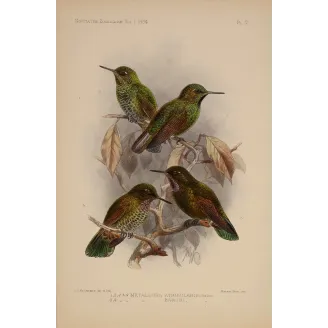
Original hand-coloured lithograph by John Gerrard Keulemans from Novitates Zoologicae, Volume I, Plate IV, published in 1894. Four closely related metaltail hummingbirds are arranged as a comparative study of shared structure and subtle variation, with selective gum arabic visible across the bodies of all four subjects. Printed by Mintern Bros. on substantial wove paper and preserved in very good condition.
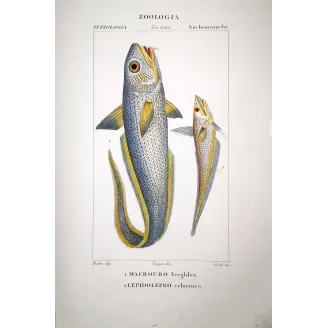
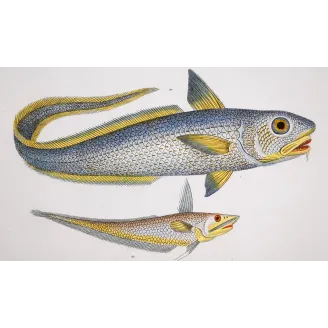
Grenadier and Ribbonfish illustrated with refined color balance and elegant detail.
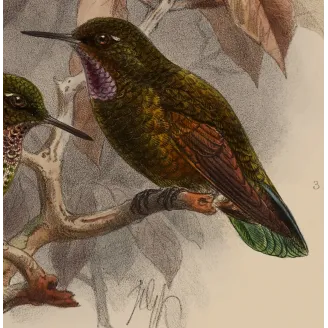
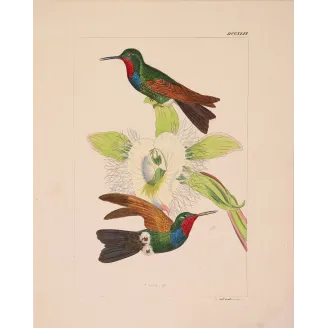
Original nineteenth-century hand-colored engraving depicting the Purple-throated Carib (Eulampis jugularis), one of the most spectacular Caribbean hummingbirds illustrated in Ludwig Reichenbach’s Trochilinarum Enumeratio.
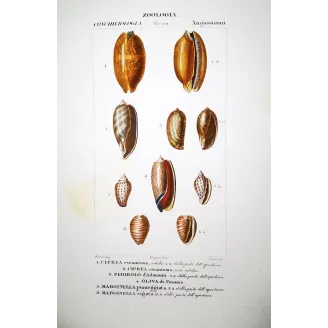
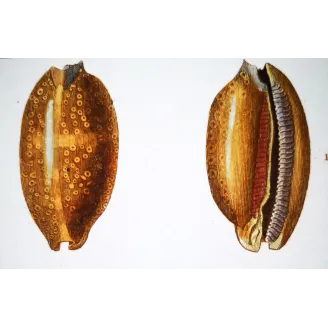
Fine antique print of Ciprea, Peribolo, Marginella highly decorative sea shells by Prêtre.
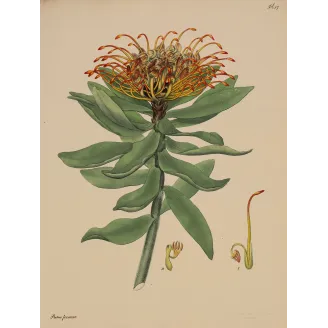
An original hand-coloured copper engraving of Protea formosa, published by Henry Charles Andrews in The Botanist's Repository (1799). Distinguished by its spectacular upward flowering styles, exceptionally delicate watercolour and refined botanical execution, this plate represents one of the most elegant Protea engravings of the series.
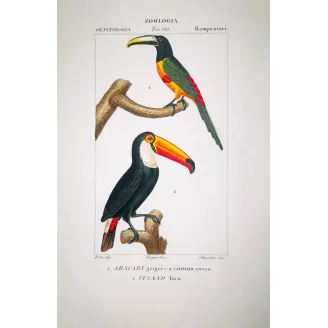
Colored illustration depicting two South American toucans: the Toco and the Red-belted Aracari.
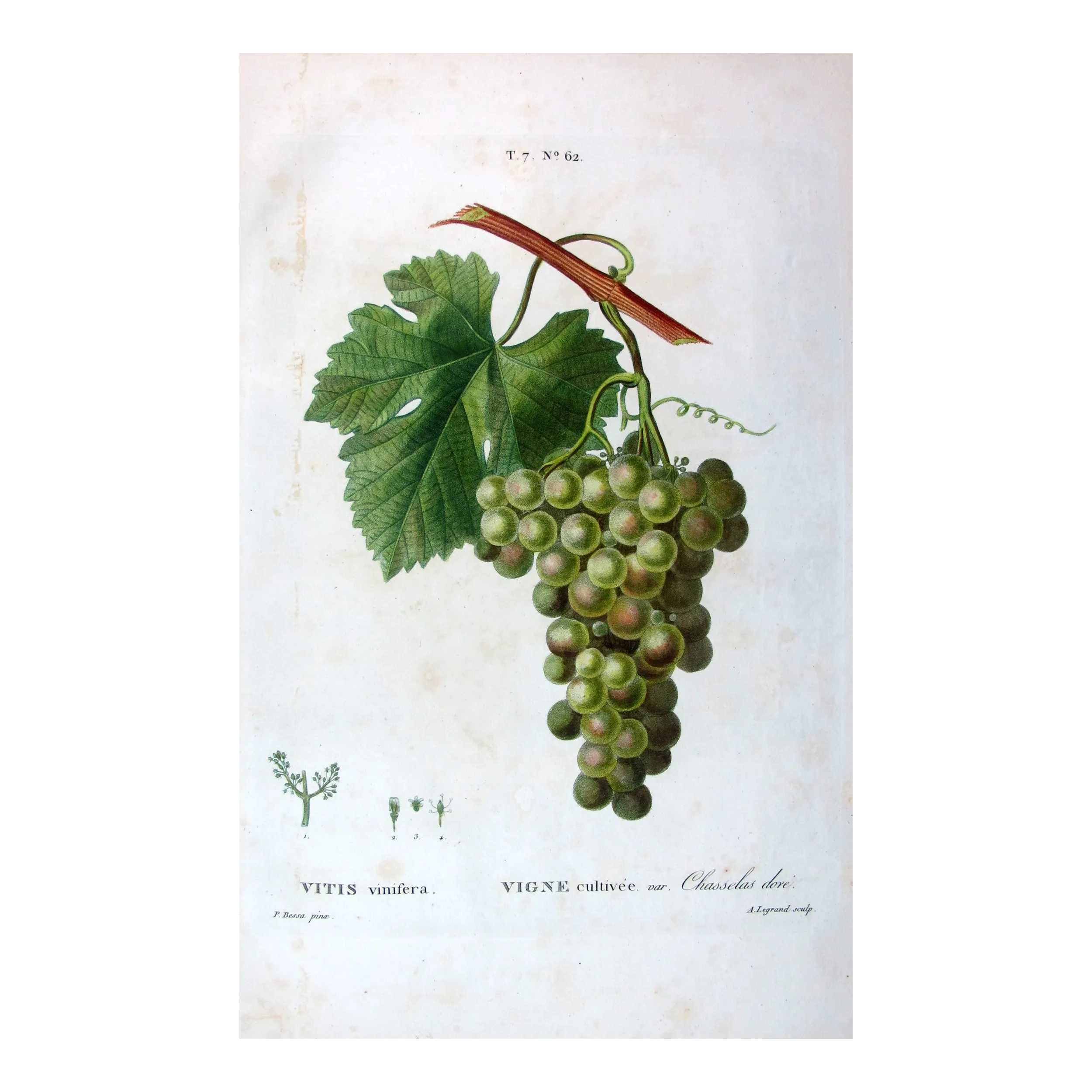
Depiction of golden grapes with vivid green leaves in fine detail.