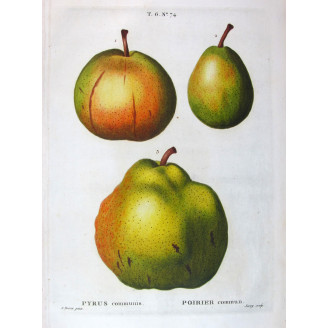
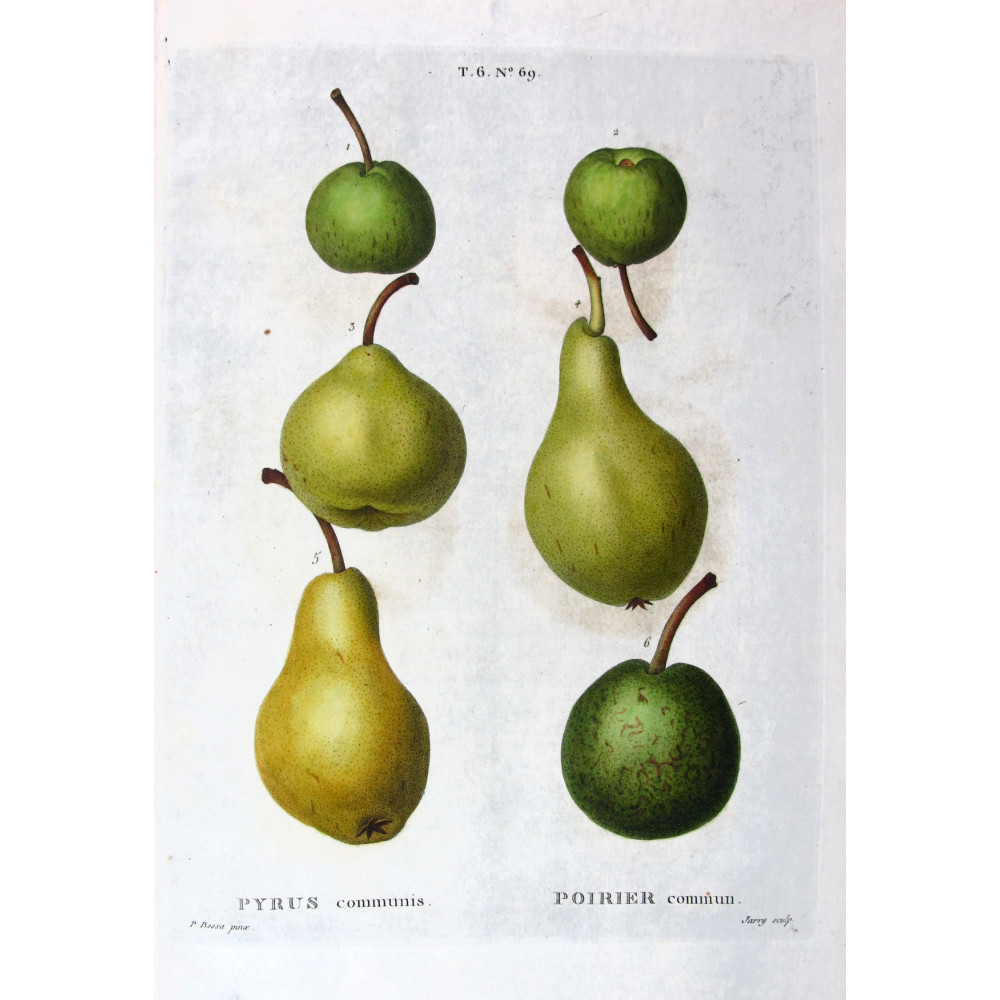
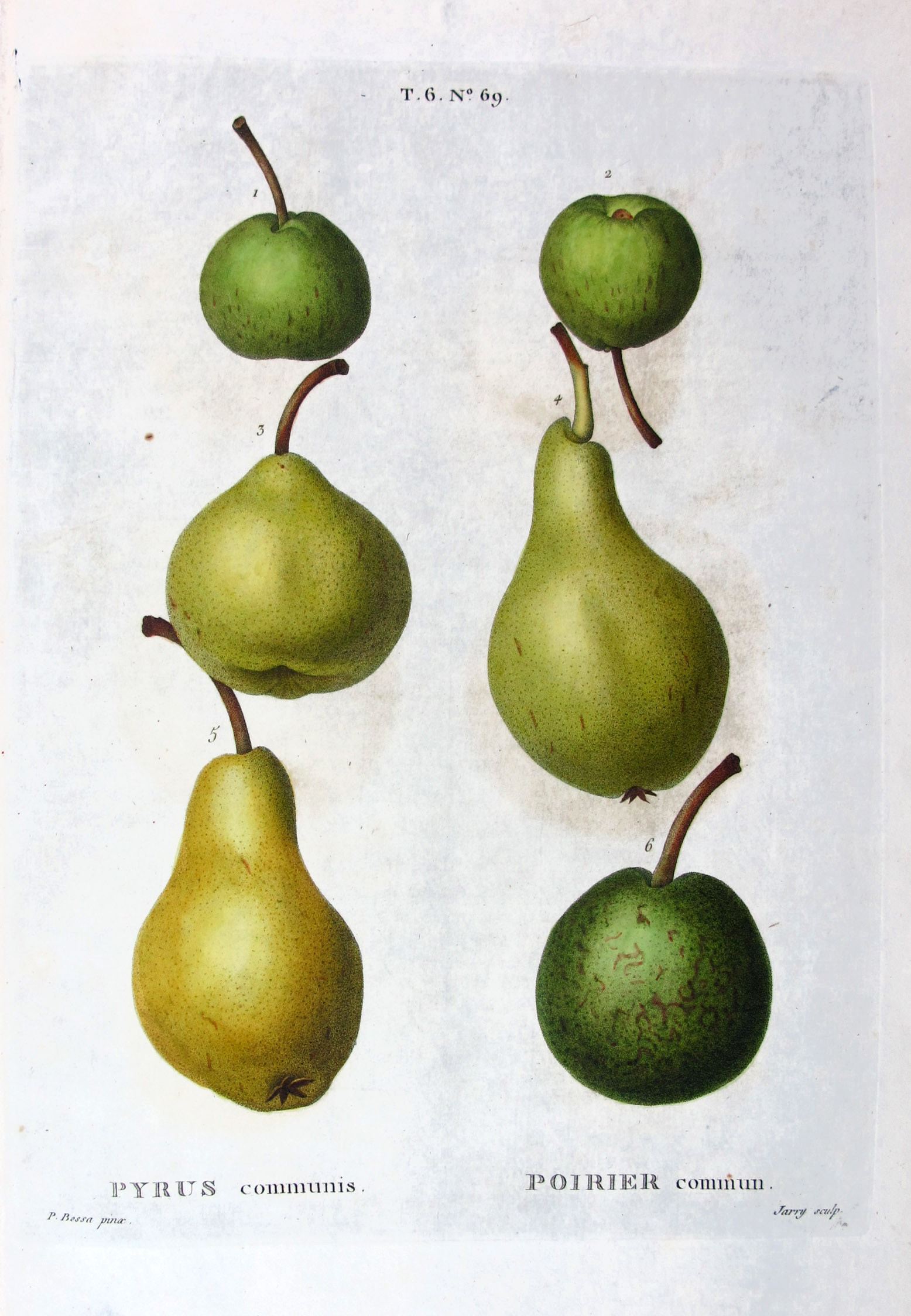

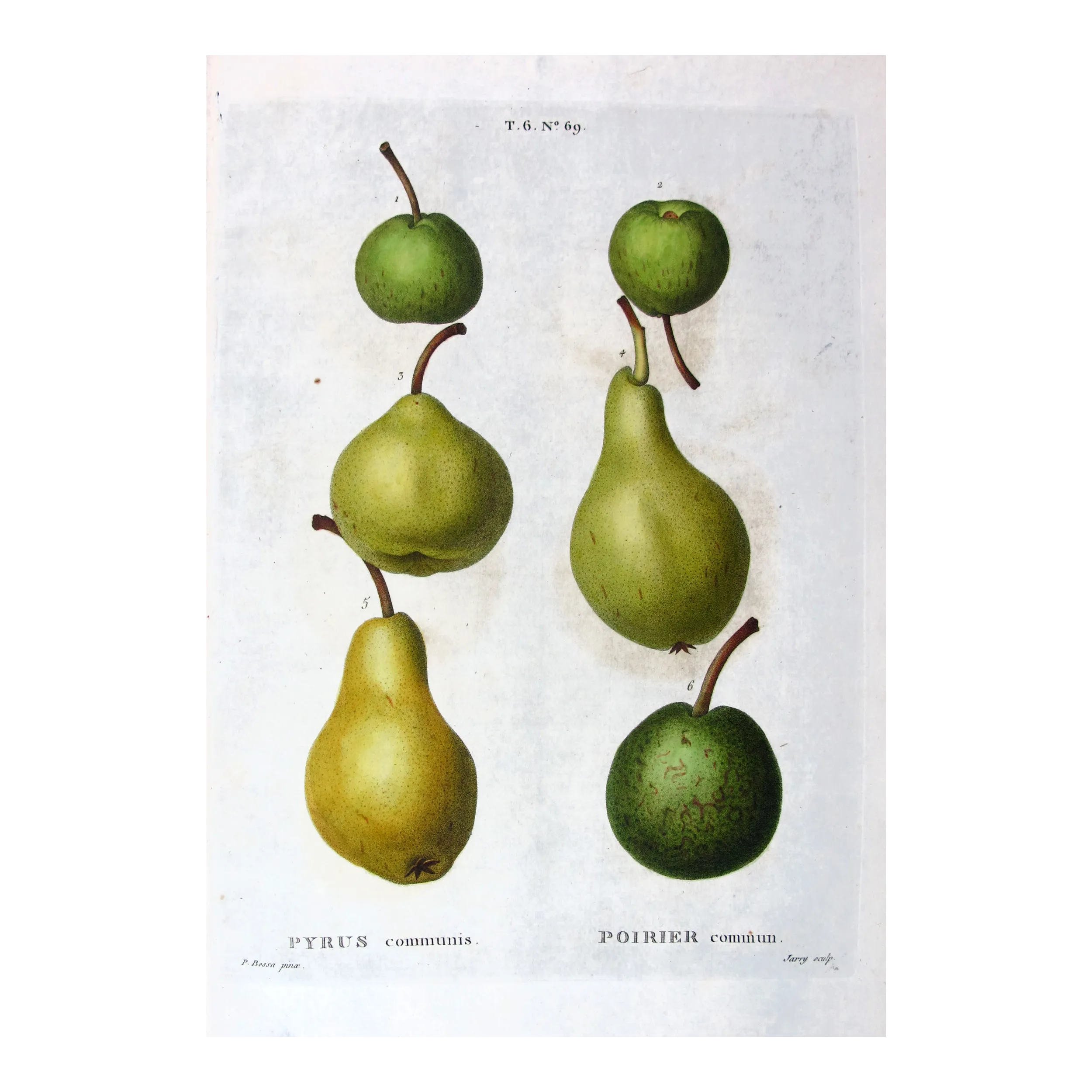
A soft palette of yellow and green in pear and apple forms.
 Delivery policy
Your print will be carefully prepared and shipped worldwide via trusted couriers (UPS or similar).
 Authentic antique prints
Original engravings from the 17th–19th century.
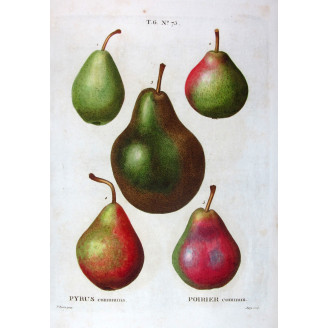
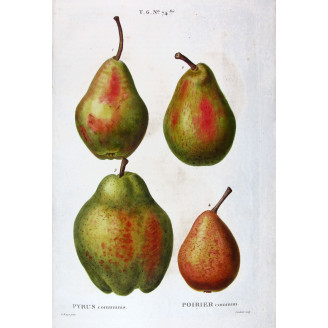
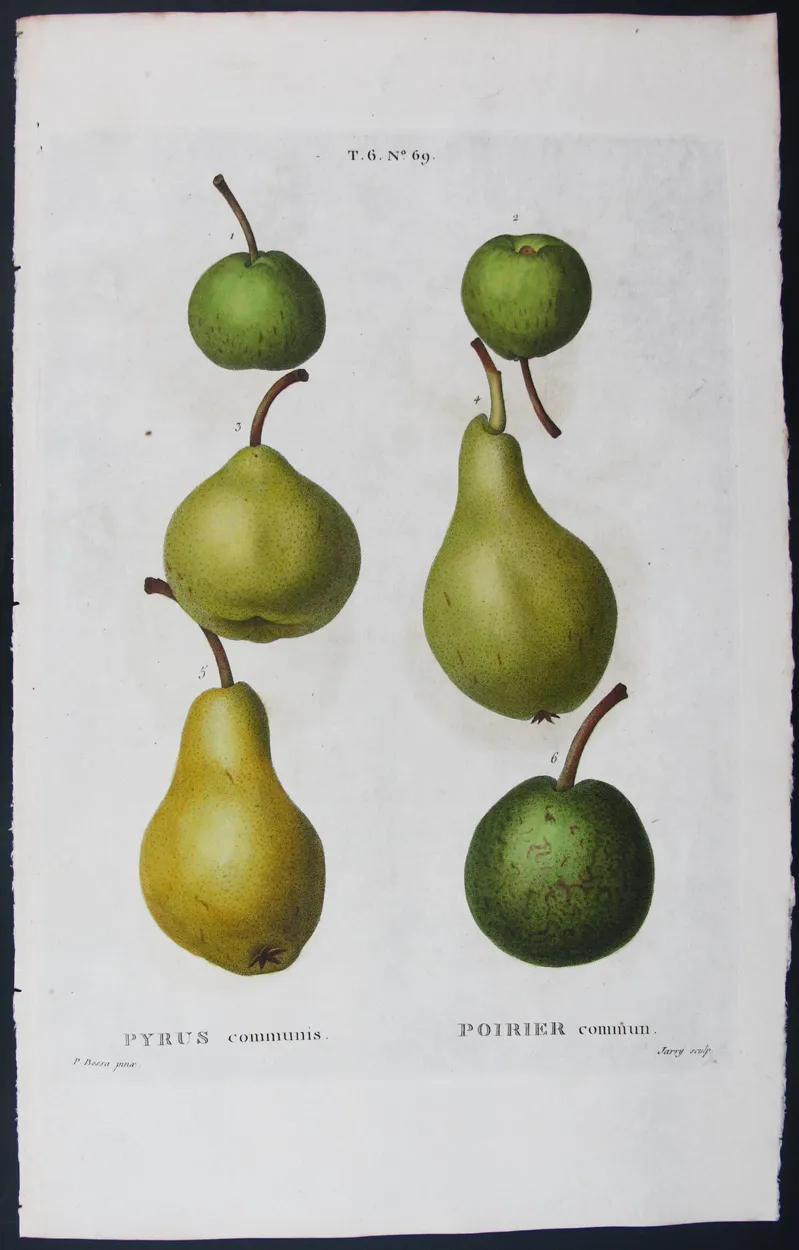
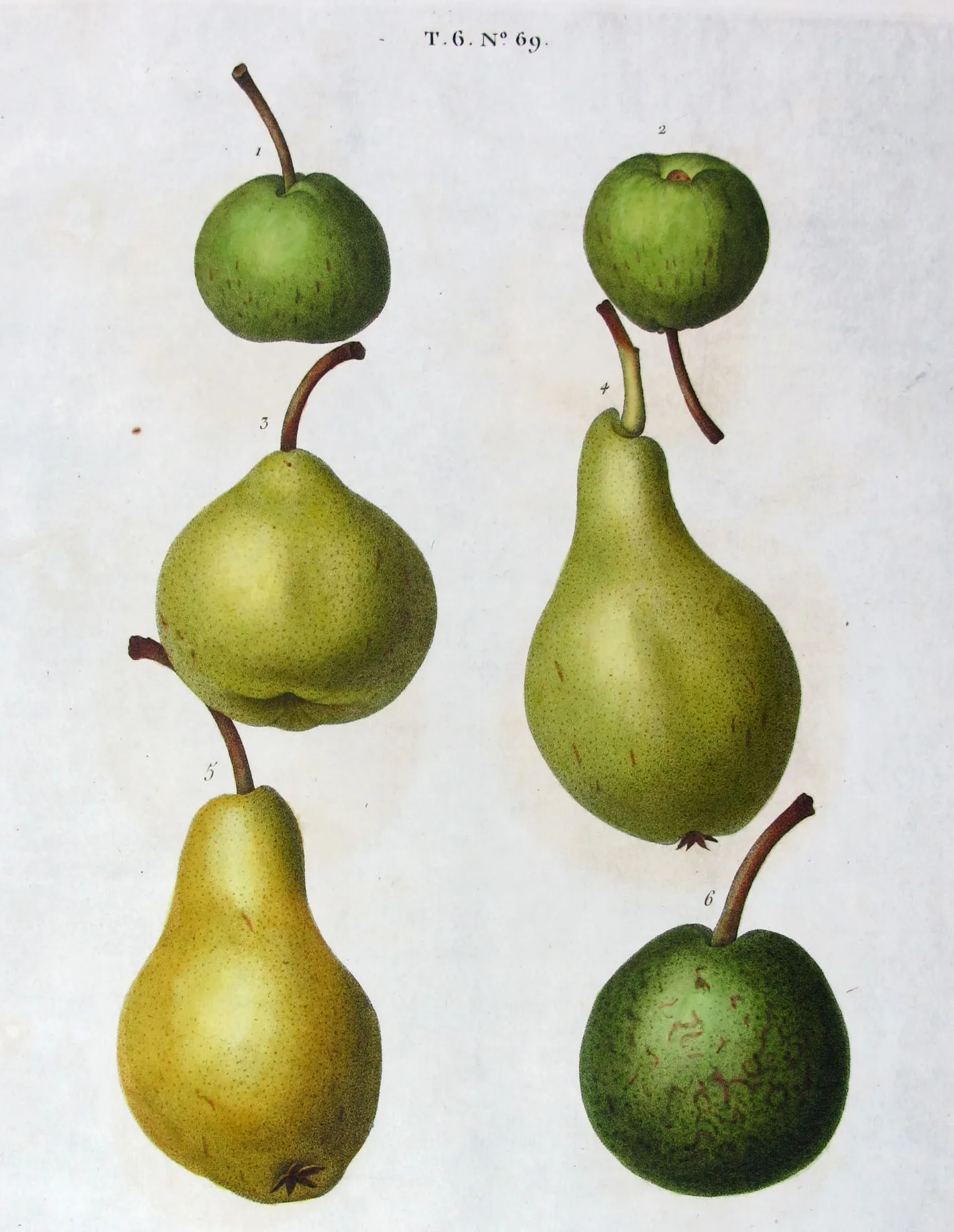
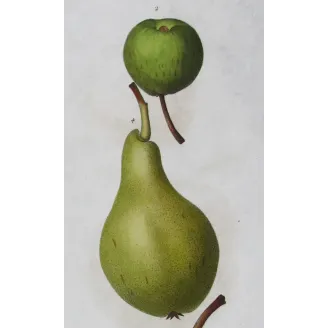
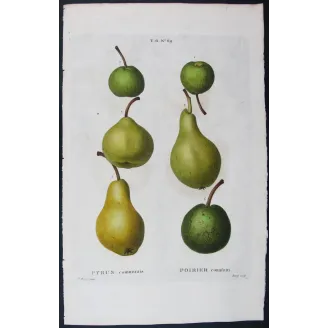
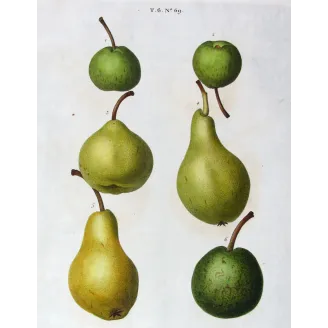
This original early 19th-century botanical engraving presents Pyrus communis (common pear) as a suite of cultivated varieties, each fruit isolated against generous white space. The composition feels almost modern in its restraint: six pears—some round and apple-like, others elongated and softly tapered—are arranged as a balanced “study wall” of orchard forms.
Pancrace Bessa’s hand-colouring is especially refined here, building volume through discreet tonal transitions rather than theatrical contrast. The palette stays deliberately natural—fresh greens, pale yellow-golds, and muted olive notes—so the silhouettes and surface texture become the true subject. The result is quietly decorative and remarkably versatile for interiors, from kitchens and dining rooms to studies and libraries.
Issued as part of Arbres et Arbustes, this plate reflects the period’s cultivated orchard culture, where fruit varieties were documented with the same seriousness given to ornamental species—an elegant meeting of botanical observation and domestic taste.
— • —
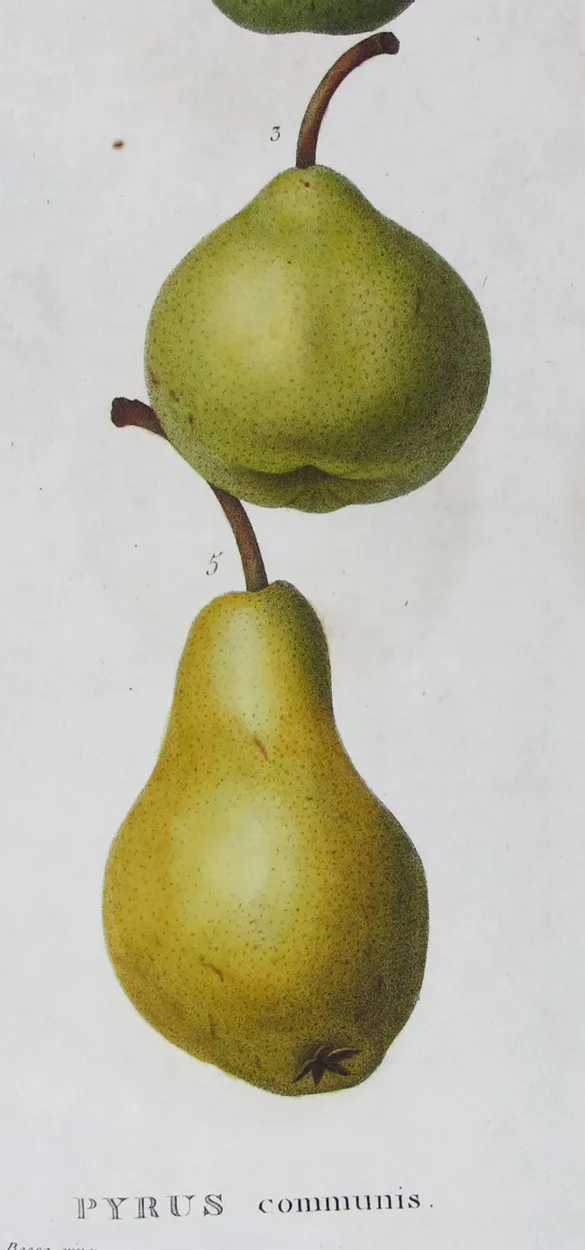
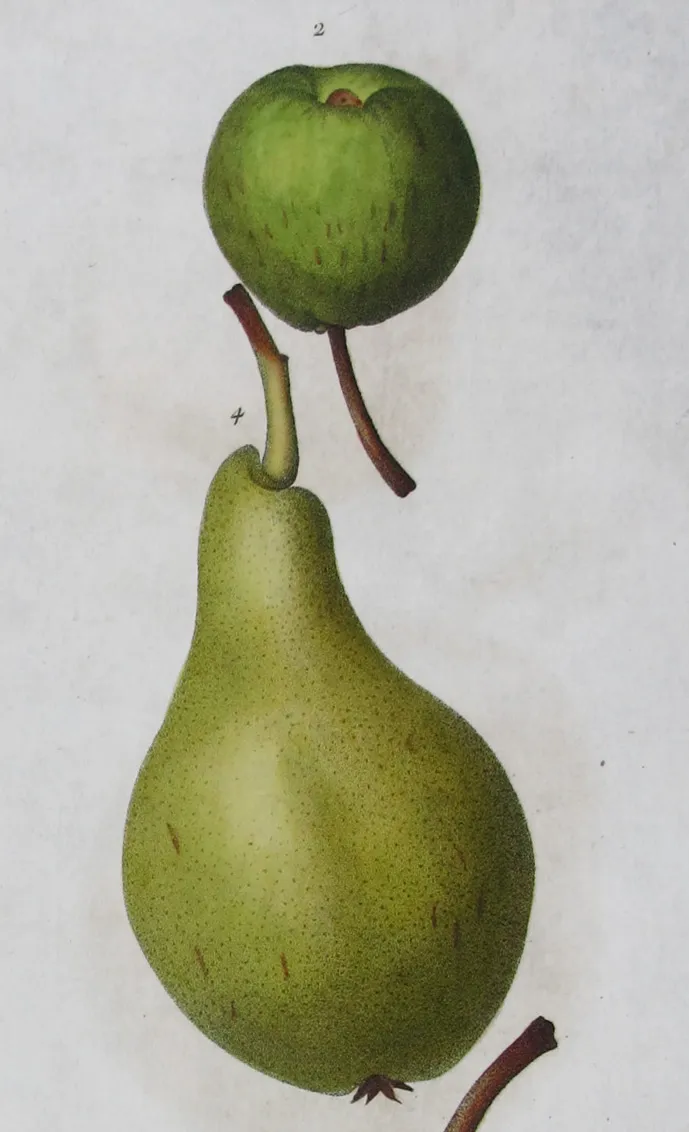
The plate is built around a pleasing rhythm of round and elongated forms: two compact fruits at the top, a broader pear and a tall, sculptural pear anchoring the middle, and two contrasting studies below—one warm-toned and one deep green with a more complex surface character. This variation creates movement without clutter, giving the engraving a gallery-like clarity.
Fine stippled modelling and careful hand-colour harmonisation lend the pears a subtle three-dimensional presence. Even at a distance, the fruit reads as tactile and luminous—one of the reasons these orchard plates can feel almost like painted studies while remaining firmly within the tradition of engraved botanical illustration.
The plate is classified as Pyrus communis (common pear). In the original publication, the six figures are identified as specific cultivated varieties—an explicit record of French orchard culture in the early 1800s:
Rather than presenting a single branch with foliage and blossom, Bessa isolates the fruit to emphasise cultivar identity—shape, proportion, and surface character—making this both an elegant decorative print and a historically grounded document of cultivated pears “in portrait.”
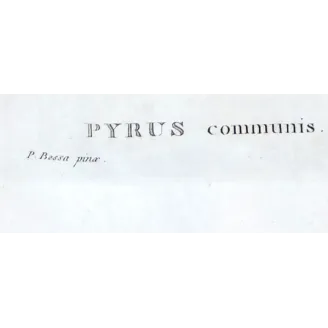
The engraving is in very good antique condition. A few very light, scattered toning spots may be observed, remaining discreet and not distracting from the image. The original hand-colouring is well preserved. No watermark has been observed. The engraved credits “P. Bessa pinx.” and “Jarry sculp.” are present, attesting to the original drawing by Pancrace Bessa and the engraving executed by Jarry.
For insight into Bessa’s distinctive hand-colouring techniques, see our editorial feature on Pancrace Bessa:
Specific References
A refined study of cultivated pears, presenting five distinct fruit forms arranged in a balanced and harmonious composition. Subtle variations in shape, colour, and surface texture create a quiet visual rhythm, reflecting Pancrace Bessa’s ability to transform orchard subjects into works of enduring elegance.
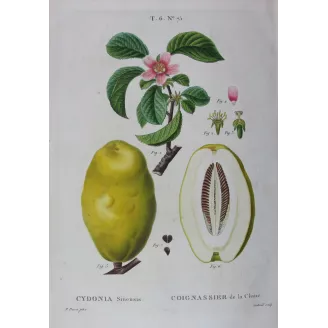
Chinese Quince Coignassier de la Chine Original hand-colored botanical engraving by Pancrace Bessa.
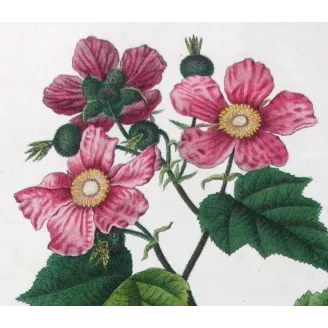
Illustration of the sweet-scented flowering bramble, Rubus odoratus, in full bloom.
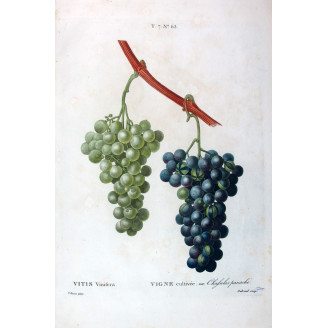
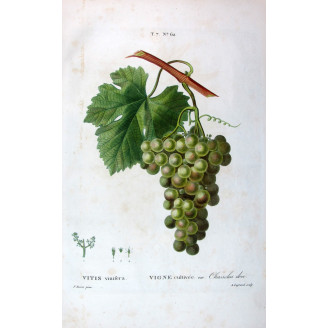
Rare depiction of striped Chasselas grape clusters, unique in its pattern and color.
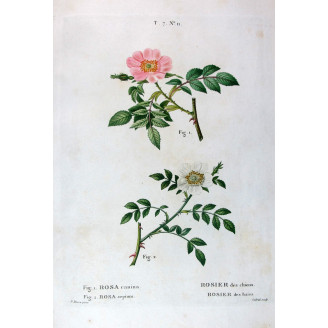
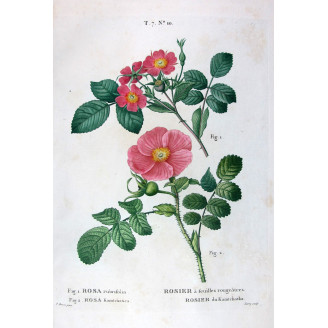
Dog Rose & Hedge Rose Rosier des chiens & Rosier des haies Original hand-colored botanical engraving by Pancrace Bessa.
A refined orchard subject where volume and proportion are carefully balanced, giving the fruit a calm, almost sculptural presence.
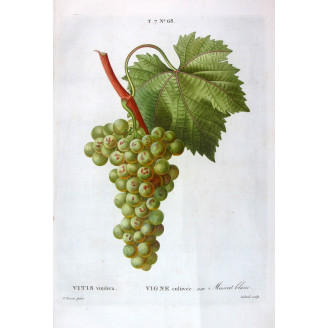
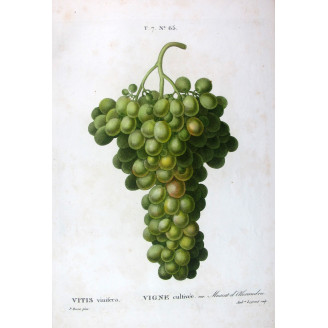
Depiction of golden grapes with vivid green leaves in fine detail.
A sculptural study of cultivated fruit, defined by rounded volumes and restrained modelling, rendered with quiet elegance and visual balance.
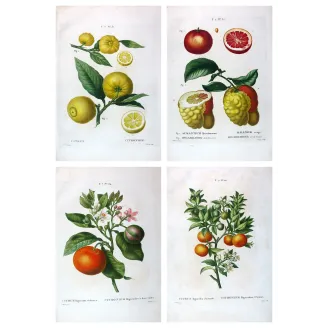
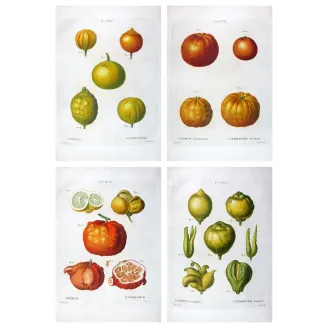
A coherent ensemble of eight original orange and bigarade engravings by Pancrace Bessa, reflecting the cultivated discipline of French orangeries in the Napoleonic era. Botanical precision and architectural composure unite in a refined citrus portfolio preserved as a complete series.
Kamchatka Rose Rosier du Kamchatka Original hand-colored botanical engraving by Pancrace Bessa.
A soft palette of yellow and green in pear and apple forms.