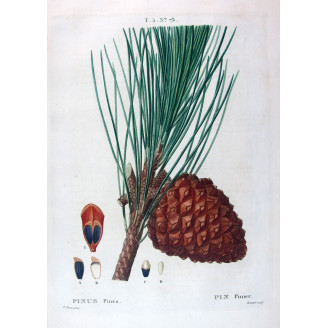
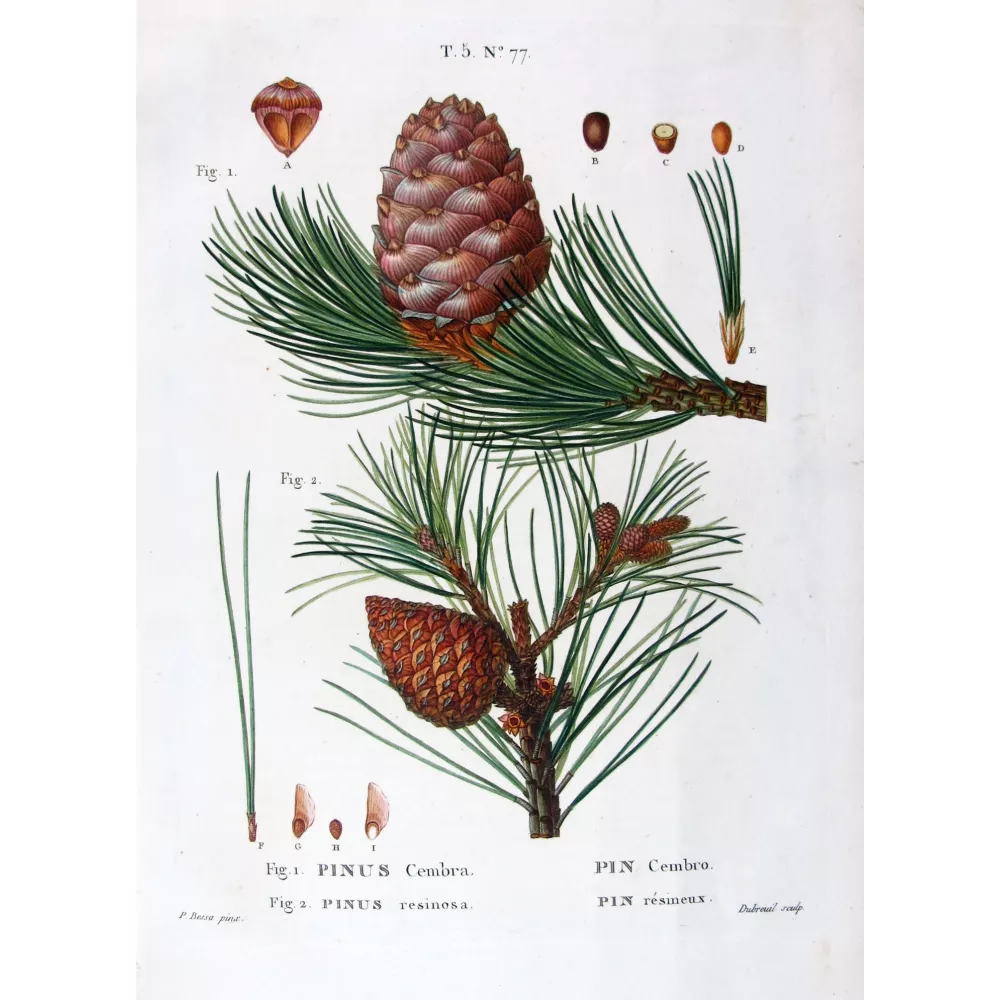
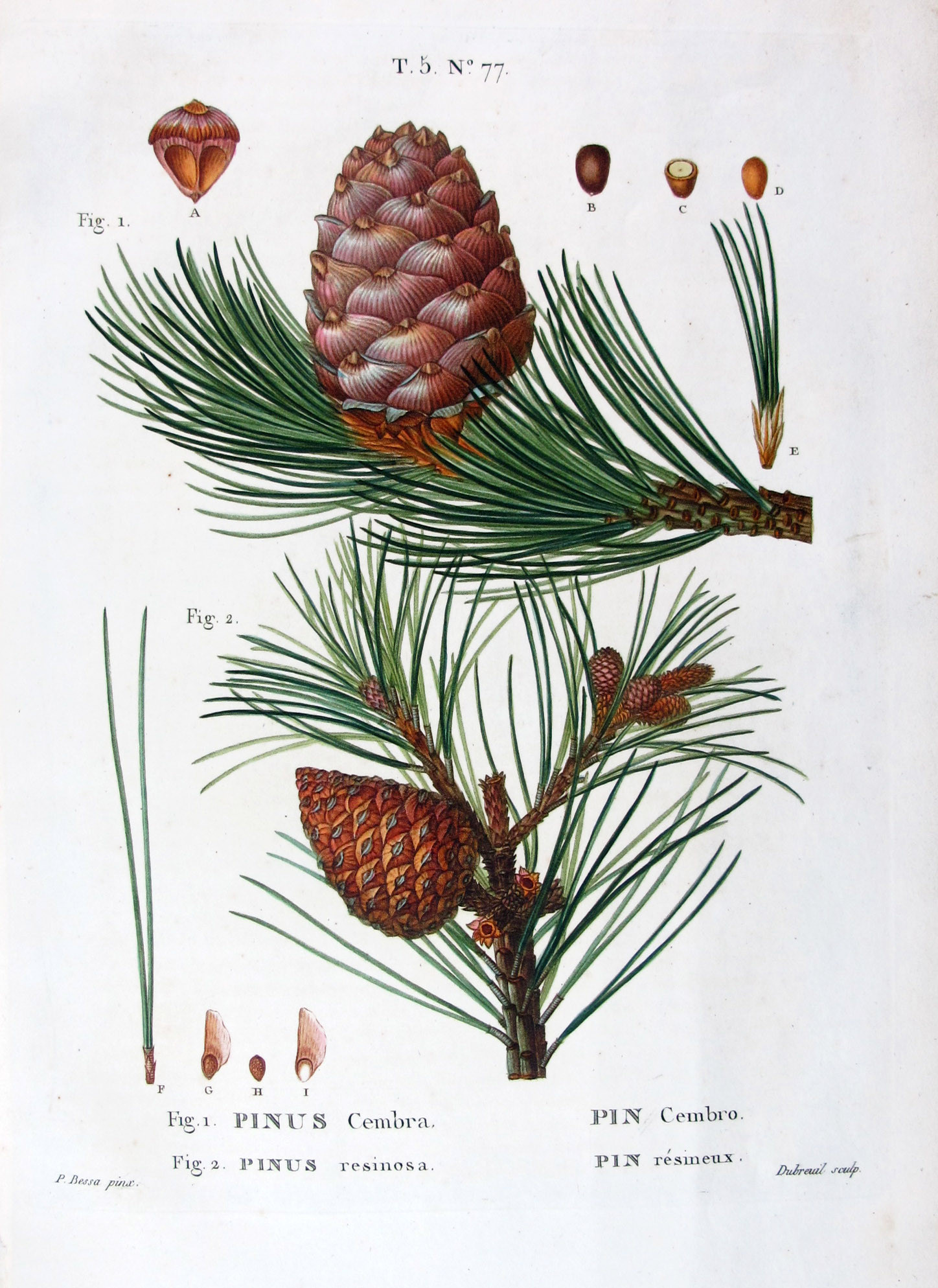
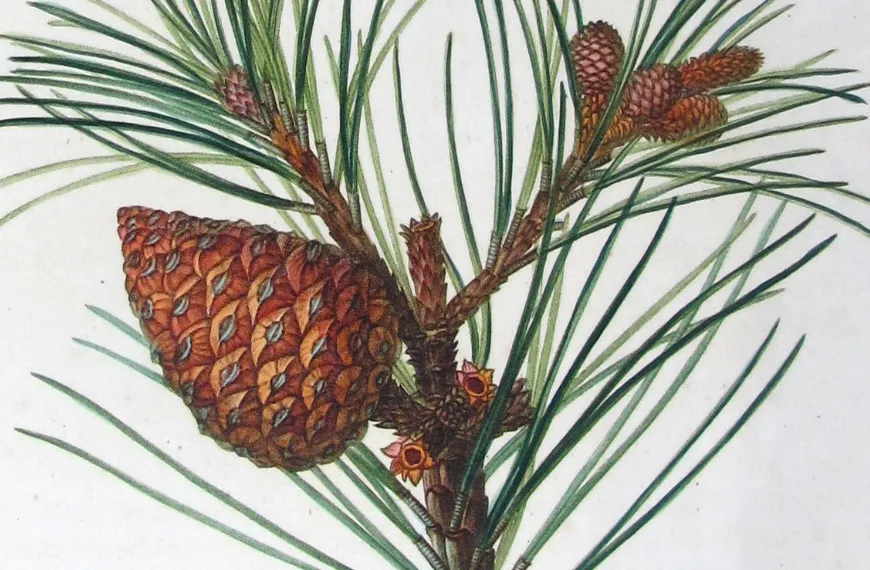
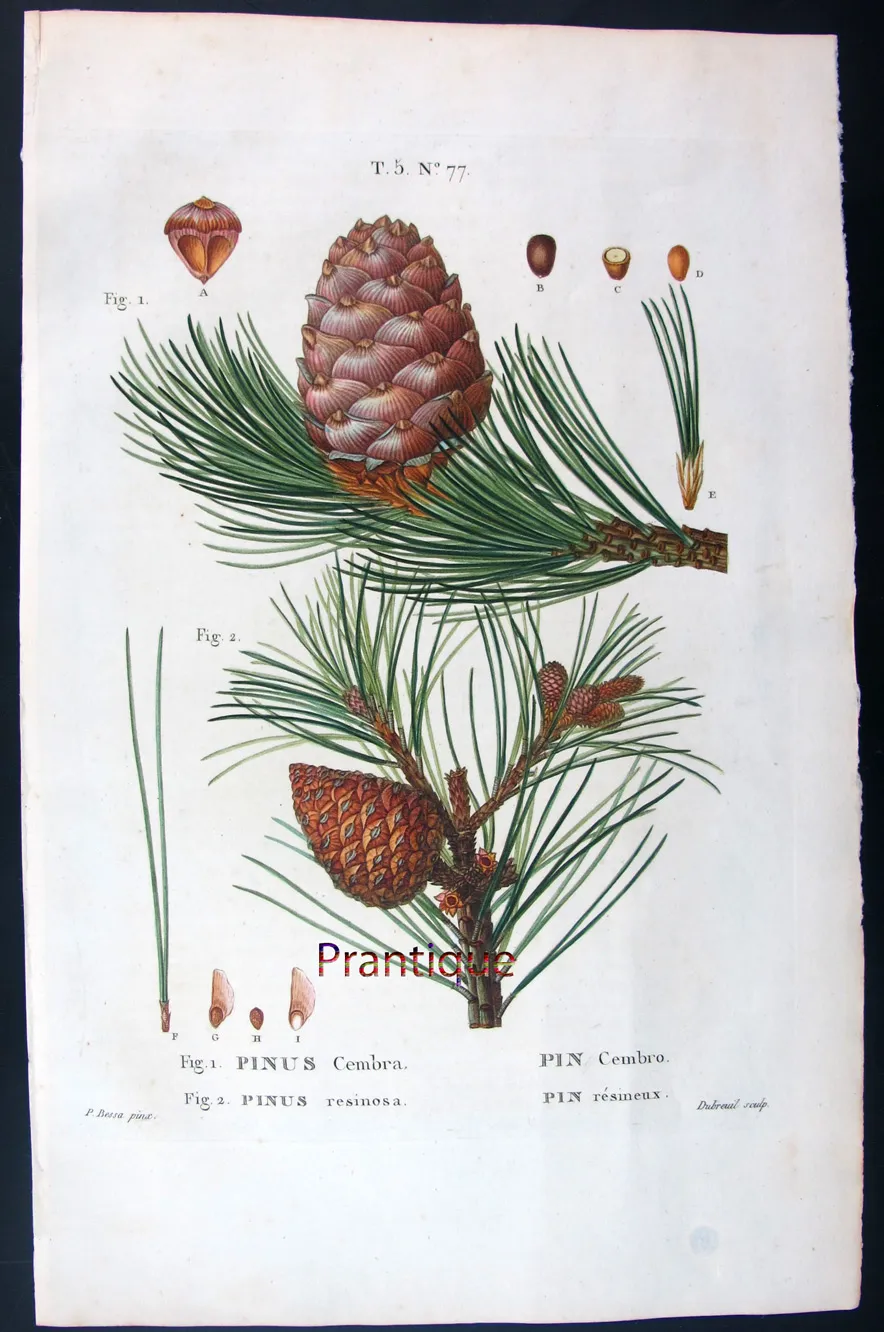

Botanical print of the Swiss and resinous pine by Pancrace Bessa.
 Delivery policy
Your print will be carefully prepared and shipped worldwide via trusted couriers (UPS or similar).
 Authentic antique prints
Original engravings from the 17th–19th century.
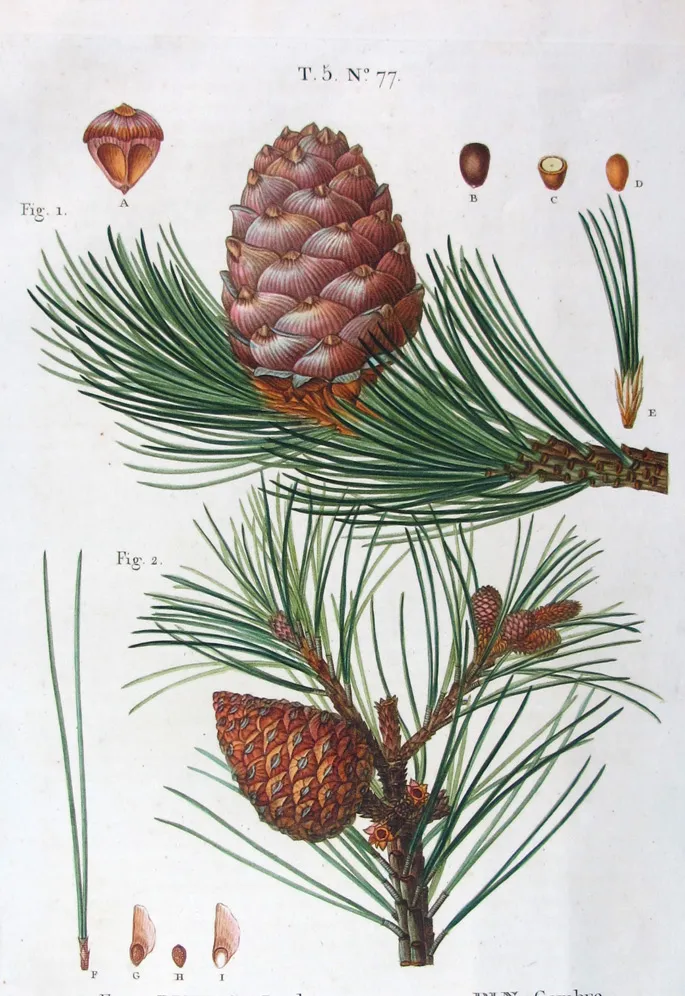
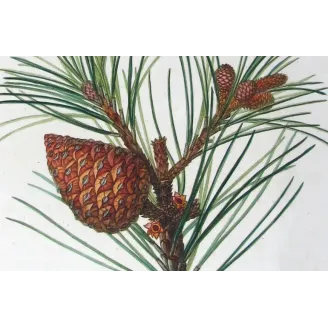
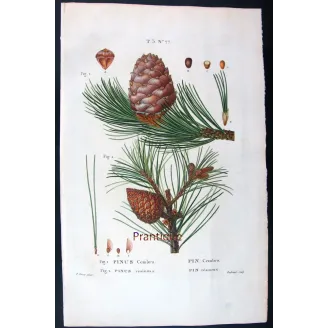
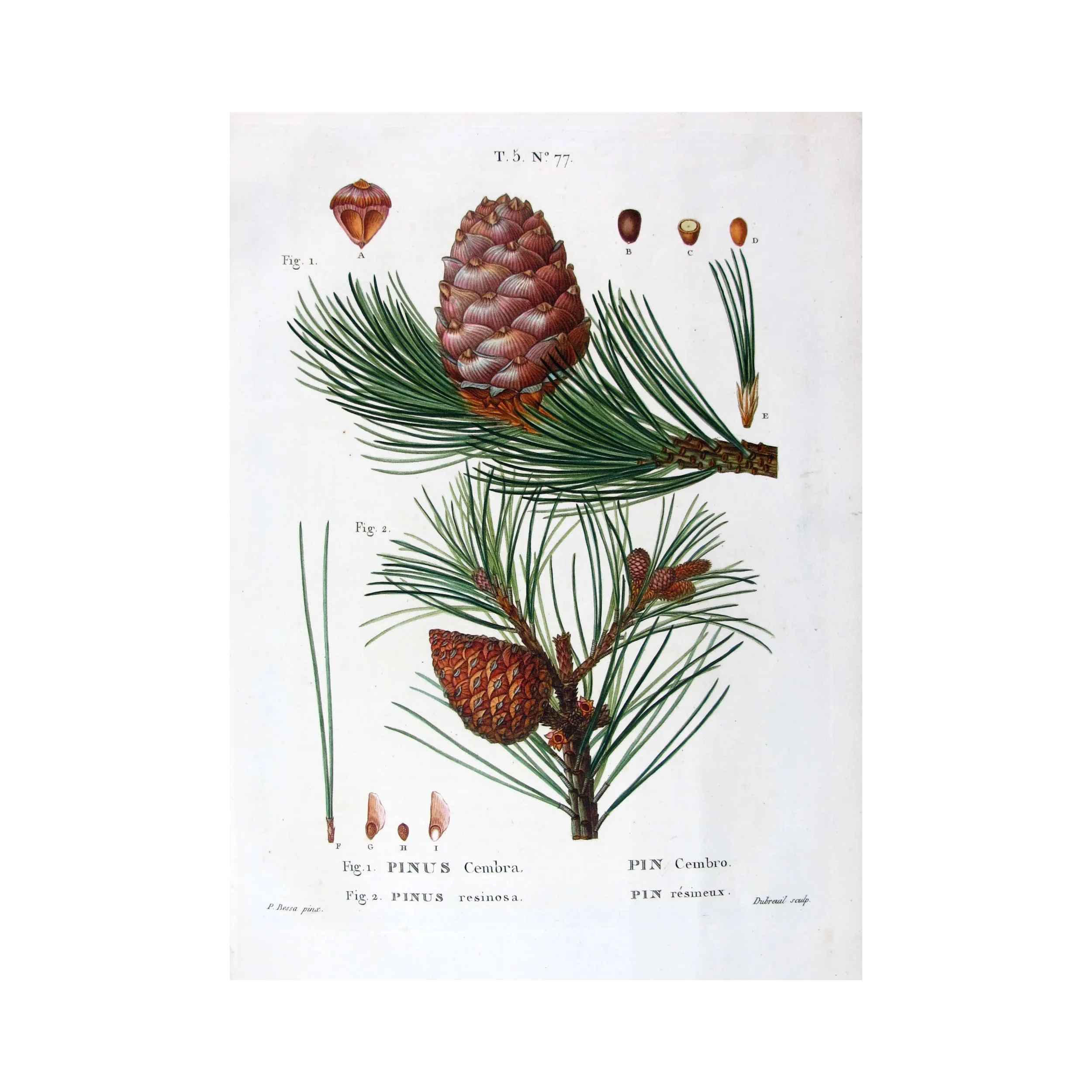
This original engraving presents a comparative study of two conifers: Pinus cembra (Swiss Pine, or “Pin Cembro”) and Pinus resinosa (Red Pine, or “Pin résineux”). The plate combines mature cones, needle clusters, and small analytical details, offering both a decorative composition and a clear botanical reading of form.
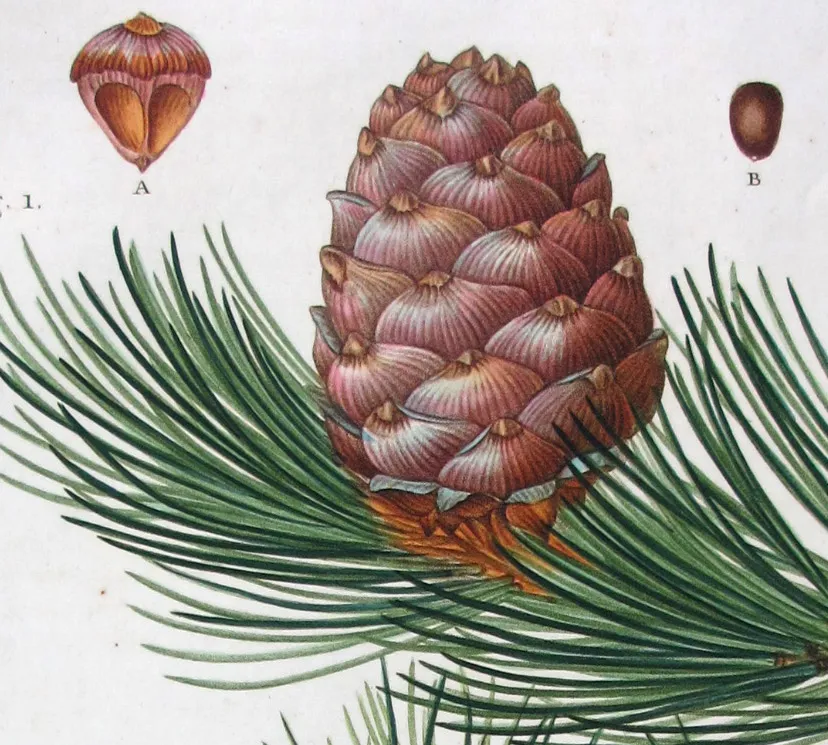
The upper figure is dominated by a compact, richly scaled cone set against long, sweeping needles, while the lower study introduces a second cone type and a branching structure that feels more linear and airy. Bessa’s visual language remains disciplined and spacious, allowing each element to be read distinctly without crowding the sheet.
A particularly useful (and surprisingly simple) way to recognise many pines lies in the needles: they grow in bundles called fascicles. Pinus cembra is typically a five-needle pine, while Pinus resinosa belongs to the two-needle group. This plate quietly teaches that principle through image rather than text — one of the reasons such engravings were valued as practical tools for early botanical classification.
— • —
The cones are engraved with careful stipple and controlled shading, their overlapping scales rendered with sculptural depth. The warm reddish-browns of the cone surfaces create a natural counterpoint to the cool greens of the needles, giving the plate a refined chromatic balance that reads strongly on a wall.
Small sectional details — including seed elements and needle studies — introduce scientific precision without disturbing the elegance of the main forms. The overall effect is both instructive and decorative, characteristic of the best plates from Arbres et Arbustes.
Pinus cembra is associated with Alpine and subalpine landscapes and is admired for its resilience, slow growth, and fragrant wood. Pinus resinosa, native to North America, is known for its straight growth habit and its resin-rich character, historically valued for timber and related uses. Together, they illustrate the diversity of the pine genus through two distinct “design solutions”: one compact and mountain-adapted, the other linear and resource-oriented.
The engraving is in Like Brand New condition. The sheet remains clean and well preserved, with fresh original hand-colouring and a strong, even paper tone. No watermark has been observed. The engraved credits confirm the original drawing by Pancrace Bessa and the engraving executed by Dubreuil, verifying its authenticity as an original early nineteenth-century plate.
For further context on Pancrace Bessa and his distinctive contribution to French botanical illustration, see our editorial feature:
Specific References
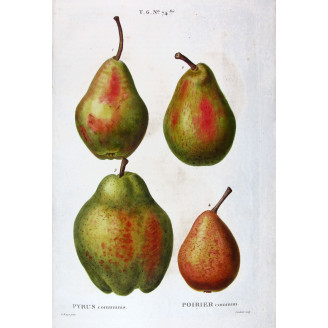
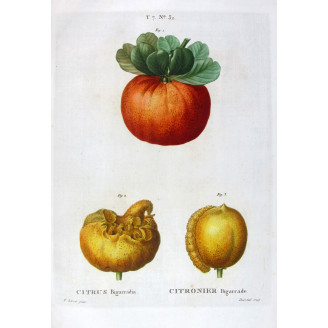
A refined orchard subject where volume and proportion are carefully balanced, giving the fruit a calm, almost sculptural presence.
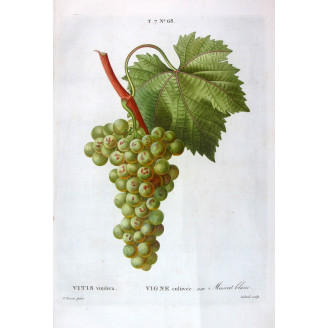
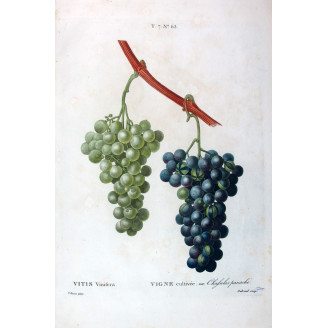
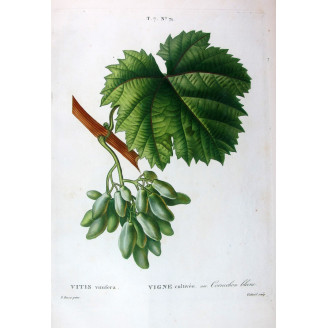
Rare depiction of striped Chasselas grape clusters, unique in its pattern and color.
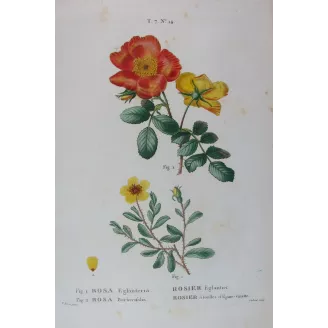
Eglantine & Berberis-leaved Rose Rosier à feuilles d'Épine-vinette Original hand-colored botanical engraving by Pancrace Bessa.
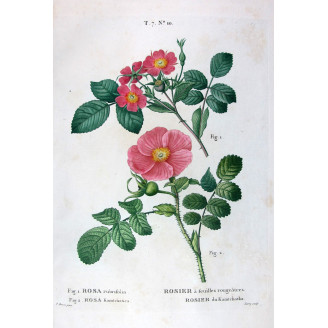
Kamchatka Rose Rosier du Kamchatka Original hand-colored botanical engraving by Pancrace Bessa.
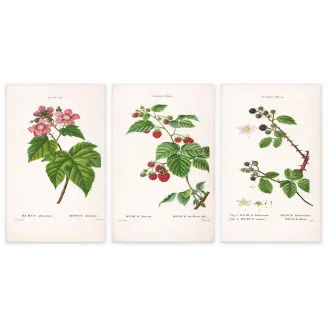
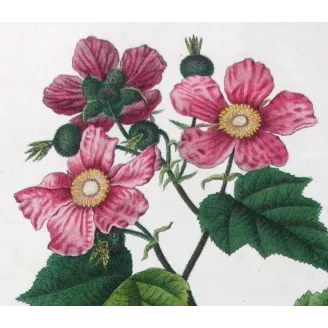
Illustration of the sweet-scented flowering bramble, Rubus odoratus, in full bloom.
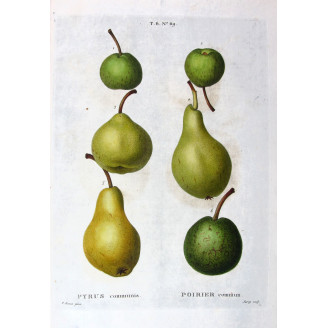
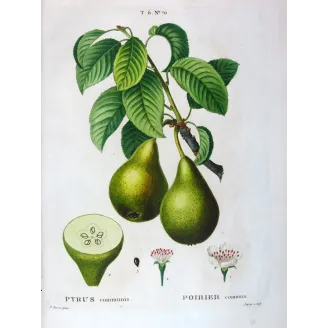
A refined early 19th-century botanical engraving depicting cultivated pear varieties (Pyrus communis), drawn by Pancrace Bessa and engraved for Arbres et Arbustes. Executed with restraint and clarity, the plate exemplifies the elegance of French pomological illustration, uniting scientific precision with a calm, decorative sensibility. The harmonious composition and subtle hand-colouring make it a timeless and highly collectible work.
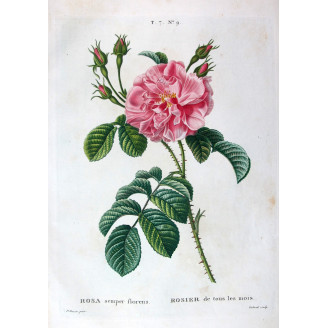
Monthly Rose Rosier de tous les mois Original hand-colored botanical engraving by Pancrace Bessa.
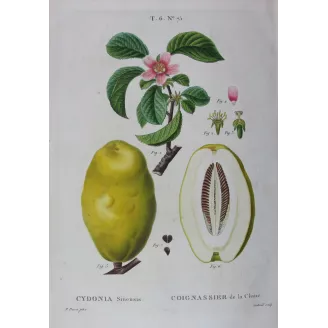
Chinese Quince Coignassier de la Chine Original hand-colored botanical engraving by Pancrace Bessa.
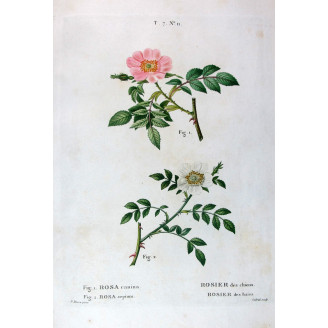
Dog Rose & Hedge Rose Rosier des chiens & Rosier des haies Original hand-colored botanical engraving by Pancrace Bessa.
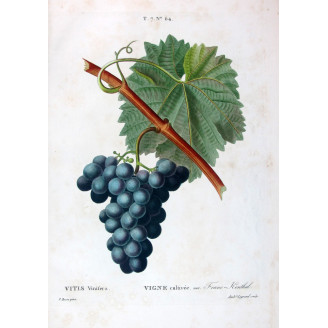
Original antique print of the common grape vine, Vitis vinifera, illustrated by Pancrace Bessa.
Botanical print of the Swiss and resinous pine by Pancrace Bessa.