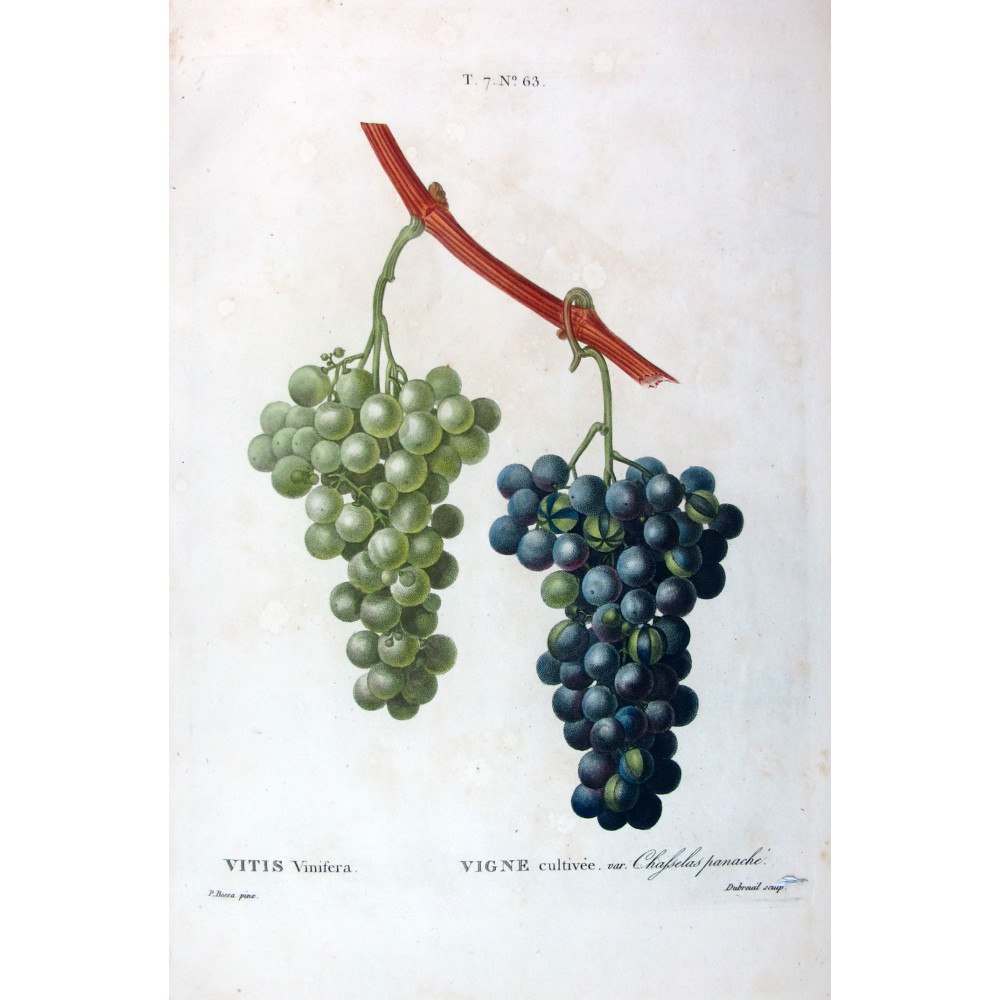
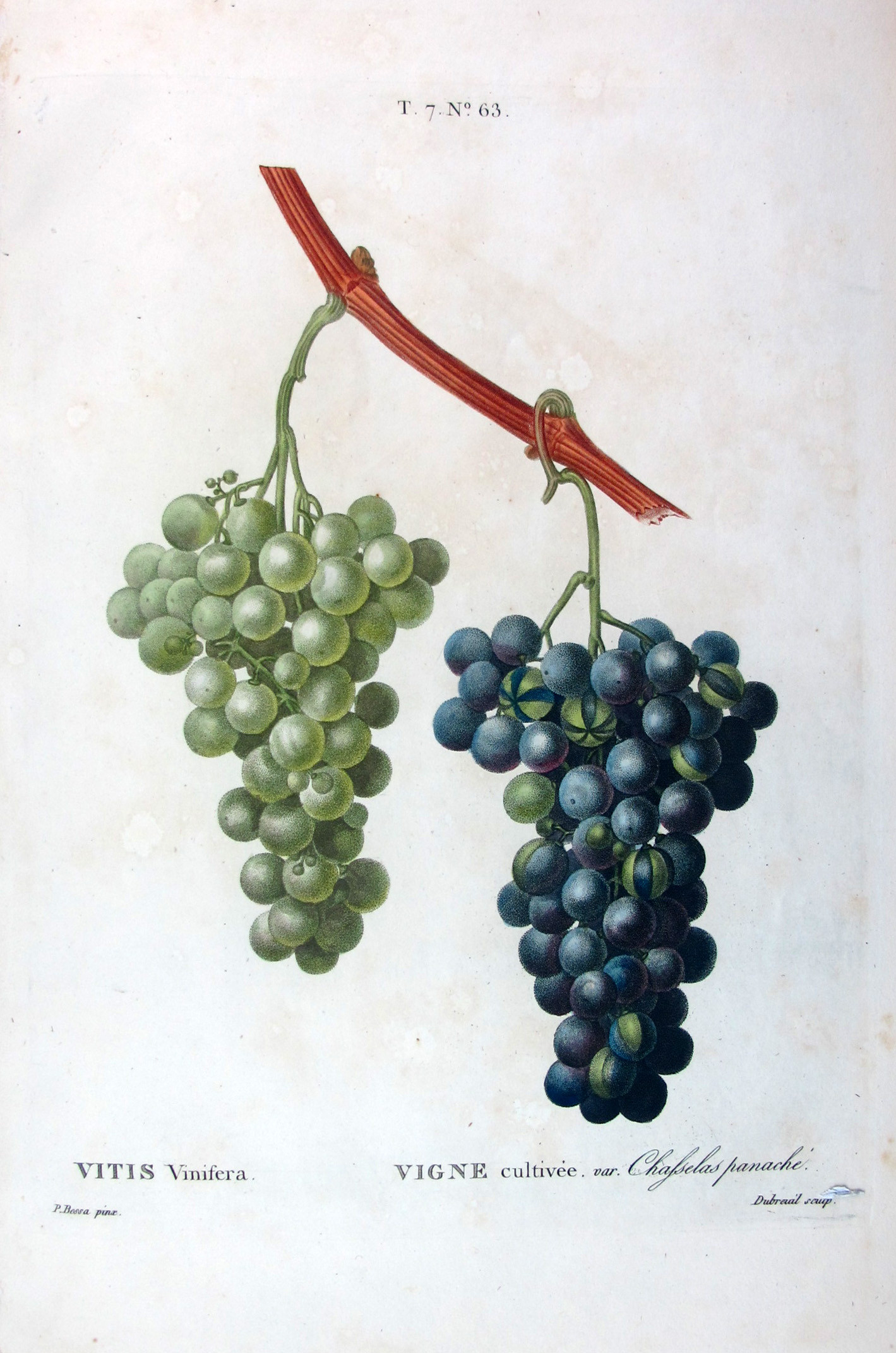
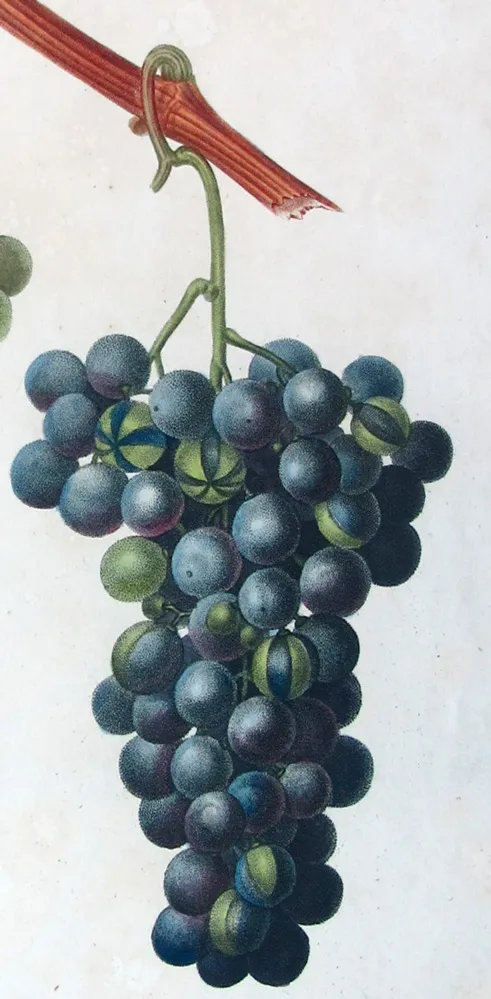
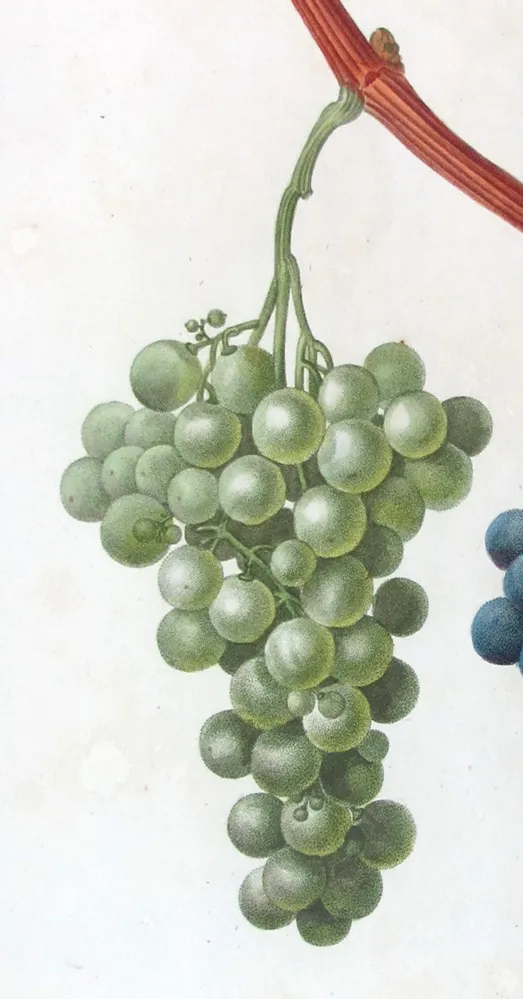
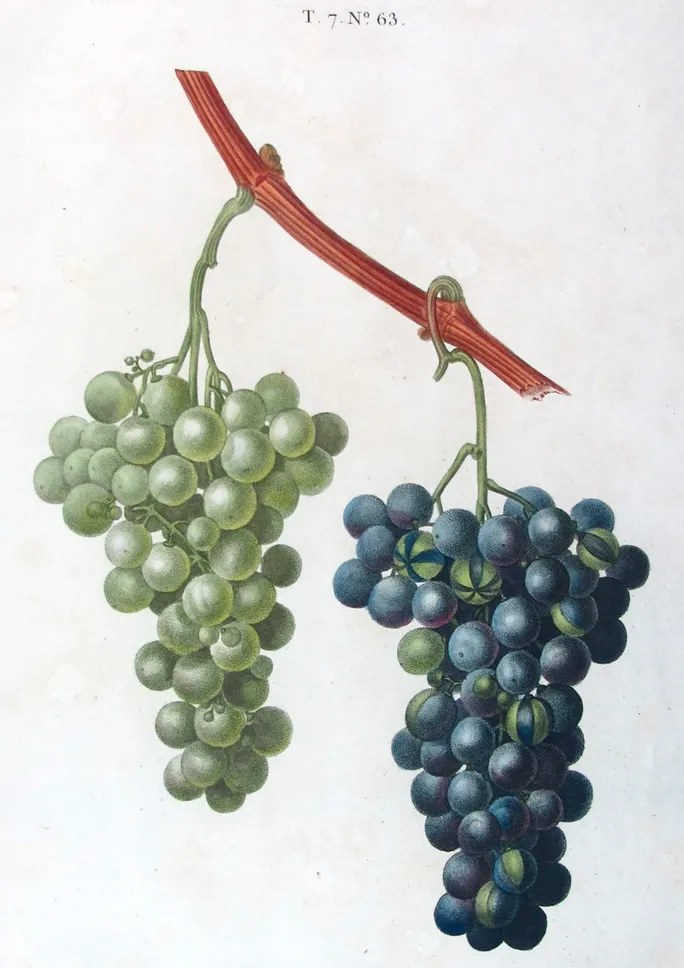
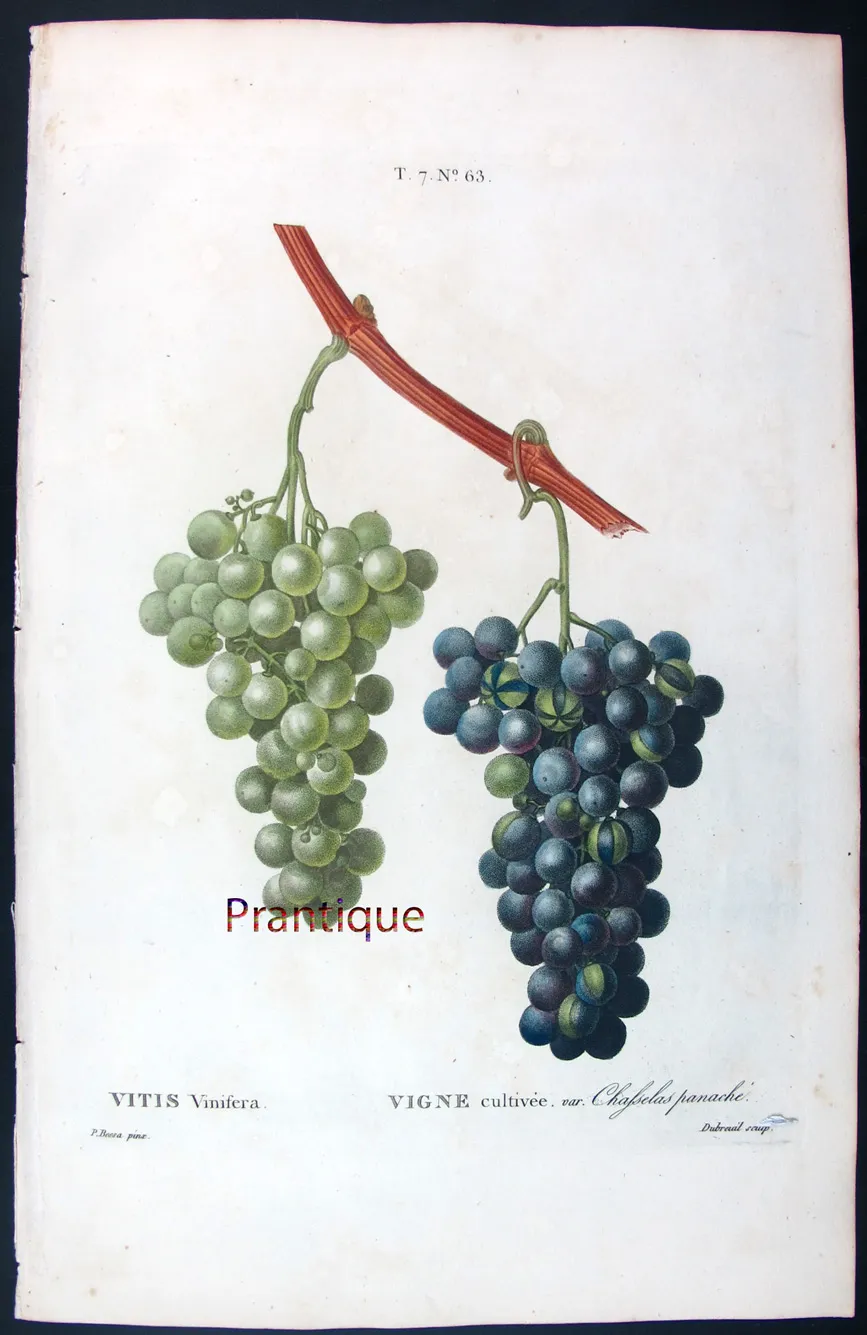

Rare depiction of striped Chasselas grape clusters, unique in its pattern and color.
 Delivery policy
Your print will be carefully prepared and shipped worldwide via trusted couriers (UPS or similar).
 Authentic antique prints
Original engravings from the 17th–19th century.
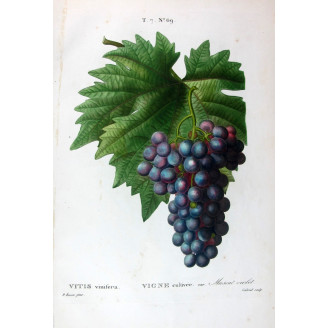
This original early 19th-century botanical engraving depicts Vitis vinifera as a cultivated French variety identified in the plate as Muscat violet. The composition presents a generous cluster of grapes suspended beneath a broad, deeply lobed leaf, arranged with clarity and balance against an open field of white space.
The visual strength of this plate lies in its chromatic depth. Pancrace Bessa renders the grapes in layered tones of blue-purple, plum, and muted indigo, subtly enlivened by cool highlights. The result is a fruit cluster that feels ripe, weighty, and almost tactile, with each berry individually articulated yet fully integrated into the whole.
Issued as part of Arbres et Arbustes, this engraving exemplifies the period’s fascination with cultivated vineyard varieties, where colour and form were used not only for identification but also for visual impact and decorative presence.
— • —
The composition is organised around a strong vertical rhythm: the dense grape cluster descends in a compact, tapering form, counterbalanced by the broad, angular leaf above. This interplay between rounded fruit and sharply veined foliage creates a dynamic yet stable visual structure.
Fine stipple engraving combined with exceptionally fresh hand-colouring produces a luminous surface with notable depth. The darker palette amplifies the sculptural modelling of the grapes, giving the plate a bold presence that reads powerfully even from a distance.
Notably, several berries show subtle chromatic irregularities—greenish striations and variegated tones within the darker cluster—reflecting natural variation in cultivated vines and underscoring the observational precision of Bessa’s approach.
The plate is identified in the original publication as a cultivated grapevine variety:
Compared to lighter Muscat varieties, the Muscat violet is characterised here by its darker skin and saturated tones, qualities that Bessa exploits to explore depth, contrast, and the visual weight of mature fruit.
The engraving is in exceptionally fine antique condition, close to near like brand new. The original hand-colouring remains fresh and vibrant. A narrow strip of very light toning is visible along the left outer margin, entirely outside the plate mark and not affecting the image. No watermark has been observed. The engraved credits “P. Bessa pinx.” and “Gabriel sculp.” are present.
For insight into Bessa’s distinctive hand-colouring techniques, see our editorial feature on Pancrace Bessa:
Specific References
A sculptural study of cultivated fruit, defined by rounded volumes and restrained modelling, rendered with quiet elegance and visual balance.
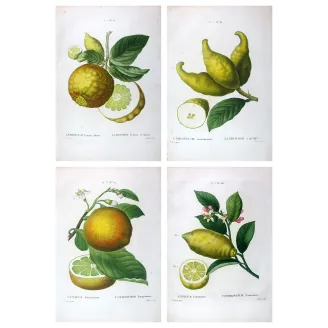
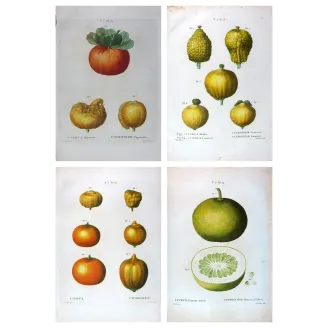
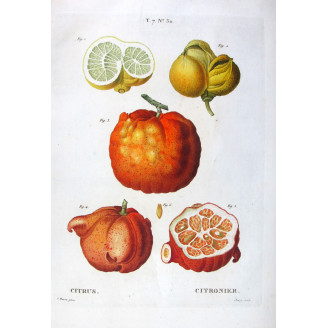
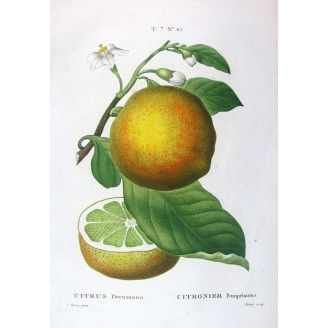
Nine original citrus engravings by Pancrace Bessa, uniting rare cedrats, sculptural lemons, and monumental Pomme d’Adam varieties into a coherent Napoleonic-era ensemble. Botanical study and refined color harmonize in a portfolio conceived to be read as a whole.
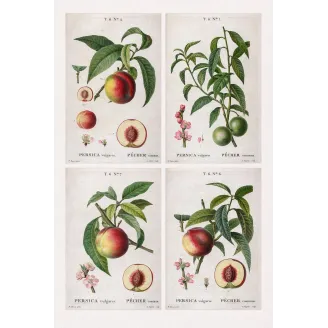
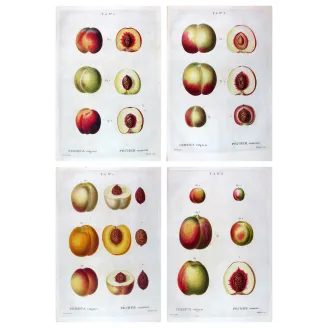
Original pochoir print of the peach tree, Prunus persica, with detailed flowering and fruit.
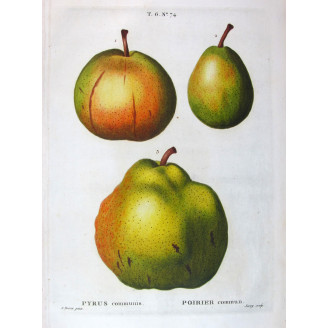
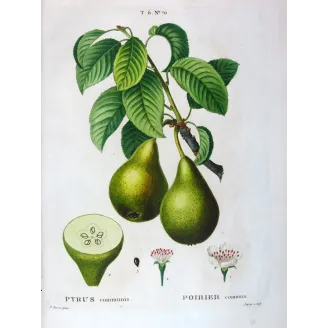
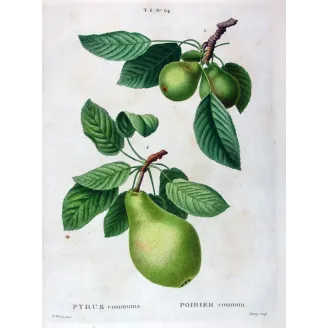
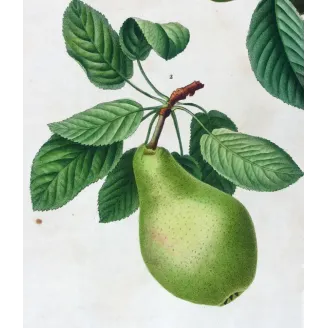
A refined early 19th-century botanical engraving depicting cultivated pear varieties (Pyrus communis), drawn by Pancrace Bessa and engraved for Arbres et Arbustes. Executed with restraint and clarity, the plate exemplifies the elegance of French pomological illustration, uniting scientific precision with a calm, decorative sensibility. The harmonious composition and subtle hand-colouring make it a timeless and highly collectible work.
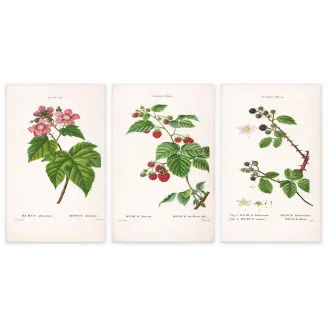
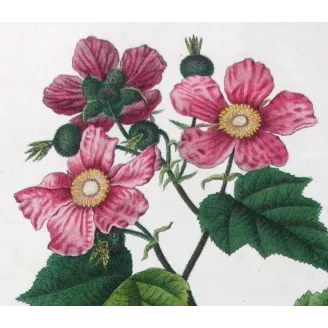
Illustration of the sweet-scented flowering bramble, Rubus odoratus, in full bloom.
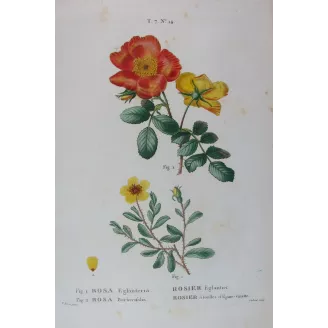
Eglantine & Berberis-leaved Rose Rosier à feuilles d'Épine-vinette Original hand-colored botanical engraving by Pancrace Bessa.
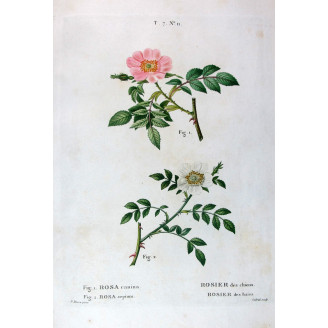
Dog Rose & Hedge Rose Rosier des chiens & Rosier des haies Original hand-colored botanical engraving by Pancrace Bessa.
A refined early 19th-century botanical engraving depicting cultivated pear varieties (Pyrus communis), drawn by Pancrace Bessa and engraved for Arbres et Arbustes. Executed with restraint and clarity, the plate exemplifies the elegance of French pomological illustration, uniting scientific precision with a calm, decorative sensibility. The harmonious composition and subtle hand-colouring make it a timeless and highly collectible work.
Elegant depiction of a rich purple Muscat grape variety by Pancrace Bessa.
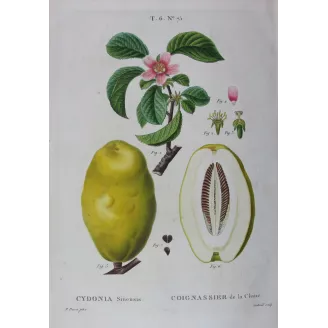
Chinese Quince Coignassier de la Chine Original hand-colored botanical engraving by Pancrace Bessa.
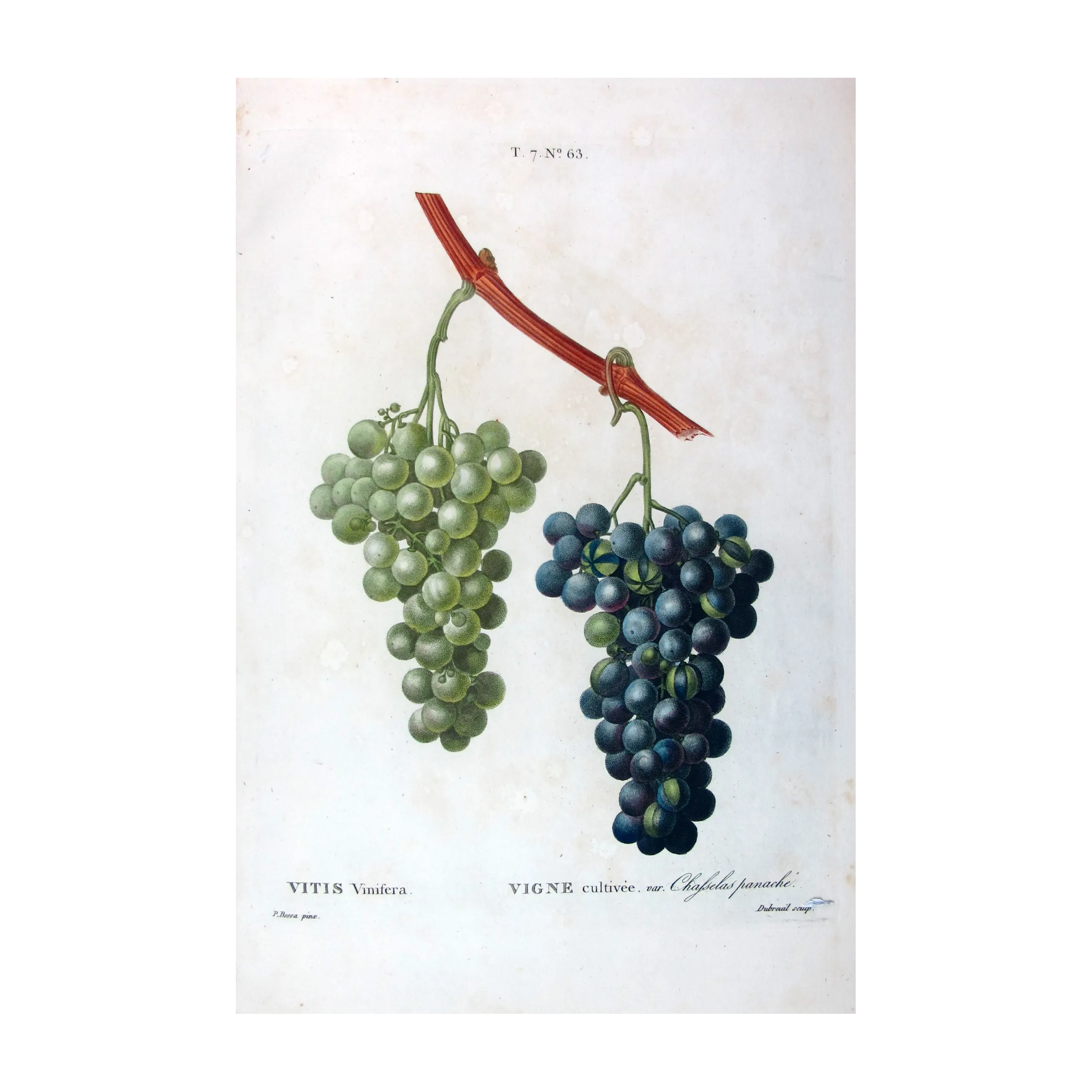
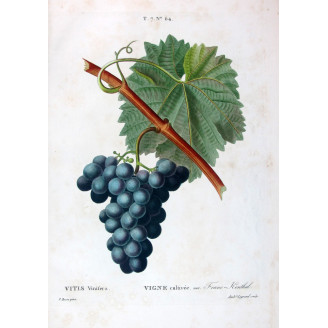
Rare depiction of striped Chasselas grape clusters, unique in its pattern and color.