
Pancrace Bessa: the Naturalist Painter of Botanical Grace
Pancrace Bessa: the Naturalist Painter of Botanical Grace
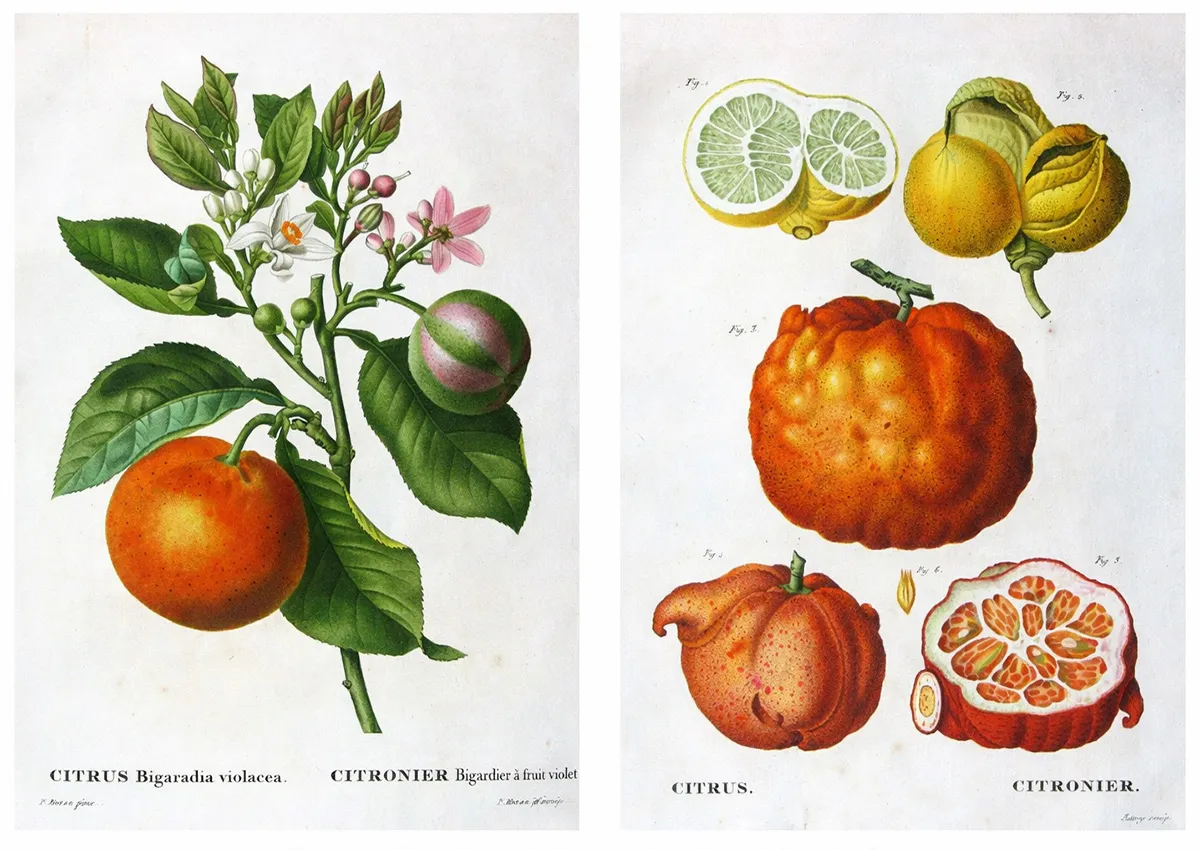
Pancrace Bessa (1772–1846) was a French botanical illustrator of the early nineteenth century, renowned for his refined hand-coloured engravings and closely associated with the circle of Pierre-Joseph Redouté. Admired for meticulous precision and a lyrical sense of composition, Bessa united scientific observation with a quiet elegance that defines some of the finest original botanical prints of his era.
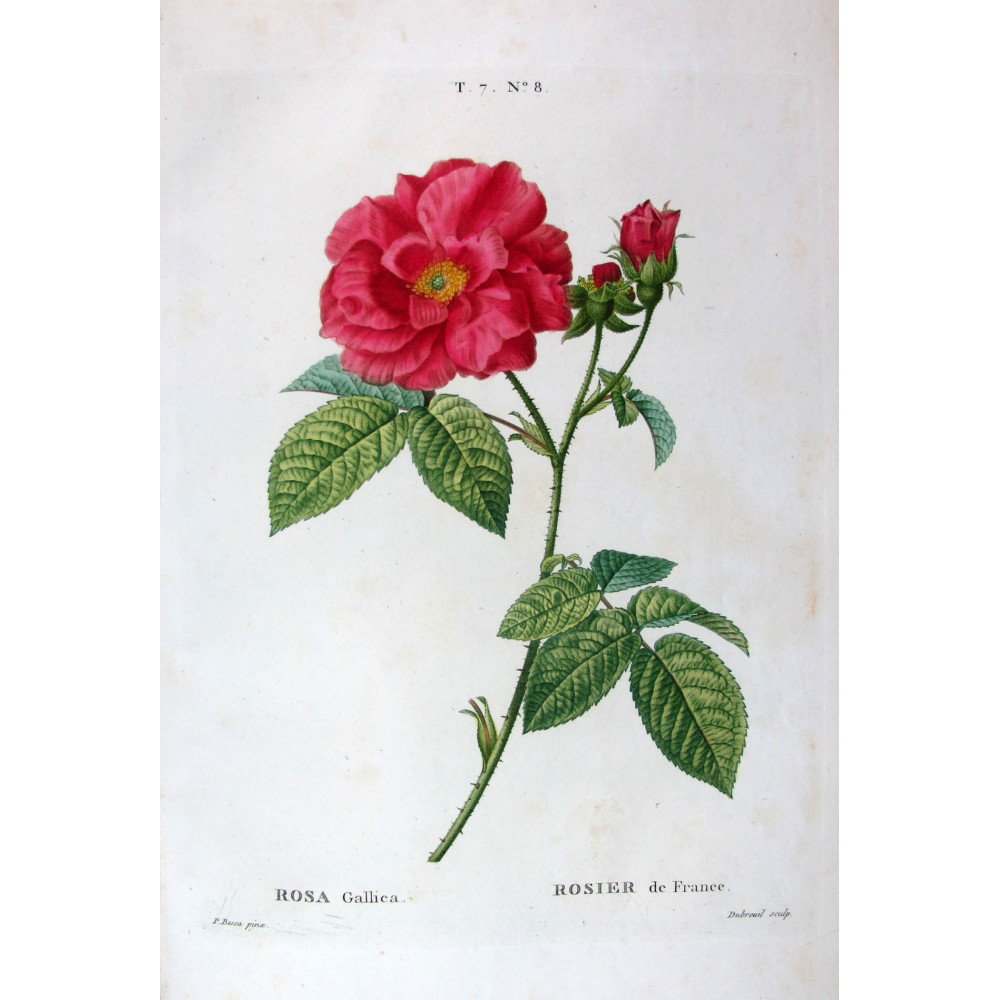
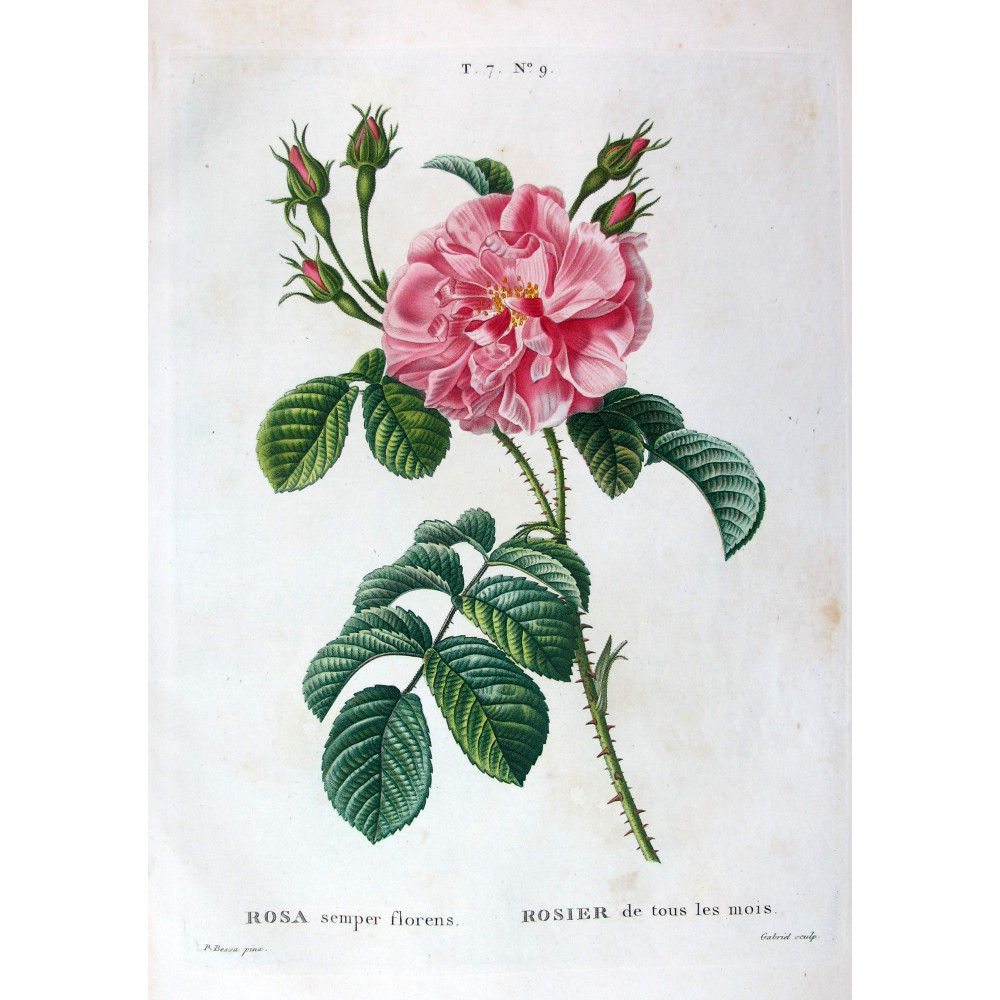
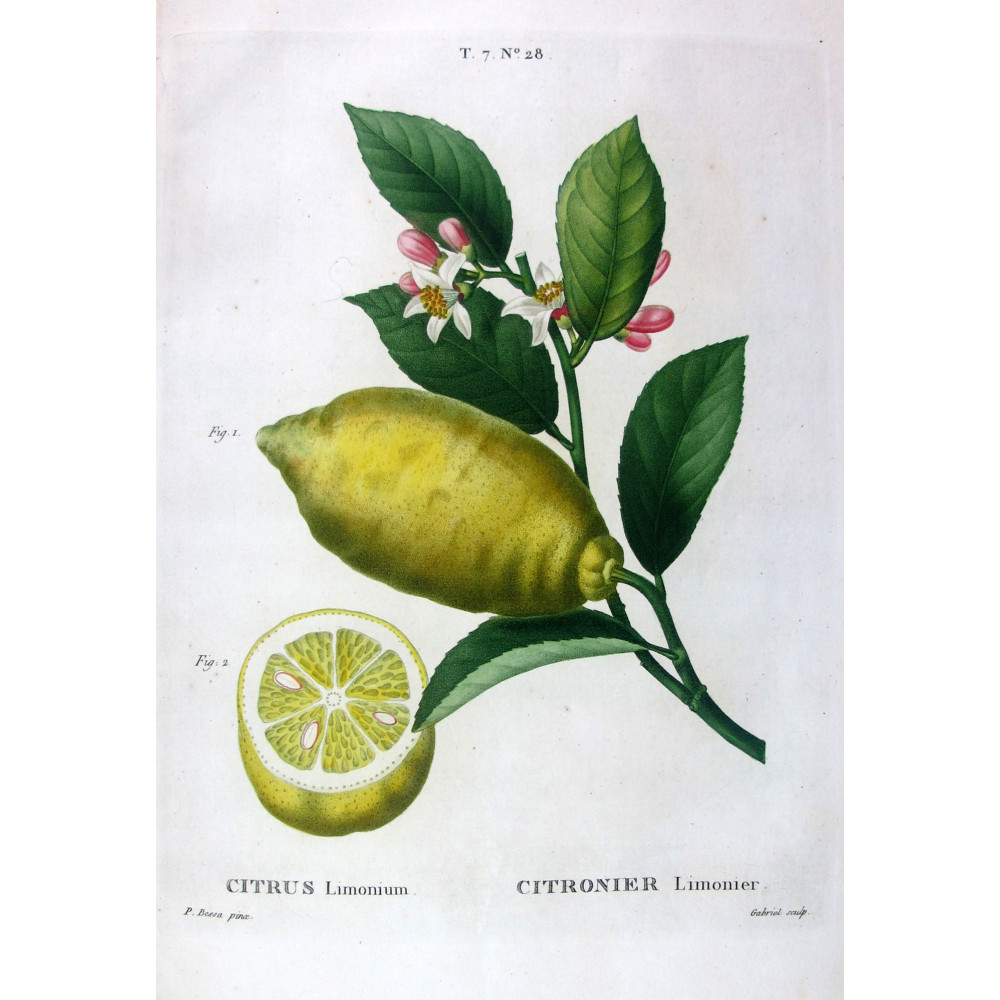
He contributed significantly to Arbres et Arbustes, one of the most ambitious botanical publications of its time. His engravings display a mastery of light, balance, and chromatic harmony, elevating each subject—from fruit trees to shrubs—into visual meditations on form and life.
Unlike Redouté’s more famous florals, Bessa’s subjects often included cultivated trees and lesser-known species, rendered with intimate familiarity. Each illustration invites the viewer to pause, observe, and marvel at the natural world through the eye of an artist-scientist.
Selected Originals — Iconic Plates from Arbres et Arbustes
View full plate details and condition reports.
|
|
|
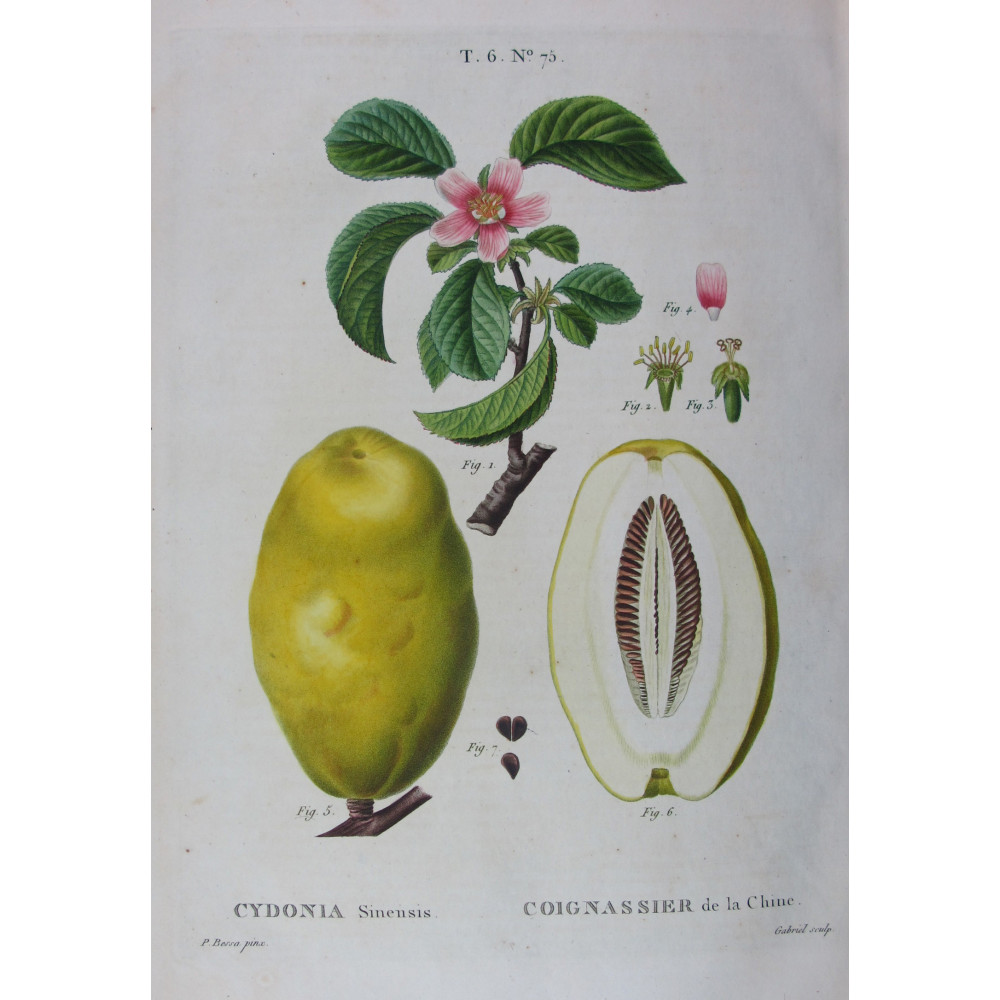
|
Browse the full Pancrace Bessa collection →
When Engraving Becomes Almost Painting
One of the most striking aspects of Pancrace Bessa’s work—particularly in his plates depicting cultivated fruits such as apples and pears—is the almost painterly quality achieved through engraving.
Bessa’s plates were produced using stipple engraving, a refined technique in which the copperplate is worked with countless minute dots rather than continuous lines. The engraved sheet was printed with subtly toned ink and lightly wiped, leaving a delicate structural impression on the paper.
Over this discreet framework, colour was applied entirely by hand. Surface details were added individually by the colourists, producing small variations from one impression to another — a hallmark of artisanal production.
A final coating of gum arabic unified the surface, softening transitions and enhancing chromatic depth. This combination produces the distinctive illusion whereby the engraved structure recedes beneath the colour, allowing the image to approach the appearance of painting while remaining a fully original printed work.
Related posts
-
 Ernst Haeckel and the Sublime Art of Das System der Medusen
A scientific monograph that became a gallery of natural elegance. The German biologist Ernst Haeckel was fascinated...Read more
Ernst Haeckel and the Sublime Art of Das System der Medusen
A scientific monograph that became a gallery of natural elegance. The German biologist Ernst Haeckel was fascinated...Read more -
 Eugène Grasset and the Art of Nature: The Origins of Modern Floral Design
In the heart of the Art Nouveau movement, Eugène Grasset stood out as one of the first artists to merge scientific...Read more
Eugène Grasset and the Art of Nature: The Origins of Modern Floral Design
In the heart of the Art Nouveau movement, Eugène Grasset stood out as one of the first artists to merge scientific...Read more -
 Émile-Allain Séguy: Nature, Color, and the Decorative Avant-Garde
A Life Between Science and Style. Séguy’s art is more than decoration. It is a reminder that even in the age of...Read more
Émile-Allain Séguy: Nature, Color, and the Decorative Avant-Garde
A Life Between Science and Style. Séguy’s art is more than decoration. It is a reminder that even in the age of...Read more -
 J.G. Keulemans: Precision and Passion in Ornithological Illustration
Johannes G. Keulemans, the master illustrator of 19th-century ornithology, blended scientific precision with poetic...Read more
J.G. Keulemans: Precision and Passion in Ornithological Illustration
Johannes G. Keulemans, the master illustrator of 19th-century ornithology, blended scientific precision with poetic...Read more -
 Henrik Grönvold: A Scandinavian Eye for Ornithological Grace
Henrik Grönvold (1858–1940) was a master of early 20th-century ornithological illustration, celebrated for his calm...Read more
Henrik Grönvold: A Scandinavian Eye for Ornithological Grace
Henrik Grönvold (1858–1940) was a master of early 20th-century ornithological illustration, celebrated for his calm...Read more
Leave a comment