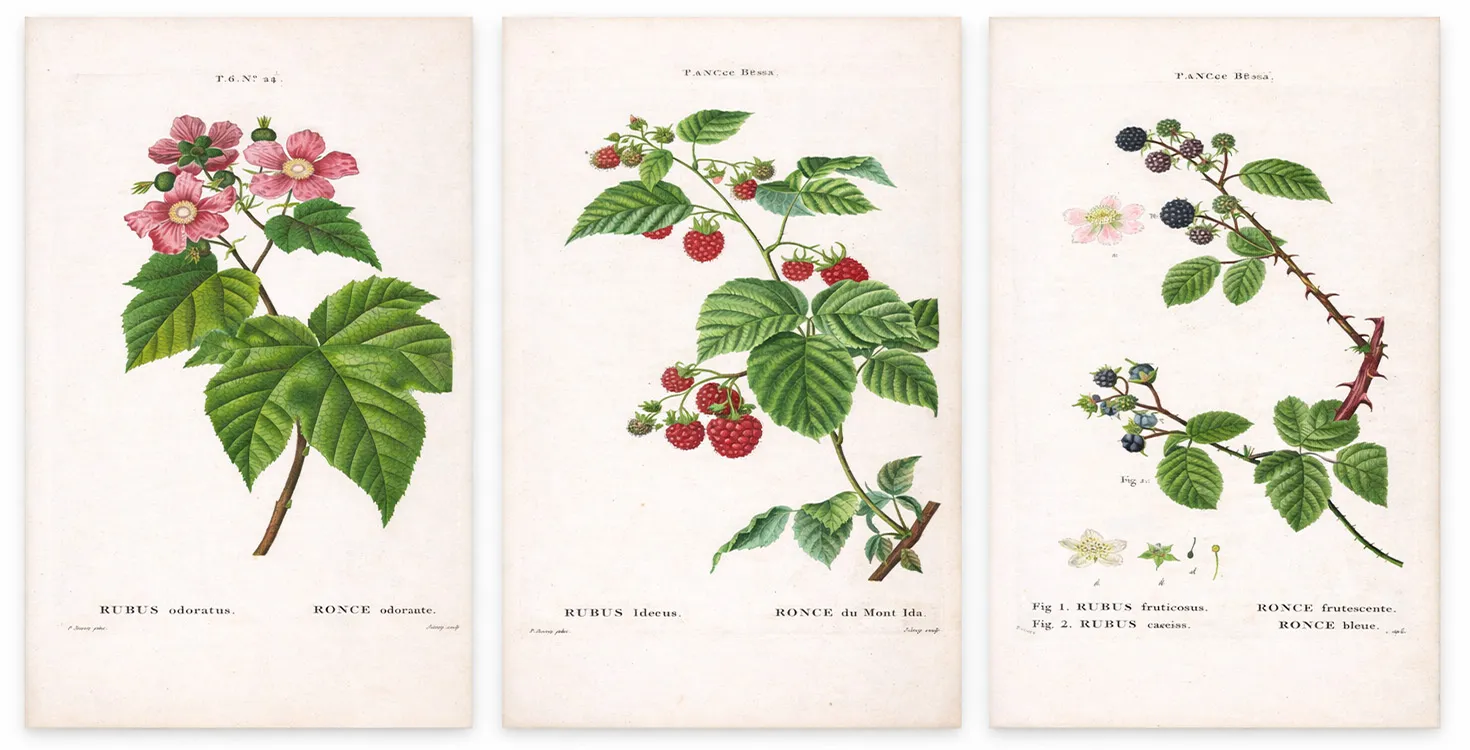
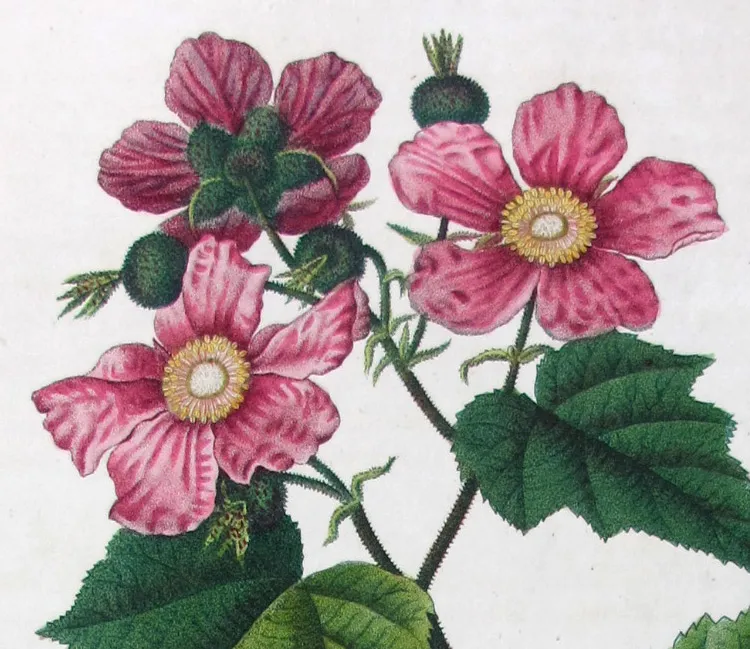
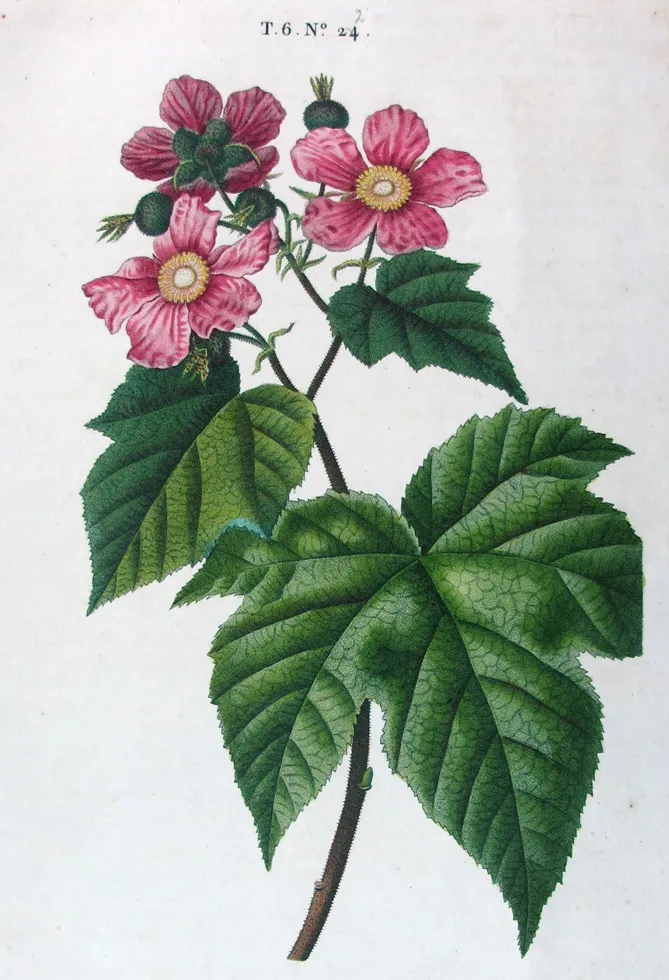
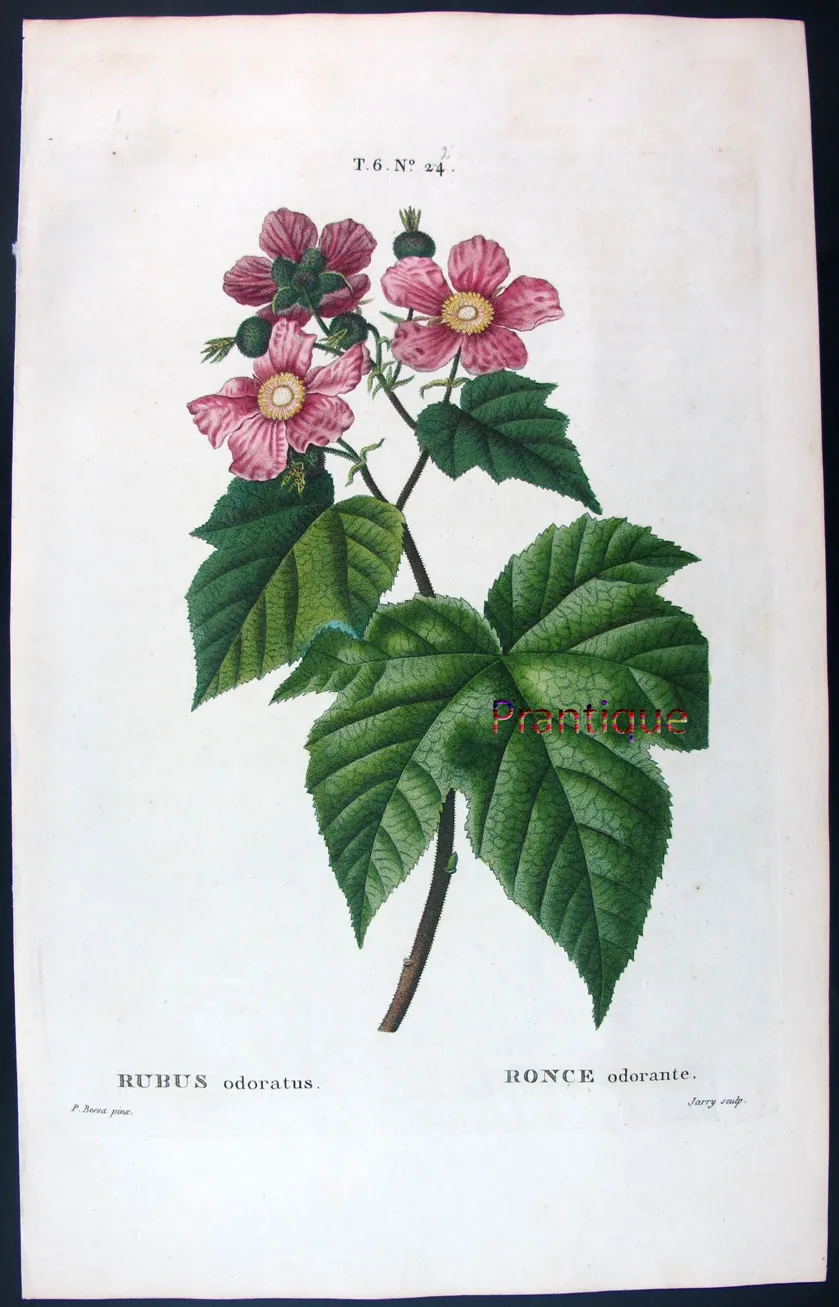
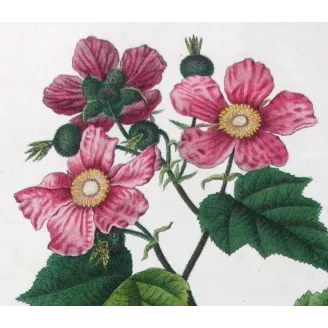
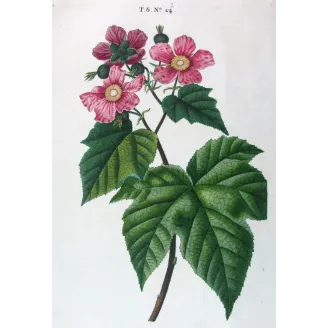
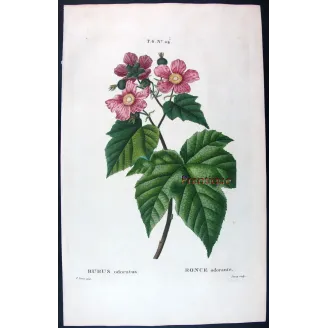
Illustration of the sweet-scented flowering bramble, Rubus odoratus, in full bloom.
 Delivery policy
Your print will be carefully prepared and shipped worldwide via trusted couriers (UPS or similar).
 Authentic antique prints
Original engravings from the 17th–19th century.
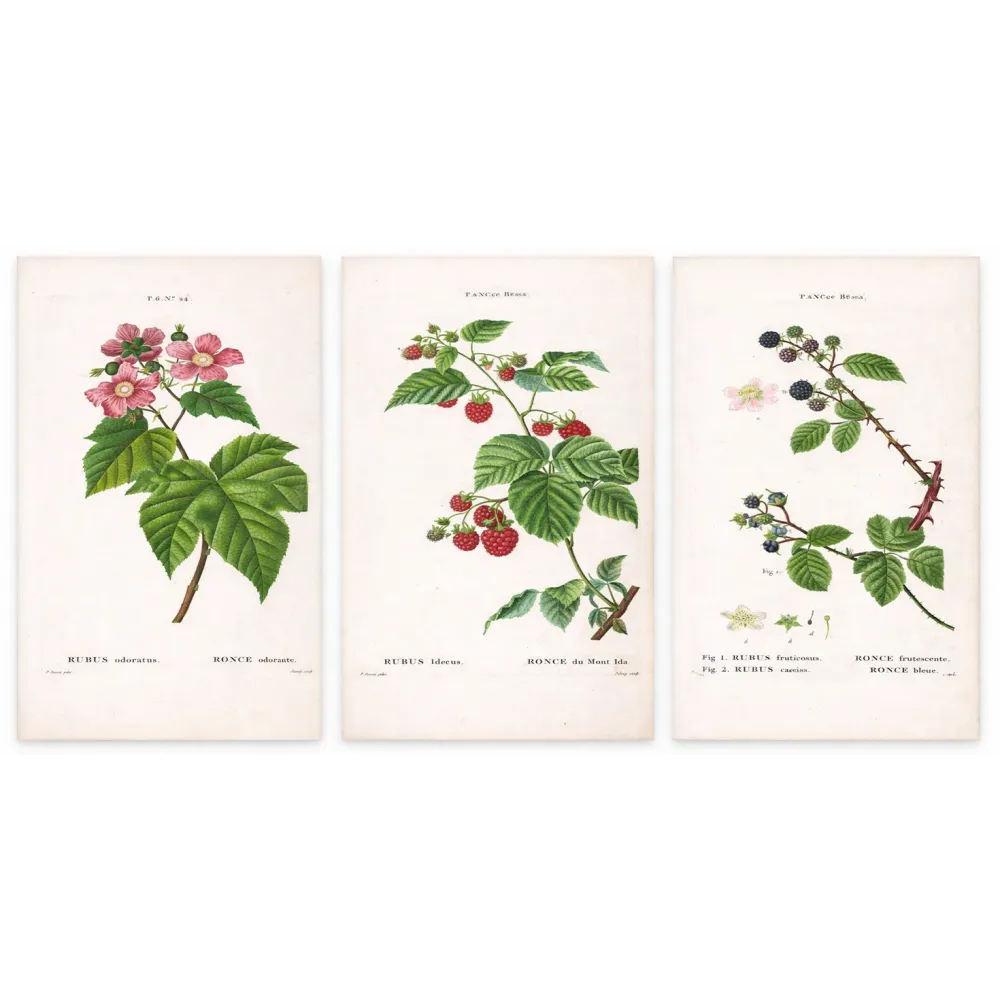
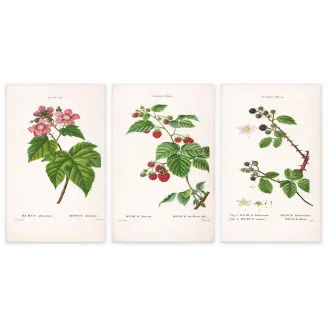
This refined set of three original hand-coloured engravings by Pancrace Bessa presents the genus Rubus not as isolated specimens, but as a coherent botanical ensemble. Across the three plates, the viewer is gently led from blossom to cultivated fruit and finally to the darker vitality of the wild bramble.
The compositions are spacious and vertically balanced, each subject isolated against a clean field that allows the structure of leaves, stems, and fruit to emerge with clarity. When viewed together, however, the three works enter into quiet dialogue. The set moves from ornamental softness to productive abundance, and then toward the more rugged architecture of the hedgerow.
Seen in sequence, the trio offers something quietly instructive: a visual study of variation within a single botanical genus. Differences in leaf morphology, thorn development, and fruit structure become legible through comparison. This is precisely how early nineteenth-century botanical illustration invited understanding — not through excess, but through order.
— • —
The first plate, depicting Rubus odoratus, introduces the ensemble with open pink blossoms and broad foliage. The petals are modelled with soft tonal transitions, while the central disc is articulated with precise stippling — an interplay of delicacy and structure that establishes the visual tone.
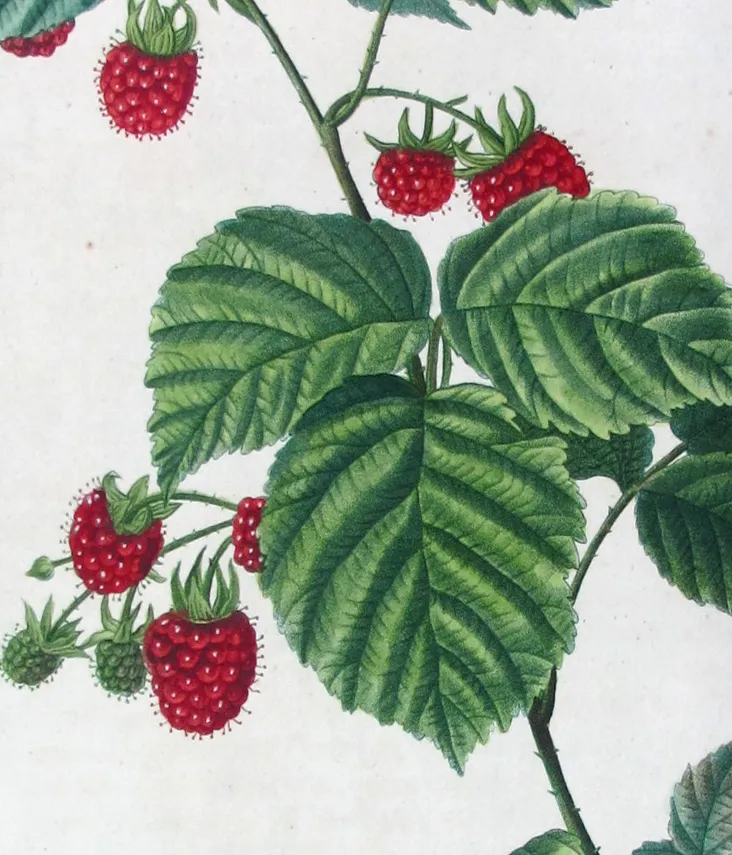
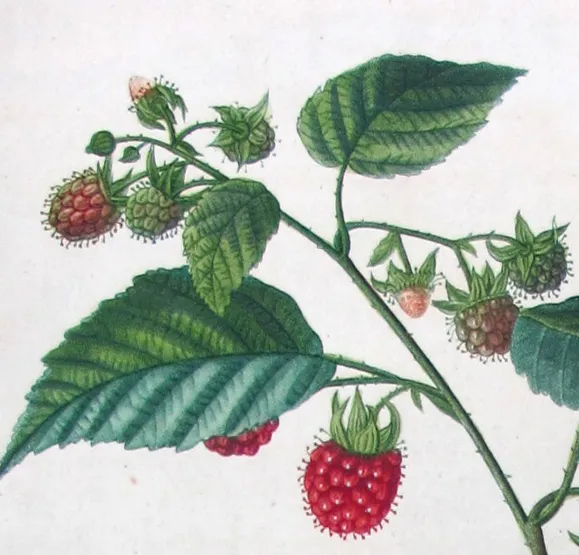
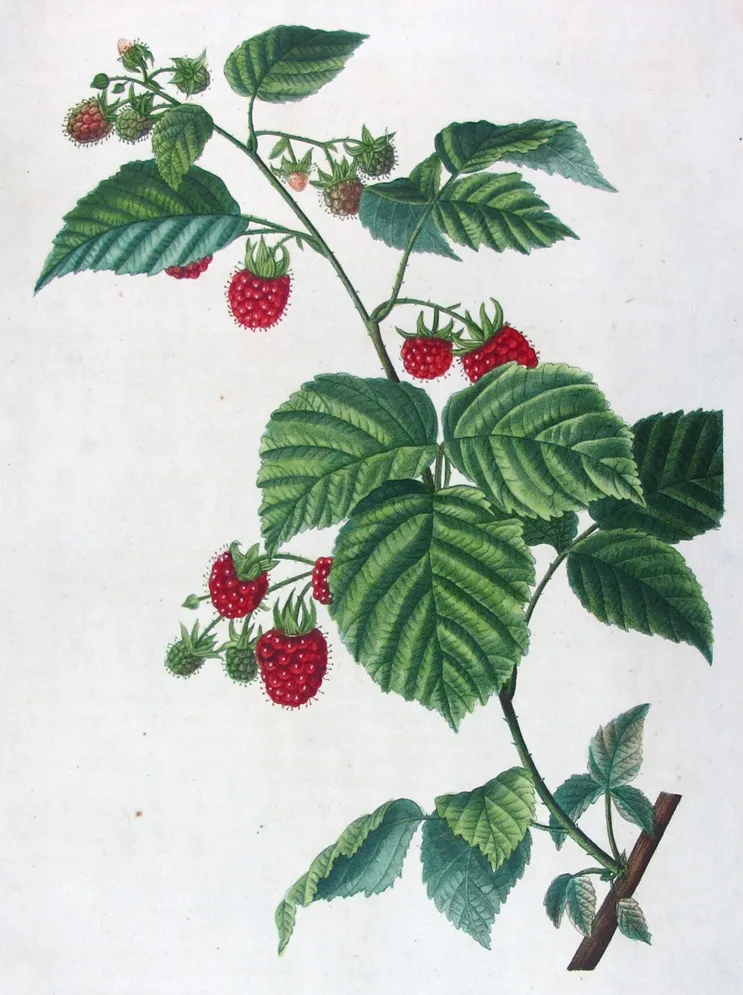
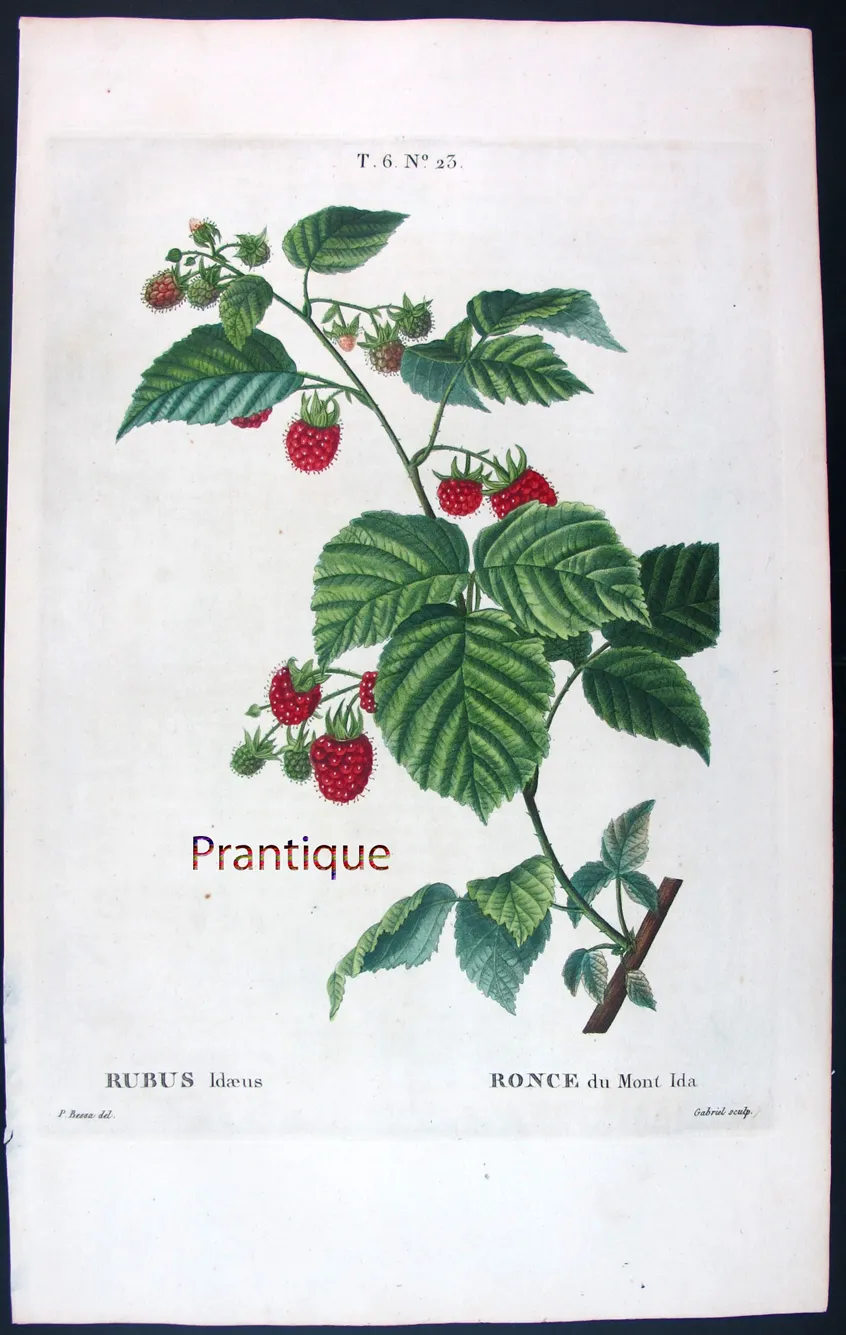
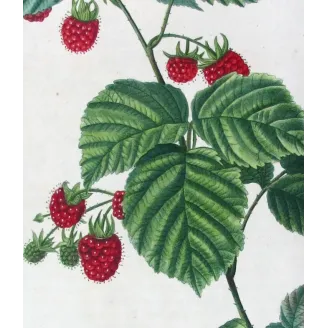
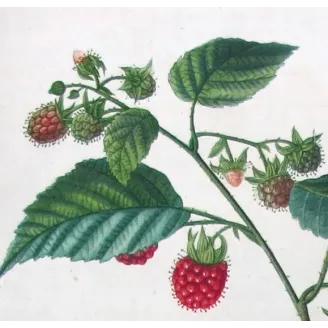
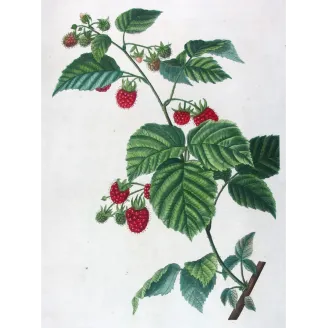
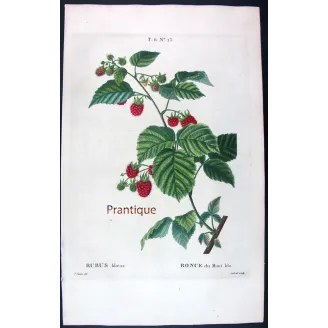
The second engraving, Rubus idaeus, shifts attention to fruiting abundance. The raspberries are rendered through layered stipple and translucent washes, producing a luminous red that contrasts elegantly with the measured green of the leaves. The arched stem creates a natural diagonal rhythm, guiding the eye without theatrical gesture.
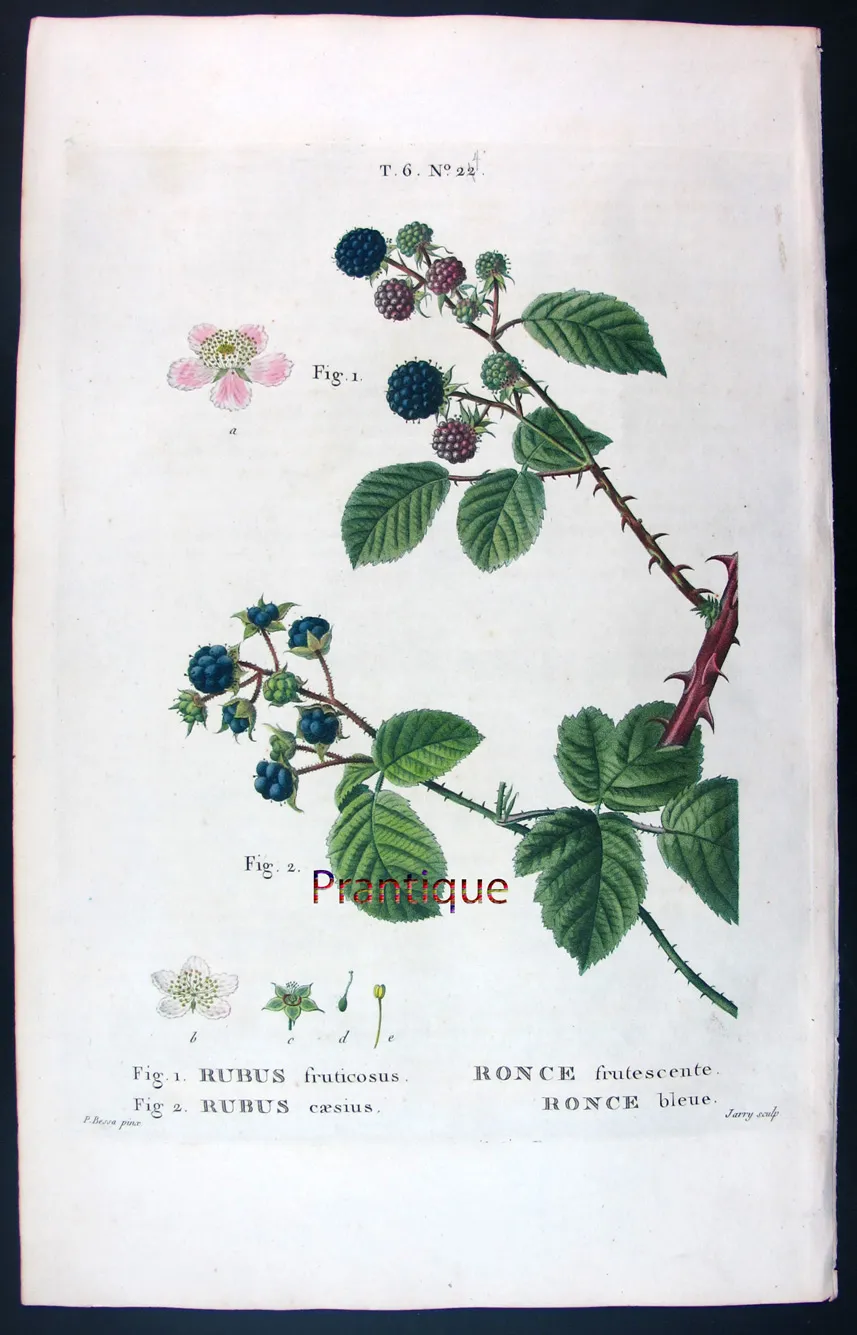
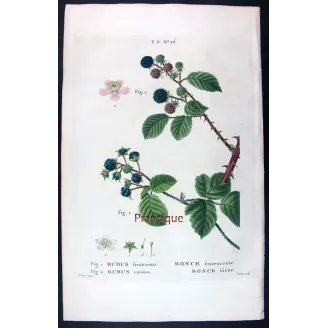
The third plate, showing Rubus fruticosus and Rubus caesius, introduces a deeper chromatic register. Here, thorned stems and clustered dark berries bring structural tension and tonal density. The subtle bloom on the bluish fruit of R. caesius — almost silvery in effect — provides a particularly refined detail, reminding the viewer that botanical precision was inseparable from visual grace.
The genus Rubus has long occupied a dual place in European culture: ornamental in garden settings and indispensable in rural landscapes. By the early nineteenth century, raspberries and brambles were cultivated for preserves, syrups, and desserts, while wild varieties continued to define hedgerows and woodland edges. Botanical publications such as Arbres et Arbustes documented these variations with increasing taxonomic precision. The comparative structure of this ensemble reflects that scientific spirit, presenting cultivated and wild forms within a single visual framework.
All three engravings are in like brand new antique condition. The paper remains clean and well preserved, with no watermark observed. The original hand-colouring retains freshness and tonal clarity across all plates. The impressions are crisp, and the margins generous. Engraved credits confirm the original drawings by Pancrace Bessa and the respective engravers. The overall preservation enhances both decorative elegance and historical authenticity.
For further context on Pancrace Bessa and his distinctive contribution to French botanical illustration, see our editorial feature:
Specific References
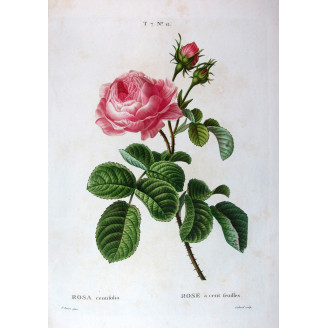
Hundred-petaled Rose Rose à cent feuilles Original hand-colored botanical engraving by Pancrace Bessa.
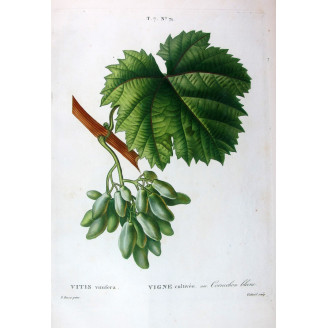
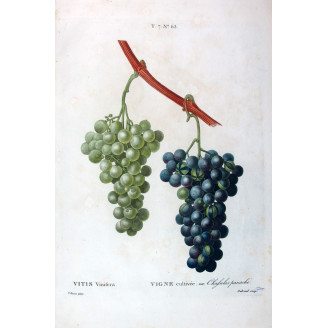
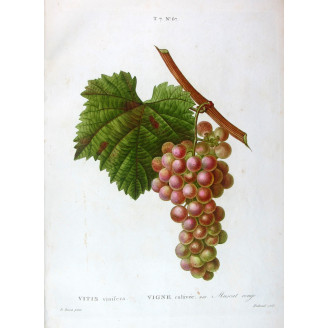
Original antique print of the common grape vine, Vitis vinifera, illustrated by Pancrace Bessa.
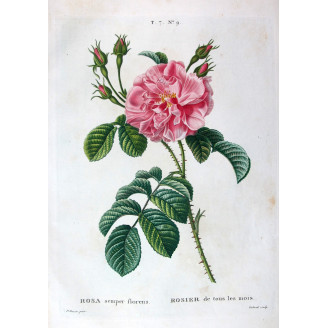
Monthly Rose Rosier de tous les mois Original hand-colored botanical engraving by Pancrace Bessa.
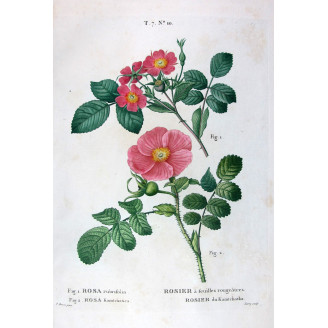
Kamchatka Rose Rosier du Kamchatka Original hand-colored botanical engraving by Pancrace Bessa.
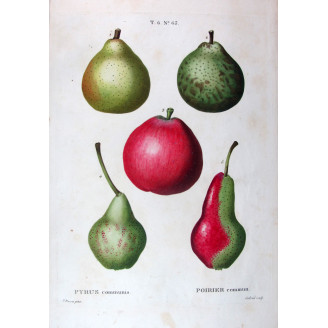
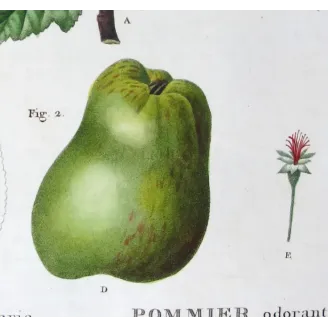
A refined study of French cultivated pear varieties, distinguished by subtle chromatic contrasts and carefully modelled forms. This hand-colored engraving reflects Pancrace Bessa’s ability to elevate orchard subjects through balance, restraint, and quiet visual authority.
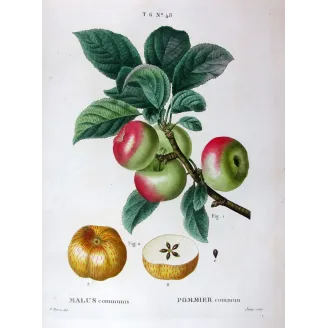
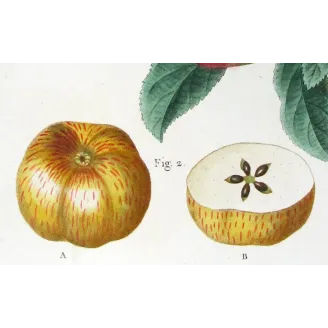
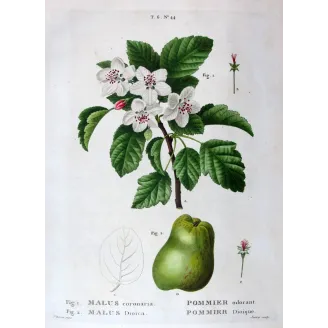
A finely executed early 19th-century botanical engraving illustrating a cultivated apple variety (Malus communis), drawn by Pancrace Bessa for Arbres et Arbustes. The composition combines precise botanical observation with refined decorative balance, presenting fruit and foliage with clarity and quiet elegance. Exceptional hand-colouring and careful modelling reflect the sophistication of French pomological illustration at its height.
A finely executed early 19th-century botanical engraving illustrating a cultivated apple variety (Malus communis), drawn by Pancrace Bessa for Arbres et Arbustes. The composition combines precise botanical observation with refined decorative balance, presenting fruit and foliage with clarity and quiet elegance. Exceptional hand-colouring and careful modelling reflect the sophistication of French pomological illustration at its height.
Rare depiction of striped Chasselas grape clusters, unique in its pattern and color.
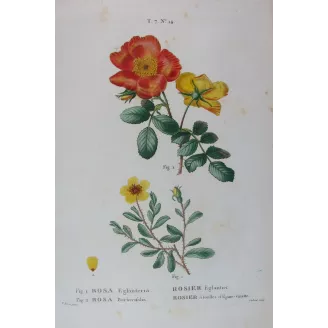
Eglantine & Berberis-leaved Rose Rosier à feuilles d'Épine-vinette Original hand-colored botanical engraving by Pancrace Bessa.
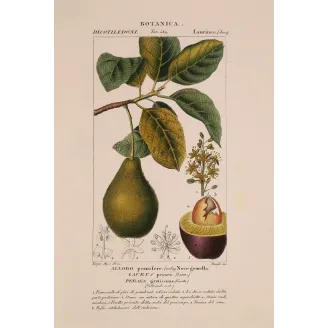
Botanical plate of avocado with whole fruit, seed, and internal anatomy.
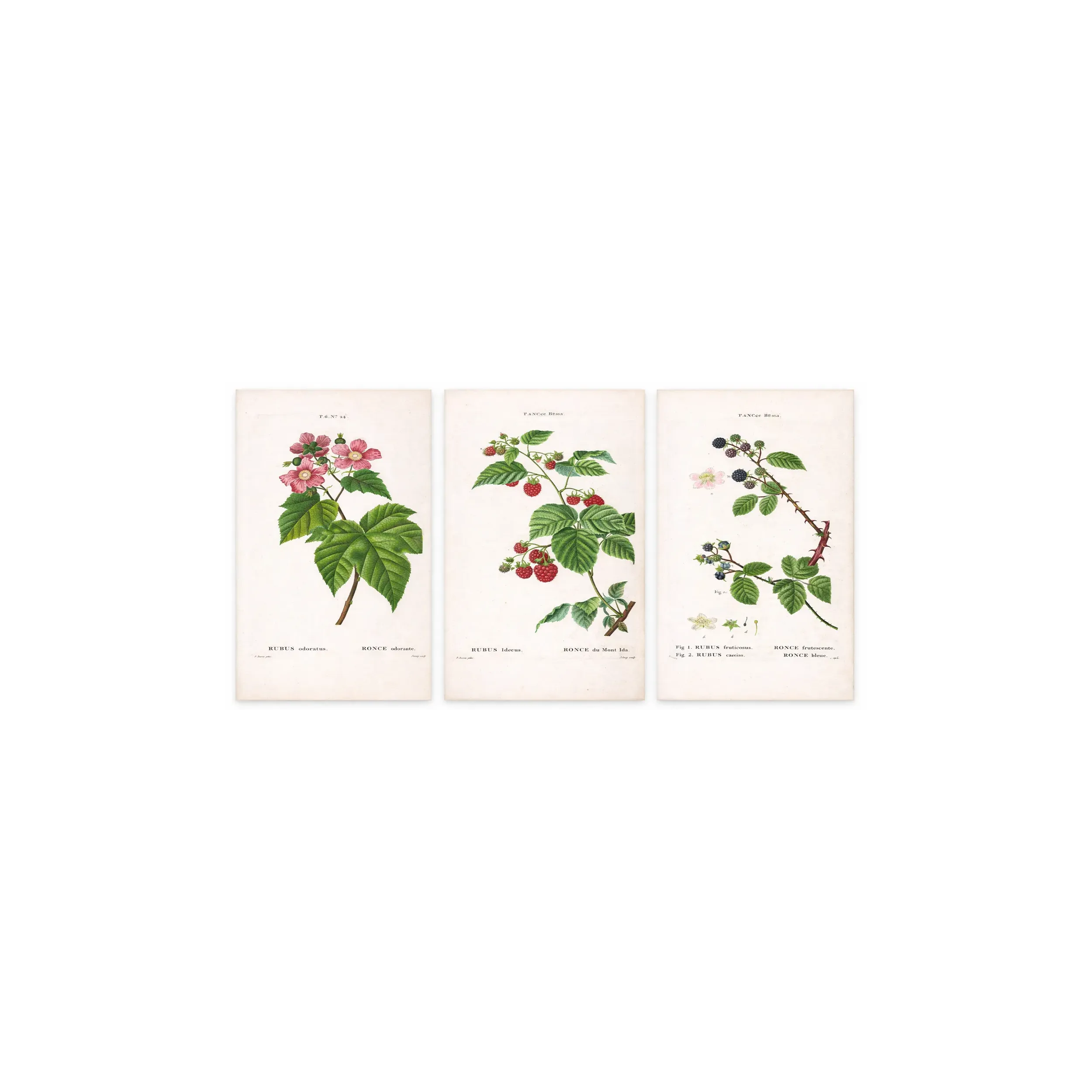
Illustration of the sweet-scented flowering bramble, Rubus odoratus, in full bloom.