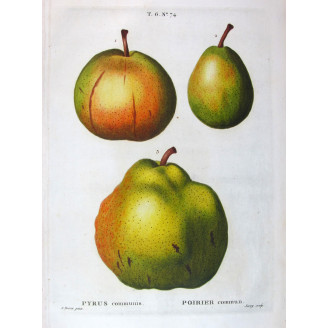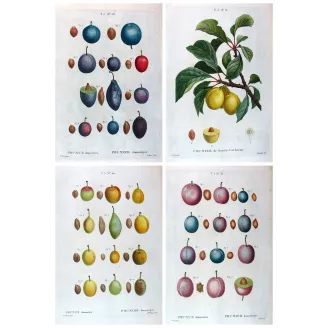
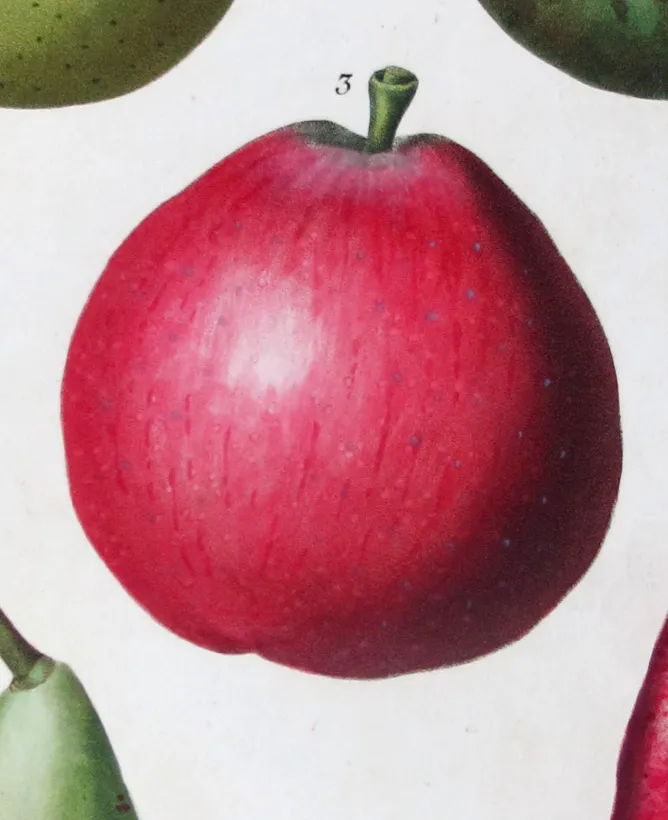
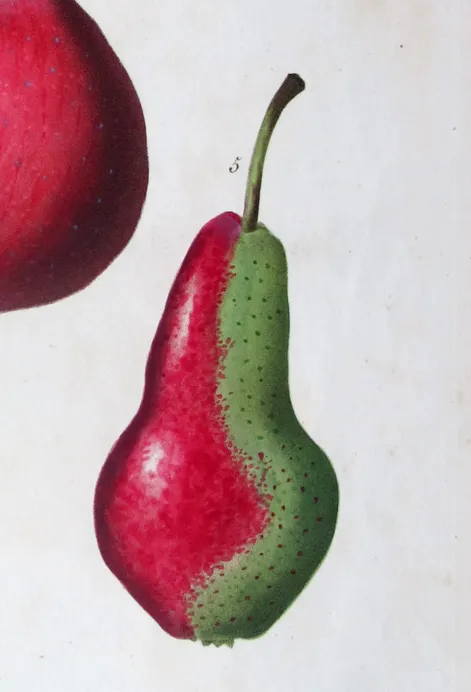
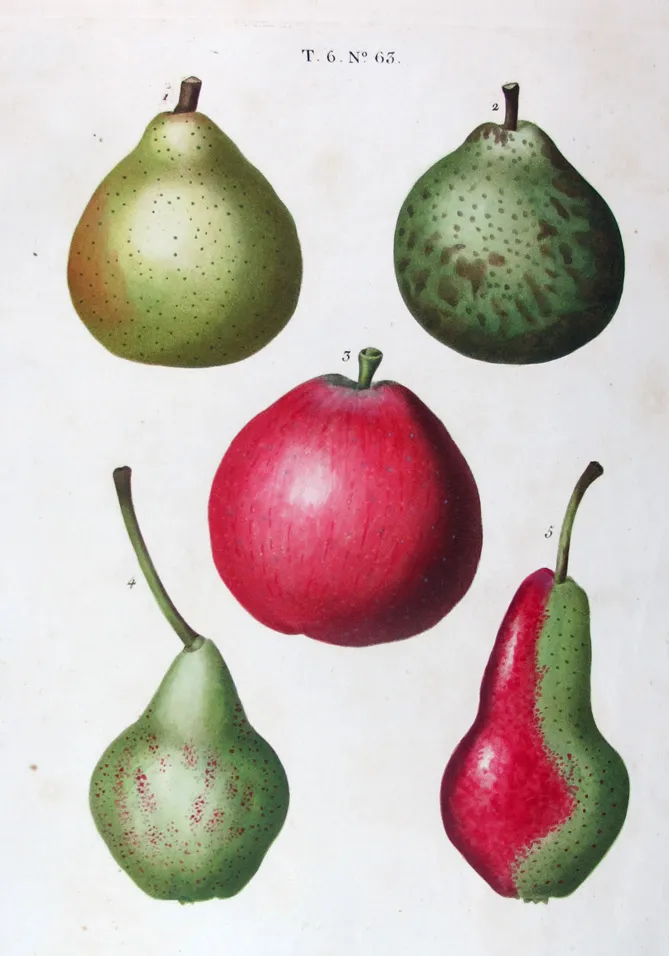
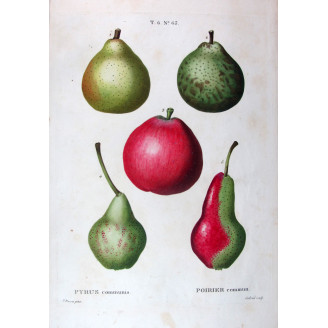

A refined study of French cultivated pear varieties, distinguished by subtle chromatic contrasts and carefully modelled forms. This hand-colored engraving reflects Pancrace Bessa’s ability to elevate orchard subjects through balance, restraint, and quiet visual authority.
 Delivery policy
Your print will be carefully prepared and shipped worldwide via trusted couriers (UPS or similar).
 Authentic antique prints
Original engravings from the 17th–19th century.
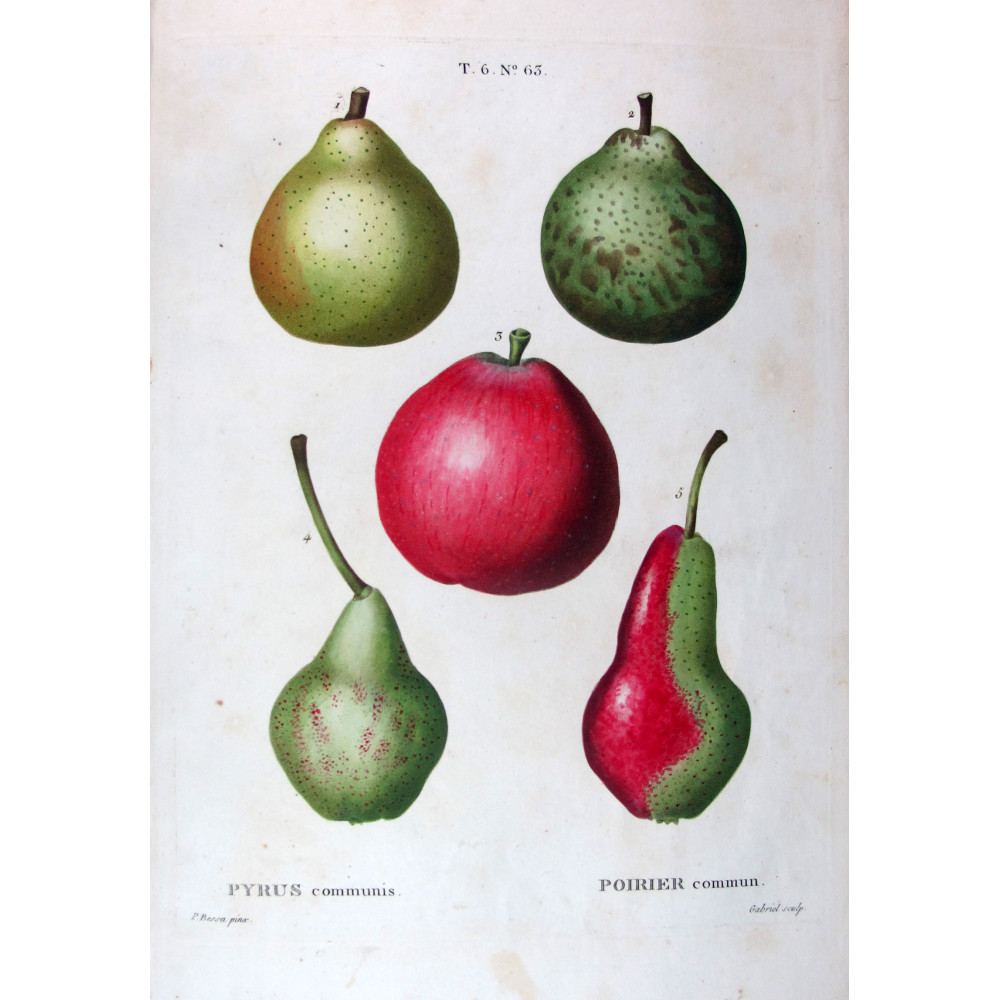
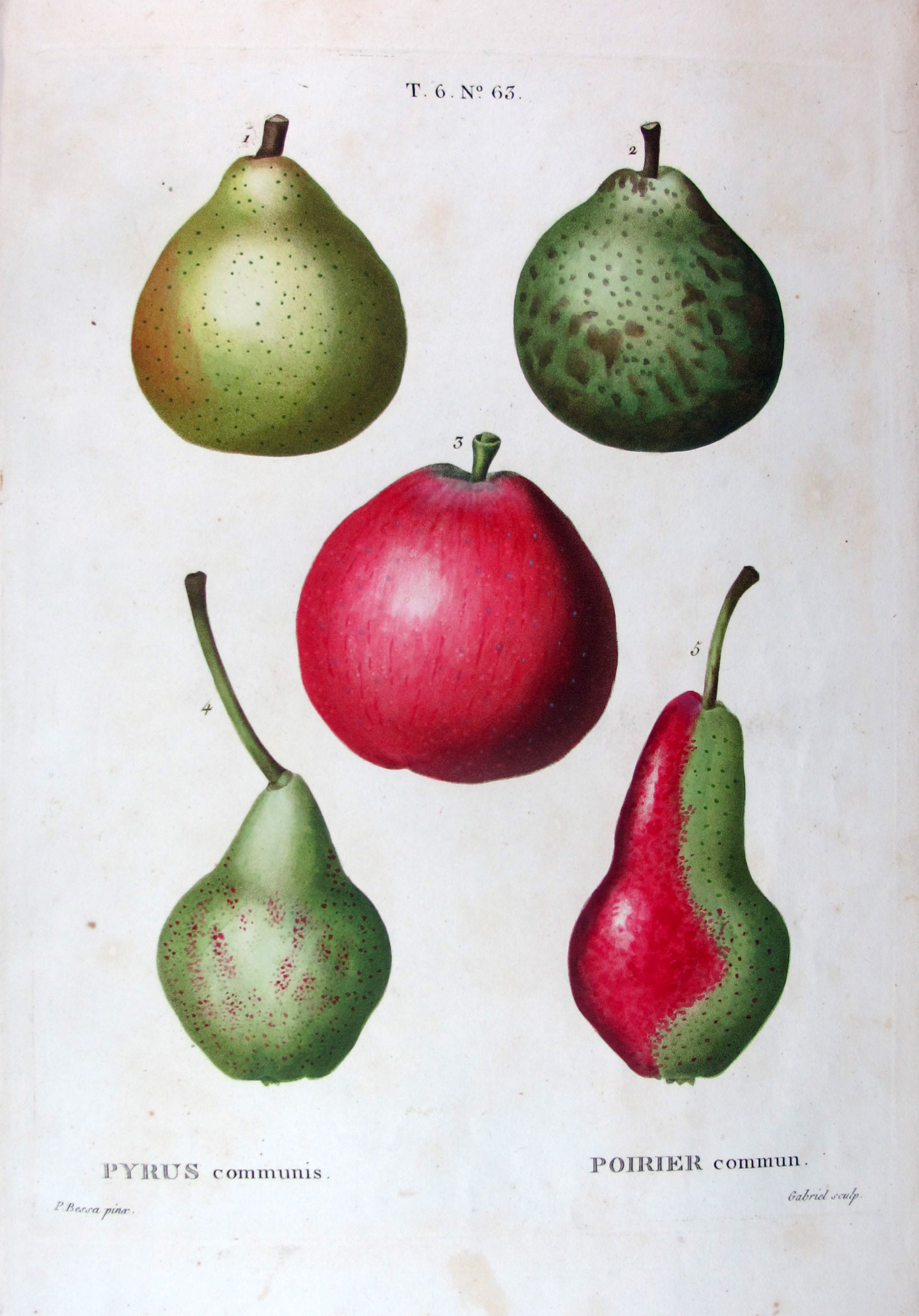
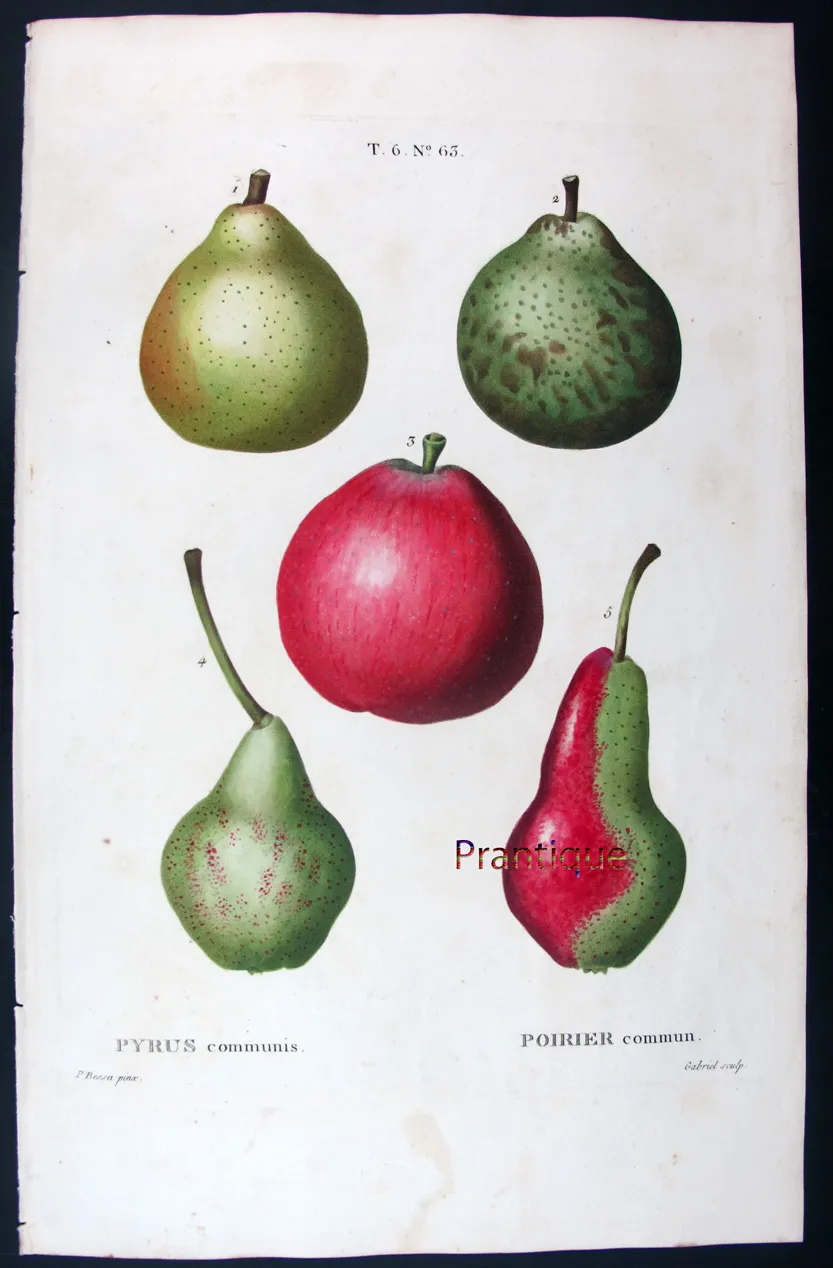
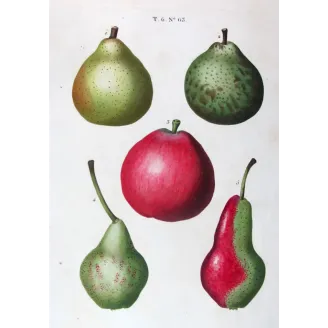
This original botanical engraving presents five cultivated pear studies arranged with deliberate clarity and visual balance. Each fruit is isolated against a generous field of negative space, allowing form, surface texture, and coloration to emerge with striking legibility and quiet authority.
Bessa’s handling of colour is particularly refined in this plate. Subtle tonal transitions model the pears’ volume without exaggeration, while the restrained use of reds, greens, and muted shadows lends the composition both depth and compositional harmony. The result is a plate that reads as simultaneously documentary and sculptural.
Executed for Arbres et Arbustes, this engraving exemplifies the highest standards of early nineteenth-century French botanical illustration, where cultivated orchard fruits were recorded with scientific intent and elevated through artistic discipline.
— • —
The composition is structured around a central fruit that anchors the plate, surrounded by four complementary studies. This radial arrangement creates a calm visual rhythm, guiding the eye naturally across variations in silhouette, surface patterning, and chromatic weight.
The pears display a wide range of natural finishes—from softly speckled greens to richly blushed surfaces—demonstrating Bessa’s capacity to convey material presence through restrained hand-colouring. The engraving remains elegant and highly adaptable to contemporary interiors, where subtle botanical subjects are especially valued.
The plate is classified as Pyrus communis and documents five distinct pear cultivars identified in the original publication. Such varietal precision reflects the period’s systematic approach to orchard documentation and cultivated fruit classification.
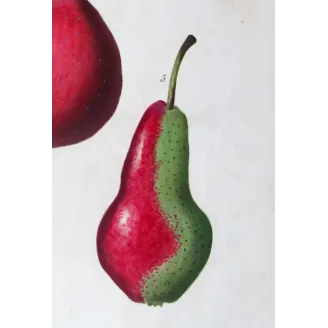
The cultivars illustrated are: Doyenné (Fig. 1), Bezi de la Motte (Fig. 2), Poire de Rateau (Fig. 3), Fin-Or de septembre (Fig. 4), and Bellissime d’automne (Fig. 5). Each fruit is presented individually, emphasizing differences in form, maturity, and surface character.
Rather than idealizing the subject, Bessa records subtle natural irregularities—variations in curvature, colour density, and speckling—offering a historically grounded portrait of cultivated pears in early nineteenth-century France.
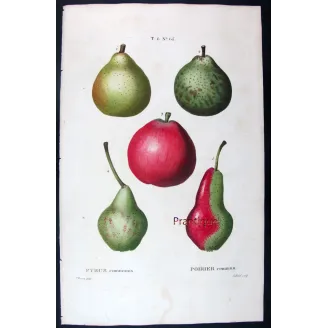
The engraving is in very good antique condition. A faint, near-imperceptible toning consistent with light offset ageing is visible in limited areas, remaining discreet and unobtrusive. No watermark has been observed. The original hand-colouring is fresh and well preserved, with strong tonal balance across all fruit studies. The engraved credits “P. Bessa pinx.” and “Gabriel sculp.” are present, confirming the original drawing by Pancrace Bessa and the engraving executed by Gabriel.
For insight into Bessa’s distinctive hand-colouring techniques and his role in French botanical illustration, see our editorial feature:
Specific References
A sculptural study of cultivated fruit, defined by rounded volumes and restrained modelling, rendered with quiet elegance and visual balance.
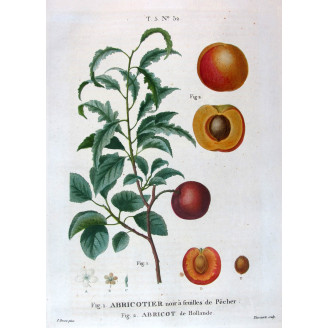
Dutch Apricot Abricot de Hollande Original hand-colored botanical engraving by Pancrace Bessa.
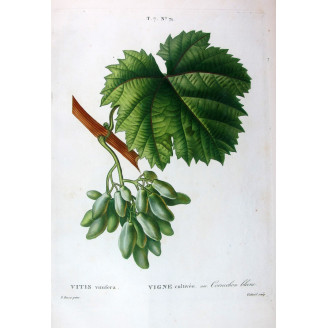
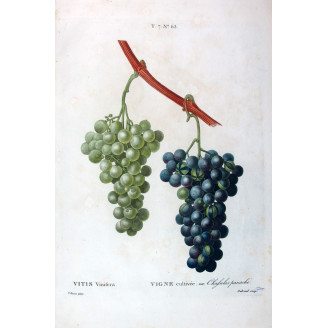
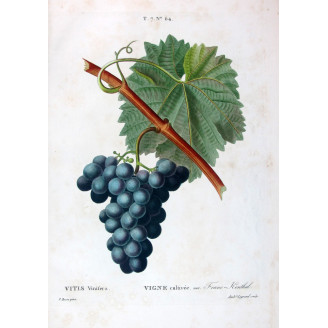
Original antique print of the common grape vine, Vitis vinifera, illustrated by Pancrace Bessa.
Rare depiction of striped Chasselas grape clusters, unique in its pattern and color.
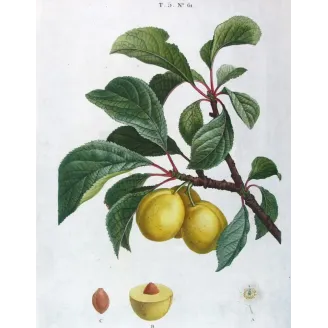
Botanical illustration of the Saint Catherine plum, a delicate fruit-bearing tree, by Pancrace Bessa.
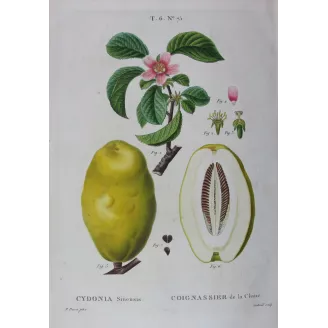
Chinese Quince Coignassier de la Chine Original hand-colored botanical engraving by Pancrace Bessa.
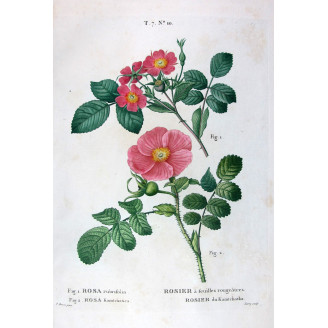
Kamchatka Rose Rosier du Kamchatka Original hand-colored botanical engraving by Pancrace Bessa.
A refined orchard subject where volume and proportion are carefully balanced, giving the fruit a calm, almost sculptural presence.
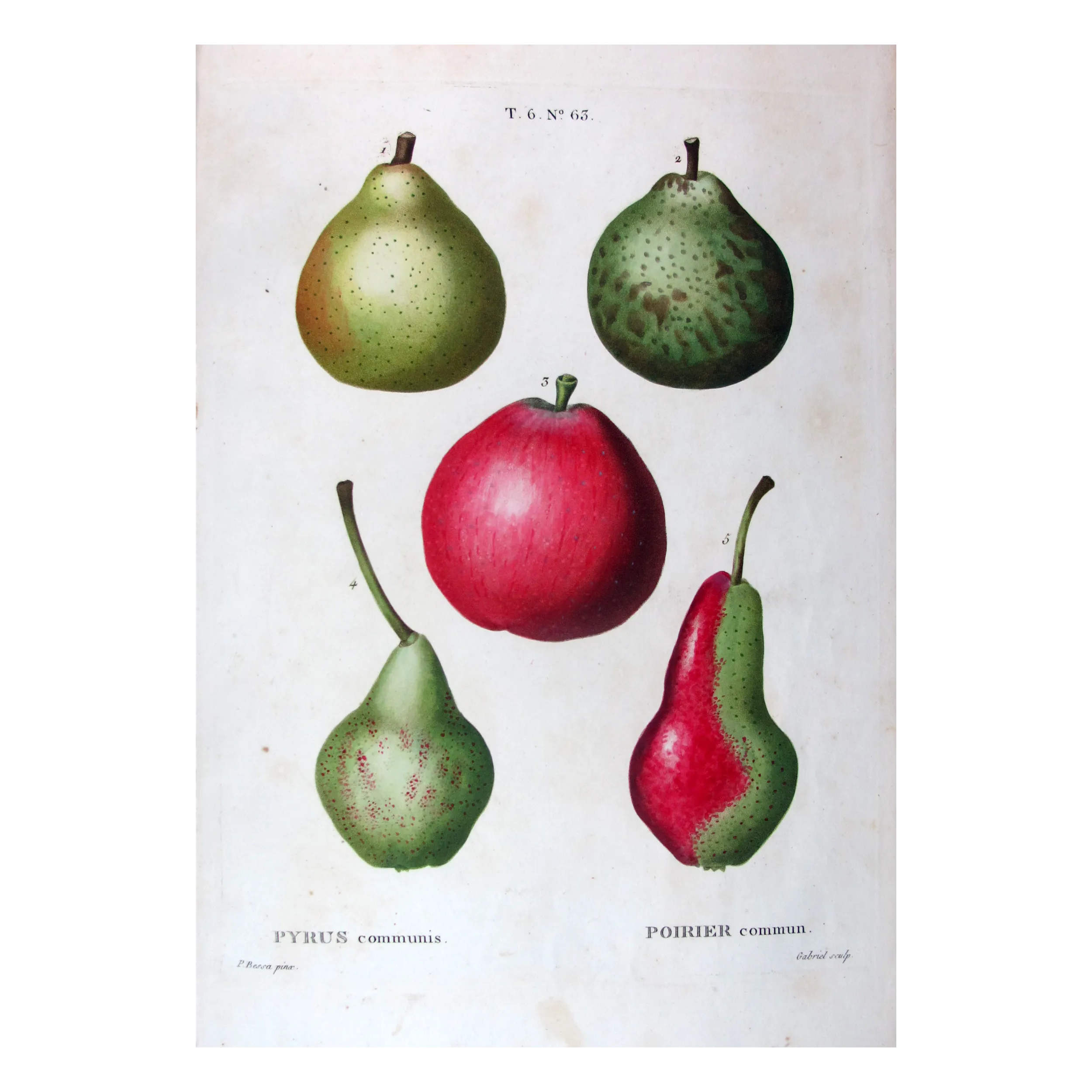
A refined study of French cultivated pear varieties, distinguished by subtle chromatic contrasts and carefully modelled forms. This hand-colored engraving reflects Pancrace Bessa’s ability to elevate orchard subjects through balance, restraint, and quiet visual authority.