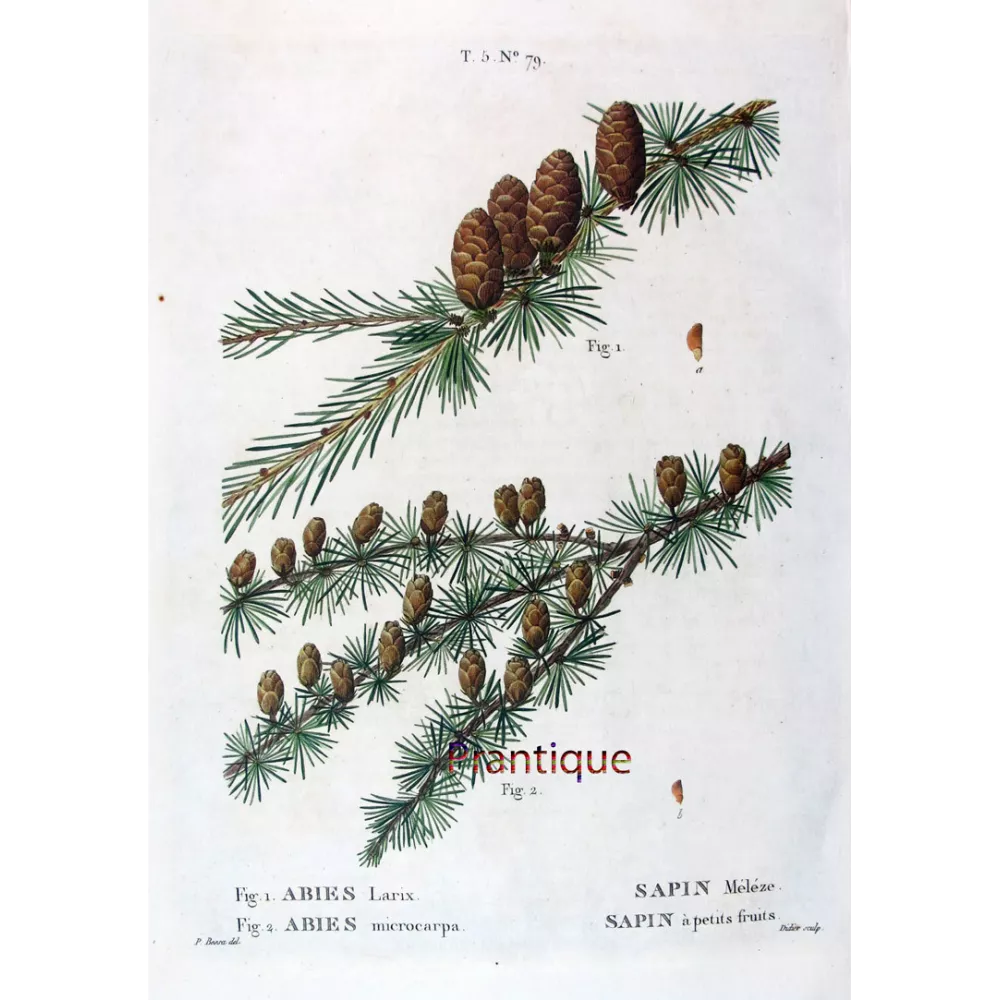
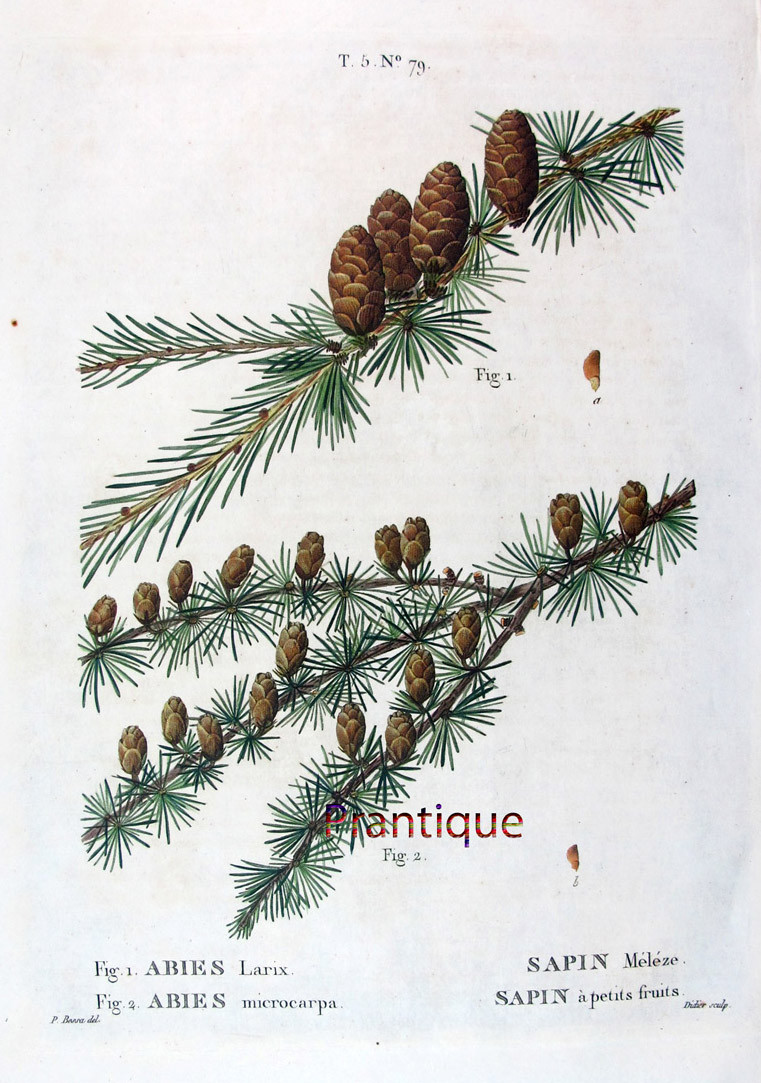
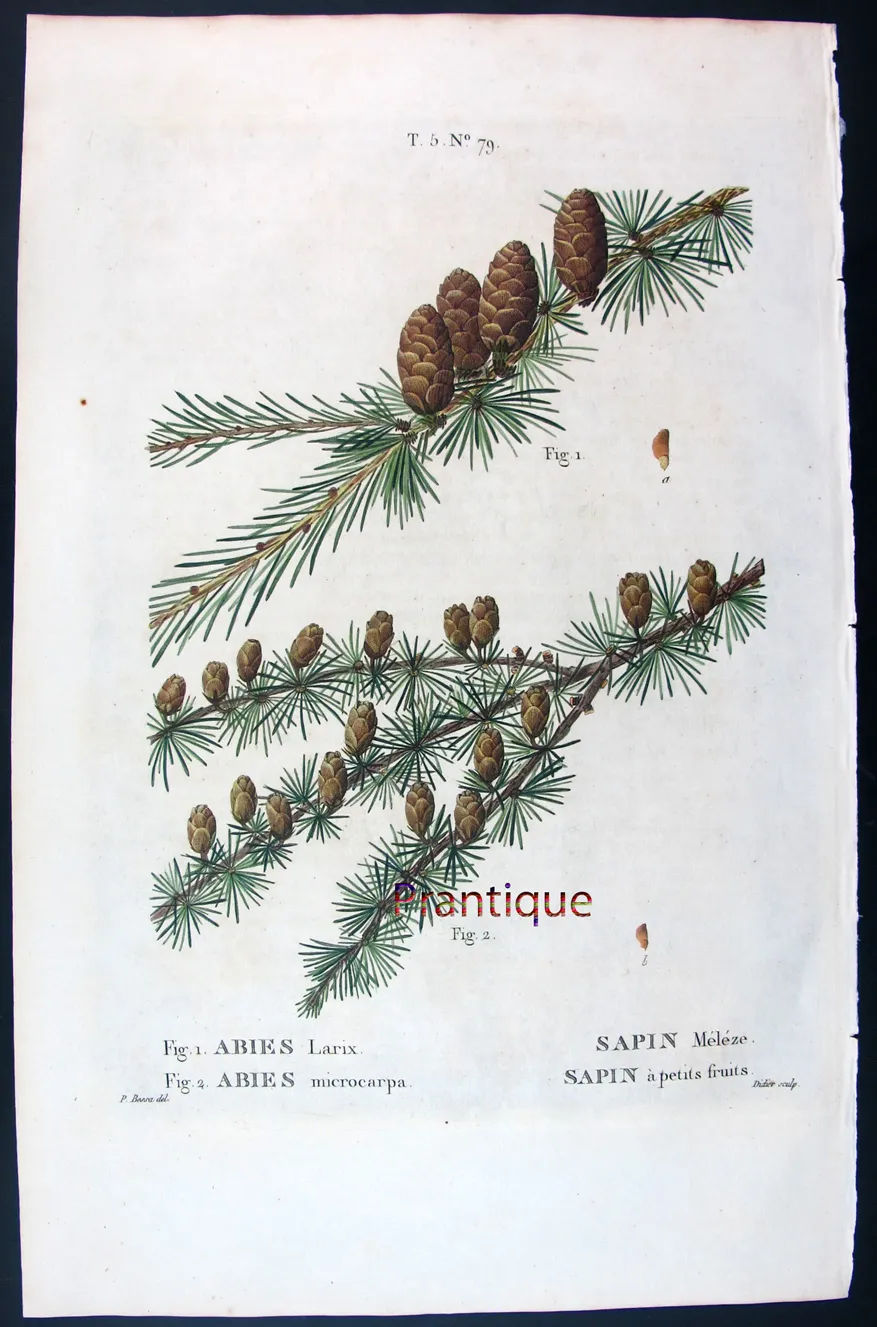

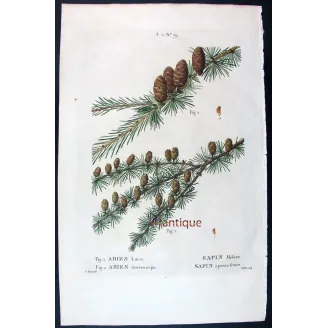
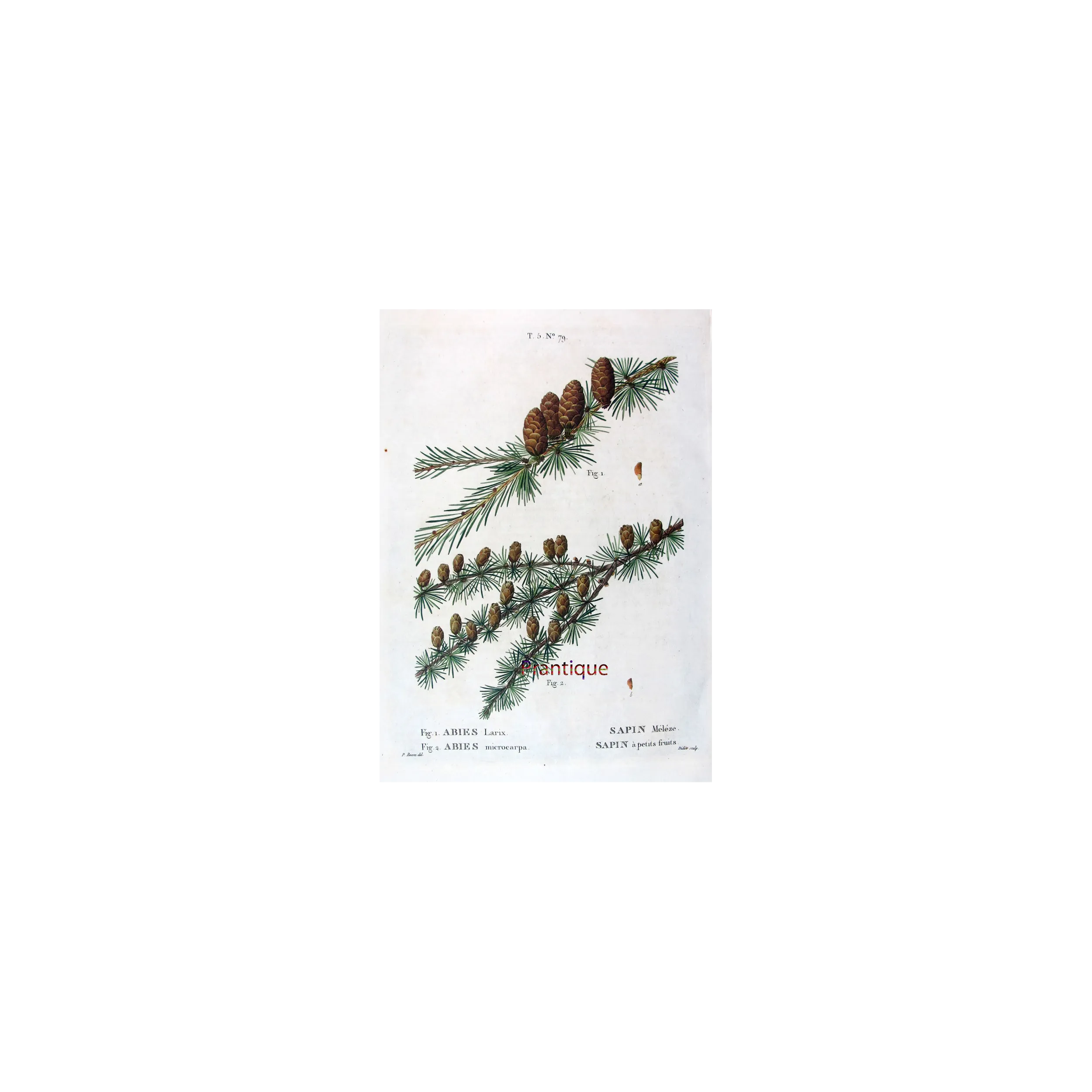
Twin species of larch firs in a beautifully orchestrated print.
 Delivery policy
Your print will be carefully prepared and shipped worldwide via trusted couriers (UPS or similar).
 Authentic antique prints
Original engravings from the 17th–19th century.
This original engraving presents Abies larix, now generally classified as Larix decidua, alongside Abies microcarpa. The plate offers a refined comparative study of branching structure and cone development, rendered with characteristic clarity and compositional balance.
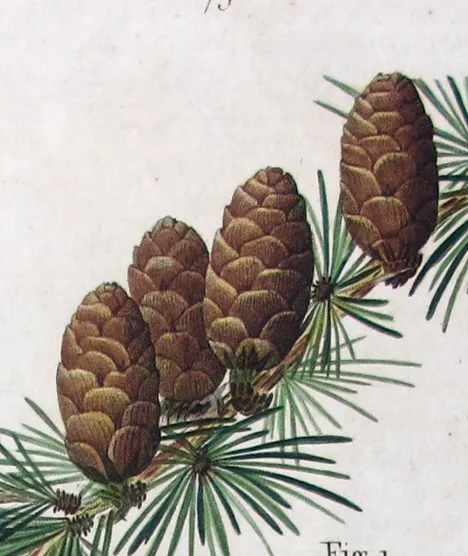
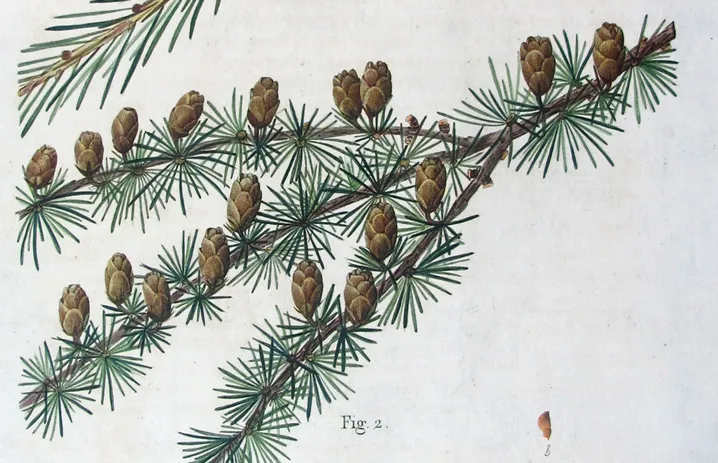
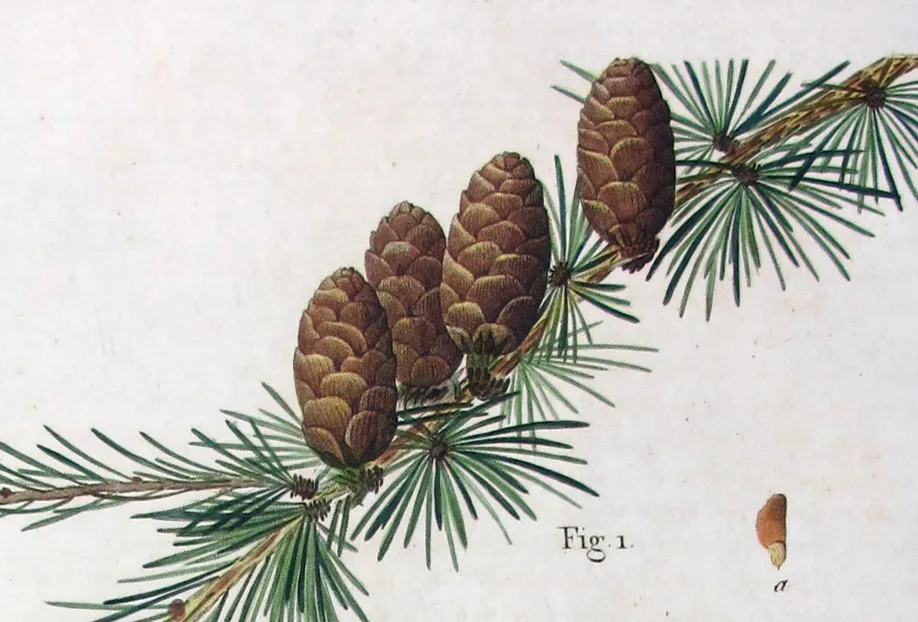
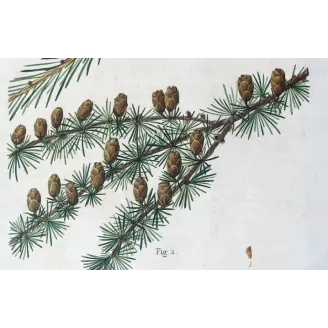
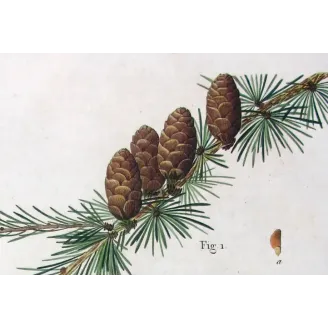
The upper branch displays mature cones arranged rhythmically along slender stems, while the lower study introduces smaller cone forms distributed across a denser needle pattern. The fine articulation of scale structure and needle clusters reflects Bessa’s disciplined approach to botanical observation.
A particularly noteworthy detail lies in the identity of the species itself. Unlike most conifers, the European larch is deciduous: it sheds its needles each autumn before entering winter dormancy. This uncommon trait among needle-bearing trees makes the larch a botanical exception, a conifer that behaves like a broadleaf in seasonal rhythm.
— • —
The cones are engraved with controlled stipple and subtle shading, their overlapping scales creating a textured surface that contrasts elegantly with the fine radial arrangement of the needles. The elongated composition lends the sheet a graceful linear quality.
The juxtaposition of mature and developing cones enhances both scientific readability and decorative rhythm. The restrained palette of greens and warm browns produces a harmonious chromatic balance well suited to refined interior settings.
Larix decidua is native to the mountainous regions of Central Europe, particularly the Alps and Carpathians. Valued historically for its durable timber and resistance to decay, it has played an important role in alpine construction and forestry. Its seasonal transformation from bright green foliage to bare winter branches distinguishes it within the conifer family.
The engraving is in very good antique condition. A very light, uniform creamy toning is visible across the sheet, consistent with the natural ageing of early nineteenth-century paper. This gentle tonal shift is even and stable, and does not interfere with the clarity of the image. No watermark has been observed. The engraved credits confirm the original drawing by Pancrace Bessa and the engraving executed by Dubreuil, verifying its authenticity as an original period plate.
For further context on Pancrace Bessa and his distinctive contribution to French botanical illustration, see our editorial feature:
Specific References
Botanical illustration of the Saint Catherine plum, a delicate fruit-bearing tree, by Pancrace Bessa.
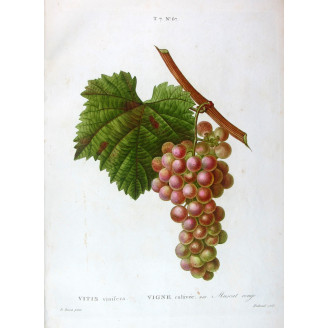
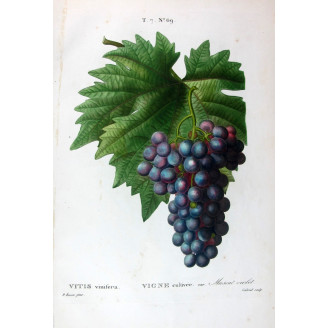
Elegant depiction of a rich purple Muscat grape variety by Pancrace Bessa.
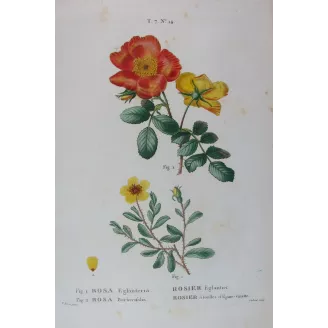
Eglantine & Berberis-leaved Rose Rosier à feuilles d'Épine-vinette Original hand-colored botanical engraving by Pancrace Bessa.
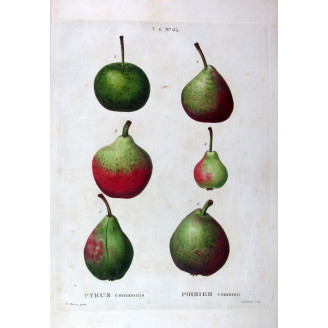
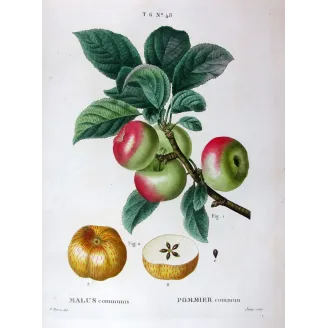
A finely executed early 19th-century botanical engraving illustrating a cultivated apple variety (Malus communis), drawn by Pancrace Bessa for Arbres et Arbustes. The composition combines precise botanical observation with refined decorative balance, presenting fruit and foliage with clarity and quiet elegance. Exceptional hand-colouring and careful modelling reflect the sophistication of French pomological illustration at its height.
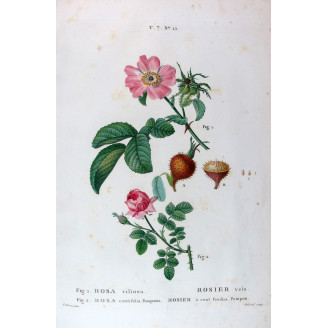
Velvet Rose & Pompon Centifolia Rosier velu & Rosier à cent feuilles, Pompon Original hand-colored botanical engraving by Pancrace Bessa.
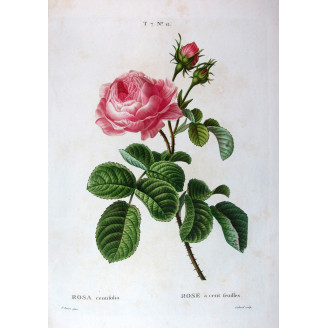
Hundred-petaled Rose Rose à cent feuilles Original hand-colored botanical engraving by Pancrace Bessa.
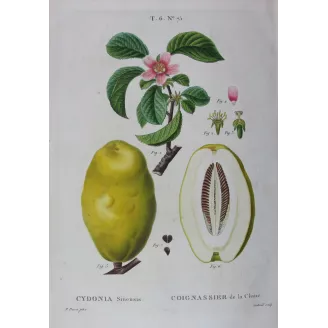
Chinese Quince Coignassier de la Chine Original hand-colored botanical engraving by Pancrace Bessa.
Twin species of larch firs in a beautifully orchestrated print.