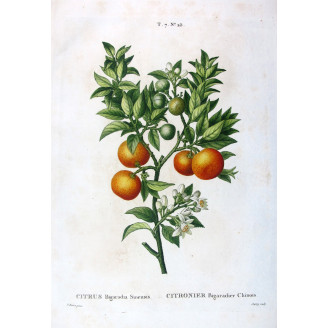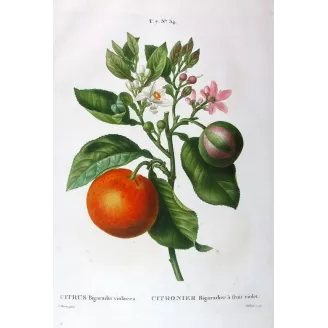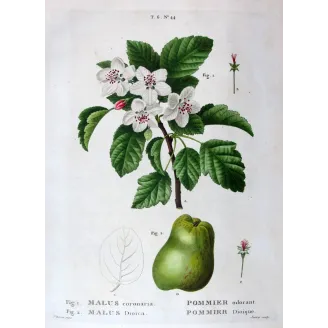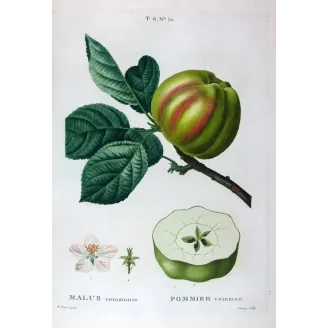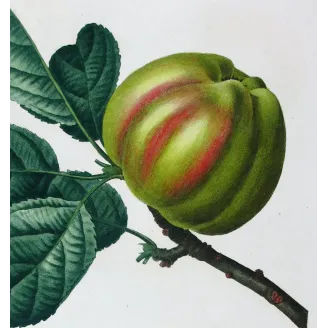
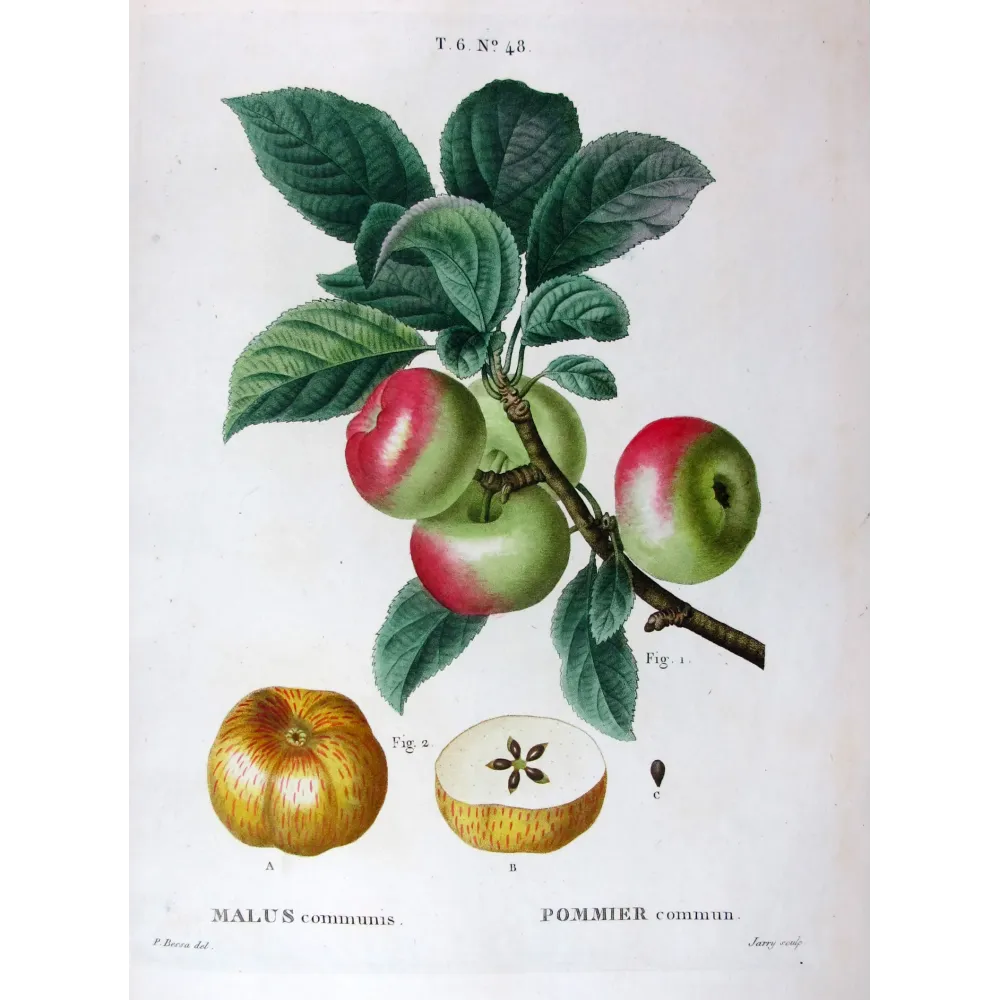
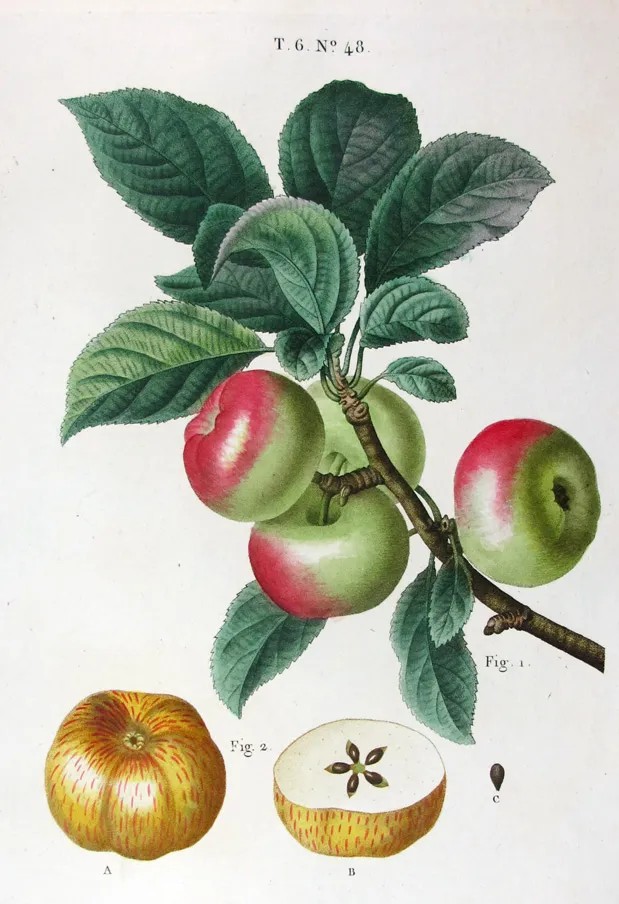
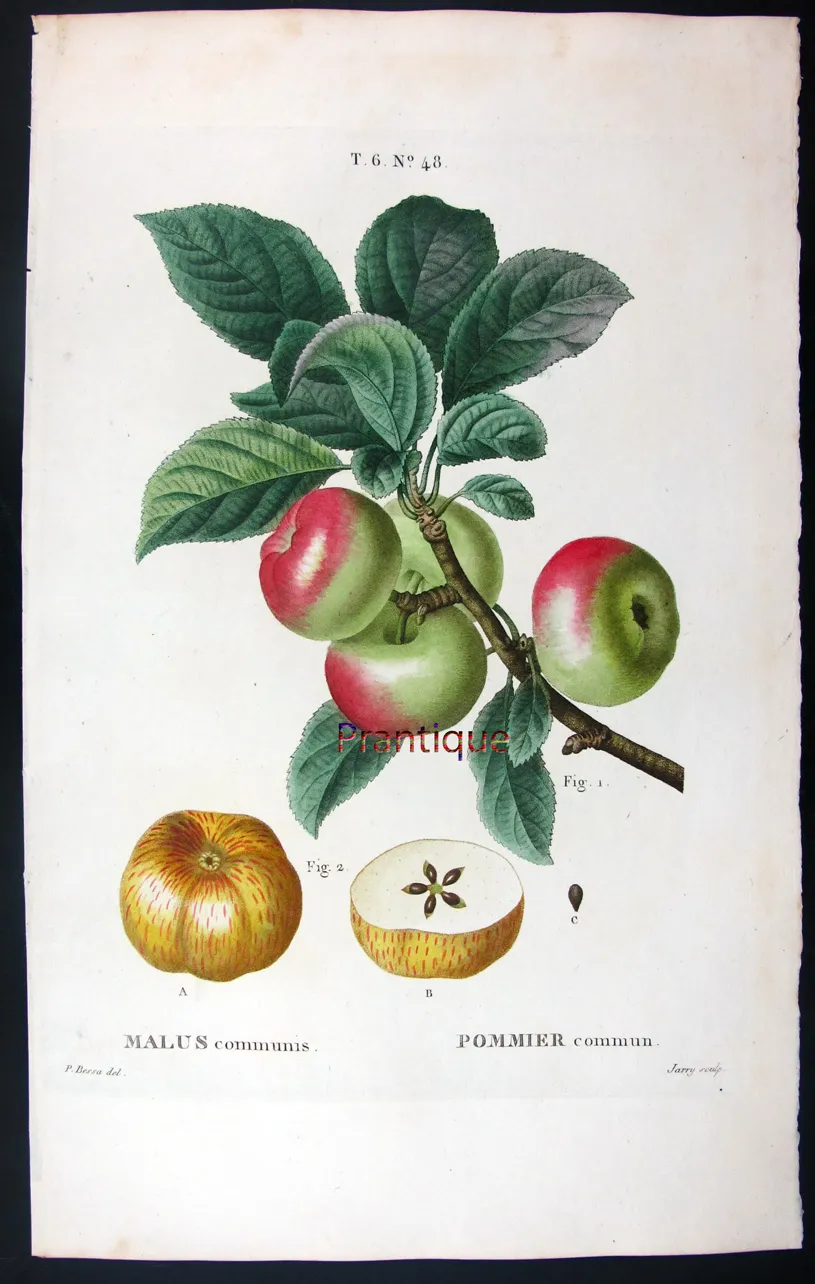
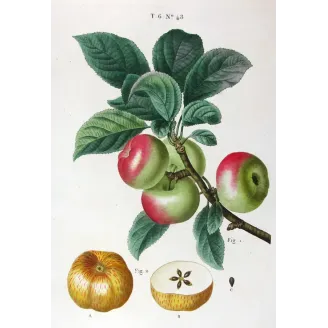
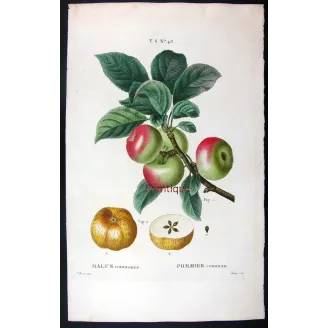
A finely executed early 19th-century botanical engraving illustrating a cultivated apple variety (Malus communis), drawn by Pancrace Bessa for Arbres et Arbustes. The composition combines precise botanical observation with refined decorative balance, presenting fruit and foliage with clarity and quiet elegance. Exceptional hand-colouring and careful modelling reflect the sophistication of French pomological illustration at its height.
 Delivery policy
Your print will be carefully prepared and shipped worldwide via trusted couriers (UPS or similar).
 Authentic antique prints
Original engravings from the 17th–19th century.
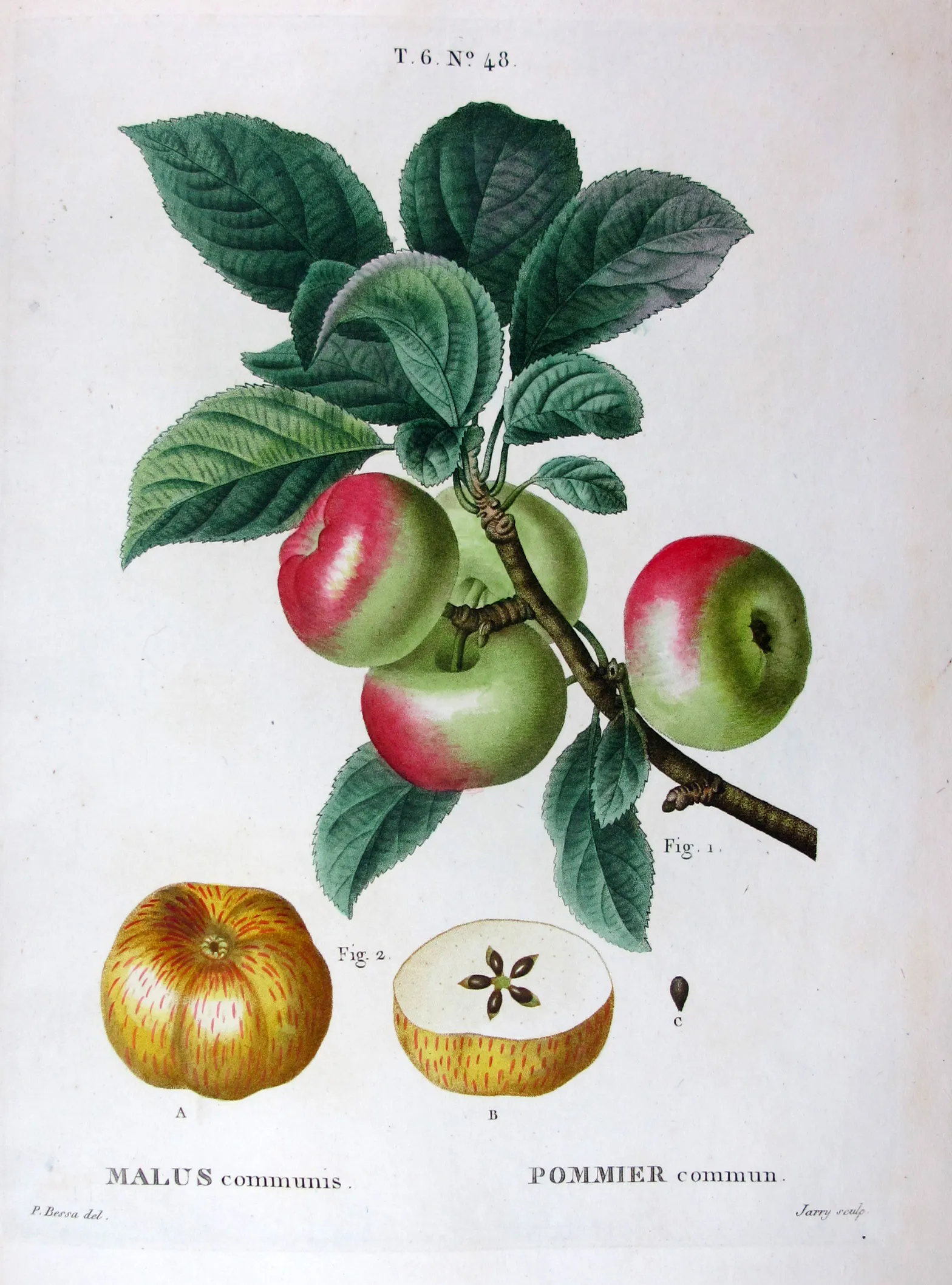
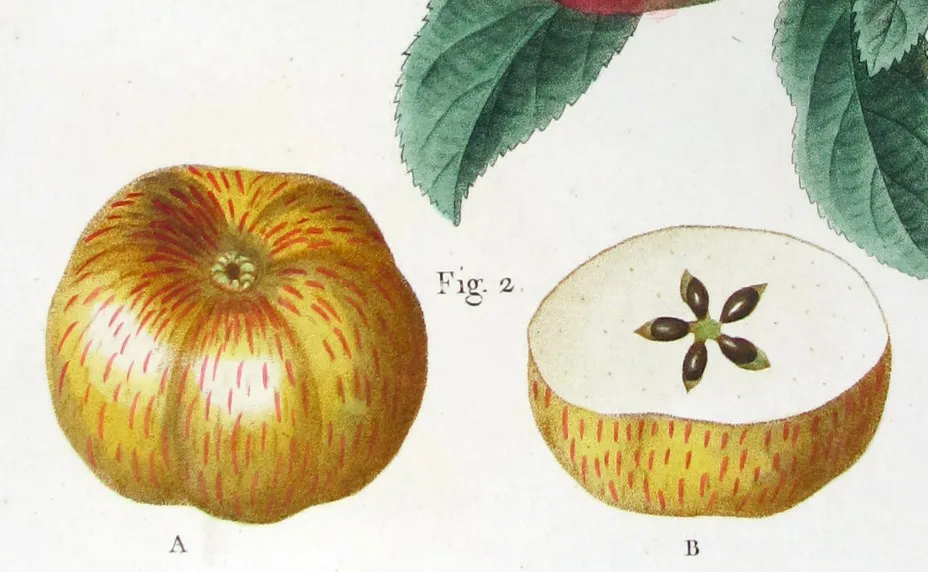
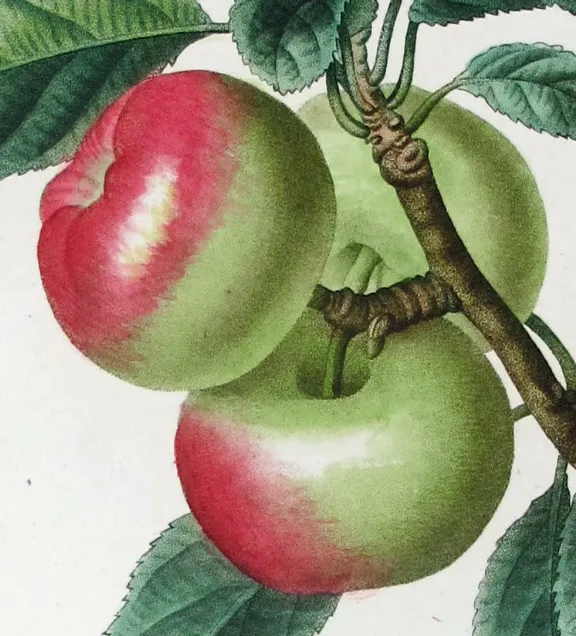
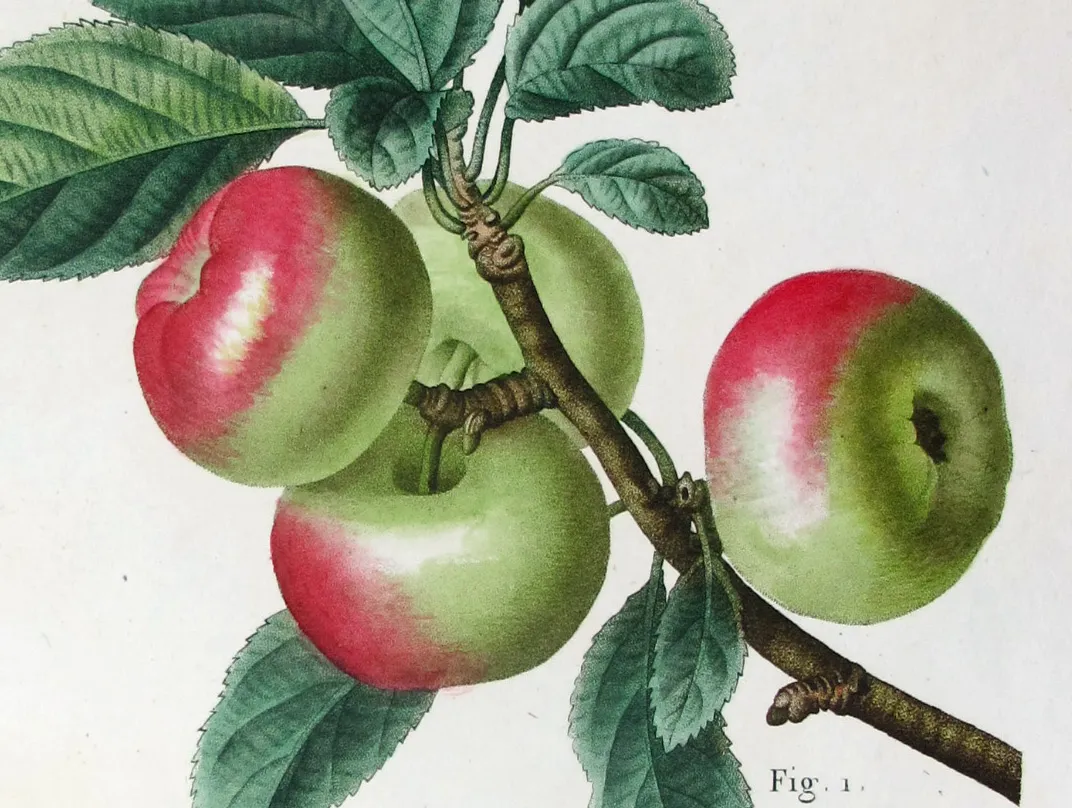
This original botanical engraving depicts a fruiting branch of an apple tree, shown laden with leaves and multiple apples, accompanied by additional studies of the fruit and its internal structure. The composition balances abundance and clarity: the branch forms a graceful diagonal presence, while the supplementary figures below provide a calm, analytical counterpoint.
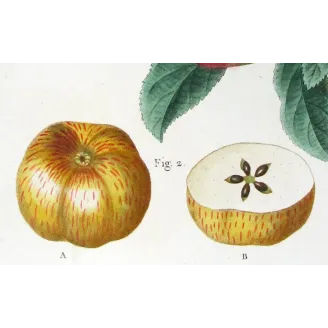
Bessa’s approach is both botanical and distinctly decorative. The clustered fruits create a rhythm of rounded volumes, each modelled through soft tonal transitions, while the dense foliage frames them in layered greens. The lower vignette—an apple shown whole and in horizontal section—adds structure and completeness, reinforcing the plate’s refined documentary intent.
The engraving forms part of Arbres et Arbustes, one of the most accomplished French botanical publications of the early nineteenth century, where Pancrace Bessa elevated cultivated orchard subjects through refined observation and elegant pictorial design.
— • —
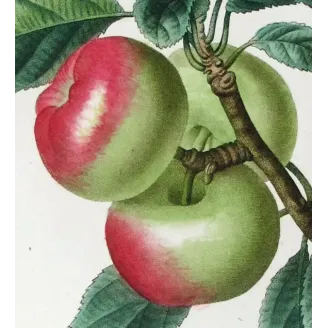
The composition is organized around a branch that sweeps diagonally across the sheet, carrying a cluster of fruits into the centre of attention. This creates both movement and stability: the fruit forms the visual anchor, while the foliage provides a structured canopy of greens and shadowed contours.
Colour application is fresh and controlled. The apples are rendered in cool greens animated by warm pink-red blush, creating a vivid yet natural contrast. Below, a striped apple is presented whole and in section, introducing a second palette register and adding visual variety. The horizontal cut emphasizes inner geometry—seed chambers arranged with quiet symmetry—strengthening the plate’s blend of decorative appeal and botanical precision.
Although the plate is broadly classified under Malus communis, it is more precisely identified in the original publication as representing the Pommier d’Apis (Apis apple). This historic cultivated variety was admired for its neat form and ornamental presence, making it particularly appreciated in refined orchards and garden settings.
The plate’s structure reflects the period’s pomological approach: varieties were documented through both outward appearance and internal organization. By combining a fruiting branch, an entire apple, and a horizontal cross-section—alongside a seed study—the engraving offers a complete botanical account while preserving an elegant, harmonious composition.
The result is a work that reads simultaneously as orchard history and decorative design: a cultivated fruit variety presented with the same pictorial care typically reserved for more overtly ornamental subjects.
The engraving is in very good antique condition. Light, even browning is present, consistent with the natural ageing of early nineteenth-century paper. No watermark has been observed. The original hand-colouring remains fresh and well preserved across foliage and fruit, with strong clarity in the additional fruit studies and the horizontal section. No significant defects affect the image. The engraved credits “P. Bessa del.” and “Janinet sculp.” are present, attesting to the original drawing by Pancrace Bessa and the engraving executed by Janinet.
For further context on Pancrace Bessa and his distinctive contribution to French botanical illustration, see our editorial feature:
Specific References
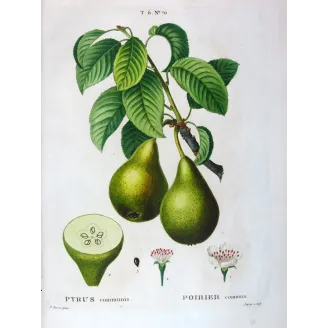
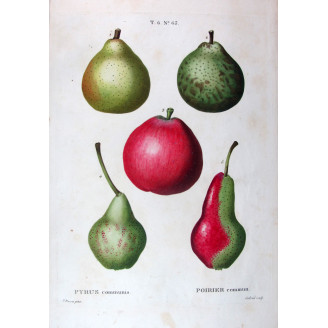
A refined early 19th-century botanical engraving depicting cultivated pear varieties (Pyrus communis), drawn by Pancrace Bessa and engraved for Arbres et Arbustes. Executed with restraint and clarity, the plate exemplifies the elegance of French pomological illustration, uniting scientific precision with a calm, decorative sensibility. The harmonious composition and subtle hand-colouring make it a timeless and highly collectible work.
A refined study of French cultivated pear varieties, distinguished by subtle chromatic contrasts and carefully modelled forms. This hand-colored engraving reflects Pancrace Bessa’s ability to elevate orchard subjects through balance, restraint, and quiet visual authority.
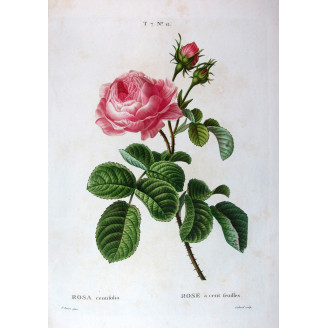
Hundred-petaled Rose Rose à cent feuilles Original hand-colored botanical engraving by Pancrace Bessa.
A finely executed early 19th-century botanical engraving illustrating a cultivated apple variety (Malus communis), drawn by Pancrace Bessa for Arbres et Arbustes. The composition combines precise botanical observation with refined decorative balance, presenting fruit and foliage with clarity and quiet elegance. Exceptional hand-colouring and careful modelling reflect the sophistication of French pomological illustration at its height.
A finely executed early 19th-century botanical engraving illustrating a cultivated apple variety (Malus communis), drawn by Pancrace Bessa for Arbres et Arbustes. The composition combines precise botanical observation with refined decorative balance, presenting fruit and foliage with clarity and quiet elegance. Exceptional hand-colouring and careful modelling reflect the sophistication of French pomological illustration at its height.
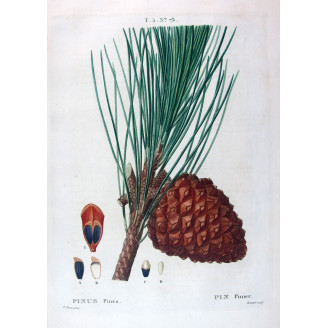
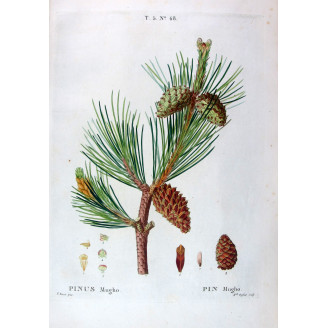
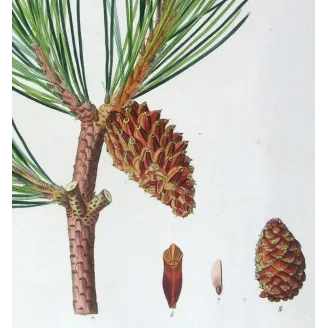
Antique engraving of Pinus Mugho by Bessa, rich in botanical detail.
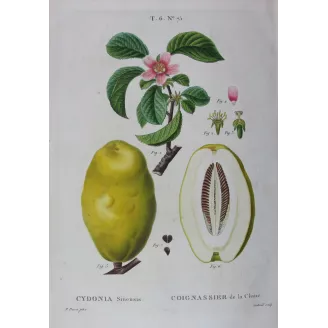
Chinese Quince Coignassier de la Chine Original hand-colored botanical engraving by Pancrace Bessa.
Botanical illustration of the Saint Catherine plum, a delicate fruit-bearing tree, by Pancrace Bessa.
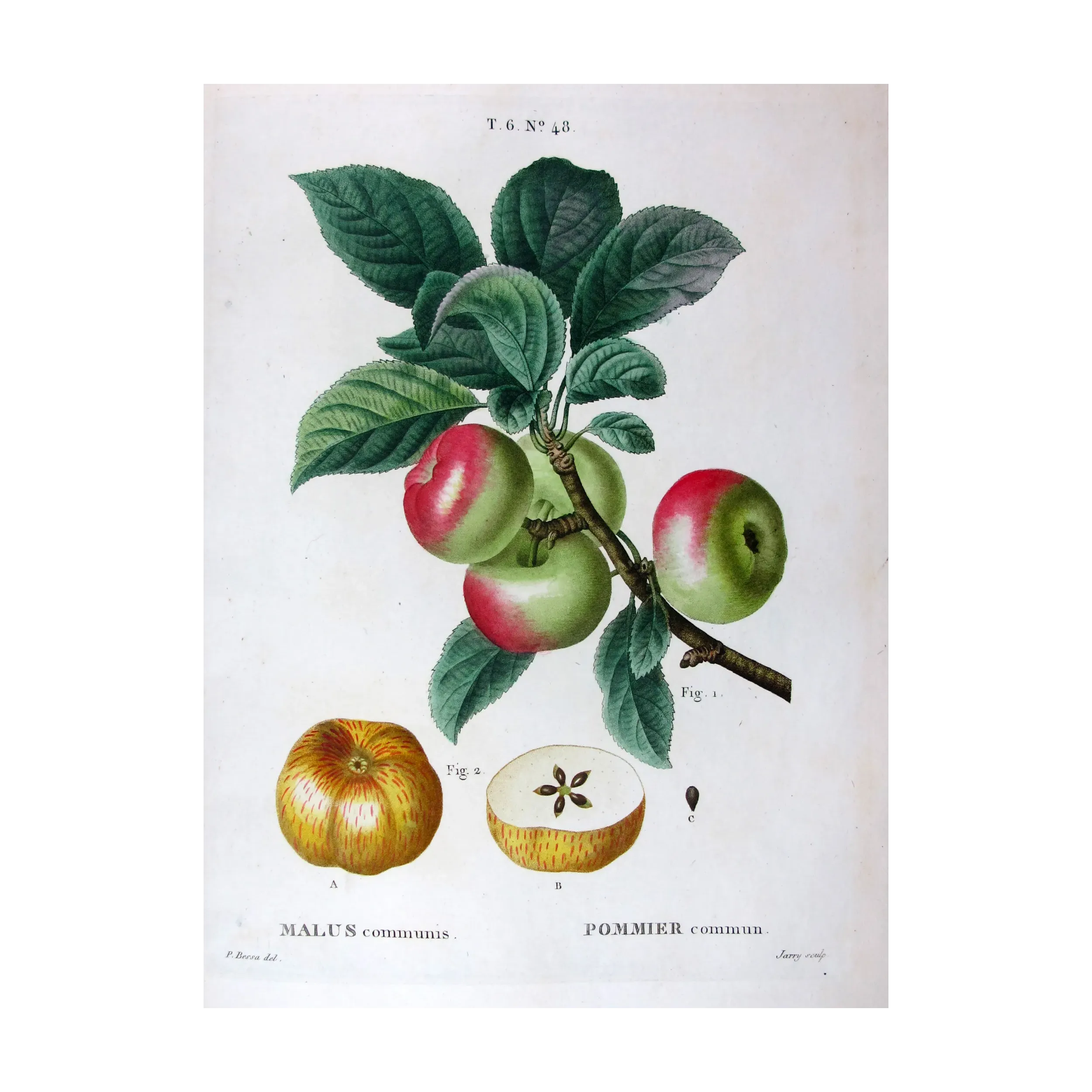
A finely executed early 19th-century botanical engraving illustrating a cultivated apple variety (Malus communis), drawn by Pancrace Bessa for Arbres et Arbustes. The composition combines precise botanical observation with refined decorative balance, presenting fruit and foliage with clarity and quiet elegance. Exceptional hand-colouring and careful modelling reflect the sophistication of French pomological illustration at its height.