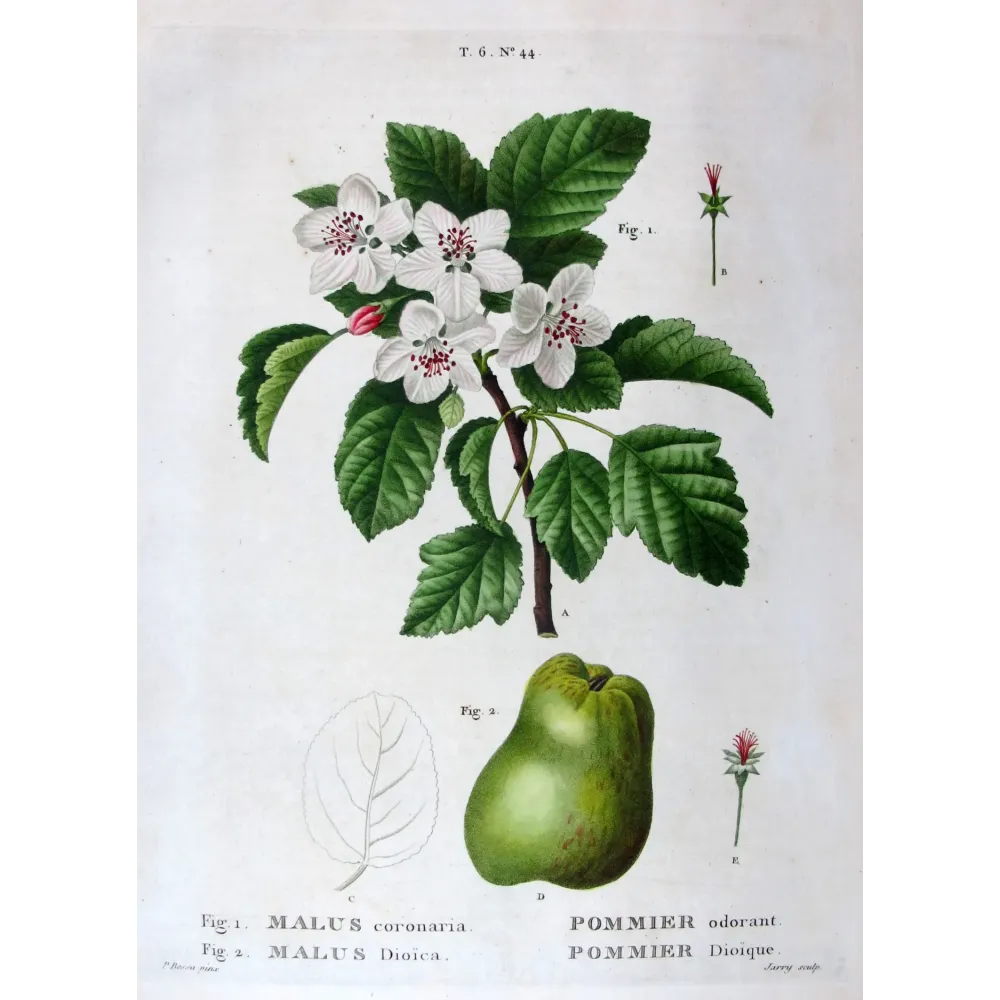
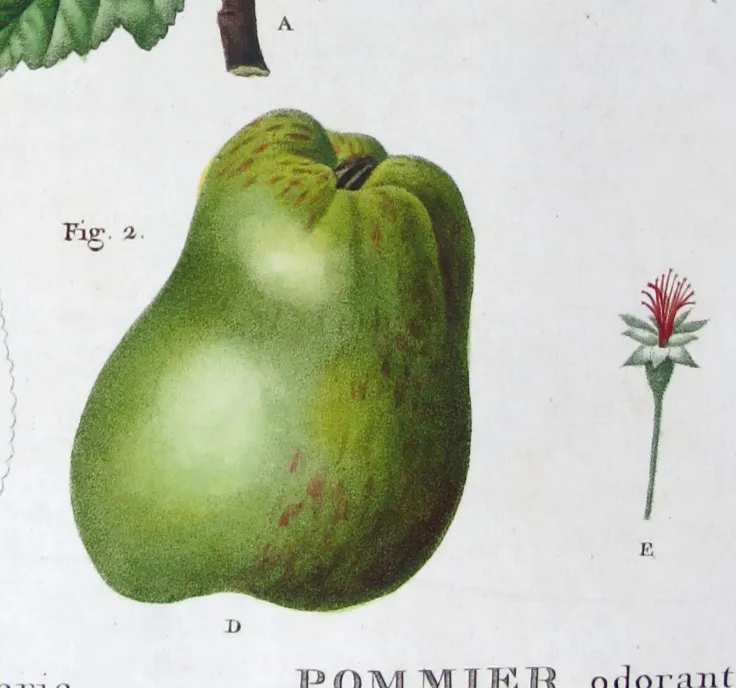
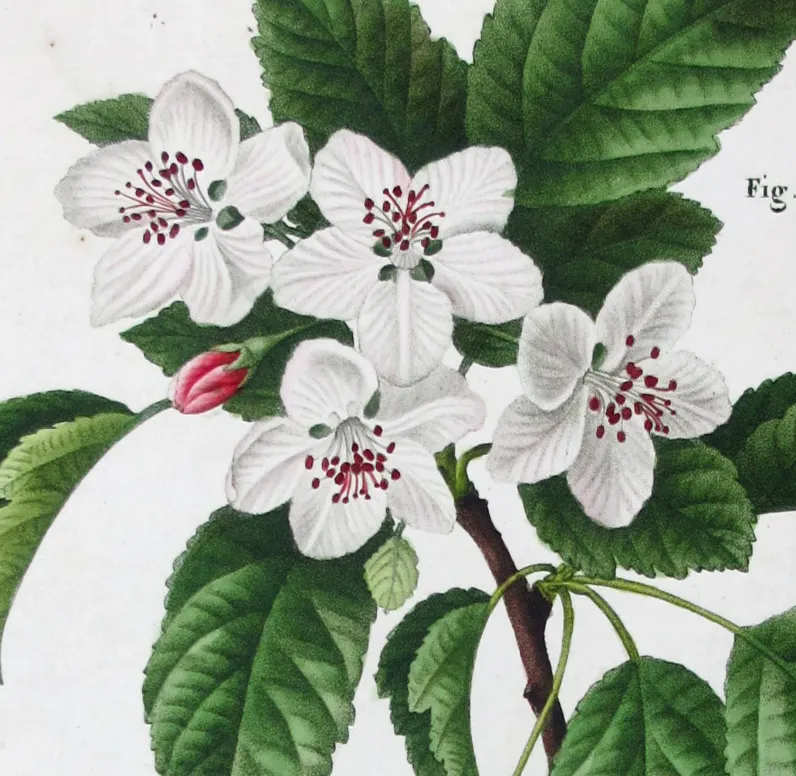
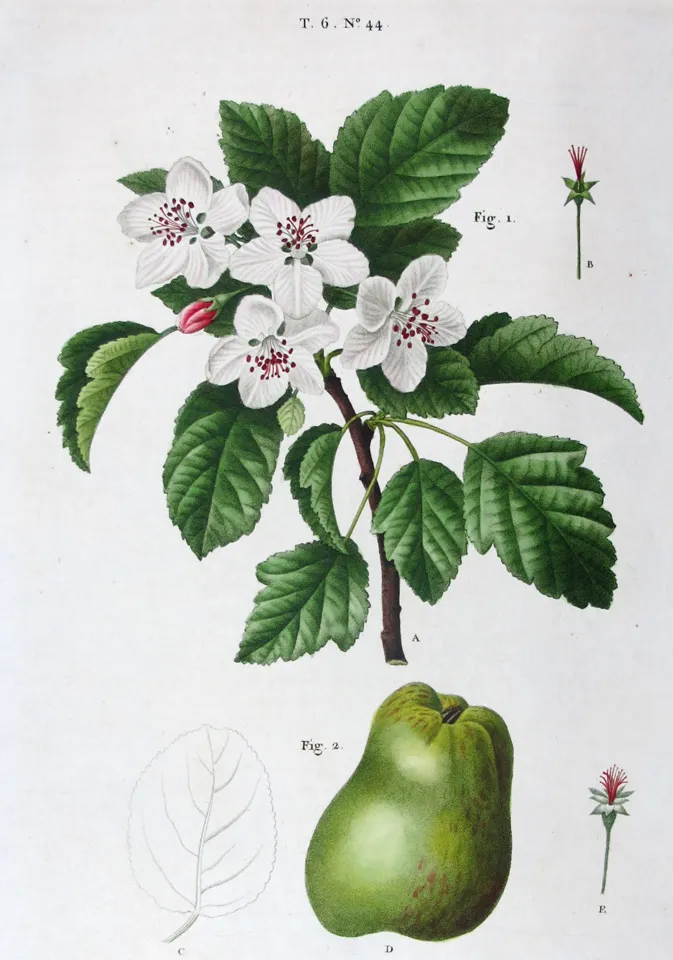
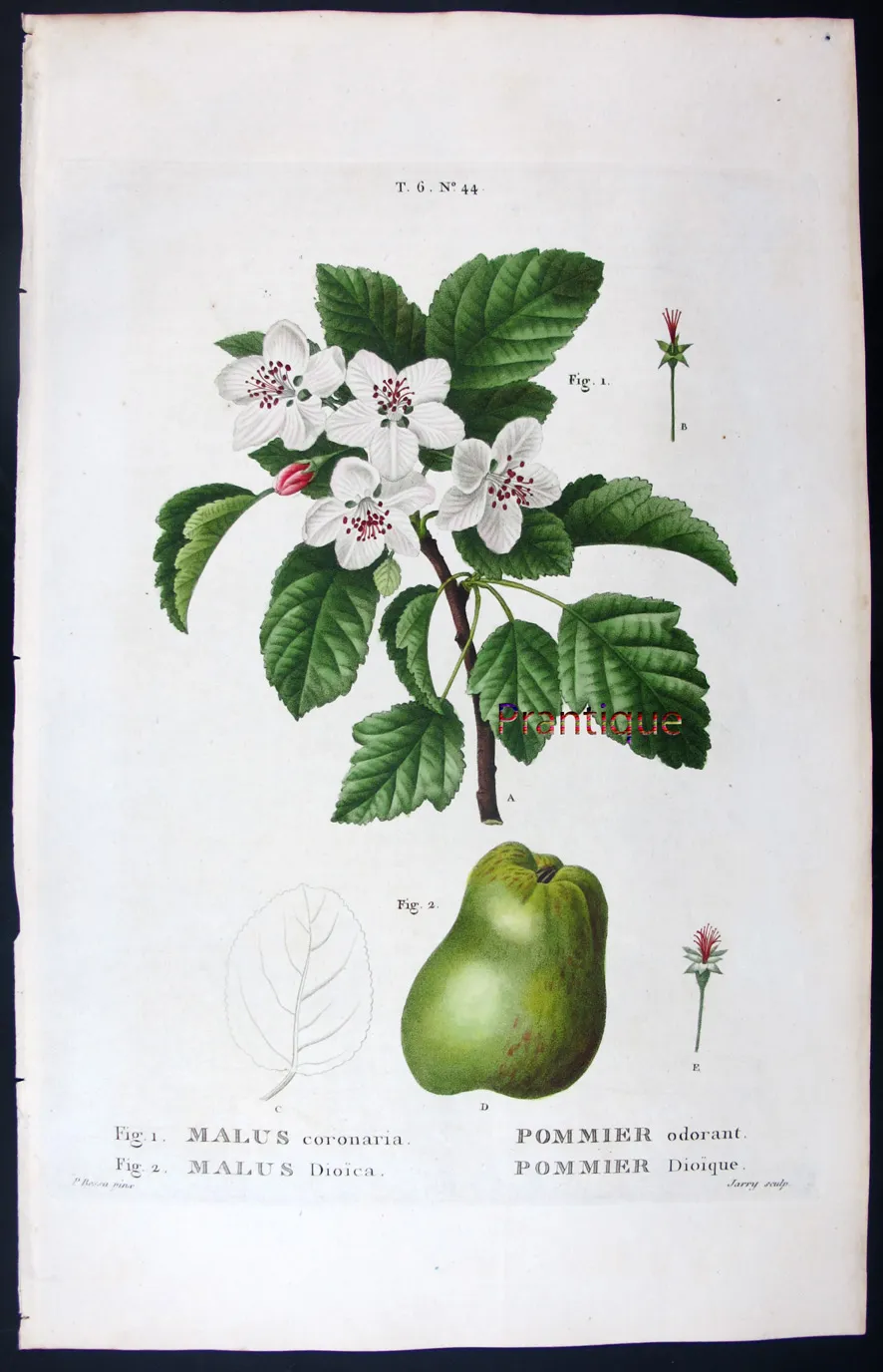
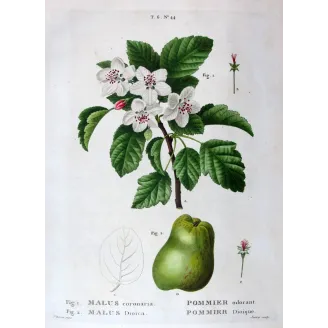
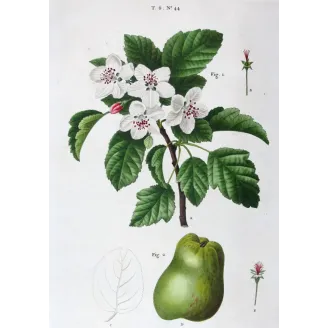
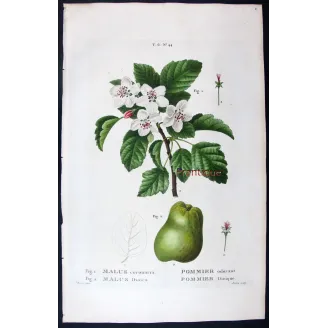
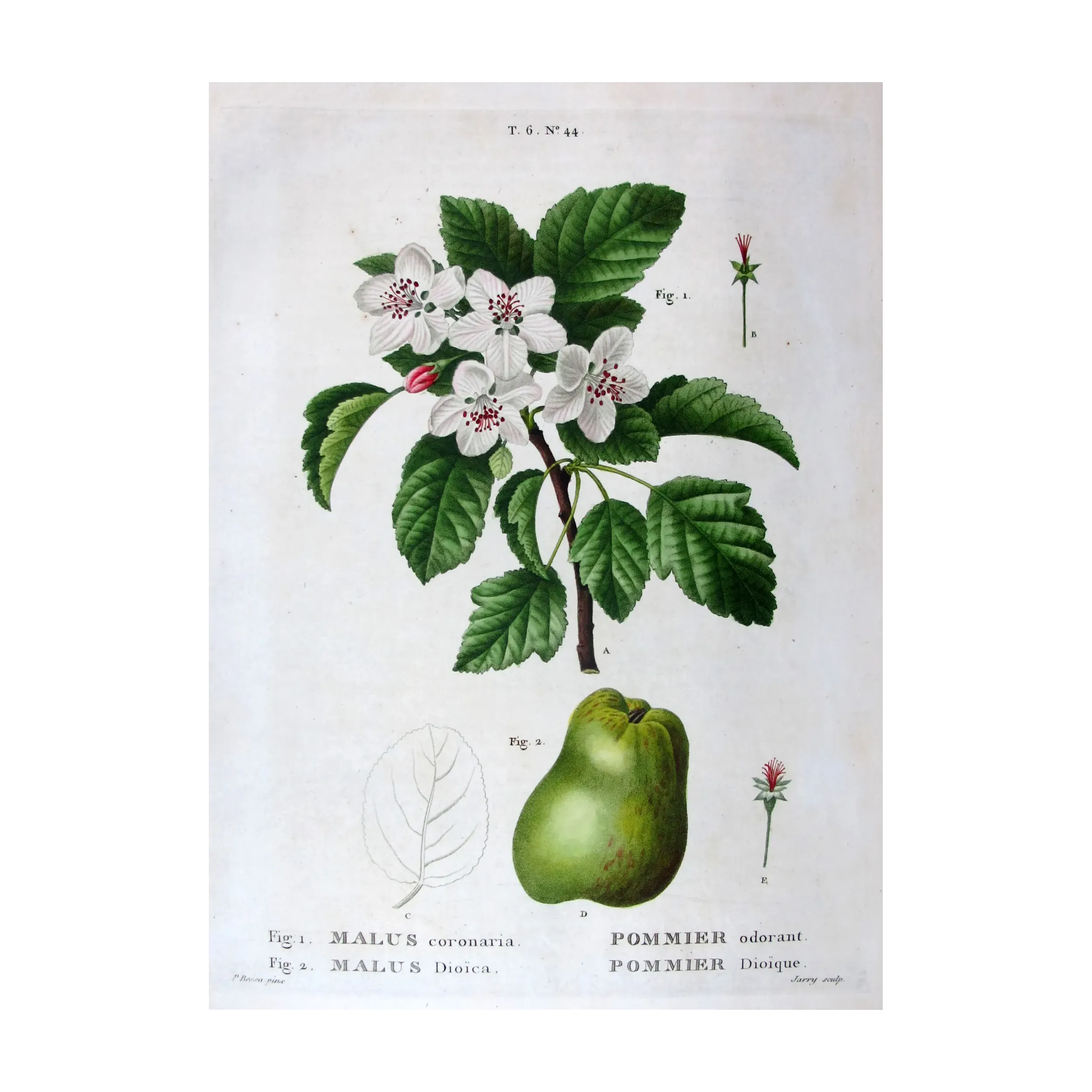
A finely executed early 19th-century botanical engraving illustrating a cultivated apple variety (Malus communis), drawn by Pancrace Bessa for Arbres et Arbustes. The composition combines precise botanical observation with refined decorative balance, presenting fruit and foliage with clarity and quiet elegance. Exceptional hand-colouring and careful modelling reflect the sophistication of French pomological illustration at its height.
 Delivery policy
Your print will be carefully prepared and shipped worldwide via trusted couriers (UPS or similar).
 Authentic antique prints
Original engravings from the 17th–19th century.
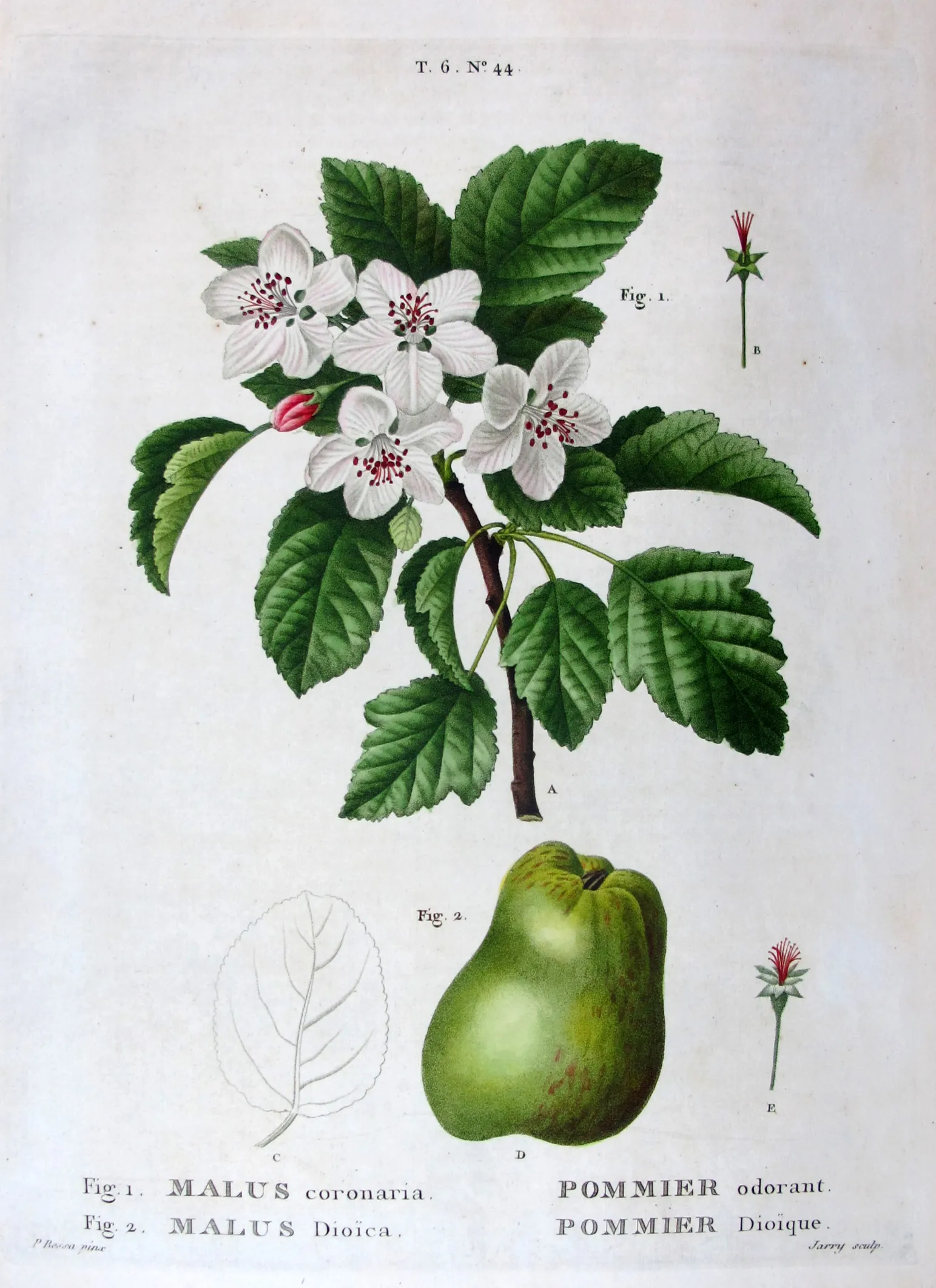
This original botanical engraving presents a refined study of apple trees, combining flowering branches with mature fruit in a balanced and visually cohesive composition. The upper portion of the sheet is devoted to delicate blossoms and fresh foliage, while the lower register introduces the developing fruit, offering a complete view of the plant’s seasonal progression.
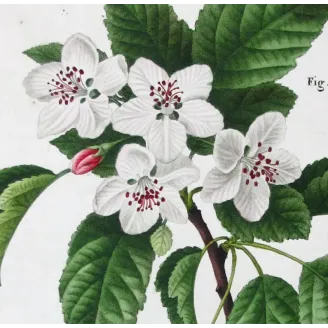
Bessa’s treatment is gentle and painterly. The blossoms are rendered with soft tonal transitions that emphasize lightness and rhythm, while the leaves provide a structured green framework. The fruit, placed below, adds visual weight and chromatic depth without overpowering the composition, resulting in a plate of quiet elegance and clarity.
This engraving forms part of Arbres et Arbustes, one of the most accomplished French botanical publications of the early nineteenth century, where Pancrace Bessa consistently combined botanical accuracy with refined ornamental sensibility.
— • —
The composition is structured vertically, with flowering branches occupying the upper half of the sheet and the fruit positioned below. This arrangement creates a natural visual flow from bloom to maturity, reinforcing the botanical narrative without crowding the page.
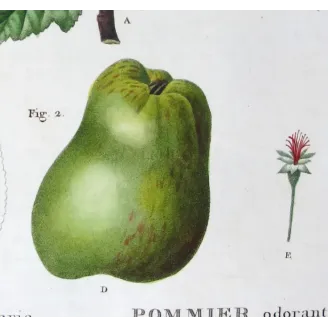
Colour application is restrained and harmonious. The pale blossoms introduce soft highlights, while the foliage is rendered in layered greens with crisp veining. The fruit adds a muted green tone that anchors the composition and suggests fullness and ripening. The overall effect is balanced and serene, well suited to refined interiors, libraries, and garden-inspired settings.
Malus coronaria and Malus dioica represent ornamental and orchard apple trees valued both for their blossoms and their fruit. In early nineteenth-century horticulture, apple trees occupied a central place within cultivated landscapes, symbolizing abundance, seasonality, and the harmony between utility and beauty.
Botanical plates such as this one were designed to capture that dual character. By presenting flowers, foliage, and fruit together, the engraving reflects a holistic view of the plant’s life cycle, aligning scientific observation with an aesthetic appreciation of orchard cultivation. Within Arbres et Arbustes, such subjects contributed to a broader vision of cultivated nature as both productive and visually pleasing.
The engraving is in very good antique condition. Light, even browning is present, consistent with the natural ageing of early nineteenth-century paper. No watermark has been observed. The original hand-colouring remains fresh and well preserved throughout the blossoms, foliage, and fruit. No significant defects affect the image. The engraved credits “P. Bessa pinx.” and “Janinet sculp.” are present, attesting to the original drawing by Pancrace Bessa and the engraving executed by Janinet.
For further context on Pancrace Bessa and his distinctive contribution to French botanical illustration, see our editorial feature:
Specific References
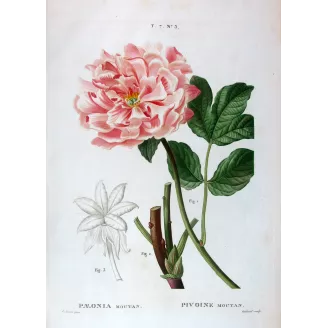
Tree Peony Pivoine moutan Original hand-colored botanical engraving by Pancrace Bessa.
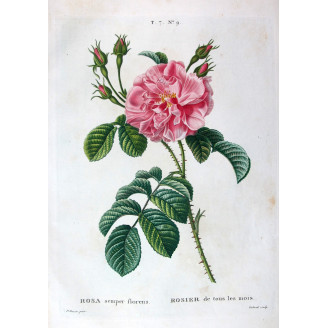
Monthly Rose Rosier de tous les mois Original hand-colored botanical engraving by Pancrace Bessa.
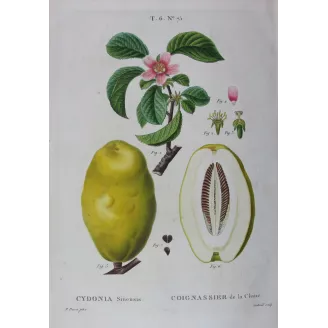
Chinese Quince Coignassier de la Chine Original hand-colored botanical engraving by Pancrace Bessa.
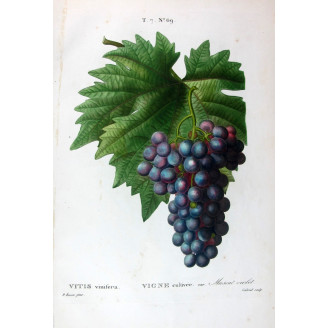
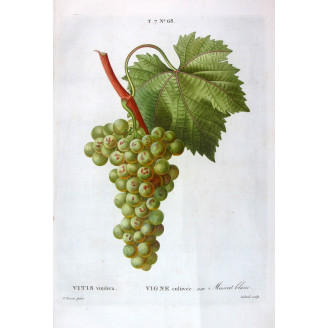
Elegant depiction of a rich purple Muscat grape variety by Pancrace Bessa.
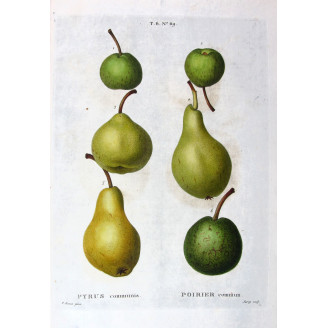
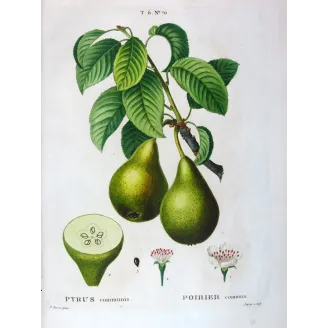
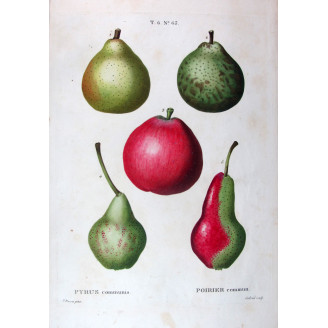
A refined early 19th-century botanical engraving depicting cultivated pear varieties (Pyrus communis), drawn by Pancrace Bessa and engraved for Arbres et Arbustes. Executed with restraint and clarity, the plate exemplifies the elegance of French pomological illustration, uniting scientific precision with a calm, decorative sensibility. The harmonious composition and subtle hand-colouring make it a timeless and highly collectible work.
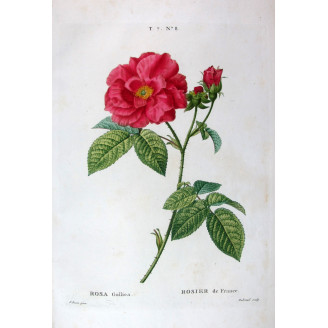
French Rose Rosier de France Original hand-colored botanical engraving by Pancrace Bessa.
A refined study of French cultivated pear varieties, distinguished by subtle chromatic contrasts and carefully modelled forms. This hand-colored engraving reflects Pancrace Bessa’s ability to elevate orchard subjects through balance, restraint, and quiet visual authority.
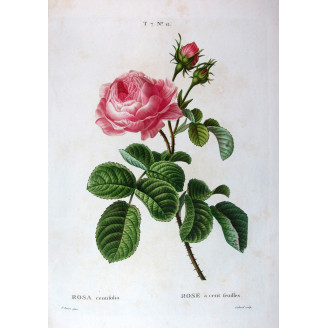
Hundred-petaled Rose Rose à cent feuilles Original hand-colored botanical engraving by Pancrace Bessa.
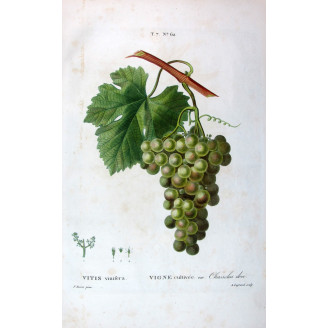
Depiction of golden grapes with vivid green leaves in fine detail.
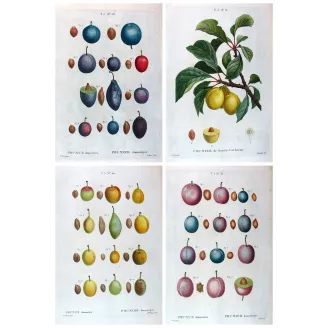
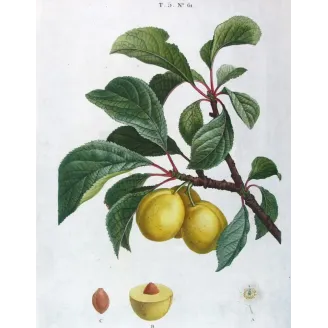
Botanical illustration of the Saint Catherine plum, a delicate fruit-bearing tree, by Pancrace Bessa.
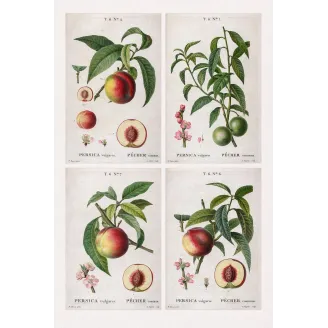
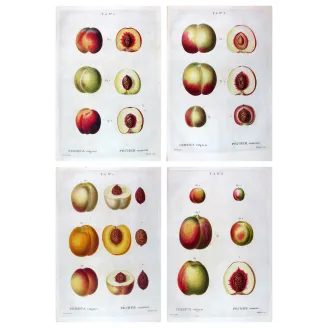
Original pochoir print of the peach tree, Prunus persica, with detailed flowering and fruit.
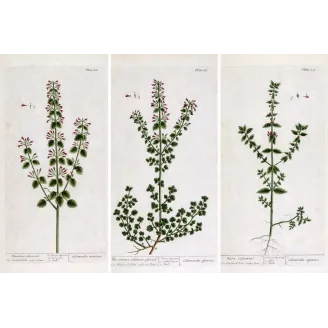
A curated botanical trio illustrating three closely related Calamintha species — officinalis, montana, and aquatica — as engraved and hand-colored by Elisabeth Blackwell for A Curious Herbal (1737–1739). Presented together, these plates offer a rare comparative view of medicinal, habitat-specific, and morphological variation within a single genus, reflecting early modern botanical practice and apothecary knowledge.
A finely executed early 19th-century botanical engraving illustrating a cultivated apple variety (Malus communis), drawn by Pancrace Bessa for Arbres et Arbustes. The composition combines precise botanical observation with refined decorative balance, presenting fruit and foliage with clarity and quiet elegance. Exceptional hand-colouring and careful modelling reflect the sophistication of French pomological illustration at its height.