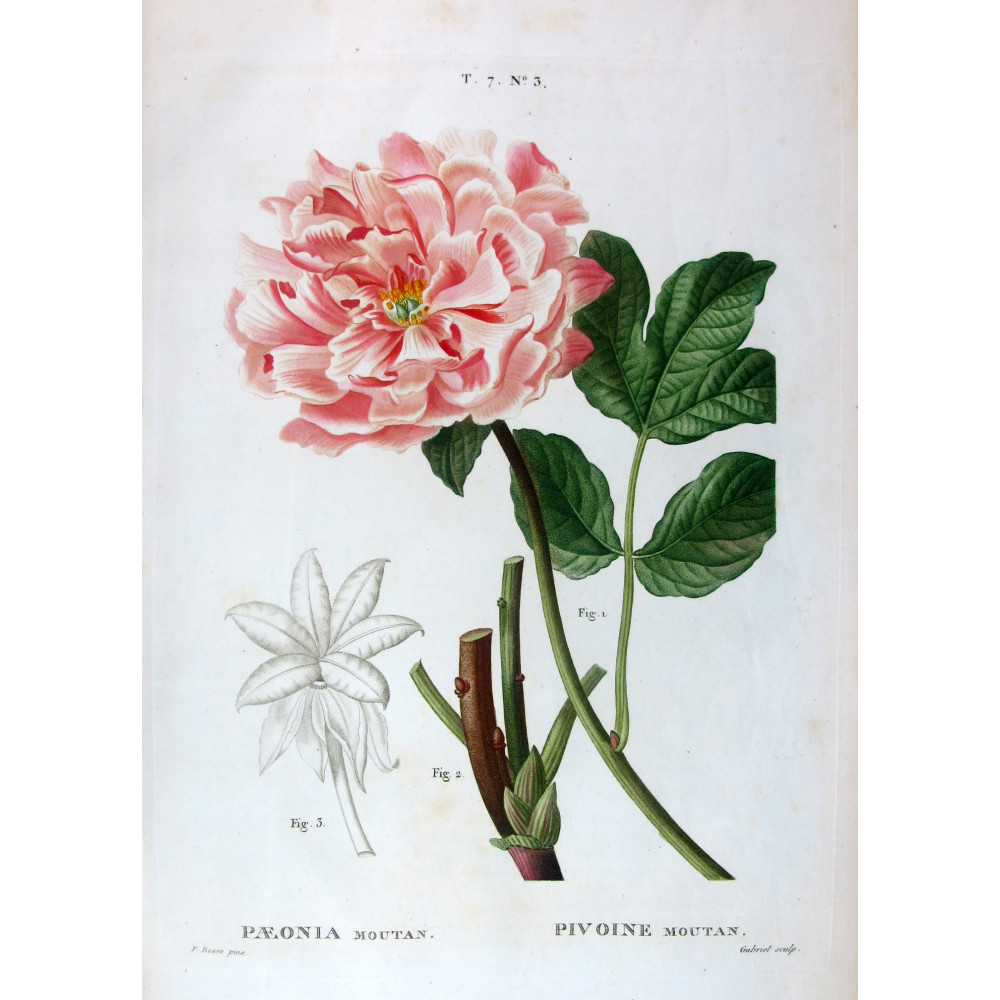
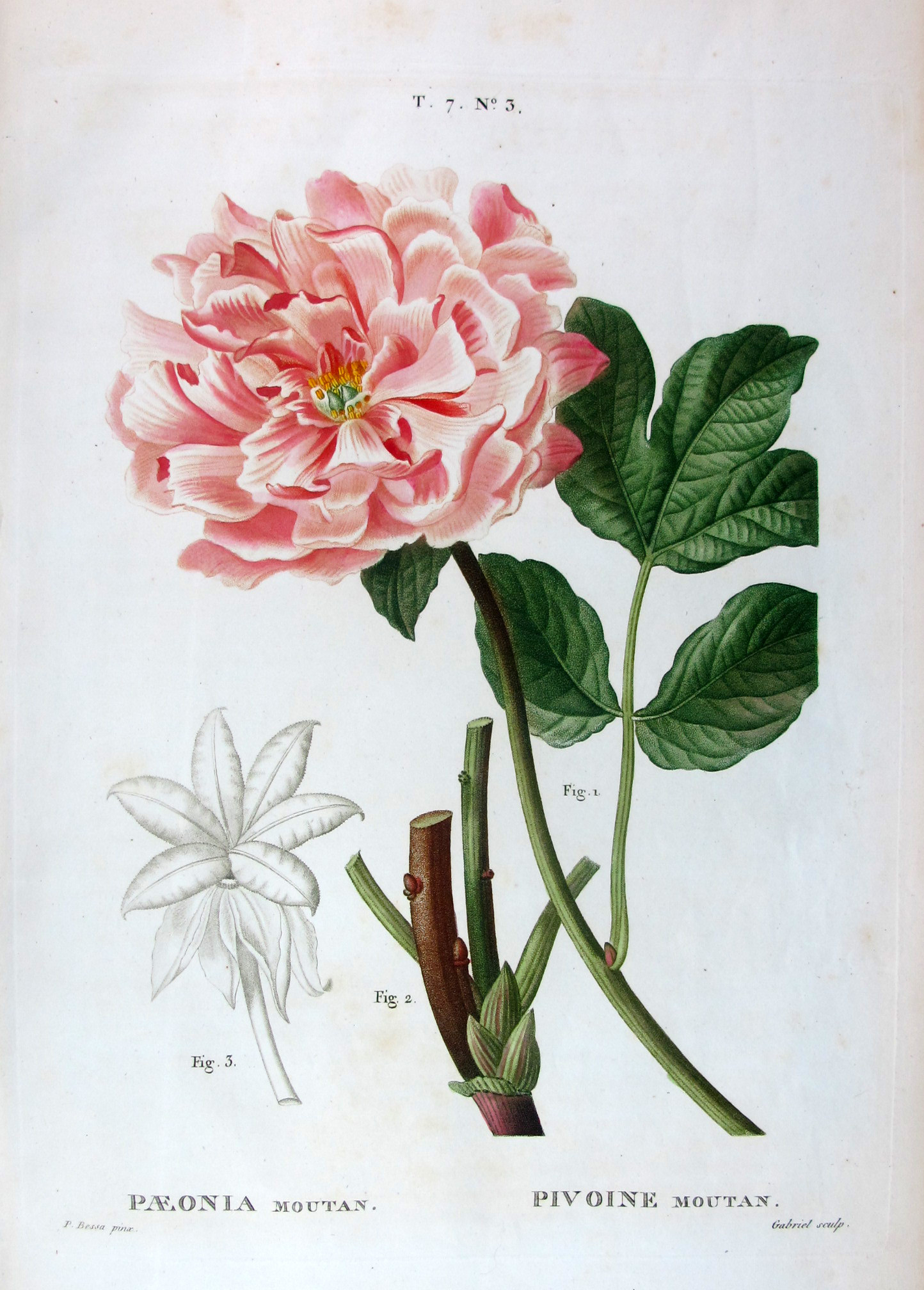
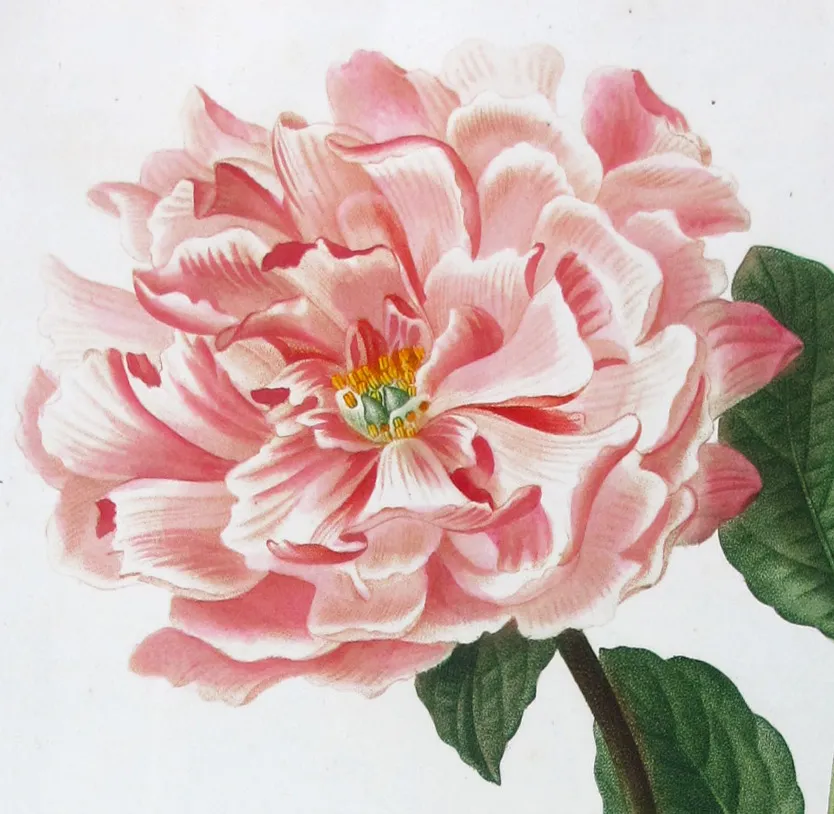
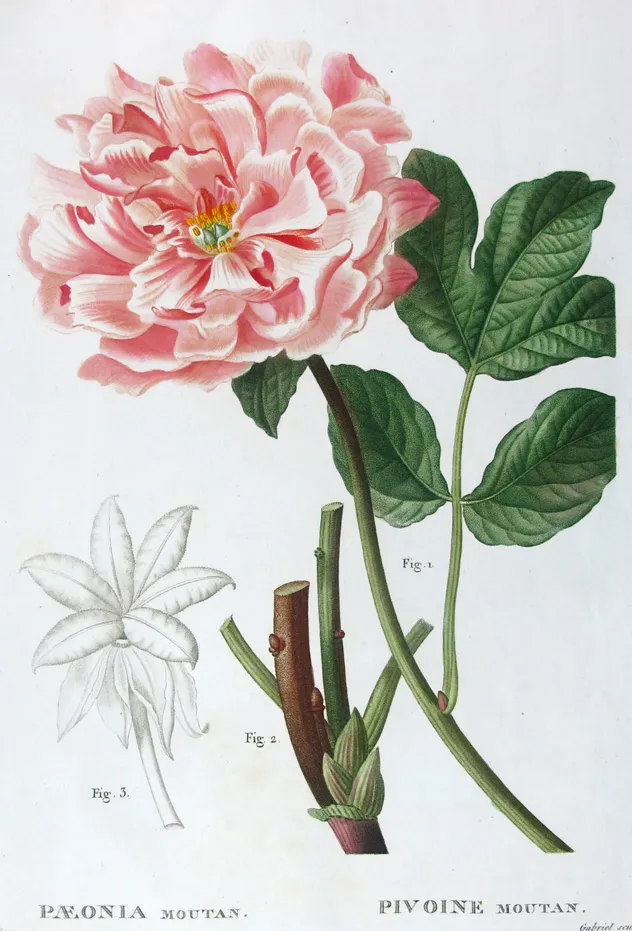
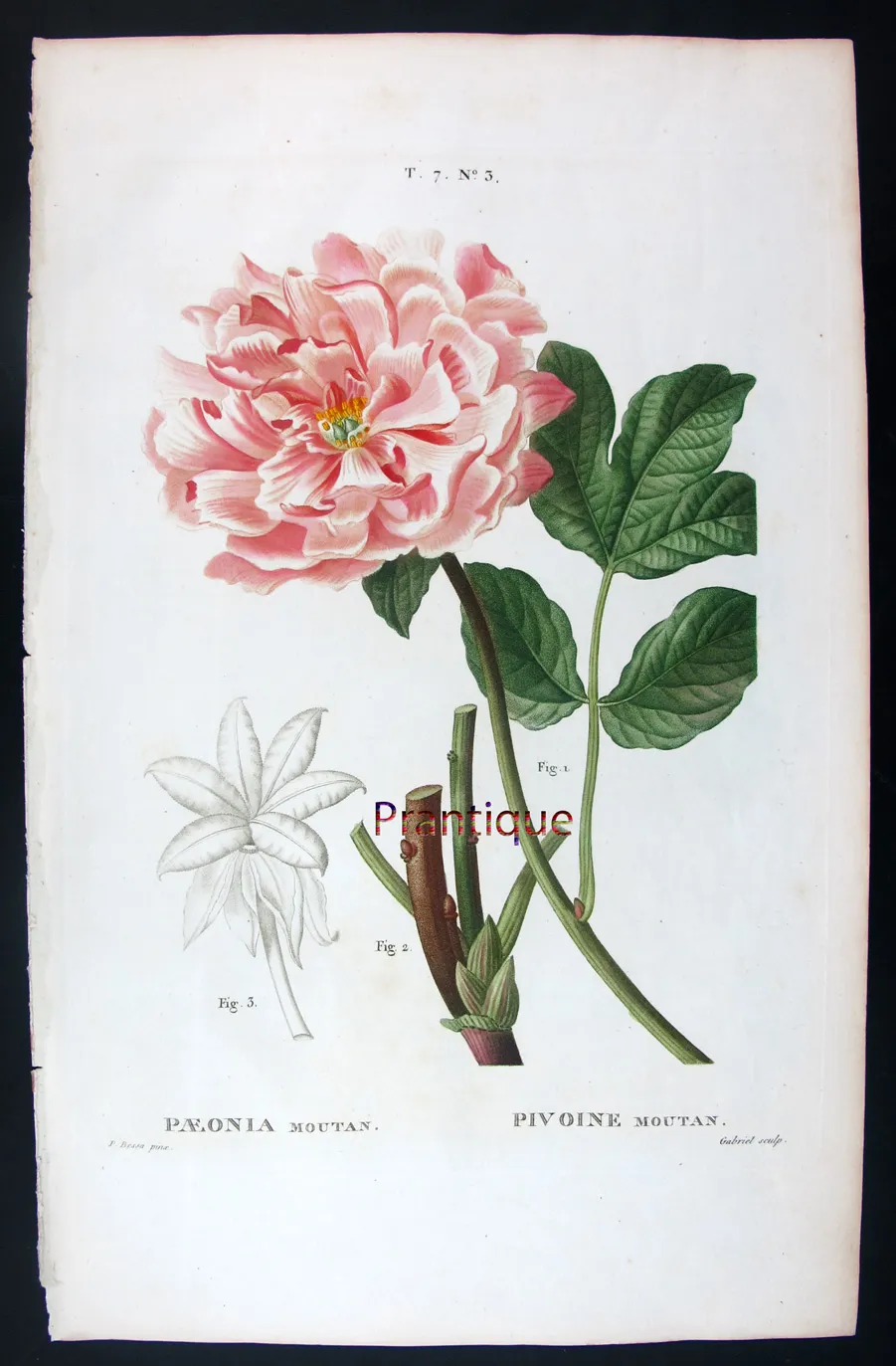

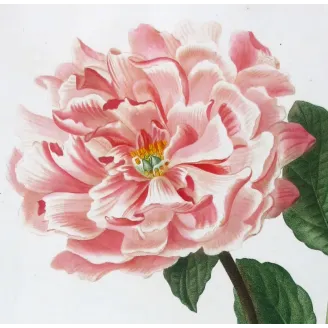
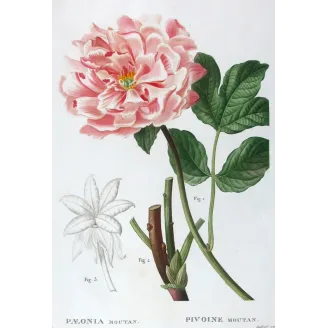
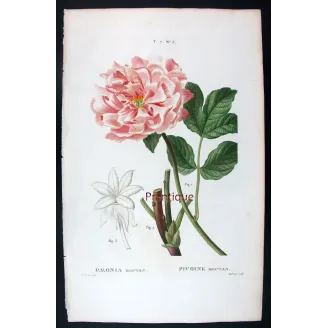
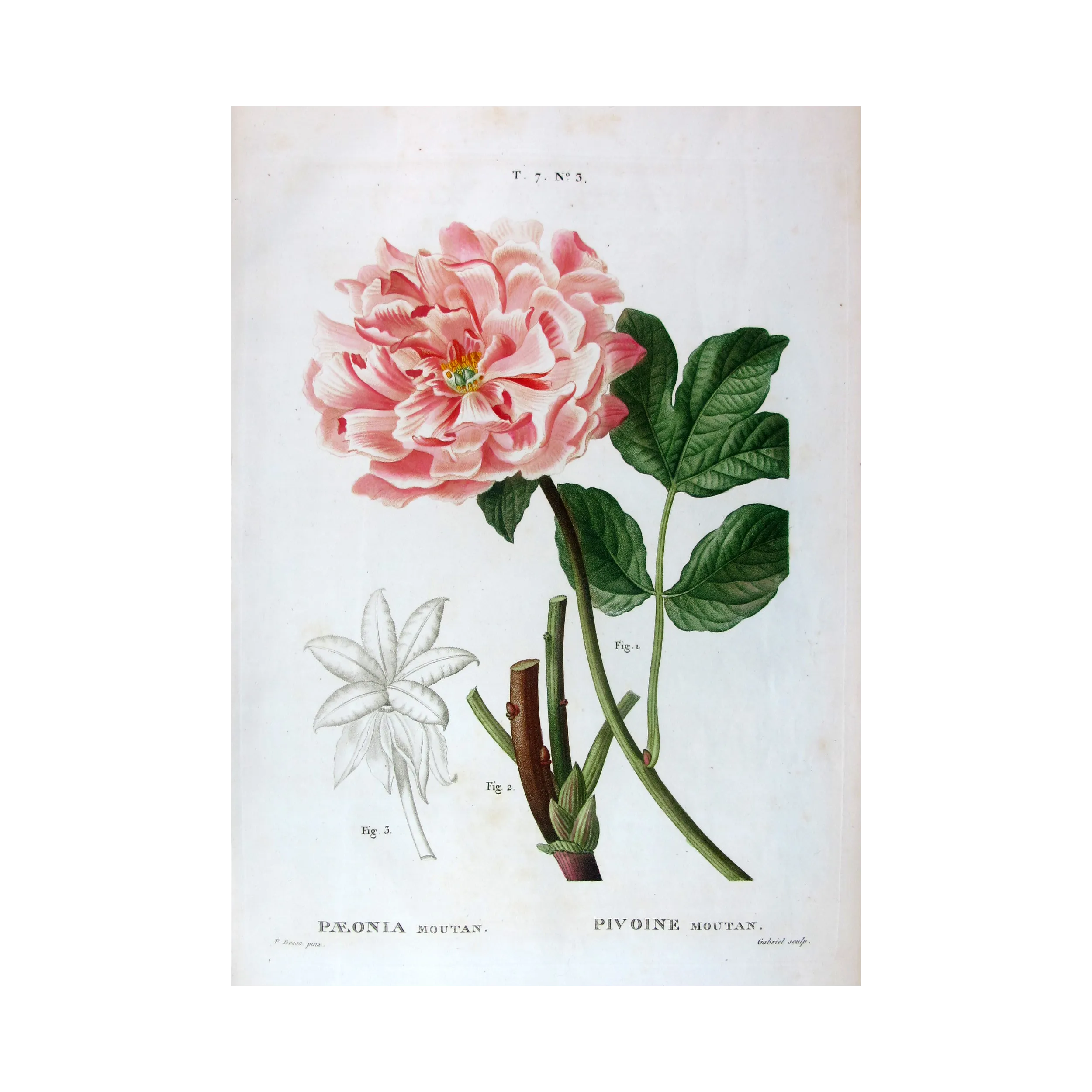
Tree Peony Pivoine moutan Original hand-colored botanical engraving by Pancrace Bessa.
 Delivery policy
Your print will be carefully prepared and shipped worldwide via trusted couriers (UPS or similar).
 Authentic antique prints
Original engravings from the 17th–19th century.
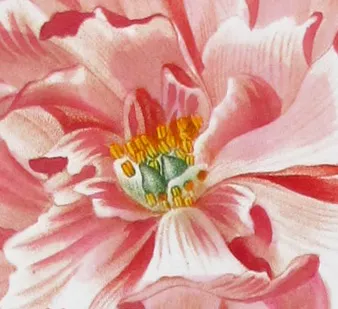
This refined botanical engraving depicts the Paeonia moutan, or tree peony, presented at full bloom with a quiet sense of balance and ornamental clarity. The composition isolates the flower against an open background, allowing the viewer to focus on the generous, layered corolla and the subtle contrast between the softness of the petals and the firmness of the supporting stem.
Bessa’s approach favours visual harmony over strict analytical breakdown. The bloom is rendered with a painterly sensitivity, where tonal gradations of pale rose and soft cream articulate volume without excess, while the foliage provides a structured green counterpoint. The overall effect is poised and decorative, lending the image a natural elegance well suited to refined interior settings.
This plate belongs to Arbres et Arbustes, one of the most celebrated French botanical publications of the early nineteenth century, in which Pancrace Bessa’s work stands out for its ability to merge botanical accuracy with a distinctly pictorial sensibility.
— • —
The composition is deliberately spacious and vertically oriented. The principal bloom occupies the upper register of the sheet, drawing the eye upward, while the branching stem and leaves create a gentle diagonal rhythm that anchors the image. The inclusion of smaller analytical figures at the lower left introduces a quiet scientific note without disturbing the visual calm of the main subject.
Colour is applied with restraint and confidence. The petals are built through soft, translucent washes that convey depth and curvature, while the foliage is defined through cooler greens and subtle veining. This balance between softness and structure results in a plate that reads equally as a botanical study and as a decorative artwork, suitable for libraries, studies, and elegant living spaces.
Paeonia moutan, commonly known as the tree peony, held a privileged place in ornamental horticulture for its large, luxuriant flowers and its association with cultivated gardens rather than wild landscapes. Unlike herbaceous peonies, the tree peony develops a woody structure, which contributed to its status as a symbol of permanence and refinement. Its dramatic blooms and layered petals made it a natural subject for botanical artists seeking to convey both botanical form and visual opulence, explaining its inclusion in ornamental-focused works such as Arbres et Arbustes.
The engraving is in very good antique condition. A very light, almost imperceptible toning is present in the upper portion of the sheet, predominantly outside the plate mark and consistent with natural ageing of early nineteenth-century paper. The paper is smooth and non-laid, and no watermark has been observed. The original hand-colouring remains fresh and well preserved, with no losses or abrasions visible. The overall impression is clean and balanced, and the minor signs of age do not detract from the visual integrity of the work, confirming its authenticity as an original period engraving. The engraved credits “P. Bessa pinx.” and “Gabriel sculp.” are present, attesting to the original drawing by Pancrace Bessa and the engraving executed by Gabriel.
For further context on Pancrace Bessa and his distinctive contribution to French botanical illustration, see our editorial feature:
Specific References
A refined orchard subject where volume and proportion are carefully balanced, giving the fruit a calm, almost sculptural presence.
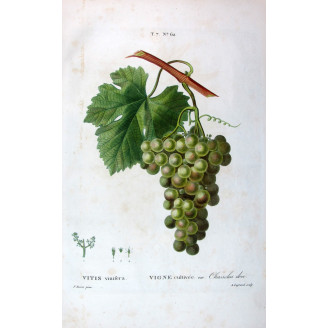
Depiction of golden grapes with vivid green leaves in fine detail.
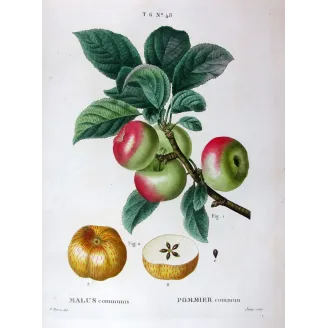
A finely executed early 19th-century botanical engraving illustrating a cultivated apple variety (Malus communis), drawn by Pancrace Bessa for Arbres et Arbustes. The composition combines precise botanical observation with refined decorative balance, presenting fruit and foliage with clarity and quiet elegance. Exceptional hand-colouring and careful modelling reflect the sophistication of French pomological illustration at its height.
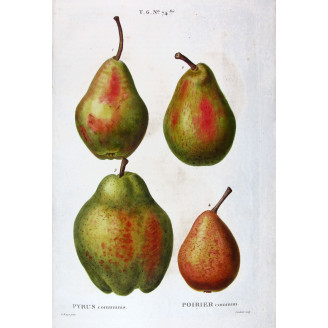
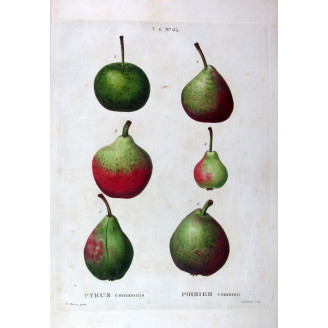
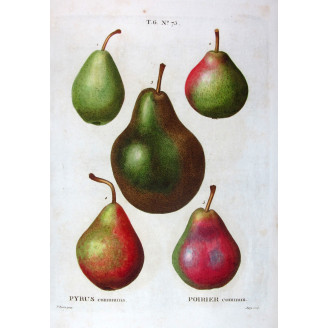
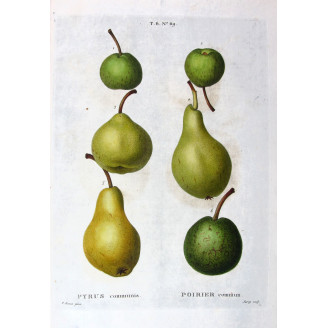
A refined study of cultivated pears, presenting five distinct fruit forms arranged in a balanced and harmonious composition. Subtle variations in shape, colour, and surface texture create a quiet visual rhythm, reflecting Pancrace Bessa’s ability to transform orchard subjects into works of enduring elegance.
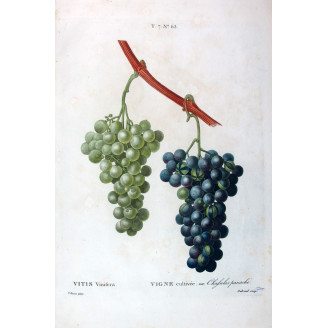
Rare depiction of striped Chasselas grape clusters, unique in its pattern and color.
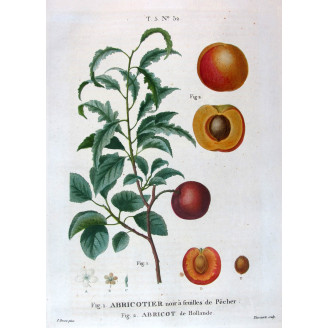
Dutch Apricot Abricot de Hollande Original hand-colored botanical engraving by Pancrace Bessa.
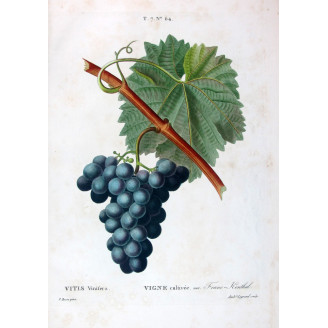
Elegant depiction of a rich purple Muscat grape variety by Pancrace Bessa.
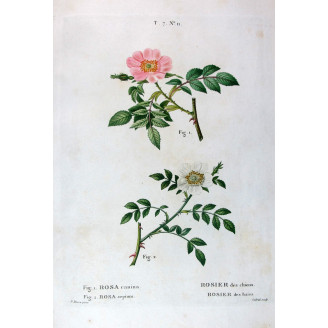
Dog Rose & Hedge Rose Rosier des chiens & Rosier des haies Original hand-colored botanical engraving by Pancrace Bessa.
Tree Peony Pivoine moutan Original hand-colored botanical engraving by Pancrace Bessa.