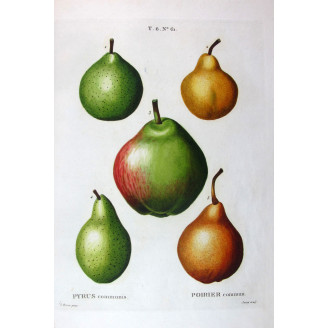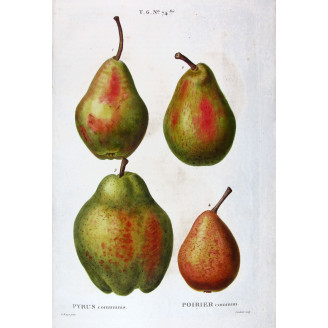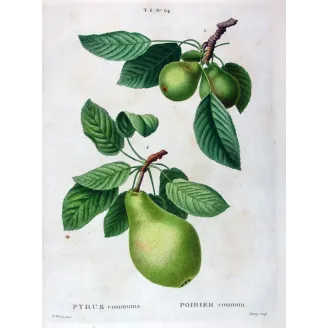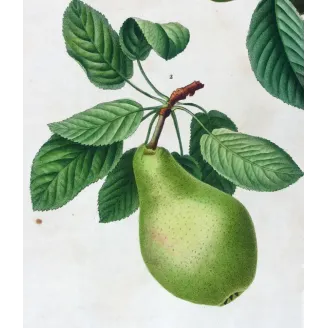
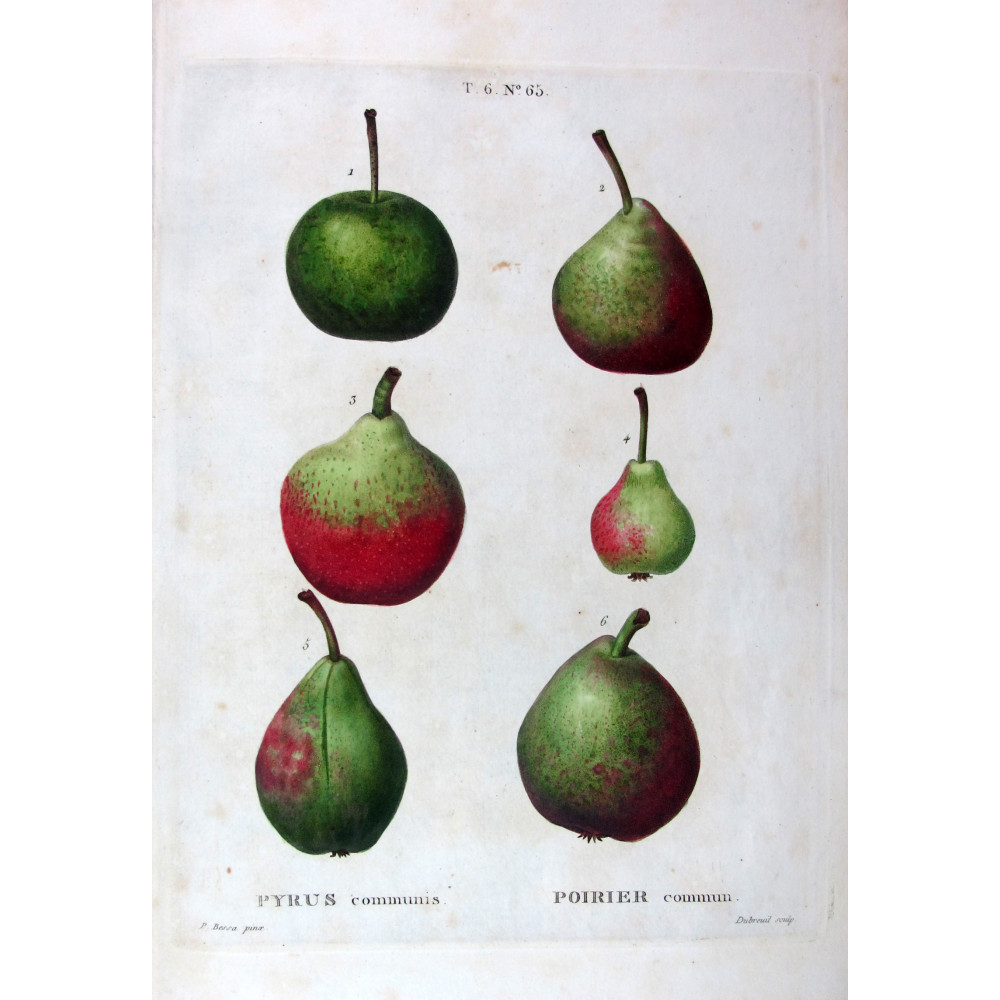
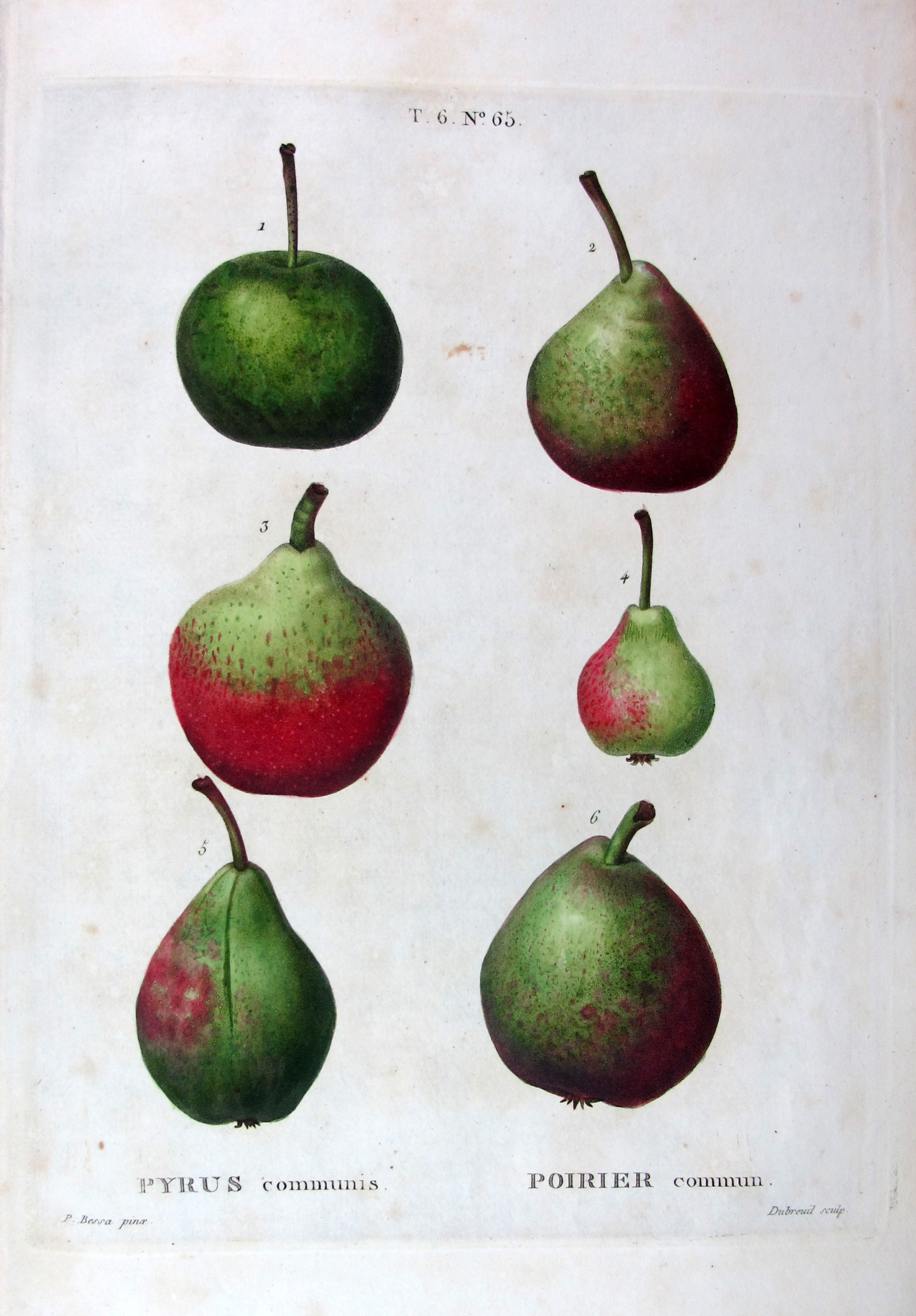
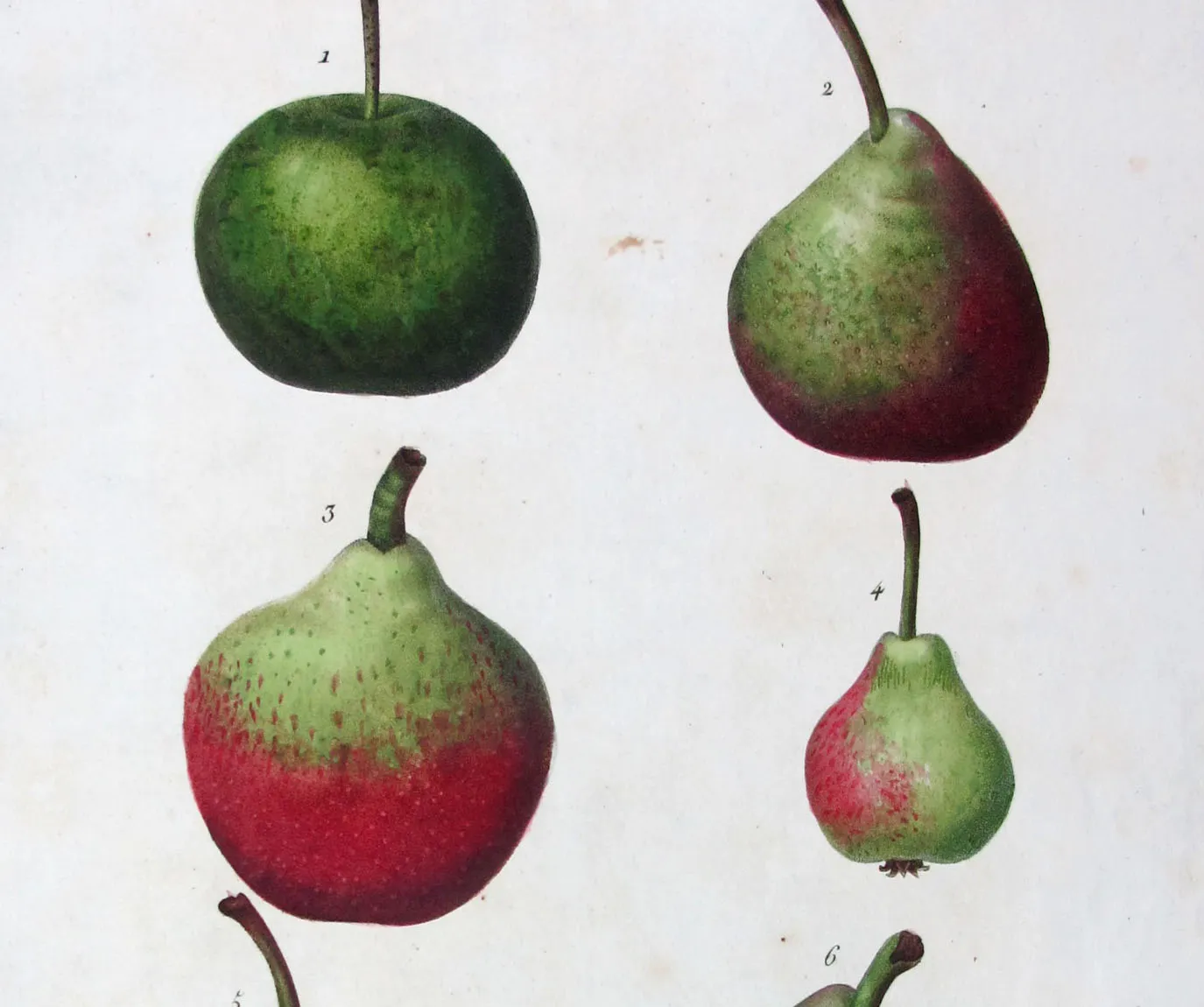
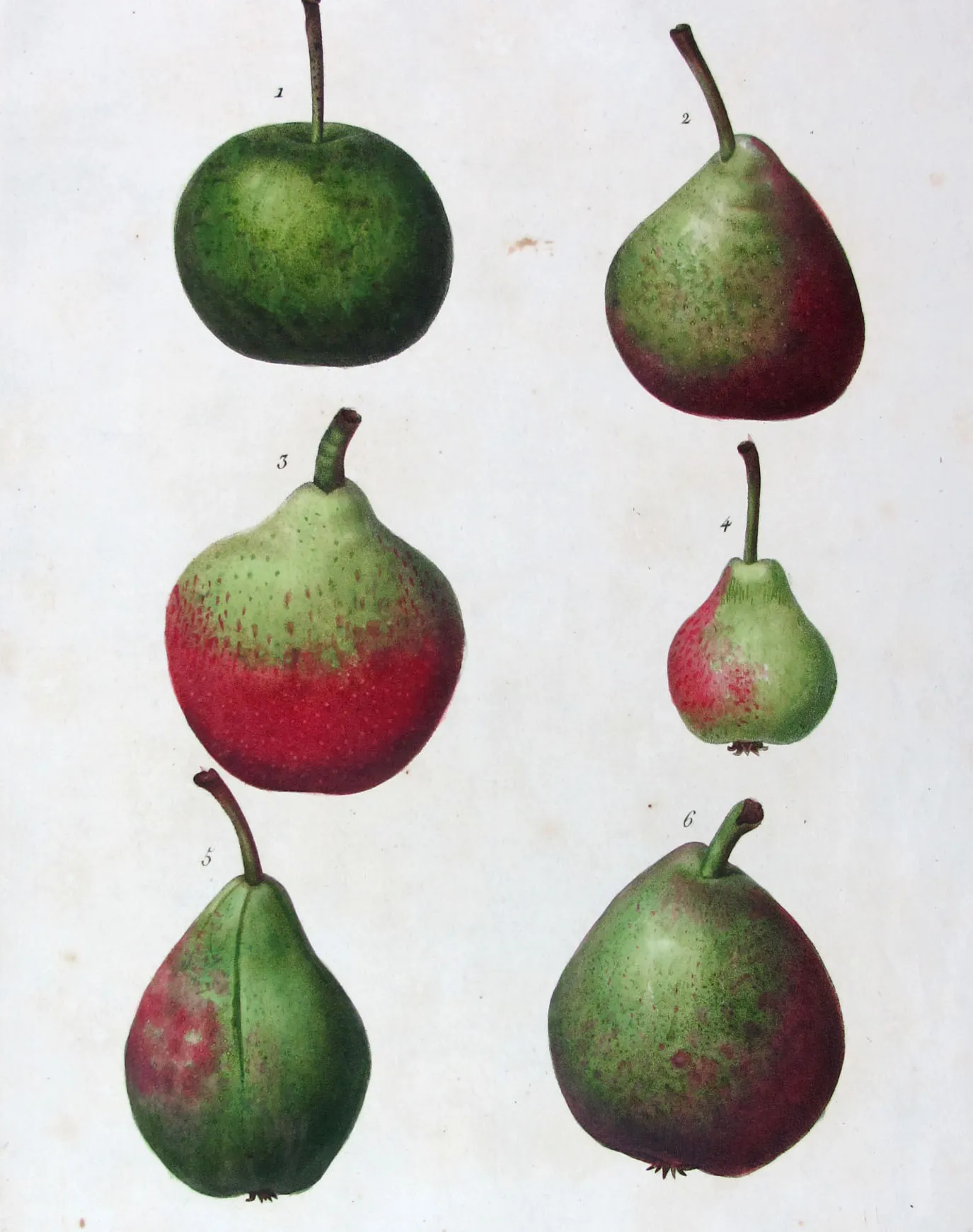
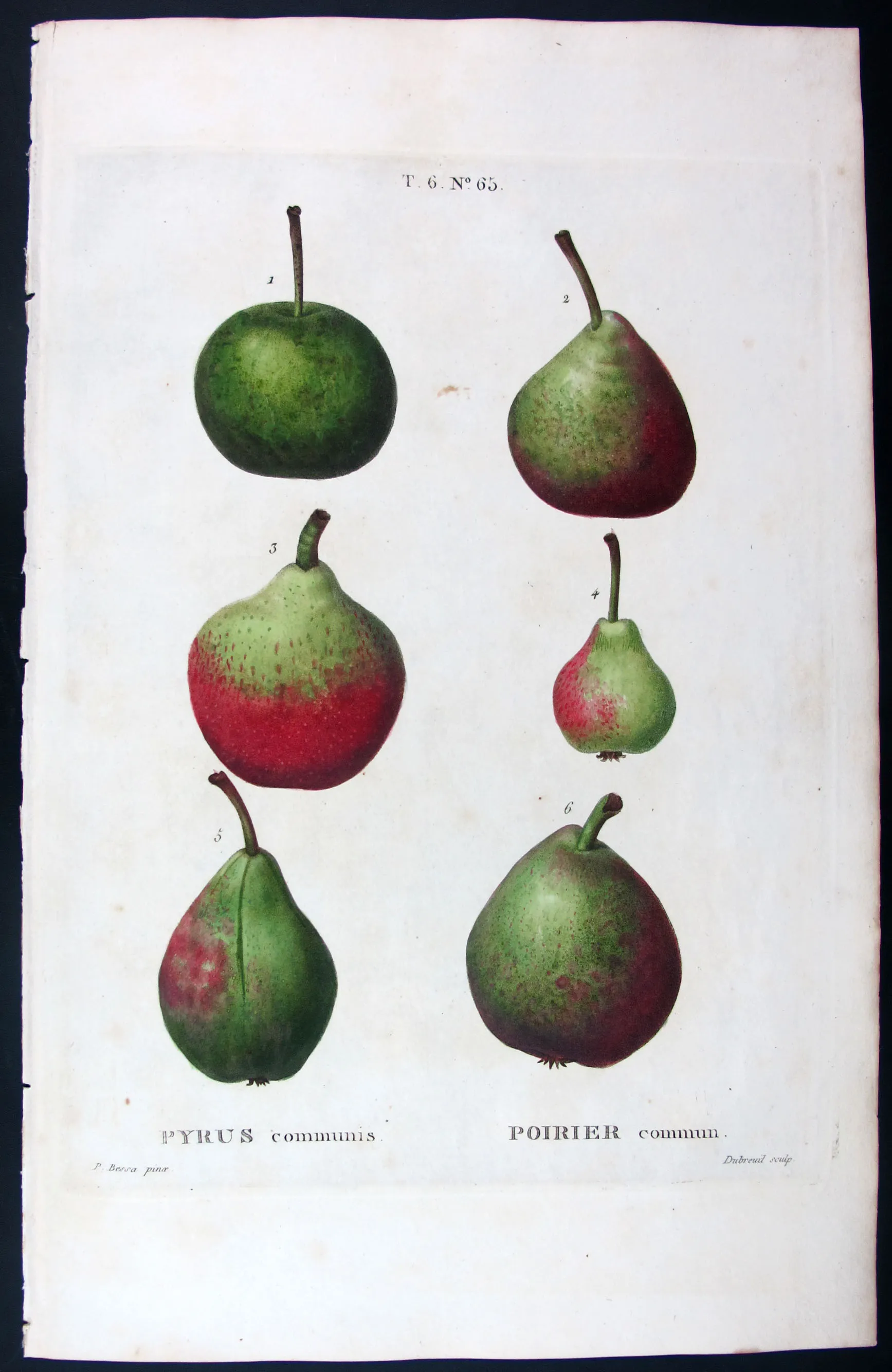
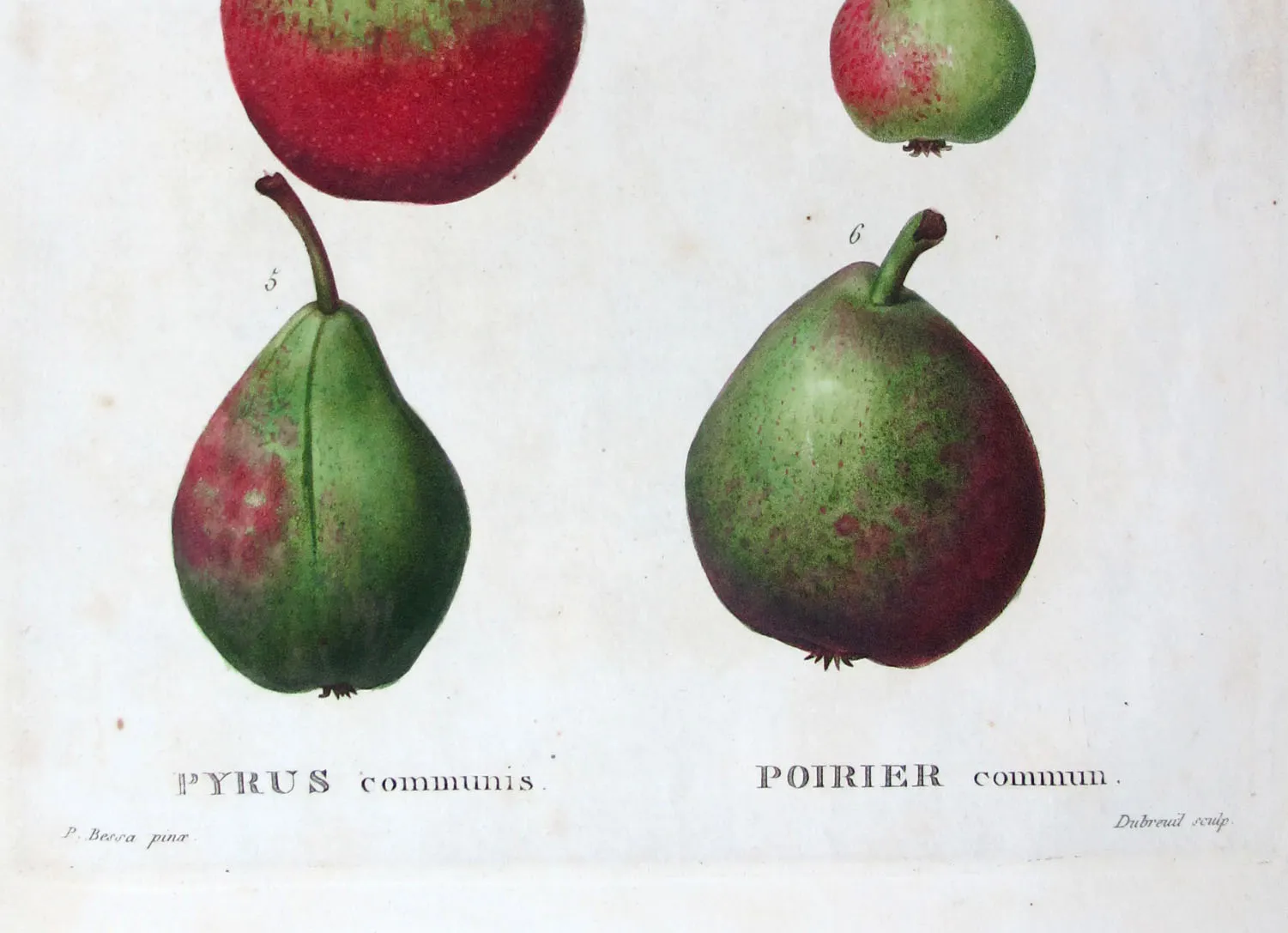
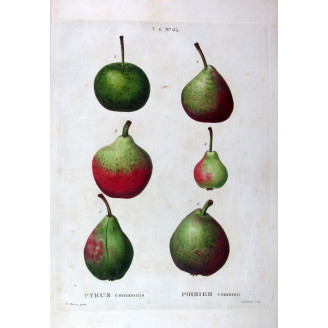

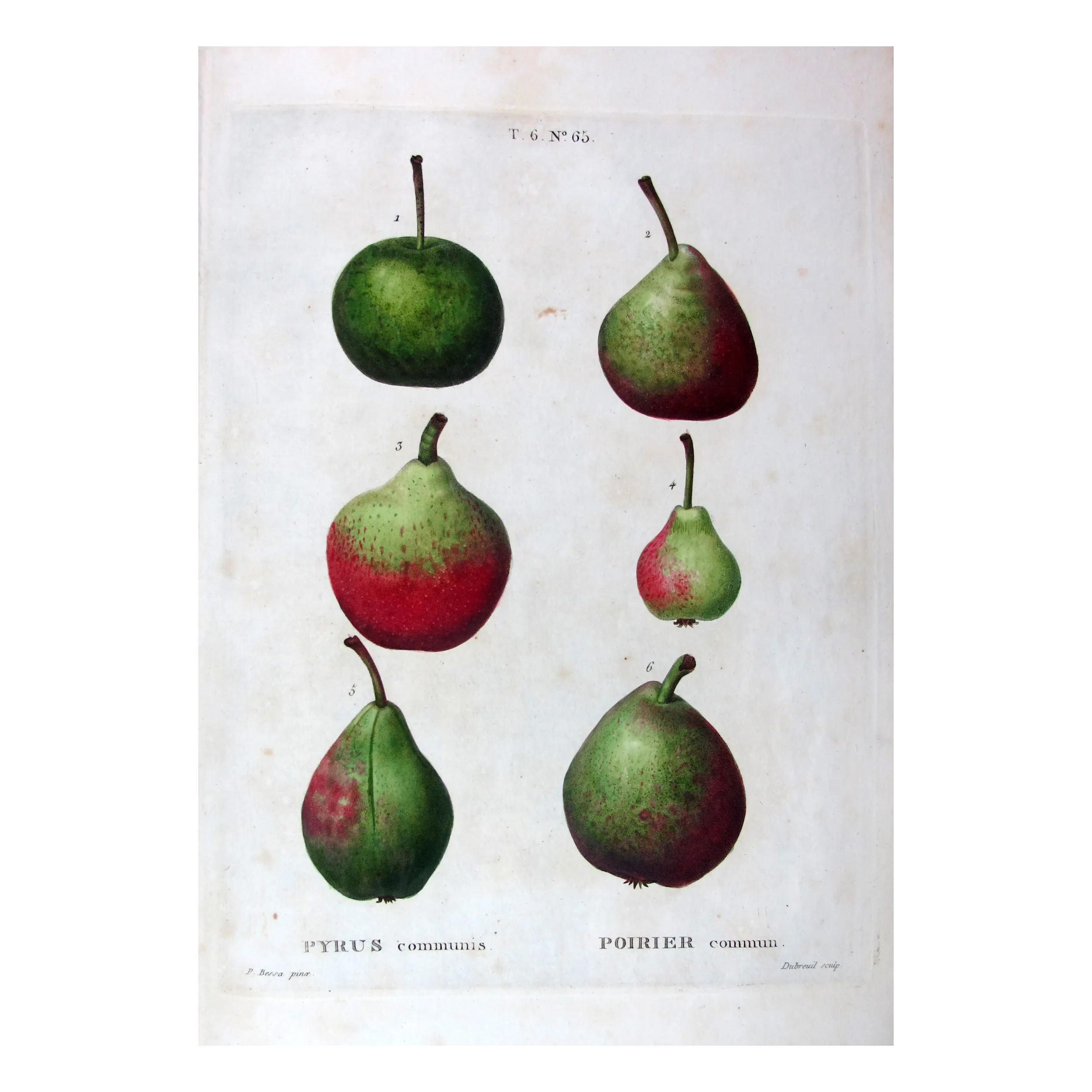
Delicately shaded pear fruits in green and crimson tones.
 Delivery policy
Your print will be carefully prepared and shipped worldwide via trusted couriers (UPS or similar).
 Authentic antique prints
Original engravings from the 17th–19th century.
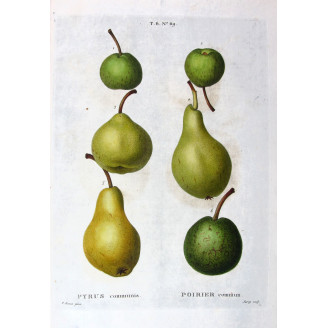
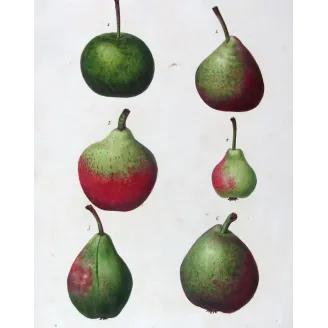
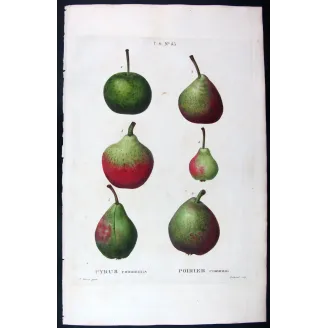
This original hand-colored engraving presents a harmonious selection of cultivated pear varieties, arranged with clarity and visual balance against a generous field of untouched paper. Each fruit is rendered as an individual study, allowing form, surface texture, and coloration to be read with immediacy and calm precision.
Bessa’s approach privileges volume over ornament: the pears are modelled through soft tonal transitions and delicate stippled textures, producing a quietly sculptural effect. The restrained palette—muted greens, warm blushes, and gentle shadowing—reinforces a sense of compositional restraint characteristic of his mature work.
The plate belongs to Arbres et Arbustes, one of the most refined botanical publications of the early nineteenth century, where cultivated orchard subjects were elevated through disciplined observation and exceptional hand-coloring.
— • —
The composition is structured around multiple pear forms, each differentiated by silhouette, surface patterning, and chromatic emphasis. This deliberate variation creates a visual rhythm across the plate while maintaining overall harmony and legibility.
Negative space plays an essential role, isolating each fruit and enhancing its presence. The result is an engraving that feels both analytical and decorative—well suited to interiors seeking understated botanical elegance rather than overt display.
The plate is classified under Pyrus communis (common pear) and documents several cultivated French varieties identified in the original legend, including Épine rose, Gros-Rousselet, Orange rouge, Aurale, Poire de Bassin, and Beurré gris. These cultivars were valued for their distinctive shapes, skin coloration, and seasonal character.
Rather than presenting a botanical narrative, Bessa isolates each cultivar as a visual specimen, emphasizing recognisable form and surface texture. This approach reflects early nineteenth-century pomological practice, where clarity and comparability were essential to orchard documentation.
For insight into Pancrace Bessa’s distinctive hand-coloring techniques and his pursuit of pictorial depth within engraving, see our editorial feature on the artist.
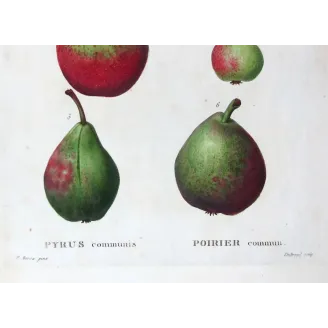
The engraving is in very good antique condition. A few faint, near-imperceptible toning spots are present, consistent with the natural ageing of early nineteenth-century paper and visible only upon close inspection. No watermark has been observed. The original hand-coloring remains well preserved, with fresh tonal contrasts across all fruit studies. The engraved credits “P. Bessa pinx.” and “Dubourdieu sculp.” are present, confirming the original drawing by Pancrace Bessa and the engraving by Dubourdieu.
For further context on Pancrace Bessa and his refined approach to botanical engraving, see our editorial feature:
Specific References
A refined study of five historic pear cultivars, combining varietal precision with sculptural balance and luminous hand-colouring.
A refined orchard subject where volume and proportion are carefully balanced, giving the fruit a calm, almost sculptural presence.
A refined early 19th-century botanical engraving depicting cultivated pear varieties (Pyrus communis), drawn by Pancrace Bessa and engraved for Arbres et Arbustes. Executed with restraint and clarity, the plate exemplifies the elegance of French pomological illustration, uniting scientific precision with a calm, decorative sensibility. The harmonious composition and subtle hand-colouring make it a timeless and highly collectible work.
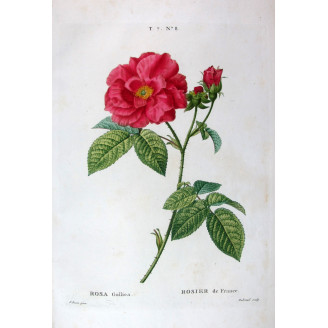
French Rose Rosier de France Original hand-colored botanical engraving by Pancrace Bessa.
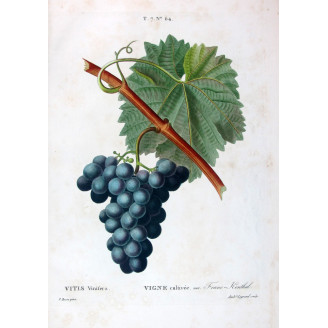
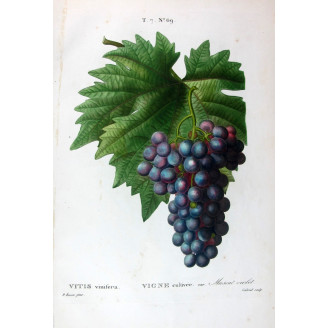
Elegant depiction of a rich purple Muscat grape variety by Pancrace Bessa.
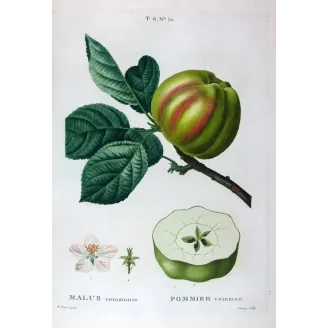
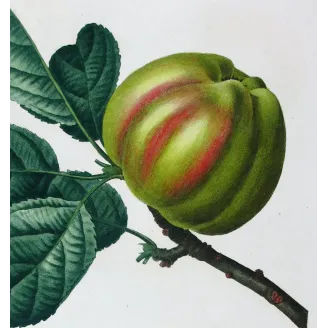
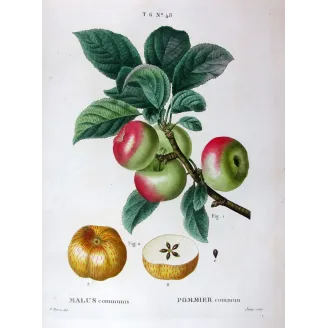
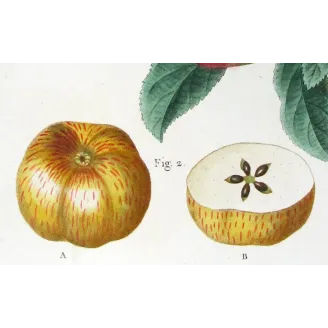
A finely executed early 19th-century botanical engraving illustrating a cultivated apple variety (Malus communis), drawn by Pancrace Bessa for Arbres et Arbustes. The composition combines precise botanical observation with refined decorative balance, presenting fruit and foliage with clarity and quiet elegance. Exceptional hand-colouring and careful modelling reflect the sophistication of French pomological illustration at its height.
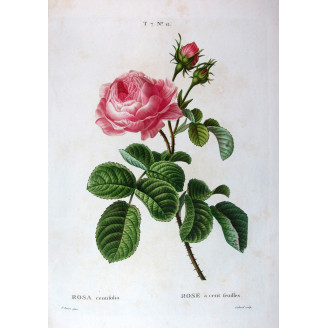
Hundred-petaled Rose Rose à cent feuilles Original hand-colored botanical engraving by Pancrace Bessa.
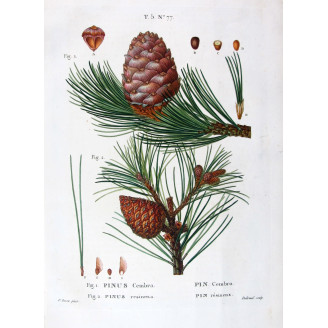
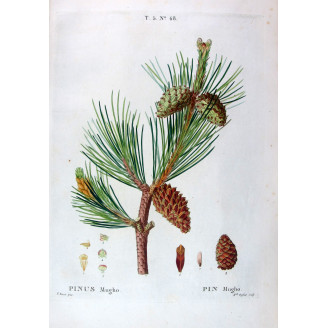
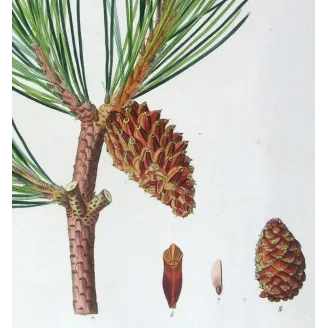
Antique engraving of Pinus Mugho by Bessa, rich in botanical detail.
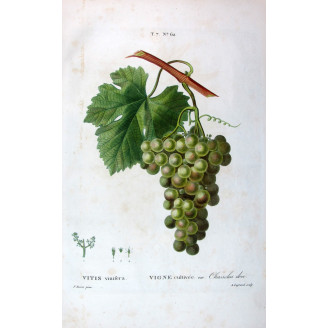
Depiction of golden grapes with vivid green leaves in fine detail.
A finely executed early 19th-century botanical engraving illustrating a cultivated apple variety (Malus communis), drawn by Pancrace Bessa for Arbres et Arbustes. The composition combines precise botanical observation with refined decorative balance, presenting fruit and foliage with clarity and quiet elegance. Exceptional hand-colouring and careful modelling reflect the sophistication of French pomological illustration at its height.
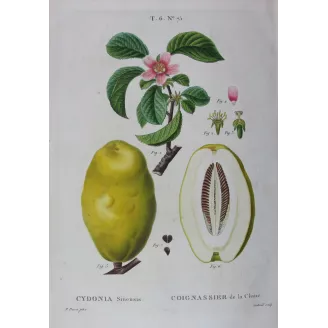
Chinese Quince Coignassier de la Chine Original hand-colored botanical engraving by Pancrace Bessa.
Botanical illustration of the Saint Catherine plum, a delicate fruit-bearing tree, by Pancrace Bessa.
Delicately shaded pear fruits in green and crimson tones.