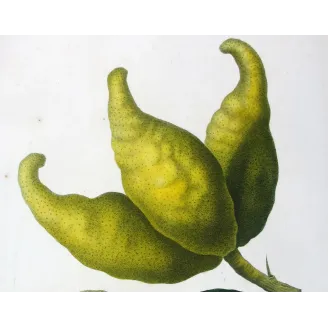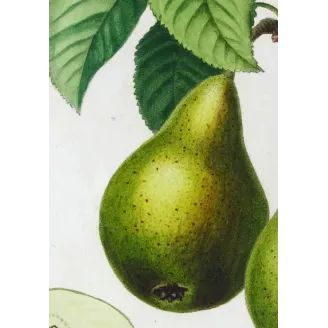
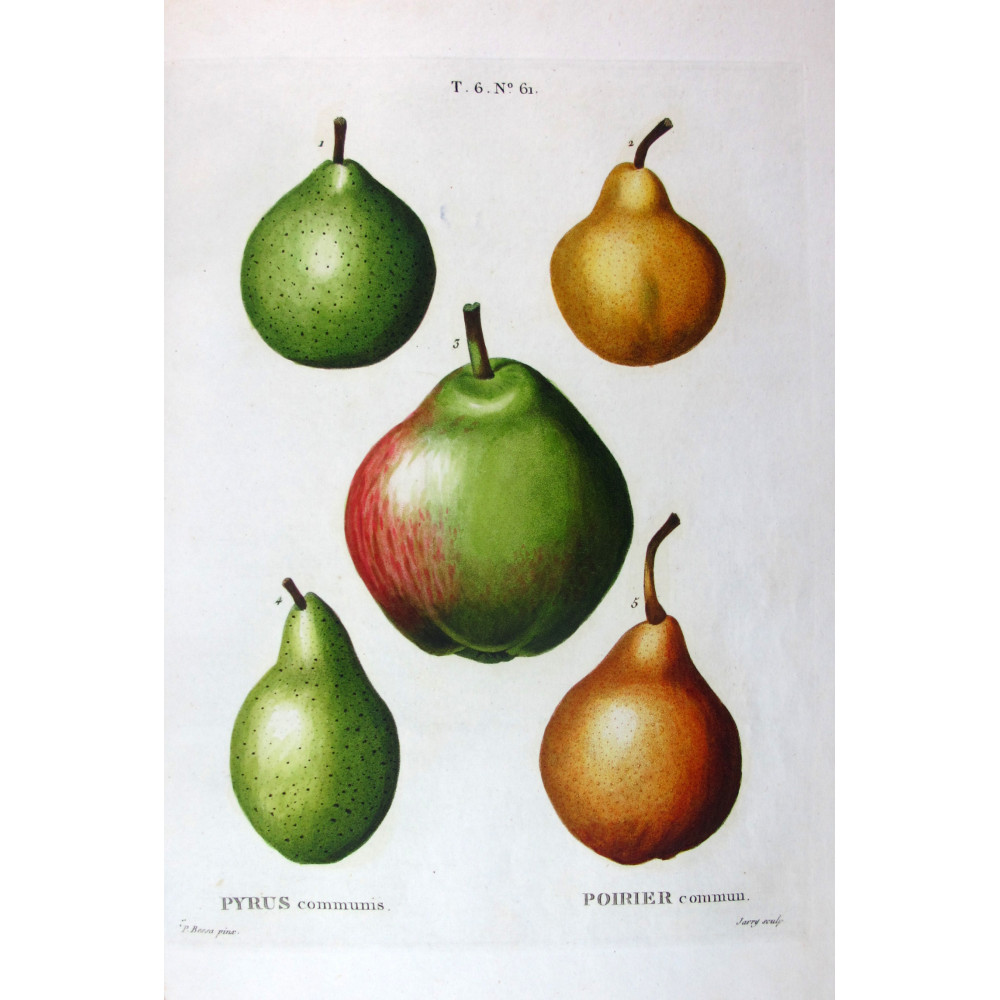
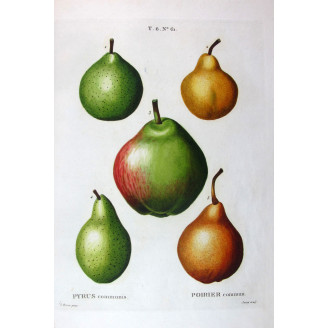

A refined study of five historic pear cultivars, combining varietal precision with sculptural balance and luminous hand-colouring.
 Delivery policy
Your print will be carefully prepared and shipped worldwide via trusted couriers (UPS or similar).
 Authentic antique prints
Original engravings from the 17th–19th century.
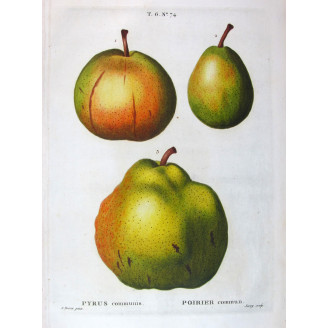
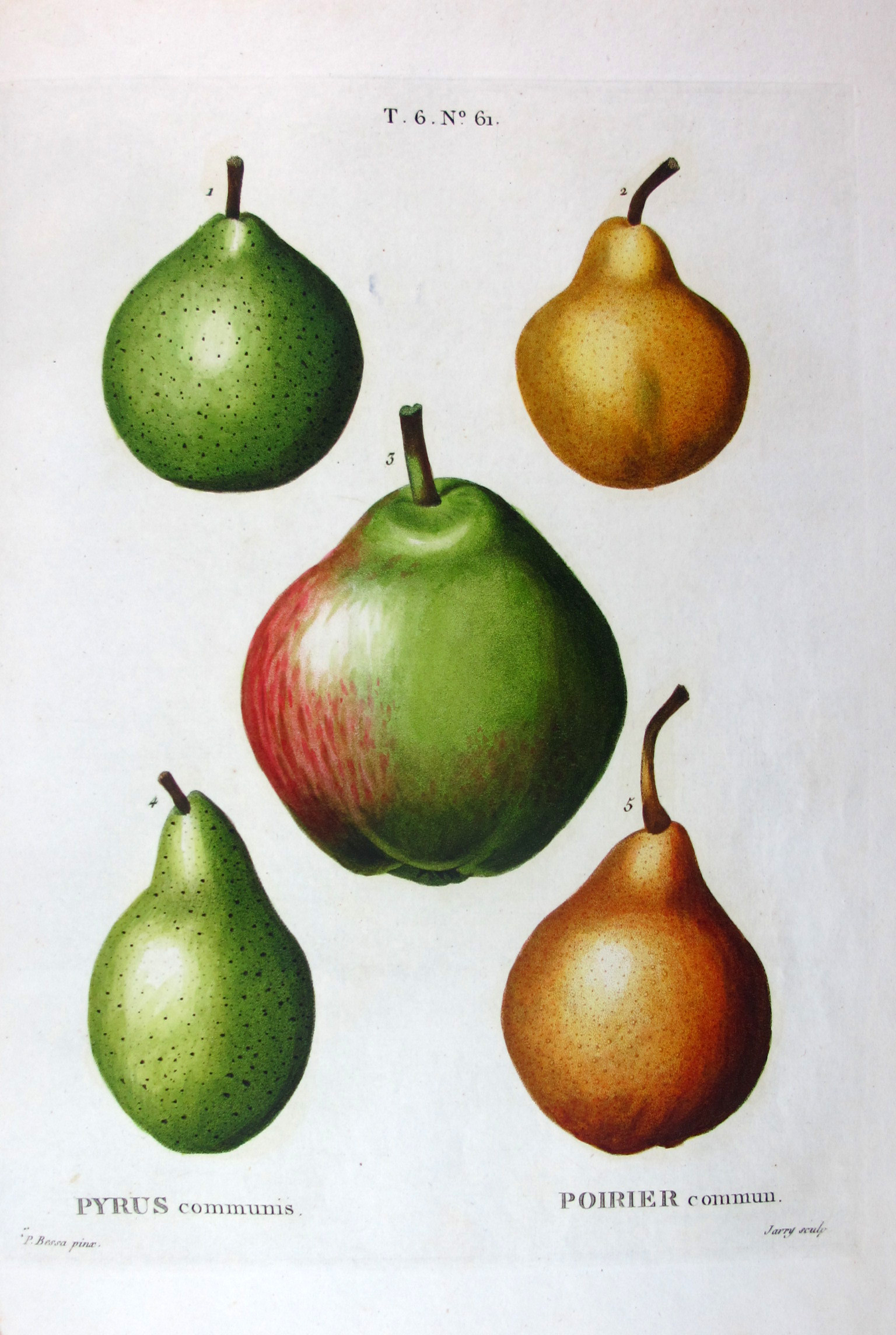
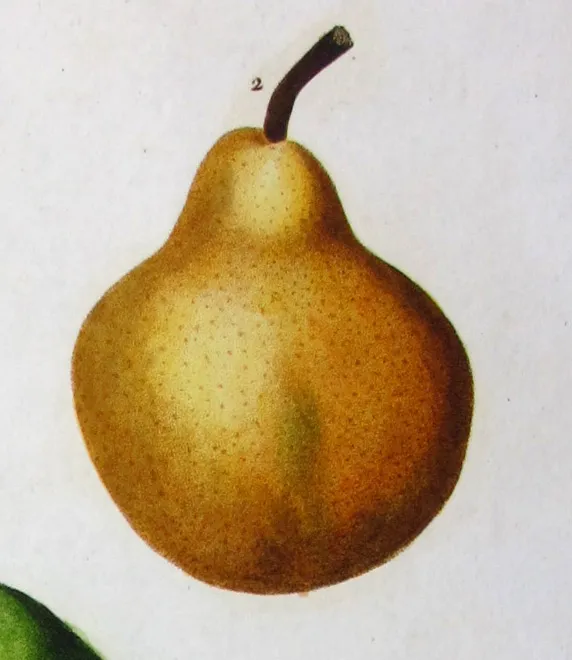
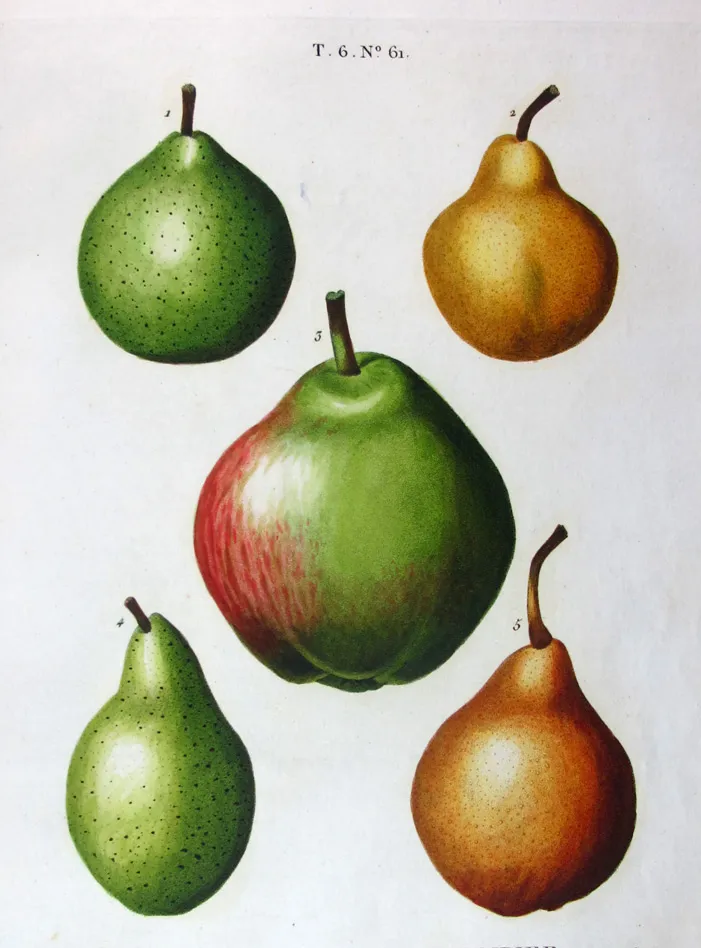
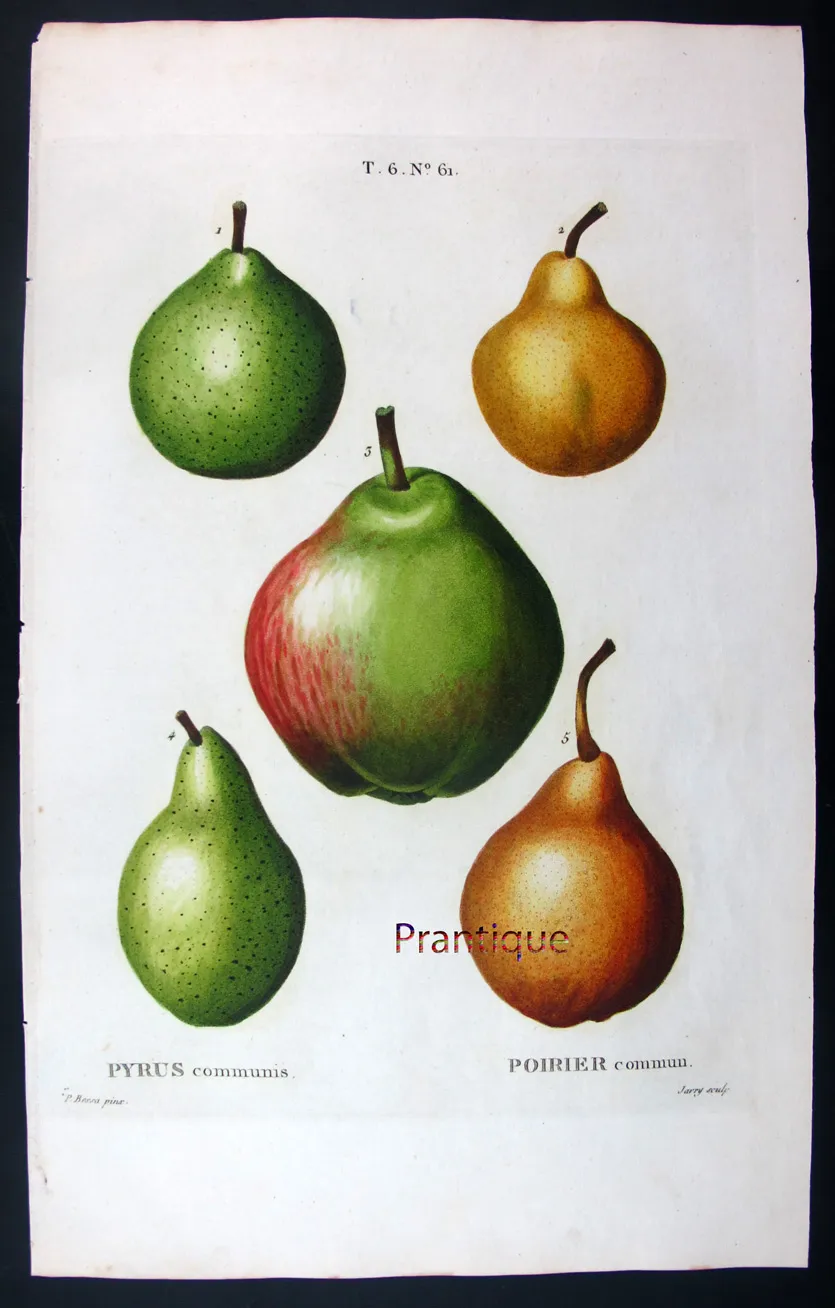
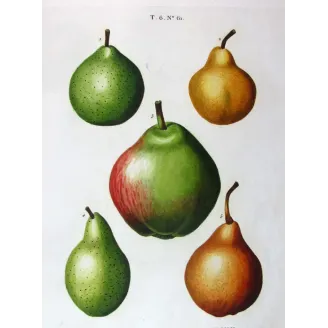
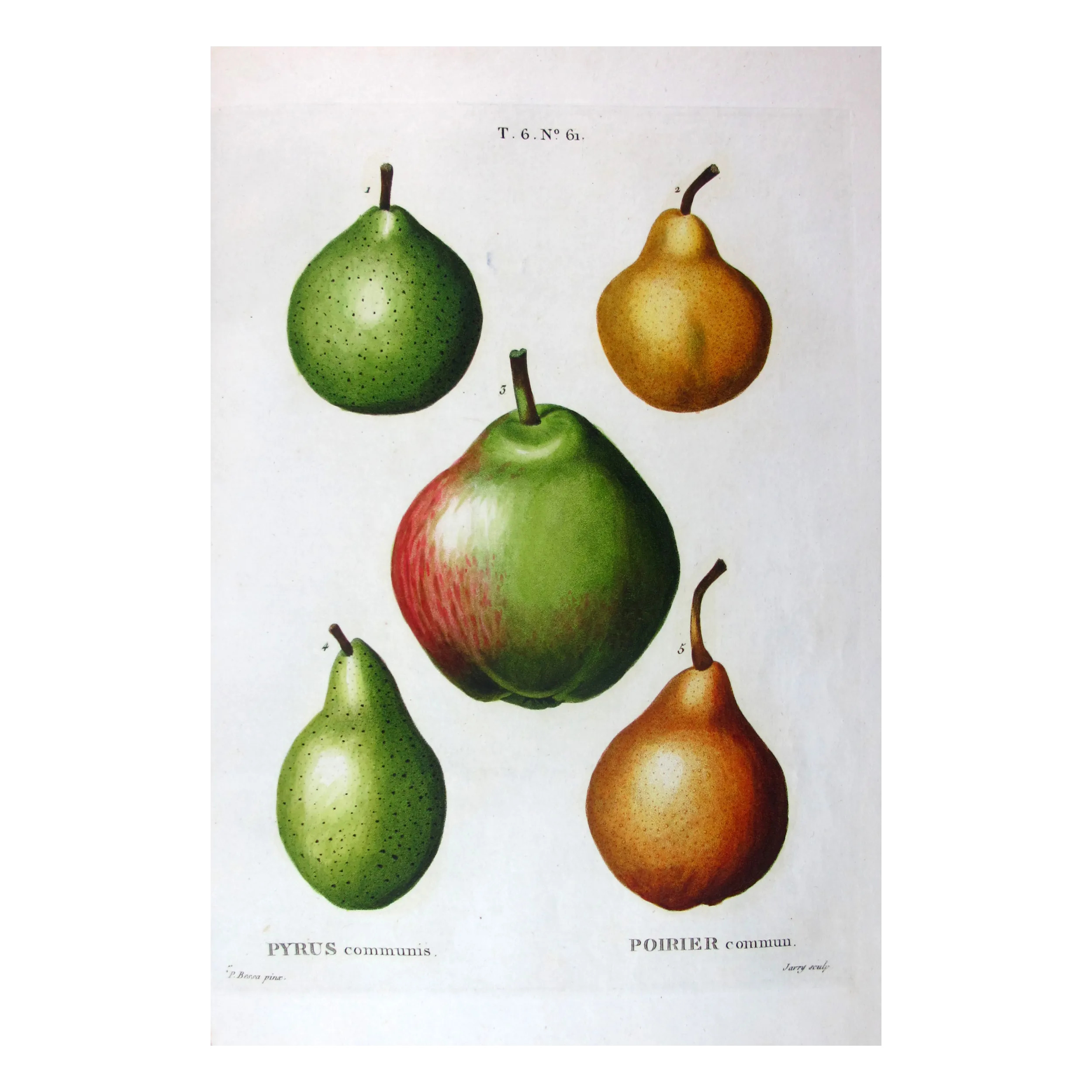
This original botanical engraving presents a refined study of cultivated pears, arranged as five distinct fruit portraits on a generous field of untouched paper. The composition is both documentary and decorative: each pear is isolated for clarity, yet together they create a calm rhythm of volume, colour, and surface texture—an effect that can feel unexpectedly modern in its restraint.
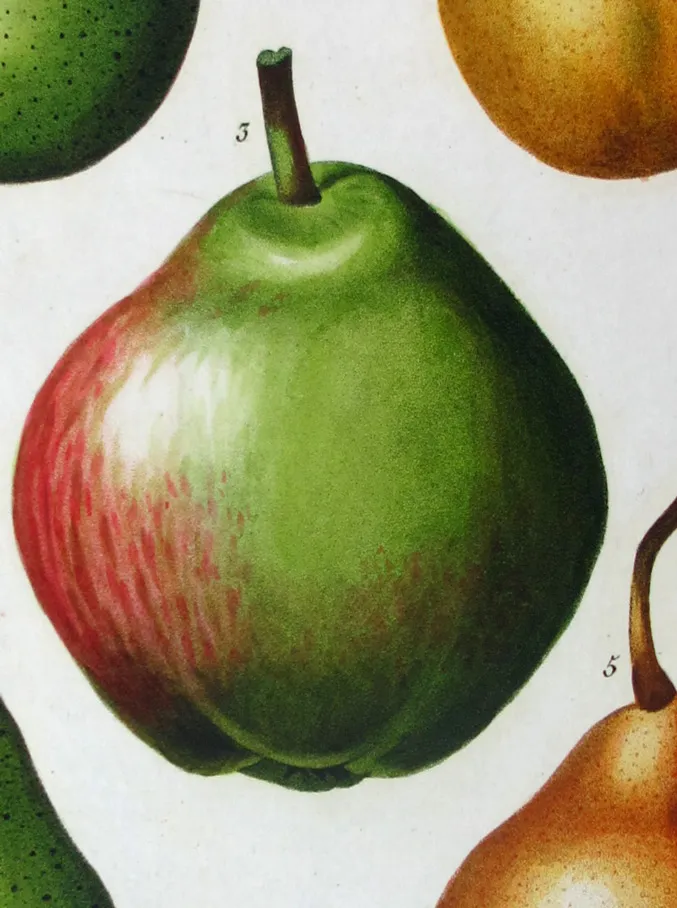
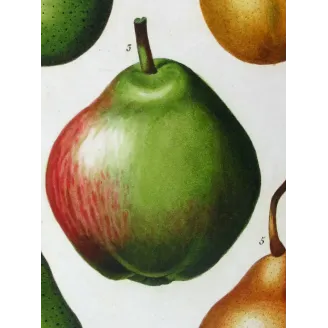
Bessa’s hand is evident in the controlled modelling of form. Subtle tonal transitions, soft highlights, and finely observed speckling suggest weight and ripeness without theatricality. The central fruit (Fig. 3) anchors the plate with a fuller, more commanding presence, while the surrounding studies—cool greens and warm russet tones—offer contrast and balance, as if curated for both comparison and visual harmony.
Produced for Arbres et Arbustes, one of the most accomplished French botanical publications of the early nineteenth century, this plate reflects a period when orchard subjects were treated with the same seriousness and aesthetic ambition as celebrated florals—crafted to satisfy an exacting audience and to astonish through elegance, precision, and perceptual depth.
— • —
The plate is structured as a constellation of forms: four pears act as satellites around a dominant central subject. This layout creates a measured visual cadence—large to small, cool to warm, smooth to lightly mottled—while maintaining a strong sense of order and openness.
Colour is handled with exceptional discretion. Fresh greens are tempered by soft ochre and russet notes, and the highlights are placed to suggest curvature and tactile surface rather than gloss. The overall impression is quietly luxurious: a study in three-dimensional presence achieved through disciplined hand-colouring and a refined understanding of light.
Because the subjects are presented without branches or foliage, the viewer’s attention is drawn to the fruit itself—shape, skin, maturity, and subtle imperfections—turning the plate into both a horticultural document and a minimalist still-life of enduring decorative appeal.
The plate is classified as Pyrus communis (common pear) and records five cultivated varieties, each explicitly named in the original publication. This level of varietal specificity reflects the early nineteenth century’s orchard culture, where distinct forms were documented for their profile, surface character, and seasonal identity.
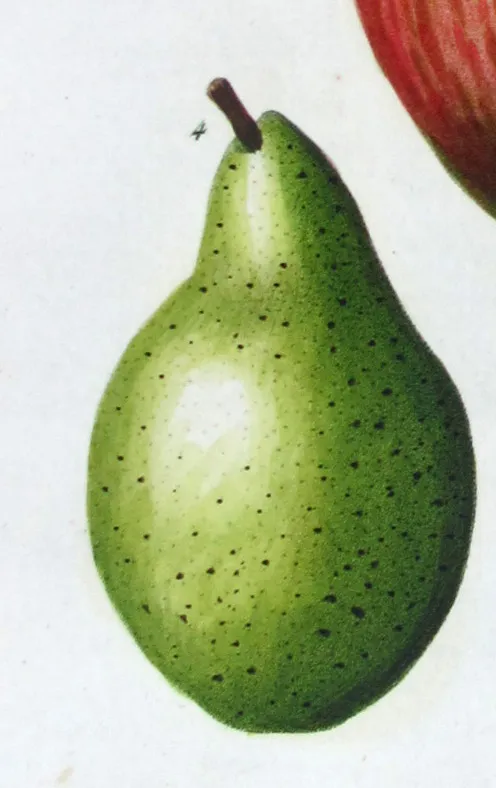
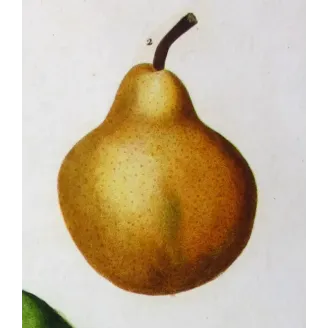
The cultivars illustrated are: Poire de Bergamotte Sylvange (Fig. 1), Messire-Jean doré (Fig. 2), Catillac (Fig. 3), Beurré Romain (Fig. 4), and Poire de Jalousie (Fig. 5). Presented as individual fruit studies, they invite close comparison while remaining visually coherent as a single, balanced composition.
As a subject, this plate sits at the intersection of botanical art and horticultural history: a precise record of cultivated pears in early nineteenth-century France, elevated through Bessa’s pursuit of perceptual realism—so convincing that the fruits can appear almost painted, with a quiet tridimensionality that rewards careful viewing.
The engraving is in like brand new condition, exceptionally fresh and clean for an early nineteenth-century sheet. The original hand-colouring remains vivid and well preserved across all five fruit studies, with no significant defects affecting overall presentation. No watermark has been observed. The engraved credits “P. Bessa pinx.” and “Jarry sculp.” are present, attesting to the original drawing by Pancrace Bessa and the engraving executed by Jarry.
For insight into Bessa’s distinctive hand-colouring techniques, see our editorial feature:
Specific References
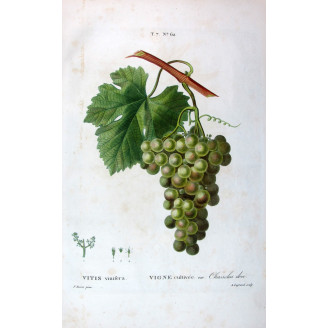
Depiction of golden grapes with vivid green leaves in fine detail.
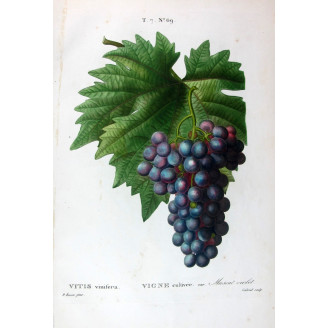
Elegant depiction of a rich purple Muscat grape variety by Pancrace Bessa.
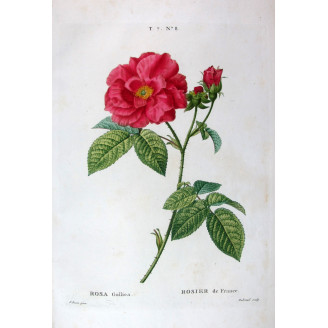
French Rose Rosier de France Original hand-colored botanical engraving by Pancrace Bessa.
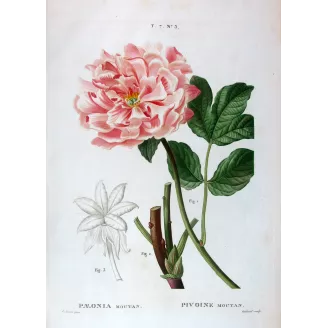
Tree Peony Pivoine moutan Original hand-colored botanical engraving by Pancrace Bessa.
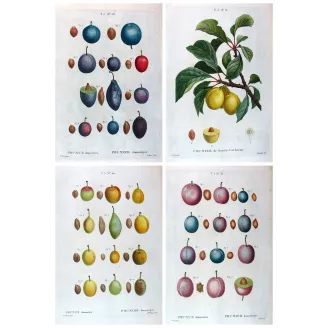
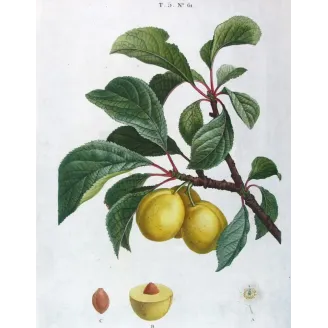
Botanical illustration of the Saint Catherine plum, a delicate fruit-bearing tree, by Pancrace Bessa.
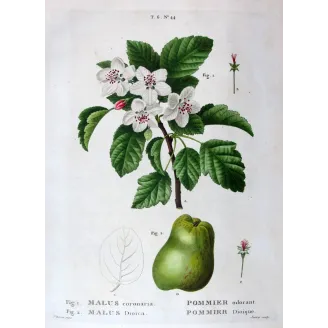
A finely executed early 19th-century botanical engraving illustrating a cultivated apple variety (Malus communis), drawn by Pancrace Bessa for Arbres et Arbustes. The composition combines precise botanical observation with refined decorative balance, presenting fruit and foliage with clarity and quiet elegance. Exceptional hand-colouring and careful modelling reflect the sophistication of French pomological illustration at its height.
A sculptural study of cultivated fruit, defined by rounded volumes and restrained modelling, rendered with quiet elegance and visual balance.
A refined early 19th-century botanical engraving depicting cultivated pear varieties (Pyrus communis), drawn by Pancrace Bessa and engraved for Arbres et Arbustes. Executed with restraint and clarity, the plate exemplifies the elegance of French pomological illustration, uniting scientific precision with a calm, decorative sensibility. The harmonious composition and subtle hand-colouring make it a timeless and highly collectible work.
Original pochoir print of the peach tree, Prunus persica, with detailed flowering and fruit.
A refined study of five historic pear cultivars, combining varietal precision with sculptural balance and luminous hand-colouring.