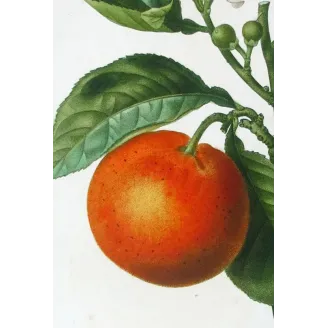
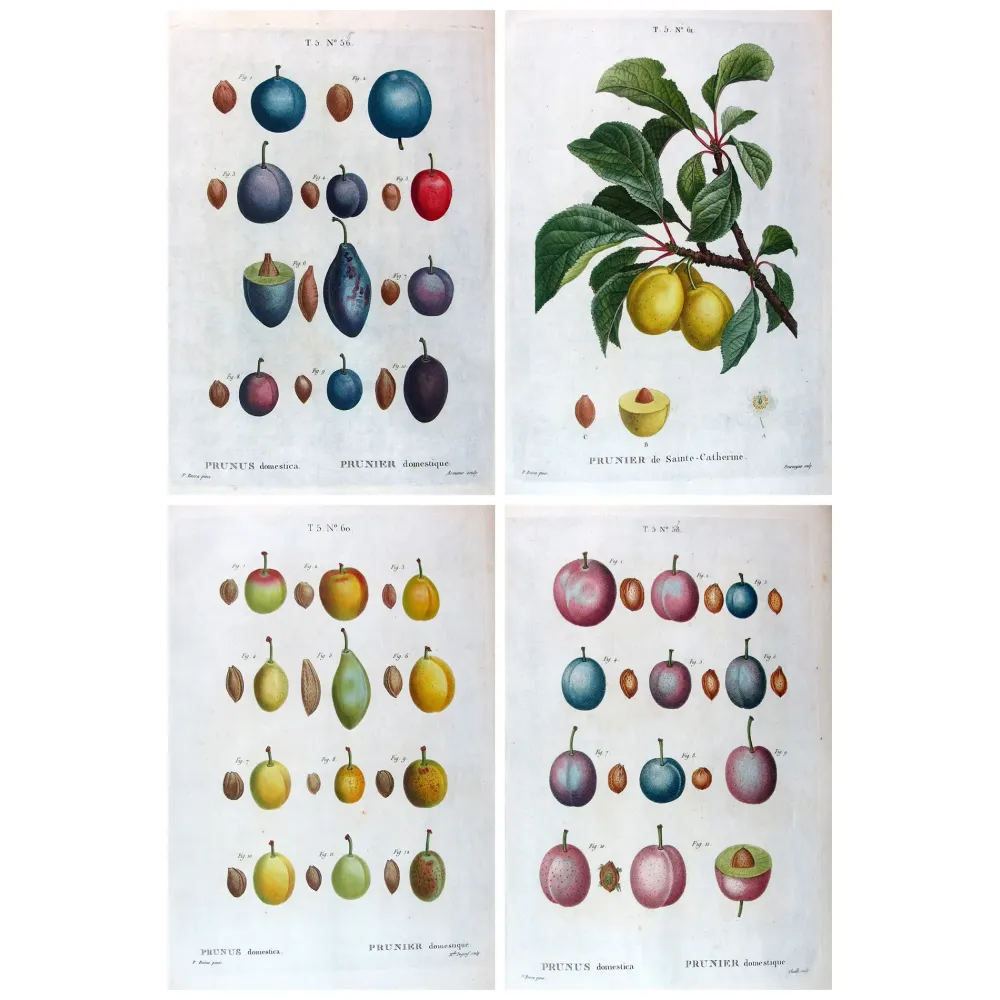
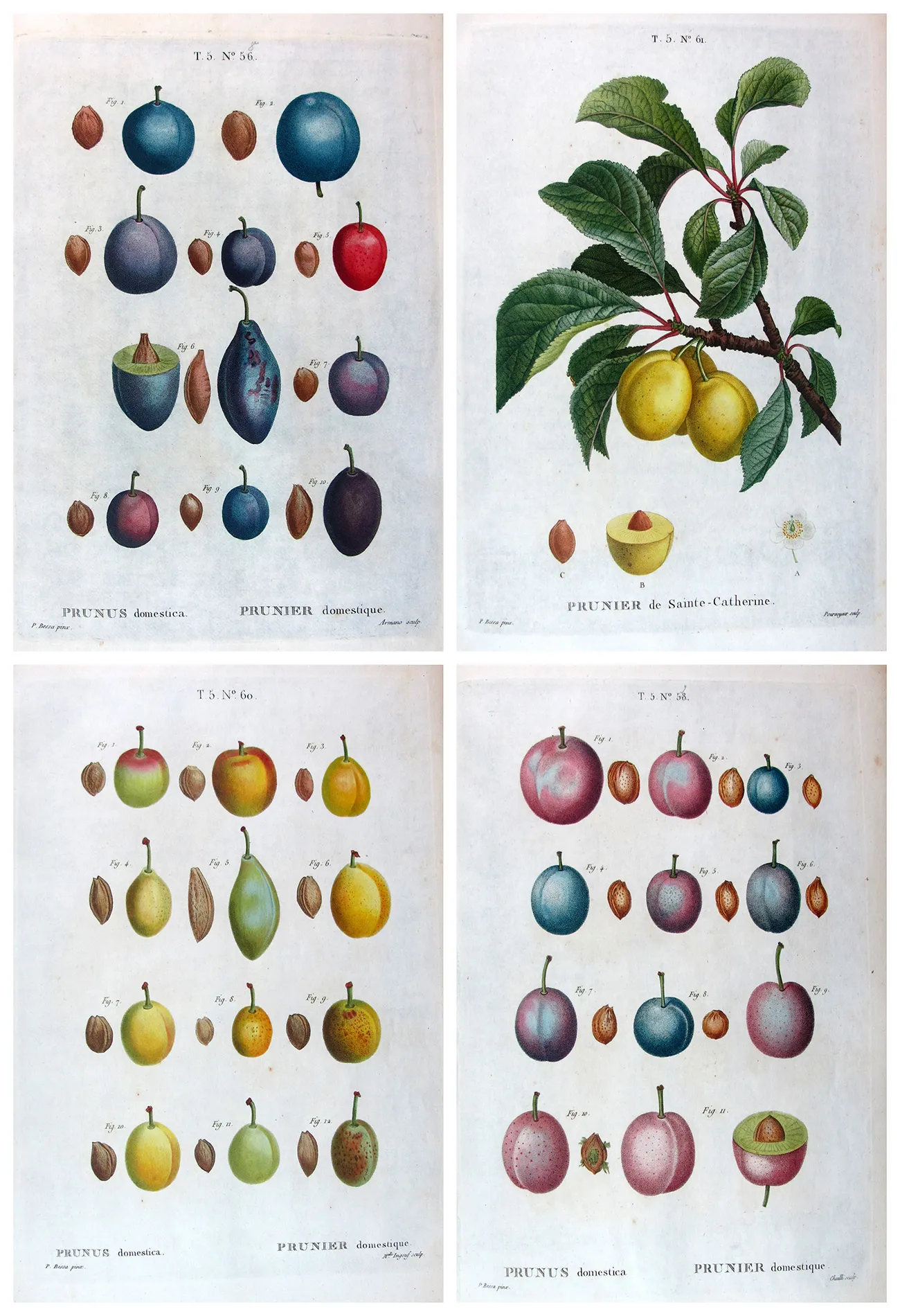
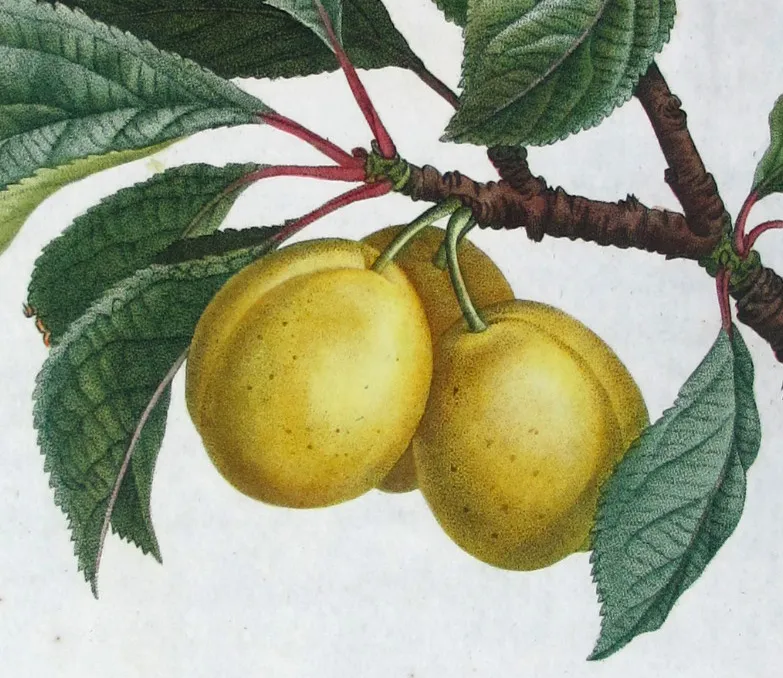
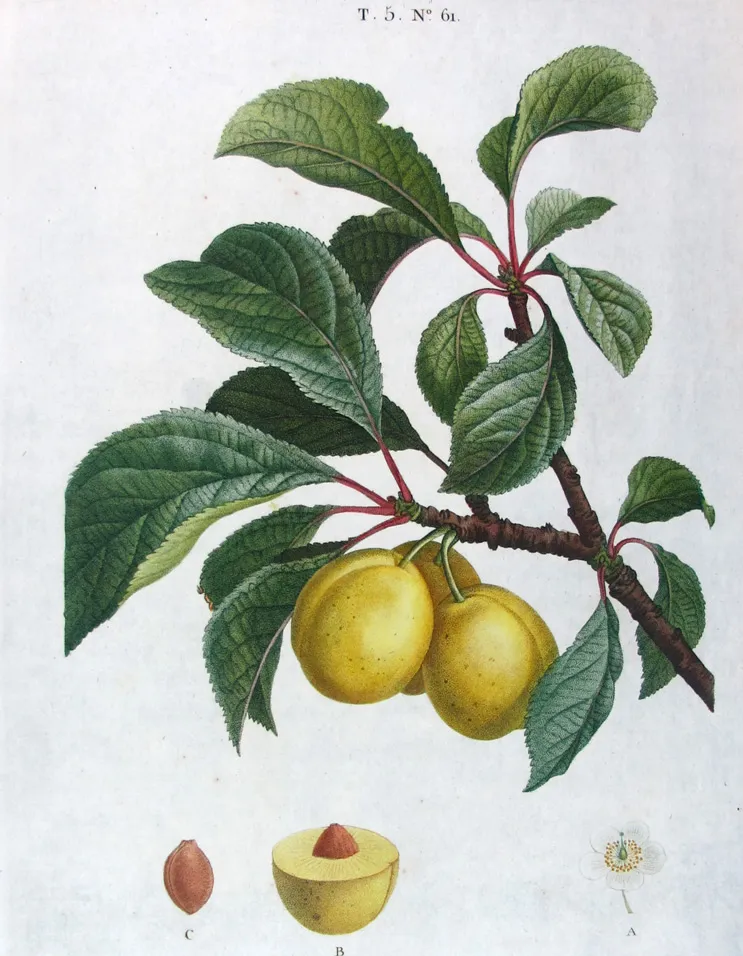
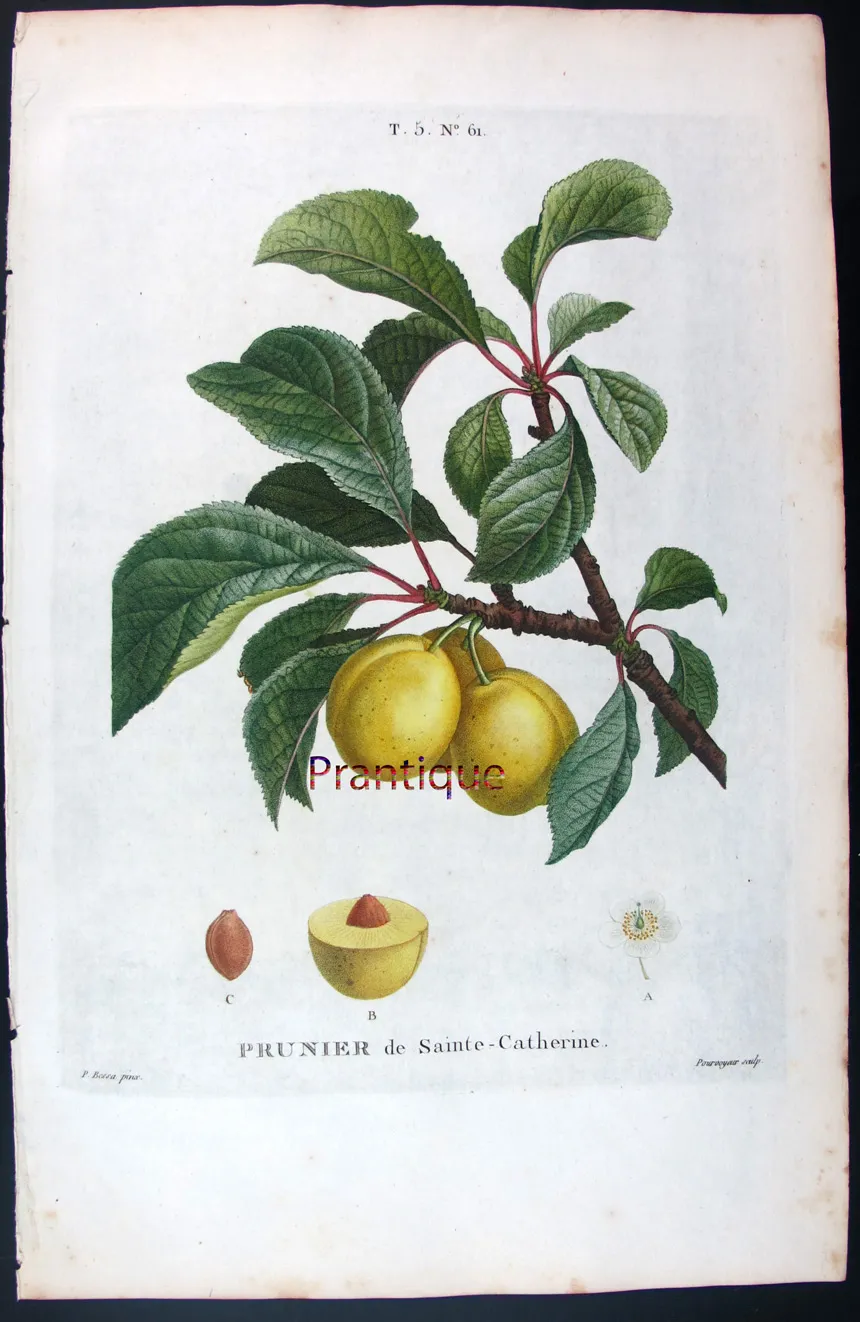
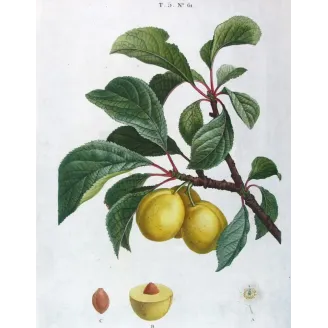
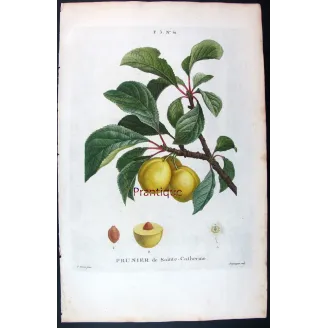
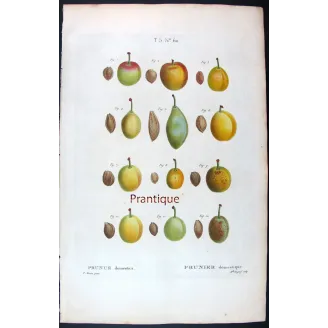
Botanical illustration of the Saint Catherine plum, a delicate fruit-bearing tree, by Pancrace Bessa.
 Delivery policy
Your print will be carefully prepared and shipped worldwide via trusted couriers (UPS or similar).
 Authentic antique prints
Original engravings from the 17th–19th century.
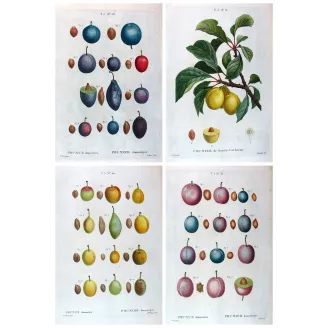
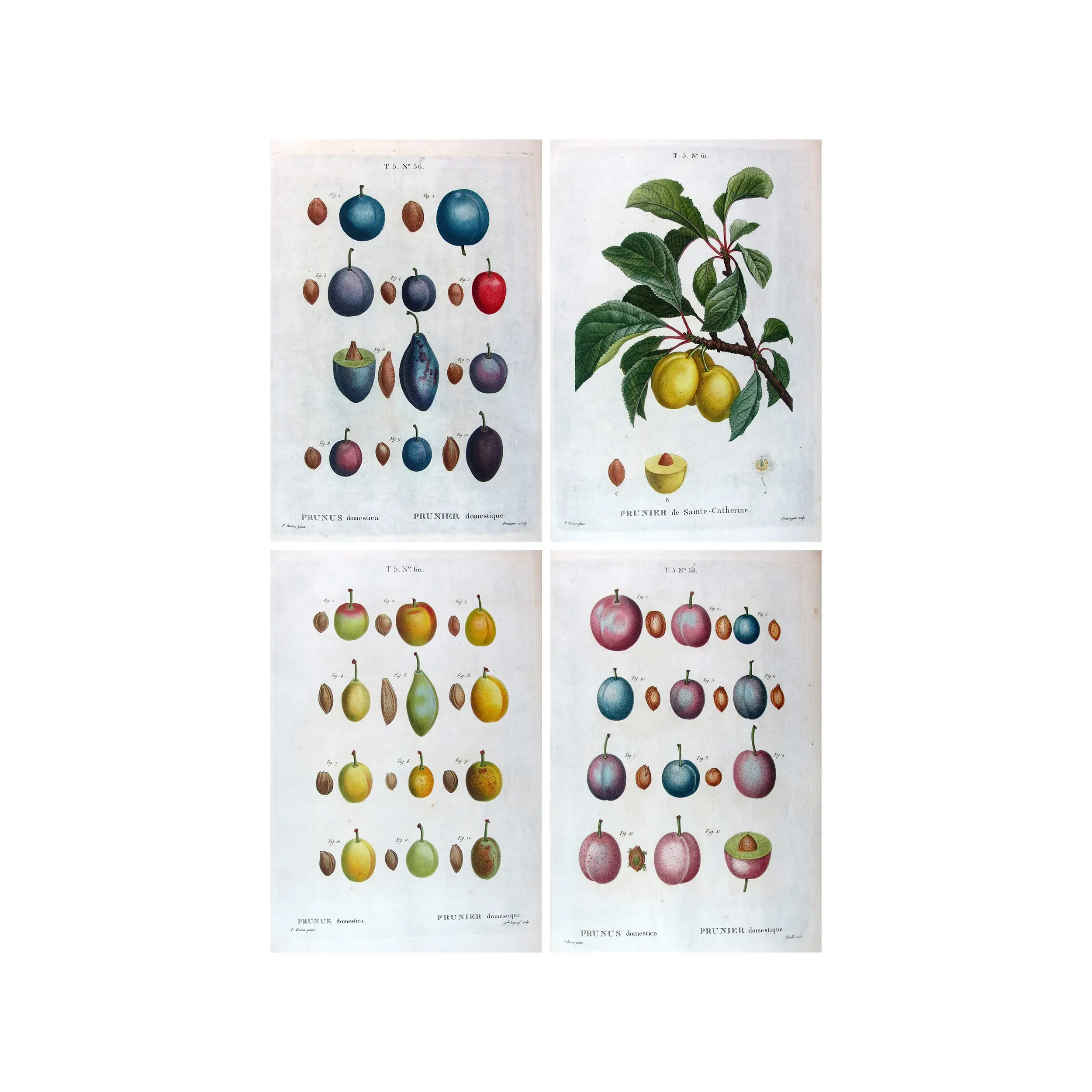
This curated ensemble gathers four original early nineteenth-century engravings devoted to Prunus domestica, forming a coherent botanical corpus executed under the artistic direction of Pancrace Bessa. Individually complete, together they evoke the monumental horticultural ambition of their time — an era when cultivated fruit was documented with scientific precision and rendered with remarkable artistic refinement for an elite and discerning audience.
What is offered here is not merely a decorative grouping of plums, but a fragment of that cultivated world: a refined visual archive of varietal diversity, morphology, and aesthetic excellence. Displayed together, the four plates create a balanced dialogue between branch studies and systematic varietal grids — between botanical poetry and horticultural classification.
— • —
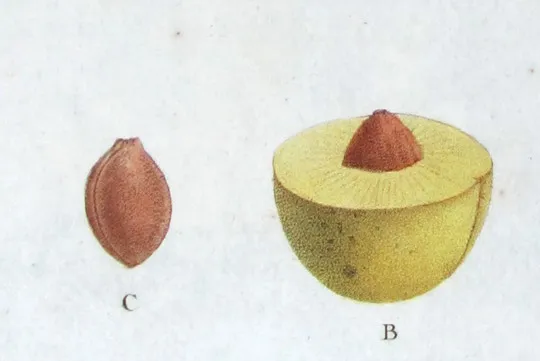
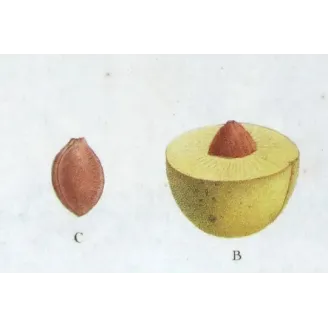
The visual strength of the ensemble lies in its internal hierarchy. The branch study of Prunier de Sainte-Catherine acts as the anchor: a composed and luminous arrangement of foliage, fruit, blossom, and anatomical details. Its sculptural leaves and warm yellow plums establish a painterly focal point that draws the eye immediately.
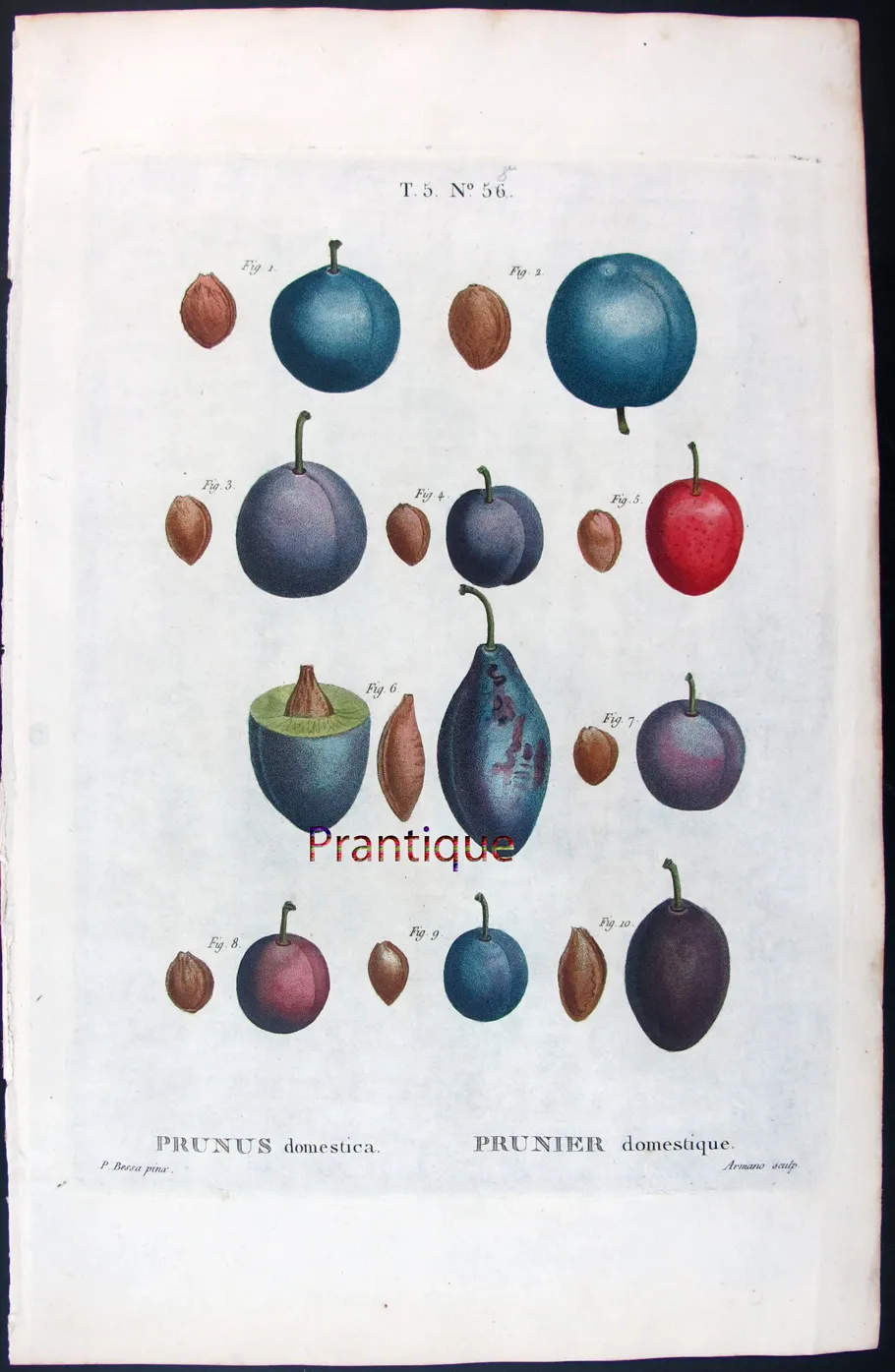
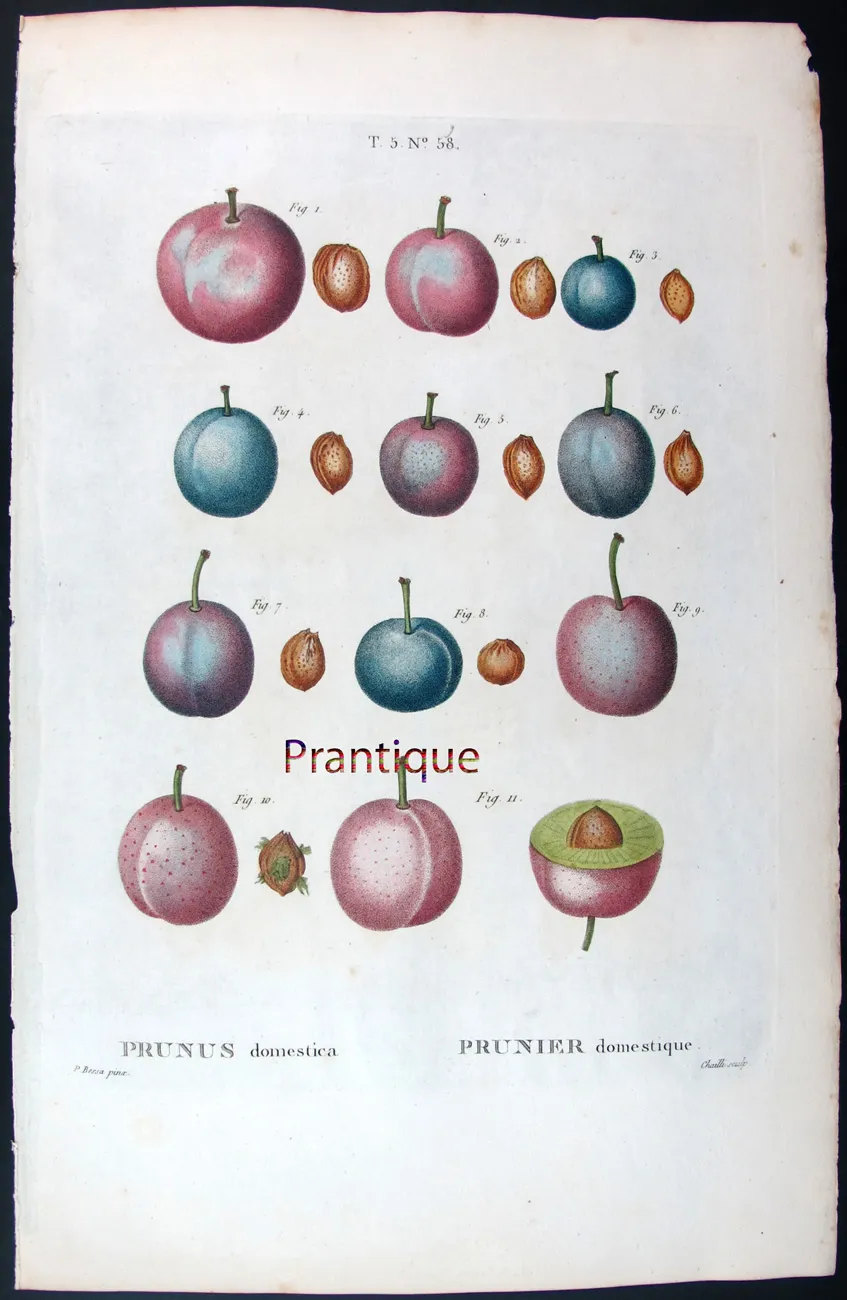
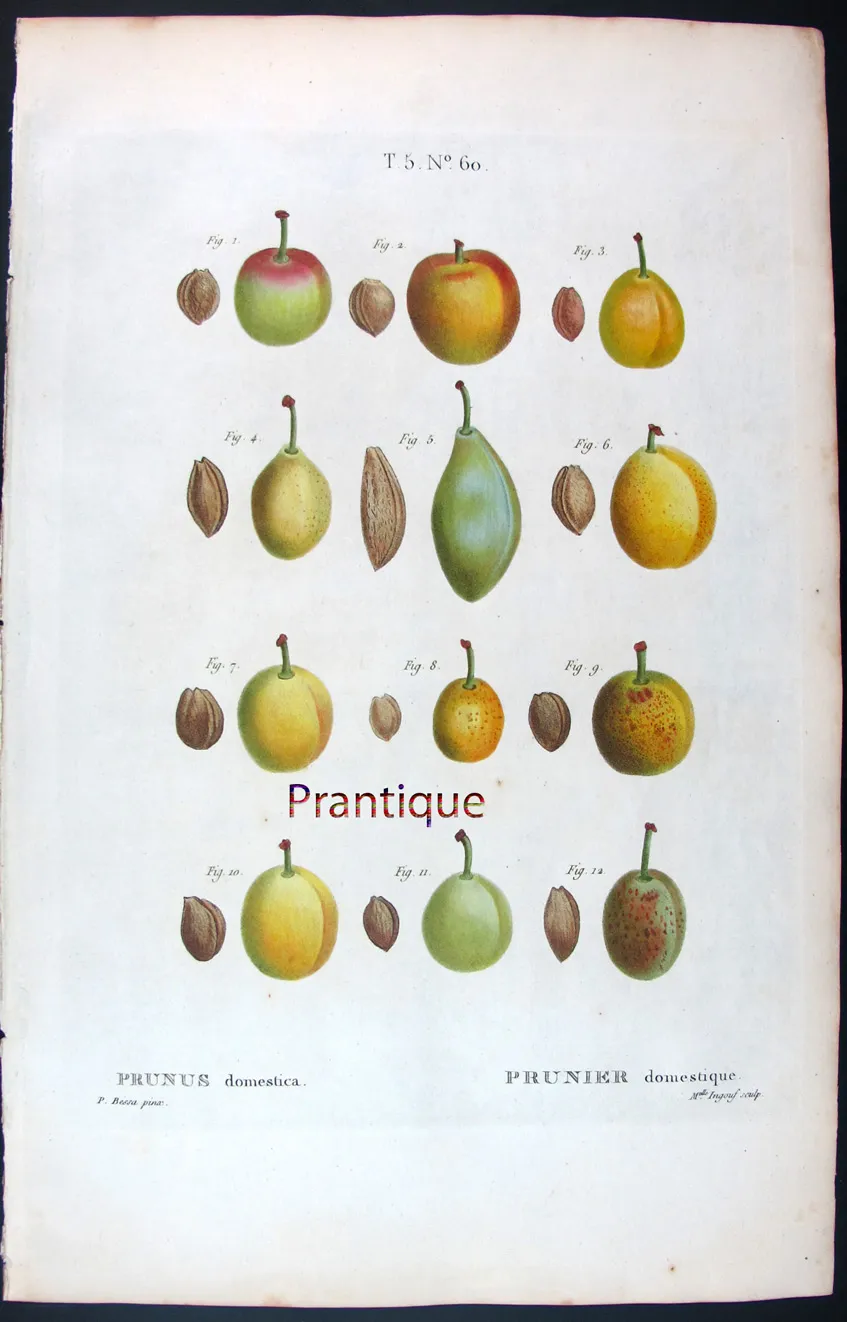
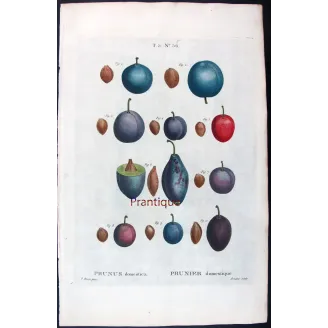
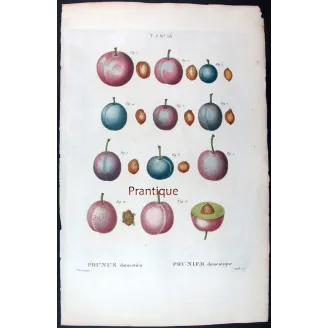
The remaining three plates expand the narrative. Two present structured varietal arrays, where individual fruits are isolated against generous white space, each accompanied by its stone. This grid-like presentation creates rhythm and clarity, allowing subtle variations in form, colour, and texture to emerge distinctly.
Viewed together, the four sheets achieve a rare equilibrium: the lyrical naturalism of the branch plate is counterbalanced by the almost taxonomic elegance of the fruit matrices. The result is refined, intellectual, and deeply decorative — a complete horticultural conversation rendered in engraving and hand-colour.
All four plates are dedicated to cultivated varieties of Prunus domestica, reflecting early nineteenth-century French pomological scholarship and orchard culture.
Together, these plates form a coherent micro-corpus: branch morphology, floral anatomy, fruit cross-sections, and an extensive survey of named cultivars. While not the entirety of the original publication, the selection is internally complete and intellectually balanced.
All four engravings are in like brand new antique condition. The paper tone is fresh and luminous, with uniform character across the set. The sheets share a harmonious visual presence — consistent colour saturation, identical paper quality, and matching margins — creating a cohesive and museum-like ensemble. No watermarks have been observed.
For further context on Pancrace Bessa and his distinctive contribution to French botanical illustration, see our editorial feature:
Specific References
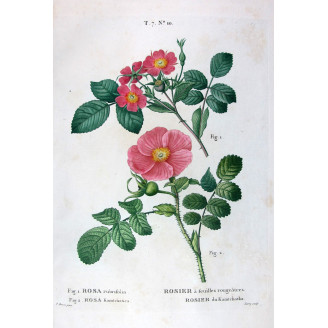
Kamchatka Rose Rosier du Kamchatka Original hand-colored botanical engraving by Pancrace Bessa.
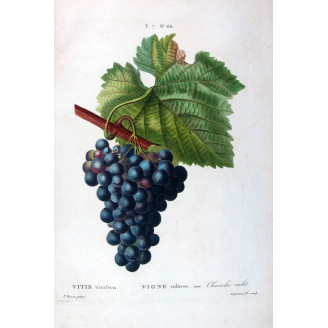
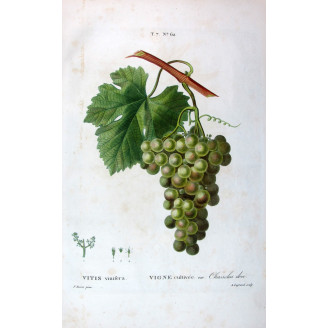
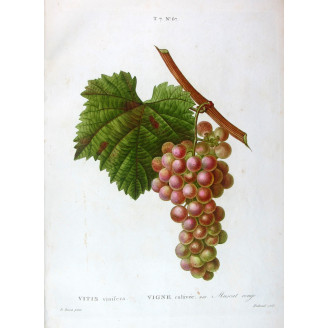
Original antique print of the cultivated Chasselas grape vine, Vitis vinifera, by Pancrace Bessa.
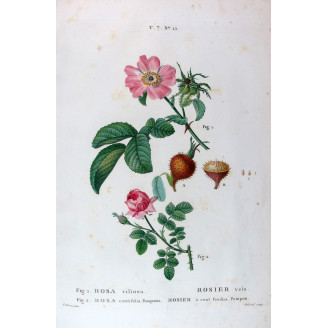
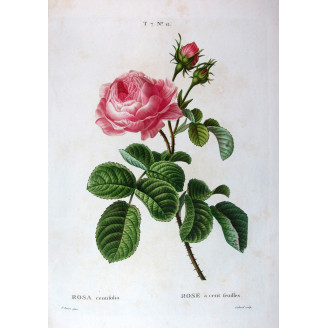
Velvet Rose & Pompon Centifolia Rosier velu & Rosier à cent feuilles, Pompon Original hand-colored botanical engraving by Pancrace Bessa.
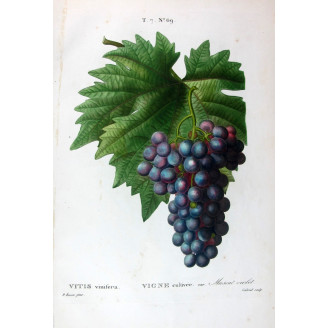
Elegant depiction of a rich purple Muscat grape variety by Pancrace Bessa.
Depiction of golden grapes with vivid green leaves in fine detail.
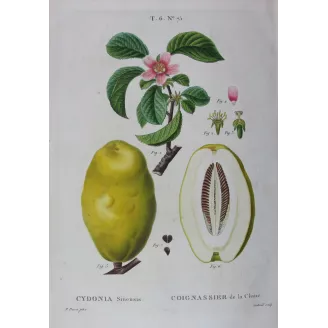
Chinese Quince Coignassier de la Chine Original hand-colored botanical engraving by Pancrace Bessa.
Hundred-petaled Rose Rose à cent feuilles Original hand-colored botanical engraving by Pancrace Bessa.
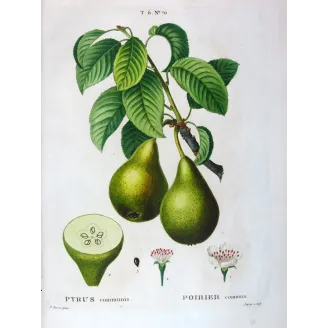
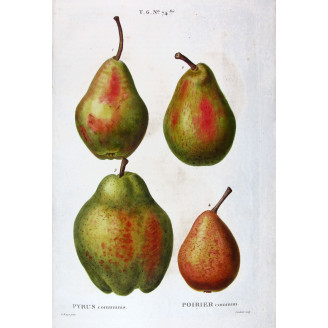
A refined early 19th-century botanical engraving depicting cultivated pear varieties (Pyrus communis), drawn by Pancrace Bessa and engraved for Arbres et Arbustes. Executed with restraint and clarity, the plate exemplifies the elegance of French pomological illustration, uniting scientific precision with a calm, decorative sensibility. The harmonious composition and subtle hand-colouring make it a timeless and highly collectible work.
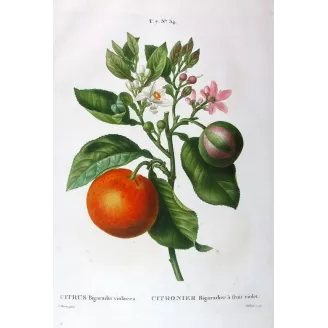
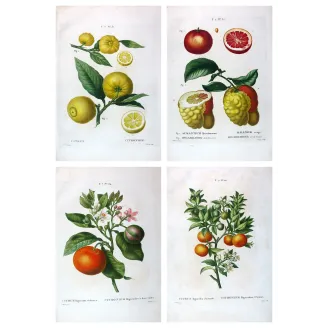
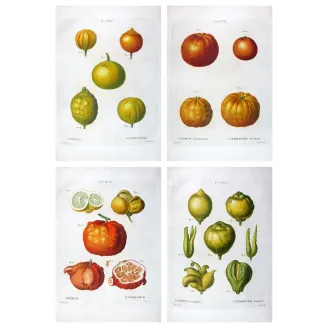
A coherent ensemble of eight original orange and bigarade engravings by Pancrace Bessa, reflecting the cultivated discipline of French orangeries in the Napoleonic era. Botanical precision and architectural composure unite in a refined citrus portfolio preserved as a complete series.
A refined orchard subject where volume and proportion are carefully balanced, giving the fruit a calm, almost sculptural presence.
Botanical illustration of the Saint Catherine plum, a delicate fruit-bearing tree, by Pancrace Bessa.