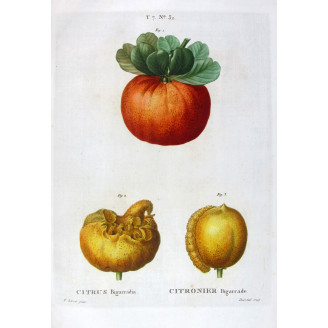
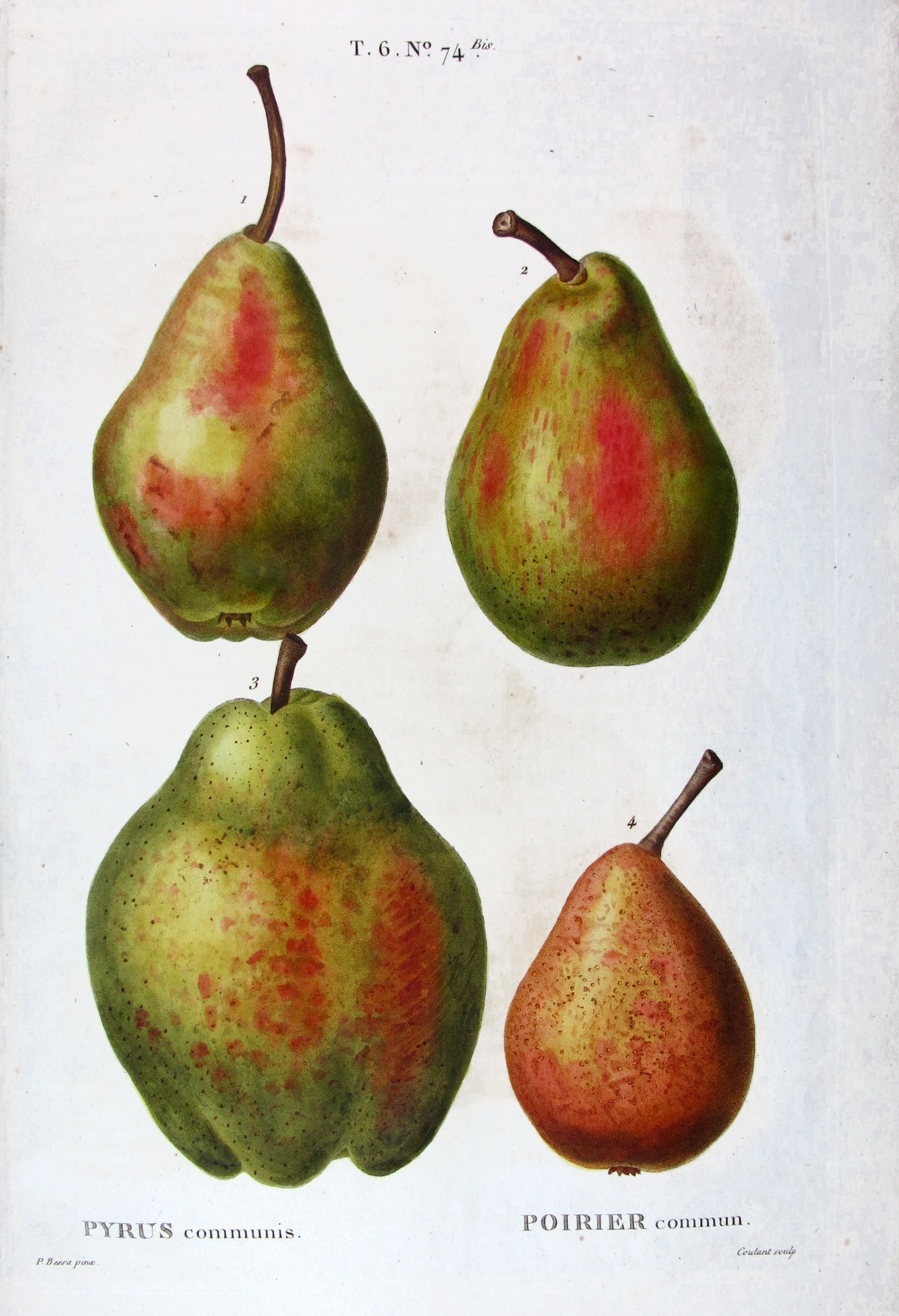

A refined orchard subject where volume and proportion are carefully balanced, giving the fruit a calm, almost sculptural presence.
 Delivery policy
Your print will be carefully prepared and shipped worldwide via trusted couriers (UPS or similar).
 Authentic antique prints
Original engravings from the 17th–19th century.
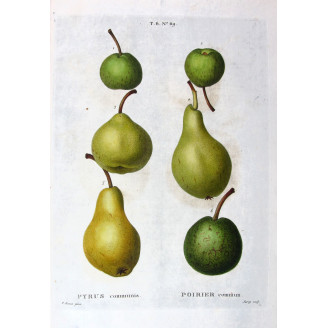
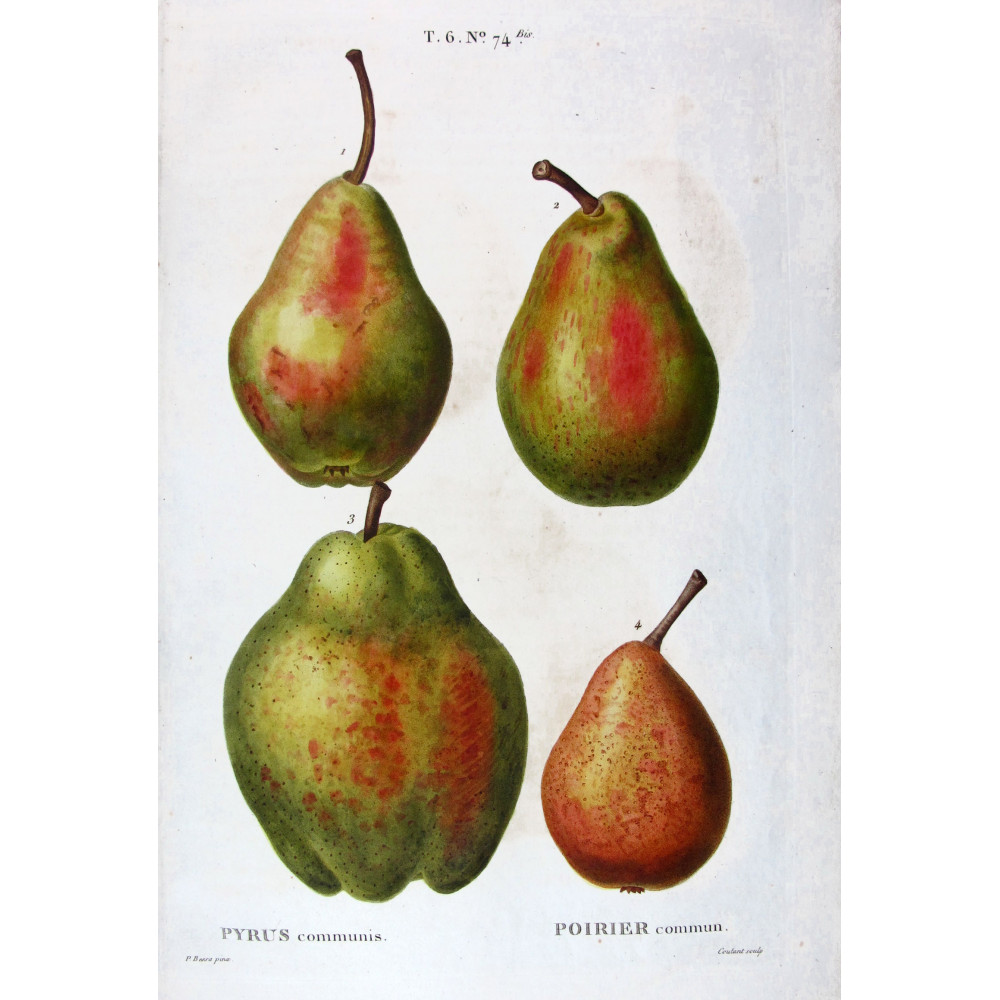
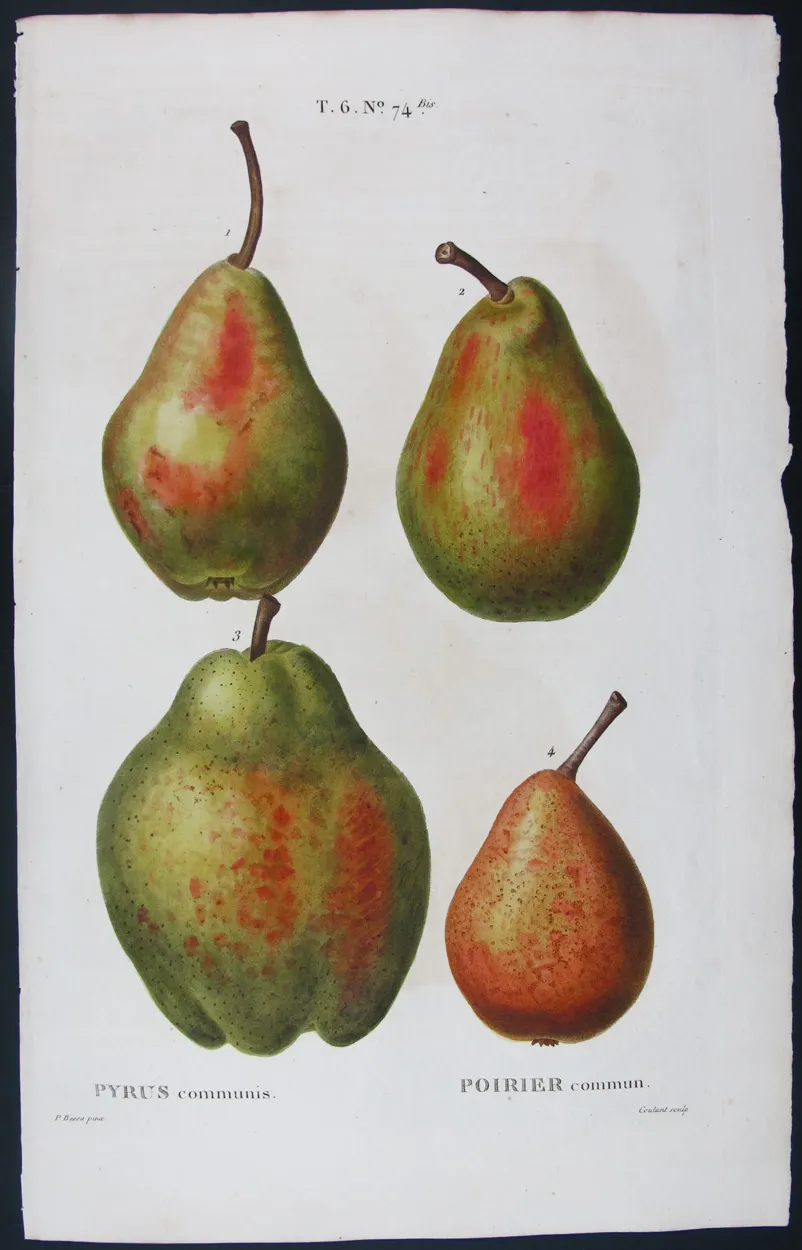
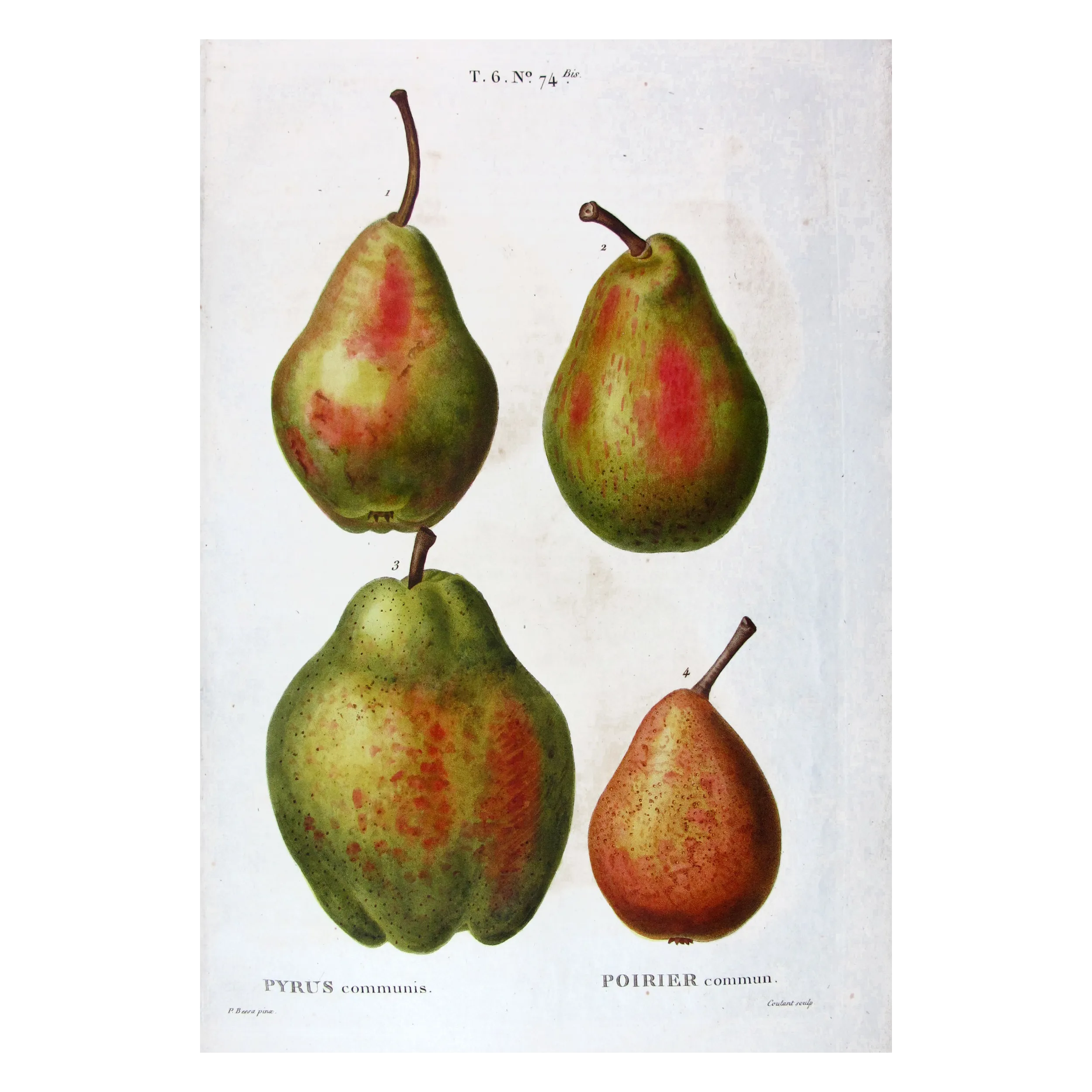
This original botanical engraving presents four cultivated pears, arranged with quiet balance and a distinctly sculptural sensibility. Each fruit is isolated against generous negative space, allowing form, surface texture, and subtle chromatic transitions to emerge with clarity and restraint.
Bessa’s handling of volume is particularly evident in the rounded modelling of the pears, where soft tonal gradients and restrained highlights create a convincing sense of three-dimensional presence. The composition avoids decorative excess, favouring a measured, almost contemplative approach that elevates the subject beyond simple orchard illustration.
Executed for Arbres et Arbustes, this plate exemplifies the refined visual language developed in early nineteenth-century French botanical publishing, where cultivated fruit was rendered with both scientific intent and aesthetic ambition.
— • —
The composition is structured around four individual fruit studies, each presented at a slightly different scale and orientation. This variation introduces a gentle visual rhythm while maintaining overall harmony and balance across the sheet.
The colour palette remains deliberately controlled, combining fresh greens with warm red and ochre accents. Fine stippled textures and soft surface mottling enhance realism without compromising the engraving’s calm, unified character, making the plate particularly well suited to refined interior settings.
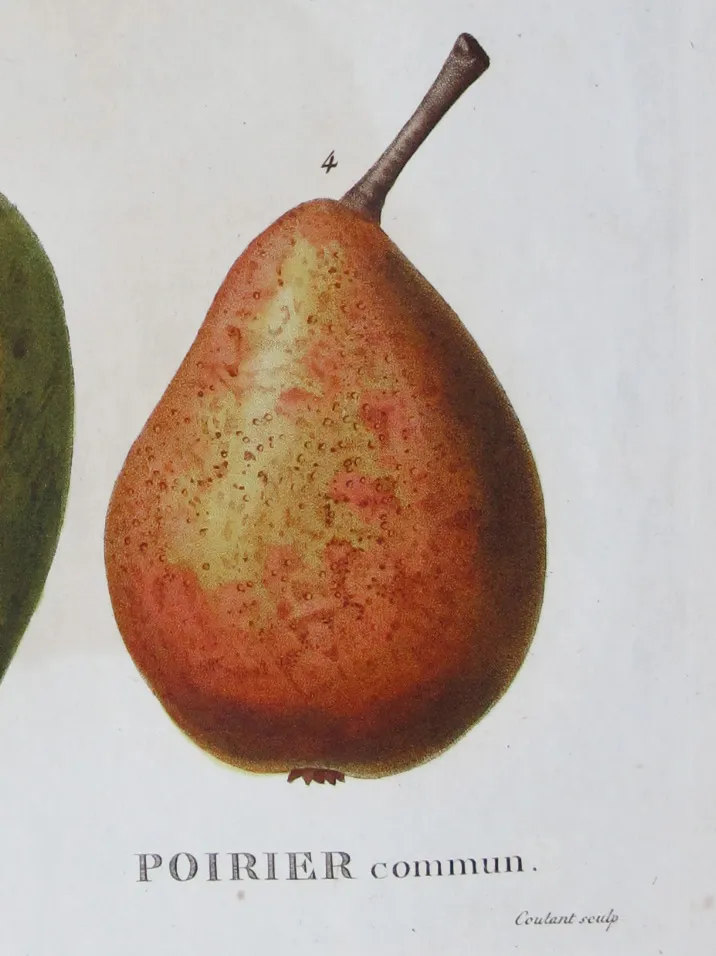
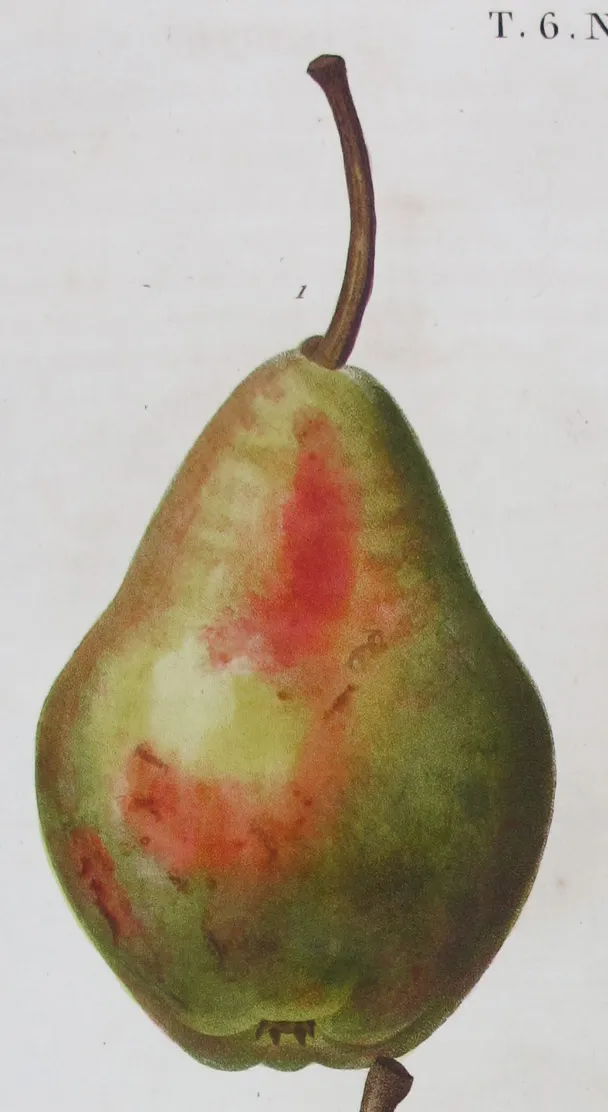
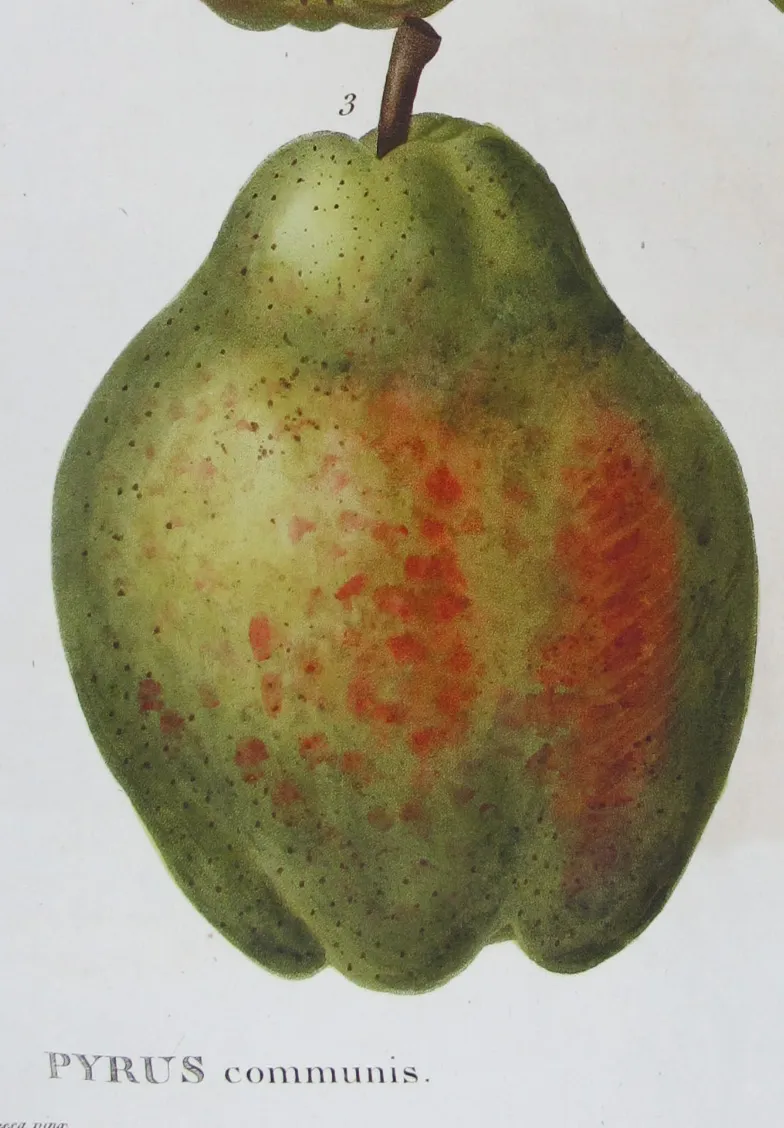
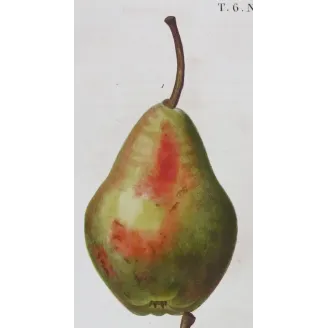
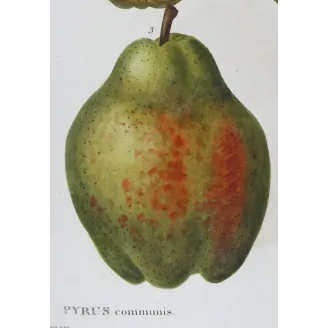
The plate is classified as Pyrus communis (common pear) and illustrates four distinct cultivated varieties as identified in the original publication: Martin-Sire (Fig. 1), Poire Chapital (Fig. 2), Belle-Bessa (Fig. 3), and Rougeaud(e) (Fig. 4).
Such varietal documentation reflects the early nineteenth-century interest in orchard classification, where cultivated fruits were recorded not merely as botanical species but as individual horticultural forms valued for their shape, surface character, and seasonal identity.
Bessa renders each cultivar with disciplined clarity, allowing differences in silhouette, texture, and colouration to emerge naturally. The result is both a precise horticultural record and a quietly elegant visual study of cultivated pears in post-revolutionary France.
The engraving is in very good antique condition. An extremely light, near-imperceptible area of toning from offsetting is visible, remaining discreet and unobtrusive. The sheet is otherwise clean and well preserved. No watermark has been observed. The original hand-colouring is fresh and balanced across all fruit studies, with no significant defects affecting the overall presentation. The engraved credits “P. Bessa pinx.” and the correct engraver attribution are present.
For insight into Bessa’s distinctive hand-colouring techniques, see our editorial feature:
Specific References
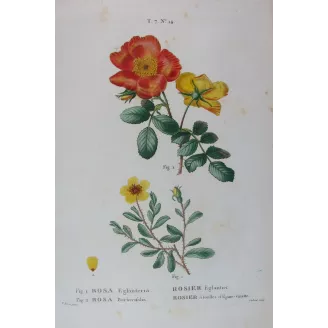
Eglantine & Berberis-leaved Rose Rosier à feuilles d'Épine-vinette Original hand-colored botanical engraving by Pancrace Bessa.
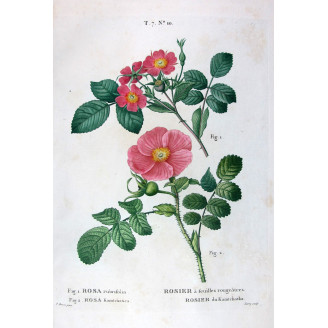
Kamchatka Rose Rosier du Kamchatka Original hand-colored botanical engraving by Pancrace Bessa.
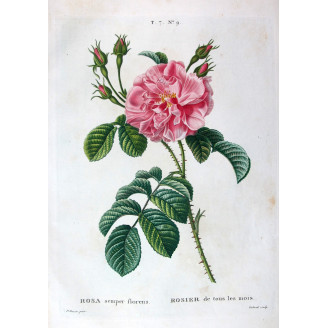
Monthly Rose Rosier de tous les mois Original hand-colored botanical engraving by Pancrace Bessa.
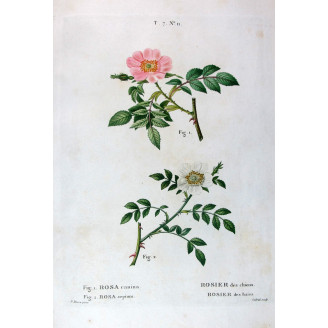
Dog Rose & Hedge Rose Rosier des chiens & Rosier des haies Original hand-colored botanical engraving by Pancrace Bessa.
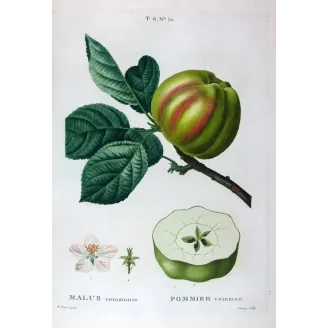
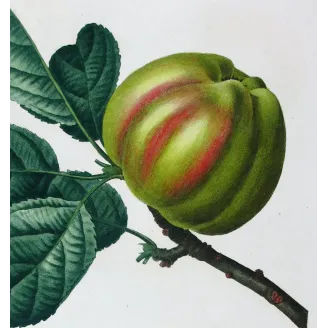
A finely executed early 19th-century botanical engraving illustrating a cultivated apple variety (Malus communis), drawn by Pancrace Bessa for Arbres et Arbustes. The composition combines precise botanical observation with refined decorative balance, presenting fruit and foliage with clarity and quiet elegance. Exceptional hand-colouring and careful modelling reflect the sophistication of French pomological illustration at its height.
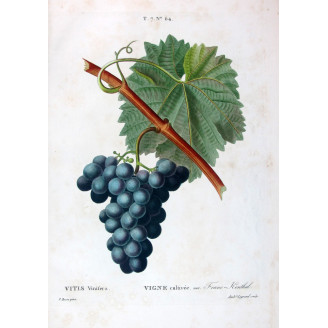
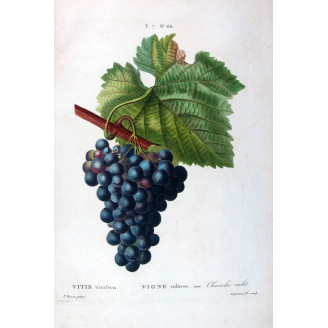
Original antique print of the cultivated Chasselas grape vine, Vitis vinifera, by Pancrace Bessa.
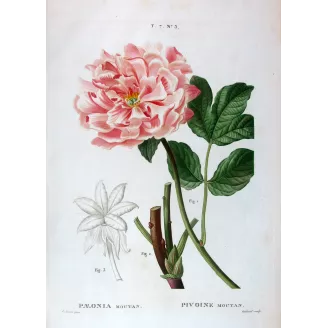
Tree Peony Pivoine moutan Original hand-colored botanical engraving by Pancrace Bessa.
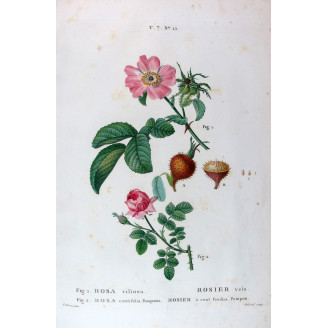
Velvet Rose & Pompon Centifolia Rosier velu & Rosier à cent feuilles, Pompon Original hand-colored botanical engraving by Pancrace Bessa.
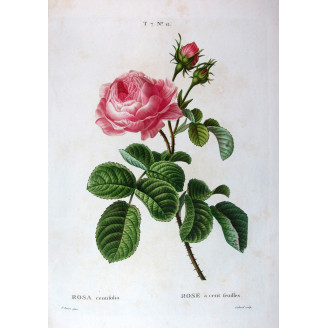
Hundred-petaled Rose Rose à cent feuilles Original hand-colored botanical engraving by Pancrace Bessa.
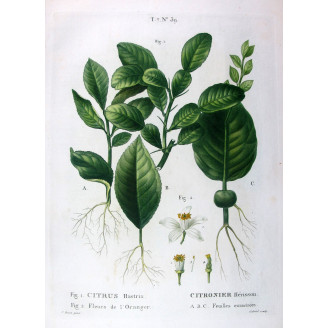
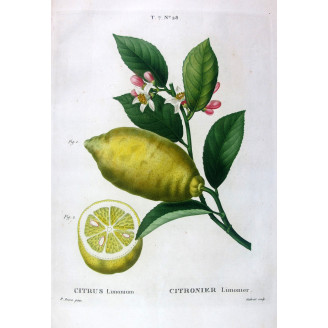
Nine original citrus engravings by Pancrace Bessa, uniting rare cedrats, sculptural lemons, and monumental Pomme d’Adam varieties into a coherent Napoleonic-era ensemble. Botanical study and refined color harmonize in a portfolio conceived to be read as a whole.
A refined orchard subject where volume and proportion are carefully balanced, giving the fruit a calm, almost sculptural presence.