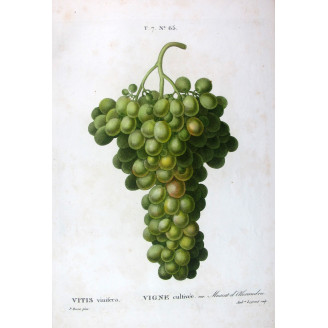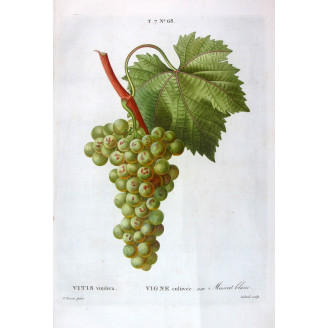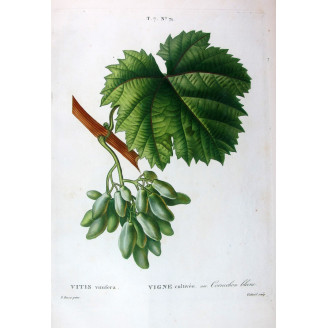
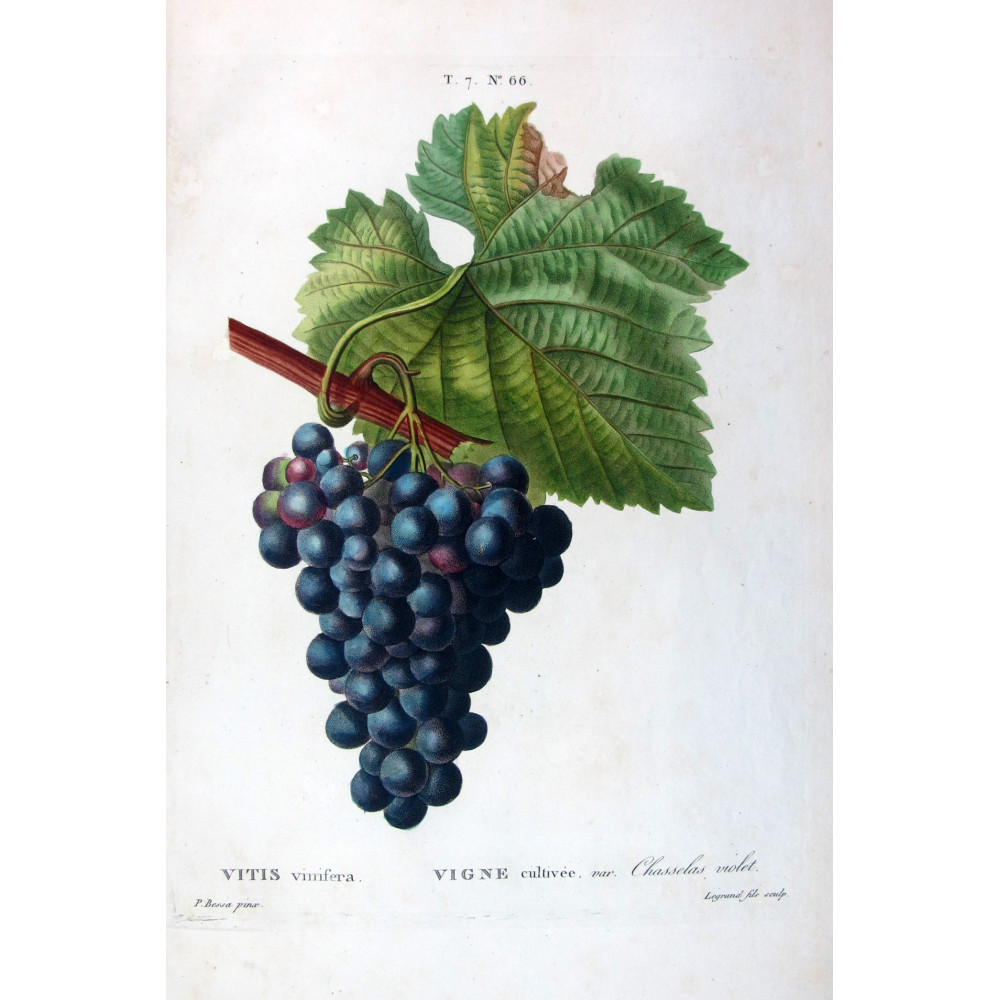
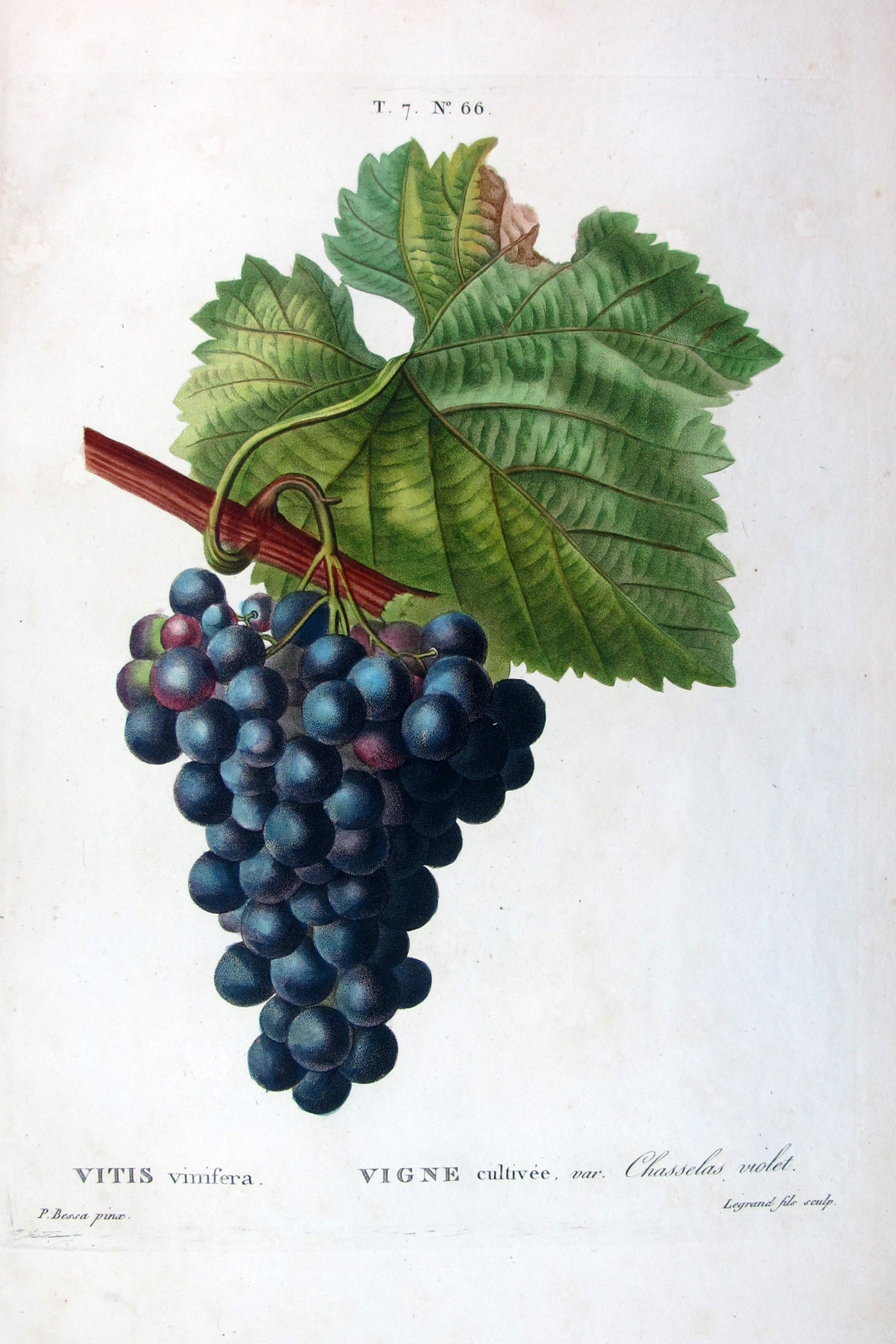
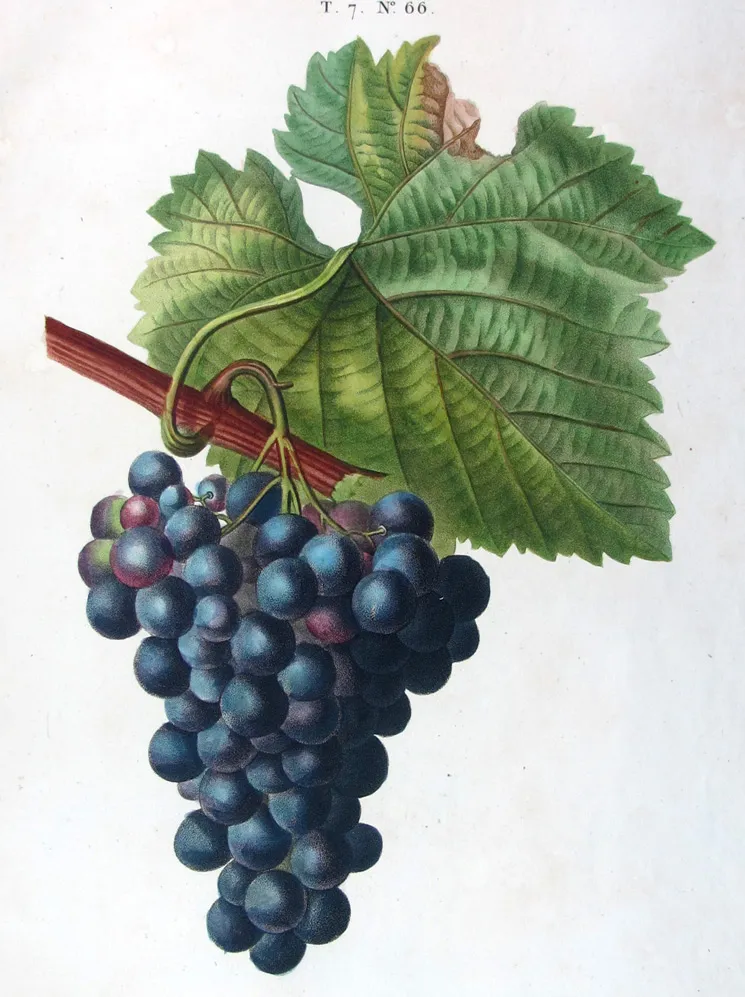
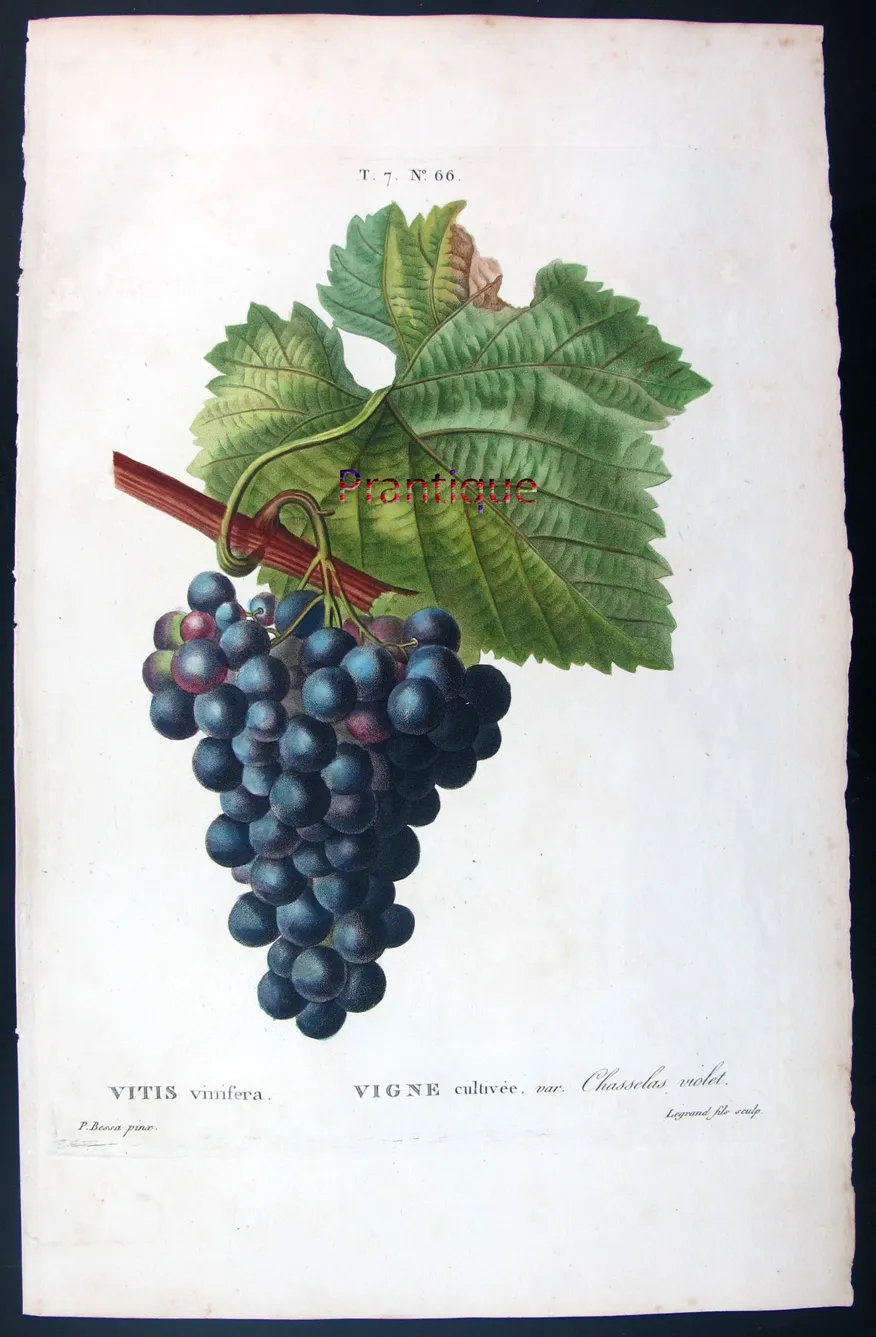
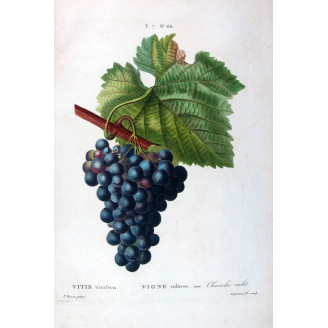

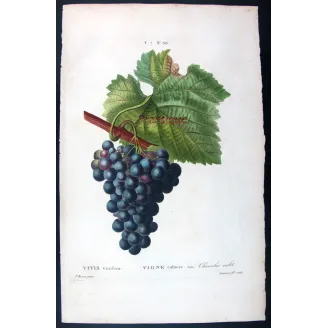
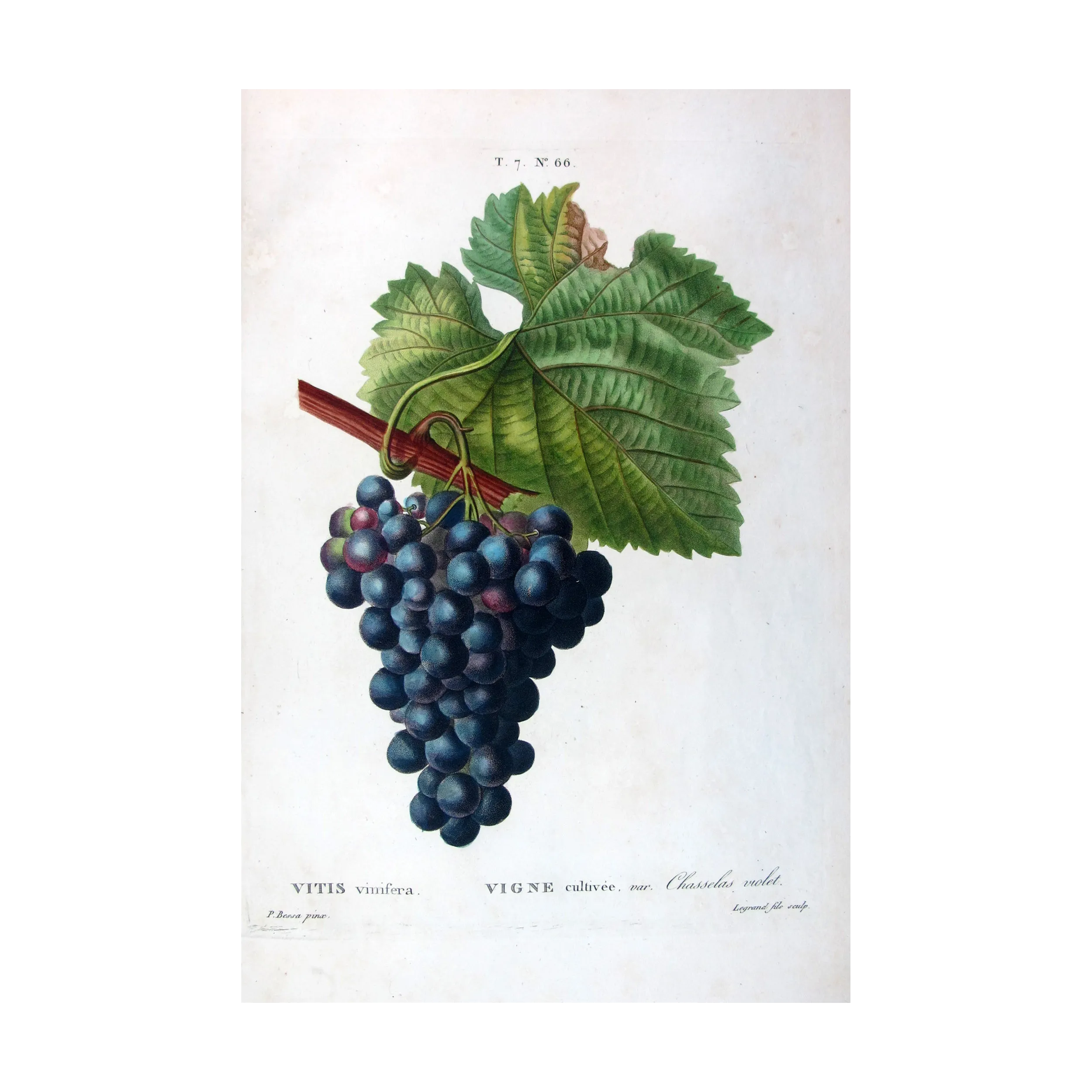
Original antique print of the cultivated Chasselas grape vine, Vitis vinifera, by Pancrace Bessa.
 Delivery policy
Your print will be carefully prepared and shipped worldwide via trusted couriers (UPS or similar).
 Authentic antique prints
Original engravings from the 17th–19th century.
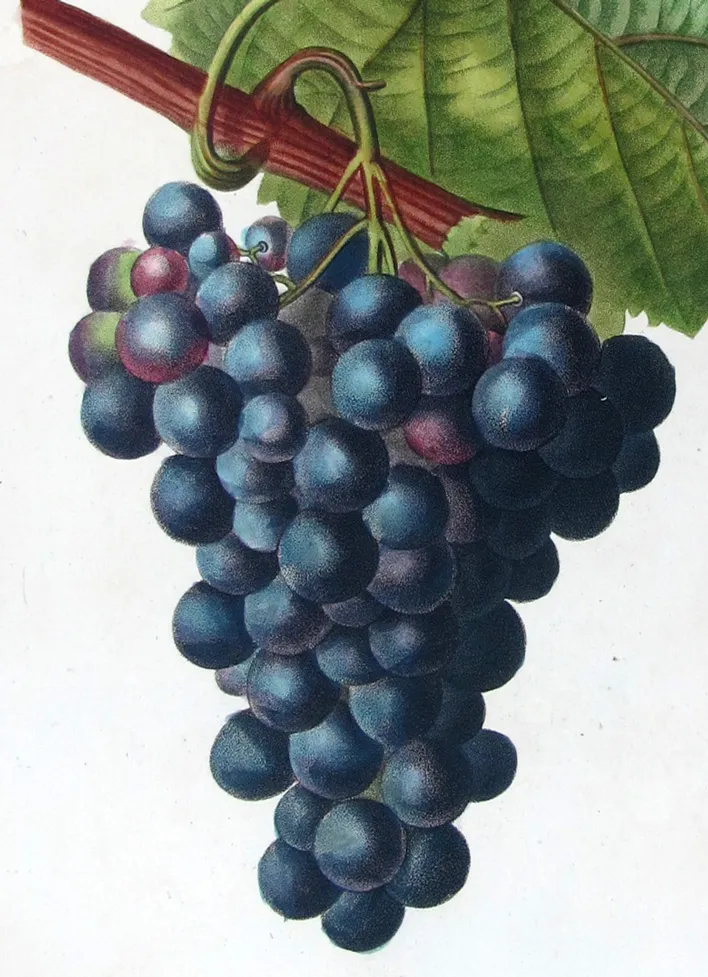
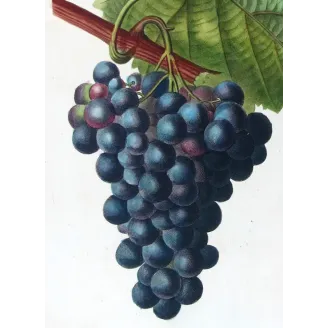
This original early 19th-century botanical engraving depicts Vitis vinifera as a cultivated French variety identified in the plate as Chasselas violet. The composition presents a compact cluster of dark grapes suspended beneath a broad vine leaf, arranged with clarity and balance against an open, softly toned background.
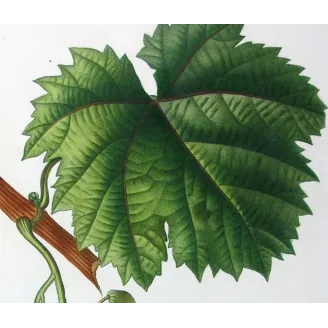
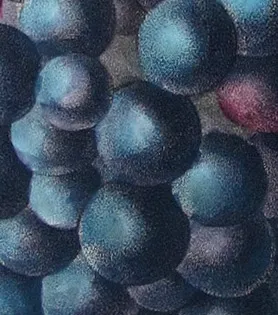
Pancrace Bessa renders the fruit in deep blue-violet and plum hues, subtly modulated with cool highlights that give the cluster a sense of weight and maturity. The leaf above, finely veined and generously proportioned, anchors the composition and reinforces its calm, classical structure.
Issued as part of Arbres et Arbustes, this plate exemplifies the measured elegance of early 19th-century botanical illustration, where cultivated varieties were recorded with equal attention to scientific accuracy and visual harmony.
— • —
The composition is built around a stable vertical axis, with the grape cluster descending in a compact, unified mass. The repetition of rounded forms creates a calm rhythm, while the restrained palette avoids dramatic contrast in favour of tonal cohesion.
The softly aged tone of the paper contributes to the overall harmony of the image, lending it a warm, settled presence that complements the darker fruit and enhances the plate’s historical character.
The plate is identified in the original publication as a cultivated grapevine variety:
Chasselas varieties were widely appreciated for their balance and reliability, and this plate records the violet form with restraint, focusing on proportion, colour depth, and cultivated regularity.
The engraving is in very good antique condition. The paper shows a soft, uniform toning consistent with age, giving the sheet a warm, non-optical appearance. This toning does not detract from the image and contributes to its overall harmony. The hand-colouring remains well preserved. No watermark has been observed. The engraved credits “P. Bessa pinx.” and “Legrand fils sculp.” are present.
For insight into Pancrace Bessa’s distinctive hand-colouring techniques, see our editorial feature on Pancrace Bessa:
Specific References
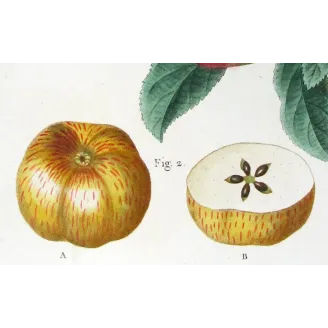
A sculptural study of cultivated fruit, defined by rounded volumes and restrained modelling, rendered with quiet elegance and visual balance.
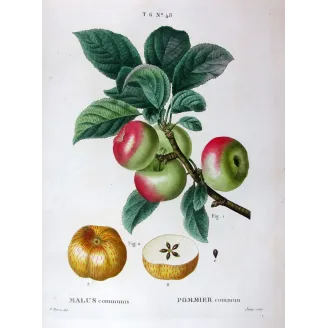
A finely executed early 19th-century botanical engraving illustrating a cultivated apple variety (Malus communis), drawn by Pancrace Bessa for Arbres et Arbustes. The composition combines precise botanical observation with refined decorative balance, presenting fruit and foliage with clarity and quiet elegance. Exceptional hand-colouring and careful modelling reflect the sophistication of French pomological illustration at its height.
Botanical illustration of the Saint Catherine plum, a delicate fruit-bearing tree, by Pancrace Bessa.
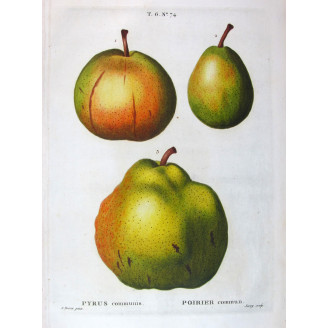
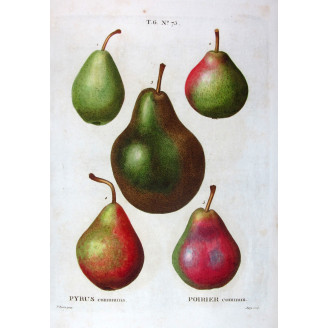
A refined study of cultivated pears, presenting five distinct fruit forms arranged in a balanced and harmonious composition. Subtle variations in shape, colour, and surface texture create a quiet visual rhythm, reflecting Pancrace Bessa’s ability to transform orchard subjects into works of enduring elegance.
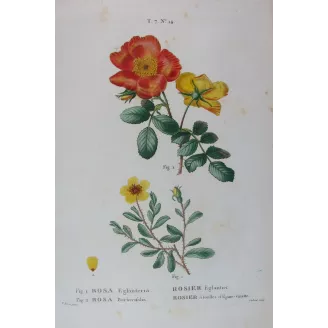
Eglantine & Berberis-leaved Rose Rosier à feuilles d'Épine-vinette Original hand-colored botanical engraving by Pancrace Bessa.
Original antique print of the common grape vine, Vitis vinifera, illustrated by Pancrace Bessa.
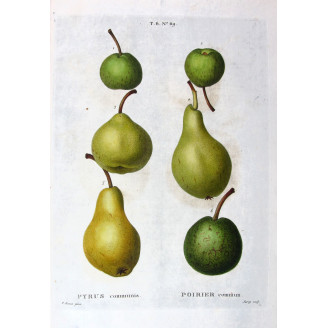
A refined early 19th-century botanical engraving depicting cultivated pear varieties (Pyrus communis), drawn by Pancrace Bessa and engraved for Arbres et Arbustes. Executed with restraint and clarity, the plate exemplifies the elegance of French pomological illustration, uniting scientific precision with a calm, decorative sensibility. The harmonious composition and subtle hand-colouring make it a timeless and highly collectible work.
Original antique print of the cultivated Chasselas grape vine, Vitis vinifera, by Pancrace Bessa.