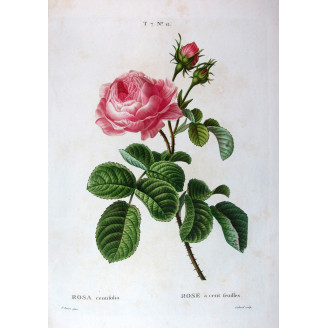
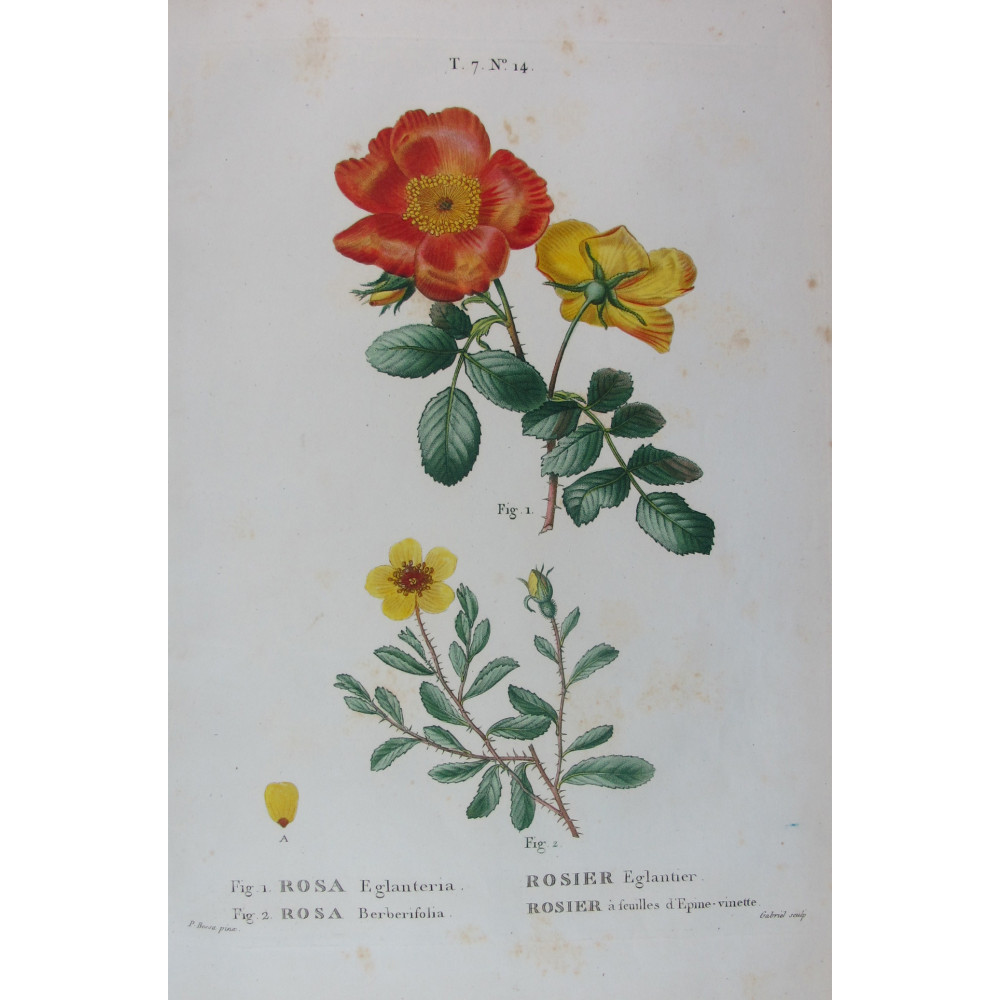
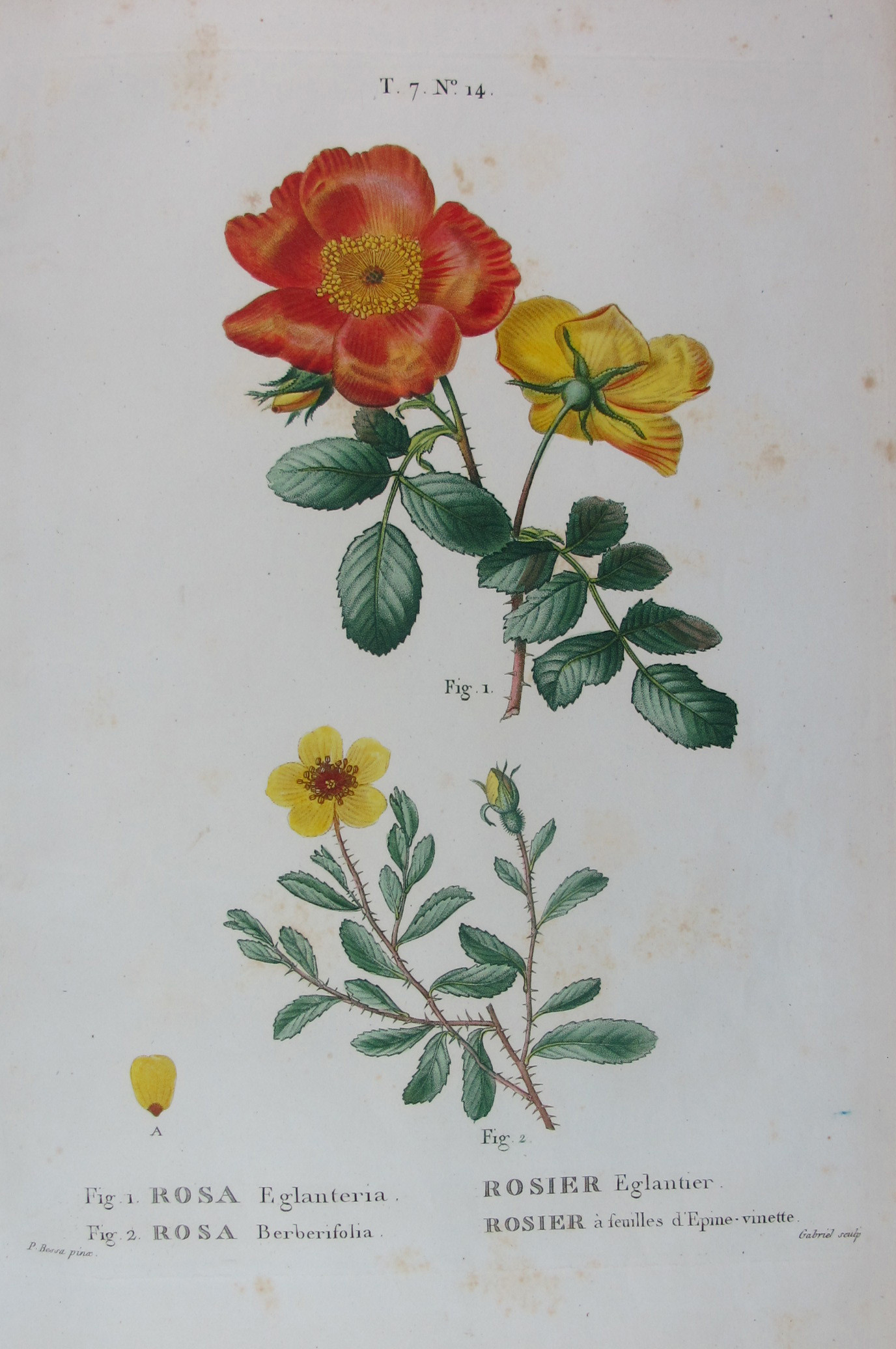
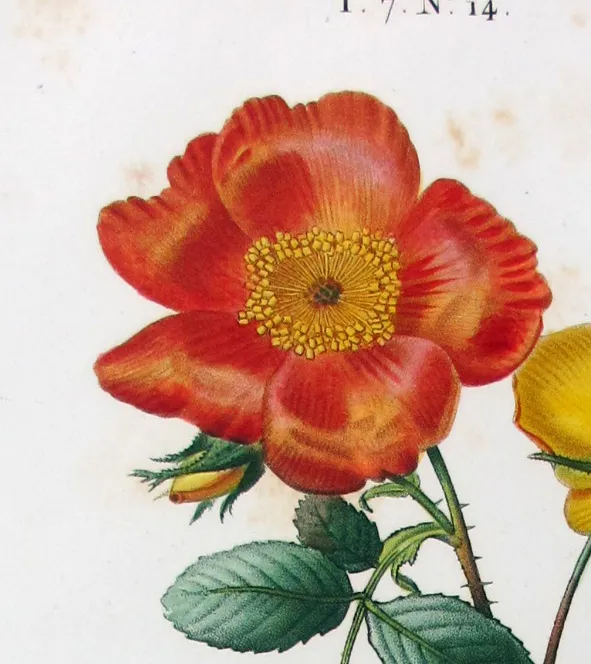
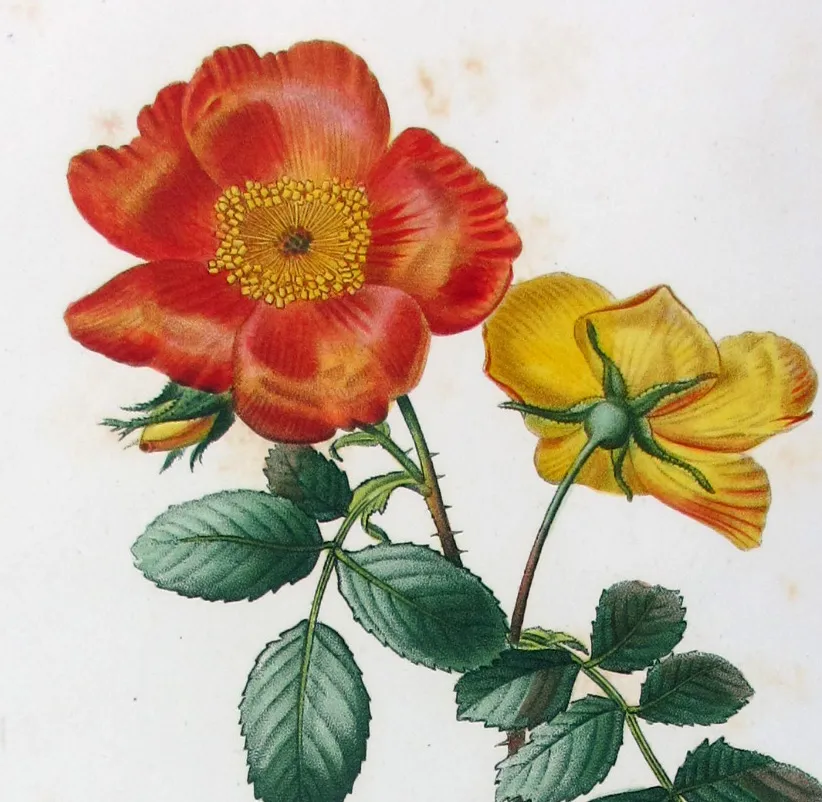
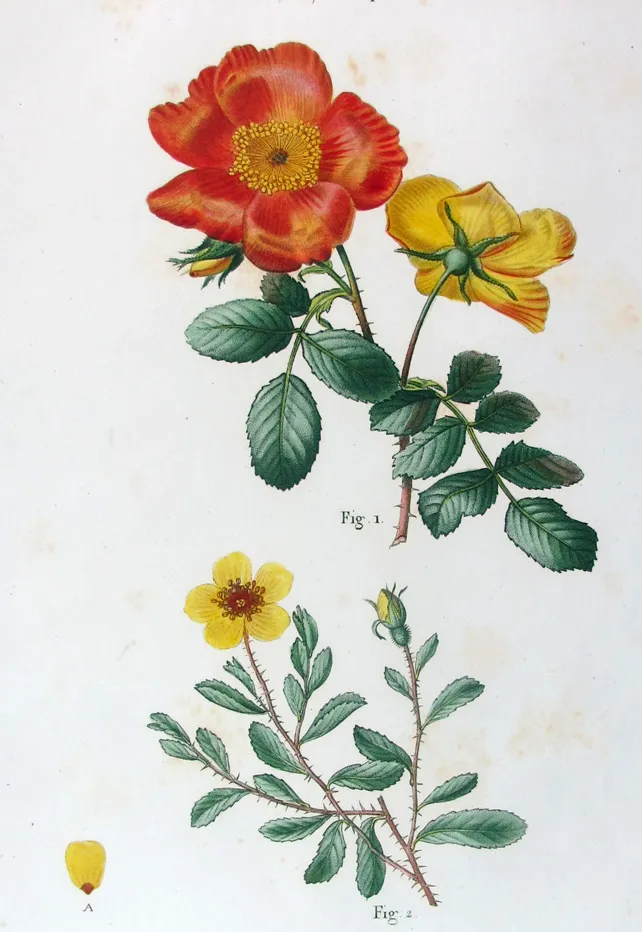
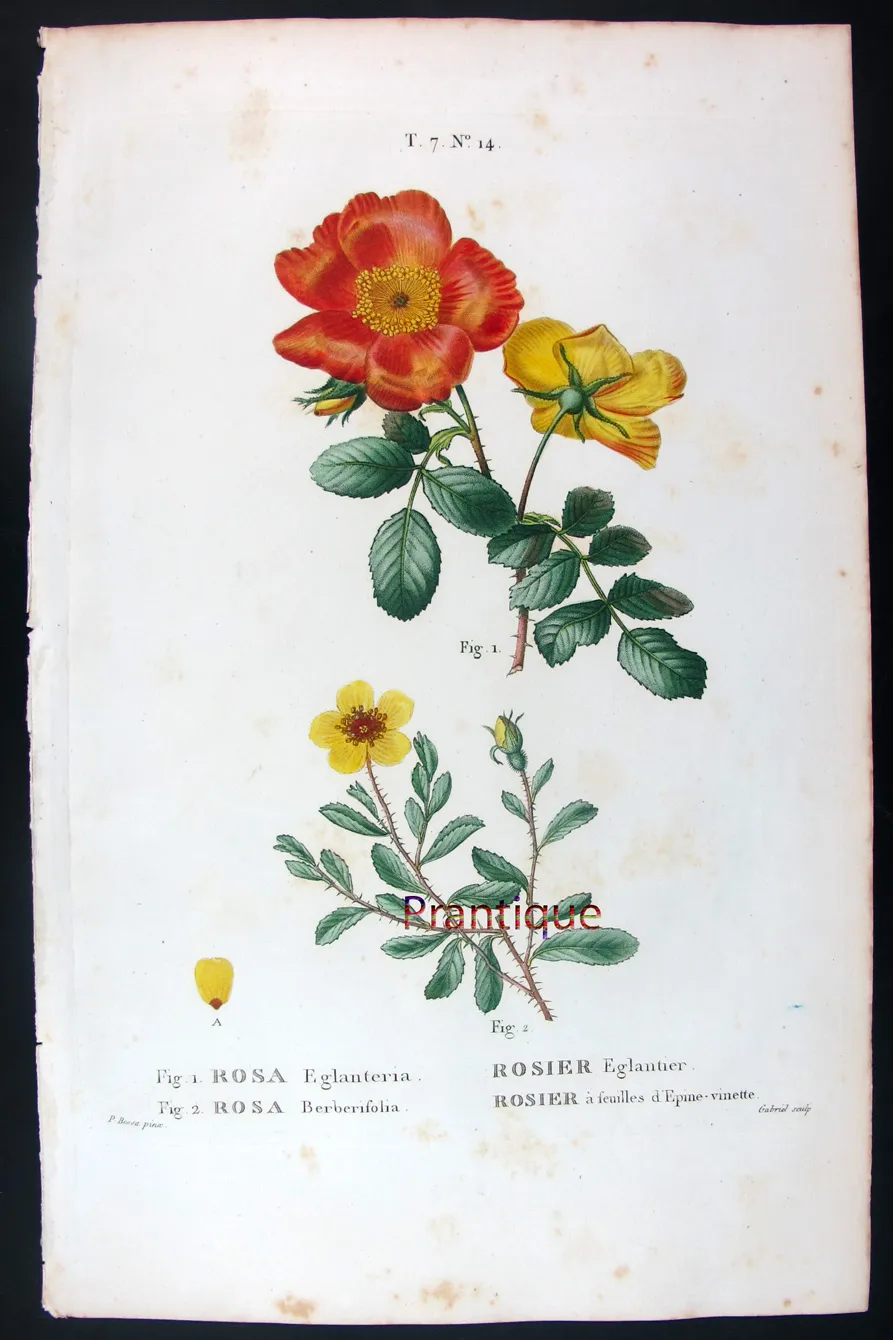

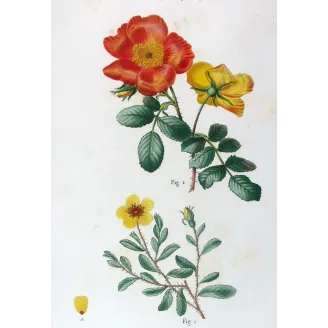
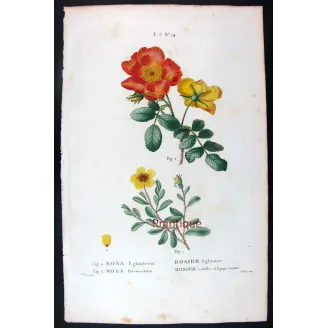
Eglantine & Berberis-leaved Rose Rosier à feuilles d'Épine-vinette Original hand-colored botanical engraving by Pancrace Bessa.
 Delivery policy
Your print will be carefully prepared and shipped worldwide via trusted couriers (UPS or similar).
 Authentic antique prints
Original engravings from the 17th–19th century.
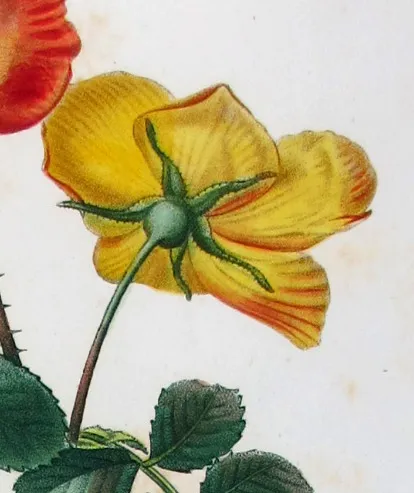
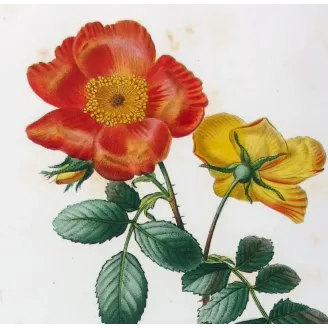
This original botanical engraving presents a comparative study of rose species, combining multiple figures on a single sheet to illustrate variation in form, structure, and flowering habit. Two principal blooms—rendered in warm red and golden yellow—are accompanied by secondary figures that explore foliage, branching, and bud development.
Rather than focusing on a single ornamental climax, Bessa adopts a composed and instructive approach, allowing each figure space to be read clearly. The arrangement balances visual interest with clarity, offering a refined synthesis of botanical observation and pictorial order.
The plate forms part of Arbres et Arbustes, one of the most important French botanical publications of the early nineteenth century, where Pancrace Bessa’s painterly discipline is applied not only to individual specimens, but also to comparative botanical representation.
— • —
The composition is structured around vertical alignment, with the primary flowering stems occupying the upper half of the sheet and subsidiary figures arranged below. This hierarchical layout guides the viewer from the most visually assertive blossoms to more analytical details, without disrupting overall balance.
Hand-colouring is applied with restraint and precision. The contrasting hues of the flowers—one warm and saturated, the other lighter and more luminous—establish visual distinction, while the foliage is rendered in cool greens with consistent veining and texture. The effect is orderly and legible, lending the plate a calm authority suited to study rooms, libraries, and interiors oriented toward intellectual rather than purely decorative display.
The roses depicted on this sheet include Rosa eglanteria and Rosa berberifolia, species valued for their distinct foliage and flowering characteristics rather than for densely petalled blooms alone. Such comparative plates played an important role in early nineteenth-century botanical works, offering viewers a clear visual understanding of variation within a genus. For artists like Bessa, these subjects provided an opportunity to combine botanical precision with compositional discipline, reinforcing the educational and ornamental aims of publications such as Arbres et Arbustes.
The engraving is in good antique condition. Light spotting is visible across the sheet, with the majority occurring outside the plate mark and consistent with the natural ageing of early nineteenth-century paper. No watermark has been observed. The original hand-colouring remains clear and well defined throughout the flowers and foliage. The image itself is unaffected by the spotting, and the overall presentation remains balanced and legible. The engraved credits “P. Bessa pinx.” and “Gabriel sculp.” are present, attesting to the original drawing by Pancrace Bessa and the engraving executed by Gabriel.
For further context on Pancrace Bessa and his distinctive contribution to French botanical illustration, see our editorial feature:
Specific References
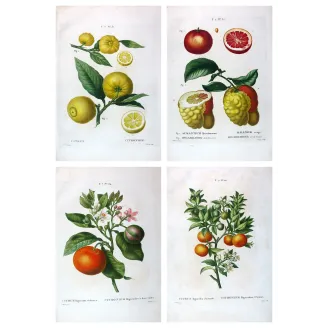
A coherent ensemble of eight original orange and bigarade engravings by Pancrace Bessa, reflecting the cultivated discipline of French orangeries in the Napoleonic era. Botanical precision and architectural composure unite in a refined citrus portfolio preserved as a complete series.
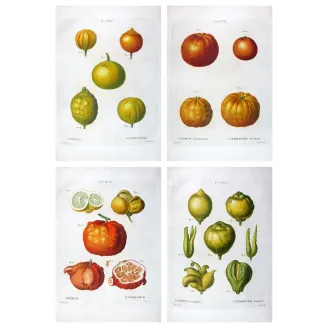
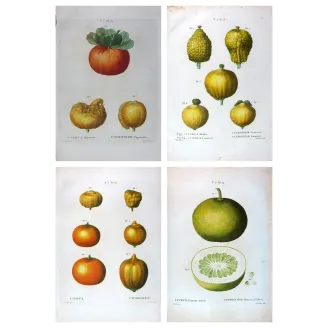
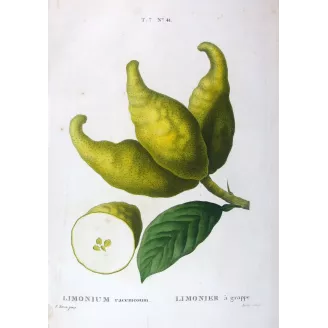
Nine original citrus engravings by Pancrace Bessa, uniting rare cedrats, sculptural lemons, and monumental Pomme d’Adam varieties into a coherent Napoleonic-era ensemble. Botanical study and refined color harmonize in a portfolio conceived to be read as a whole.
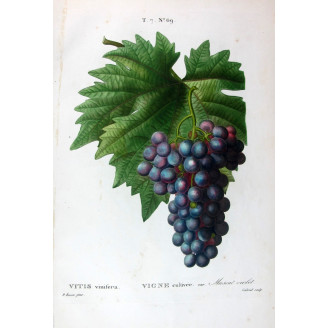
Elegant depiction of a rich purple Muscat grape variety by Pancrace Bessa.
Hundred-petaled Rose Rose à cent feuilles Original hand-colored botanical engraving by Pancrace Bessa.
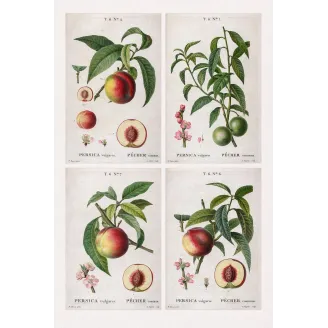
Original pochoir print of the peach tree, Prunus persica, with detailed flowering and fruit.
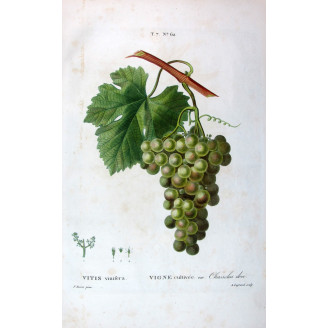
Depiction of golden grapes with vivid green leaves in fine detail.
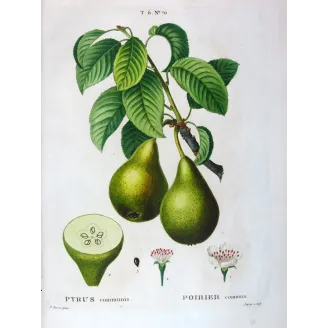
A refined early 19th-century botanical engraving depicting cultivated pear varieties (Pyrus communis), drawn by Pancrace Bessa and engraved for Arbres et Arbustes. Executed with restraint and clarity, the plate exemplifies the elegance of French pomological illustration, uniting scientific precision with a calm, decorative sensibility. The harmonious composition and subtle hand-colouring make it a timeless and highly collectible work.
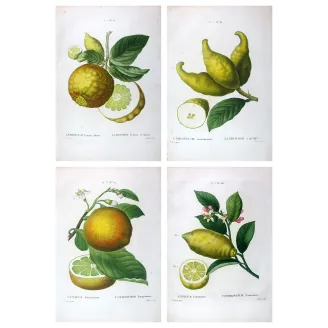
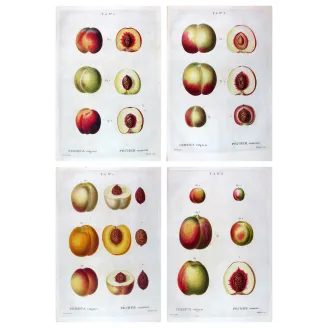
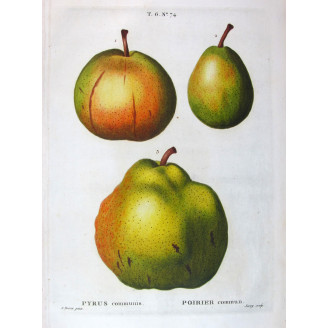
A sculptural study of cultivated fruit, defined by rounded volumes and restrained modelling, rendered with quiet elegance and visual balance.
Illustration of the sweet-scented flowering bramble, Rubus odoratus, in full bloom.
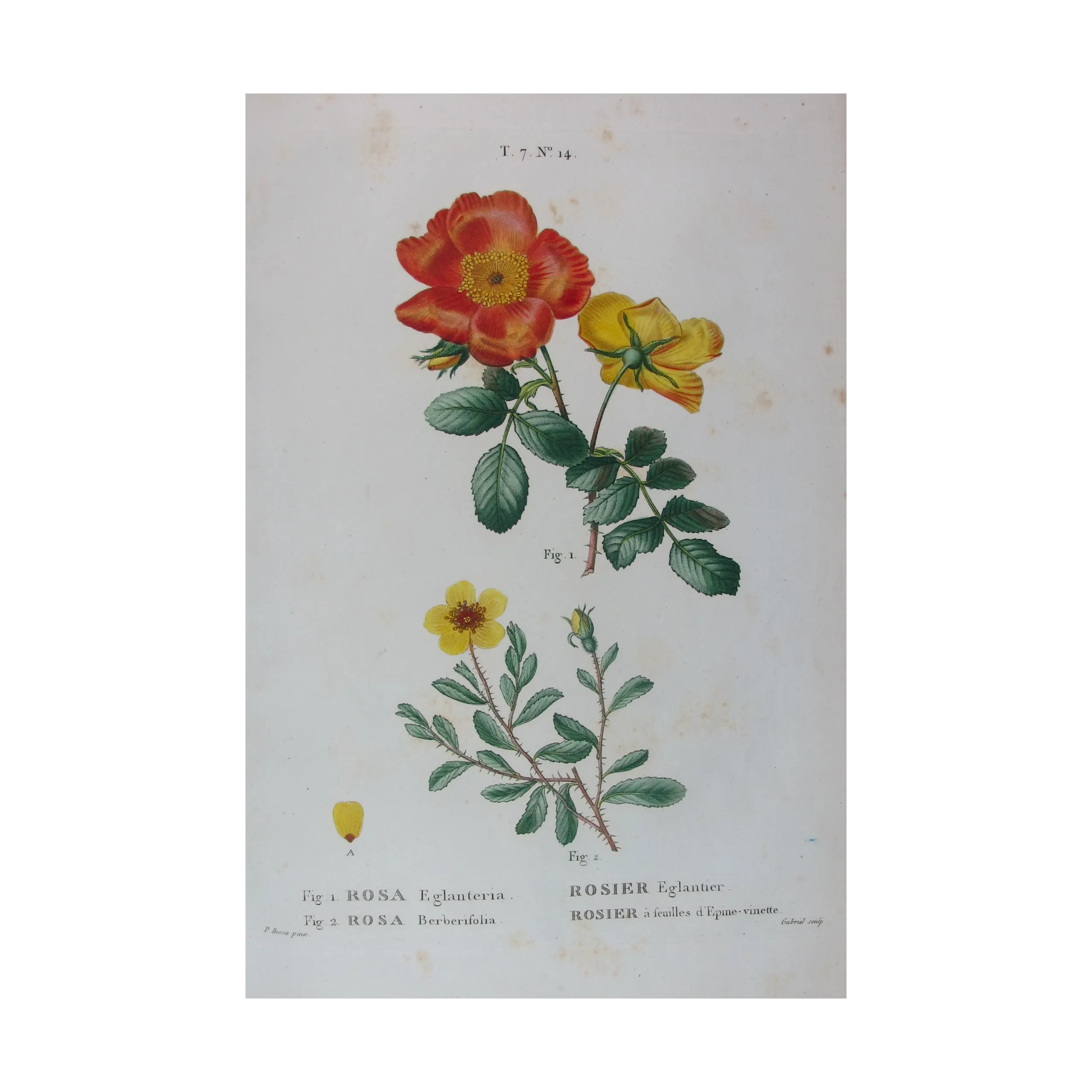
Eglantine & Berberis-leaved Rose Rosier à feuilles d'Épine-vinette Original hand-colored botanical engraving by Pancrace Bessa.