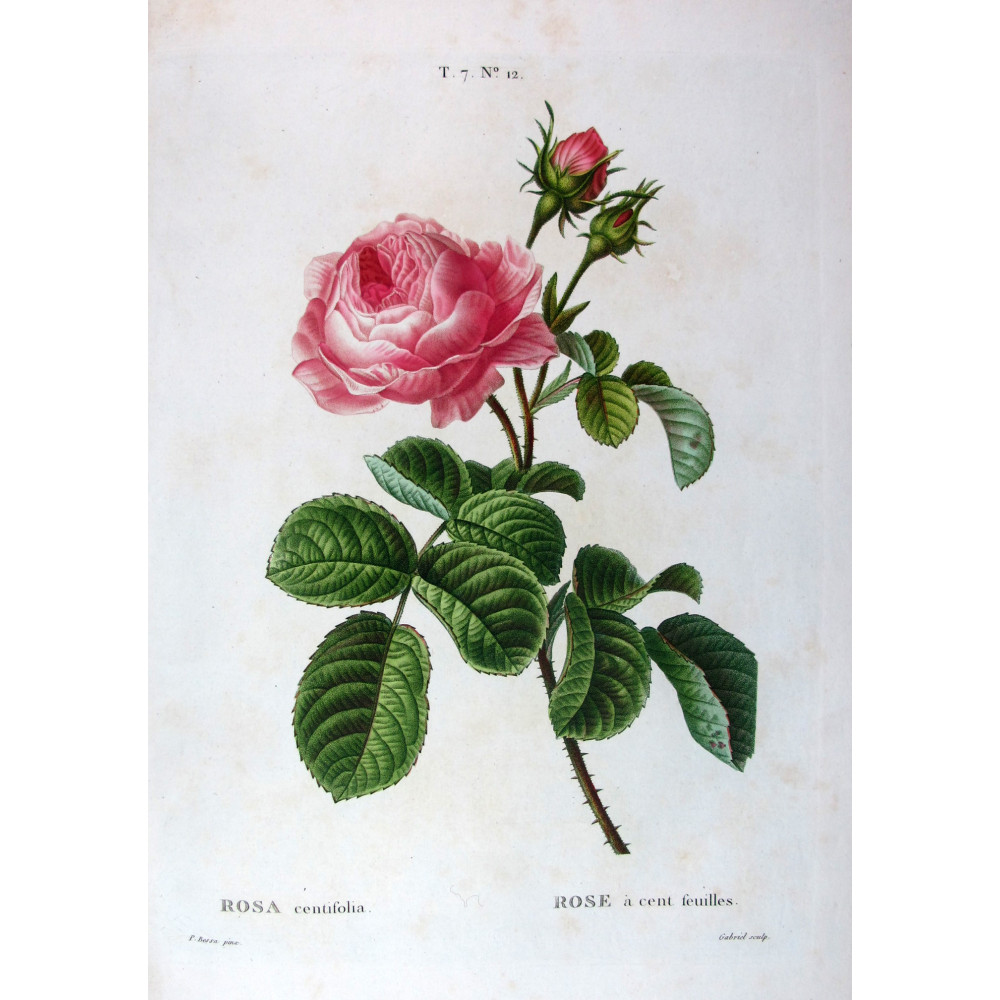
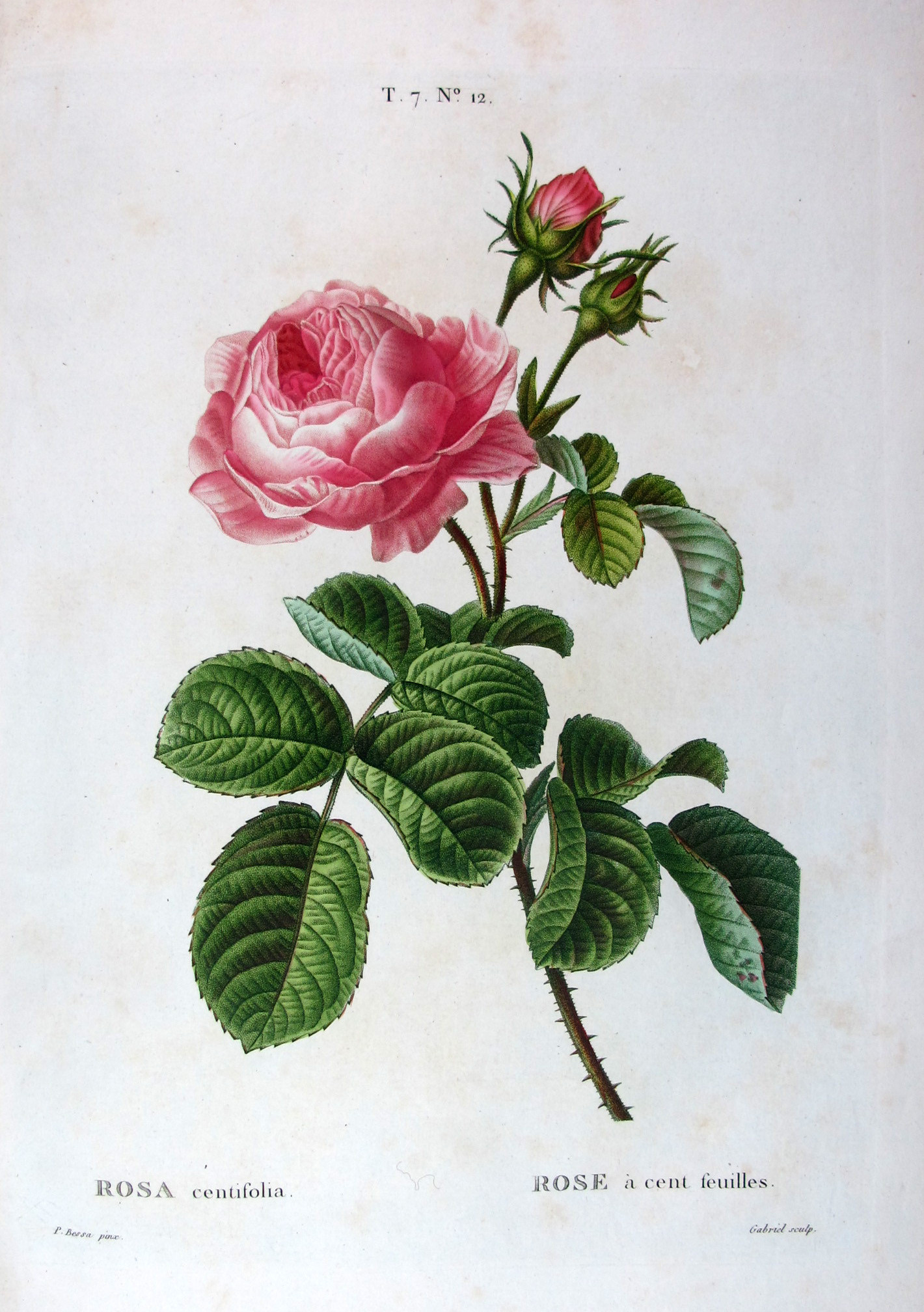
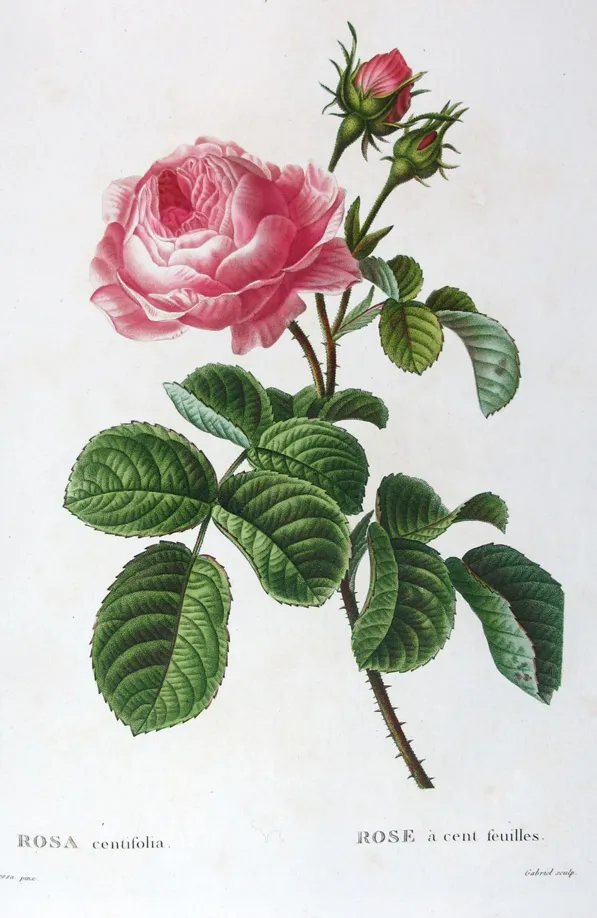
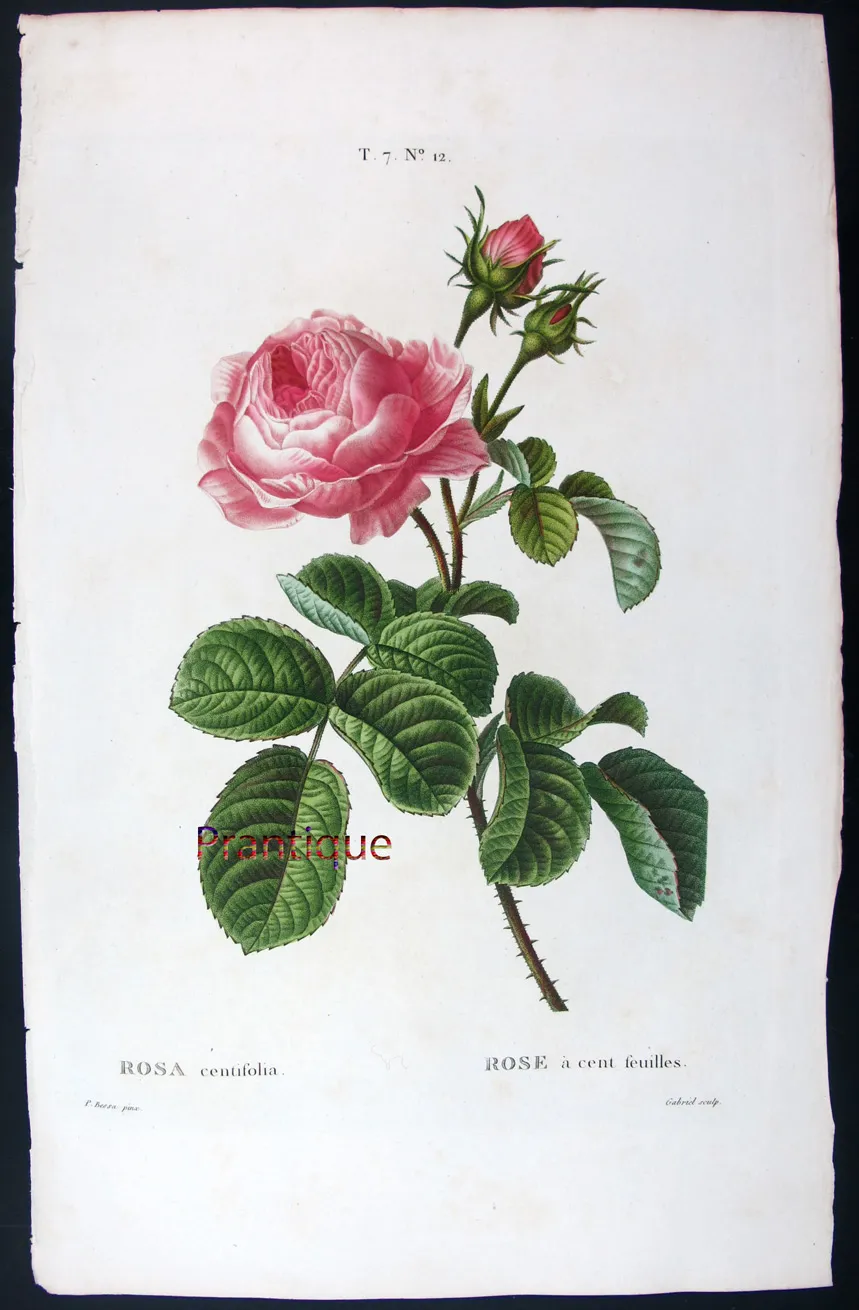

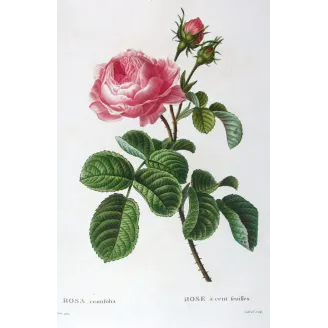
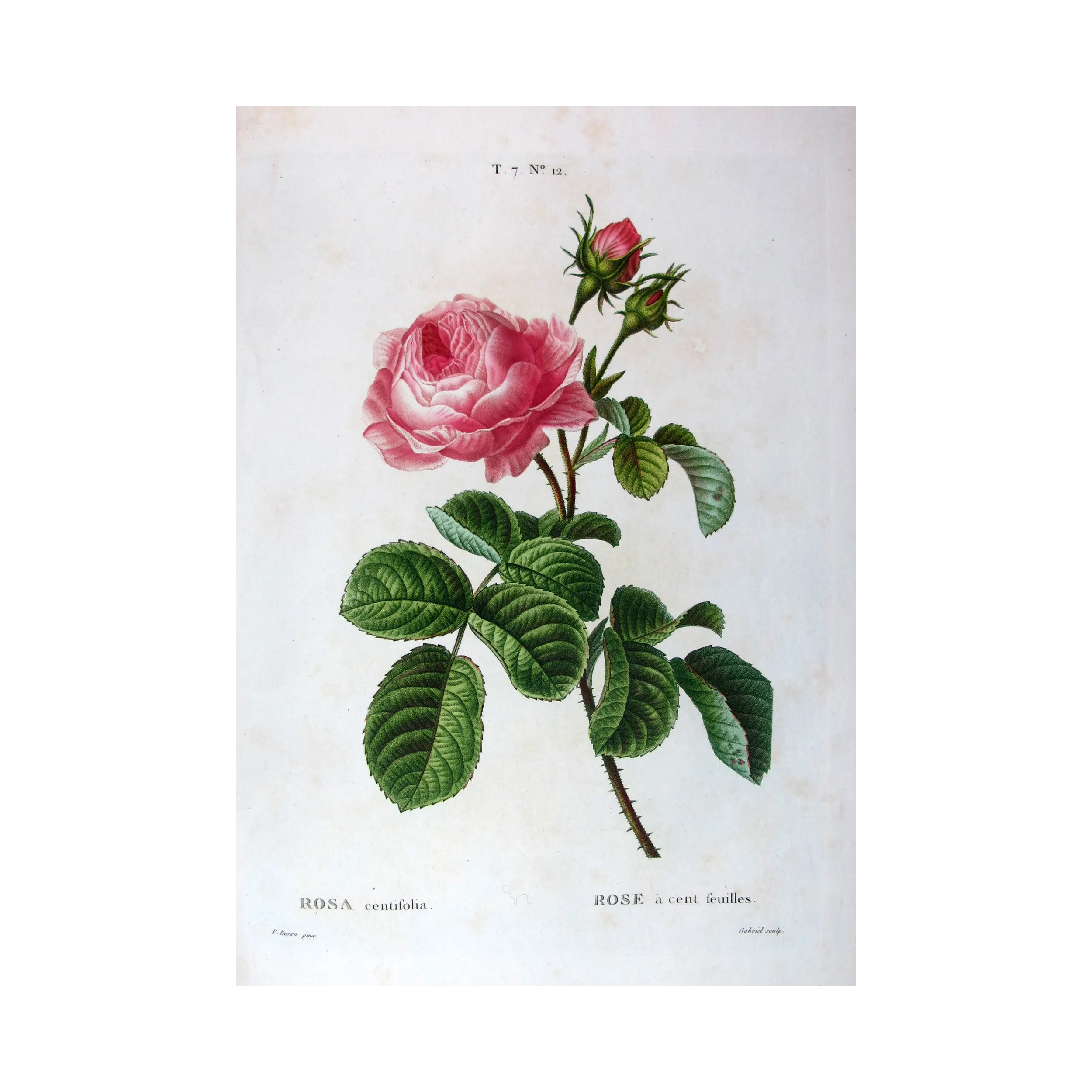
Hundred-petaled Rose Rose à cent feuilles Original hand-colored botanical engraving by Pancrace Bessa.
 Delivery policy
Your print will be carefully prepared and shipped worldwide via trusted couriers (UPS or similar).
 Authentic antique prints
Original engravings from the 17th–19th century.
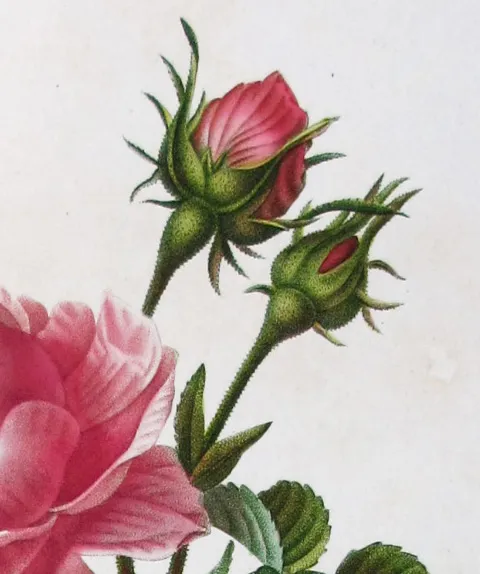
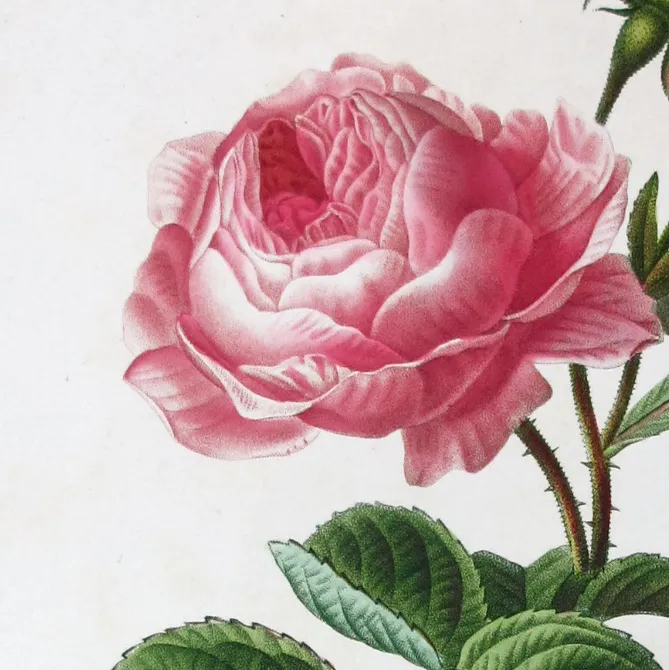
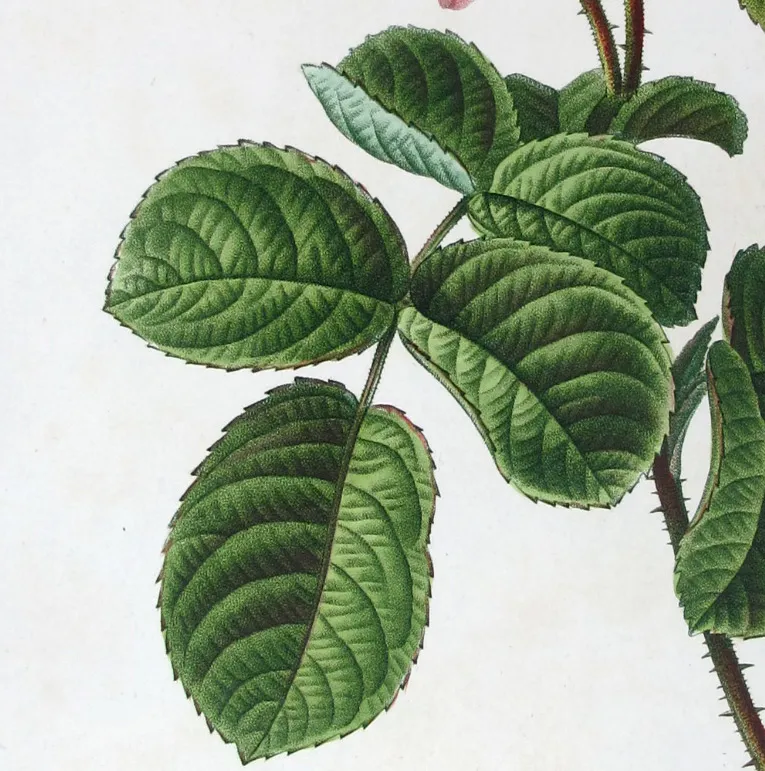
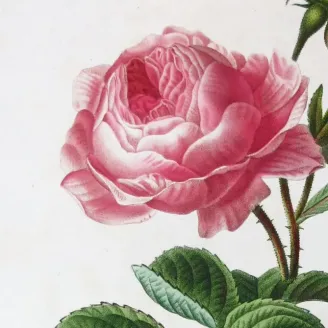
This refined botanical engraving presents the Rosa centifolia, the hundred-petaled rose, depicted with composure and clarity against an open ground. The principal bloom unfolds in full maturity, accompanied by two developing buds, creating a natural progression that guides the viewer’s eye through different stages of flowering.
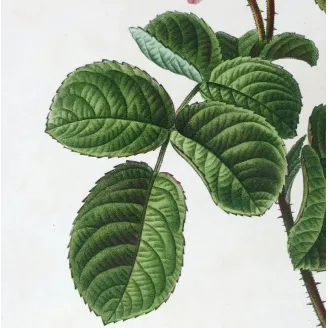
Bessa’s interpretation privileges equilibrium and legibility. The softly layered petals are rendered with measured tonal transitions, while the foliage—firm, textured, and rhythmically arranged—anchors the composition with structural confidence. The result is a plate that conveys both cultivated elegance and botanical presence, without theatrical excess.
This engraving forms part of Arbres et Arbustes, among the most significant French botanical publications of the early nineteenth century, where Pancrace Bessa’s painterly approach offers a refined alternative to strictly analytical botanical illustration.
— • —
The composition is vertically articulated and carefully balanced. The dominant bloom occupies the upper left register, while the ascending stem and secondary buds introduce a gentle diagonal movement that prevents rigidity. Leaves are distributed with deliberation, alternating between openness and density to maintain visual rhythm.
Colour application is restrained and confident. The rose petals display a controlled range of soft pinks, subtly modulated to suggest depth and volume, while the foliage is treated in cooler greens with precise veining. This chromatic discipline reinforces the sense of cultivated refinement, allowing the image to function equally as a botanical study and as a decorative work suited to formal interiors, libraries, or traditional settings.
Rosa centifolia, commonly known as the cabbage rose or hundred-petaled rose, has long been associated with cultivated gardens and horticultural refinement rather than wild growth. Valued for its densely layered blossoms and balanced form, it became an emblem of ornamental gardening in Europe, particularly within formal and botanical gardens. Its visual richness and clear structural character made it a natural subject for botanical artists seeking to combine aesthetic appeal with accurate representation, securing its place in works such as Arbres et Arbustes.
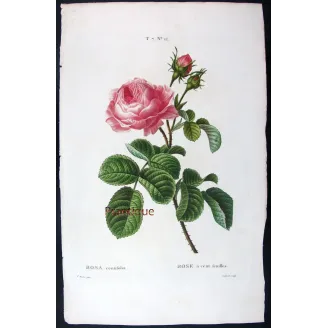
The engraving is in very good antique condition. Light, even browning is visible, consistent with natural ageing of early nineteenth-century paper. No watermark has been observed. The paper remains stable, and the original hand-colouring is well preserved, retaining clarity and freshness throughout the petals and foliage. The overall impression is clean and harmonious, with no significant losses or abrasions affecting the image. The engraved credits “P. Bessa pinx.” and “Gabriel sculp.” are present, attesting to the original drawing by Pancrace Bessa and the engraving executed by Gabriel.
For further context on Pancrace Bessa and his distinctive contribution to French botanical illustration, see our editorial feature:
Specific References
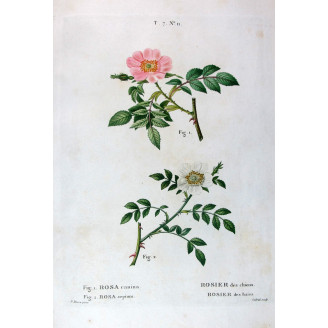
Dog Rose & Hedge Rose Rosier des chiens & Rosier des haies Original hand-colored botanical engraving by Pancrace Bessa.
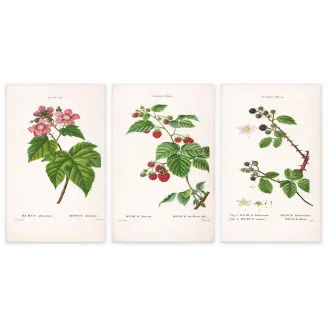
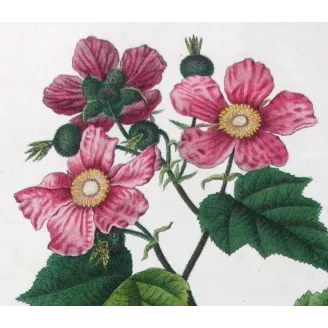
Illustration of the sweet-scented flowering bramble, Rubus odoratus, in full bloom.
A refined orchard subject where volume and proportion are carefully balanced, giving the fruit a calm, almost sculptural presence.
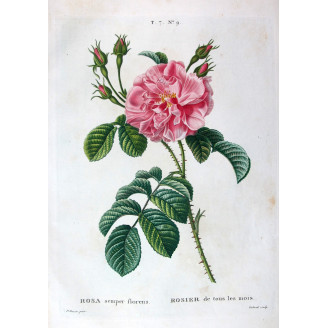
Monthly Rose Rosier de tous les mois Original hand-colored botanical engraving by Pancrace Bessa.
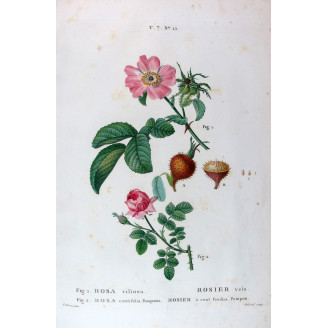
Velvet Rose & Pompon Centifolia Rosier velu & Rosier à cent feuilles, Pompon Original hand-colored botanical engraving by Pancrace Bessa.
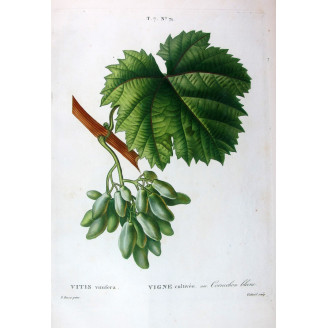
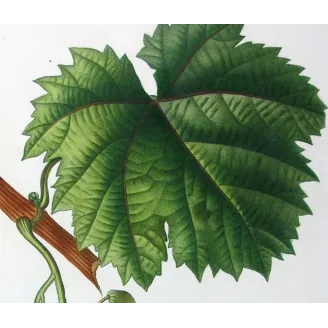
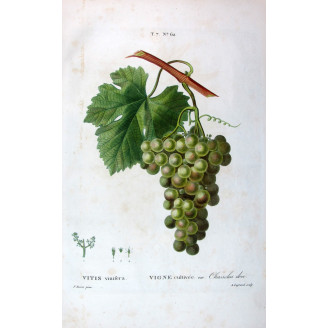
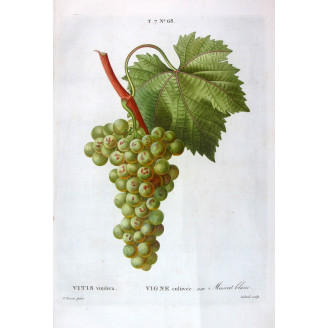
Original antique print of the common grape vine, Vitis vinifera, illustrated by Pancrace Bessa.
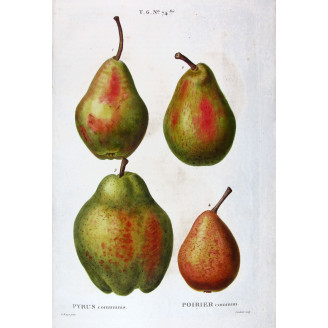
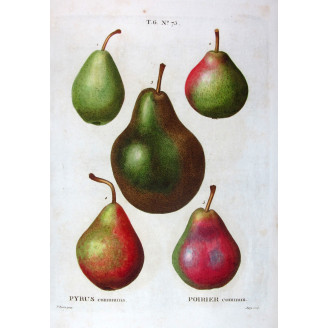
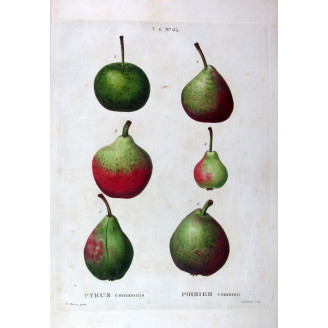
A refined study of cultivated pears, presenting five distinct fruit forms arranged in a balanced and harmonious composition. Subtle variations in shape, colour, and surface texture create a quiet visual rhythm, reflecting Pancrace Bessa’s ability to transform orchard subjects into works of enduring elegance.
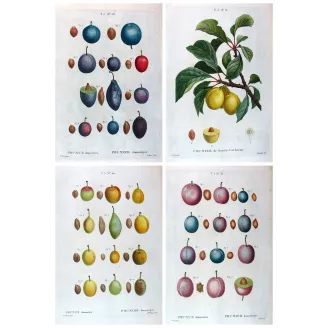
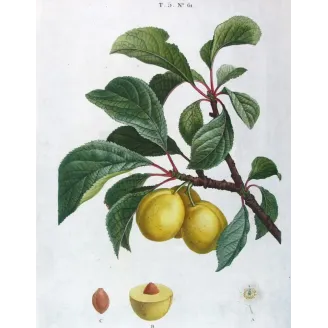
Botanical illustration of the Saint Catherine plum, a delicate fruit-bearing tree, by Pancrace Bessa.
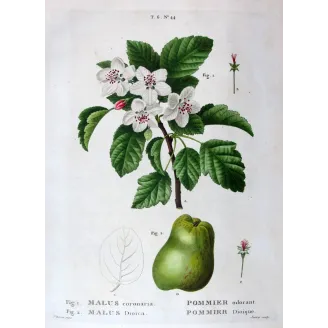
A finely executed early 19th-century botanical engraving illustrating a cultivated apple variety (Malus communis), drawn by Pancrace Bessa for Arbres et Arbustes. The composition combines precise botanical observation with refined decorative balance, presenting fruit and foliage with clarity and quiet elegance. Exceptional hand-colouring and careful modelling reflect the sophistication of French pomological illustration at its height.
Depiction of golden grapes with vivid green leaves in fine detail.
Hundred-petaled Rose Rose à cent feuilles Original hand-colored botanical engraving by Pancrace Bessa.