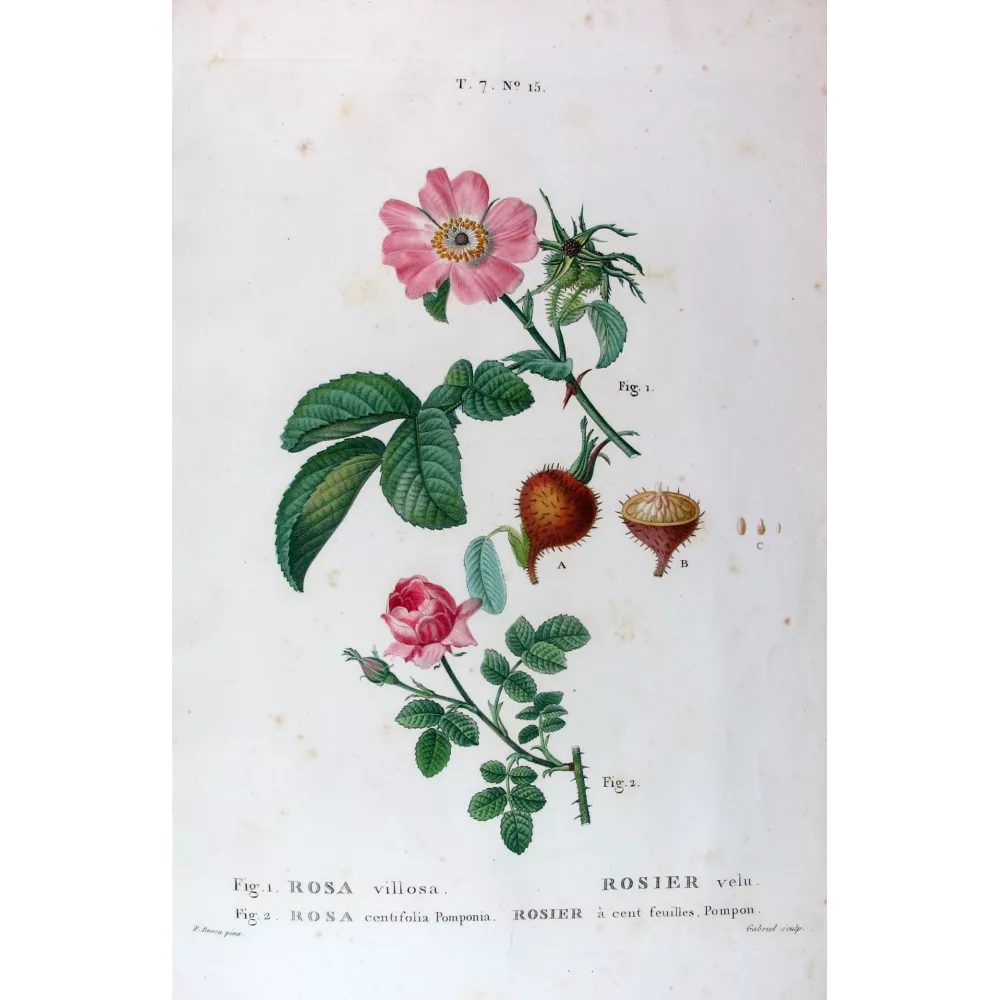
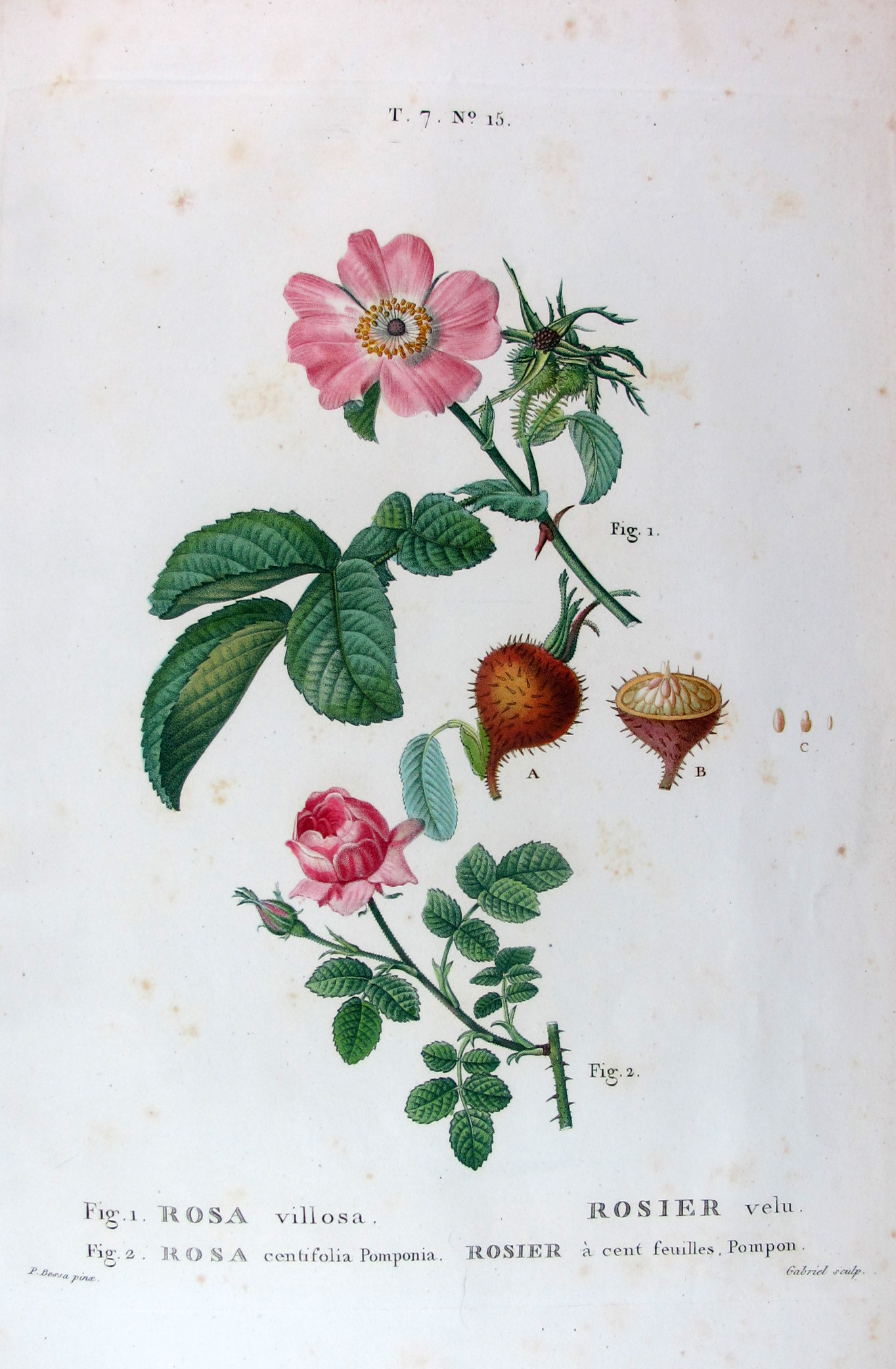
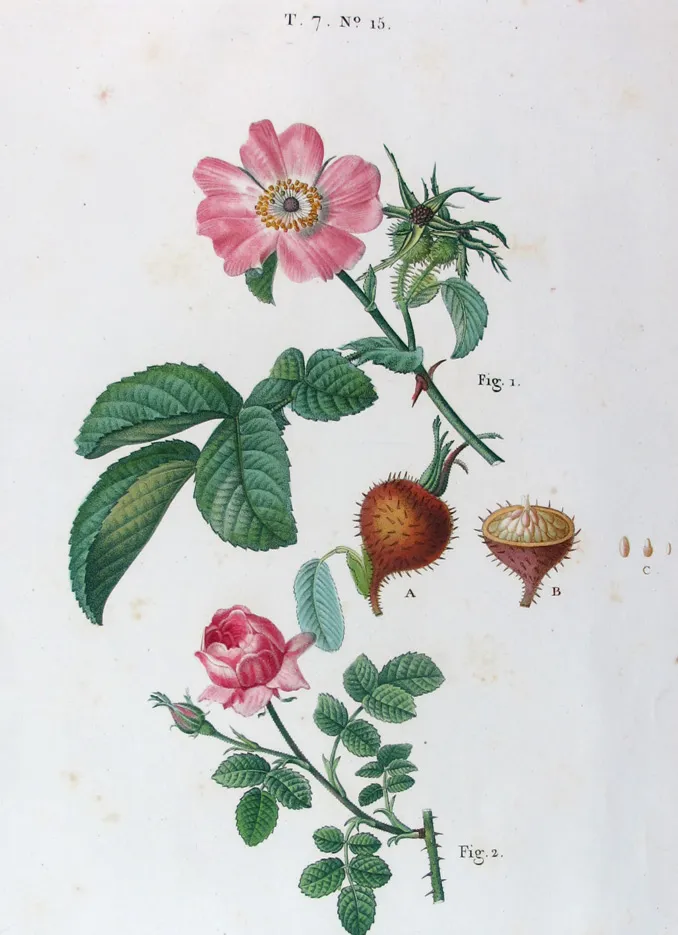
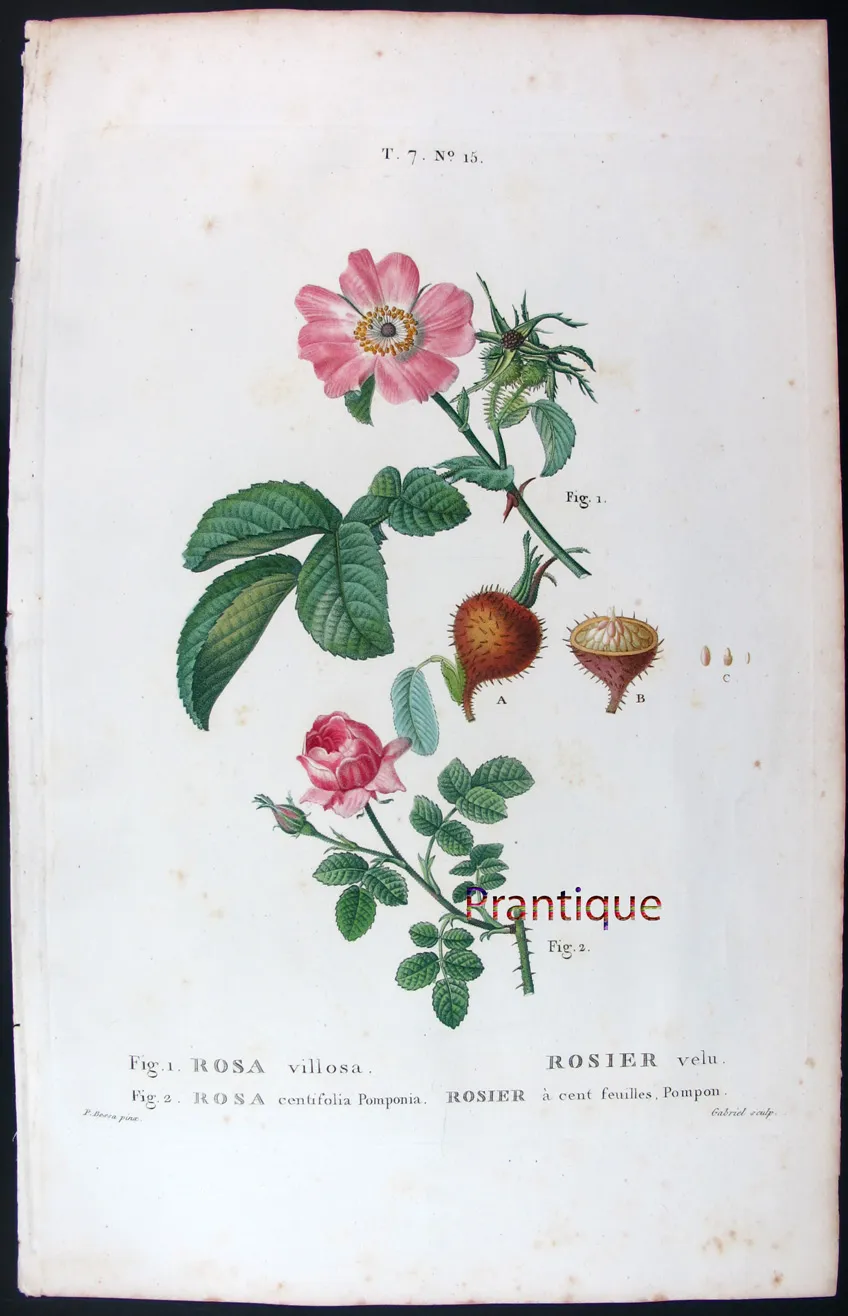

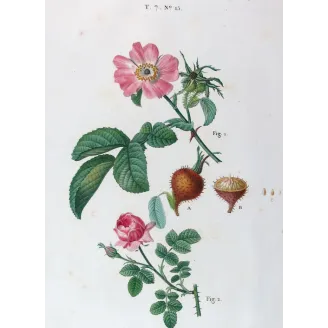
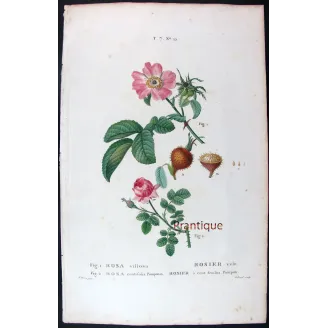
Velvet Rose & Pompon Centifolia Rosier velu & Rosier à cent feuilles, Pompon Original hand-colored botanical engraving by Pancrace Bessa.
 Delivery policy
Your print will be carefully prepared and shipped worldwide via trusted couriers (UPS or similar).
 Authentic antique prints
Original engravings from the 17th–19th century.
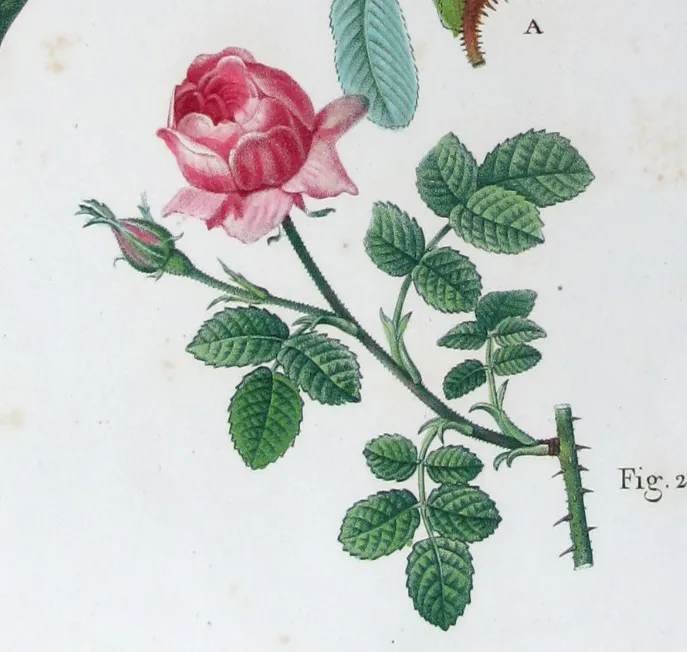
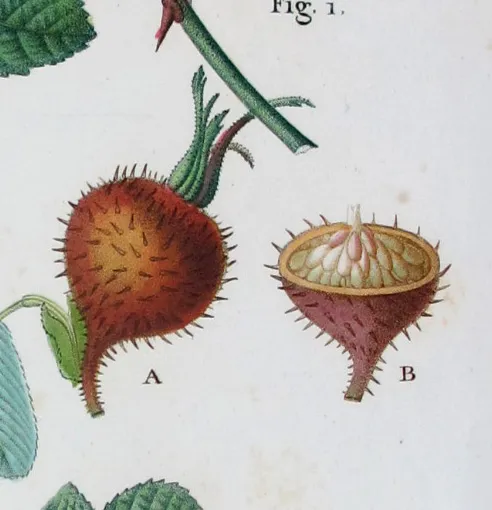
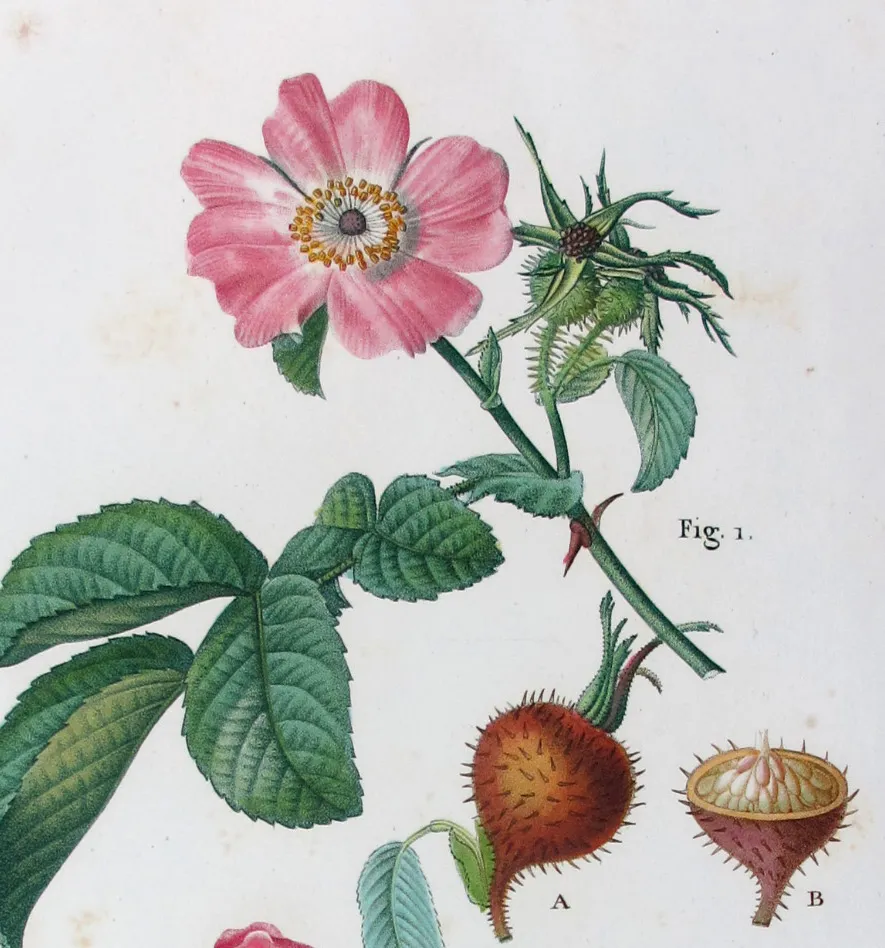
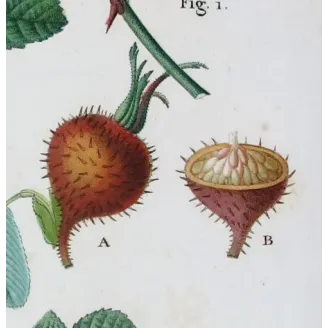
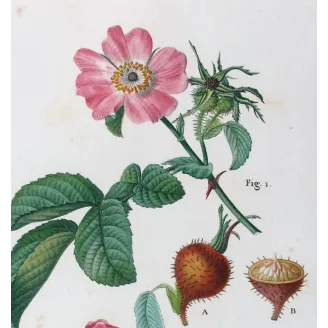
This original botanical engraving presents a nuanced study of rose morphology, combining flowering specimens with detailed representations of fruit and seed. The principal figure depicts an open bloom rendered with clarity and balance, while secondary elements explore successive stages of development, from bud to ripened hip.
Bessa’s approach is both painterly and methodical. The flowers are modelled through soft tonal transitions that convey delicacy without fragility, while the foliage and branching structure provide compositional stability. The inclusion of fruit sections introduces a quiet analytical depth, enriching the plate without disrupting its overall harmony.
This plate belongs to Arbres et Arbustes, one of the most accomplished French botanical publications of the early nineteenth century, where Pancrace Bessa consistently balanced visual refinement with botanical completeness.
— • —
The composition is vertically articulated, with the principal flowering branch occupying the upper register and additional figures arranged below and to the side. This distribution creates a natural reading sequence, guiding the viewer from ornamental focus to botanical detail without crowding the sheet.
Colour is applied with restraint and precision. The petals display soft pink hues accented by warmer tonal centres, while the foliage is rendered in cool greens with crisp veining. The rose hips introduce an earthy counterpoint, adding chromatic depth and reinforcing the sense of seasonal progression. The result is a plate that functions equally as a refined decorative work and as a thoughtful botanical document.
The roses illustrated on this sheet include Rosa villosa and Rosa centifolia pomponia, species appreciated not only for their flowers but also for their distinctive fruiting characteristics. Such composite plates were integral to nineteenth-century botanical works, allowing artists to convey the full life cycle of a plant within a single, coherent composition. Their inclusion in Arbres et Arbustes reflects the publication’s ambition to unite ornamental appeal with botanical completeness.
The engraving is in very good antique condition. A few small, light spots are visible near the sheet edges, most notably along the lower margin; these are unobtrusive and consistent with the natural ageing of early nineteenth-century paper. No watermark has been observed. The original hand-colouring remains fresh and well preserved throughout the flowers, foliage, and fruit. The image itself is unaffected by these minor signs of age and retains excellent clarity. The engraved credits “P. Bessa pinx.” and “Gabriel sculp.” are present, attesting to the original drawing by Pancrace Bessa and the engraving executed by Gabriel.
For further context on Pancrace Bessa and his distinctive contribution to French botanical illustration, see our editorial feature:
Specific References
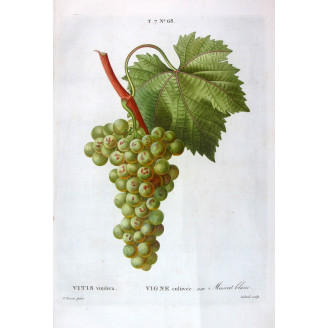
Depiction of golden grapes with vivid green leaves in fine detail.
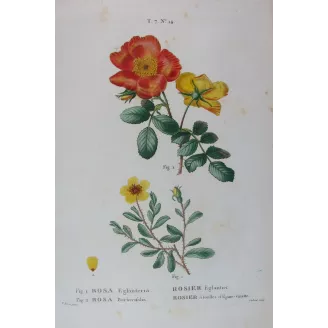
Eglantine & Berberis-leaved Rose Rosier à feuilles d'Épine-vinette Original hand-colored botanical engraving by Pancrace Bessa.
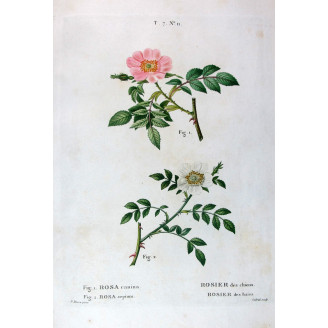
Dog Rose & Hedge Rose Rosier des chiens & Rosier des haies Original hand-colored botanical engraving by Pancrace Bessa.
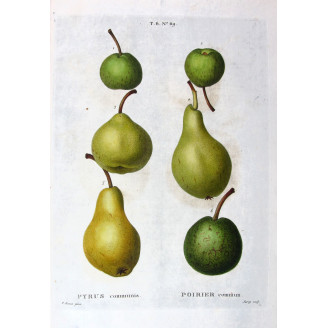
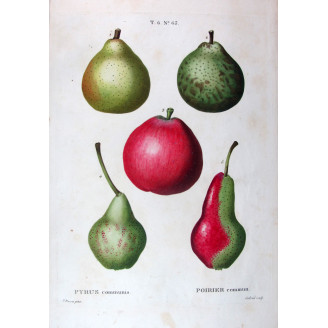
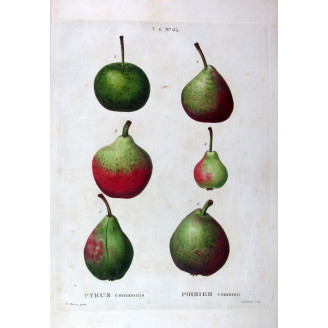
A refined study of French cultivated pear varieties, distinguished by subtle chromatic contrasts and carefully modelled forms. This hand-colored engraving reflects Pancrace Bessa’s ability to elevate orchard subjects through balance, restraint, and quiet visual authority.
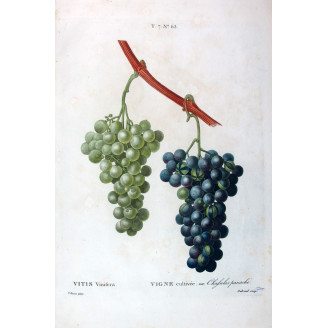
Rare depiction of striped Chasselas grape clusters, unique in its pattern and color.
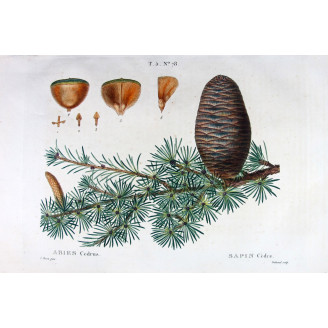
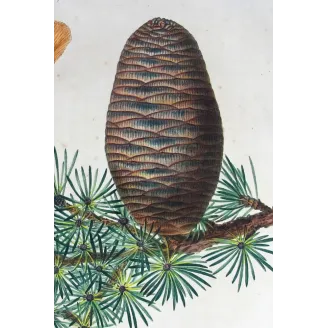
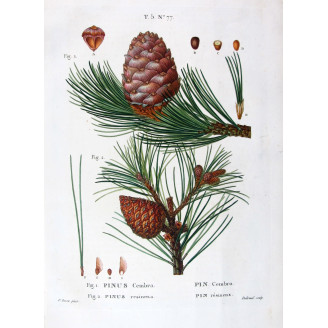
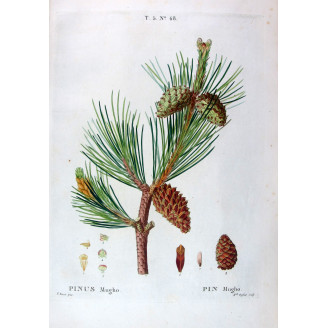
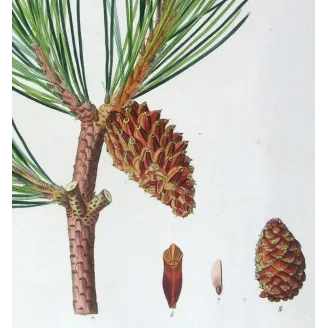
Antique engraving of Pinus Mugho by Bessa, rich in botanical detail.
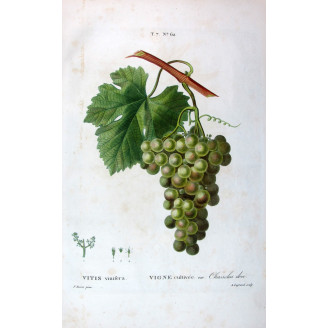
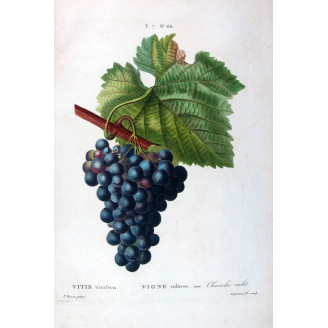
Original antique print of the cultivated Chasselas grape vine, Vitis vinifera, by Pancrace Bessa.
Original lithograph of the Tawny Frogmouth by H. Grönvold from Mathews' Birds of Australia.
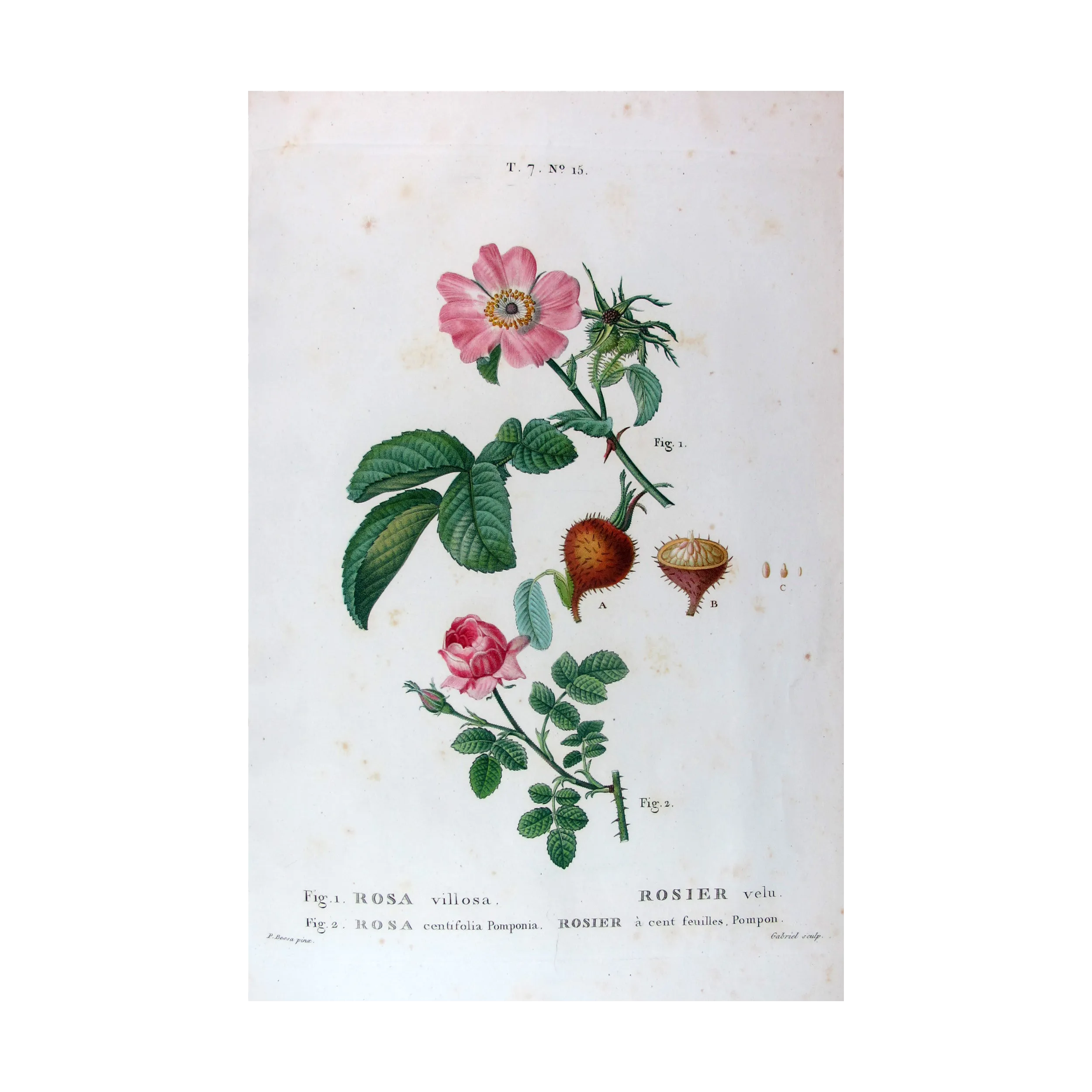
Velvet Rose & Pompon Centifolia Rosier velu & Rosier à cent feuilles, Pompon Original hand-colored botanical engraving by Pancrace Bessa.