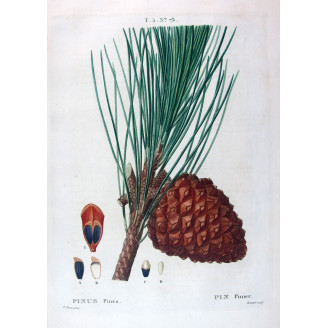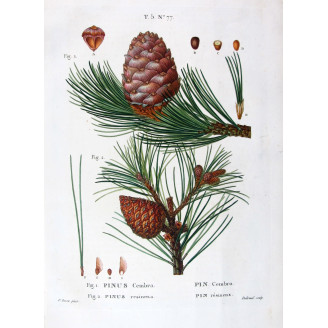
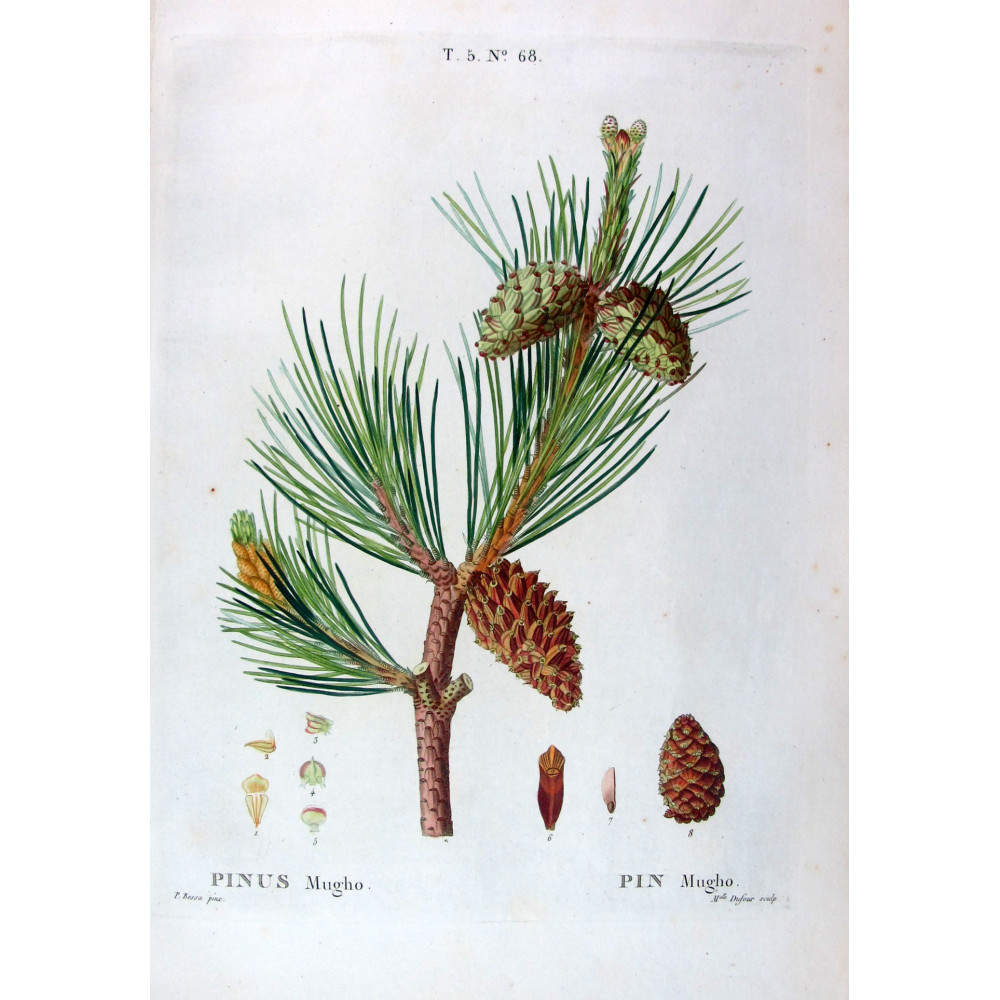
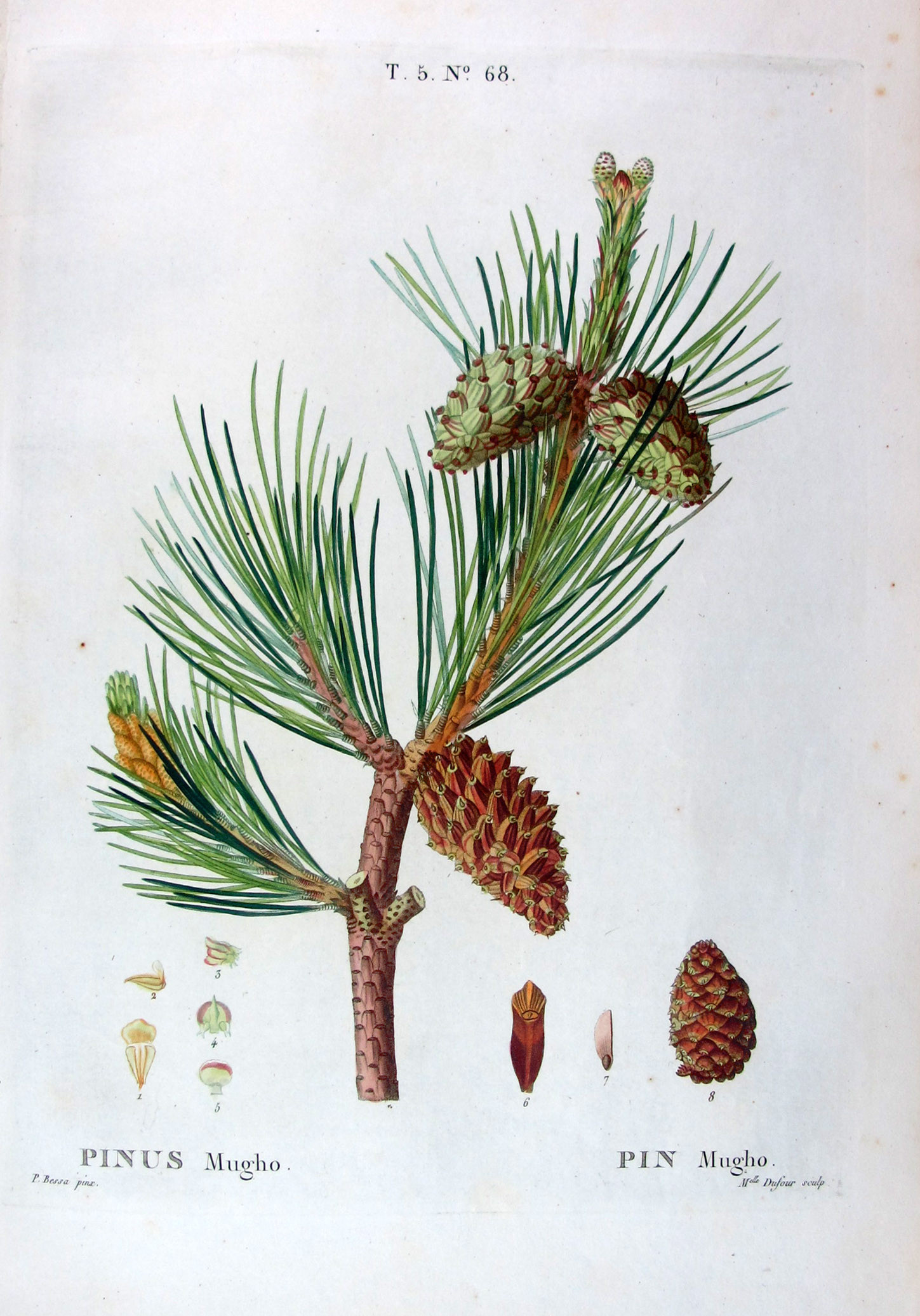
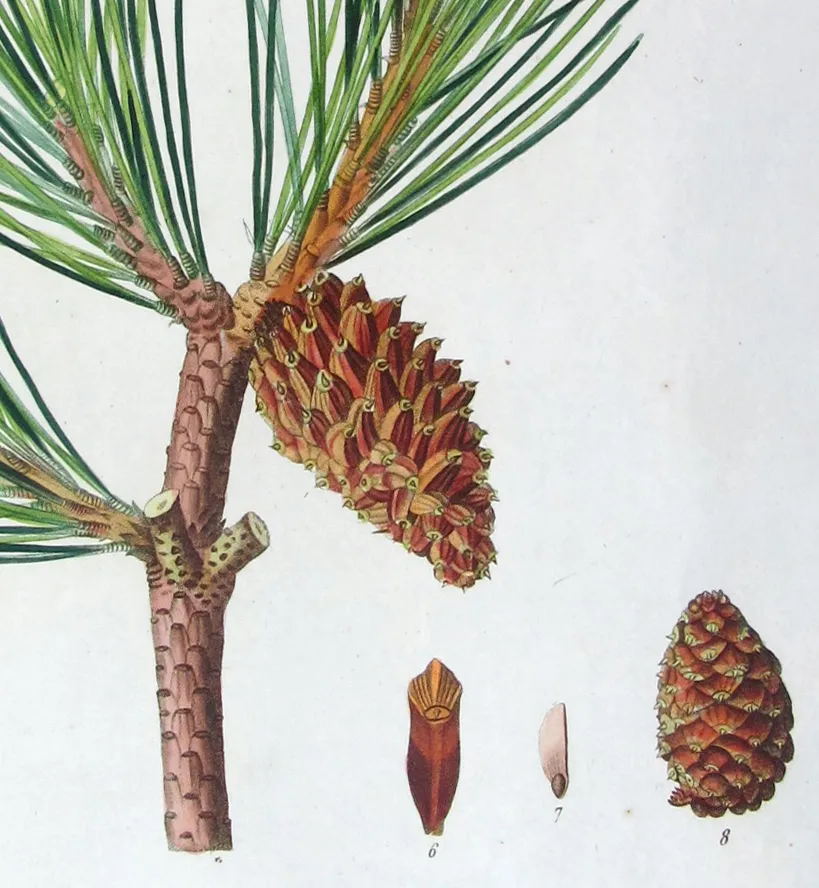
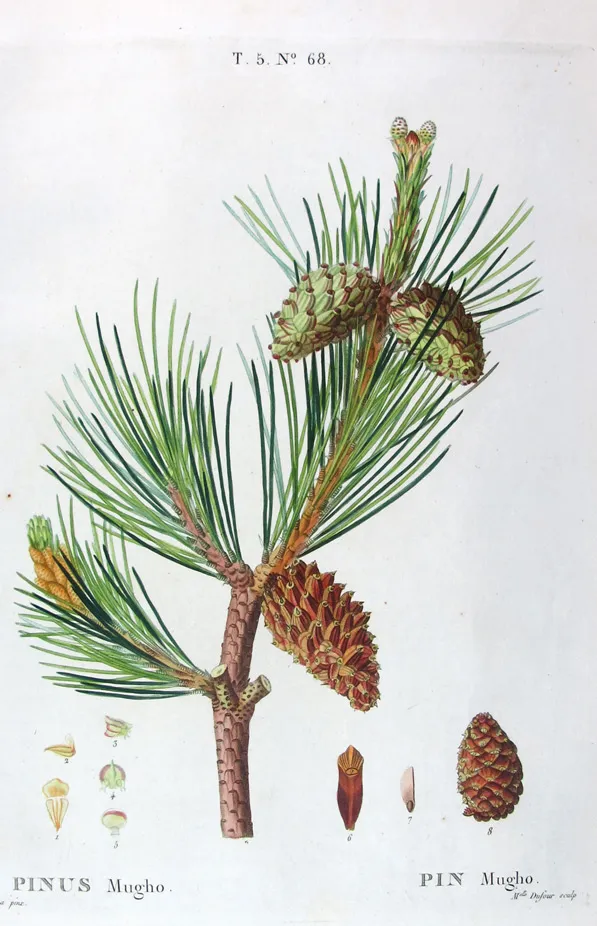
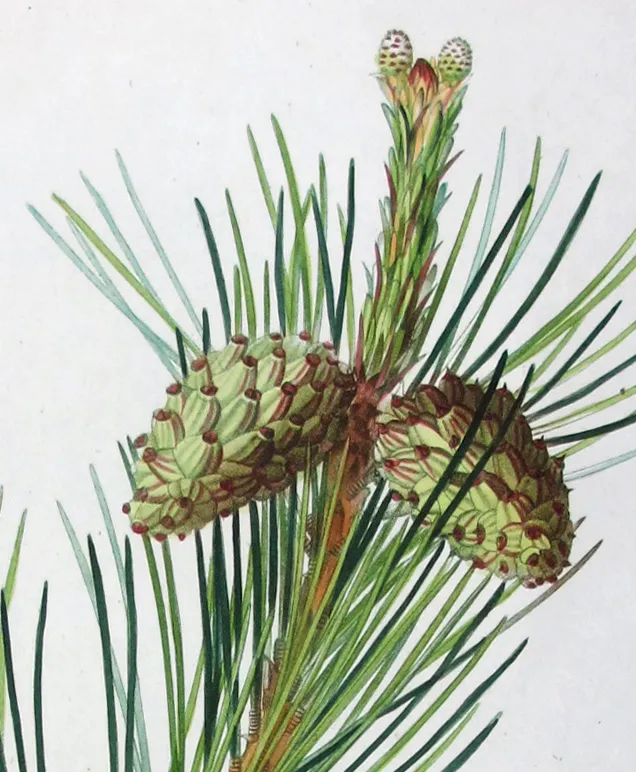
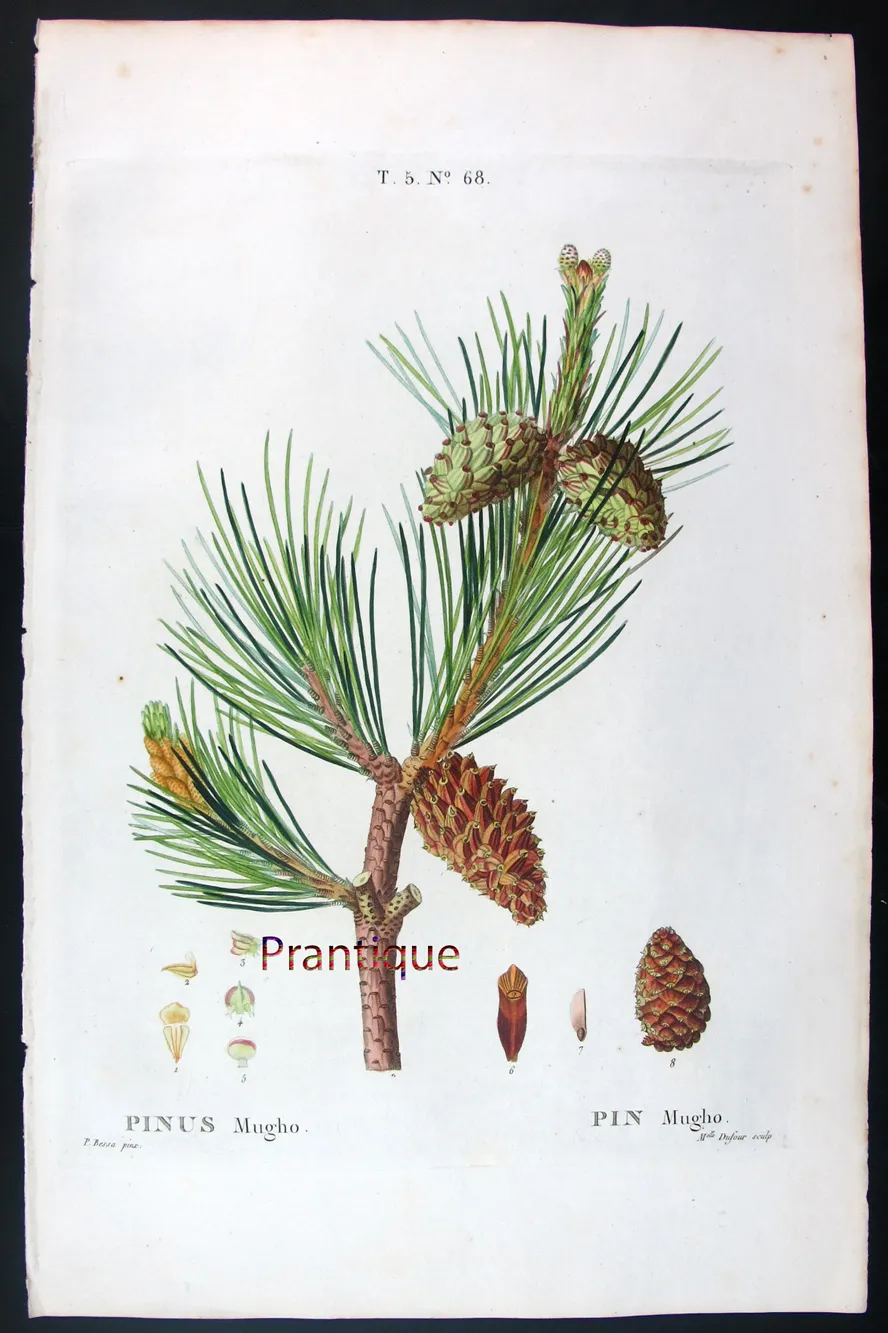
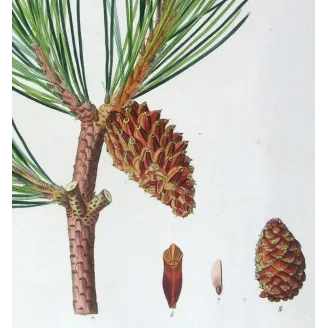
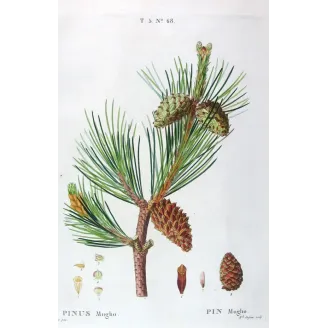
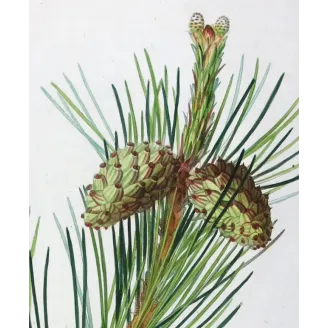
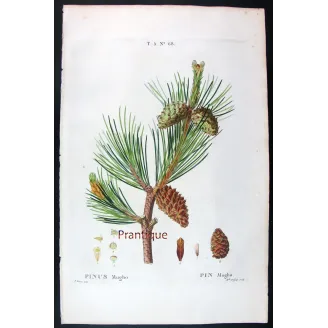
Antique engraving of Pinus Mugho by Bessa, rich in botanical detail.
 Delivery policy
Your print will be carefully prepared and shipped worldwide via trusted couriers (UPS or similar).
 Authentic antique prints
Original engravings from the 17th–19th century.
This original engraving depicts Abies cedrus, commonly known as the Cedar of Lebanon, presented through a refined horizontal composition combining mature cone, branch, and detailed botanical studies. The elongated cone rises with quiet monumentality above a densely structured spray of needles.
The branch is rendered with disciplined clarity: short clustered needles radiate in balanced formation, while the large, upright cone is articulated through carefully shaded scales that convey mass and architectural presence. The plate exemplifies the synthesis of decorative elegance and scientific observation characteristic of Bessa’s work.
Beyond its botanical identity, the Cedar of Lebanon carries deep historical resonance. Revered in ancient Near Eastern civilizations and frequently referenced in biblical texts as a symbol of strength and permanence, the species has long represented durability and elevated stature. This engraving therefore captures not merely a conifer, but a tree embedded in cultural memory across millennia.
— • —
The upright cone dominates the composition, its layered scales engraved with subtle stipple and tonal modulation. The cool blue-green needles provide chromatic contrast, enhancing depth while preserving compositional calm.
The inclusion of sectional studies above the branch introduces analytical precision, illustrating seed and structural details without disturbing the plate’s decorative coherence. The horizontal orientation lends the sheet a particularly elegant presence when framed.
Abies cedrus, now generally classified as Cedrus libani, is native to the mountains of the Eastern Mediterranean. Celebrated for its durable timber and majestic form, it has been associated with sacred architecture and monumental construction since antiquity. Its symbolic association with endurance and nobility contributes to its continued cultural prominence.
The engraving is in good antique condition. A very light and uniform toning is visible, consistent with the natural ageing of early nineteenth-century paper. A faint text offset from a previously bound state can be observed, typical of period publications. These minor signs of age do not detract from the visual integrity of the plate. No watermark has been observed. The engraved credits confirm the original drawing by Pancrace Bessa and the engraving executed by Dubreuil, verifying its authenticity as an original period work.
For further context on Pancrace Bessa and his distinctive contribution to French botanical illustration, see our editorial feature:
Specific References
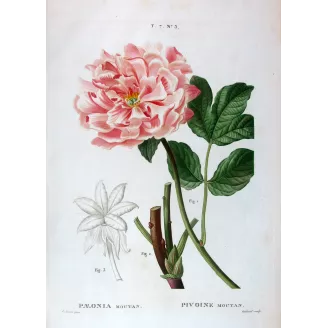
Tree Peony Pivoine moutan Original hand-colored botanical engraving by Pancrace Bessa.
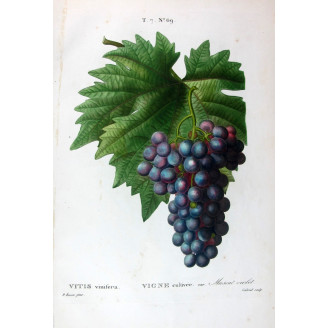
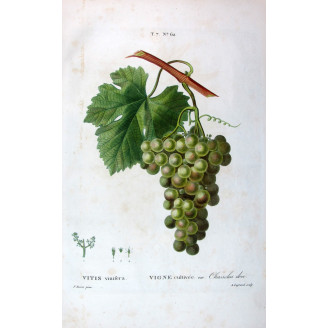
Elegant depiction of a rich purple Muscat grape variety by Pancrace Bessa.
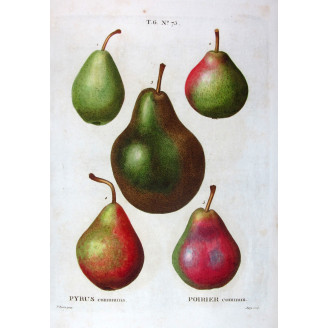
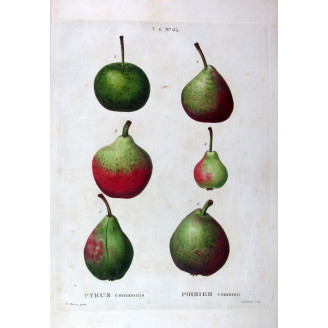
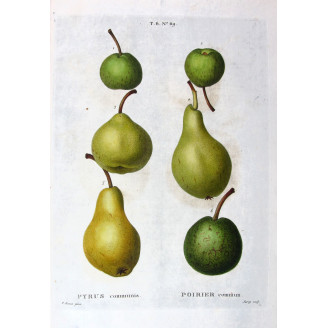
A refined study of cultivated pears, presenting five distinct fruit forms arranged in a balanced and harmonious composition. Subtle variations in shape, colour, and surface texture create a quiet visual rhythm, reflecting Pancrace Bessa’s ability to transform orchard subjects into works of enduring elegance.
Depiction of golden grapes with vivid green leaves in fine detail.
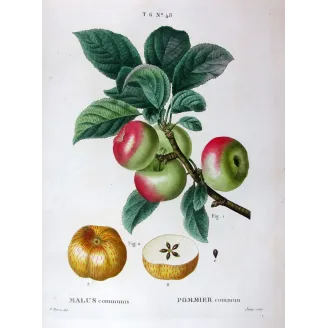
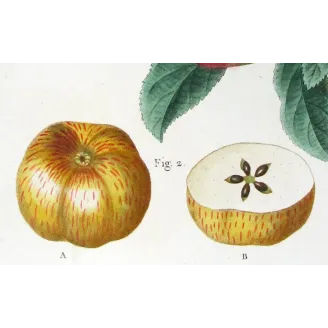
A finely executed early 19th-century botanical engraving illustrating a cultivated apple variety (Malus communis), drawn by Pancrace Bessa for Arbres et Arbustes. The composition combines precise botanical observation with refined decorative balance, presenting fruit and foliage with clarity and quiet elegance. Exceptional hand-colouring and careful modelling reflect the sophistication of French pomological illustration at its height.
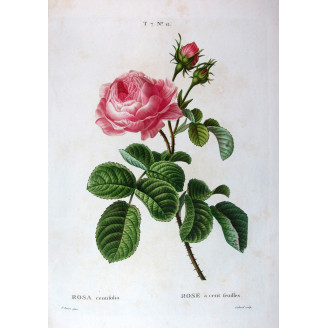
Hundred-petaled Rose Rose à cent feuilles Original hand-colored botanical engraving by Pancrace Bessa.
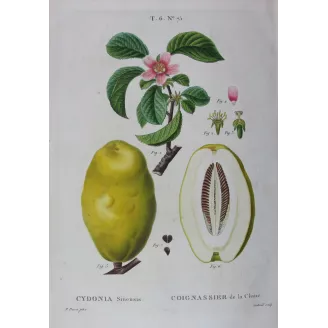
Chinese Quince Coignassier de la Chine Original hand-colored botanical engraving by Pancrace Bessa.
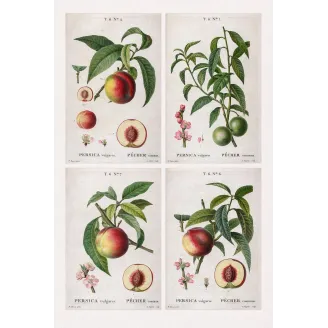
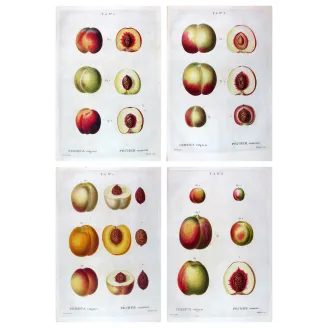
Original pochoir print of the peach tree, Prunus persica, with detailed flowering and fruit.
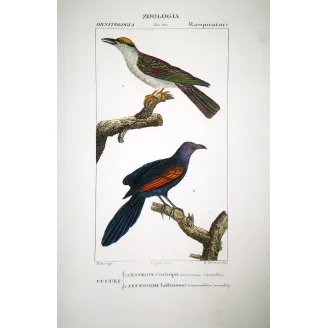
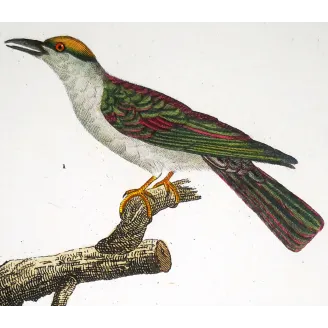
Two exotic birds from Australia, depicted with vivid hand-coloring.
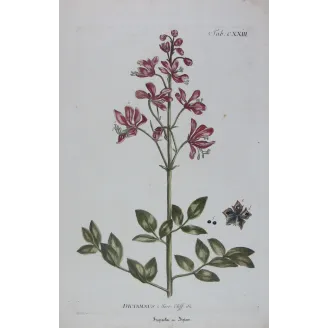
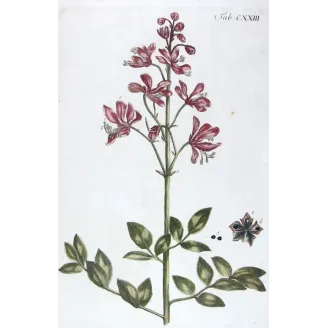
A refined 18th-century botanical engraving depicting Dictamnus albus, known for its elegant pink blossoms and structured foliage. The balanced composition and delicate hand-coloring make this a highly decorative and versatile botanical print.
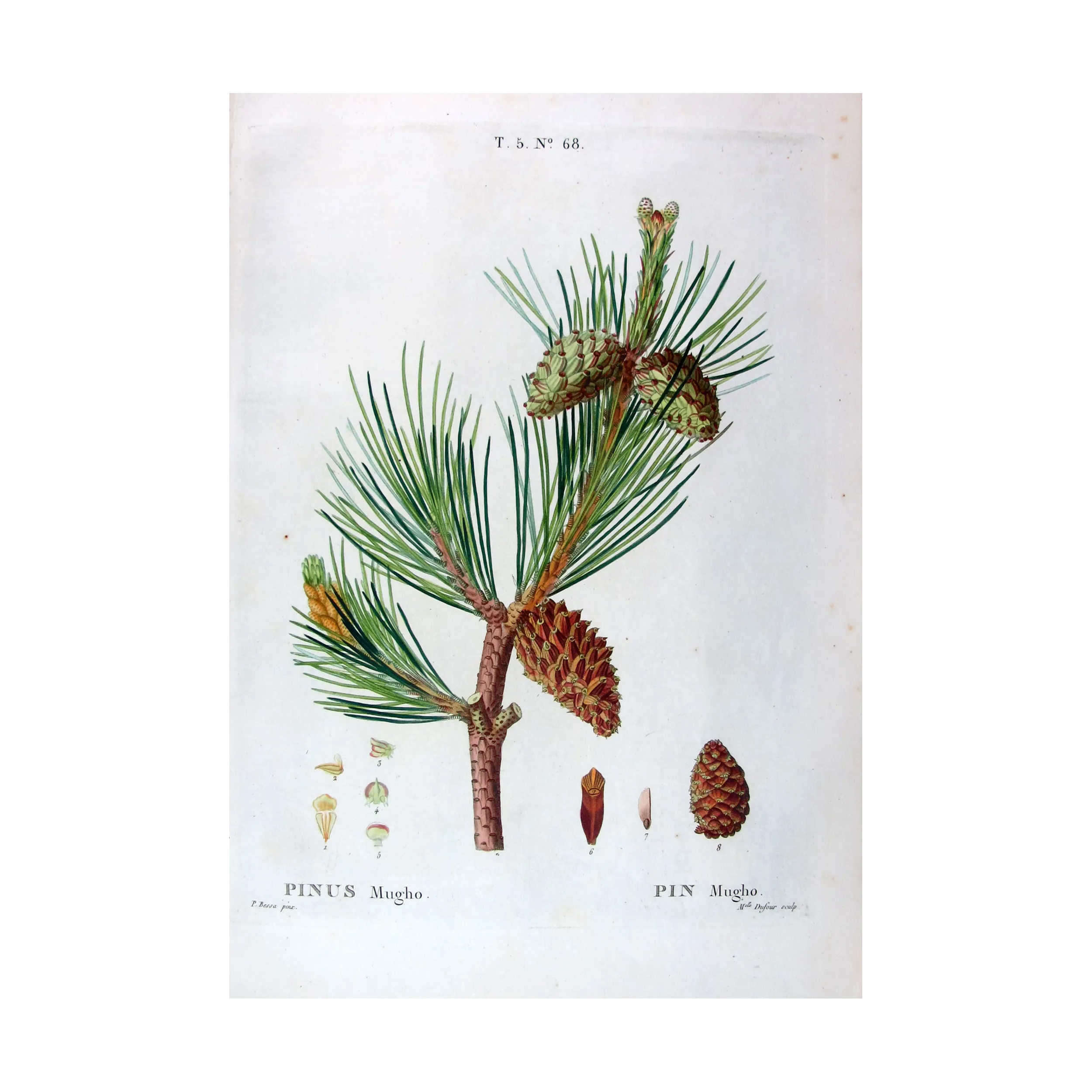
Antique engraving of Pinus Mugho by Bessa, rich in botanical detail.