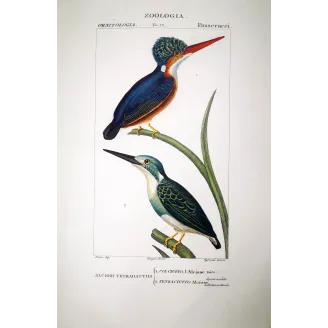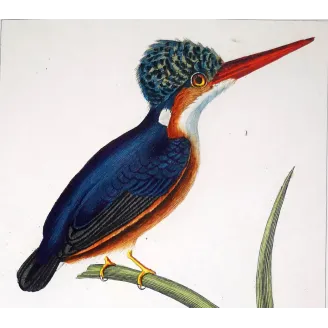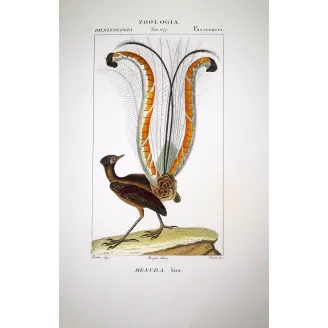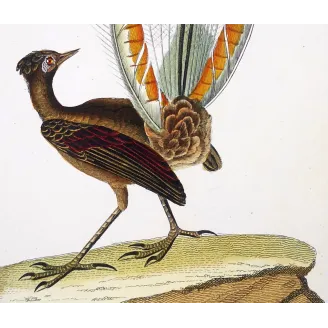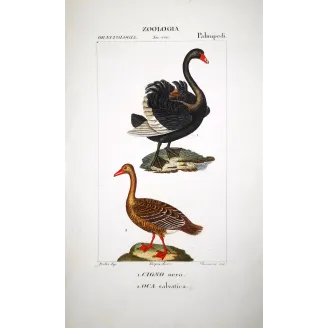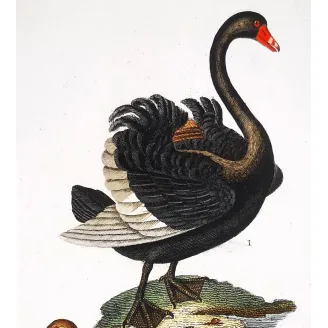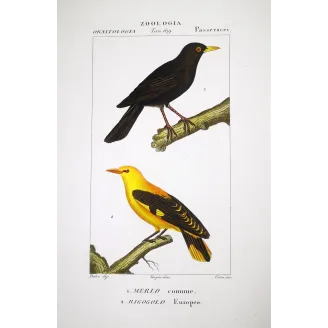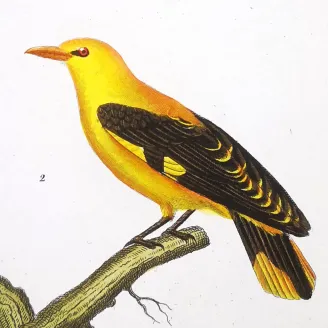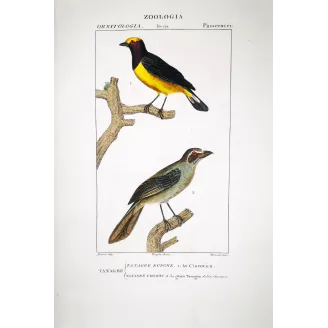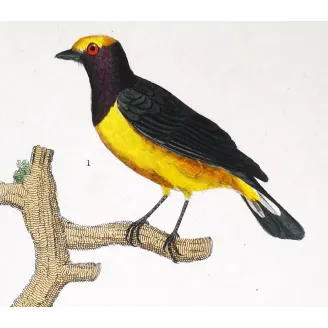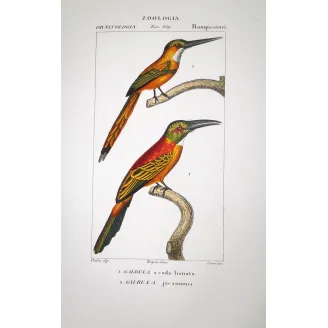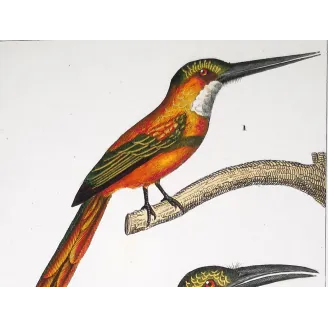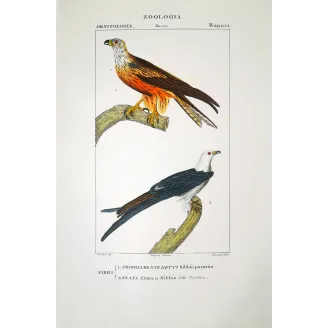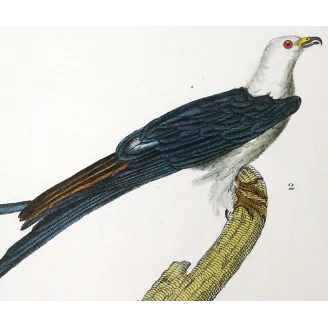
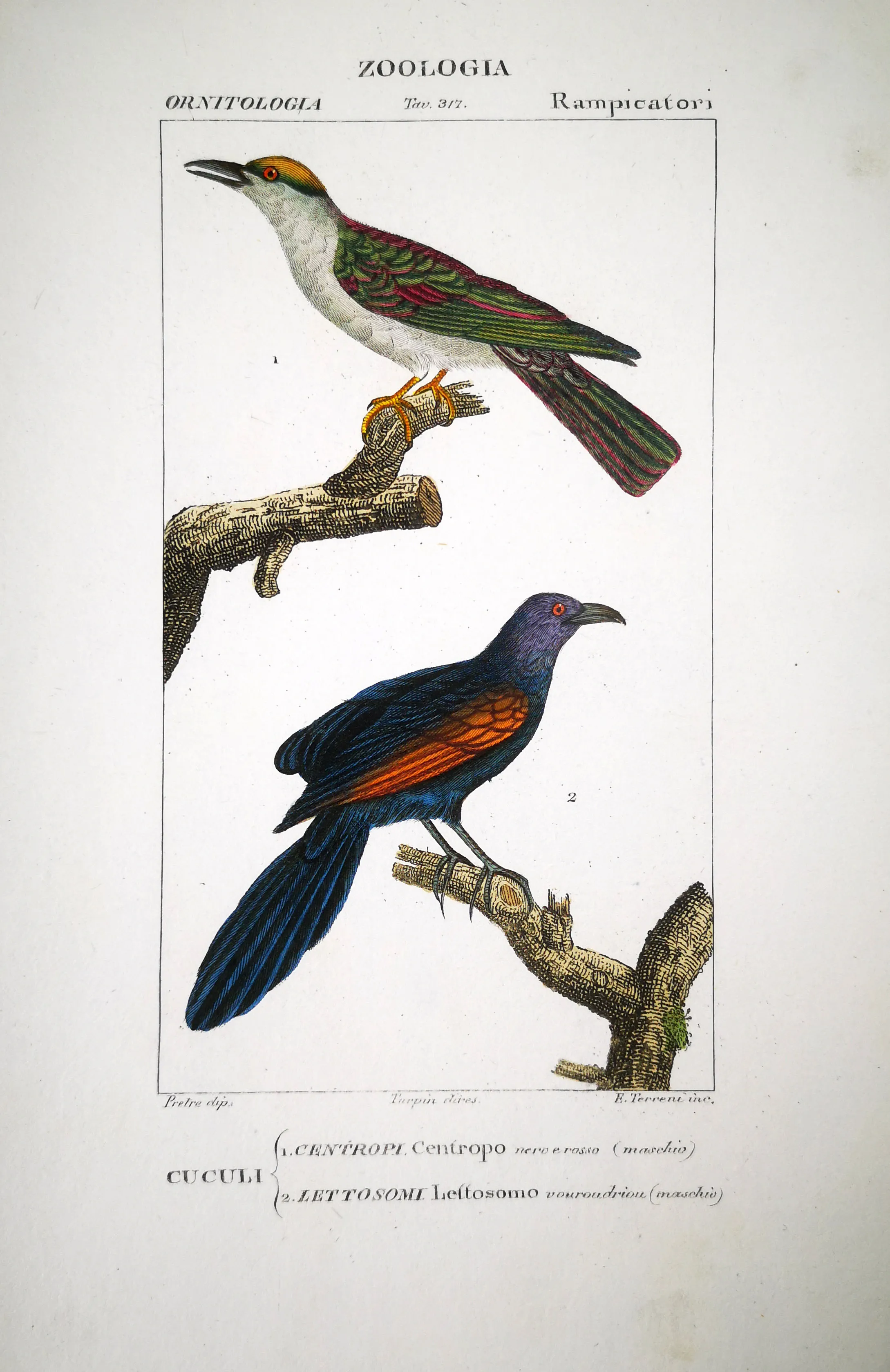



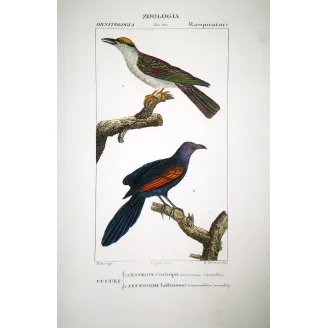
Two exotic birds from Australia, depicted with vivid hand-coloring.
 Delivery policy
Your print will be carefully prepared and shipped worldwide via trusted couriers (UPS or similar).
 Authentic antique prints
Original engravings from the 17th–19th century.
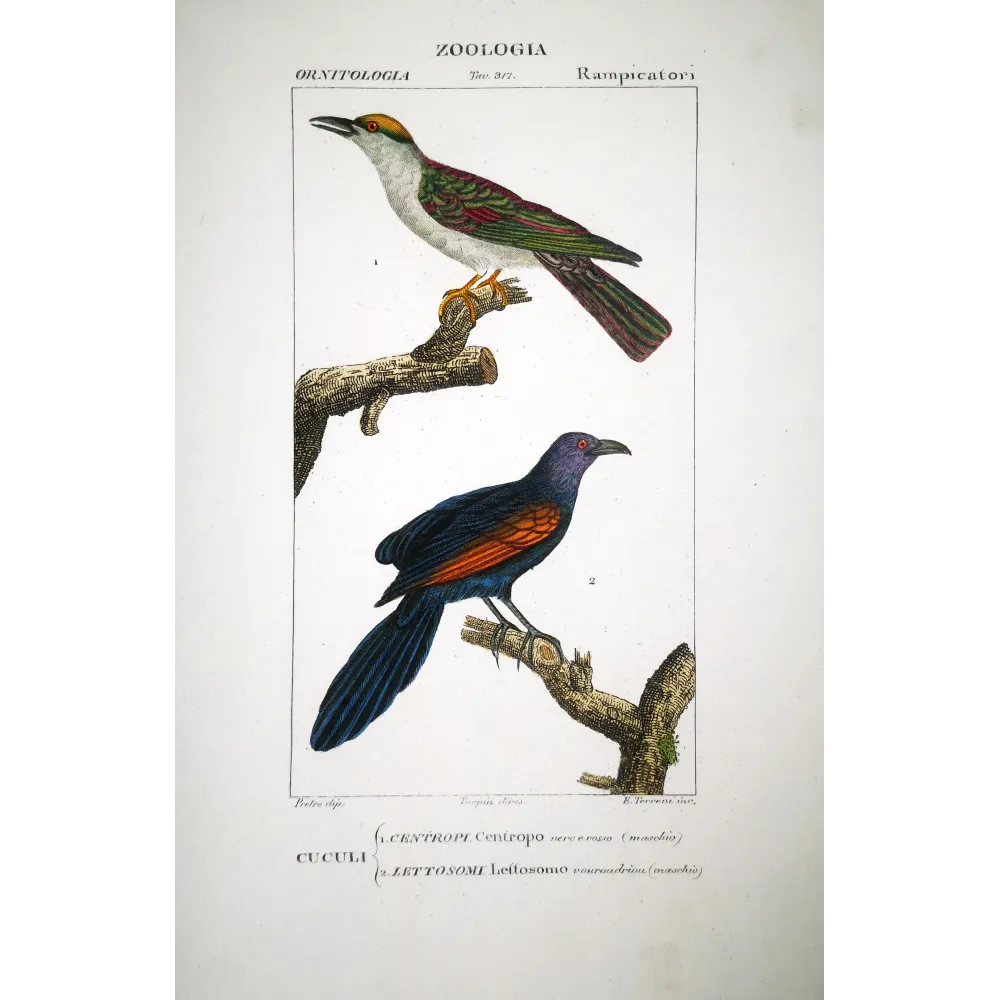
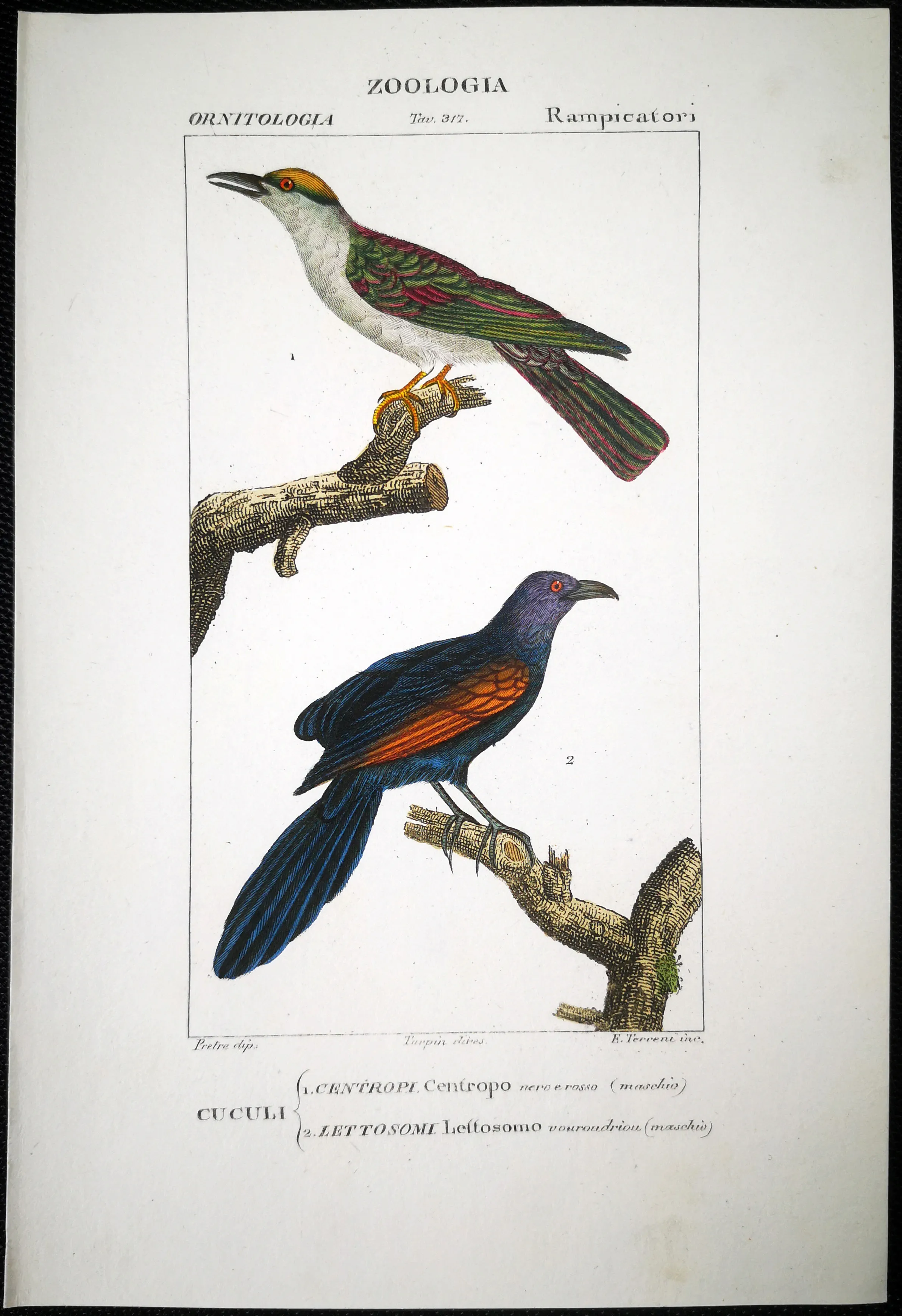
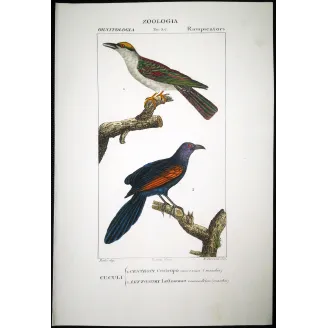
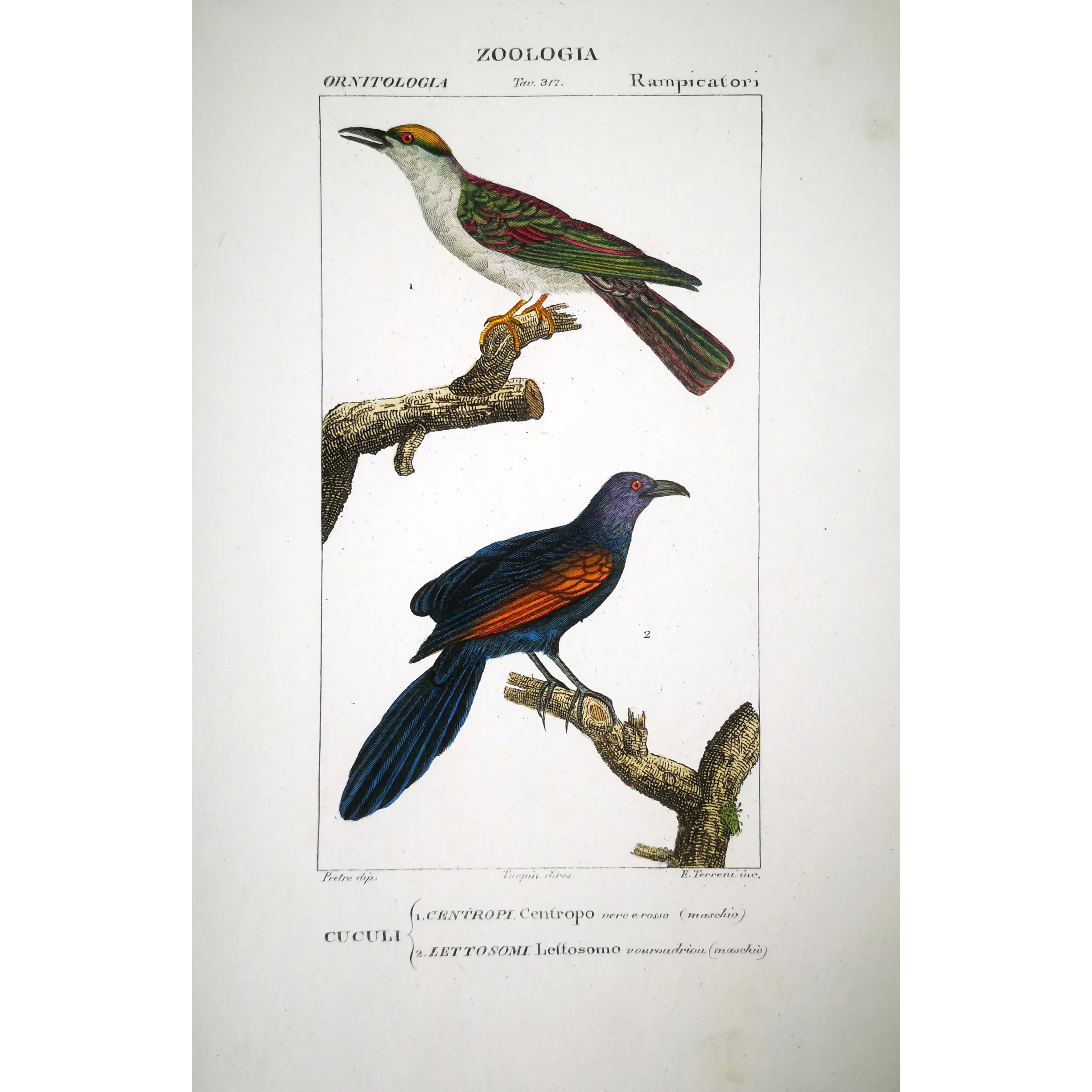
This striking ornithological engraving presents two exotic male cuckoo-related species identified in the plate as Centropo nero e rosso and Lettosomo vouroudrion. The sheet belongs to the ornithological section of the Dizionario di Scienze Naturali, where Pierre Antoine Prêtre captures tropical brilliance with remarkable chromatic control.
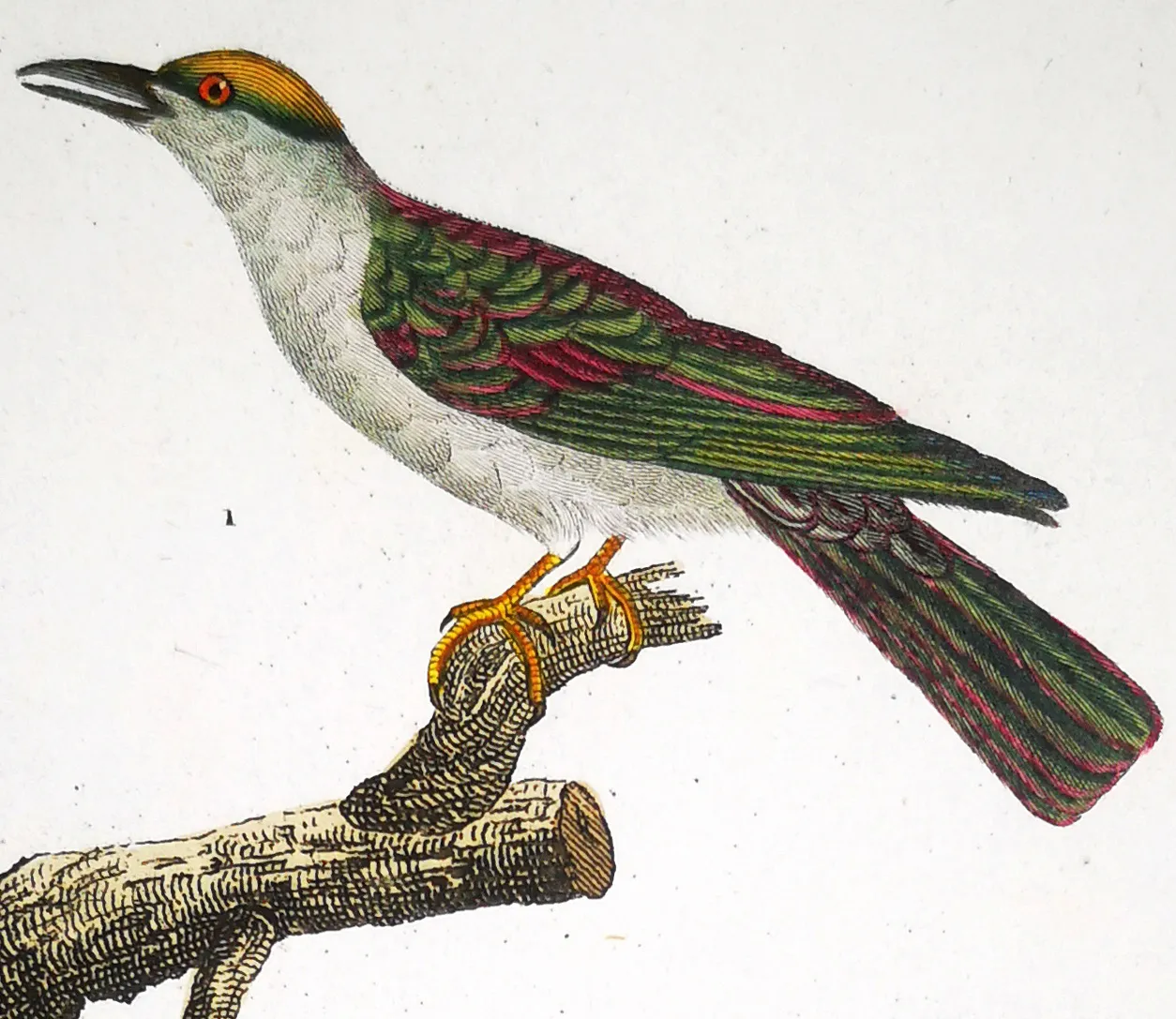
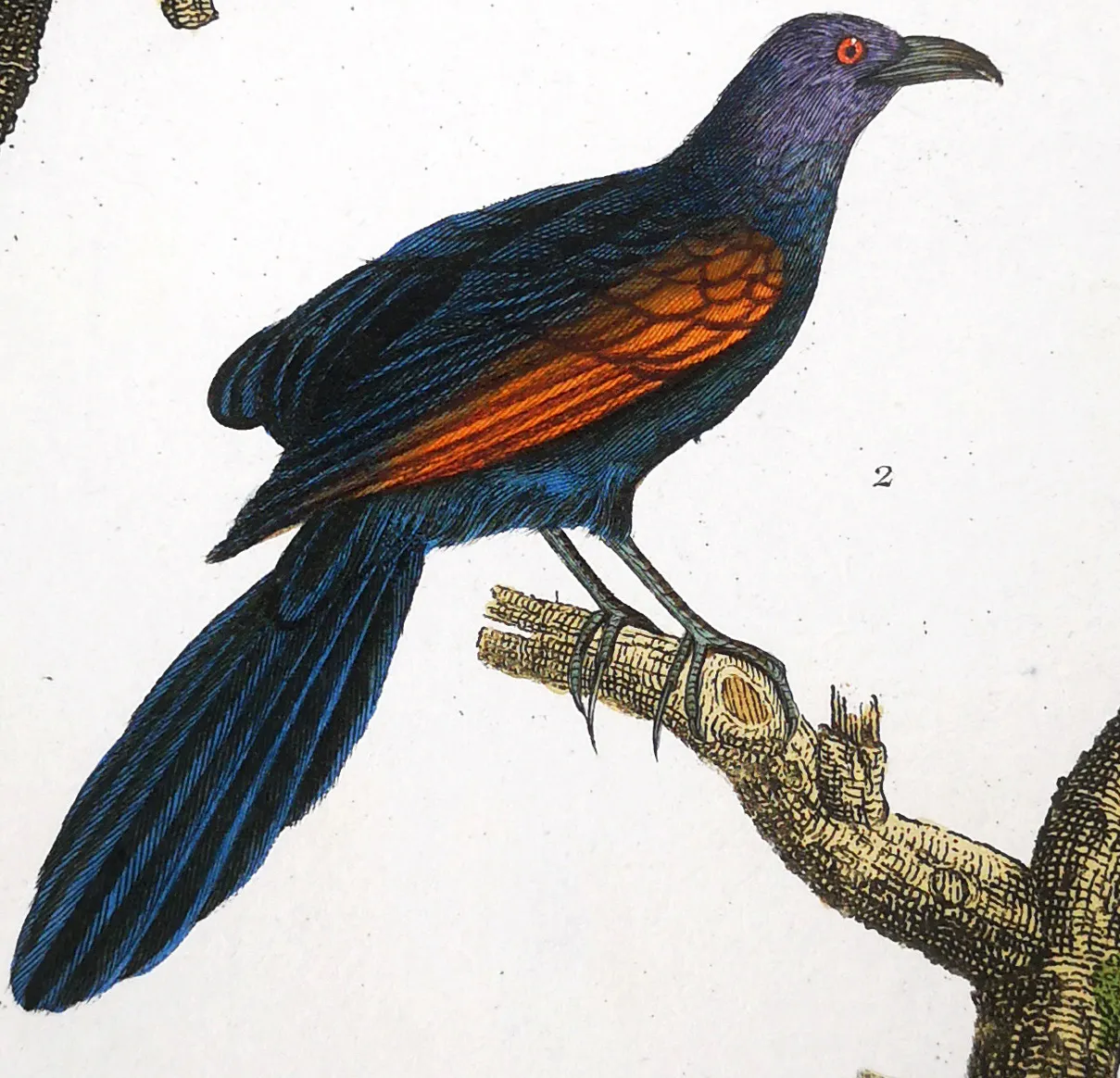
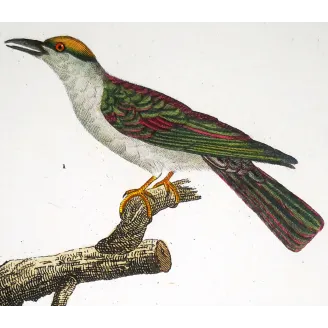
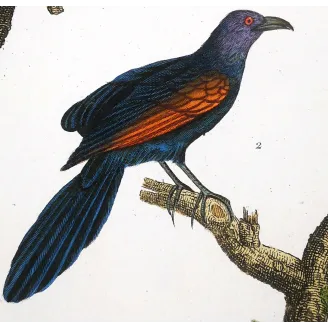
The upper bird is rendered in layered greens with crimson undertones, while the lower species radiates deep sapphire-blue plumage punctuated by a vivid rust-orange wing patch. Together they form a composition of controlled intensity and strong decorative presence.
— • —
The Centropi displays subtle feather articulation, where emerald and burgundy tones interlock across the wing in fine copperplate linework. The pale breast and orange orbital ring provide clarity and balance, preventing chromatic saturation from overwhelming the composition.
Below, the Lettosome introduces saturated ultramarine tones that transition into violet shadows. The sharply defined orange wing panel acts as a luminous counterpoint, giving the bird a jewel-like quality. The elongated tail and diagonal perch enhance movement, while generous negative space preserves the refined cabinet aesthetic characteristic of early nineteenth-century zoological engraving.
The Centropi corresponds to species within the genus Centropus, ground-dwelling cuckoos native to Africa and Asia. Known for contrasting plumage and elongated tails, these birds were frequently illustrated in early ornithological works due to their distinctive morphology.
The Lettosome is associated with tropical cuckoo-like birds historically classified within related groups. The intense blue and rust coloration visible in this plate reflects the fascination European naturalists held for the chromatic richness of tropical avifauna. As a nineteenth-century tropical bird engraving, this sheet combines scientific documentation with bold decorative impact.
This engraving forms part of the historic Dizionario di Scienze Naturali, a monumental early nineteenth-century encyclopedic enterprise once preserved within a noble library and today housed in the Sacchetti Collection. Each plate reflects a period in which scientific ambition was matched by exceptional artisanal execution — from disciplined copperplate linework to luminous hand-applied color.
These works represent a moment when natural history illustration achieved both scientific rigor and aesthetic refinement. To discover the full story behind these rare prints and their noble provenance, we invite you to read our editorial feature “Not Just Another Print”.
The engraving is in very good antique condition. The impression is clean and well-defined, with preserved original hand-colouring. The paper is smooth early nineteenth-century wove paper (non-laid), consistent with Italian scientific editions of the period. No watermark has been observed. Minor age toning, if present, is consistent with antique paper and does not affect the legibility or decorative quality of the plate.
For further context on Pierre Antoine Prêtre and his contribution to nineteenth-century zoological illustration, see our editorial feature:
Pierre Antoine Prêtre – Illustrator of Natural Science and Marine Life
Specific References
Refined old print with two specimens of South American halcyons: one crested and one with a green-blue livery.
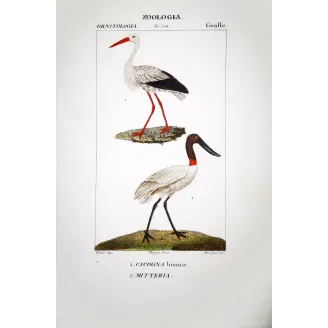
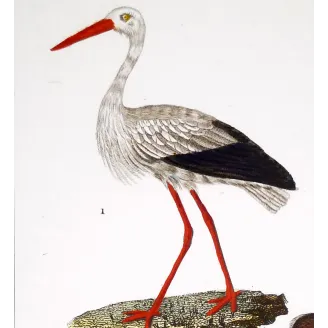
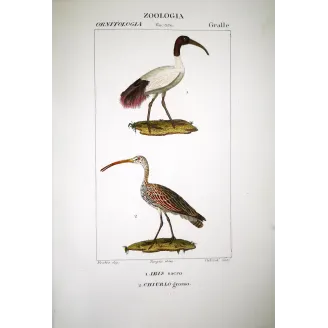
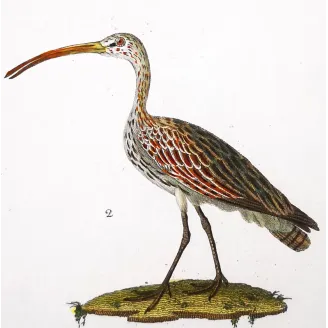
Graceful stork and robust jabiru presented with classic naturalistic balance.
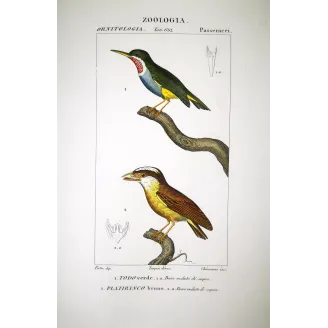
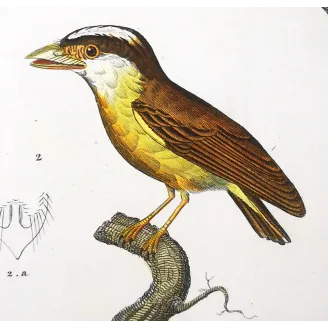
Delicate birds from the New World: the vibrant Green Todus and a brown Platyrinchus with unique beak features.
Graceful composition of a Yellow Tanager and a more subtly colored species from the Guyana region.
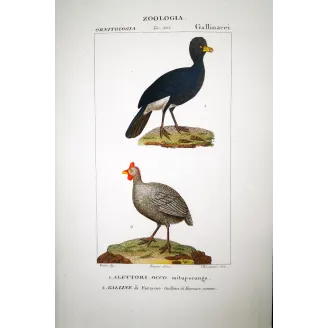
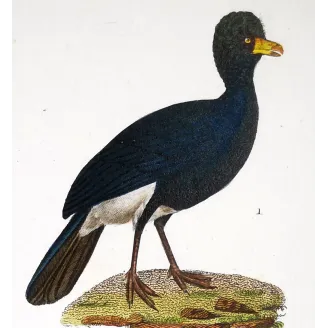
Elegant engraving of a guinea fowl and a Mituporanga, with rich textures and natural posture.
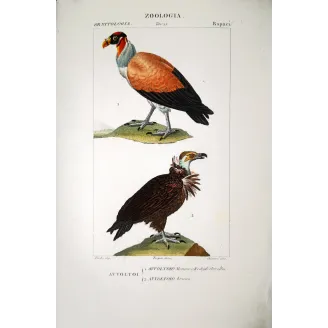
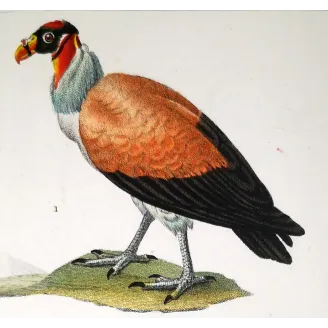
Original early 19th-century hand-colored engraving depicting King Vulture and Brown Vulture from the Dizionario di Scienze Naturali.
Beautiful engraving combining sacred symbolism and elegant coastal shapes.
Two vibrant Jacamar birds with metallic plumage and long sharp beaks on stylized branches.
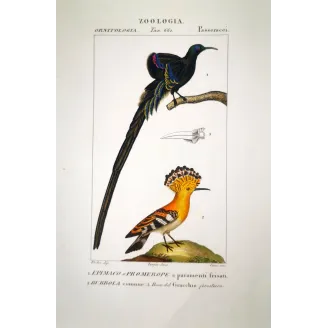
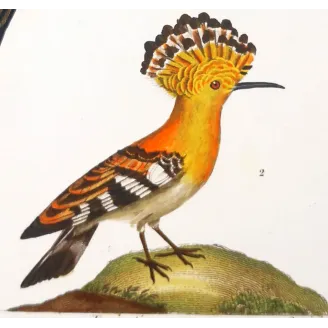
A long-tailed Promerops and a vivid Hoopoe bird, both perched and richly colored against a clean background.
Charming illustration of two aquatic birds with accurate anatomical and marine details.
Exquisite depiction of the ornate Greater Bird-of-Paradise alongside the striking Common Hill Myna.
Parasitic Kite & Elanus (Milvus sp. & Elanus sp.) – Original Hand-Colored Engraving by Prêtre, Antique Print.
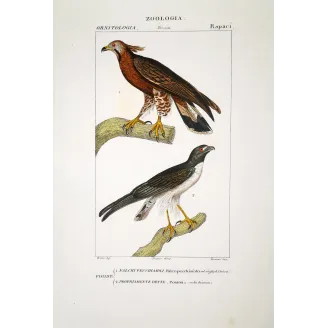
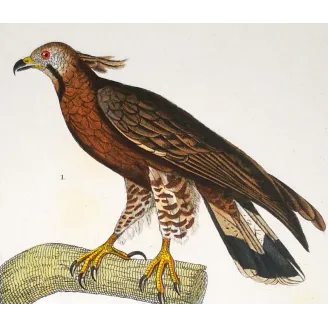
Finely drawn buzzards with a harmonious and naturalistic composition.
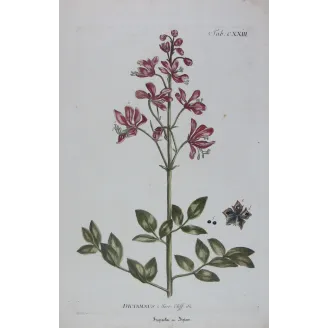
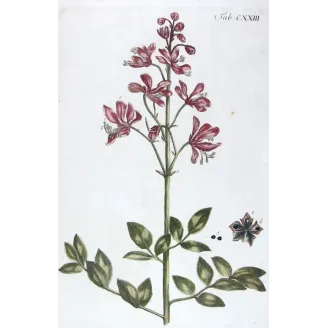
A refined 18th-century botanical engraving depicting Dictamnus albus, known for its elegant pink blossoms and structured foliage. The balanced composition and delicate hand-coloring make this a highly decorative and versatile botanical print.
Two exotic birds from Australia, depicted with vivid hand-coloring.