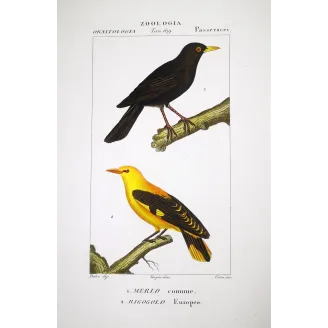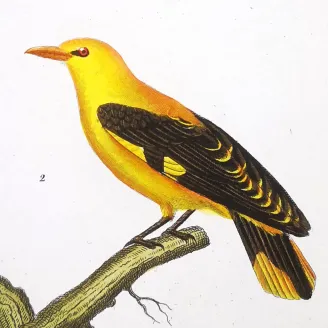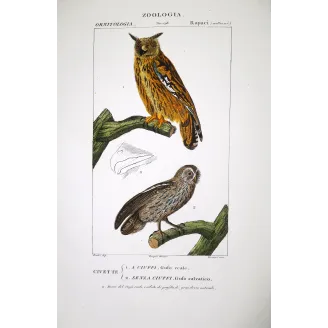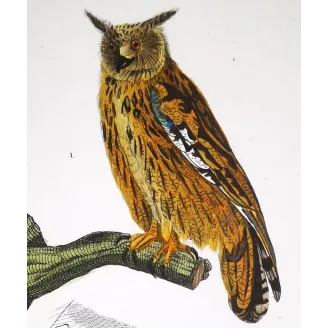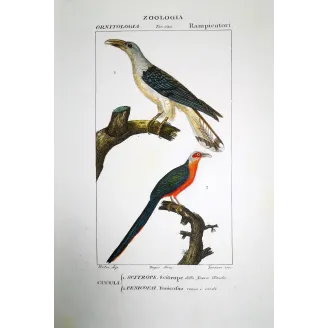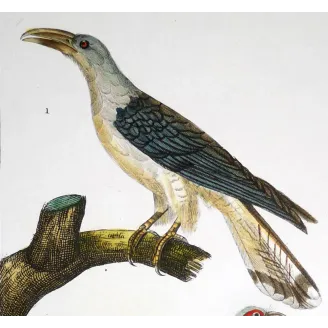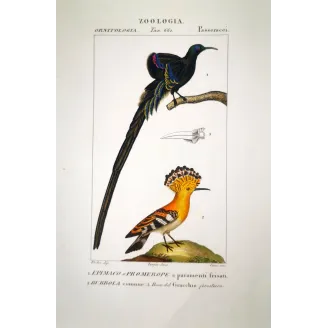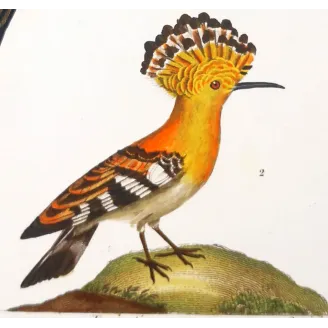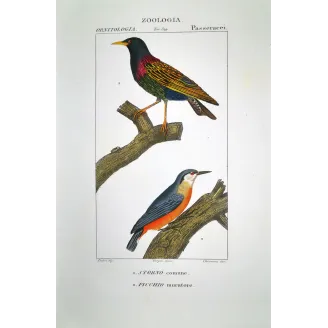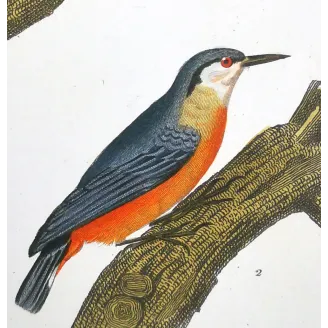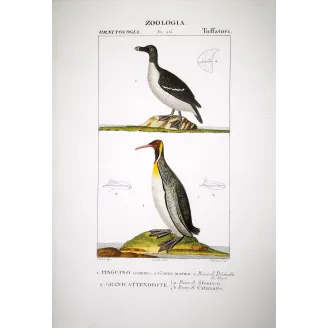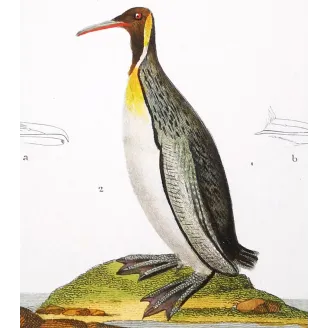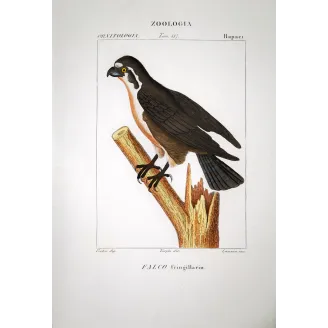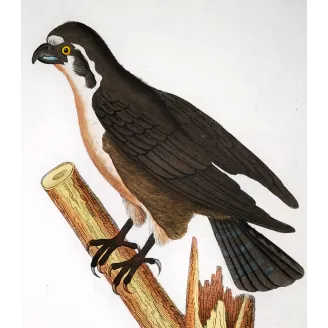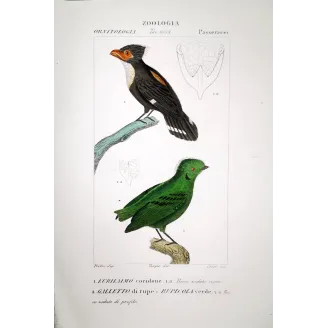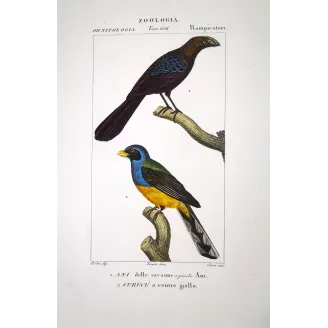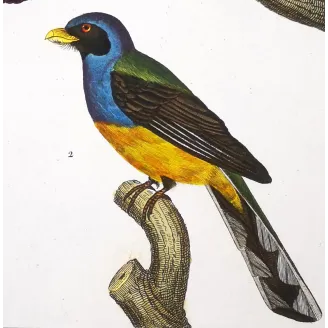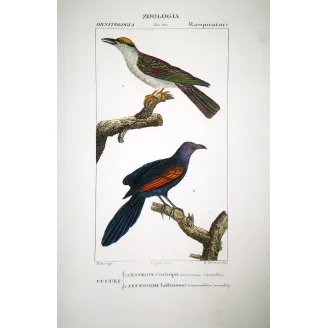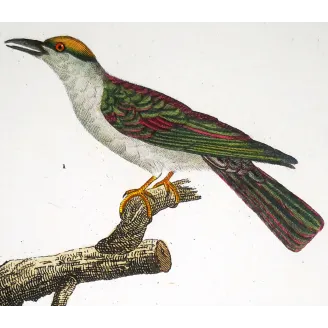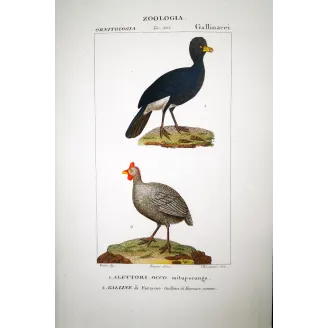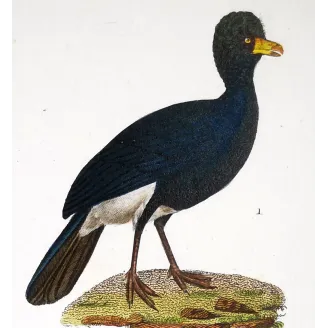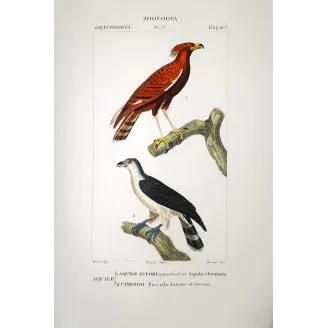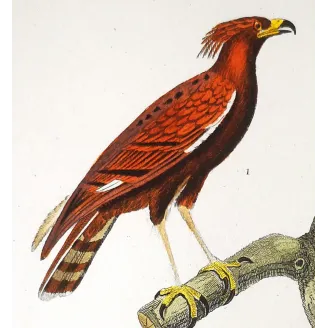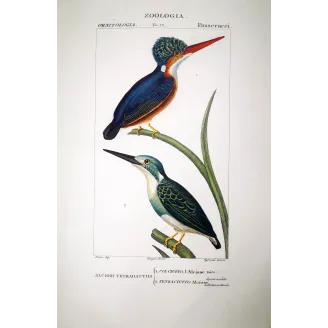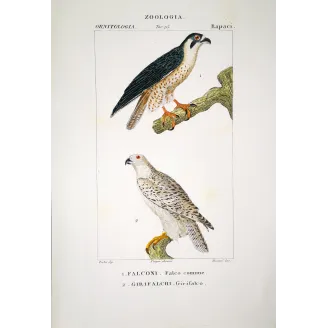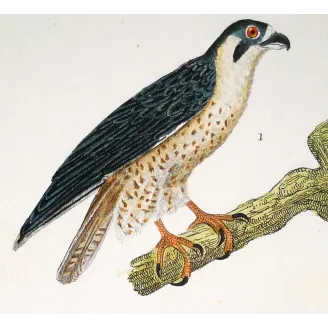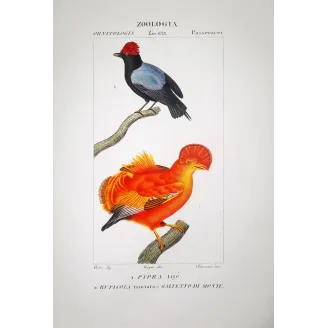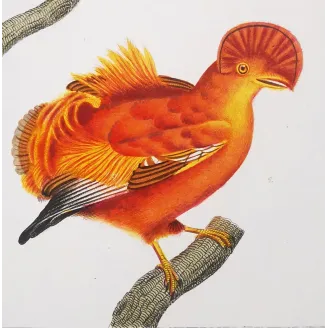
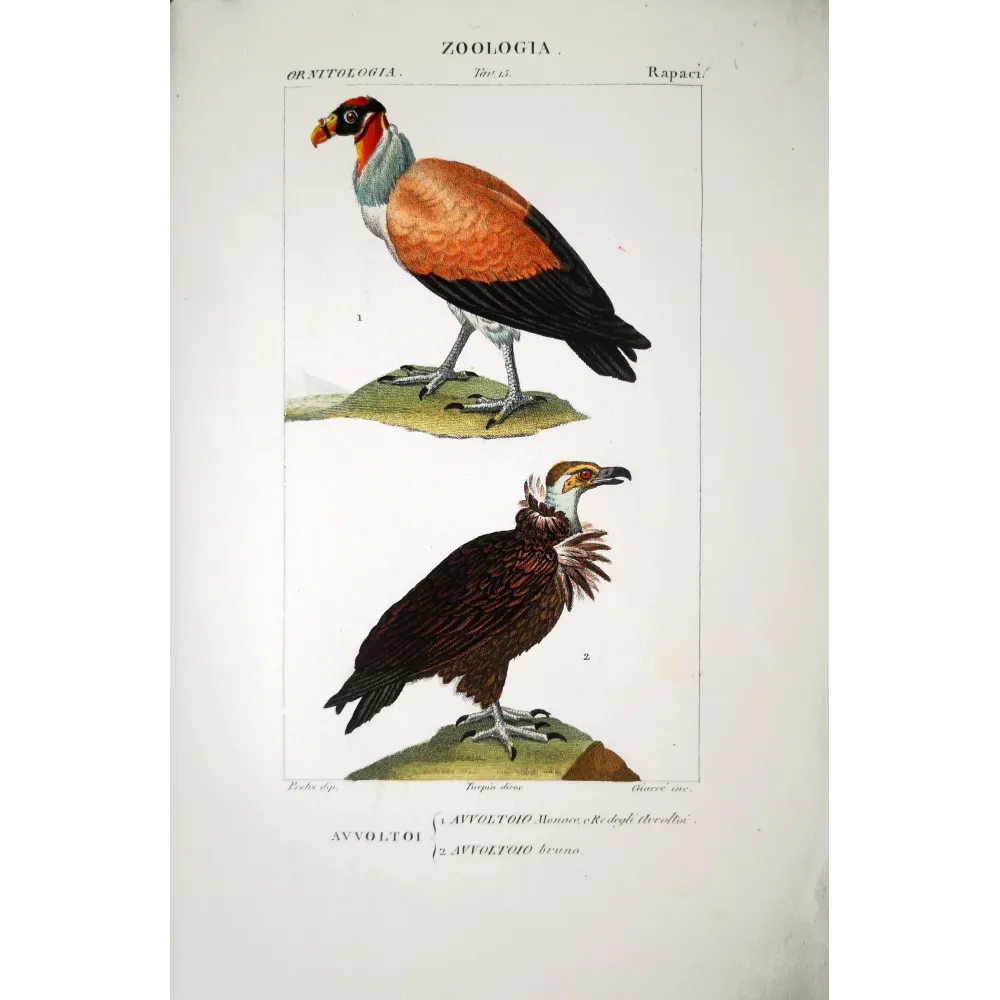
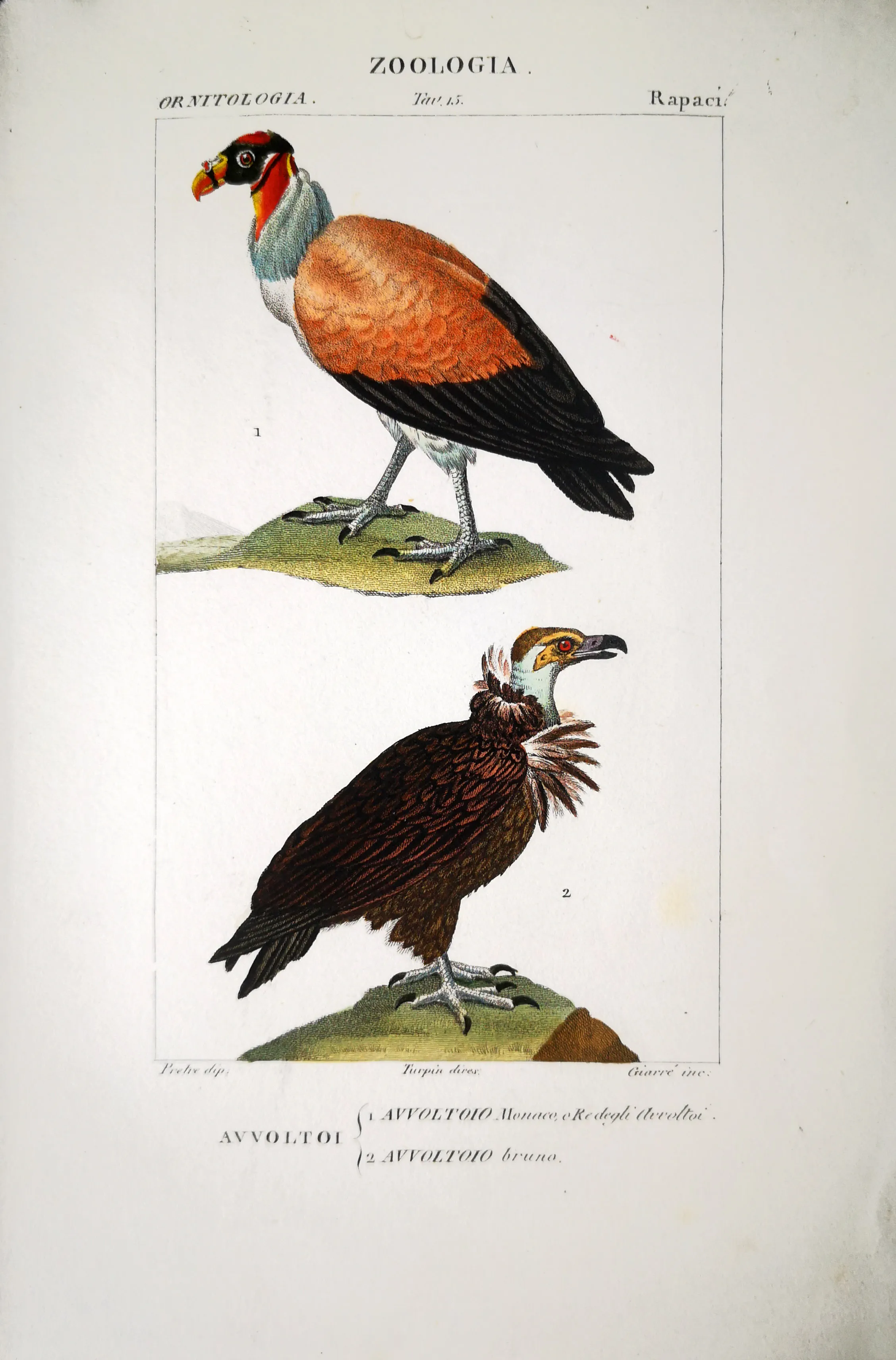
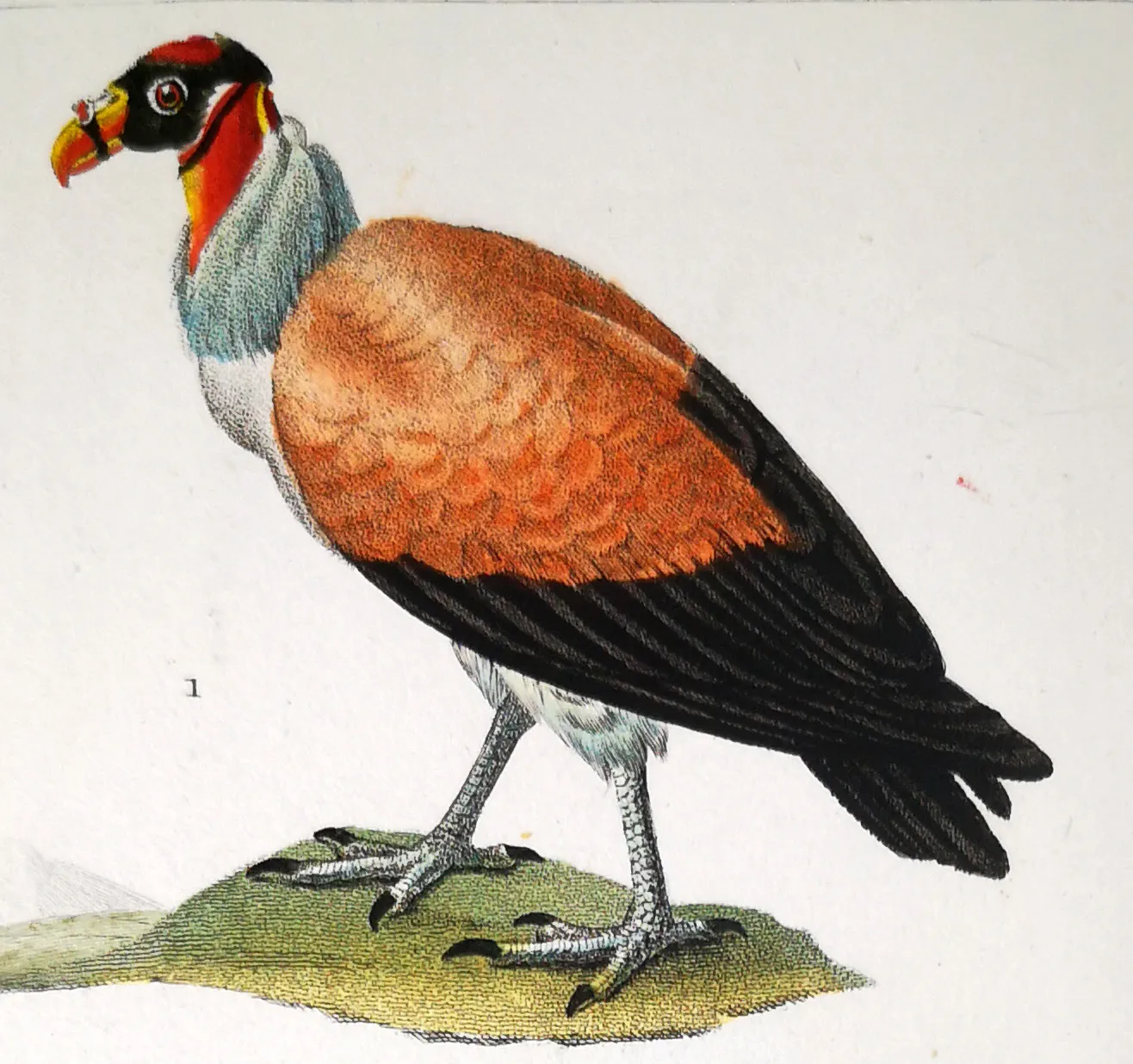
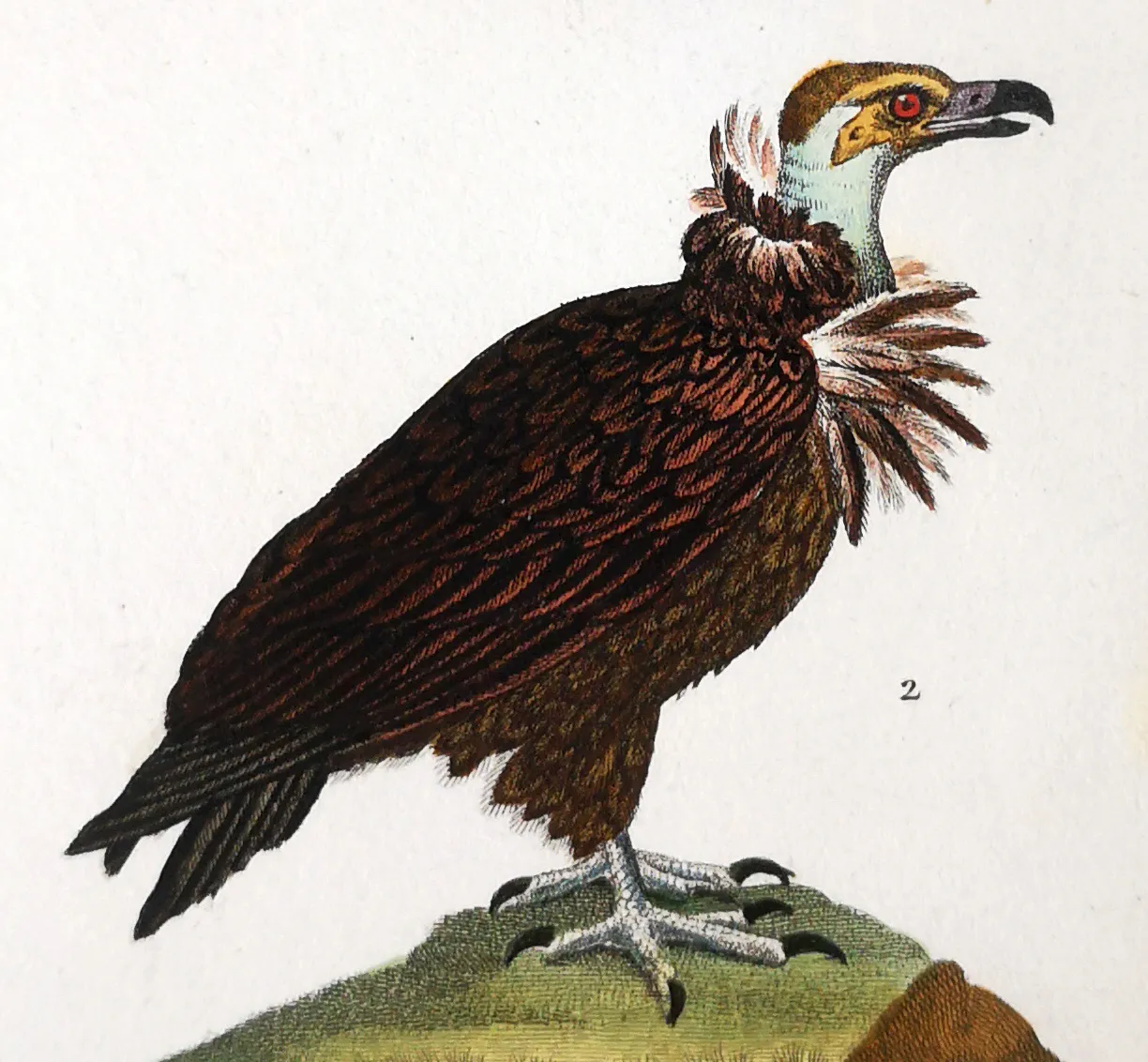
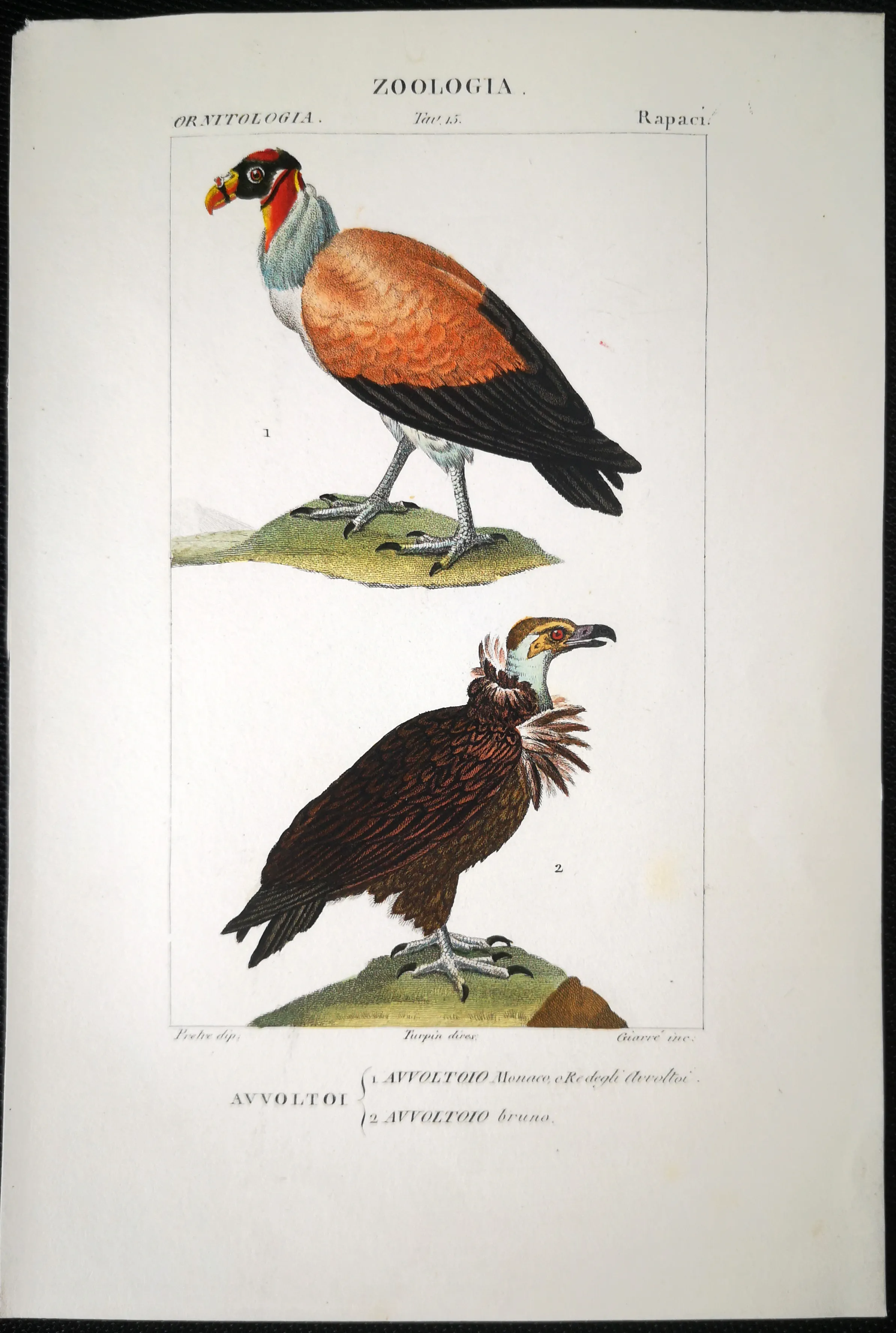
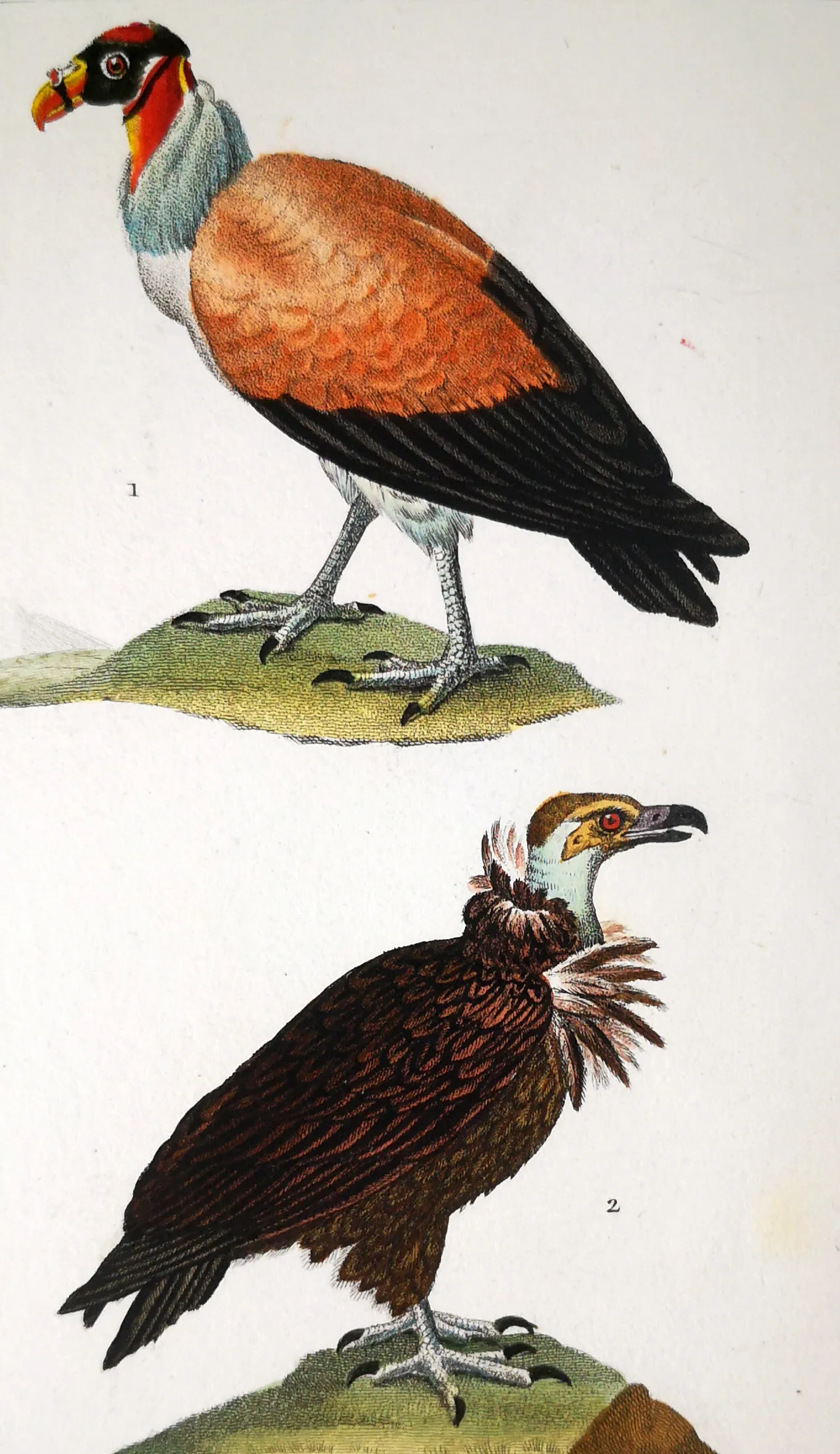

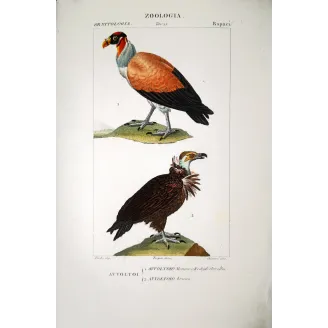
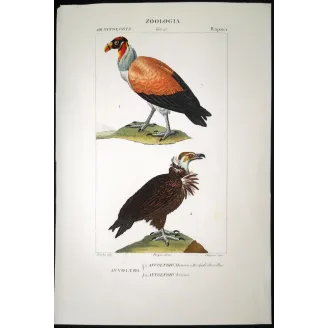
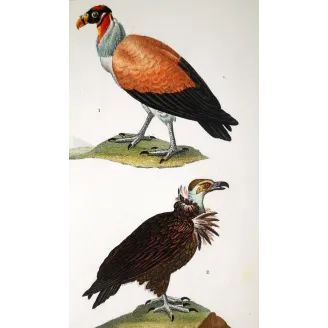
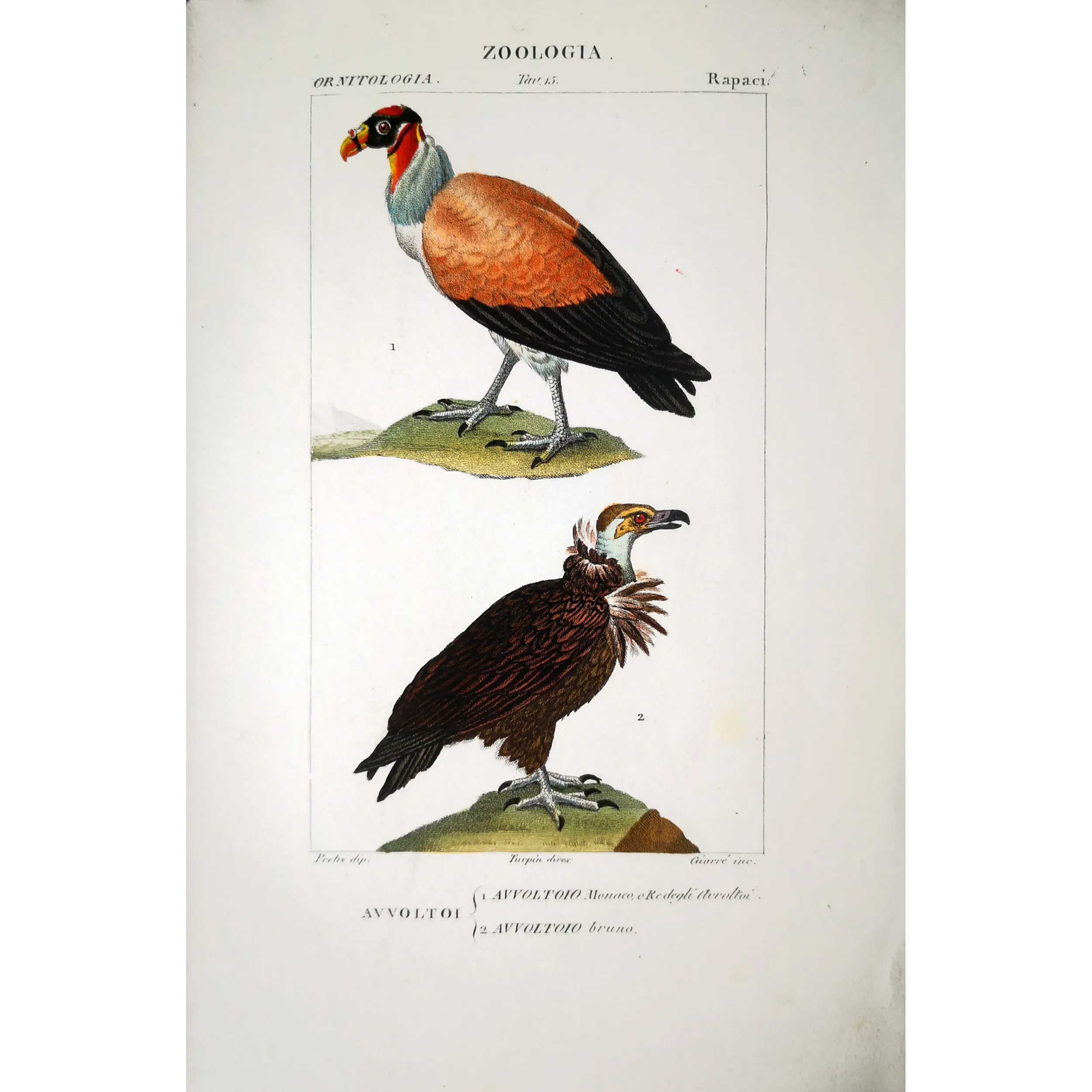
Original early 19th-century hand-colored engraving depicting King Vulture and Brown Vulture from the Dizionario di Scienze Naturali.
 Delivery policy
Your print will be carefully prepared and shipped worldwide via trusted couriers (UPS or similar).
 Authentic antique prints
Original engravings from the 17th–19th century.
This original early nineteenth-century hand-colored engraving presents two imposing vultures identified in the plate as Avvoltoio Monaco – Re degli avvoltoi and Avvoltoio bruno. The sheet forms part of the ornithological section of the Dizionario di Scienze Naturali, illustrated by Pierre Antoine Prêtre under the scientific direction of Turpin.
The upper bird, associated with the Sarcoramphus papa (King Vulture), is rendered with dramatic chromatic contrasts, while the darker lower vulture introduces weight and compositional gravity, forming a powerful vertical pairing.
— • —
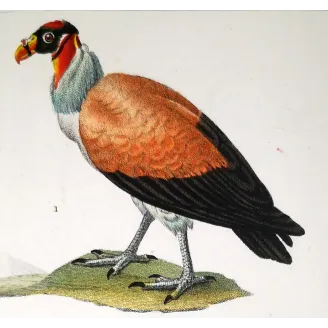
The King Vulture is depicted with warm terracotta plumage, contrasting dark wings, and a vividly colored facial area. The precision of the copperplate linework enhances feather articulation while preserving anatomical authority.
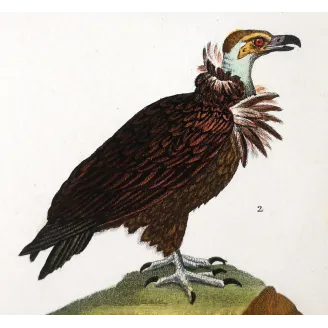
Below, the Brown Vulture (associated with Gyps species) appears in deeper umber tones. The dense feather texture and strong stance create a sculptural presence that balances the composition.
The King Vulture inhabits Central and South America and was regarded by early European naturalists as one of the most striking New World raptors. Its inclusion reflects expanding global zoological documentation during the nineteenth century.
Old World vultures such as the Brown Vulture played a central role in ecological systems as carrion specialists. Their depiction in scientific atlases illustrates both naturalistic observation and symbolic fascination.
This engraving originates from the monumental Dizionario di Scienze Naturali, preserved within a noble Roman library and today part of the Sacchetti Collection. The project represents a period when scientific ambition and artisanal engraving converged in works of exceptional refinement.
Discover more about this remarkable provenance in our editorial feature: Not Just Another Print – The Sacchetti Collection.
Very good antique condition. Crisp impression and well-preserved original hand-coloring. Printed on smooth early nineteenth-century wove paper. No watermark observed. Minor age toning consistent with age.
For more about Pierre Antoine Prêtre, see: Pierre Antoine Prêtre – Illustrator of Natural Science
Specific References
Nocturnal birds of prey elegantly rendered, showing sharpness and grace.
Elegant depiction of a Scythrope and a vividly colored red-and-green Trogon perched on branches.
A long-tailed Promerops and a vivid Hoopoe bird, both perched and richly colored against a clean background.
Charming illustration of two aquatic birds with accurate anatomical and marine details.
Majestic raptor captured in perfect hunting pose with detailed feathers.
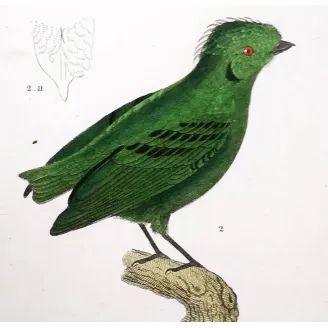
Rare birds of the jungle: the crest-faced Corydon and a luminous green Rupicola.
Colorful engraving of two exotic birds: the Ani and the vibrant Yellow-bellied Curuçu.
Two exotic birds from Australia, depicted with vivid hand-coloring.
Elegant engraving of a guinea fowl and a Mituporanga, with rich textures and natural posture.
A lively contrast between a fiery red hawk-eagle and a smaller black-and-white goshawk.
Refined old print with two specimens of South American halcyons: one crested and one with a green-blue livery.
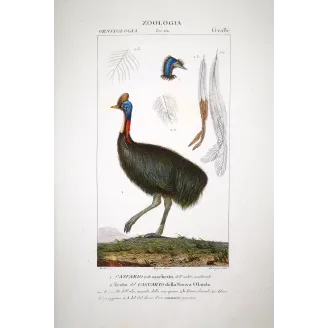
Impressive antique engraving of the Southern Cassowary, a striking flightless bird from New Guinea and northern Australia.
Original early 19th-century hand-colored engraving depicting King Vulture and Brown Vulture from the Dizionario di Scienze Naturali.