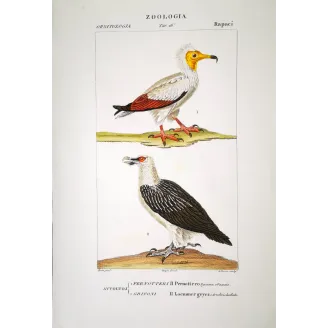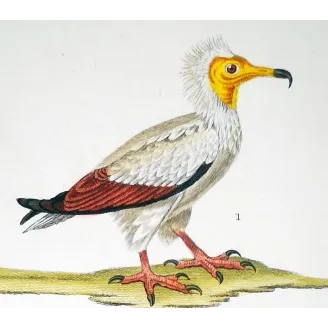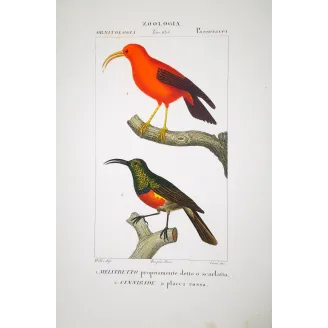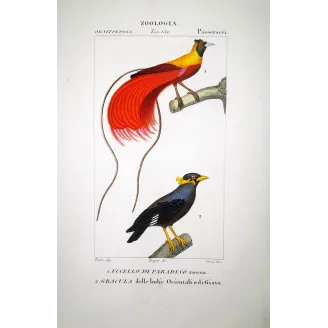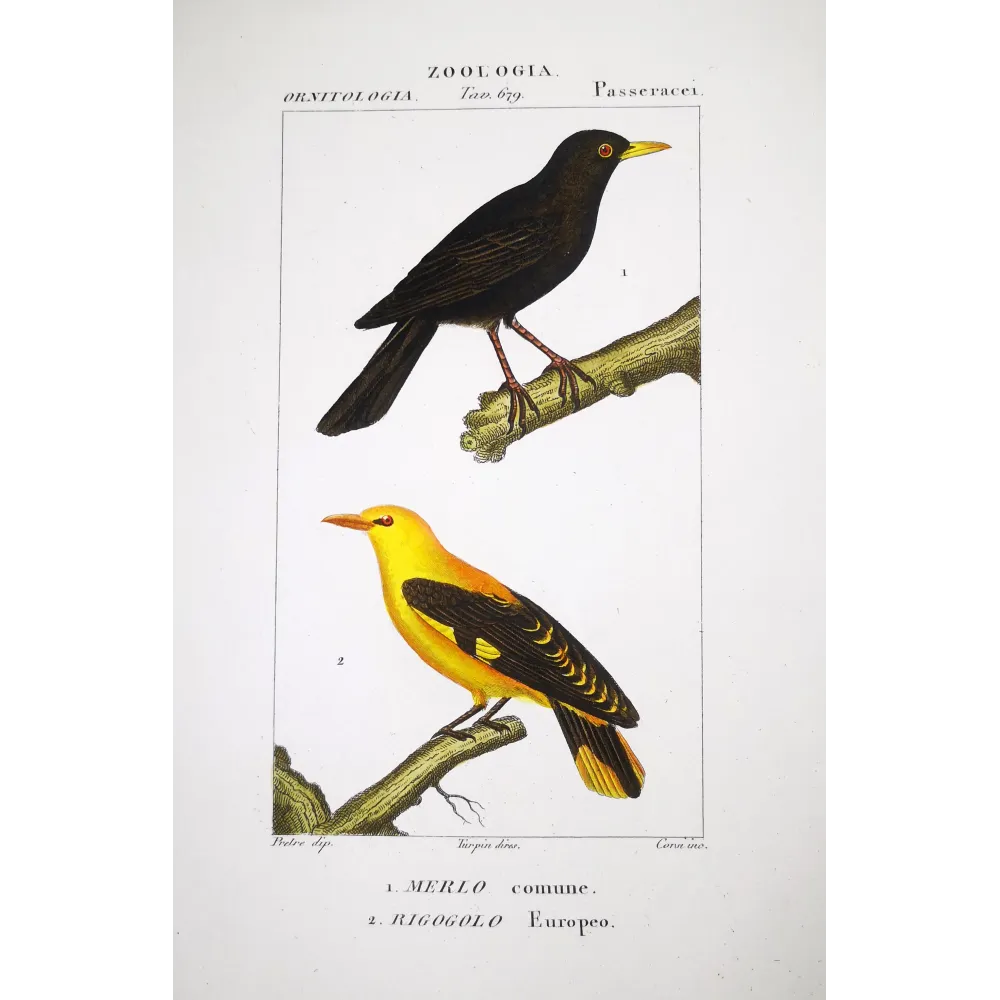
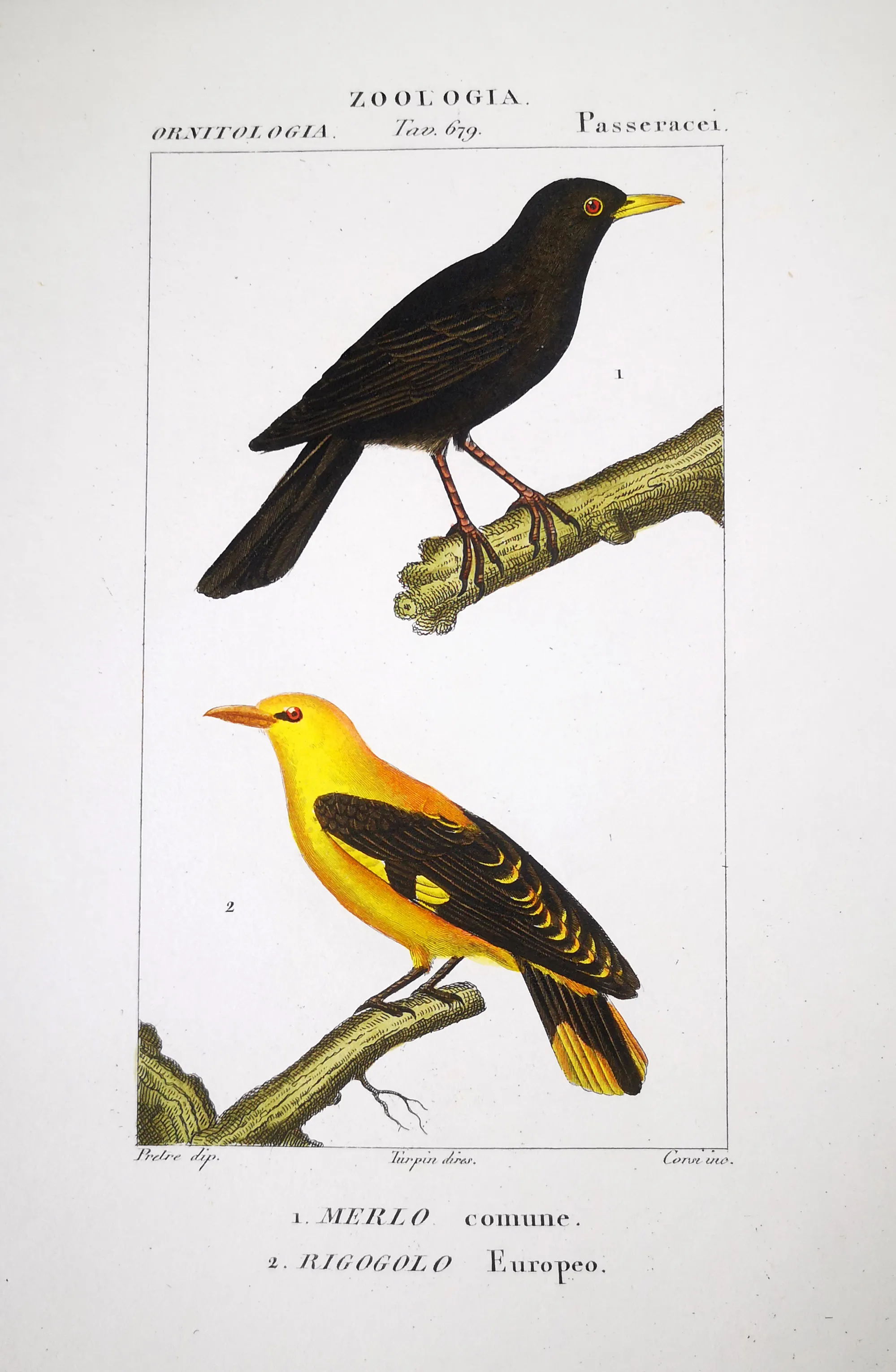
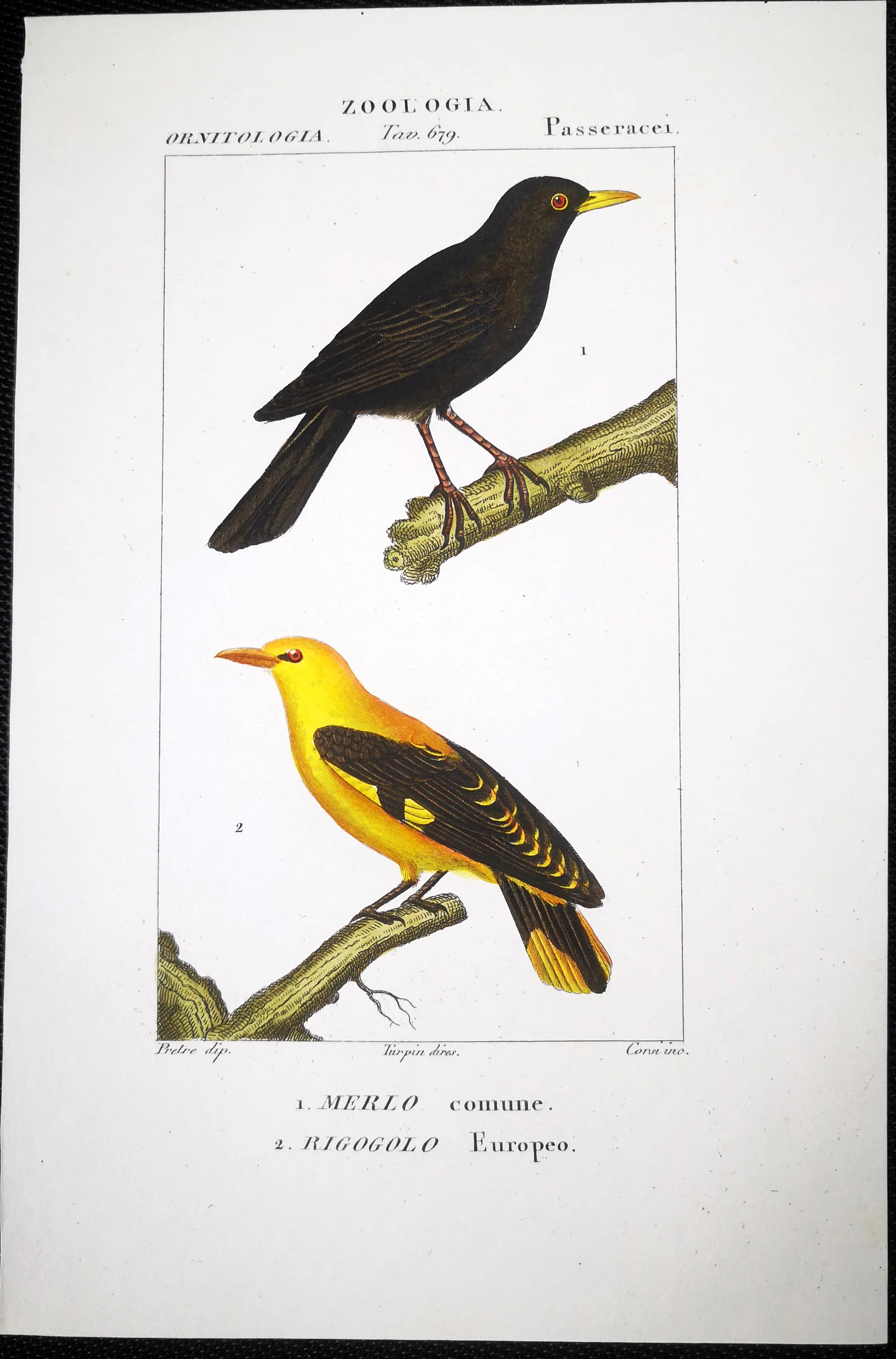



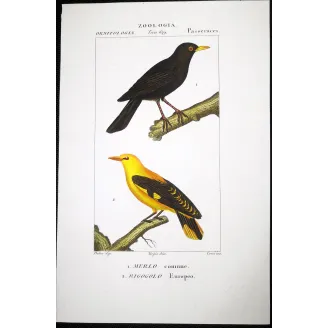

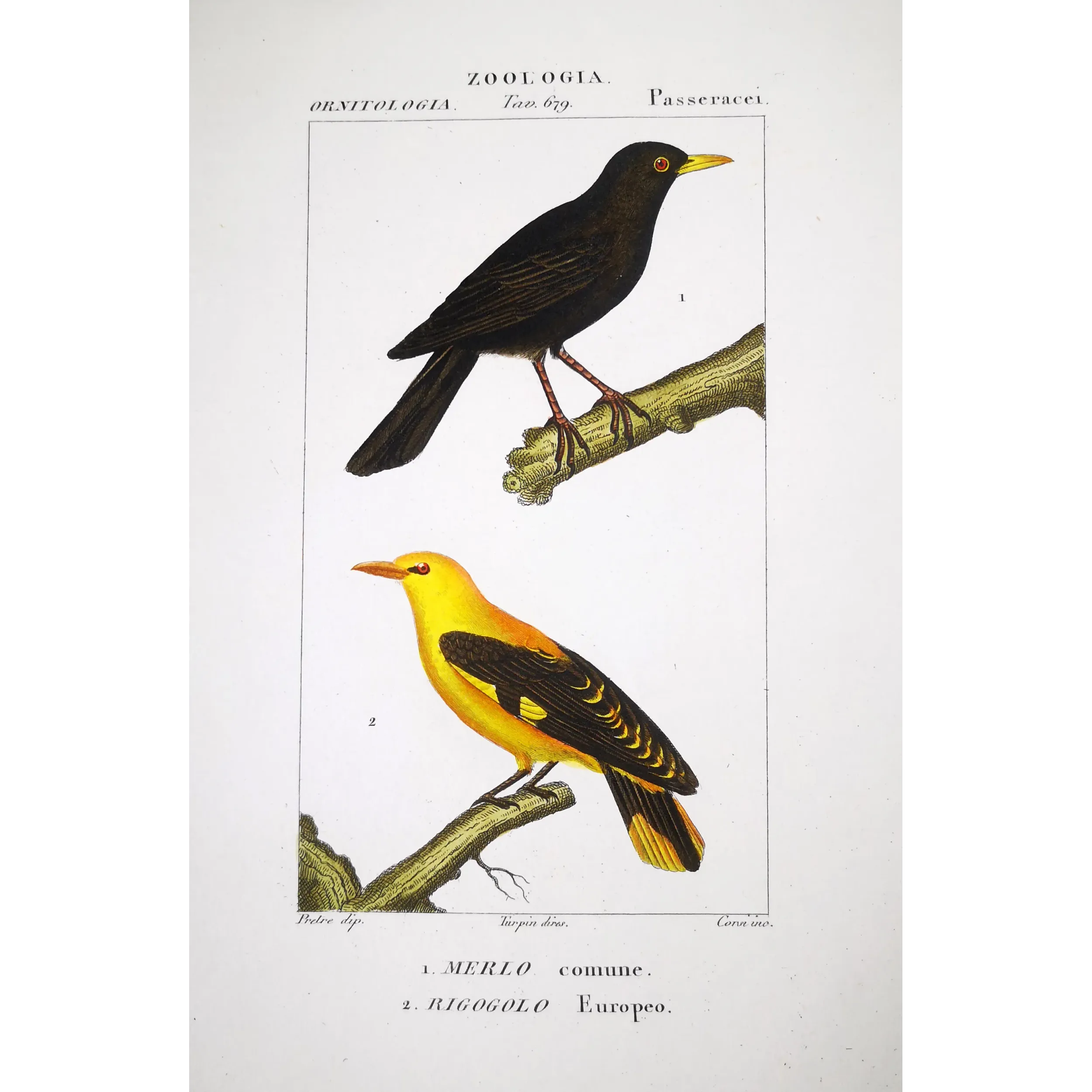
Charming duo of common European birds with elegant plumage contrast.
 Delivery policy
Your print will be carefully prepared and shipped worldwide via trusted couriers (UPS or similar).
 Authentic antique prints
Original engravings from the 17th–19th century.
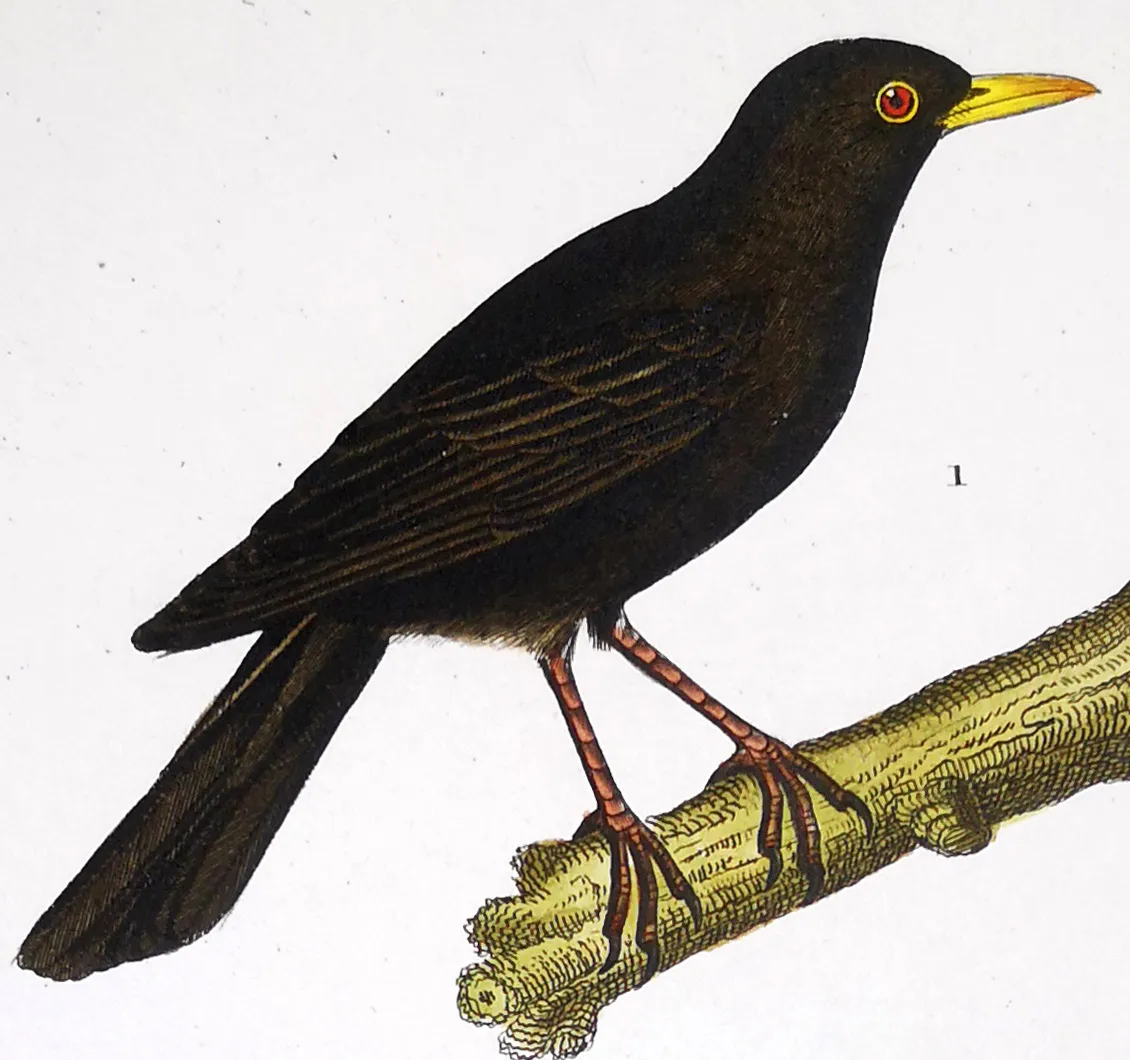
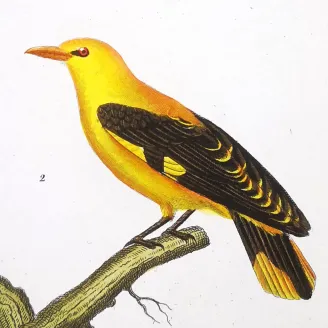
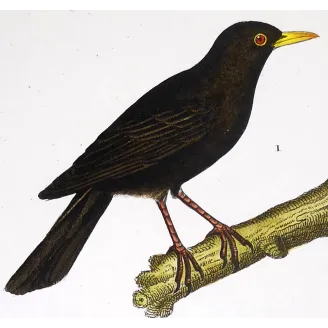
This refined ornithological engraving presents two familiar yet visually contrasting European species: the Merlo comune (the Common Blackbird, Turdus merula) and the Rigogolo Europeo (the Golden Oriole, Oriolus oriolus). The plate belongs to the ornithological section of the Dizionario di Scienze Naturali, where Pierre Antoine Prêtre transforms everyday avian subjects into elegantly composed natural history studies.
Set against a pale, uncluttered background, the two birds create a deliberate contrast between tonal depth and luminous color. The blackbird occupies the upper register in quiet composure, while the golden oriole below introduces radiant chromatic intensity.
— • —
The Common Blackbird is rendered in rich, velvety black, subtly modulated with brown undertones that give volume to the wings and tail. The bright yellow bill and red orbital ring create a refined focal contrast, animating an otherwise restrained silhouette.
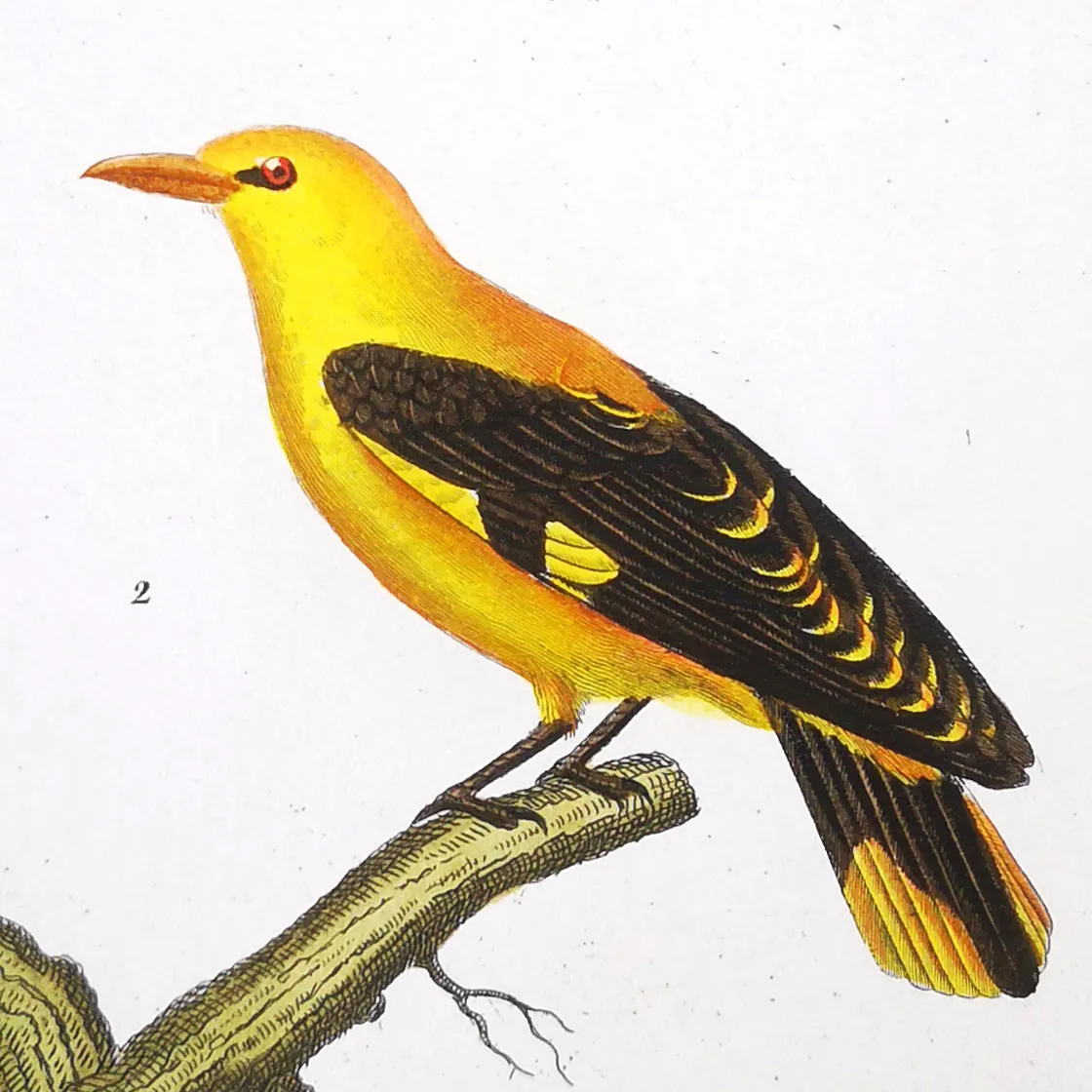
In contrast, the Golden Oriole radiates warmth. Its saturated yellow plumage, balanced by deep black wing markings, creates a bold graphic rhythm. The diagonal placement of the perch and the clean negative space reinforce the “cabinet specimen” aesthetic typical of early nineteenth-century zoological engraving—measured, elegant, and visually balanced.
The Common Blackbird (Turdus merula) is one of Europe’s most recognisable songbirds, long associated with woodland, gardens, and poetic symbolism. Its dark plumage and clear song made it a frequent subject of naturalists and illustrators alike.
The Golden Oriole (Oriolus oriolus) is celebrated for its brilliant yellow coloration and melodious call. In nineteenth-century natural history illustration, species with strong chromatic contrast—such as the oriole—were especially valued, as their coloration translated vividly into hand-applied pigments. Together, these two birds create a harmonious composition that balances familiarity with visual impact.
This engraving forms part of the historic Dizionario di Scienze Naturali, a monumental early nineteenth-century encyclopedic enterprise once preserved within a noble library and today housed in the Sacchetti Collection. Each plate reflects a period in which scientific ambition was matched by exceptional artisanal execution — from disciplined copperplate linework to luminous hand-applied color.
These works represent a moment when natural history illustration achieved both scientific rigor and aesthetic refinement. To discover the full story behind these rare prints and their noble provenance, we invite you to read our editorial feature “Not Just Another Print”.
The engraving is in very good antique condition. The impression is clean and well-defined, with preserved original hand-colouring. The paper is smooth early nineteenth-century wove paper (non-laid), consistent with Italian scientific editions of the period. No watermark has been observed. Minor age toning, if present, is consistent with antique paper and does not affect the legibility or decorative quality of the plate.
For further context on Pierre Antoine Prêtre and his contribution to nineteenth-century zoological illustration, see our editorial feature:
Pierre Antoine Prêtre – Illustrator of Natural Science and Marine Life
Specific References
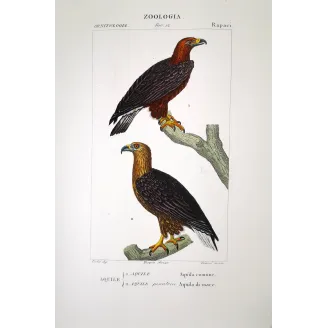
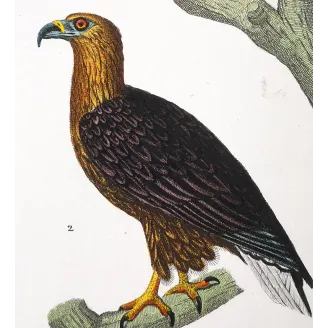
Impressive pairing of two majestic eagles, captured with remarkable precision and power.
Beautiful engraving combining sacred symbolism and elegant coastal shapes.
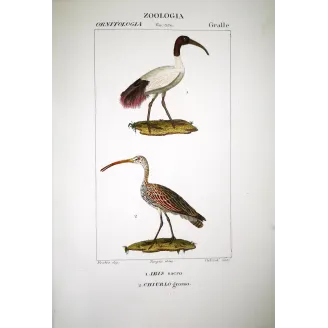
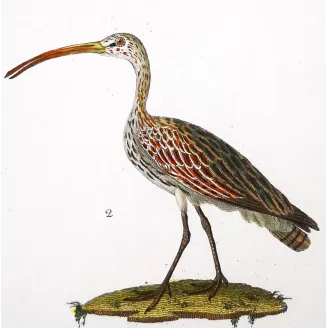
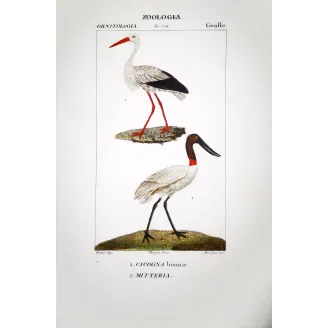
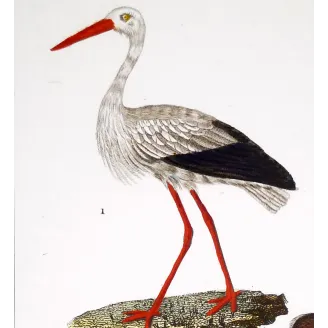
Graceful stork and robust jabiru presented with classic naturalistic balance.
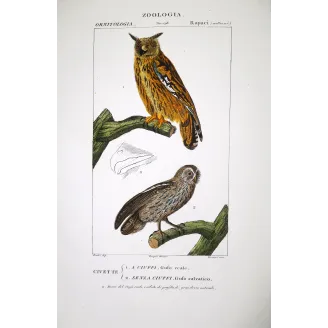
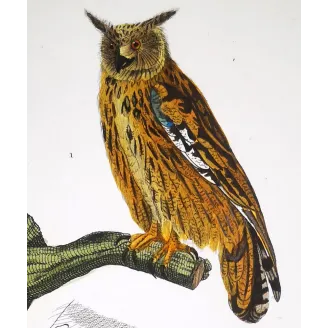
Nocturnal birds of prey elegantly rendered, showing sharpness and grace.
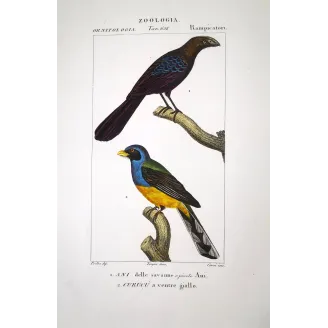
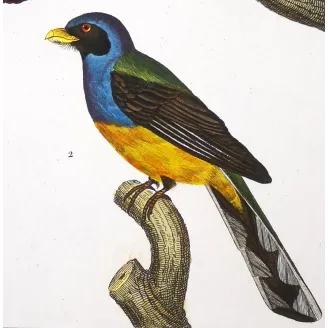
Colorful engraving of two exotic birds: the Ani and the vibrant Yellow-bellied Curuçu.
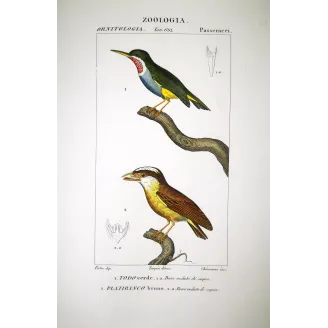
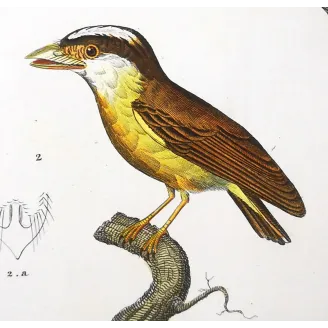
Delicate birds from the New World: the vibrant Green Todus and a brown Platyrinchus with unique beak features.
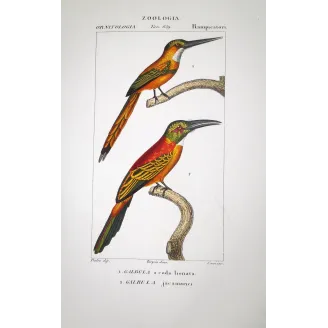
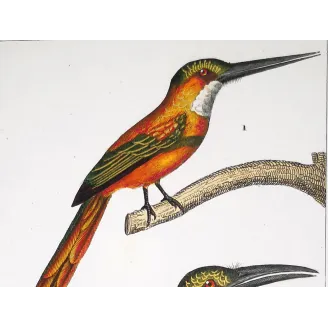
Two vibrant Jacamar birds with metallic plumage and long sharp beaks on stylized branches.
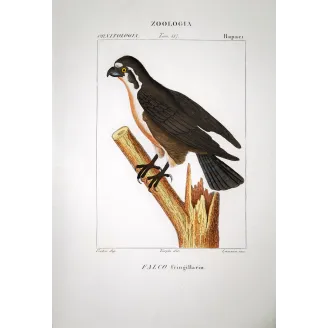
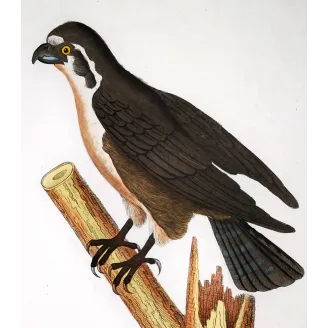
Majestic raptor captured in perfect hunting pose with detailed feathers.
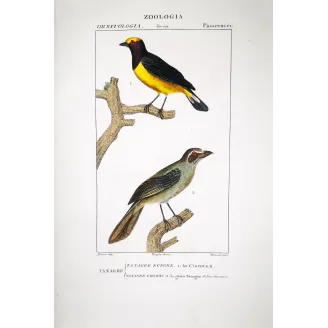
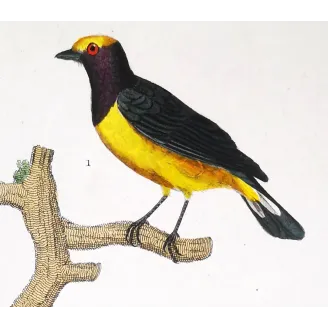
Graceful composition of a Yellow Tanager and a more subtly colored species from the Guyana region.
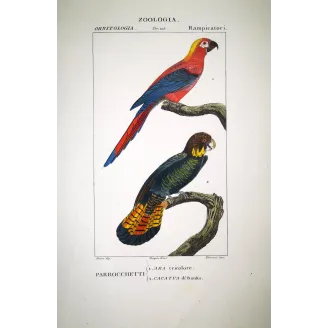
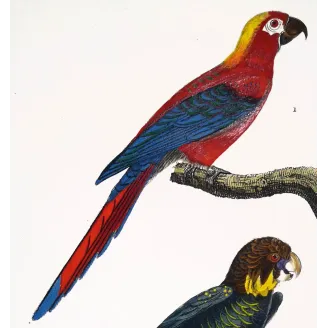
Vibrant parakeets perched on branches: a scarlet macaw and a black cockatoo with yellow and red highlights.
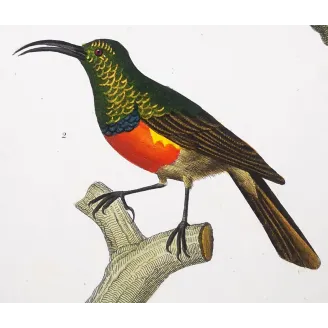
Brilliantly colored honeycreeper and sunbird illustration with tropical vibrancy, captured by Prêtre.
Vividly colored engraving of a European Green Woodpecker and a Eurasian Wryneck, masterfully rendered by Prêtre.
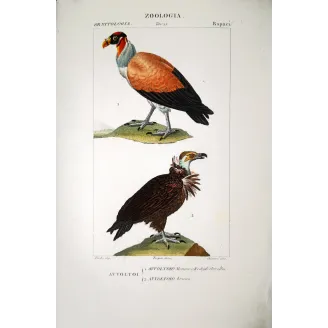
Original early 19th-century hand-colored engraving depicting King Vulture and Brown Vulture from the Dizionario di Scienze Naturali.
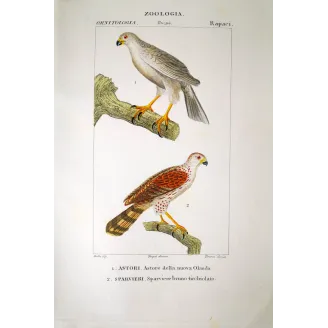
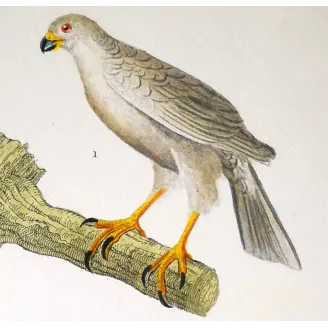
Two striking hawks from Australia, finely illustrated with warm natural tones.
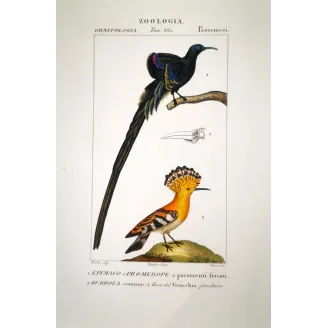
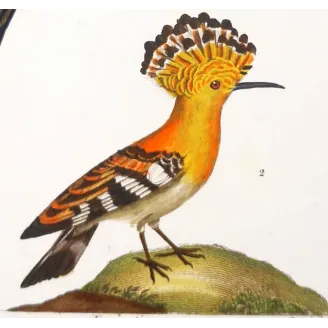
A long-tailed Promerops and a vivid Hoopoe bird, both perched and richly colored against a clean background.
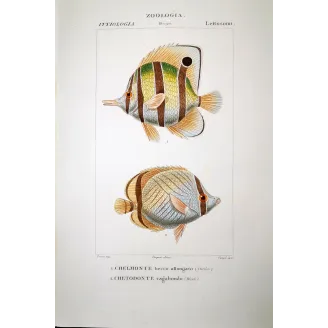
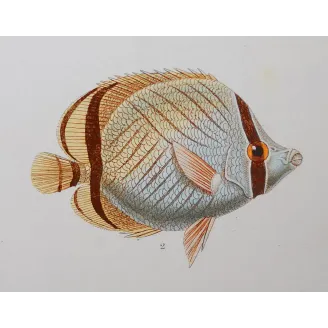
Iconic Antique Print with two vivid butterflyfishes, finely hand-coloredstriking geometry and coral-reef charm for collectors.
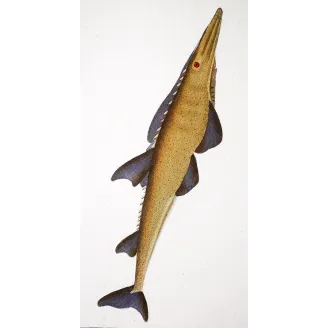
Charming 19th-century engraving of the Smooth Guitarfish by Pierre Antoine Prêtre, highlighting elegant form and serene coloration.
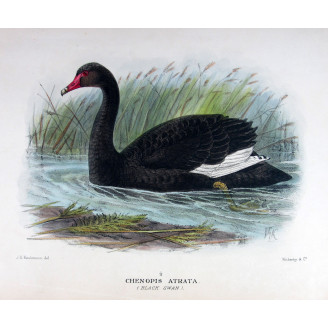
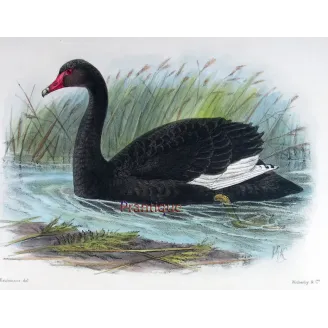
Original lithograph of the Black Swan by J.G. Keulemans (Chenopis atrata).
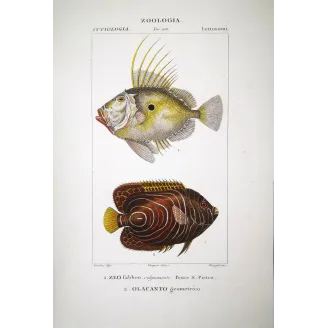
Iconic plate with the celebrated John Dory and a striking angelfishsuperb color contrasts and collector appeal.
Fine botanical engraving of oregano with delicate flowering stems and aromatic leaves.
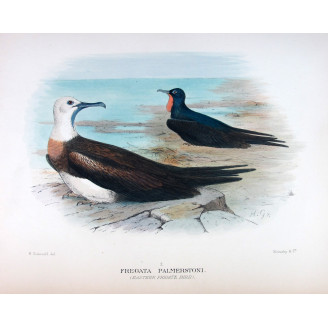
Eastern Frigate Bird from Mathews' Birds of Australia, drawn by Grönvold.
Charming duo of common European birds with elegant plumage contrast.