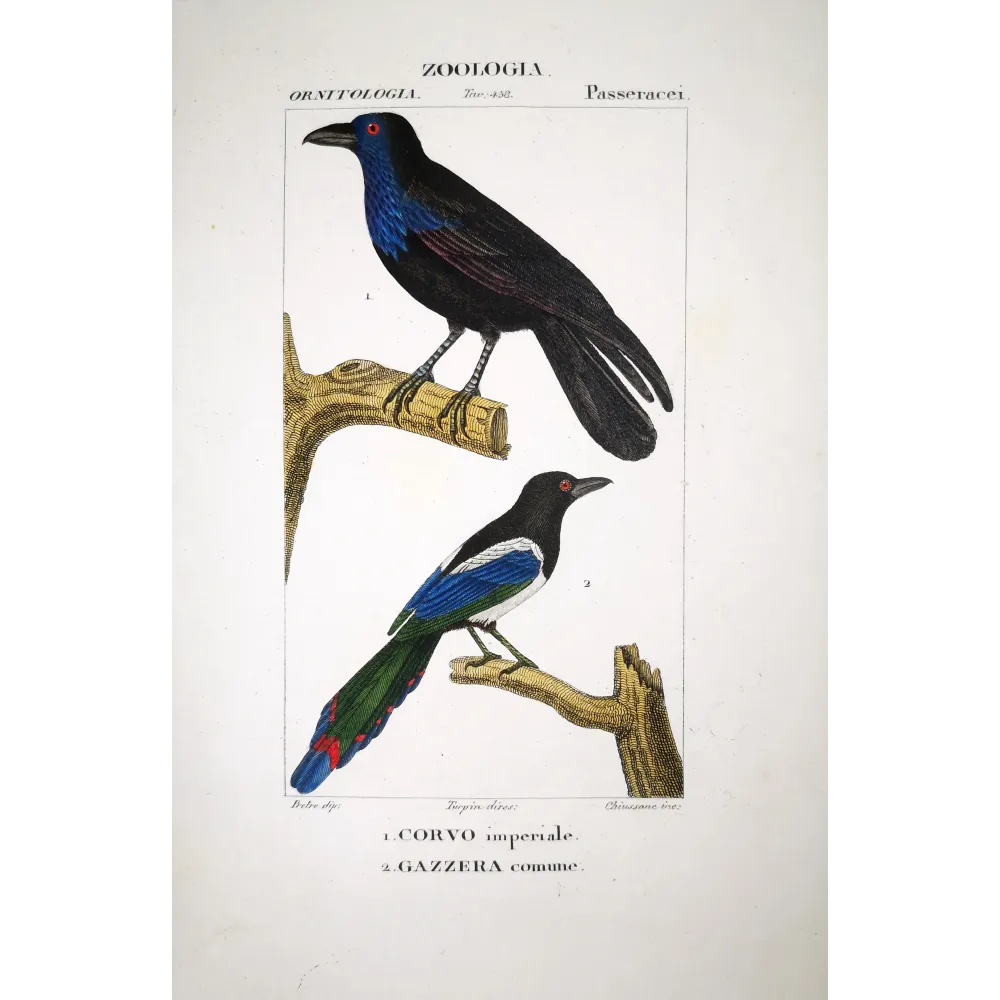
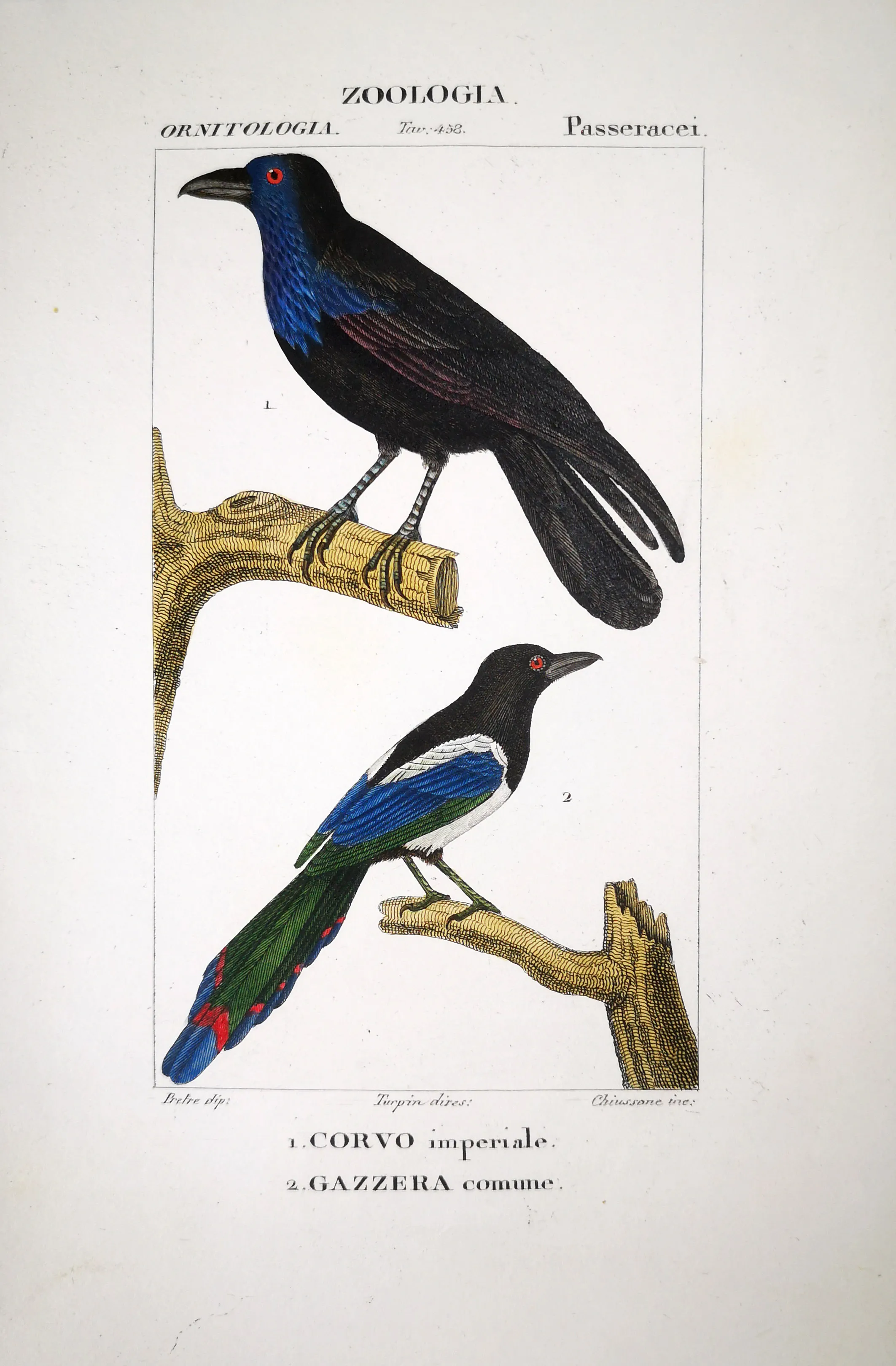
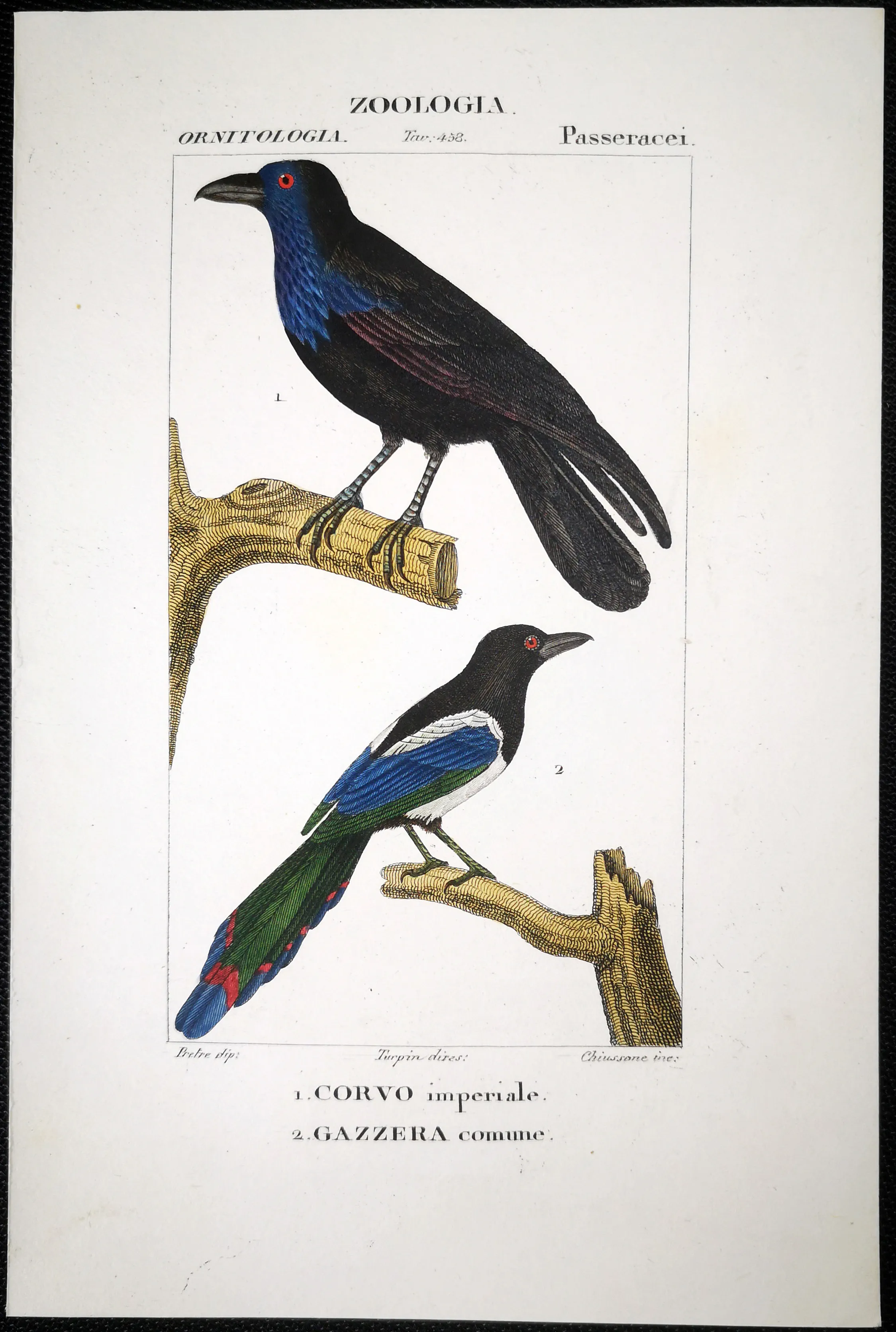



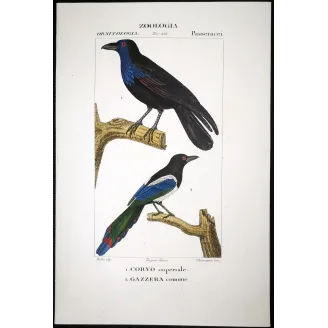
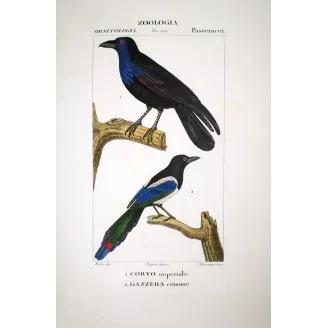
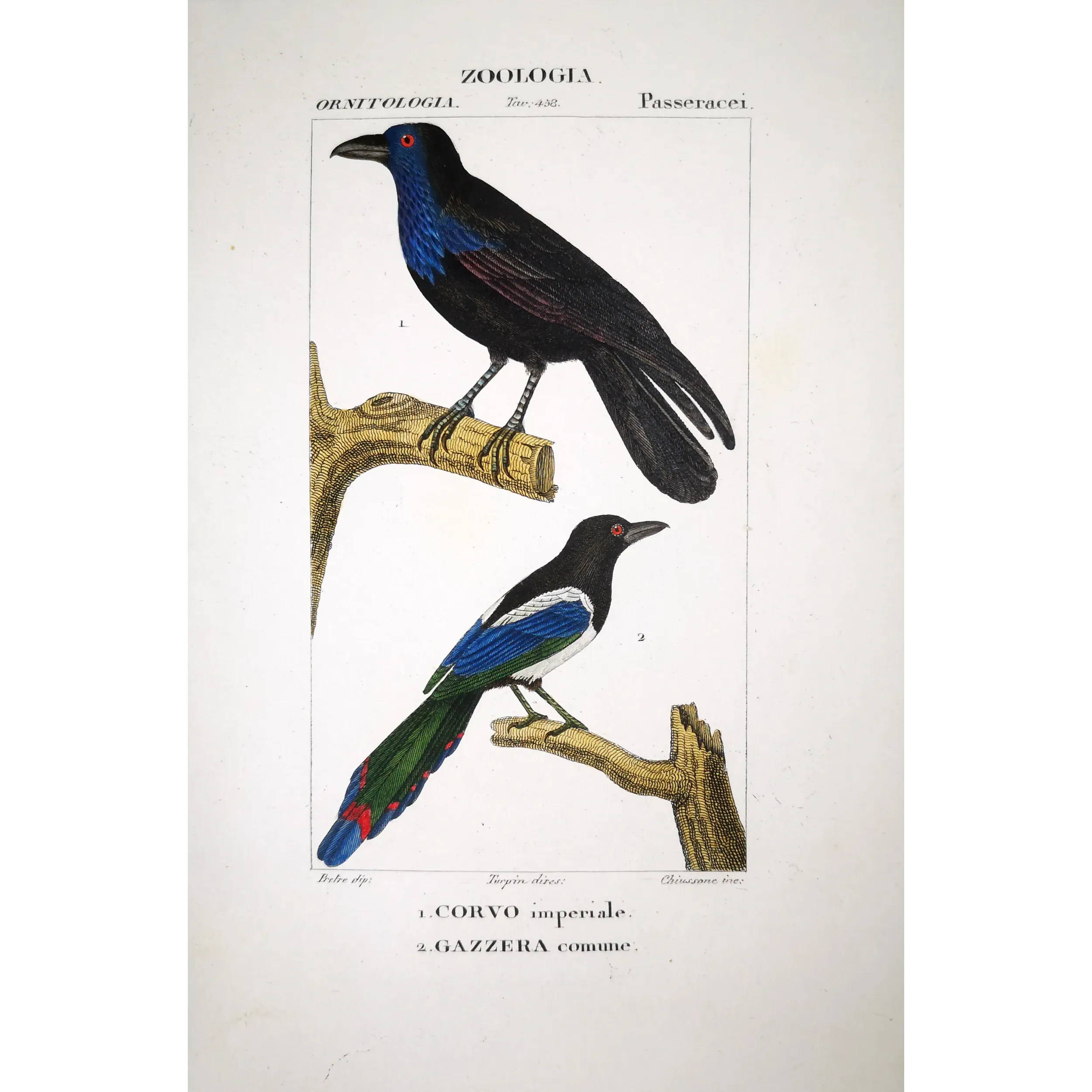
Striking contrast between the dark Imperial Crow and the vividly patterned Common Magpie.
 Delivery policy
Your print will be carefully prepared and shipped worldwide via trusted couriers (UPS or similar).
 Authentic antique prints
Original engravings from the 17th–19th century.
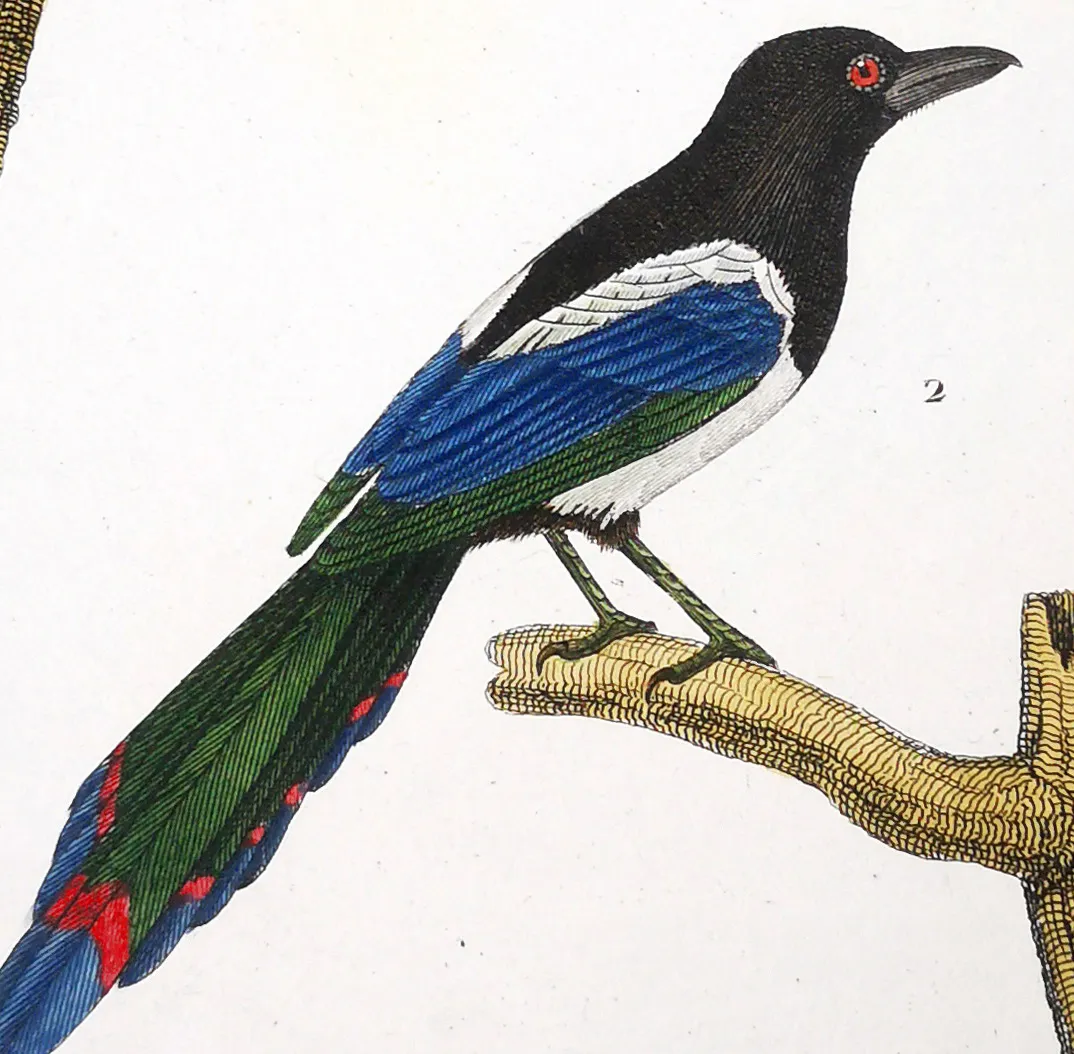
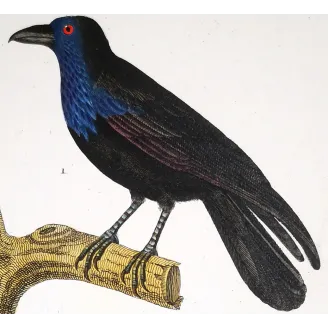
This striking ornithological engraving presents two emblematic European corvids: the Corvo imperiale (commonly identified with Corvus corax) and the Gazzera comune (the Eurasian magpie, Pica pica). The plate belongs to the ornithological section of the Dizionario di Scienze Naturali, where Pierre Antoine Prêtre combines zoological precision with a distinctly refined visual sensibility.
Set against a luminous ground, the two birds create a dialogue between mass and movement. The upper crow dominates through scale and tonal depth, while the magpie below introduces chromatic articulation—blue, green, and white—bringing balance and elegance to the composition.
— • —
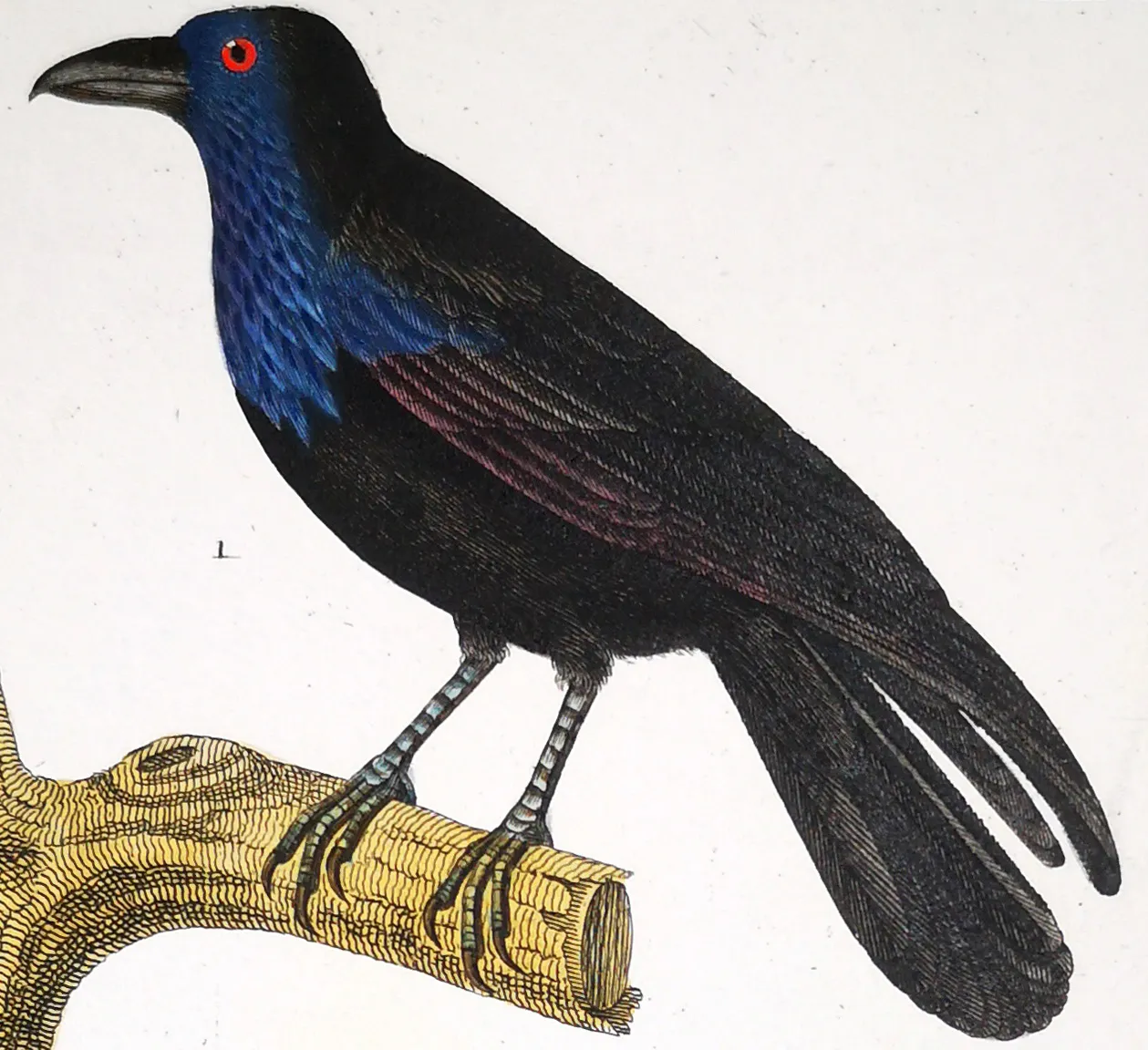
The Imperial Crow is rendered with remarkable subtlety. Though apparently black, the plumage reveals deep blue iridescence across the neck and soft violet modulation along the folded wing. The red-ringed eye adds a discreet focal point, giving the figure both intensity and composure.
Below, the magpie offers a lighter register. The contrast between white shoulder patches and saturated blue-green wing feathers creates a rhythmic pattern of light and dark. The long graduated tail extends diagonally, lending dynamism to the lower half of the plate. Together, the birds embody the sculptural clarity typical of early nineteenth-century natural history engraving—measured, curated, and visually authoritative.
The “Corvo imperiale” corresponds to Corvus corax, the raven, one of Europe’s most intelligent and symbolically charged birds. Throughout history it has appeared in mythology, literature, and heraldry, admired for its intelligence and imposing presence.
The “Gazzera comune,” identified as Pica pica, is known for its striking black-and-white plumage enriched by iridescent blue and green reflections. Magpies have long fascinated observers for their bold behavior and visual contrast, making them particularly appealing subjects for hand-colored engravings intended for cultured nineteenth-century audiences.
This engraving forms part of the historic Dizionario di Scienze Naturali, a monumental early nineteenth-century encyclopedic enterprise once preserved within a noble library and today housed in the Sacchetti Collection. Each plate reflects a period in which scientific ambition was matched by exceptional artisanal execution — from disciplined copperplate linework to luminous hand-applied color.
These works represent a moment when natural history illustration achieved both scientific rigor and aesthetic refinement. To discover the full story behind these rare prints and their noble provenance, we invite you to read our editorial feature “Not Just Another Print”.
The engraving is in very good antique condition. The impression is clean and well-defined, with preserved original hand-colouring. The paper is smooth early nineteenth-century wove paper (non-laid), consistent with Italian scientific editions of the period. No watermark has been observed. Minor age toning, if present, is consistent with antique paper and does not affect the legibility or decorative quality of the plate.
For further context on Pierre Antoine Prêtre and his contribution to nineteenth-century zoological illustration, see our editorial feature:
Pierre Antoine Prêtre – Illustrator of Natural Science and Marine Life
Specific References
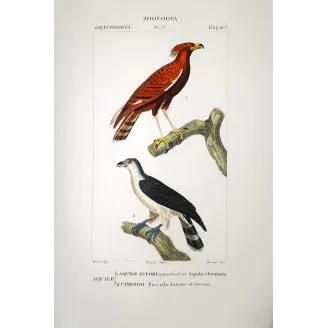
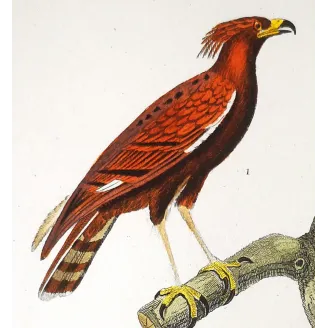
A lively contrast between a fiery red hawk-eagle and a smaller black-and-white goshawk.
Beautiful engraving combining sacred symbolism and elegant coastal shapes.
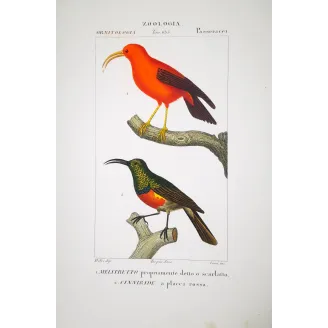
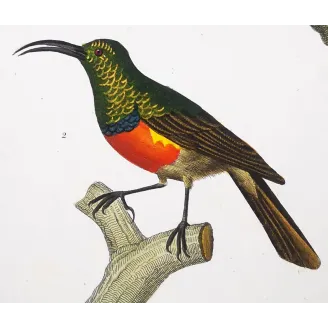
Brilliantly colored honeycreeper and sunbird illustration with tropical vibrancy, captured by Prêtre.
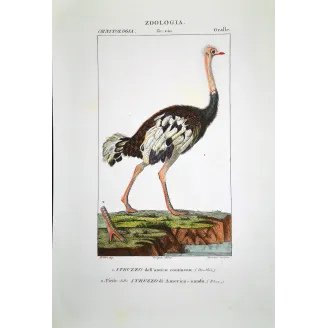
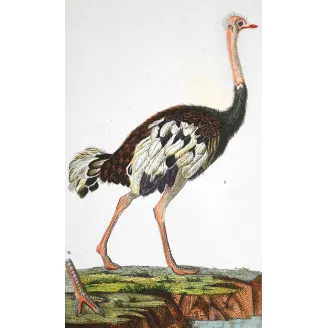
Imposing rendering of the Old World Ostrich and anatomical study of a Rhea foot.
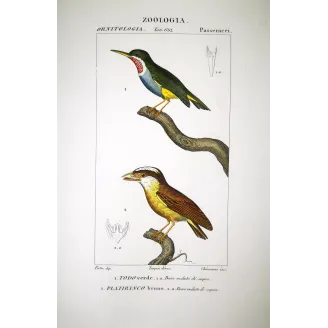
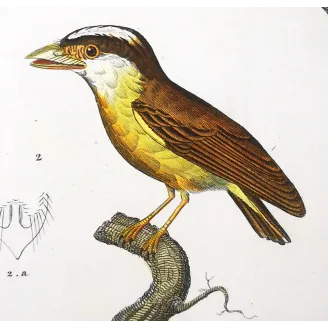
Delicate birds from the New World: the vibrant Green Todus and a brown Platyrinchus with unique beak features.
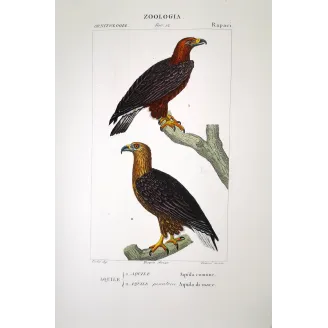
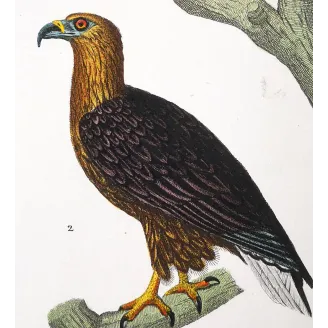
Impressive pairing of two majestic eagles, captured with remarkable precision and power.
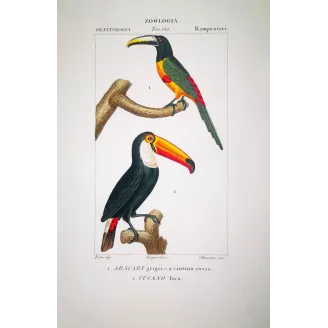
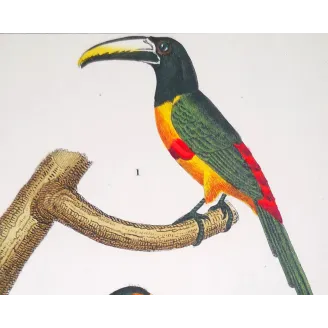
Colored illustration depicting two South American toucans: the Toco and the Red-belted Aracari.
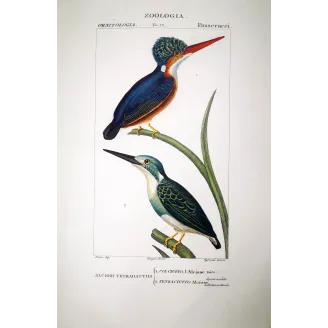
Refined old print with two specimens of South American halcyons: one crested and one with a green-blue livery.
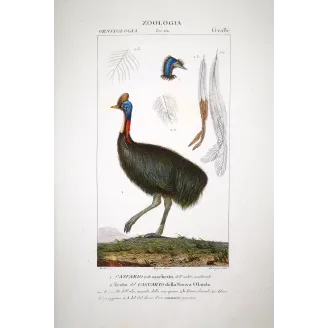
Impressive antique engraving of the Southern Cassowary, a striking flightless bird from New Guinea and northern Australia.
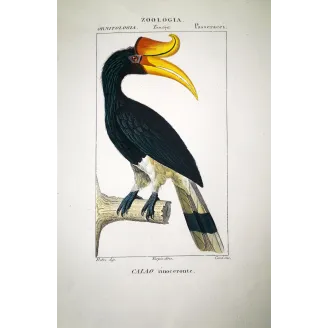
Beautiful 19th century illustration of the Buceros rhinoceros, commonly known as the Rhinoceros Hornbill.
Charming illustration of two aquatic birds with accurate anatomical and marine details.
Striking contrast between the dark Imperial Crow and the vividly patterned Common Magpie.