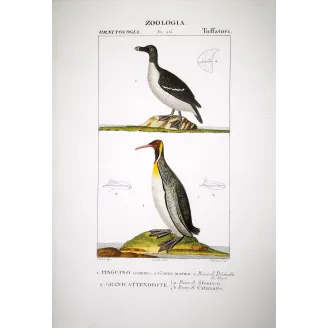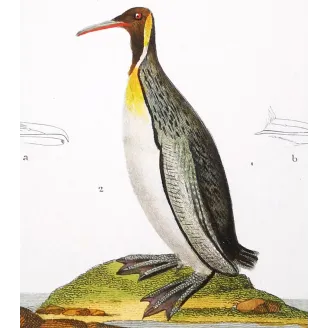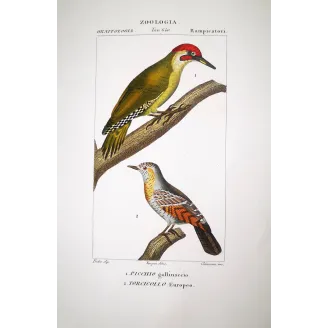
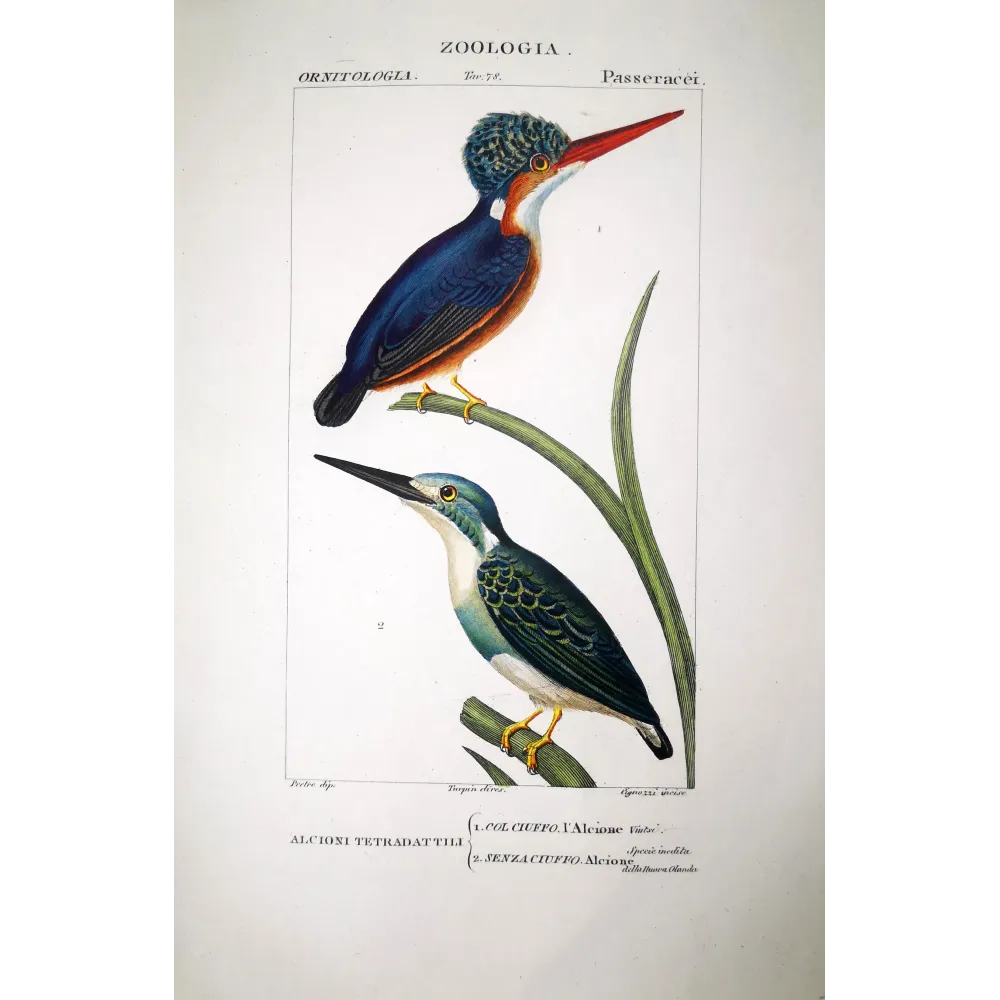
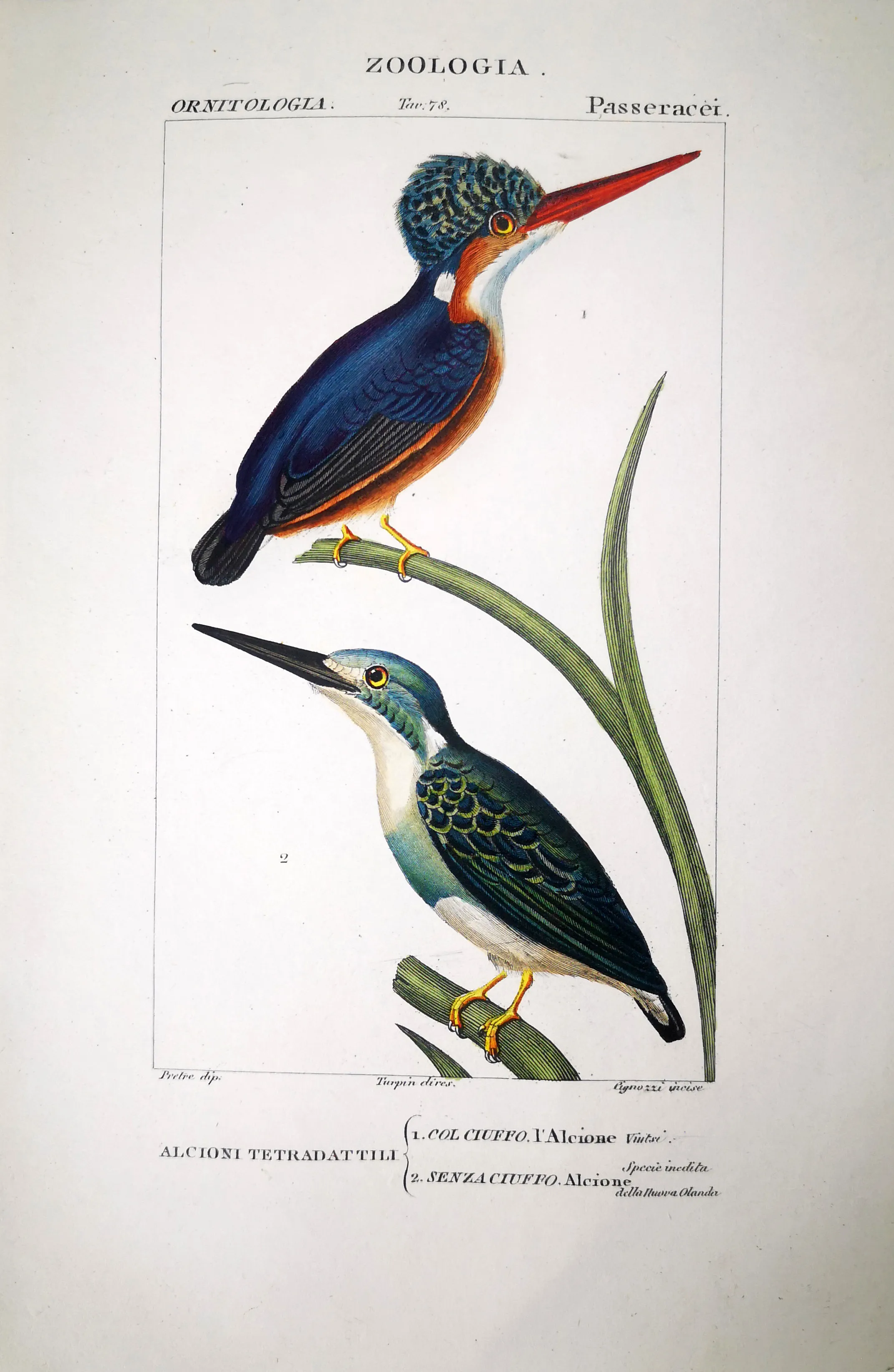
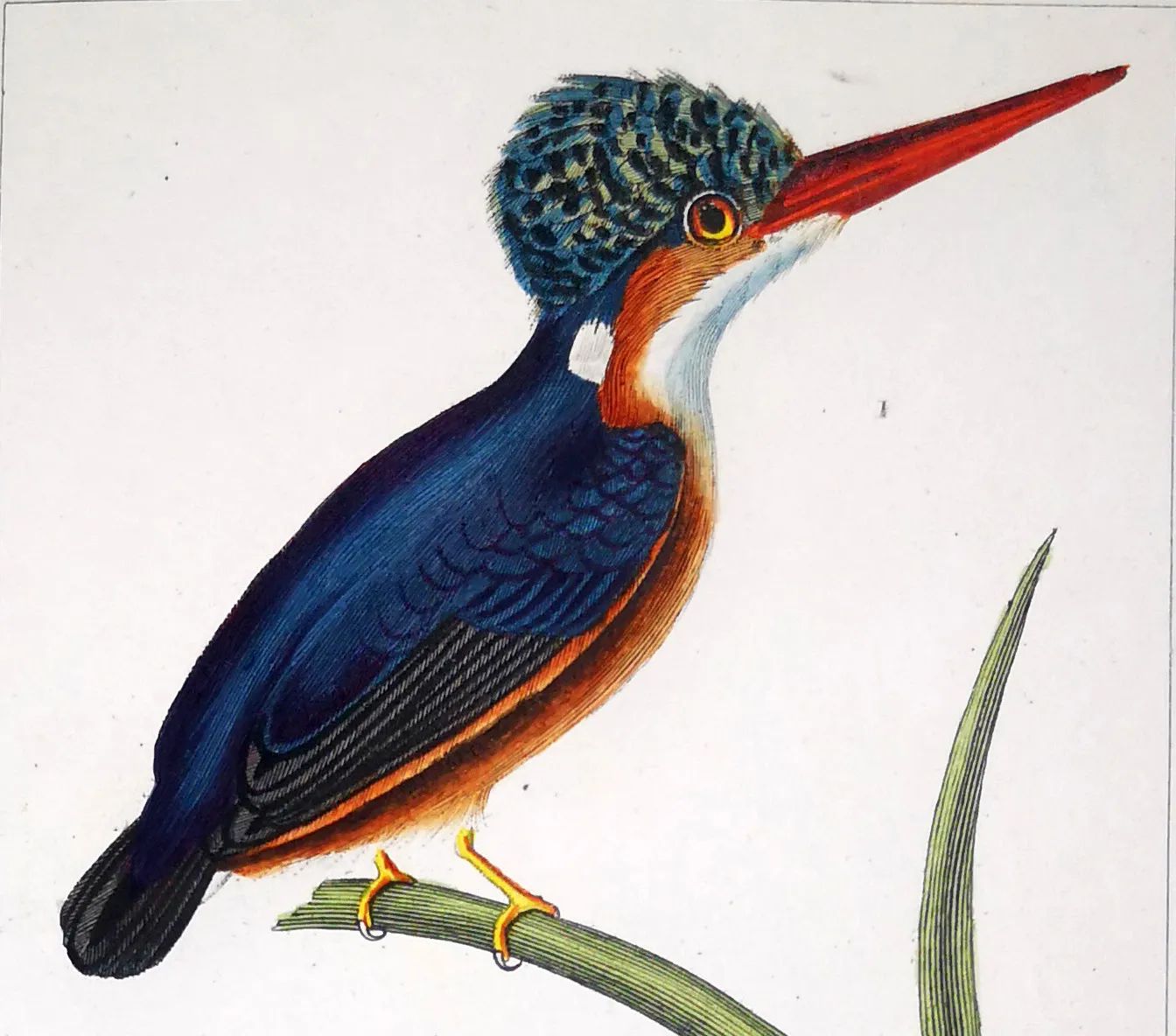
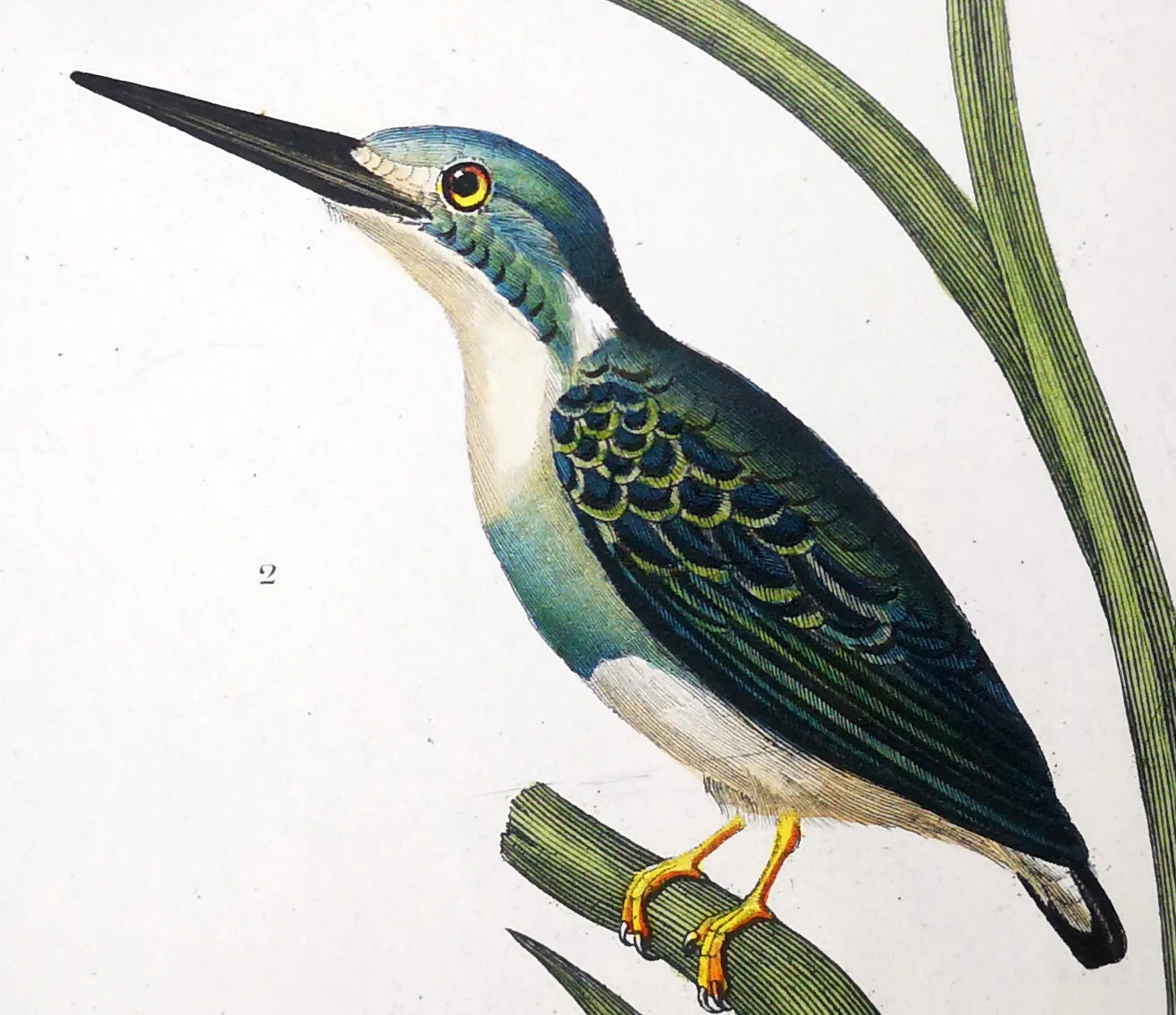
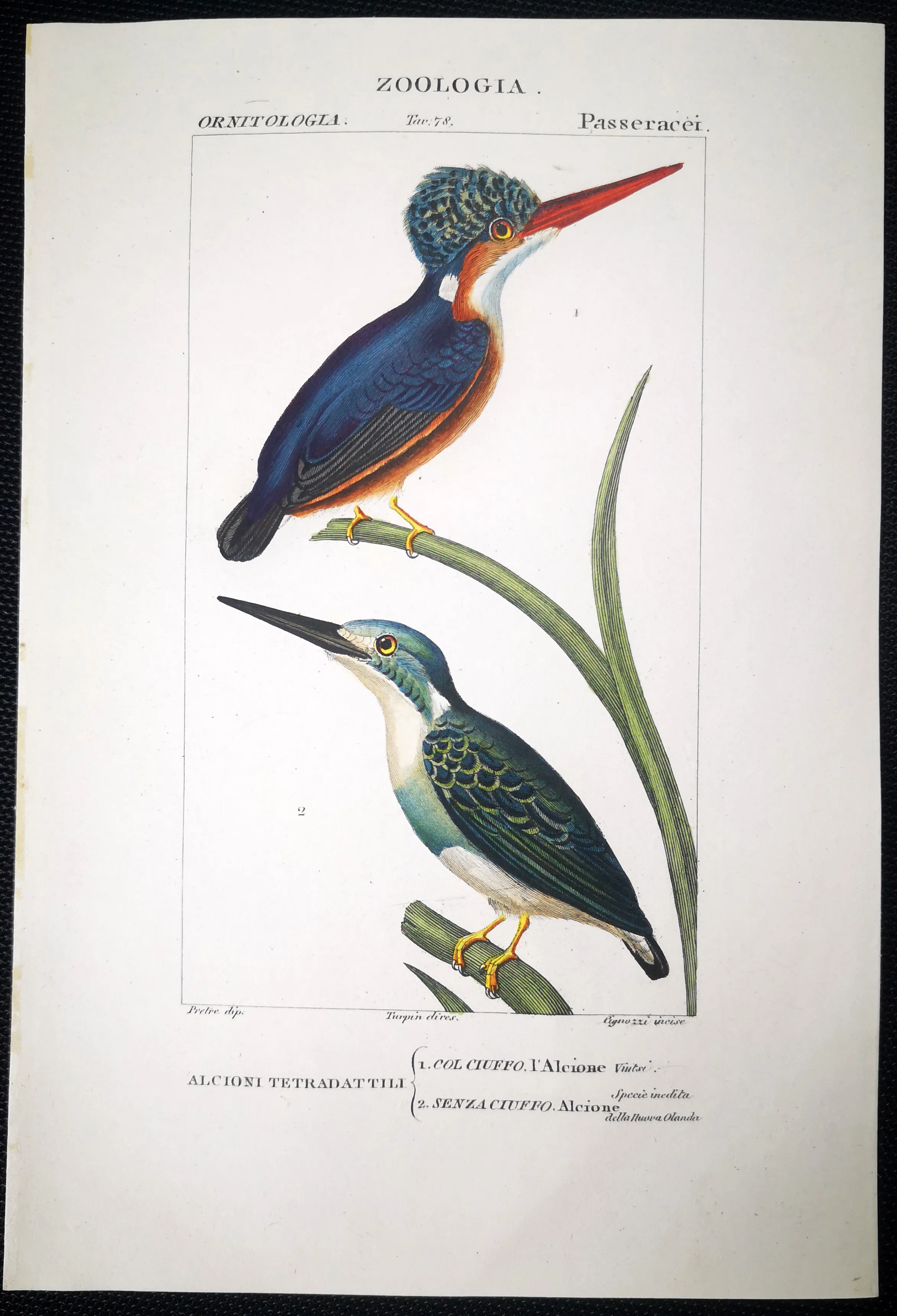



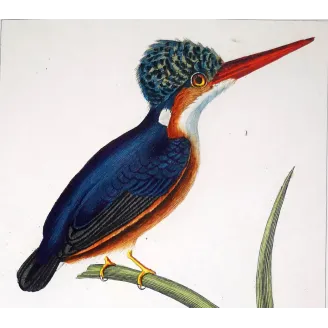
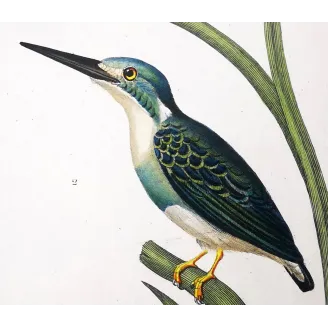
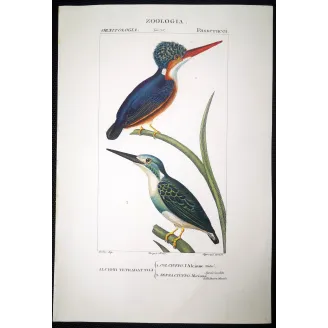
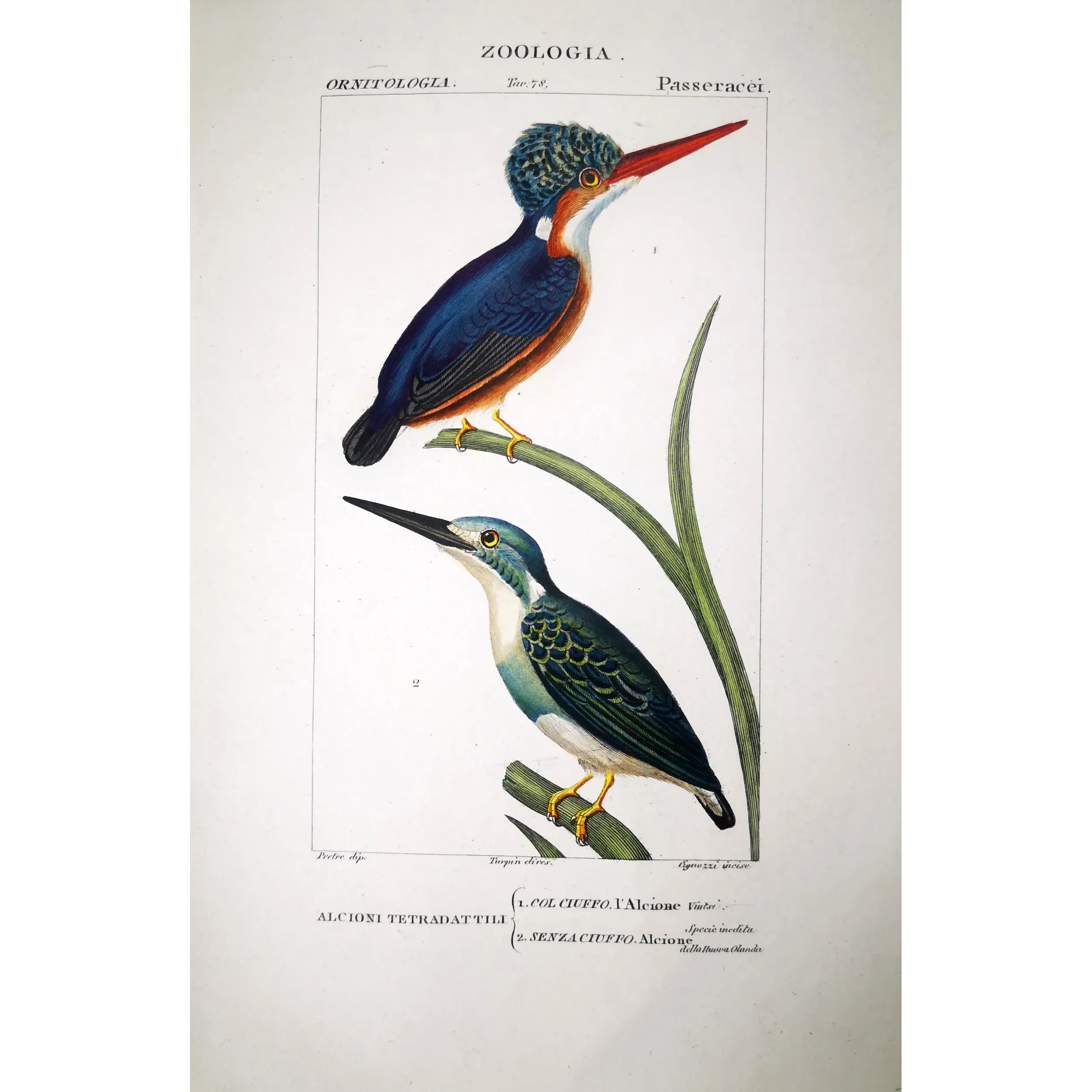
Refined old print with two specimens of South American halcyons: one crested and one with a green-blue livery.
 Delivery policy
Your print will be carefully prepared and shipped worldwide via trusted couriers (UPS or similar).
 Authentic antique prints
Original engravings from the 17th–19th century.
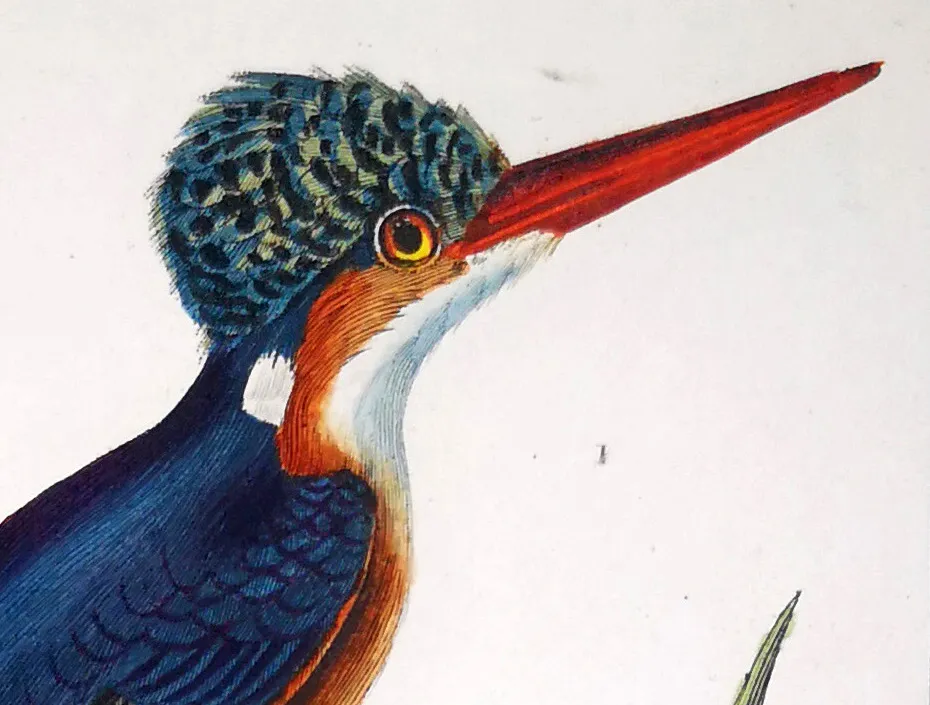
This luminous ornithological engraving presents two kingfishers, titled in the plate as Alcioni tetradattilli, shown in a refined comparative arrangement: a crested kingfisher (commonly associated with Megaceryle lugubris) and an Australian kingfisher (historically recorded in European sources as a New Holland “Alcione”, often linked to the group now treated as Todiramphus, e.g. the Sacred Kingfisher Todiramphus sanctus). The birds are isolated against a clean field, allowing bill structure, plumage logic, and posture to read with the clarity of a cabinet specimen—an ideal balance between scientific legibility and decorative impact.
Prêtre’s hand is especially evident in the way colour is disciplined rather than theatrical: dense ultramarine blues, peacock greens, and warm russet accents are applied with precision, creating a controlled “jewel” effect. The perch and reed-like elements act as a quiet architectural frame, reinforcing the sense of poised observation rather than narrative scene.
The plate belongs to the Italian edition of the Dizionario di Scienze Naturali (Florence, Battelli press), one of the most ambitious encyclopedic scientific enterprises of its time, for which Pierre Antoine Prêtre produced some of the most accomplished zoological illustrations of the early nineteenth century.
— • —
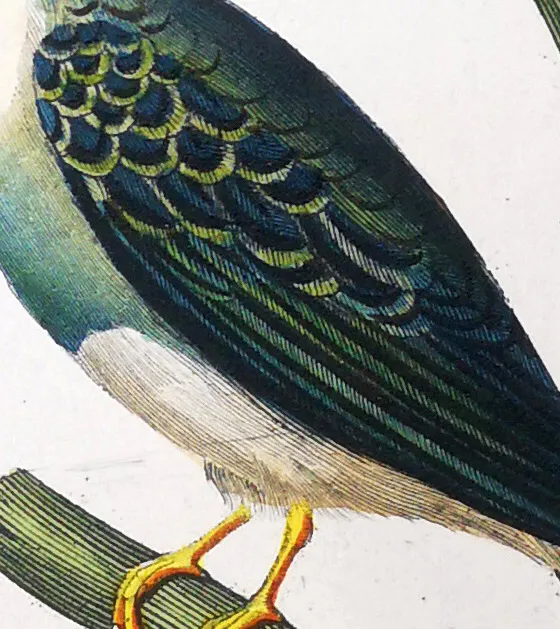
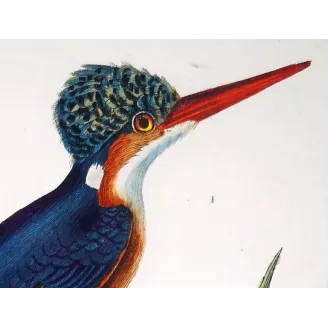
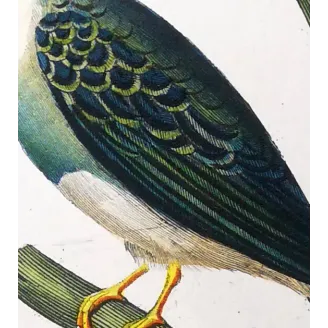
The composition is structured as a calm vertical dialogue. The upper bird, distinguished by its textured crest and long coral-red bill, reads as the more dramatic profile—almost a miniature “portrait” of intent and speed. The lower bird counters with quieter elegance: a cooler bill, pale throat, and layered green-blue wing patterning that feels almost like scale-work or enamel.
Chromatically, the plate is unusually sophisticated for a small format. Blues shift from deep indigo to bright cobalt, while the warm rust of the breast and the clean whites of the throat create breathing space. The overall effect is refined rather than loud—perfect for interiors that favor curated, museum-like presence over decorative excess.
Kingfishers have long fascinated naturalists because their form is “engineered” for a precise lifestyle: streamlined bodies, strong heads, and dagger-like bills adapted to rapid strikes. The crested figure on this plate is commonly associated with the Crested Kingfisher (Megaceryle lugubris), a species known in Asian river systems and valued in early illustration for its unmistakable silhouette and powerful bill proportion.
The second bird is labeled as a New Holland (Nuova Olanda) “Alcione” in the plate text—reflecting the transitional taxonomy of the period—often linked today to Australian woodland kingfishers within Todiramphus (for example the Sacred Kingfisher, Todiramphus sanctus). Beyond their beauty, kingfishers were prized as “model subjects” for comparative science: bill shape, crest or smooth crown, and plumage patterning offered clear visual markers for classification—exactly the kind of intelligible variation that nineteenth-century encyclopedias sought to preserve.
This plate forms part of the historic Dizionario di Scienze Naturali, a monumental early nineteenth-century encyclopedic enterprise once preserved within a noble library and today housed in the Sacchetti Collection. Each engraving reflects a period in which scientific ambition was matched by exceptional artisanal execution — from the disciplined copperplate line to the luminous hand-colouring applied individually to every impression.
The result is not merely zoological documentation, but a refined synthesis of scholarship and craftsmanship. To discover the full story behind these rare prints and their noble provenance, we invite you to read our editorial feature “Not Just Another Print”.
The engraving is in very good antique condition. The impression is clean and well-preserved, with crisp definition and carefully retained period hand-colouring. The paper is smooth early nineteenth-century wove paper (non-laid), consistent with Italian scientific editions of the period. No watermark has been observed. Minor age toning may be present, consistent with antique paper and not affecting the legibility or decorative impact of the illustration.
For further context on Pierre Antoine Prêtre and his contribution to nineteenth-century zoological illustration, see our editorial feature:
Pierre Antoine Prêtre – Illustrator of Natural Science and Marine Life
Specific References
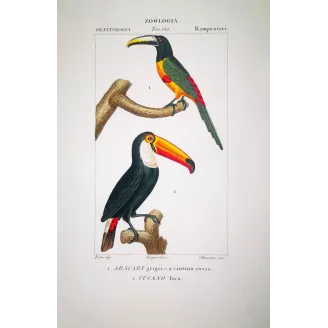
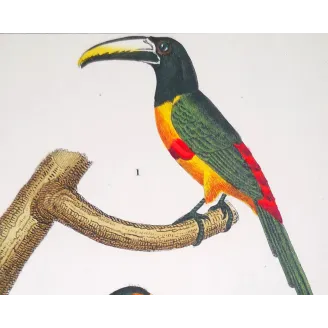
Colored illustration depicting two South American toucans: the Toco and the Red-belted Aracari.
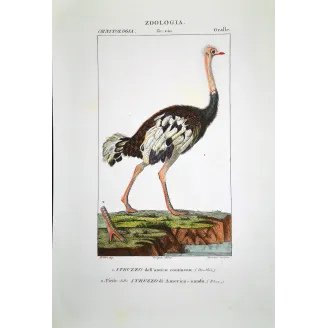
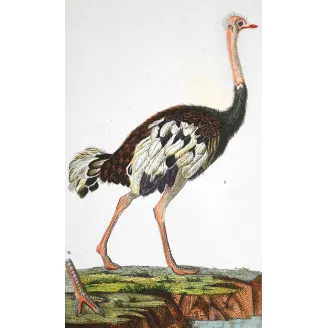
Imposing rendering of the Old World Ostrich and anatomical study of a Rhea foot.
Charming illustration of two aquatic birds with accurate anatomical and marine details.
Exquisite depiction of the ornate Greater Bird-of-Paradise alongside the striking Common Hill Myna.
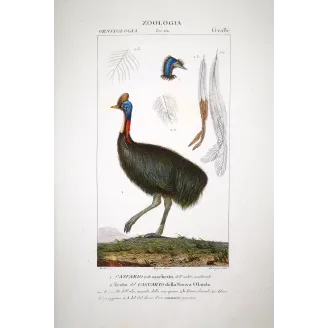
Impressive antique engraving of the Southern Cassowary, a striking flightless bird from New Guinea and northern Australia.
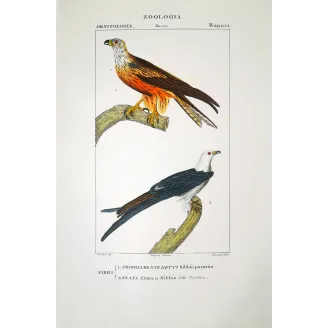
Parasitic Kite & Elanus (Milvus sp. & Elanus sp.) – Original Hand-Colored Engraving by Prêtre, Antique Print.
Nocturnal birds of prey elegantly rendered, showing sharpness and grace.
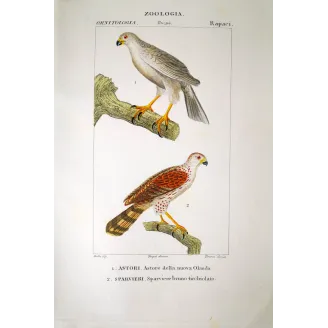
Two striking hawks from Australia, finely illustrated with warm natural tones.
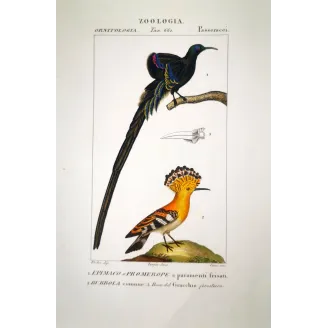
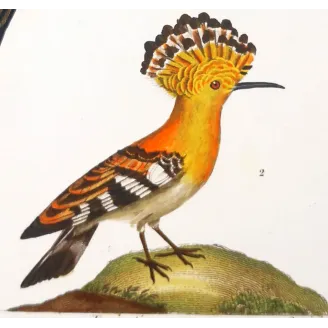
A long-tailed Promerops and a vivid Hoopoe bird, both perched and richly colored against a clean background.
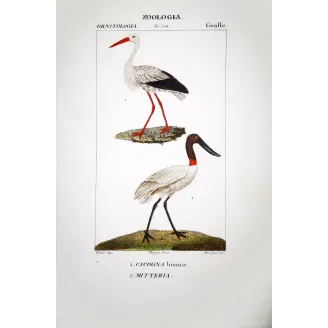
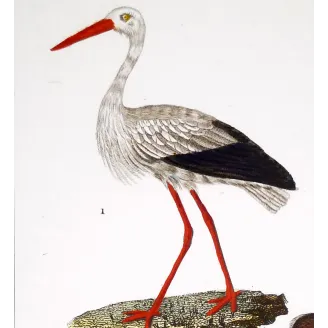
Graceful stork and robust jabiru presented with classic naturalistic balance.
Brilliantly colored honeycreeper and sunbird illustration with tropical vibrancy, captured by Prêtre.
Refined old print with two specimens of South American halcyons: one crested and one with a green-blue livery.