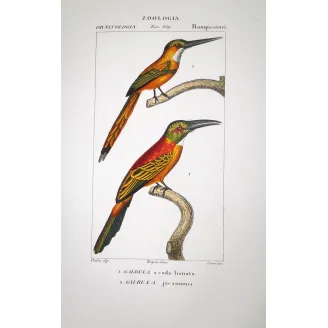
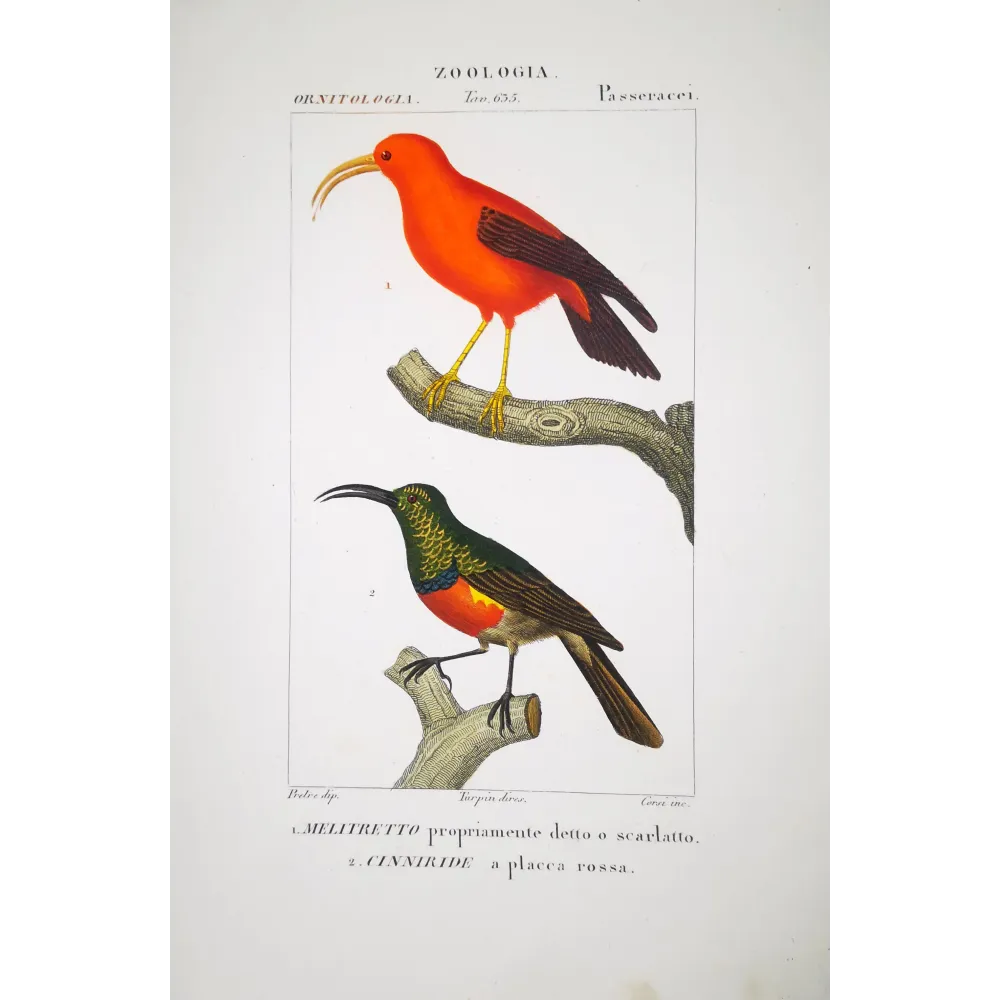
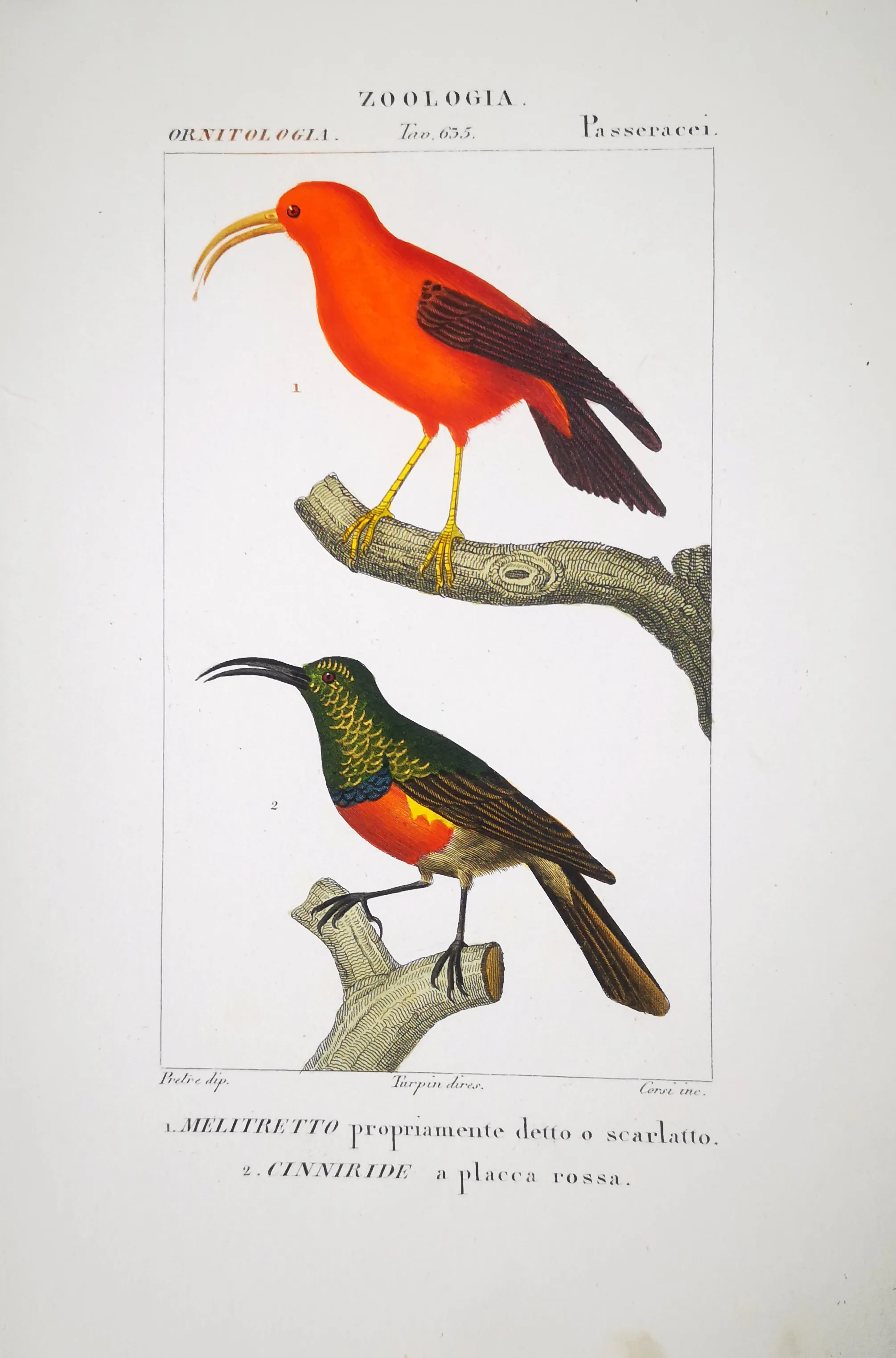
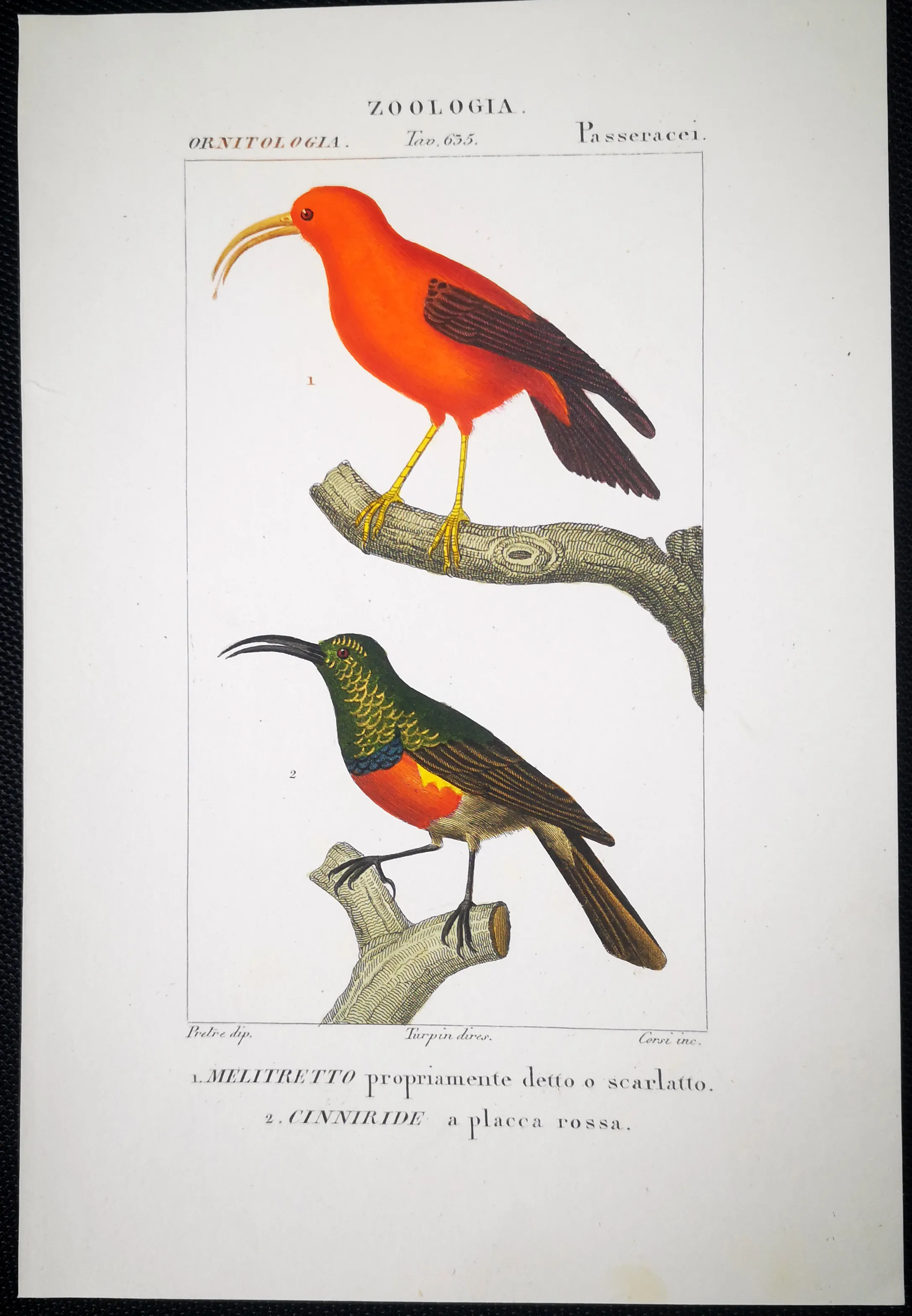



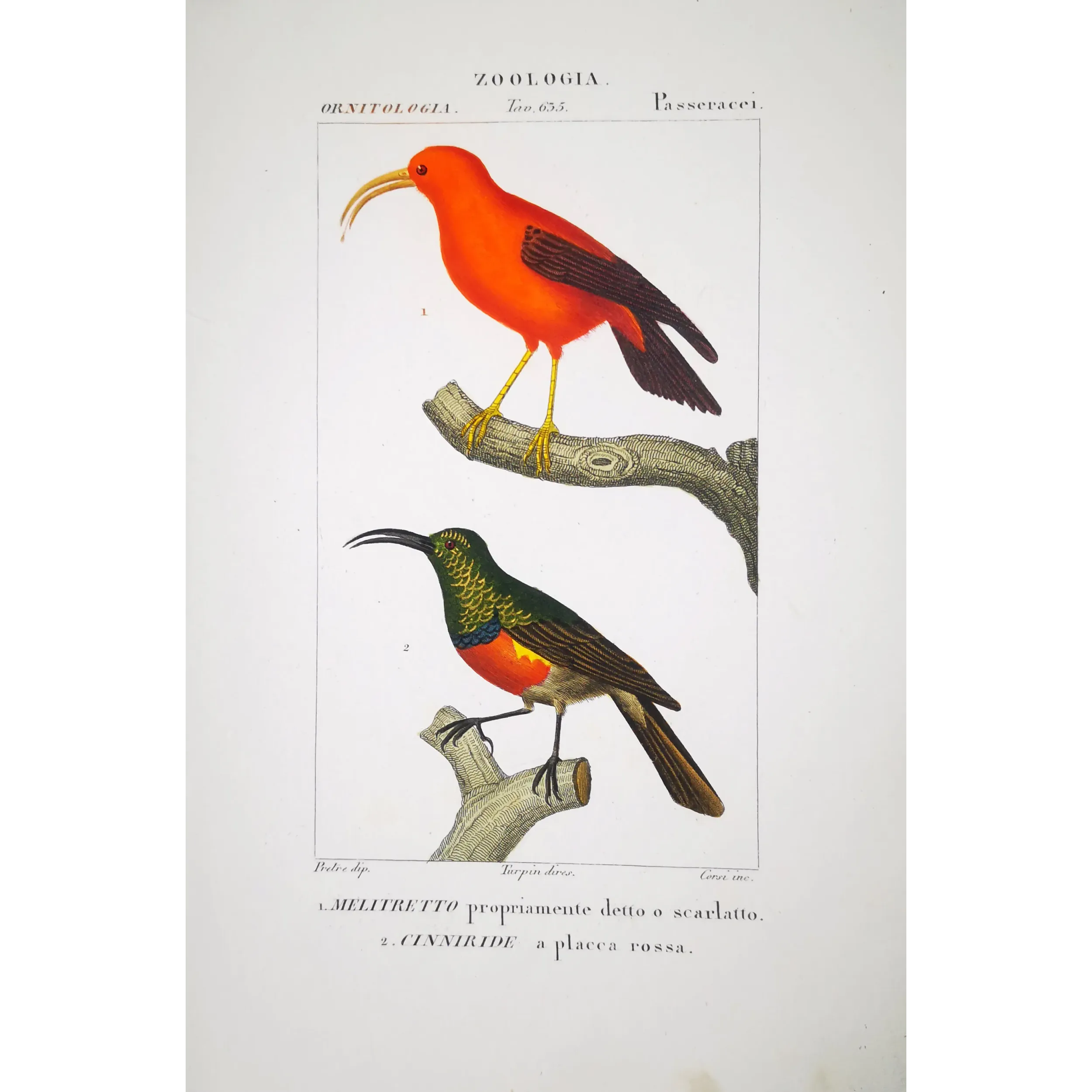
Brilliantly colored honeycreeper and sunbird illustration with tropical vibrancy, captured by Prêtre.
 Delivery policy
Your print will be carefully prepared and shipped worldwide via trusted couriers (UPS or similar).
 Authentic antique prints
Original engravings from the 17th–19th century.
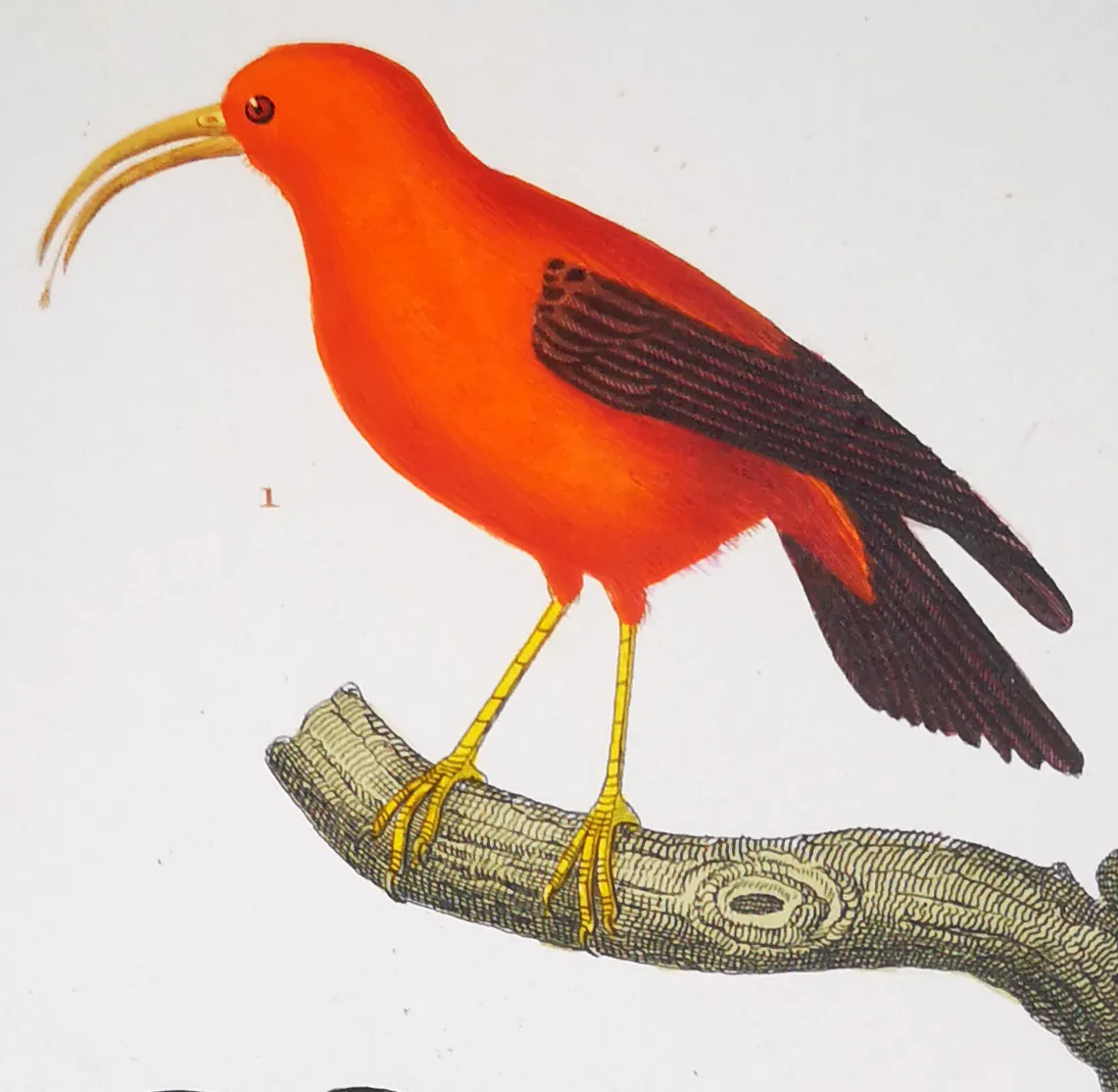
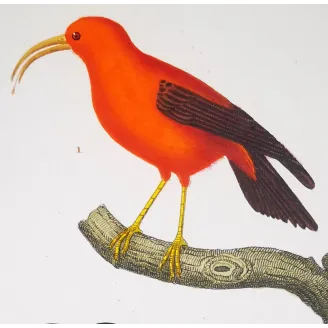
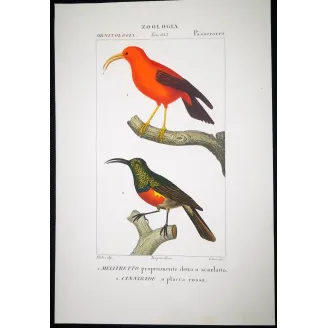
This striking ornithological engraving presents two vividly contrasted “Passeracei” subjects, titled on the plate as “Melliretto propriamente detto o scarlatto” (1) and “Cinnyride a placca rossa” (2). Both birds are shown as clean cabinet-style specimens—isolated against a pale ground—so that bill curvature, stance, and plumage structure can be read with immediate clarity. The composition is simple yet exceptionally powerful: one figure rendered in near-monochrome scarlet, the other built from iridescent greens and warm reds that feel almost jewel-like.
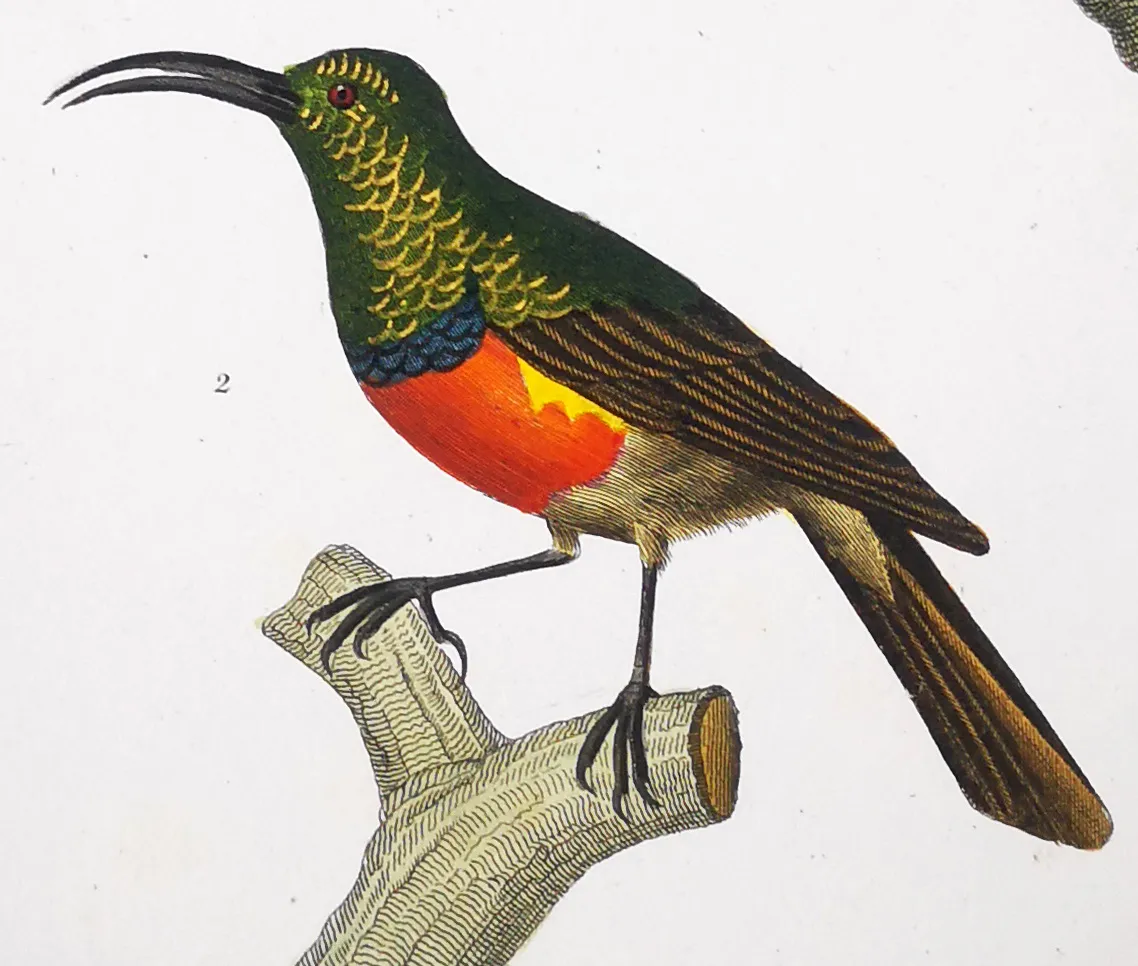
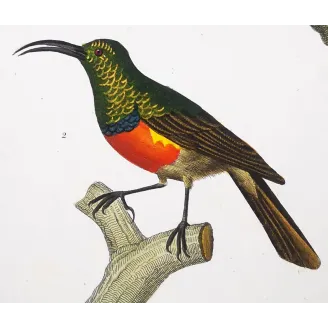
What makes this sheet especially desirable is the presence of true gold enhancement on subject 2, visible as a luminous gilded effect across the feathered areas (most notably in the head/upper plumage). The gold is not a casual highlight: it adds a refined, metallic vibration that transforms the bird’s iridescence into a genuine material luxury under light.
The plate belongs to the Italian edition of the Dizionario di Scienze Naturali (Florence, Battelli press), one of the most ambitious encyclopedic scientific enterprises of its time, for which Pierre Antoine Prêtre produced some of the most accomplished zoological illustrations of the early nineteenth century.
— • —
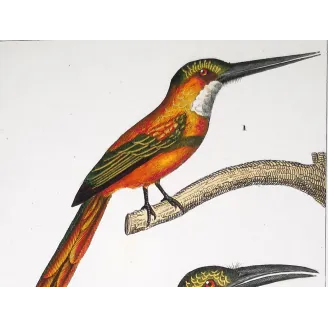
The plate is designed around chromatic authority. The upper bird is a pure scarlet statement—an uninterrupted field of red, tempered only by the darker wings and the long, curved bill. Its simplicity becomes its elegance: a single dominant hue, staged with generous white space, reads with modern graphic power.
The lower figure is more intricate and arguably more luxurious: layered greens, warm reds, and dark wing structure combine into a richly textured surface. Here, the true gold enhancement intensifies the sense of iridescence, producing a gilded shimmer that shifts with viewing angle. Together, the two birds create a refined “red-and-gold” dialogue—exceptionally suited to curated interiors where a small-format print is meant to carry high visual presence.
The terminology used on the plate reflects nineteenth-century classification, when many nectar-feeding passerines were grouped and renamed as scientific knowledge expanded through global collecting. “Cinnyride” points toward the sunbird tradition—birds known for their slender, curved bills adapted to feeding on nectar, and for plumage that can appear metallic or iridescent depending on light. In modern taxonomy, comparable forms are often associated with the sunbird family (Nectariniidae), frequently placed in or near the genus Cinnyris.
Plates like this were prized because they offered “readable” diagnostic traits: bill curvature, body proportions, and the logic of color placement. For collectors today, these subjects deliver the best of nineteenth-century natural history—scientific clarity, exquisite hand-colouring, and a rare material finish—without requiring a large format to achieve strong decorative impact.
This plate forms part of the historic Dizionario di Scienze Naturali, a monumental early nineteenth-century encyclopedic enterprise once preserved within a noble library and today housed in the Sacchetti Collection. Each engraving reflects a period in which scientific ambition was matched by exceptional artisanal execution — from the disciplined copperplate line to the luminous hand-colouring applied individually to every impression.
The result is not merely zoological documentation, but a refined synthesis of scholarship and craftsmanship. To discover the full story behind these rare prints and their noble provenance, we invite you to read our editorial feature “Not Just Another Print”.
The engraving is in excellent antique condition. The impression is clean and fresh, with well-preserved period hand-colouring. True gold enhancement is present on subject 2, visible as a distinct metallic brilliance on the plumage under light. The paper is smooth early nineteenth-century wove paper (non-laid), consistent with Italian scientific editions of the period. No watermark has been observed. Any minor age toning is consistent with antique paper and does not affect the plate’s visual impact.
For further context on Pierre Antoine Prêtre and his contribution to nineteenth-century zoological illustration, see our editorial feature:
Pierre Antoine Prêtre – Illustrator of Natural Science and Marine Life
Specific References
Finely drawn buzzards with a harmonious and naturalistic composition.
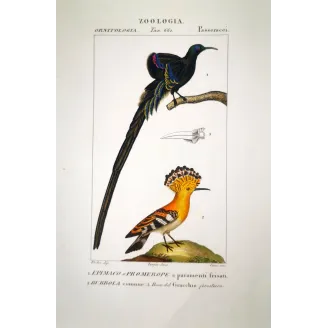
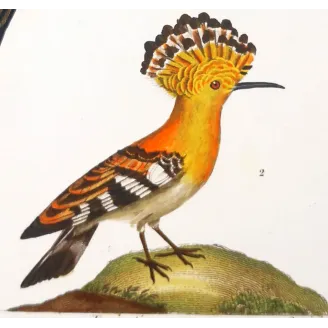
A long-tailed Promerops and a vivid Hoopoe bird, both perched and richly colored against a clean background.
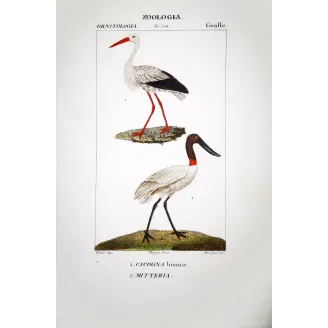
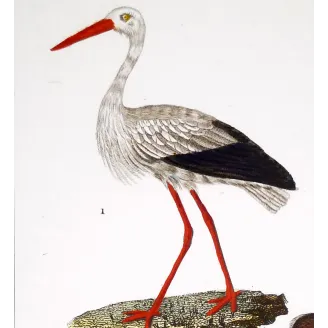
Graceful stork and robust jabiru presented with classic naturalistic balance.
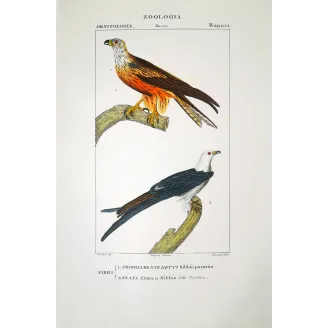
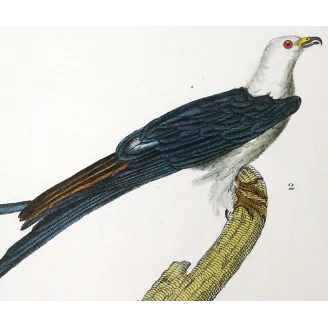
Parasitic Kite & Elanus (Milvus sp. & Elanus sp.) – Original Hand-Colored Engraving by Prêtre, Antique Print.
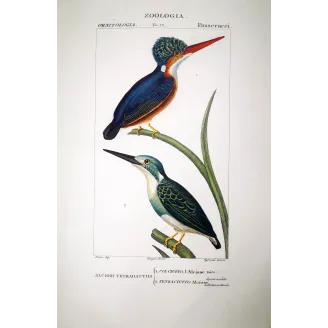
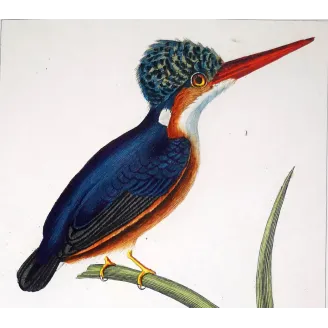
Refined old print with two specimens of South American halcyons: one crested and one with a green-blue livery.
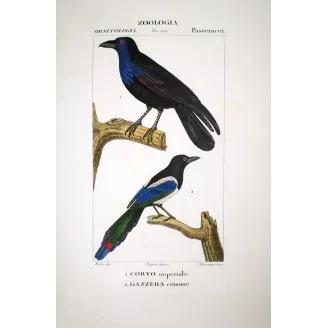
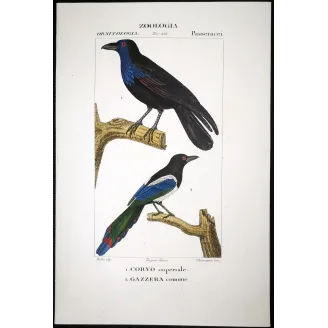
Striking contrast between the dark Imperial Crow and the vividly patterned Common Magpie.
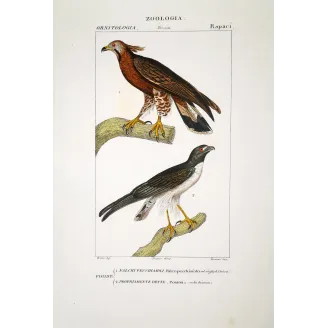
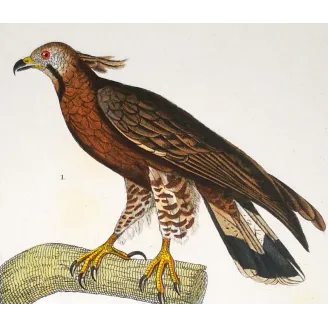
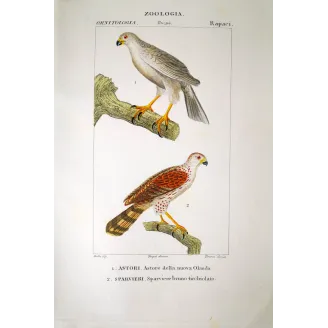
Two striking hawks from Australia, finely illustrated with warm natural tones.
Beautiful engraving combining sacred symbolism and elegant coastal shapes.
Two exotic birds from Australia, depicted with vivid hand-coloring.
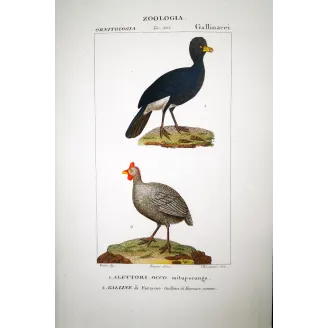
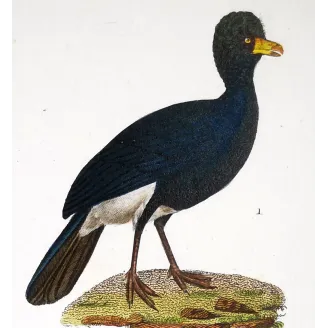
Elegant engraving of a guinea fowl and a Mituporanga, with rich textures and natural posture.
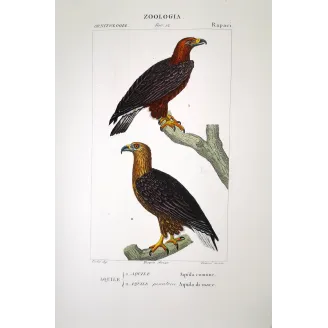
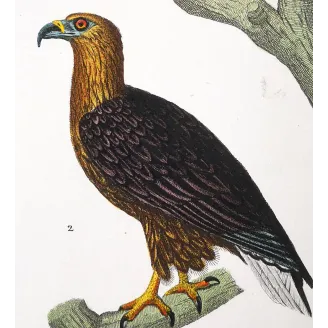
Impressive pairing of two majestic eagles, captured with remarkable precision and power.
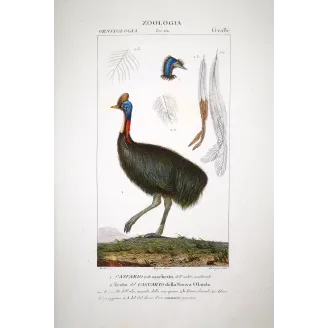
Impressive antique engraving of the Southern Cassowary, a striking flightless bird from New Guinea and northern Australia.
Charming illustration of two aquatic birds with accurate anatomical and marine details.
Two vibrant Jacamar birds with metallic plumage and long sharp beaks on stylized branches.
Brilliantly colored honeycreeper and sunbird illustration with tropical vibrancy, captured by Prêtre.