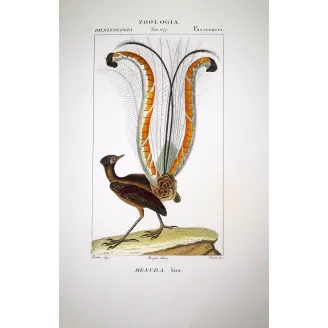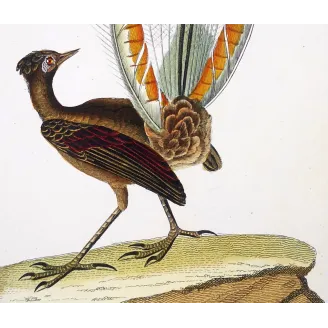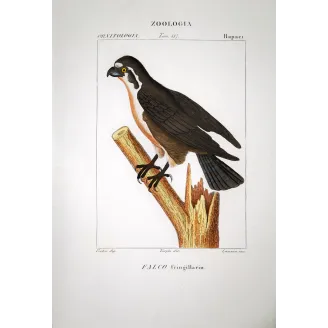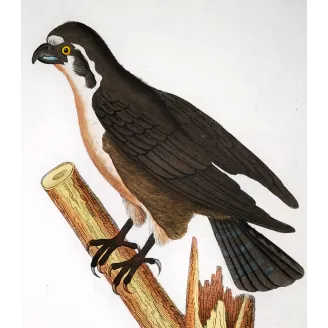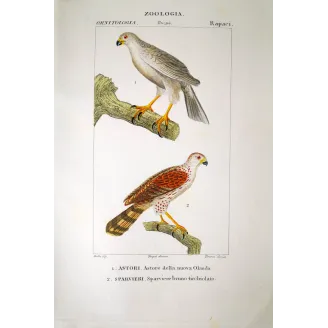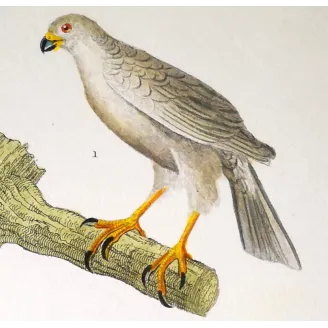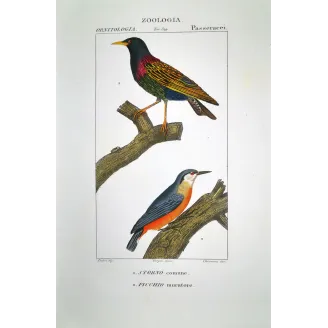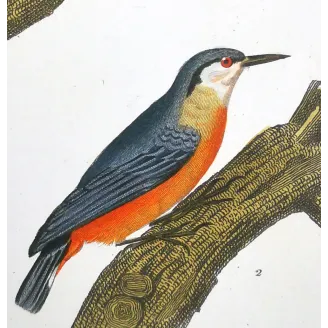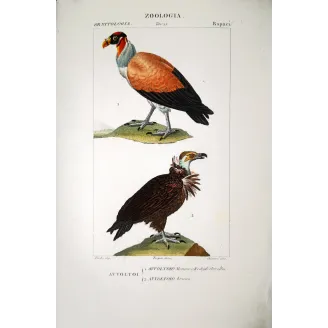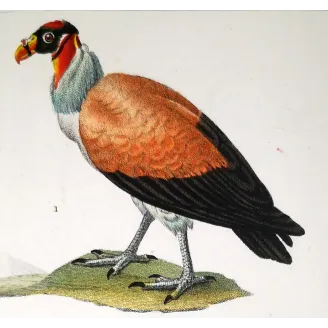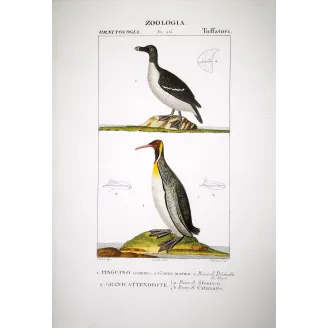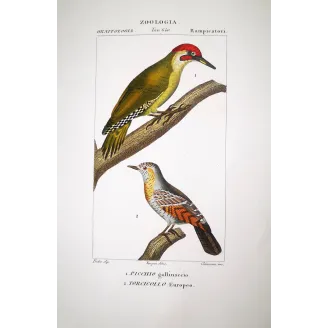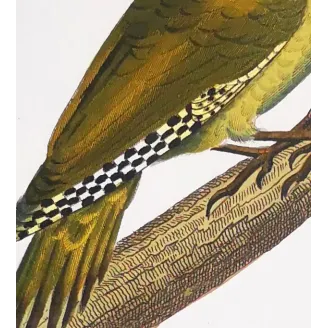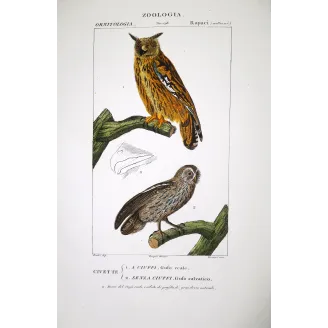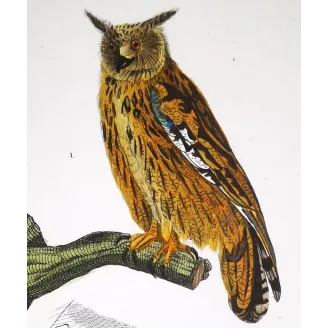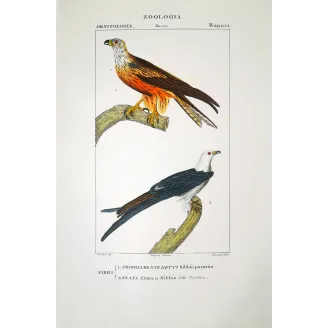



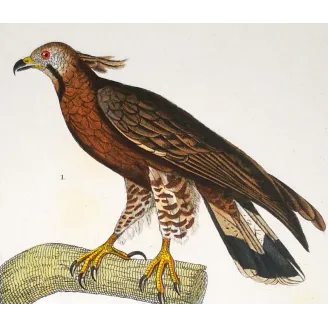
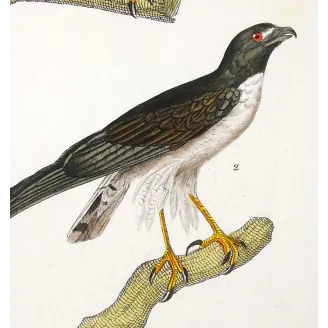
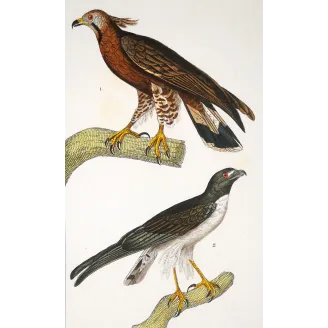
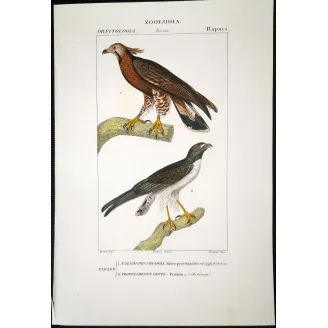
Finely drawn buzzards with a harmonious and naturalistic composition.
 Delivery policy
Your print will be carefully prepared and shipped worldwide via trusted couriers (UPS or similar).
 Authentic antique prints
Original engravings from the 17th–19th century.
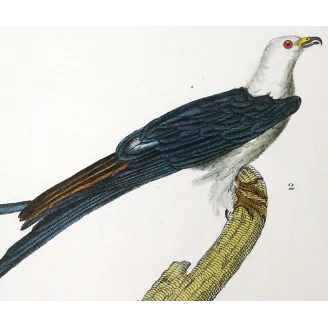
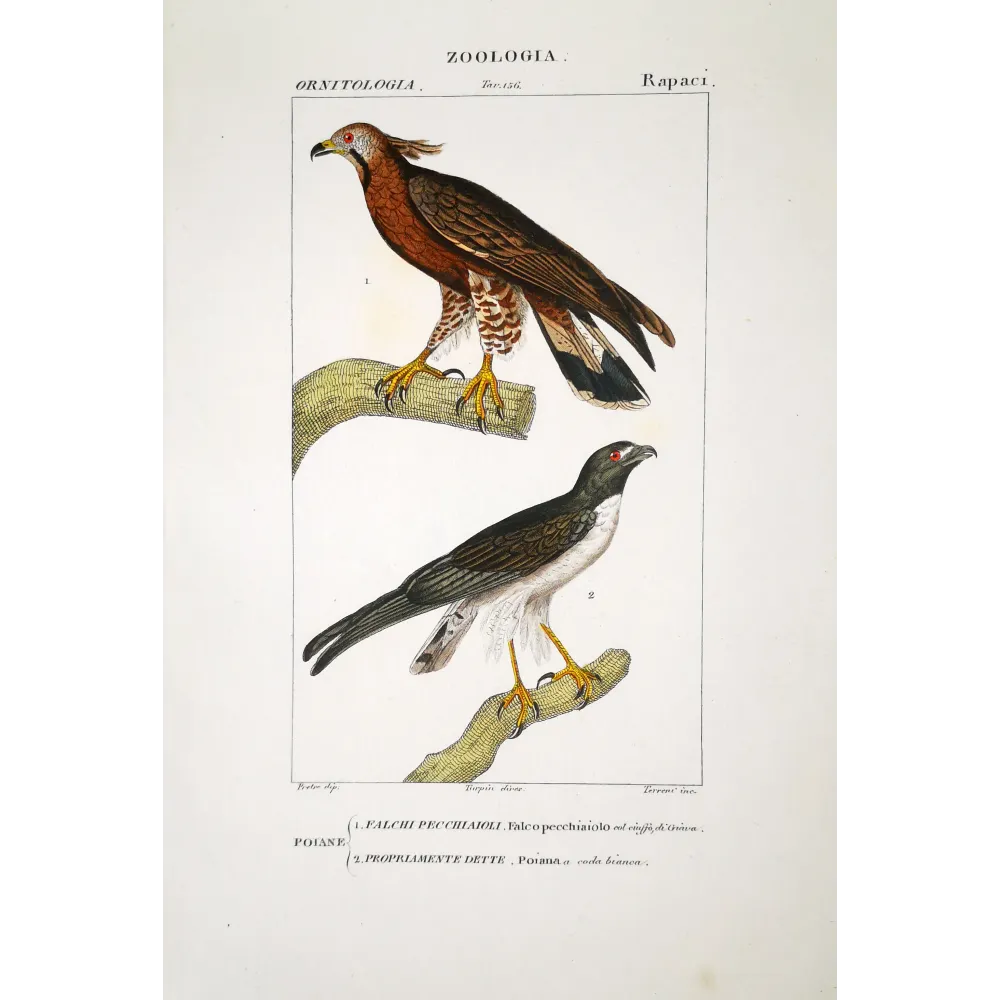
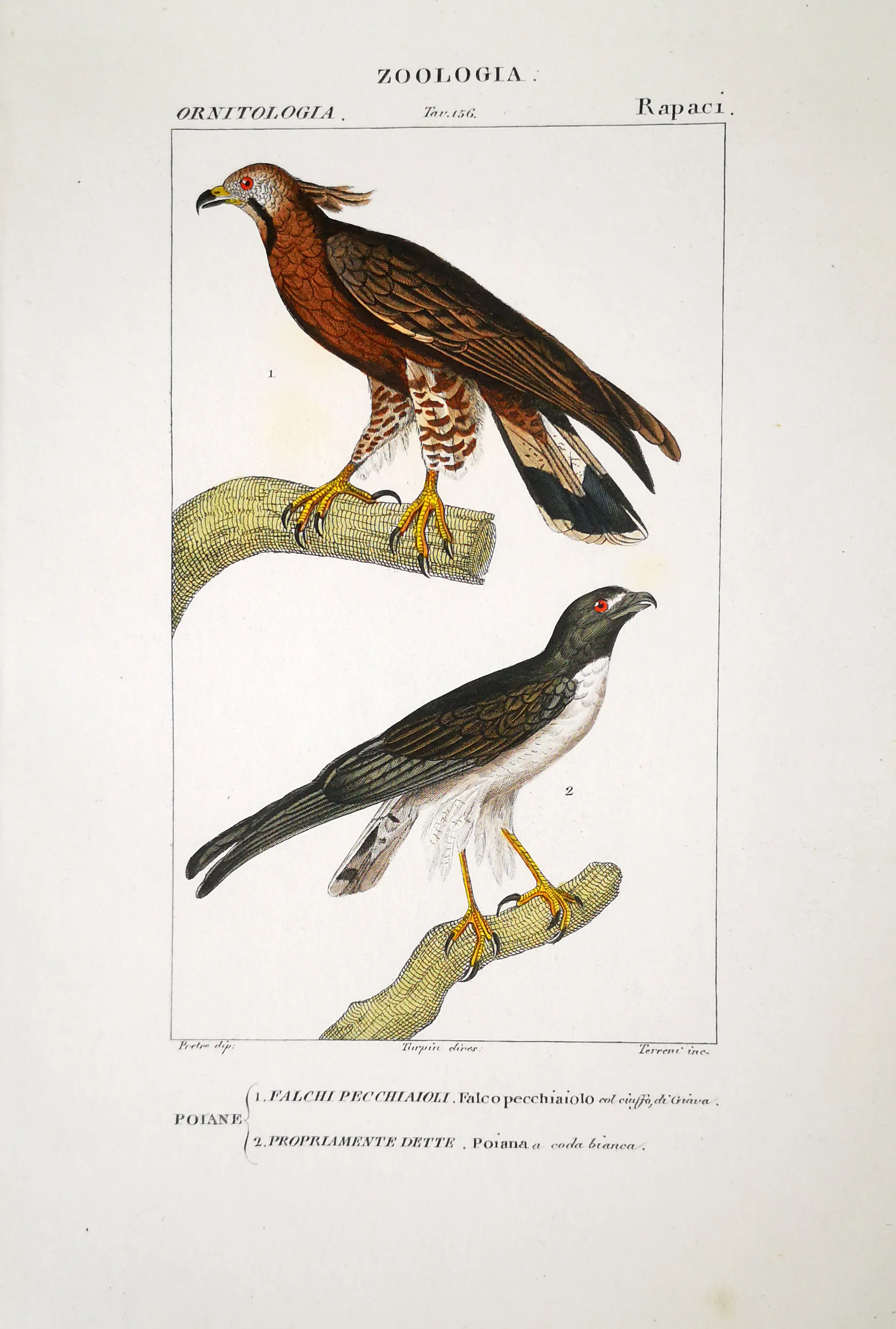
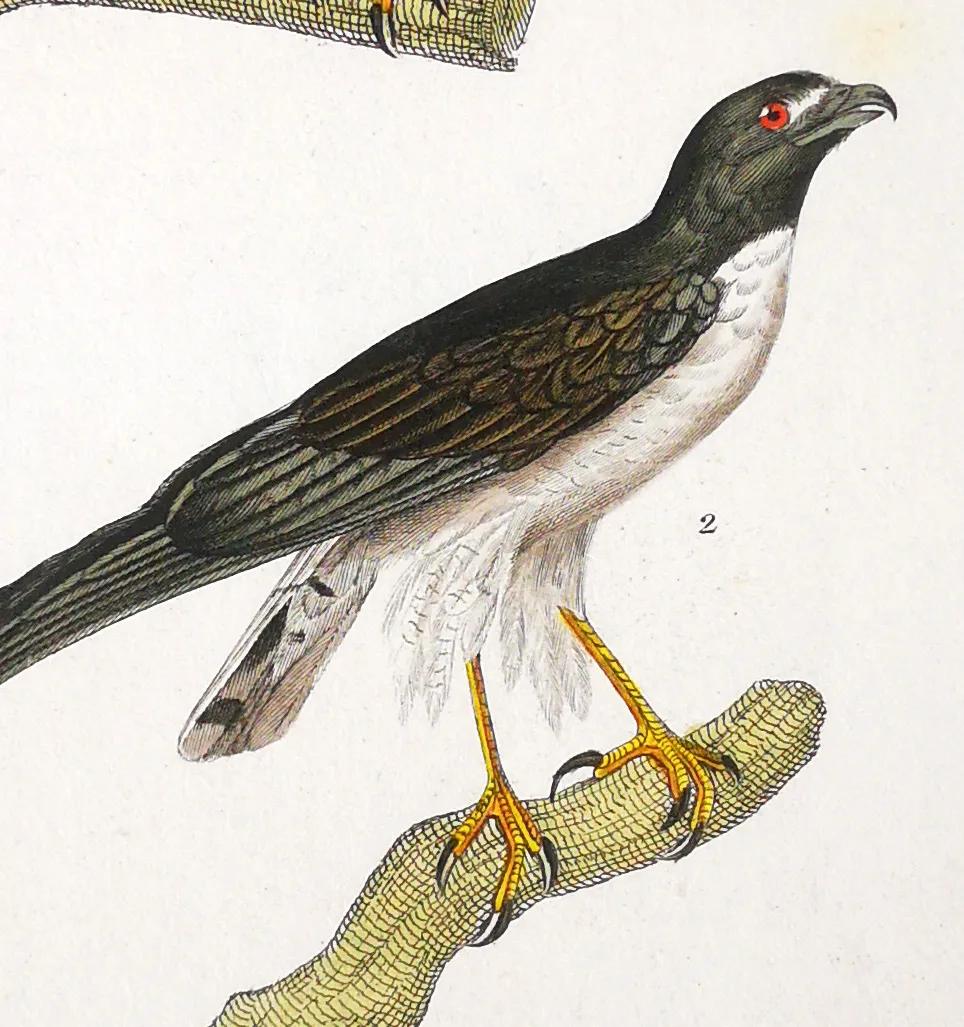
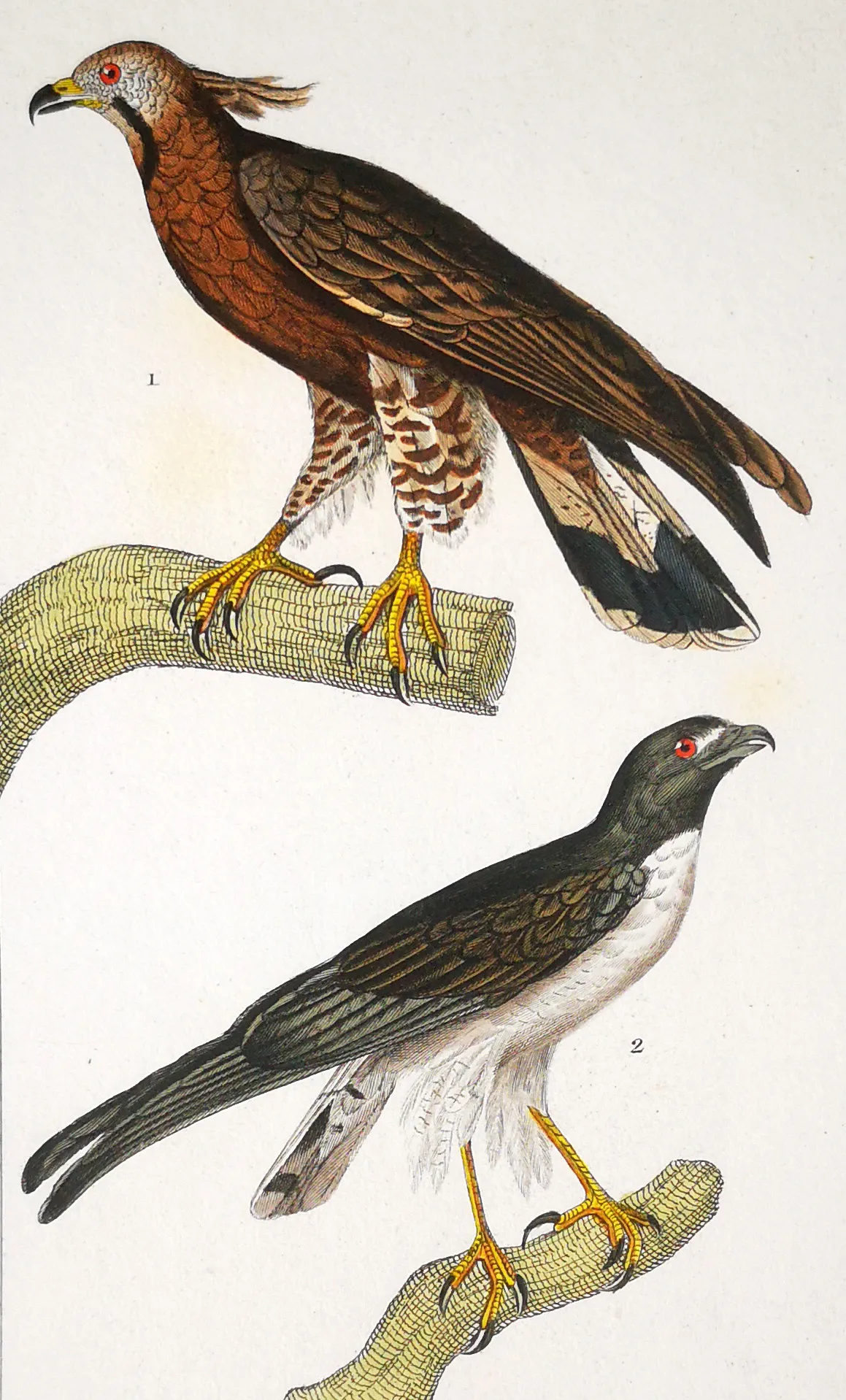
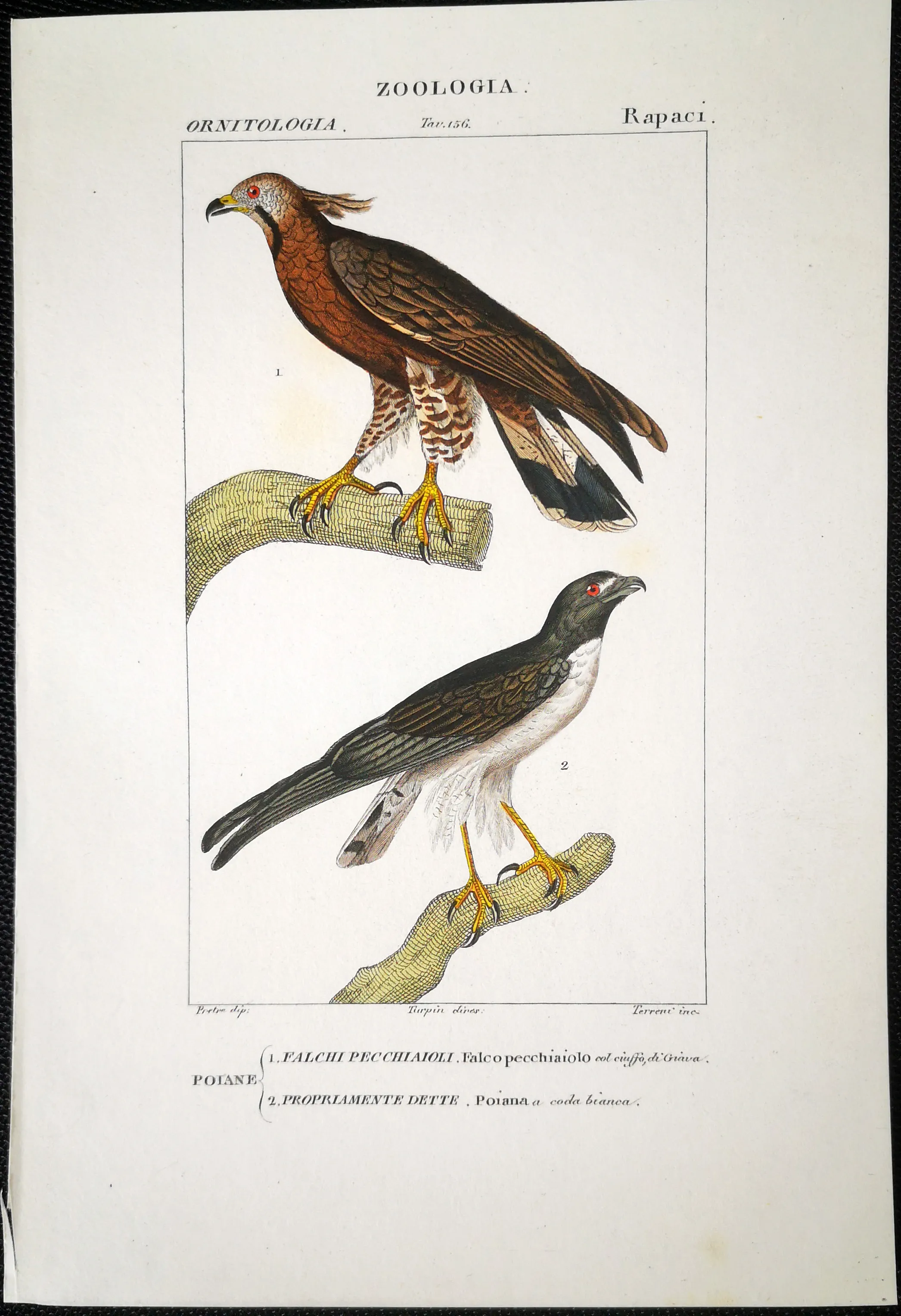
This ornithological engraving presents two raptors identified in the plate as Falco pecchiaiolo col ciuffo di Giava and Poiana a coda bianca. The sheet belongs to the ornithological section of the Dizionario di Scienze Naturali, where Pierre Antoine Prêtre combines scientific discipline with refined compositional balance.
The upper bird, rendered in warm copper-brown tonalities, contrasts with the darker, cooler hues of the lower buzzard, creating a harmonious vertical dialogue between two distinct yet related species.
— • —
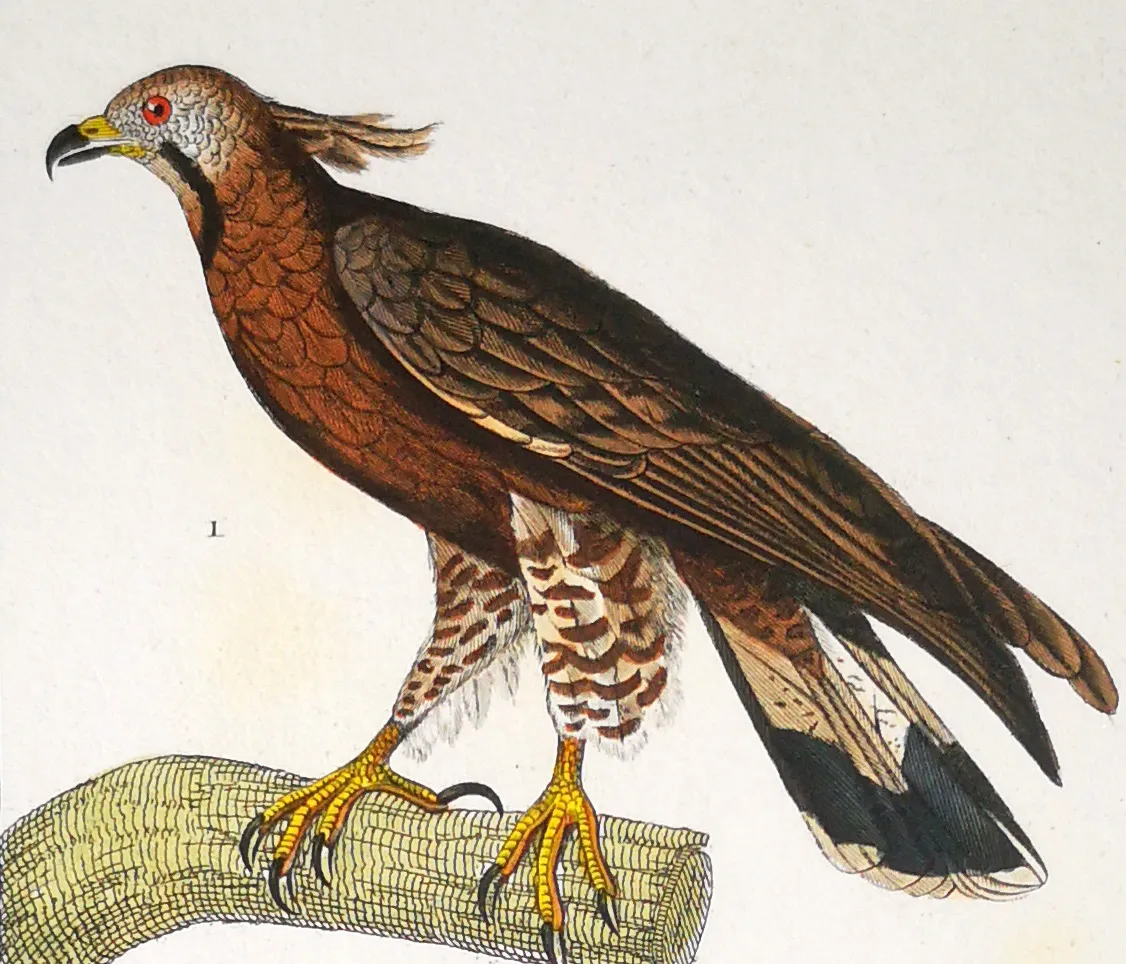
The upper honey-buzzard displays layered chestnut and umber plumage articulated through precise copperplate linework. The yellow talons introduce vivid chromatic accents against the pale branch.
Below, the white-tailed buzzard presents a darker mantle with contrasting pale underparts. The composition remains restrained, allowing feather texture and tonal contrast to emerge within the scientific clarity characteristic of early nineteenth-century natural history engraving.
Honey-buzzards are commonly associated with the genus Pernis, specialized raptors known for feeding on wasps and bees. The reference to “Giava” reflects early nineteenth-century European geographic nomenclature for Java, indicating expanding global taxonomy.
Buzzards, within the genus Buteo, represent adaptable raptors distributed across Europe and beyond. Their inclusion in encyclopedic works illustrates the growing scientific interest in comparative ornithology during the period.
This engraving forms part of the monumental Dizionario di Scienze Naturali, an early nineteenth-century encyclopedic enterprise preserved within a noble Roman library and today part of the Sacchetti Collection. Each plate reflects a period when scientific ambition and artisanal engraving achieved exceptional refinement.
To explore the broader historical and cultural narrative behind these rare natural history engravings, we invite you to read our editorial feature “Not Just Another Print”.
The engraving is in very good antique condition. The impression is sharp and the original hand-colouring remains vibrant. The paper is smooth early nineteenth-century wove paper (non-laid), consistent with Italian scientific editions of the period. No watermark has been observed. Minor age toning may be present, consistent with its age.
For further insight into Pierre Antoine Prêtre’s role in nineteenth-century zoological illustration, see our editorial feature:
Pierre Antoine Prêtre – Illustrator of Natural Science and Marine Life
Specific References
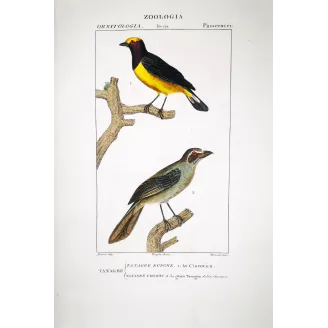
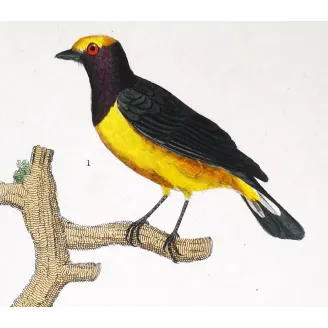
Graceful composition of a Yellow Tanager and a more subtly colored species from the Guyana region.
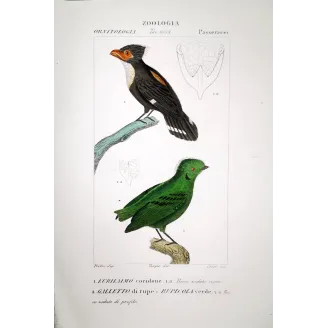
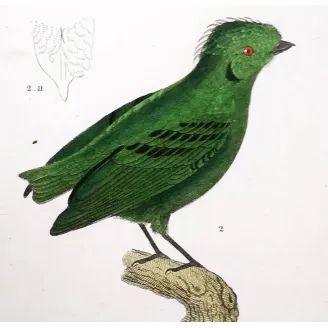
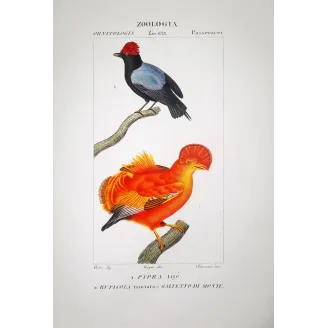
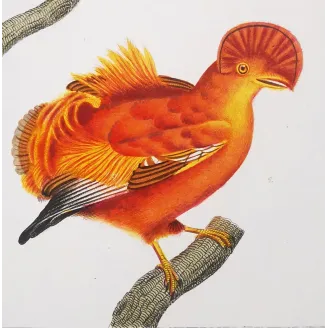
Rare birds of the jungle: the crest-faced Corydon and a luminous green Rupicola.
Majestic raptor captured in perfect hunting pose with detailed feathers.
Two striking hawks from Australia, finely illustrated with warm natural tones.
Original early 19th-century hand-colored engraving depicting King Vulture and Brown Vulture from the Dizionario di Scienze Naturali.
Charming illustration of two aquatic birds with accurate anatomical and marine details.
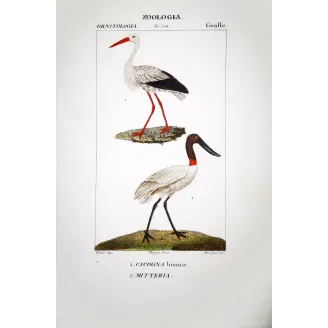
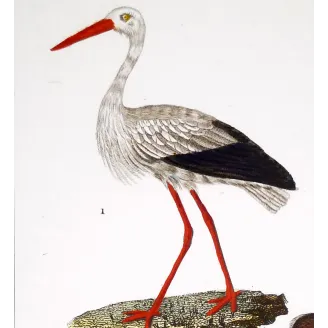
Graceful stork and robust jabiru presented with classic naturalistic balance.
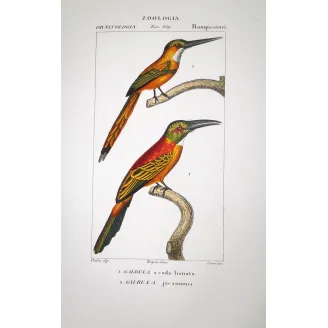
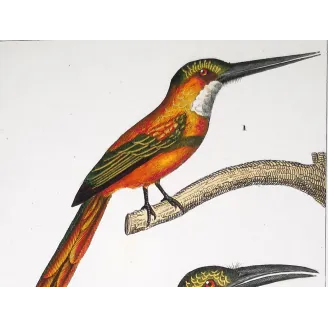
Two vibrant Jacamar birds with metallic plumage and long sharp beaks on stylized branches.
Exquisite depiction of the ornate Greater Bird-of-Paradise alongside the striking Common Hill Myna.
Nocturnal birds of prey elegantly rendered, showing sharpness and grace.
Parasitic Kite & Elanus (Milvus sp. & Elanus sp.) – Original Hand-Colored Engraving by Prêtre, Antique Print.
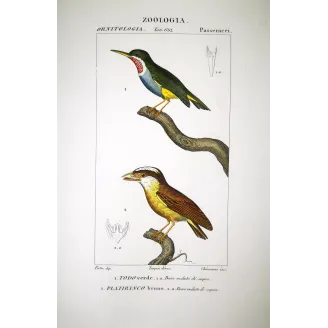
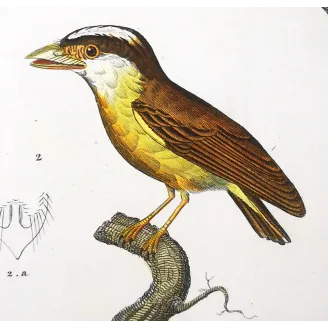
Delicate birds from the New World: the vibrant Green Todus and a brown Platyrinchus with unique beak features.
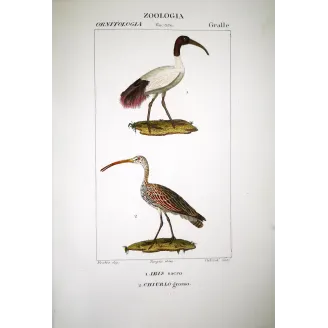
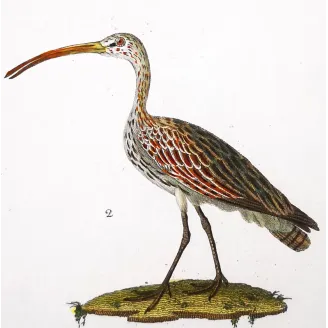
Beautiful engraving combining sacred symbolism and elegant coastal shapes.
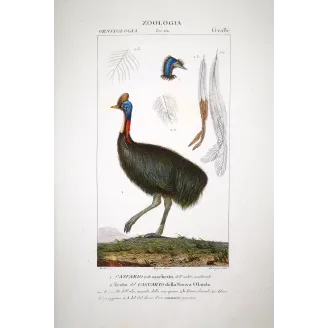
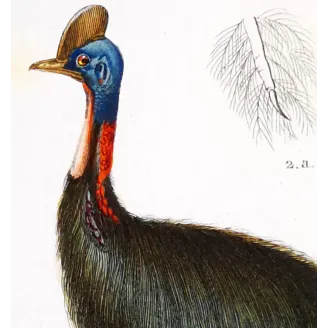
Impressive antique engraving of the Southern Cassowary, a striking flightless bird from New Guinea and northern Australia.
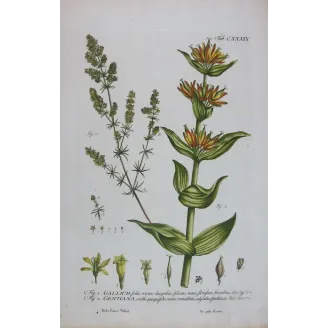
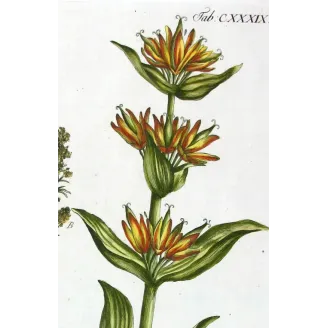
An elegant 18th-century botanical engraving depicting Gentian and Bedstraw, combining structured vertical growth with delicate botanical detail. The vivid hand-coloring and dual composition create a refined and visually engaging natural history print.
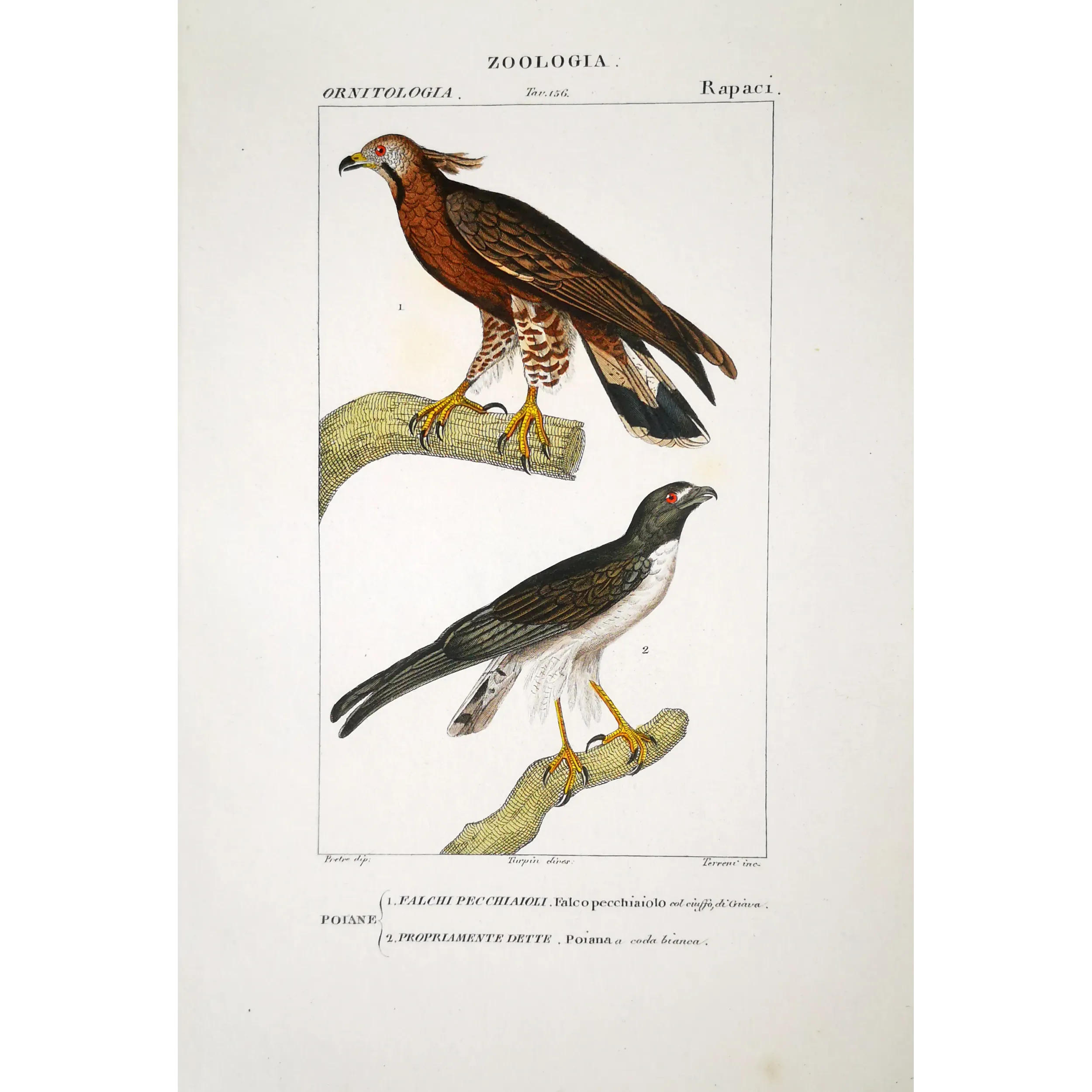
Finely drawn buzzards with a harmonious and naturalistic composition.